
Although many Roman churches pre-date the 16th century, most of this early architecture has been overlaid with a layer of Baroque ornamentation. With its riotous color, chubby cherubs and emotional drama, this extravagance was endorsed by the Catholic church to counter the simplicity promoted during the Protestant reformation. The goal was to retain parishioners by communicating religious themes in a way that was direct, emotional, and dramatic. It also resulted in some amazing artistic treasures.
But of the hundreds of Baroque churches and artworks in Rome, where to start? There is the vastness (and Michelangelo connection) of St. Peter’s, or the counter-reformation history of the Church of the Gesu, or the golden ceiling of Santa Maria Maggiore, made with gold brought back from Columbus’s first voyage. However, if I had to limit my choice to just one it would be Santa Maria della Vittoria – specifically the Cornaro Family side chapel. While it is hardly a secret, most of the tourist hordes skip this in favor of other well known churches.
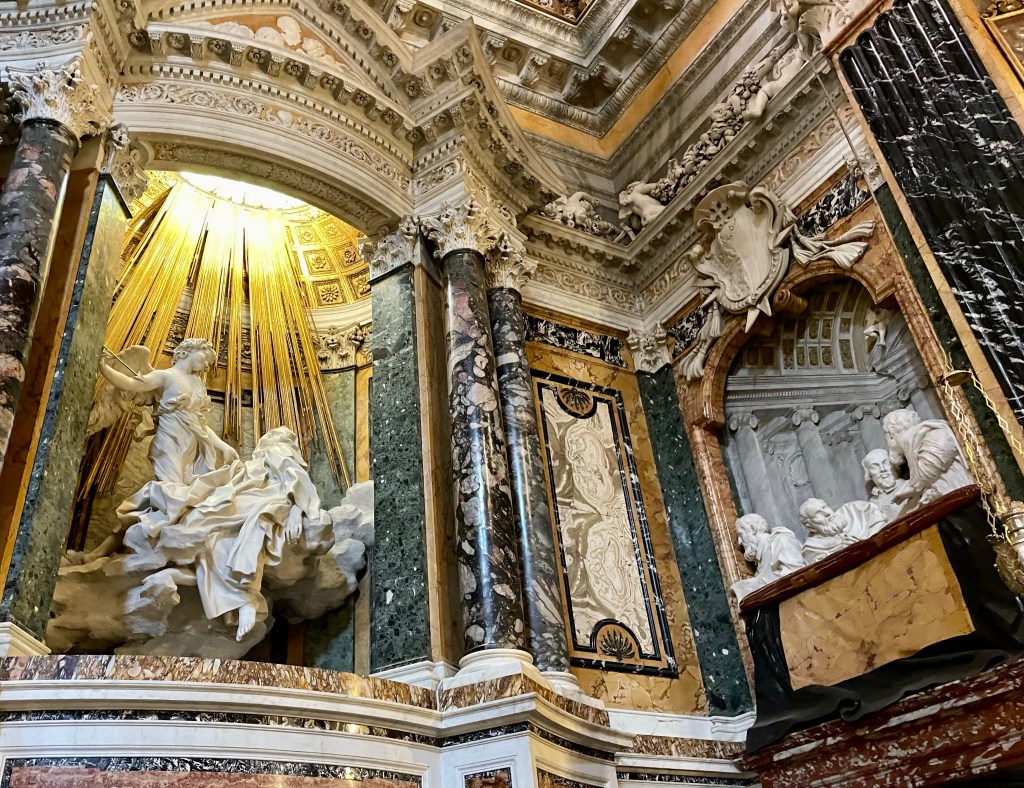
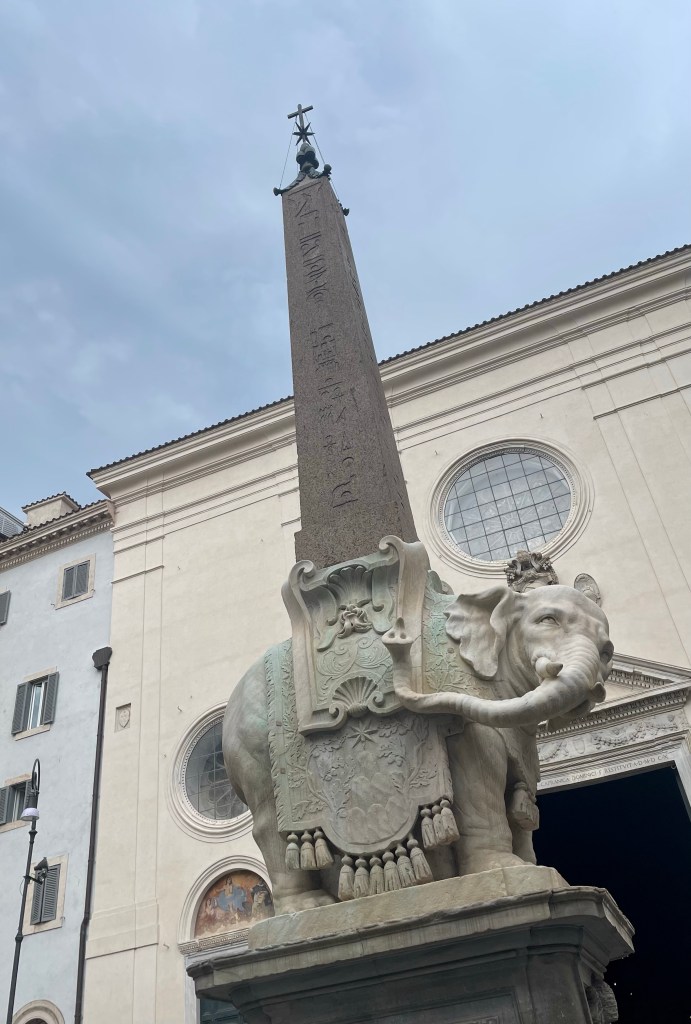
This side chapel was created by the master of Baroque, Gian Lorenzo Bernini – a sculptor, painter, and architect whose work is found all across Rome. It is his colonnade that surrounds St Peter’s, his Fountain of the Four Rivers in Piazza Navona, his elephant holding up an Egyptian obelisk in the Piazza della Minerva, and this little chapel that is the pinnacle of Baroque art.
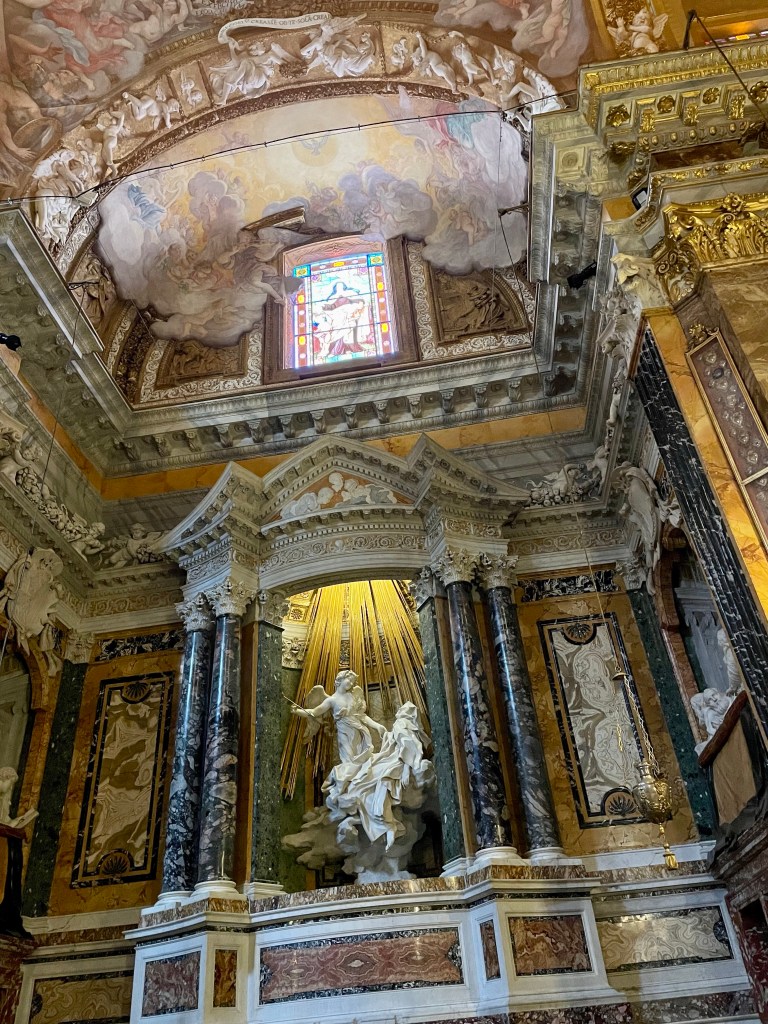
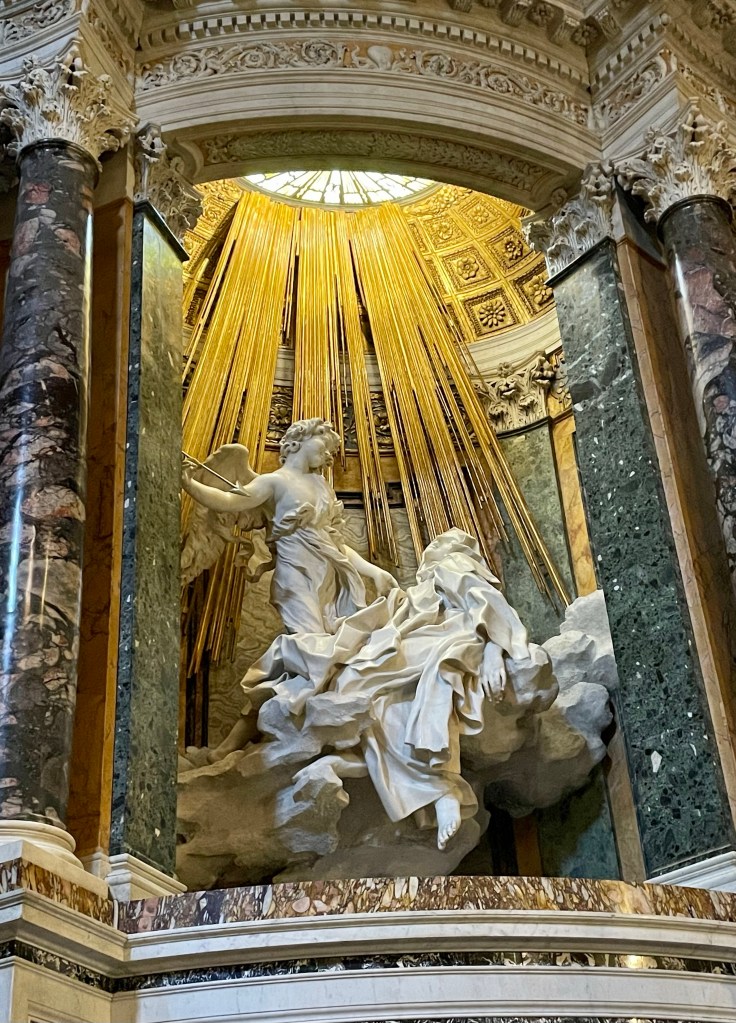
The chapel is a 3-D extravaganza from the ceiling to the floor, highlighting the moment when Saint Theresa’s heart has been pierced by an arrow and she swoons in religious ecstasy. In her autobiography Theresa wrote, “I saw in his hand a long spear of gold, and at the iron’s point there seemed to be a little fire. He appeared to me to be thrusting it at times into my heart, and to pierce my very entrails; when he drew it out, he seemed to draw them out also, and to leave me all on fire with a great love of God. The pain was so great, that it made me moan; and yet so surpassing was the sweetness of this excessive pain, that I could not wish to be rid of it.”
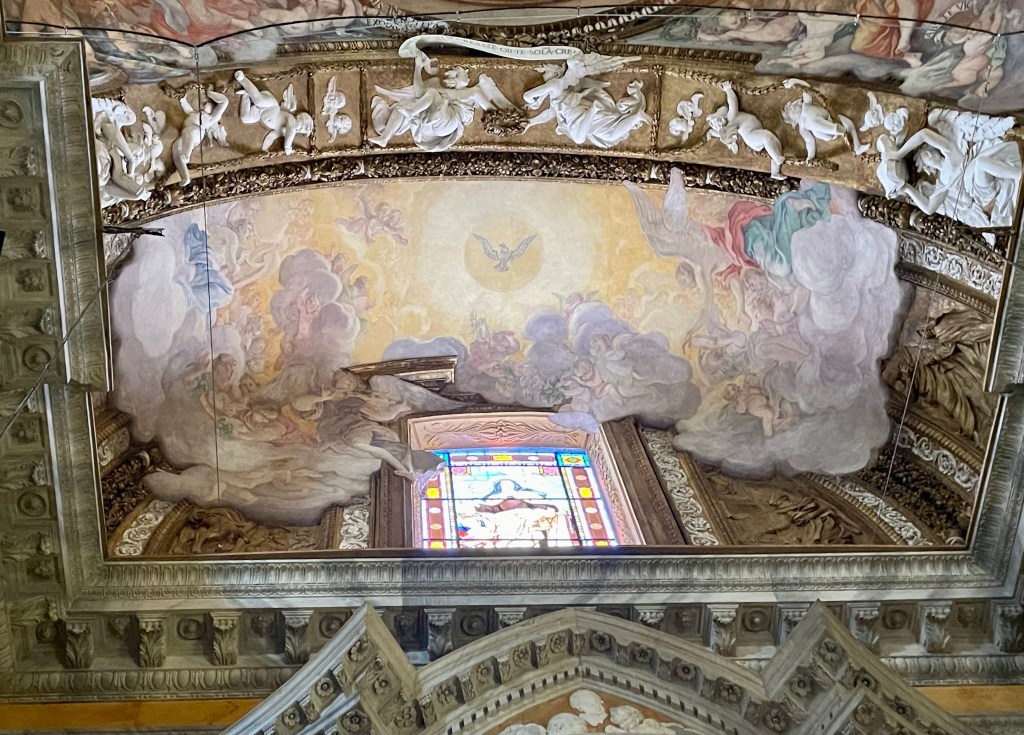
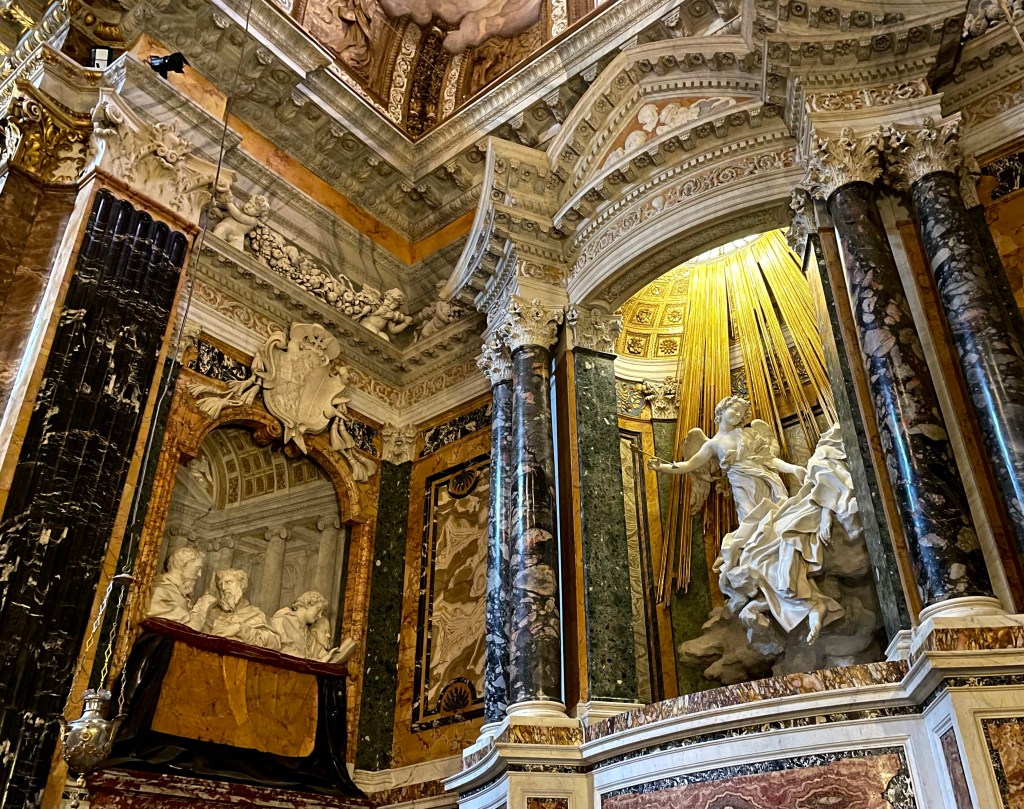
From the fascinated cherubs tumbling out of the sky, to the clouds billowing over the walls, to the window with its natural light highlighted by gilded rays, to the chapel’s donors watching in awe from side boxes, to St. Theresa spilling out of the alter into our space, everything about the chapel is designed to draw the visitor into the scene and elicit an emotional response. The power of Bernini’s work forces the viewer to believe in the glory of God’ power – the ultimate goal of Baroque’s theatricality.
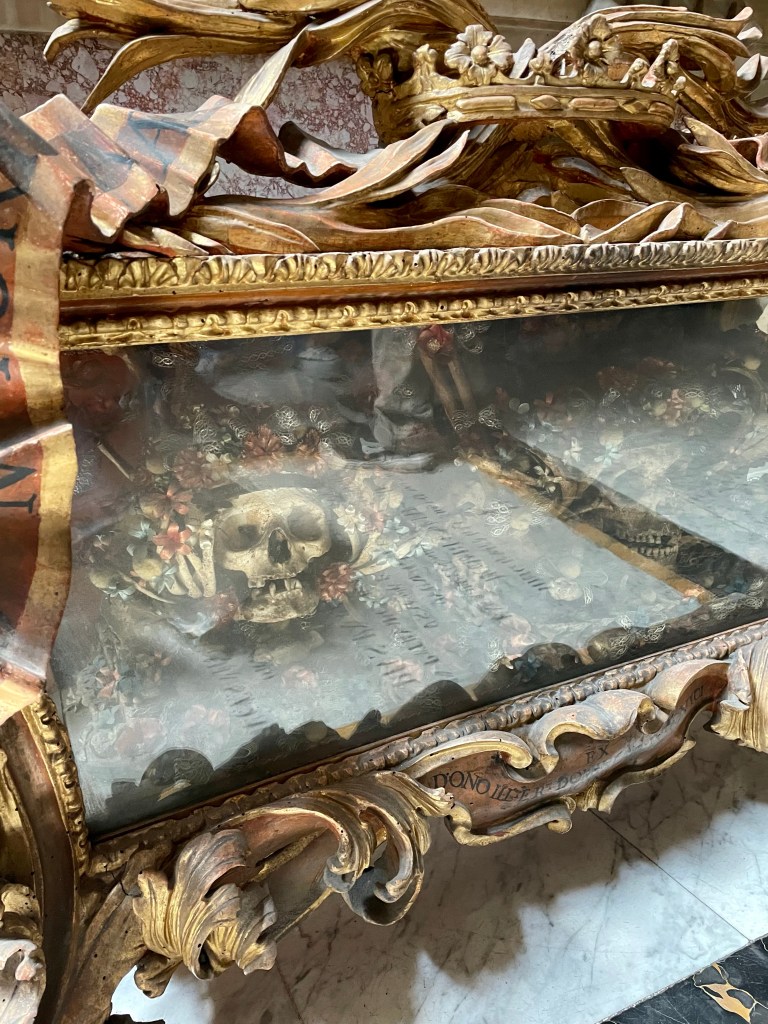
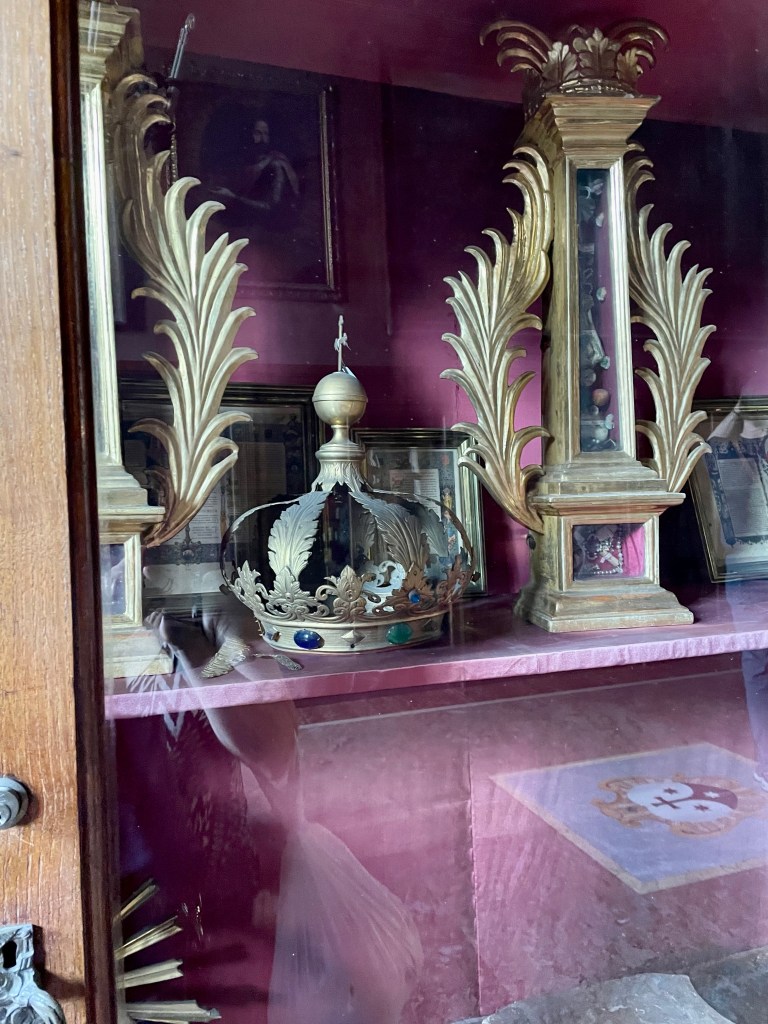
While St. Theresa may be the ultimate expression of Baroque drama, there is plenty more to see in the rest of the church – don’t miss the preserved remains of Saint Victoria, the side hall with its reliquaries, and (if open) the back room containing the church’s treasures.


Extra: Although it can’t compete with St. Theresa, you must admit that Bernini’s elephant is adorable!
 Secrets of Philadelphia