
The most famous couch in the world lives here in this great little museum tucked away in a London suburb.
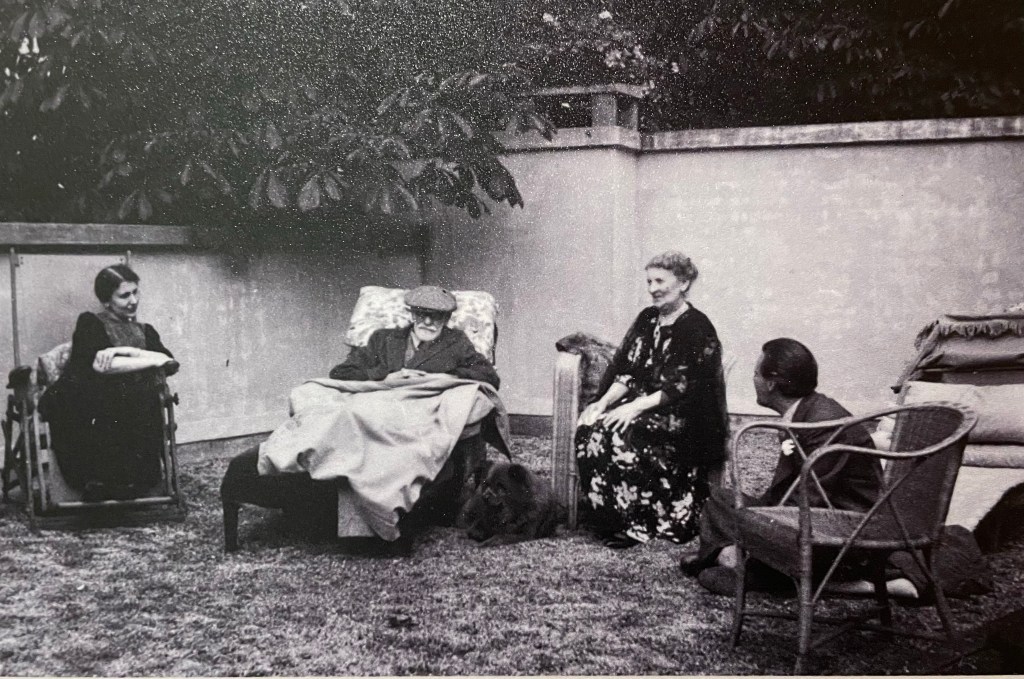
After being ransomed from the Nazis, Sigmund Freud, his wife, and members of his extended family came to London, moving into this house in Maresfield Gardens (his four older sisters were unable to escape and were all killed in concentration camps). His stuff followed soon after and was used to recreate his Vienna consulting rooms. Although Freud lived in this home for only a year before his death in 1939, his daughter, pioneering child psychiatrist Anna Freud, lived here until her death in 1982 when the house became a museum. Because of that, much of the house hasn’t changed since Freud last walked its rooms.
After passing through the sunroom designed by his son and the dining area filled with his painted Austrian furniture,

you come to the best part of the house, Freud’s library and study with the world famous couch (with the green chair hidden behind the patient’s head, where Freud would sit out of sight during consultations).

With over 1600 books and over 2500 antiquities, Freud surrounded himself with works that stimulated him and sparked his imagination.

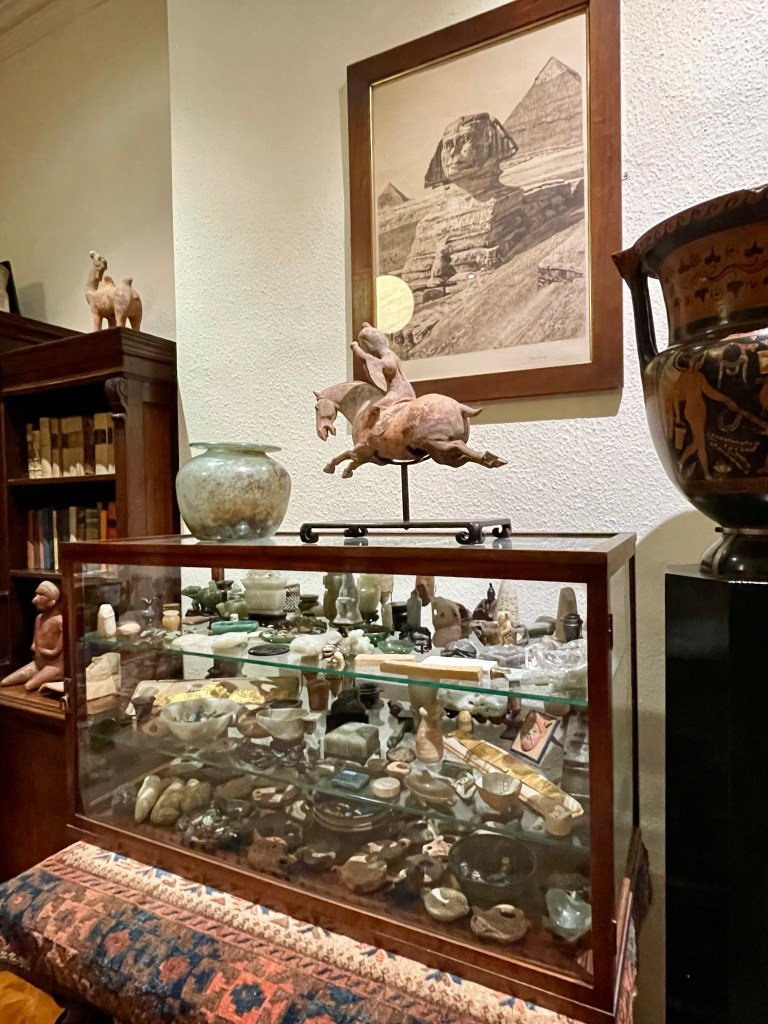
Freud’s personal favorites still line his desk. A patient wrote about this collection saying, “Freud himself explained his love for archaeology in that the psychoanalyst, like the archaeologist in his excavations, must uncover layer after layer of the patient’s psyche, before coming to the deepest, most valuable treasures.” Next to the desk is the chair that Freud had designed to accommodate his favorite sitting position (legs hanging over one arm of the chair).

Many of Freud’s personal belongings are in cases lining the entrance hall, including his prosthetic jaw and the cloths pin he used to open and close his mouth when his cancer progressed to the point that it was too painful to do on his own.

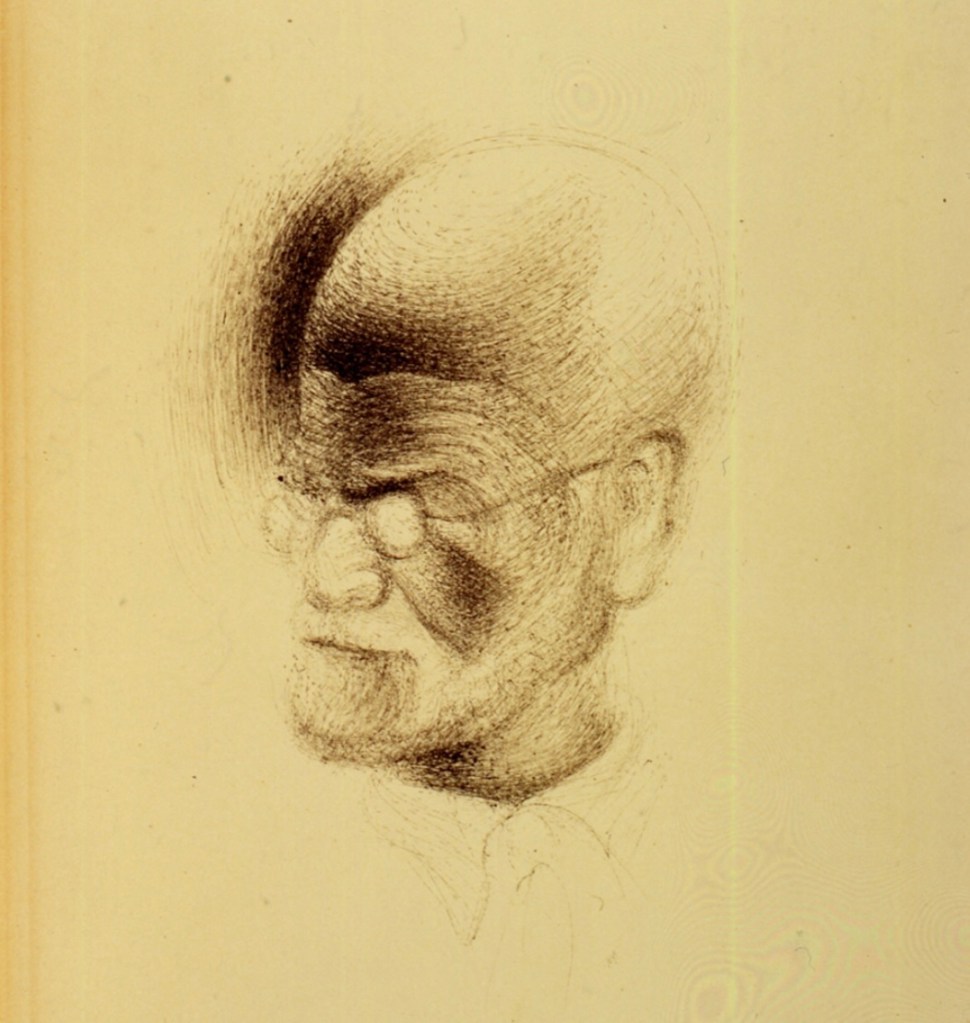
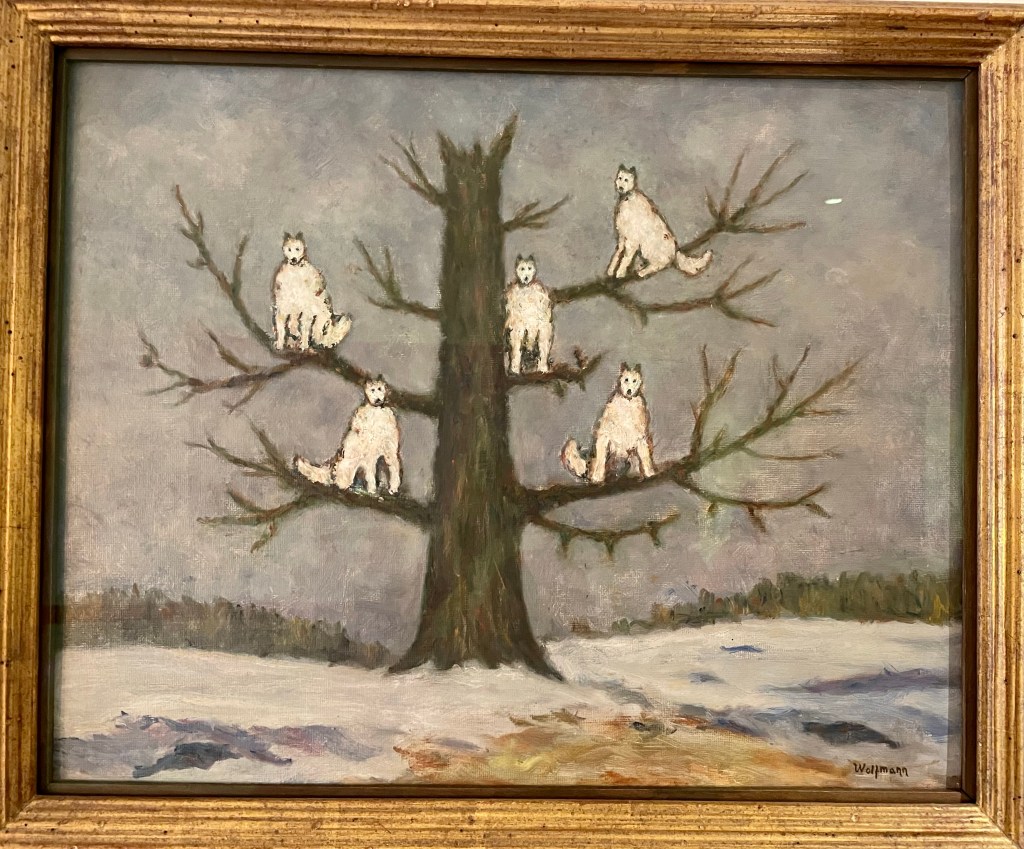
It was in this house that Salvador Dalí met his idol. Dalí brought with him his latest painting, “The Metamorphosis of Narcissus” (now in the collection of the Tate Modern). After their visit, Dalí drew this sketch of Freud, which now hangs in the museum’s hallway, next to a painting by Freud’s most famous patient, the Wolf Man, detailing the dream that brought him into Freud’s care.
Upstairs, you can visit Anna’s workspace, with her own psychoanalytic couch used by her young patients and the toys she used during play therapy.
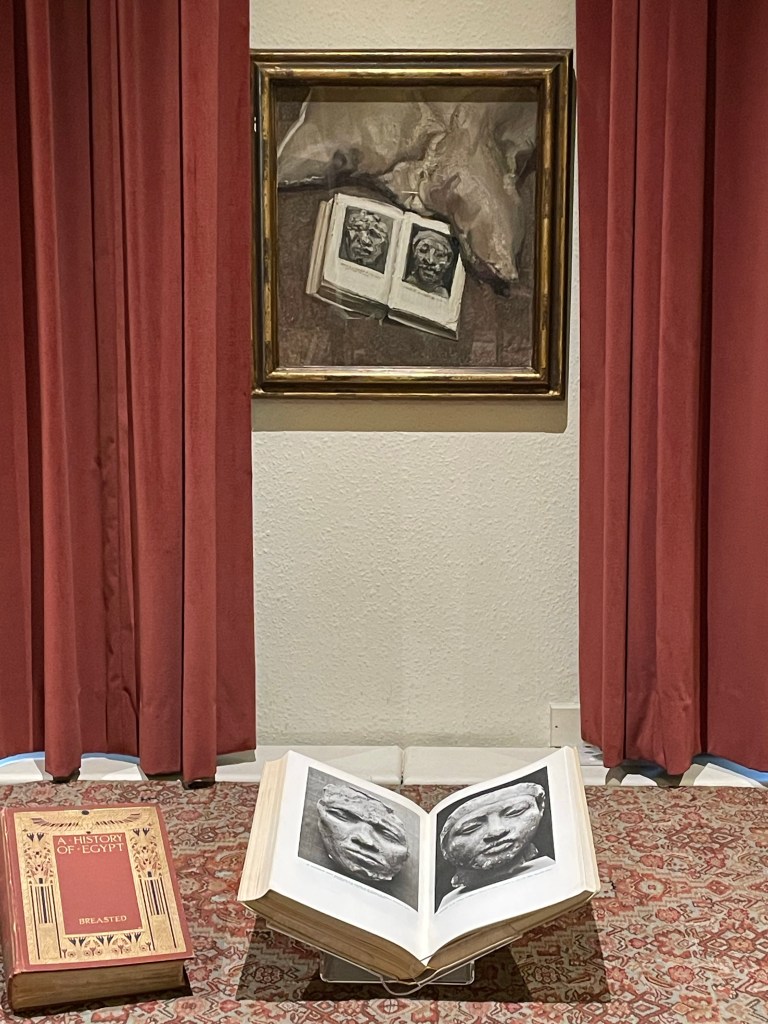
In addition to the permanent collection, the museum hosts rotating exhibits. At the time of our visit it was a display of works by Lucian Freud, Sigmund’s grandson, discussing Freud’s influence on his work.
Maybe the best part of the museum is that you can ponder your own unconscious thoughts while using Freud’s small toilet located off the main hall. It comes complete with a bathroom inspired quote courtesy of Freud:

 Secrets of Philadelphia