
The Tradescants were a father-son duo of globe-trotting 17th century gardeners-to-English-royalty, who had a huge impact on the botanical and gastronomic landscape in England, and today have the coolest tomb in London.
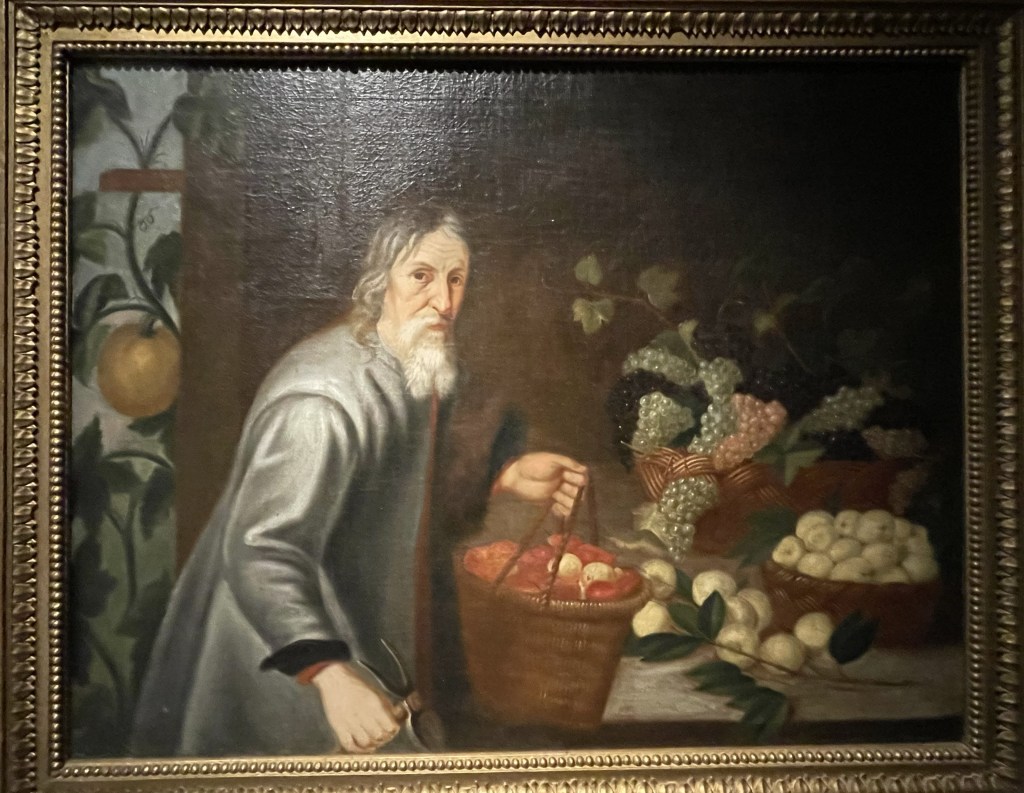
Beginning with John Tradescant the Elder (157?-1638), they were leaders in the mania for plant collecting fueled by the exploration and colonization of the Far East and Americas. Tradescant the Elder was head gardener (also assisting with diplomatic and military missions) for Robert Cecil, the 1st Earl of Salisbury and royal favorite George Villiers, 1st Duke of Buckingham, before being engaged by King Charles I, a position his son John Tradescant the Younger (1608-1662) succeeded him in, making the gardens for the Queen’s House in Greenwich. Between father and son, they traveled to Russia, North Africa, the Low Countries, and Virginia, collecting plants for their clients, as well as their own garden.

By 1634 their London garden contained: 49 varieties of apples, 45 varieties of pears, 33 varieties of plum, 15 varieties of cherry, 5 varieties of apricot, 4 varieties of nectarine, 12 varieties of peach, and 6 varieties of grape. In addition, they introduced many plants into English gardens that have become part of the modern gardener’s repertoire such as: phlox, aster, horse chestnut, gladiolus, lilac, mulberry, columbine, jasmine, and bergamot.
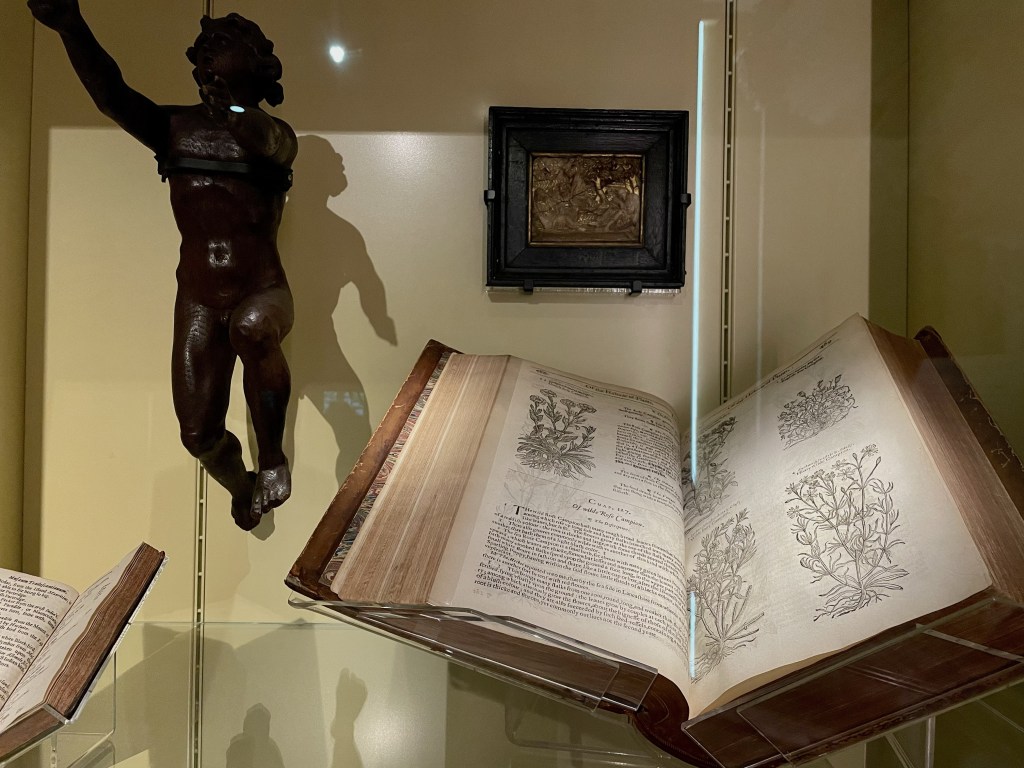
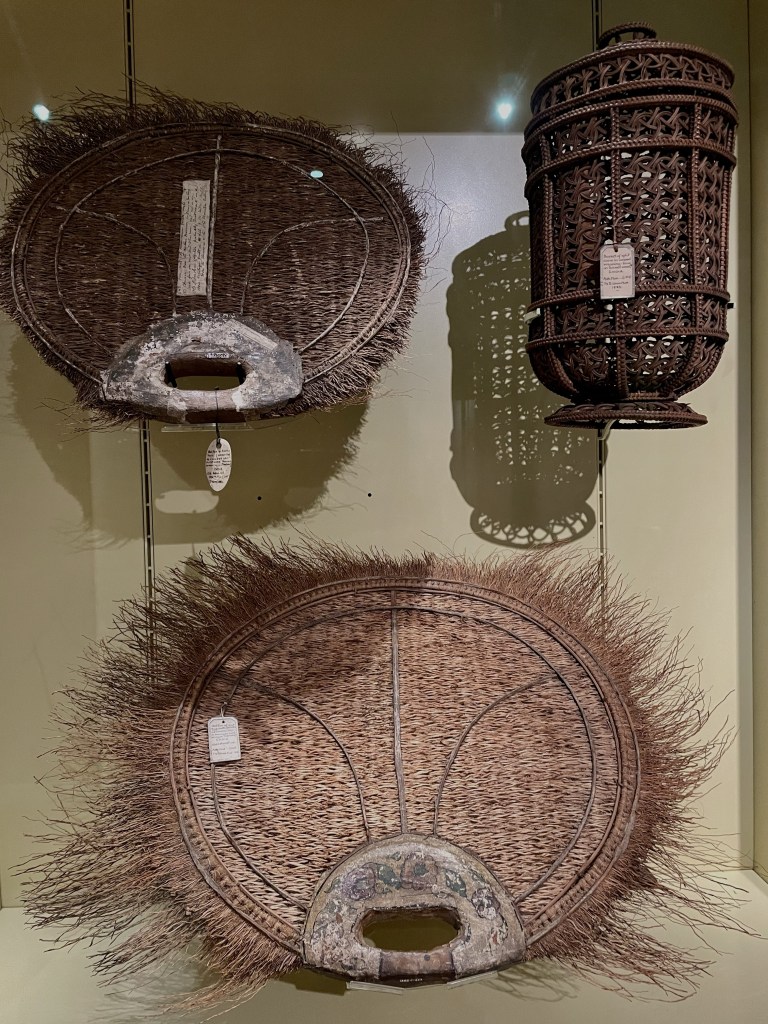
In addition to collecting plants, the Tradescants collected other unusual items, as the Younger noted when he visited Virginia “to gather up all raritye of flowers, plants, shells… .” Their collection included items as varied as Russian snowshoes, birds and shells, a Spanish tambourine, and even the ceremonial cloak of Chief Powhatan (of Pocahontas fame). I’m not sure if this was obtained through Tradescant the Elder’s John Smith connection or not (the two knew each other well enough that John Smith left part of his library to the elder Tradescant upon his death). The collection, known as The Ark, was open to the public, making it the first public museum in England. It was later purchased/swindled by Elias Ashmole who donated it to the University of Oxford where it became the foundation of the Ashmolean Museum.
As for that tomb… you can visit it at St. Mary-at-Lambeth where it was erected in 1662 by Tradescant the Younger’s wife when he was buried here alongside his father. The tomb was so popular that diarist Samuel Pepys had drawings commissioned in 1662. You can see it again in this 1793 etching (housed at the National Portrait Gallery). It has been restored several times in the intervening years, but still remains close to the original (although the hydra heads definitely became much scarier during the Victorian-era restoration).
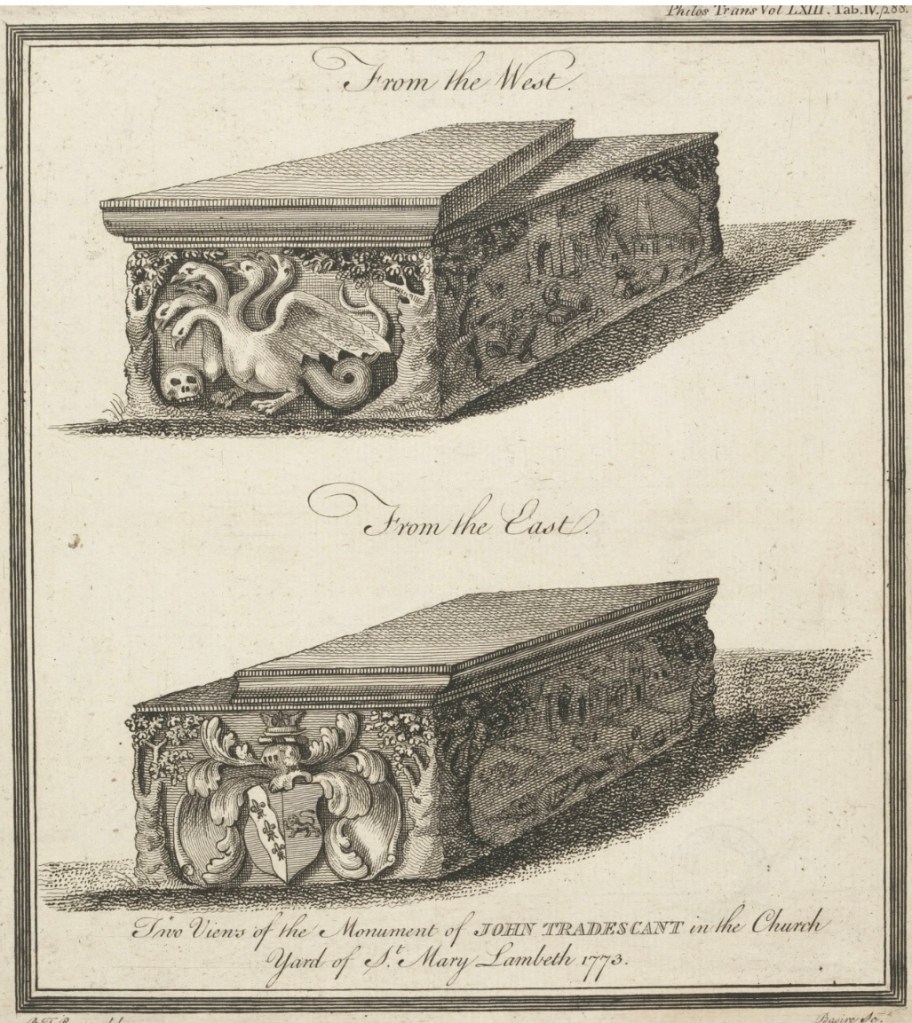


So many fascinating details from the hydra and skull to the crocodile and shells! Signage provides details about the carvings and history.
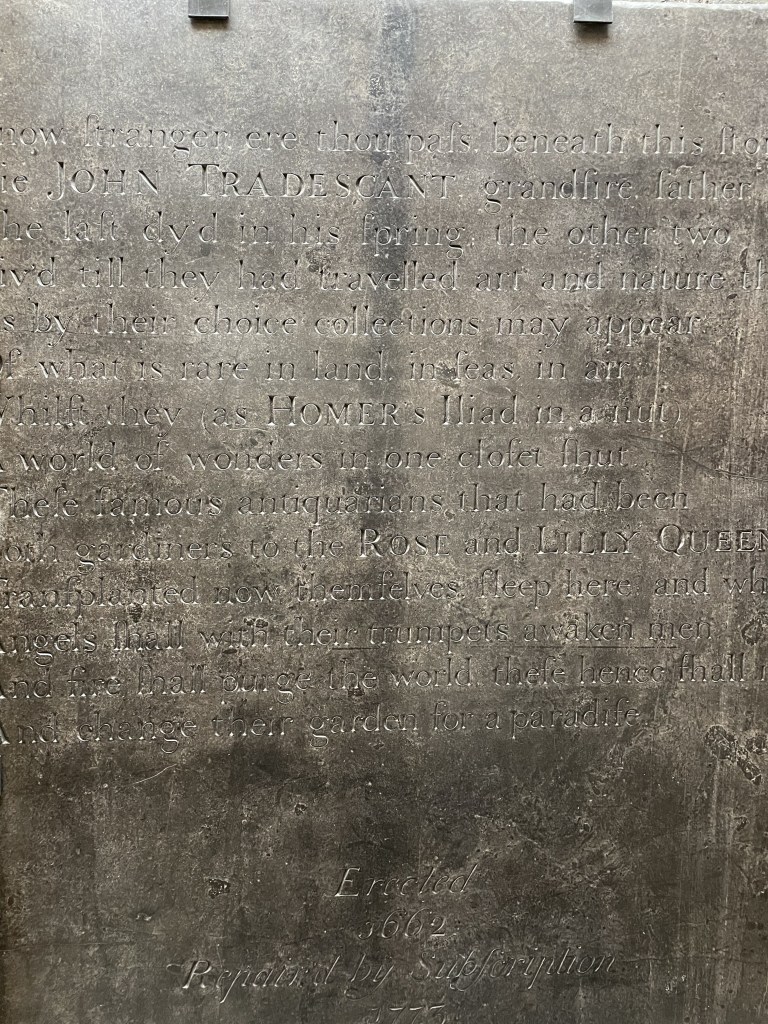
The original inscribed lid of the tomb is located in the church:
The church now houses the Garden Museum, with its collection of garden memorabilia, as well as a recreation of The Ark (items on loan from the Ashmolean & Pitt Rivers Museums):


Tip: in the garden you can also check out the tomb of Captain Bligh of “Mutiny on the Bounty” fame, along with a breadfruit plant whose collection and transportation to the West Indies as a cheap, nutritious food for slaves were the reason for his voyage.

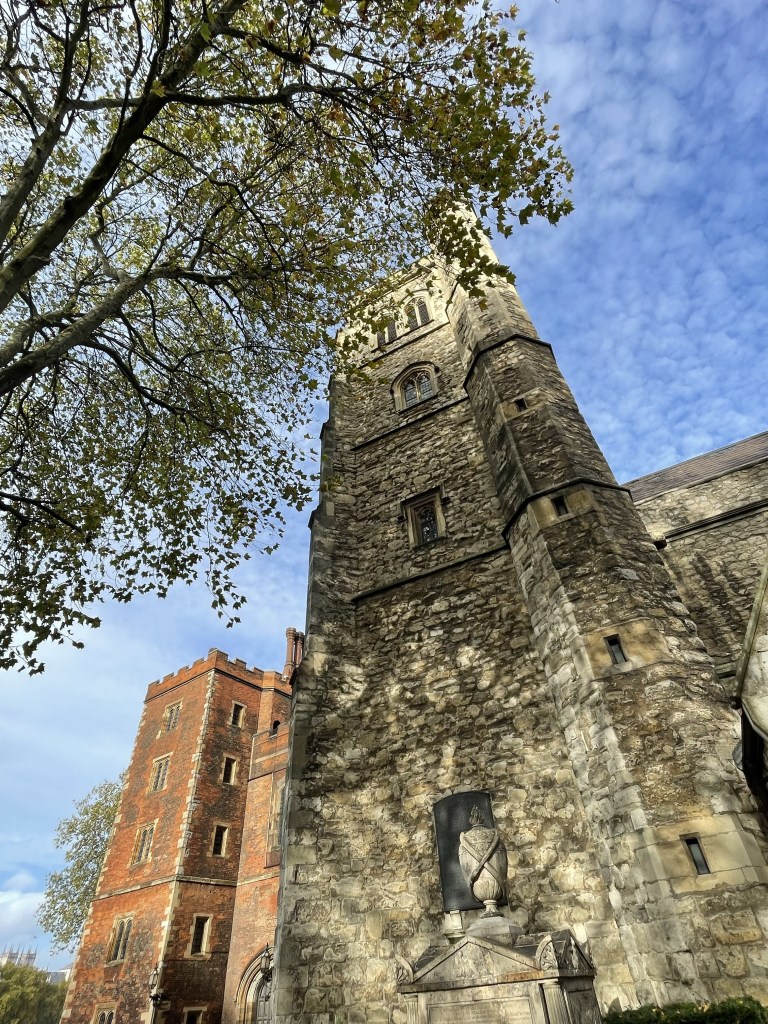
Most of today’s church is Victorian, but the church on the site dates back to 1062. The tower dates to a 1377 medieval construction, and is climbable when it’s not wet.
 Secrets of Philadelphia