
I couldn’t decide which headline I preferred – they are both such apt descriptions of the La Brea tarpits.
Smack in the middle of downtown LA are the still oozing tar (actually asphalt) pits that once entrapped one of the largest collections of Ice Age flora and fauna.

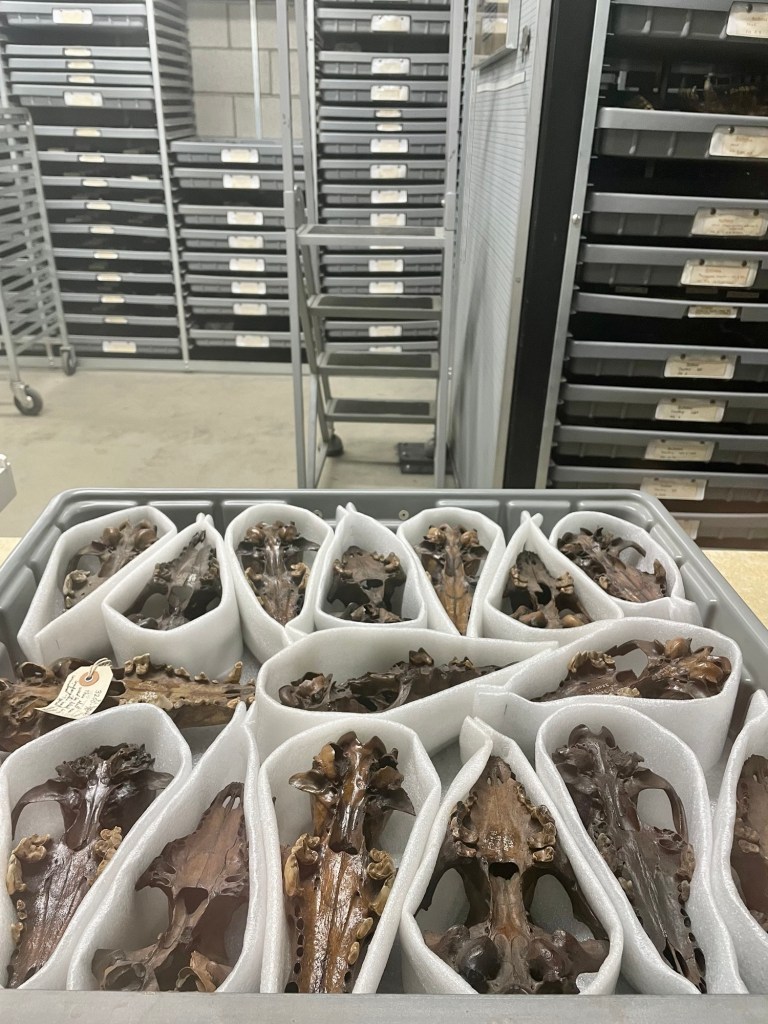
Head inside the museum for a close look at the fossils. Illustrating the vast number of specimens found here is the wall of 404 Dire Wolf skulls. More than 1600 of these wolf skeletons have been found in the pits, hence the “deathtrap for meat eaters” title. It’s believed that these predators became trapped while trying to capture prey that had been trapped in the sticky goo (the “treacherous goo” part of the title).

In fact, over 3.5 million fossils have been collected, including giant ground sloths, American lions, and mammoths.


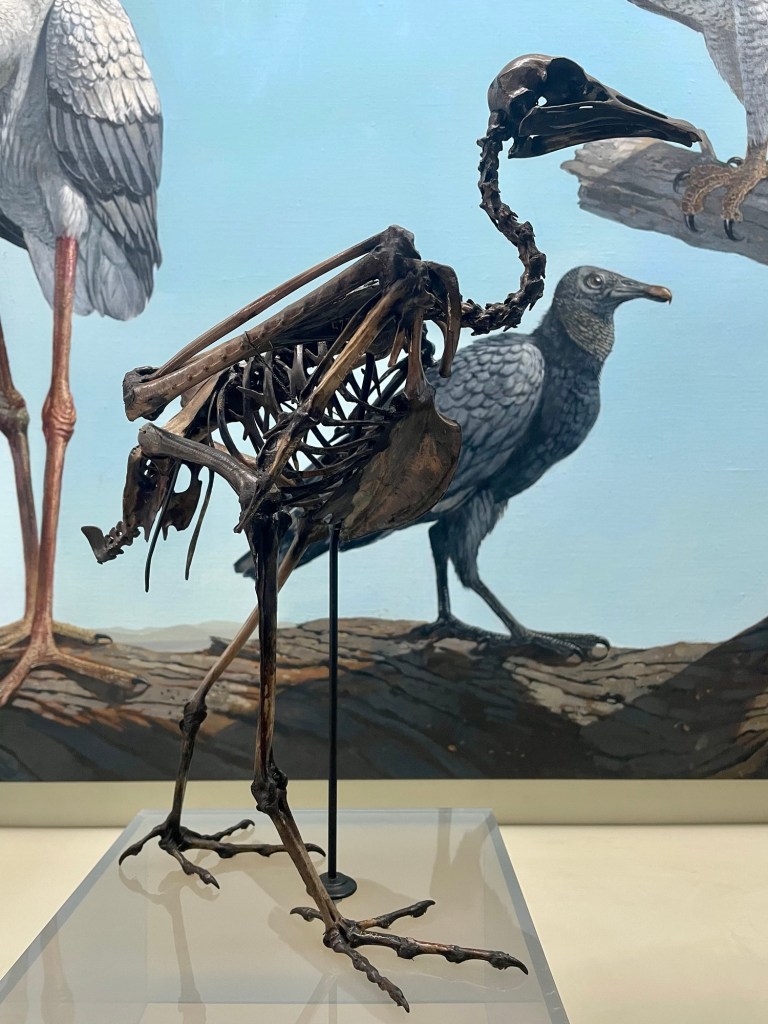
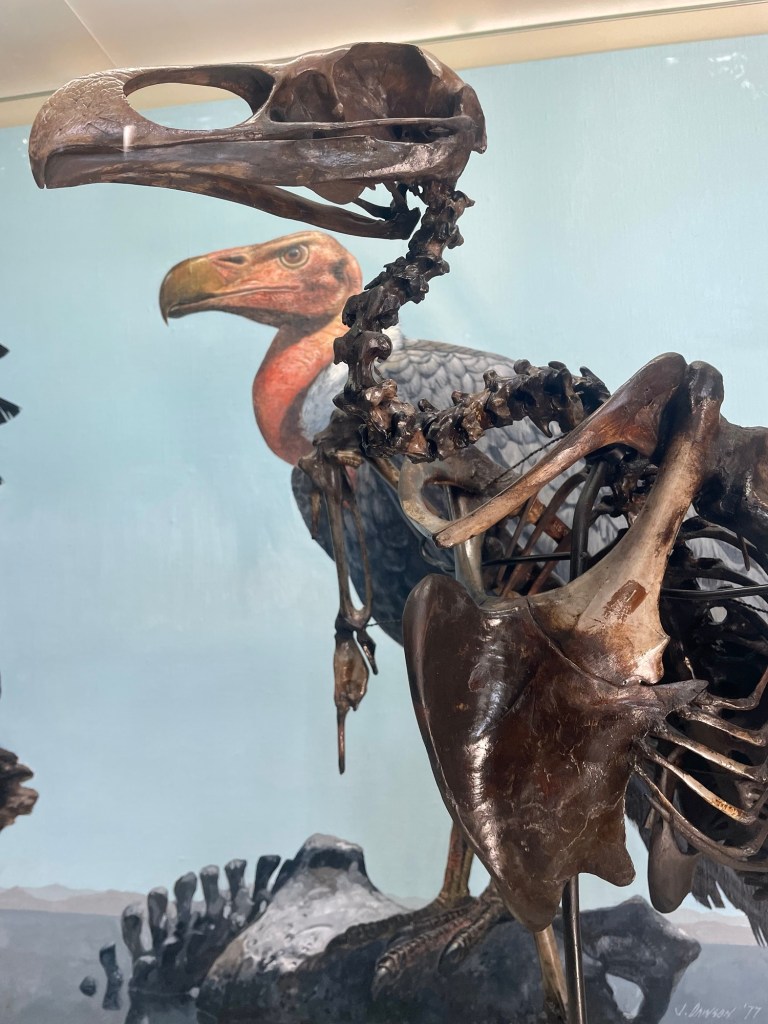
My favorite display showed fossil birds along with images of how they may have looked in real life.
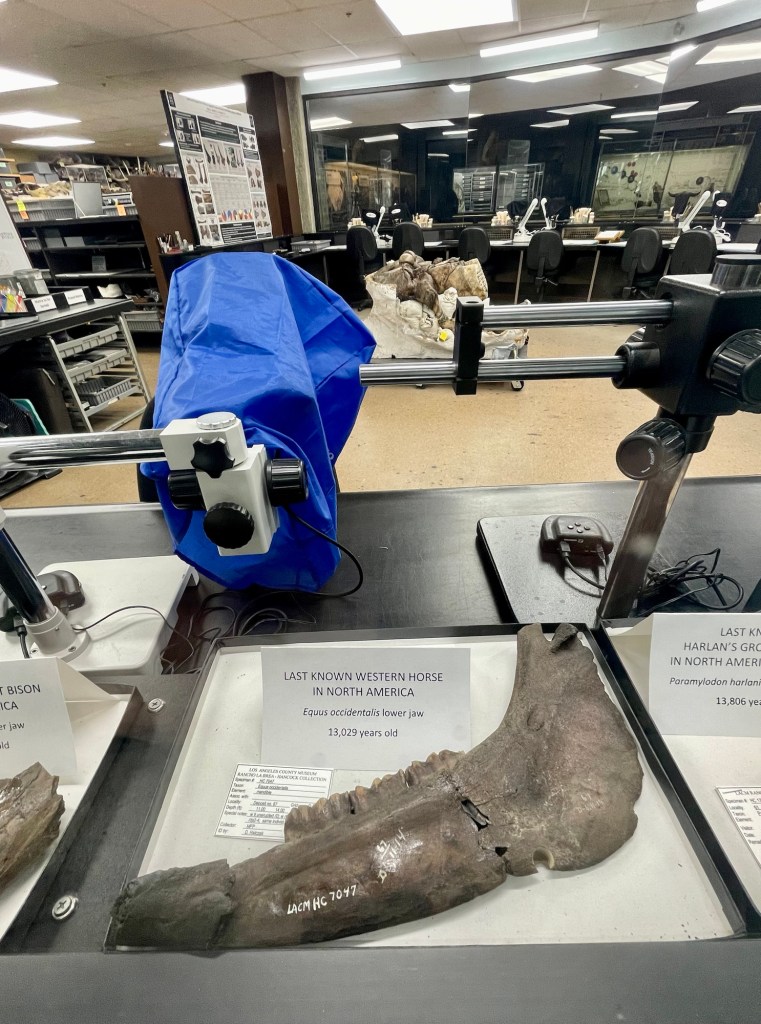
Excavation is still ongoing, and you can see paleontologists at work in the lab, along with a large chunk of fossil-filled asphalt.

There is plenty to see in the surrounding park, including several life size recreations and a Pleistocene Garden filled with plants whose fossil remains were found nearby.


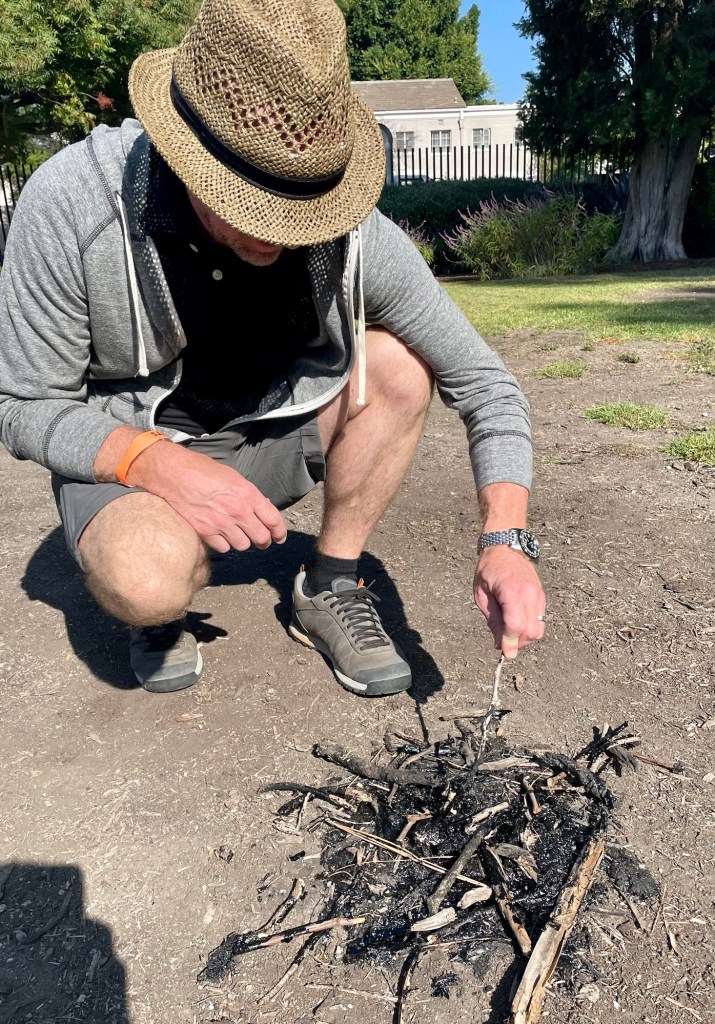
As you wander, keep your eyes open for small patches where the goo has recently seeped up. New areas are constantly appearing, and the basements of surrounding buildings have to be monitored. It’s irresistible to find a stick to poke in the squishy holes.
At the lake and large fenced off areas marking old dig sites, you can see methane bubbles breaking the surface of the water and asphalt. Excreted by bacteria feeding in the underground asphalt, the methane helps churn the fossils, resulting in the jumble of bones found during excavation.

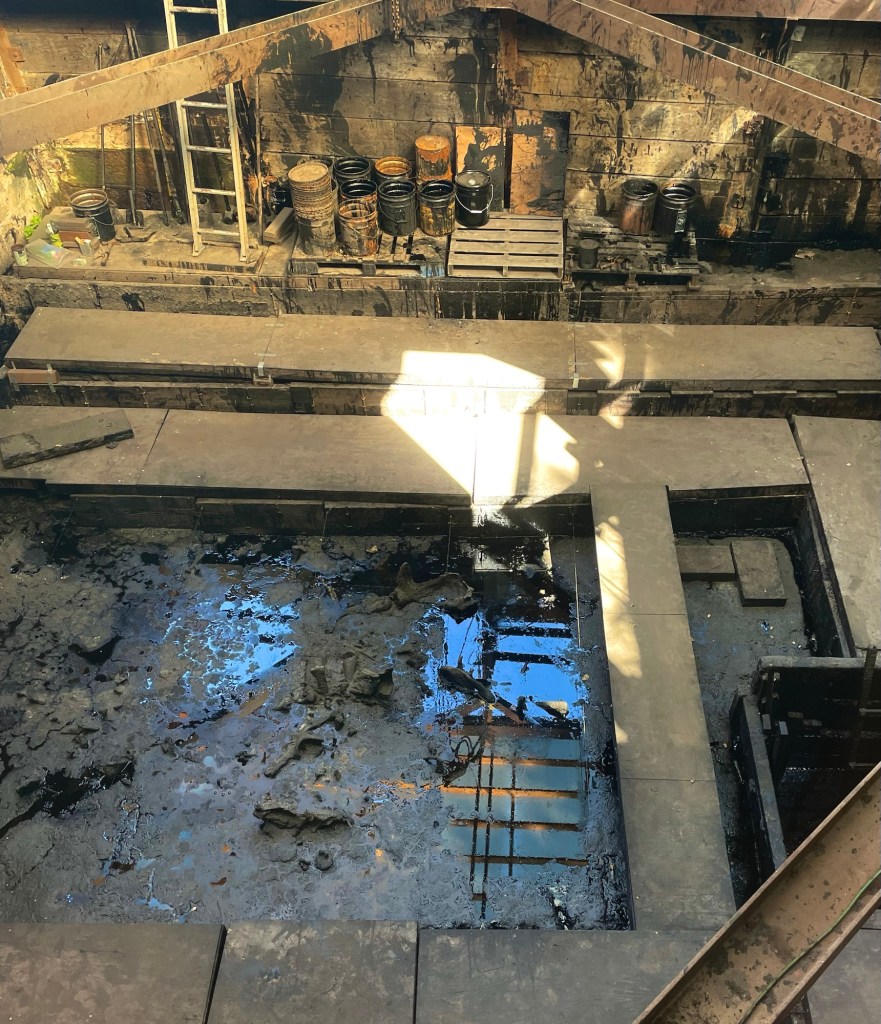
Although most of the previous dig sites are inactive and fenced off, there is still one active site with an observation area.
Once you finish up with the Ice Age, check out the other nearby museums (Los Angeles Museum of Art, Academy Museum of Motion Pictures, and Petersen Automotive Museum) as well as the culinary treats of Little Ethiopia.
 Secrets of Philadelphia