
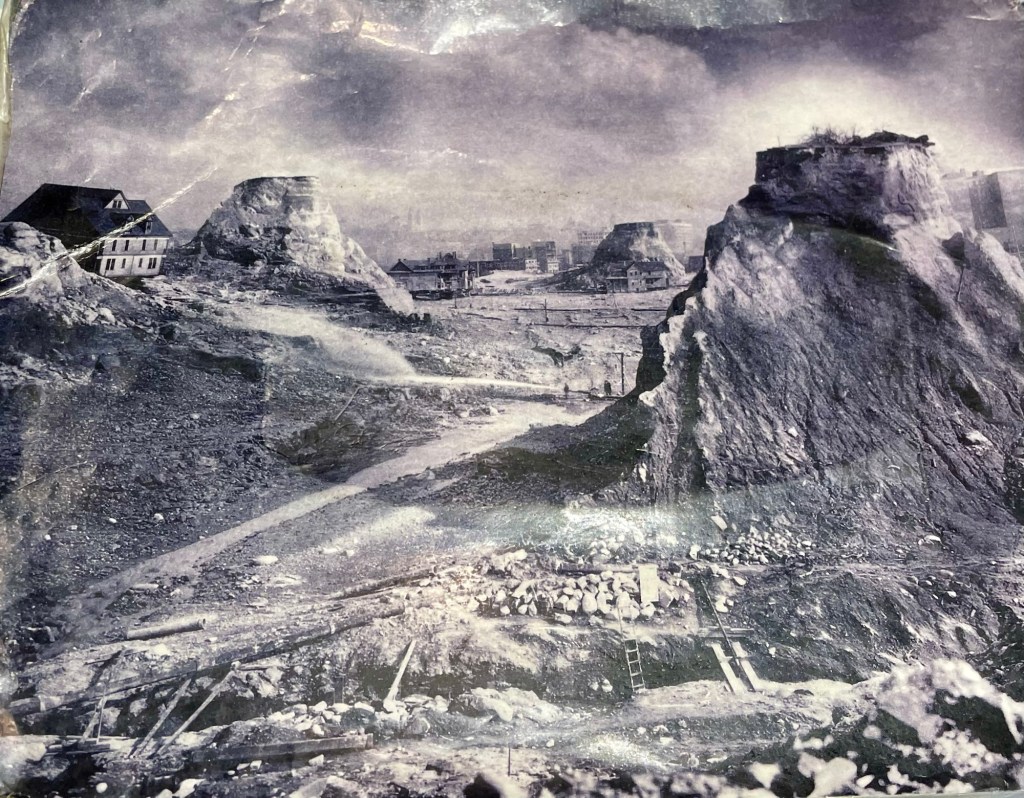
Underground Seattle is a bit of a misnomer. This area was once at street level, but in the aftermath of the great fire of 1889 streets were raised 12-30 feet to reducing flooding and allow for the installation of a sewer system. Nearby hills were leveled (although Seattle is still very hilly!) to provide fill to build up the roadways, so now what was once the ground floor has became a subterranean space.
Seattle before and after the fire:
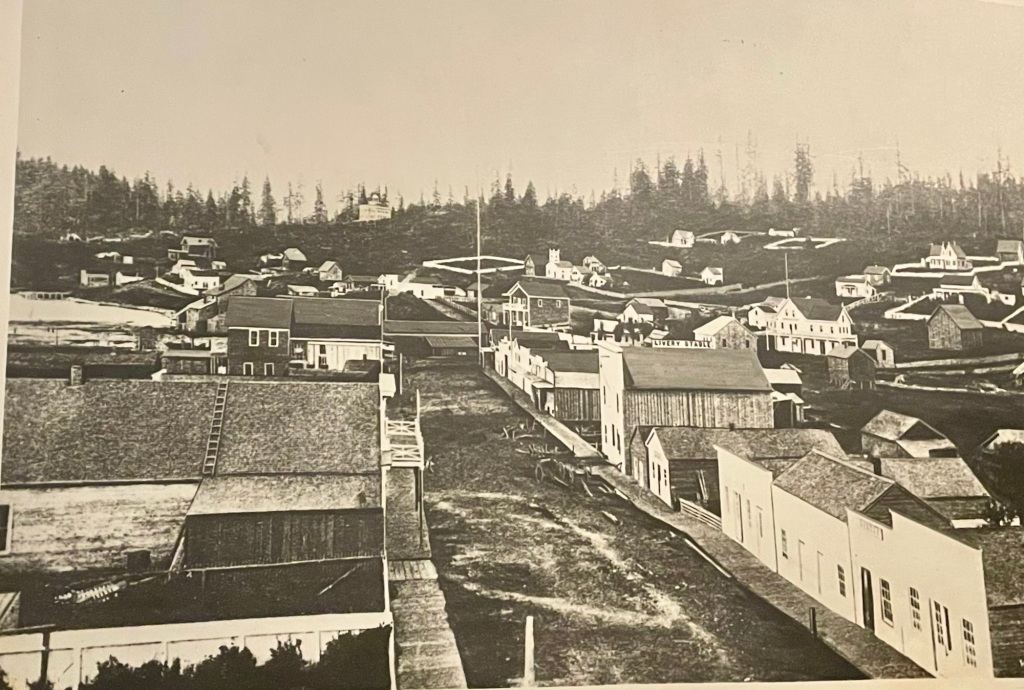

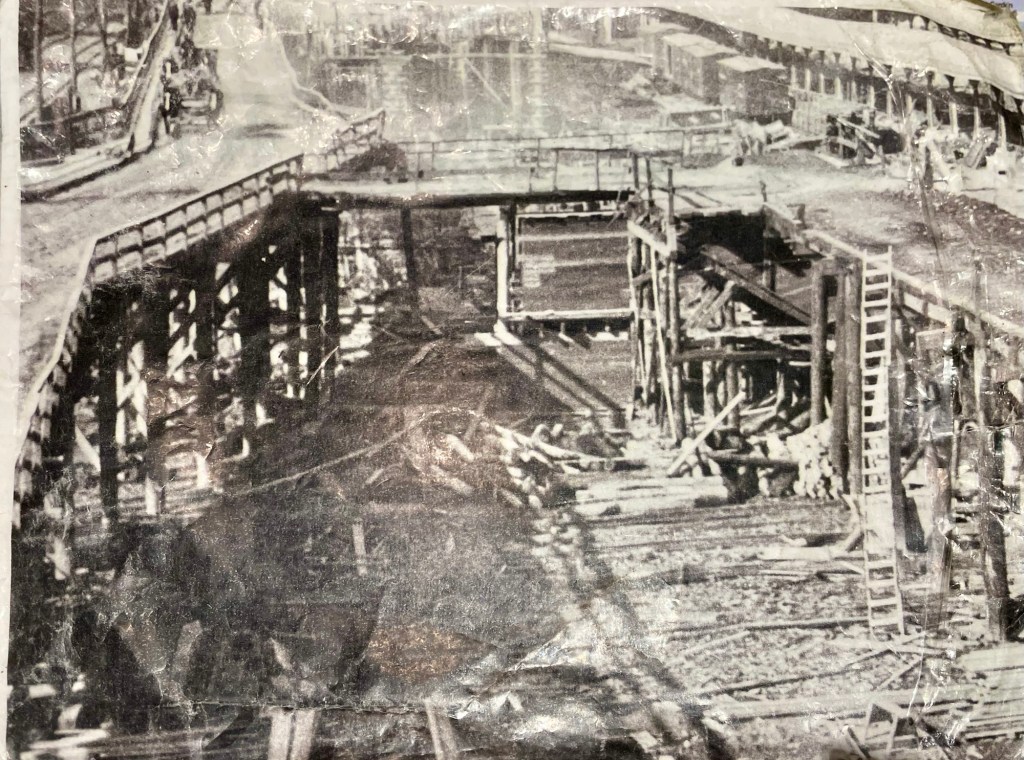
This diagram illustrates the situation in the city for four years following the fire. As they rebuilt in the aftermath of the fire, sidewalks and businesses were at ground level, while the roadway with new sewer pipes was a story above.

For four years the city and businesses argued over who would pay the cost for new sidewalks. Meanwhile, pedestrians had to ascend and descend via ladders that could reach up to 30 feet. Quite a challenge for women in dresses and corsets!
Fill from surrounding areas was blasted into the new road beds, leveling some of the surrounding hills:
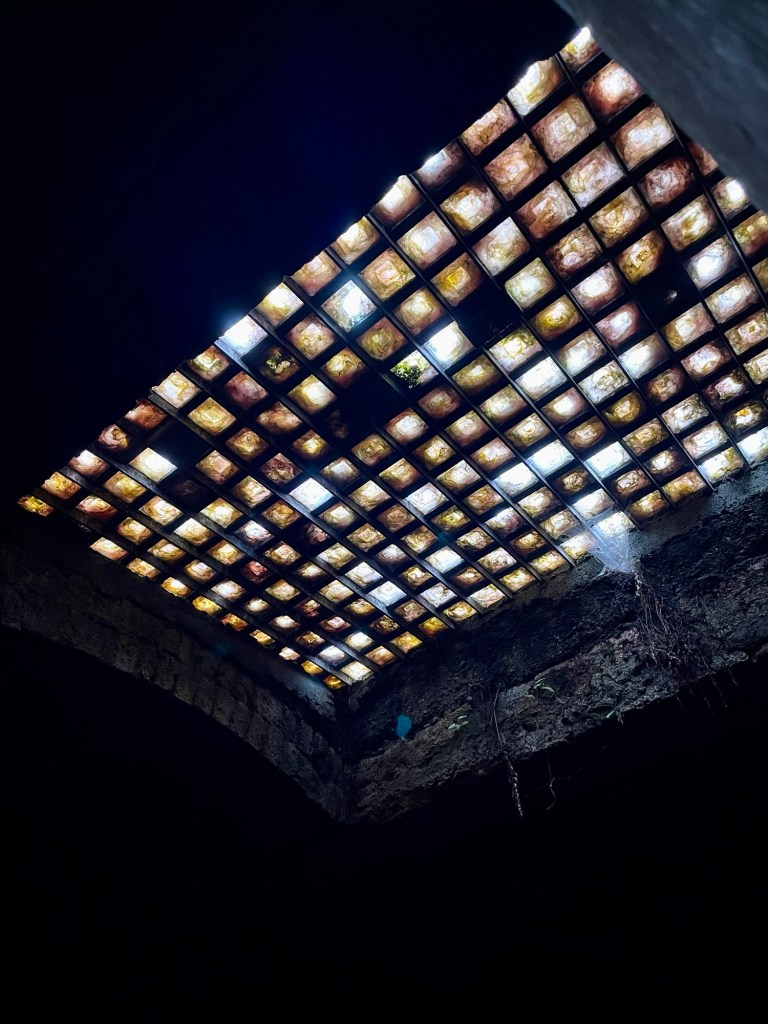
Once a deal was reached where businesses and the city would share sidewalk costs, brick archways were constructed between the road and buildings. Vault lights were added, and pedestrians could now walk on the upper sidewalk or lower sidewalk out of the weather. While strolling the sidewalks today, you can still see these lights. The original ones have turned purple with age.

The underground passages were closed in 1907, and afterwards became illegal flophouses and gambling dens. During prohibition, speakeasies opened in the underground. Entrances for moving bootlegged booze in and out of the subterranean spaces are still visible.

Today you enter through doors and grates like these in the late 19th century buildings surrounding Pioneer Square, and then descend a flight of stairs to the once ground level area.

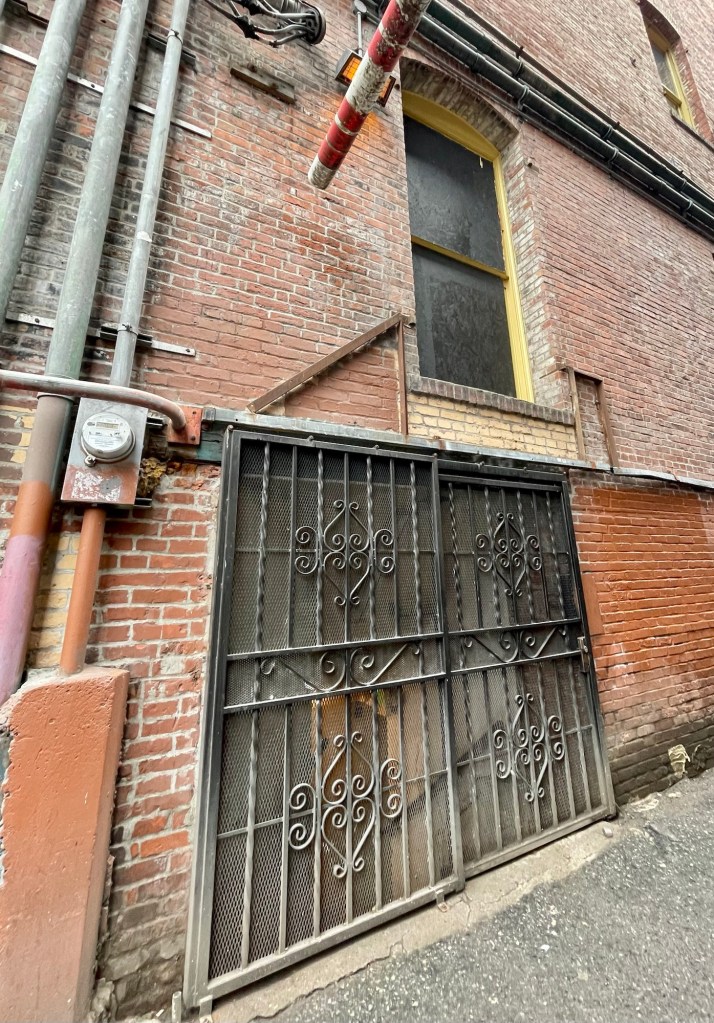
Our first stop took us down into an original ground floor room where you could see through the original street level windows before we exited out onto a now underground sidewalk. When these buildings were being reconstructed, merchants and landlords knew that the ground floor would eventually be underground and the next floor up would be the new ground floor, so there is very little decoration on the doors and windows of the original ground floor.
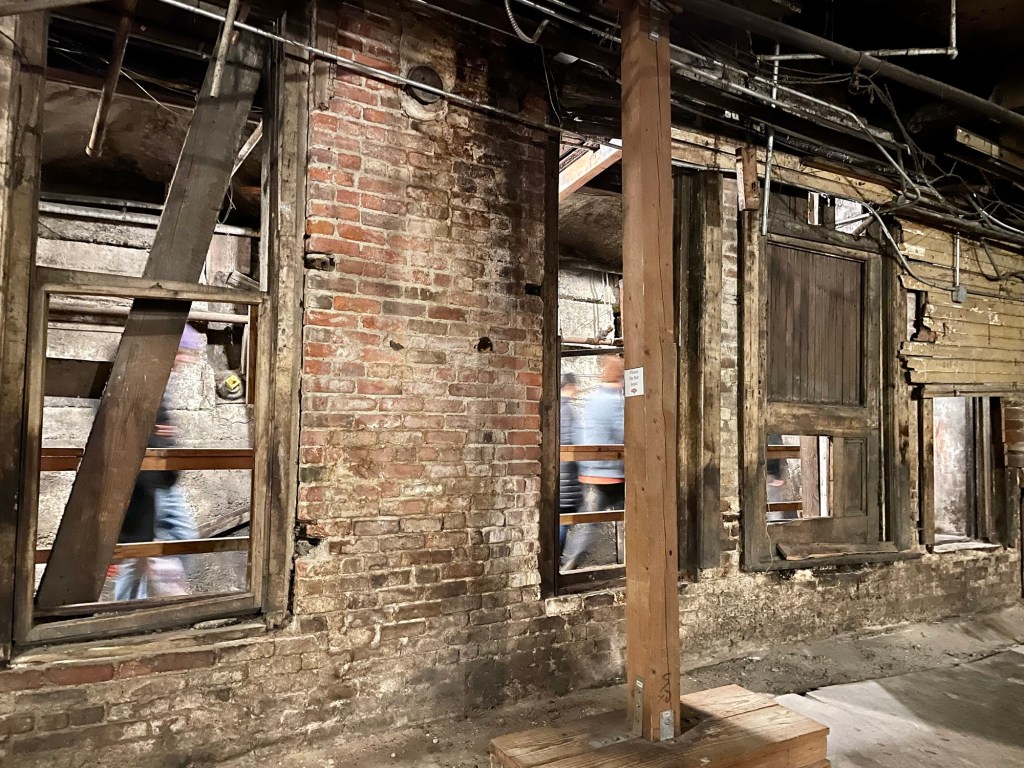
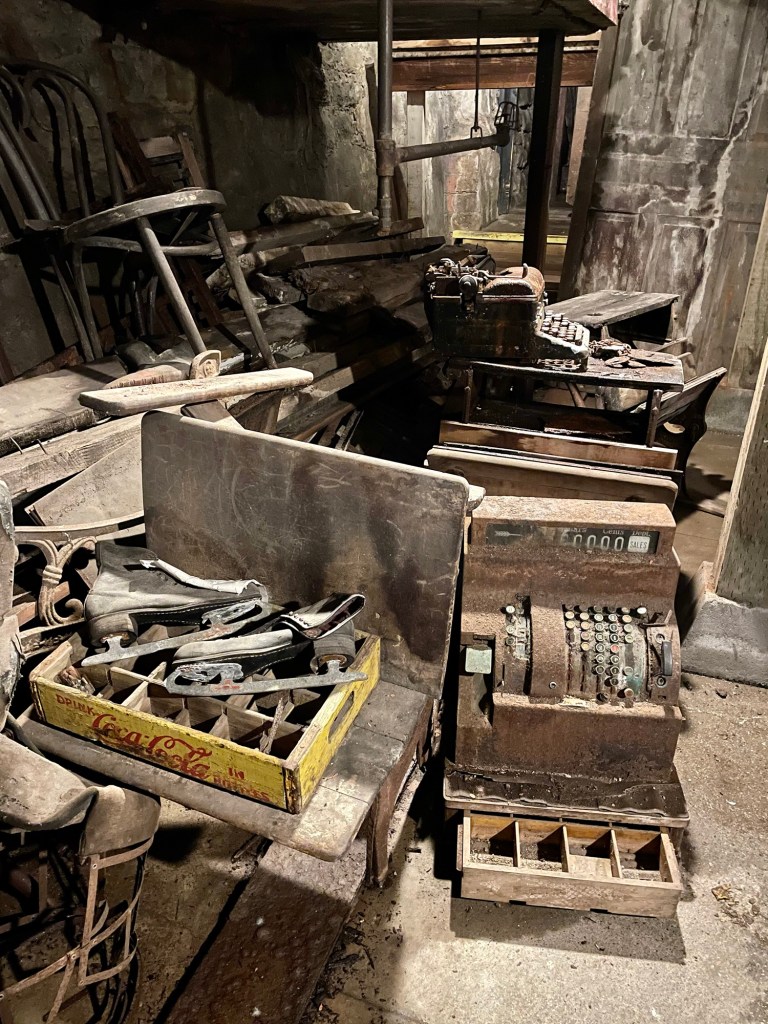
These now underground sidewalks are filled with debris and old artifacts:


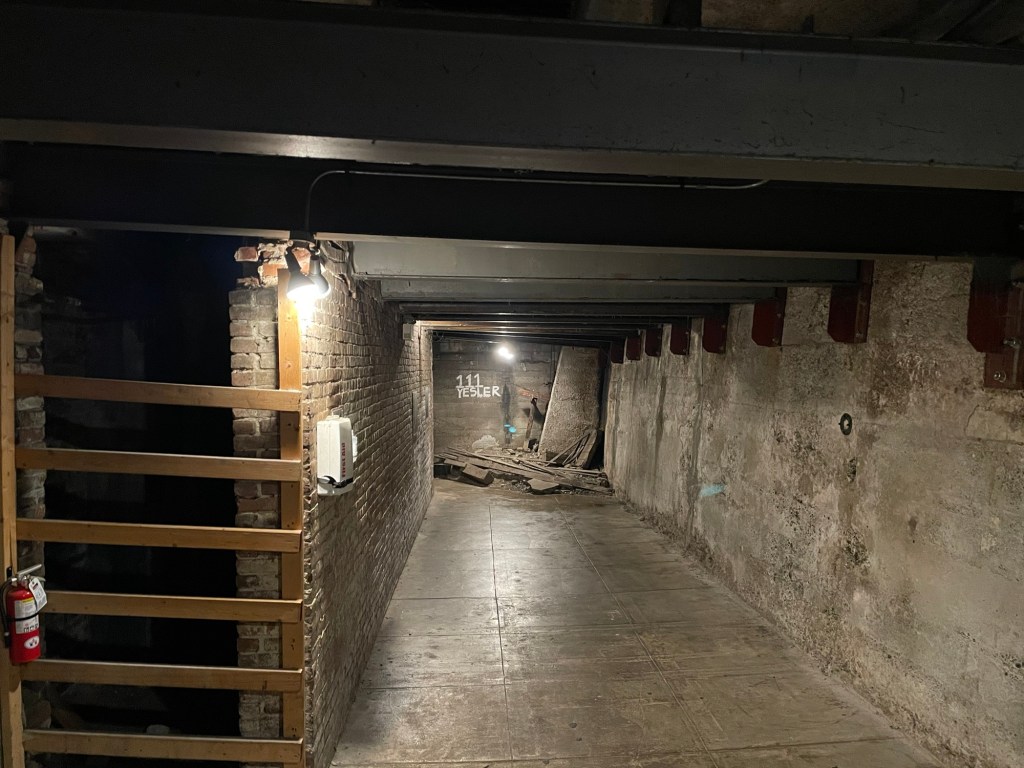
There is evidence of old business, like this bank vault and teller area:


There is even an example of an original wooden sewer pipe:

Several companies run underground tours, each leasing a different section from the city. We did Bill Speidel’s Original tour. Bill was a former newspaper reporter and preservationist who helped get the Pioneer Square area designated a historic district. He founded the underground tour in 1965 and was responsible for much of its current preservation.
In addition to exploring the underground spaces, the tour touches (in a very humorous way) on Seattle’s history and roll in the Alaskan gold rush. For more on Seattle’s history, especially relating to the gold rush, head down the block to Klondike National Park.
 Secrets of Philadelphia