
Born in West Chester, Horace Pippin showed his artistic skill early, winning his first set of crayons and a box of watercolors at age 10 in an art supply company’s advertising contest.
When America entered WWI, Pippin joined the renowned Harlem Hell-fighters, the first African American regiment to serve with the American Expeditionary Forces. Due to segregation in the US Army, the unit was transferred to the command of the French Army where their bravery and ferocity on the battlefield led them to become some of the first Americans awarded the French Croix de Guerre. After losing the use of his shoulder from a sniper bullet (an injury for which Pippin received a Purple Heart), he returned to the US where he taught himself to paint as a form of physical therapy and to help with his battle against depression. Many of his paintings dealt with his experiences of segregation and the difficulties he faced finding employment after returning from Europe.
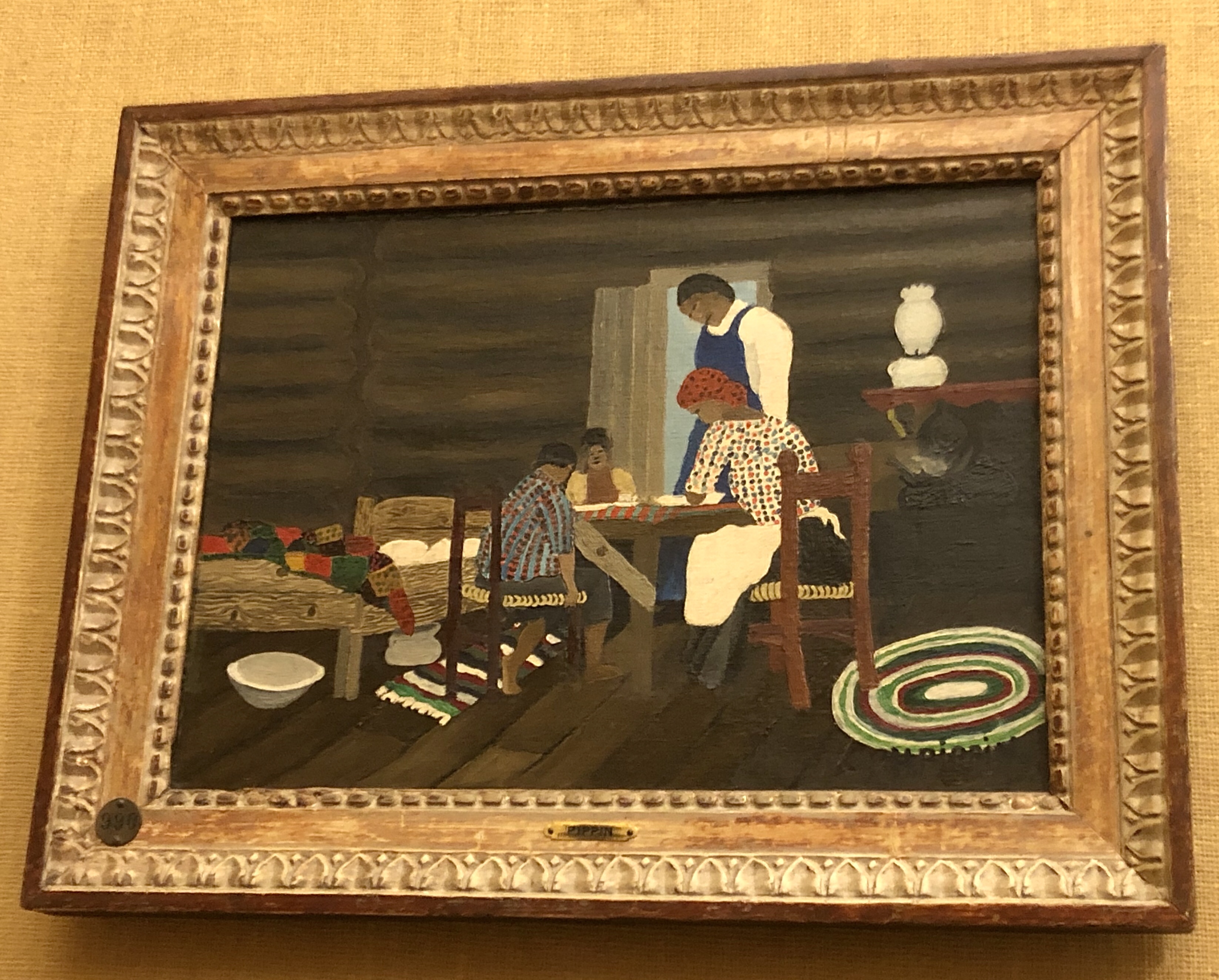
He returned to West Chester, and it was here that local artist NC Wyeth (Philly(area) Artist(s): The Wyeth Family) and another art critic saw his work and helped promote the self-taught artist to the modern art world. Albert Barnes (What’s So Special About The Barnes?) became a supporter, and Pippin took an art class at the Barnes Foundation. Today, the Barnes exhibits 3 of Pippin’s paintings:


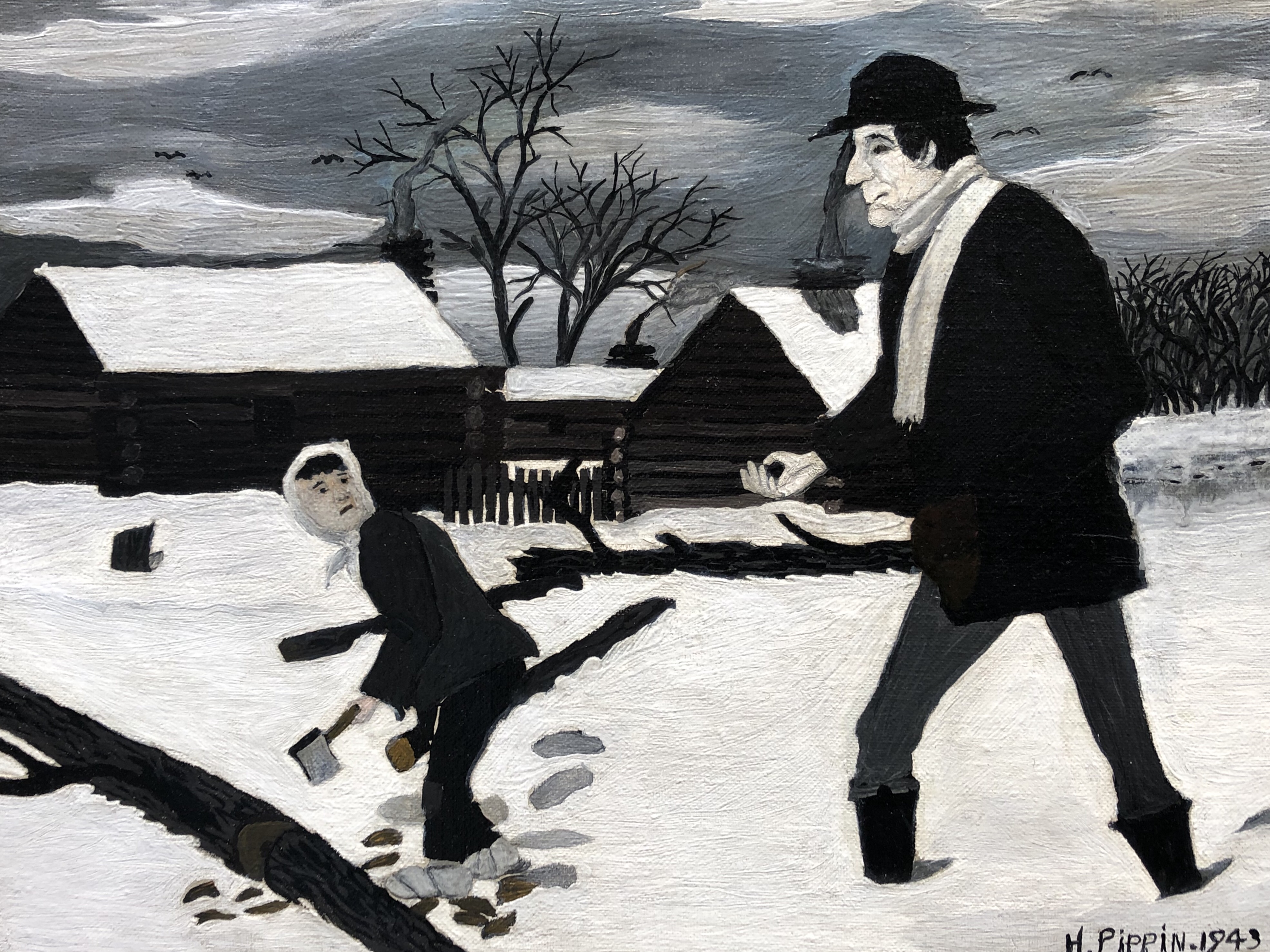
Other local places that exhibit Pippin’s works include the Pennsylvania Academy of Fine Arts, which houses Pippin’s famous “John Brown Going to His Hanging.” (Pennsylvania Academy of Fine Arts: American Art & Victorian Splendor):

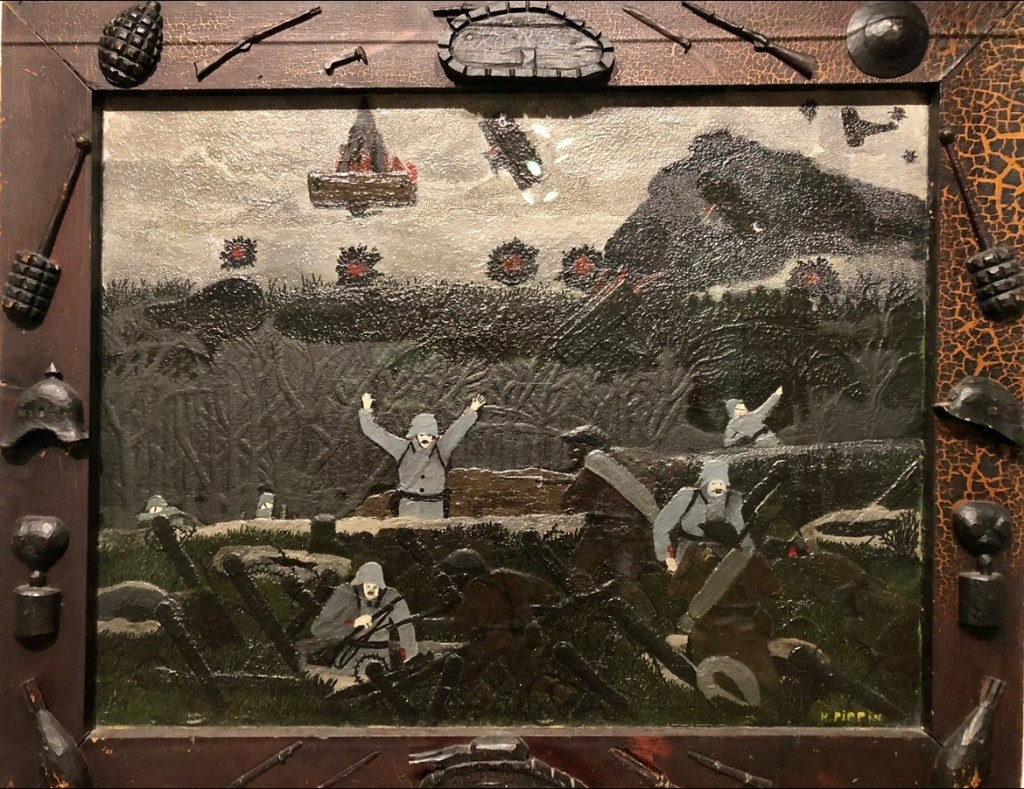
The collection at the Philadelphia Museum of Art includes “Mr. Prejudice,” one of Pippin’s most graphic depictions of his experience with war time segregation (lead photo) and “The Ending of the War, Starting Home,” on whose frame Pippin affixed carved tanks, guns, hand grenades and gas masks. Unfortunately, due to the size of the PMA’s collection Pippin’s works are not always on display:

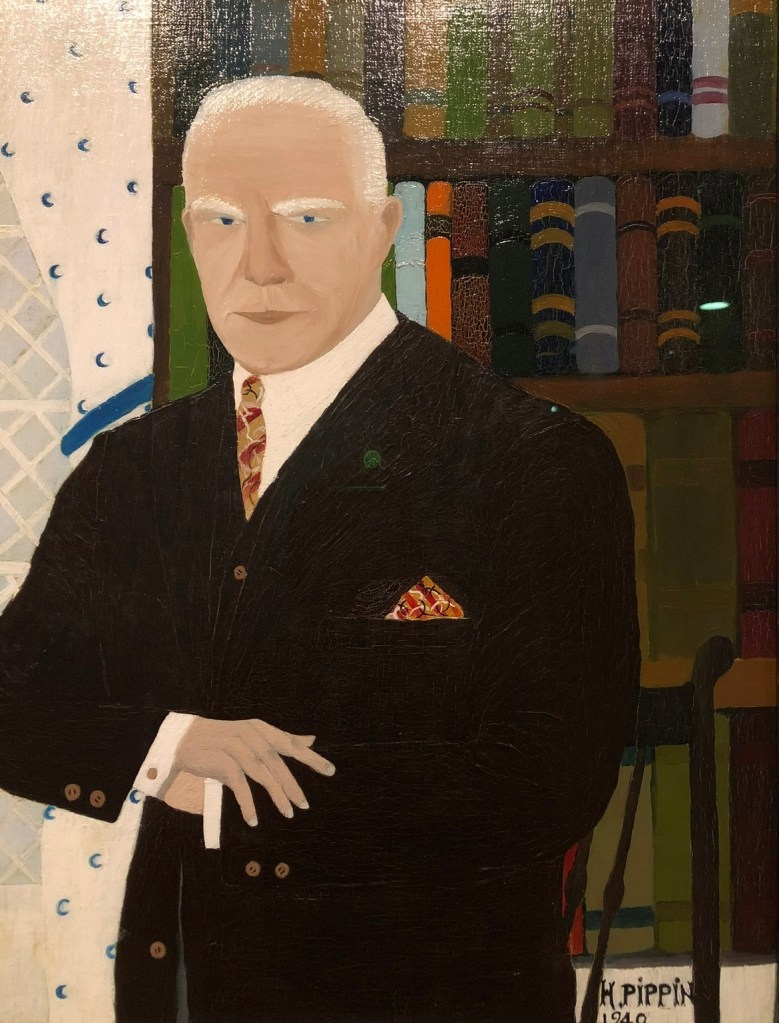
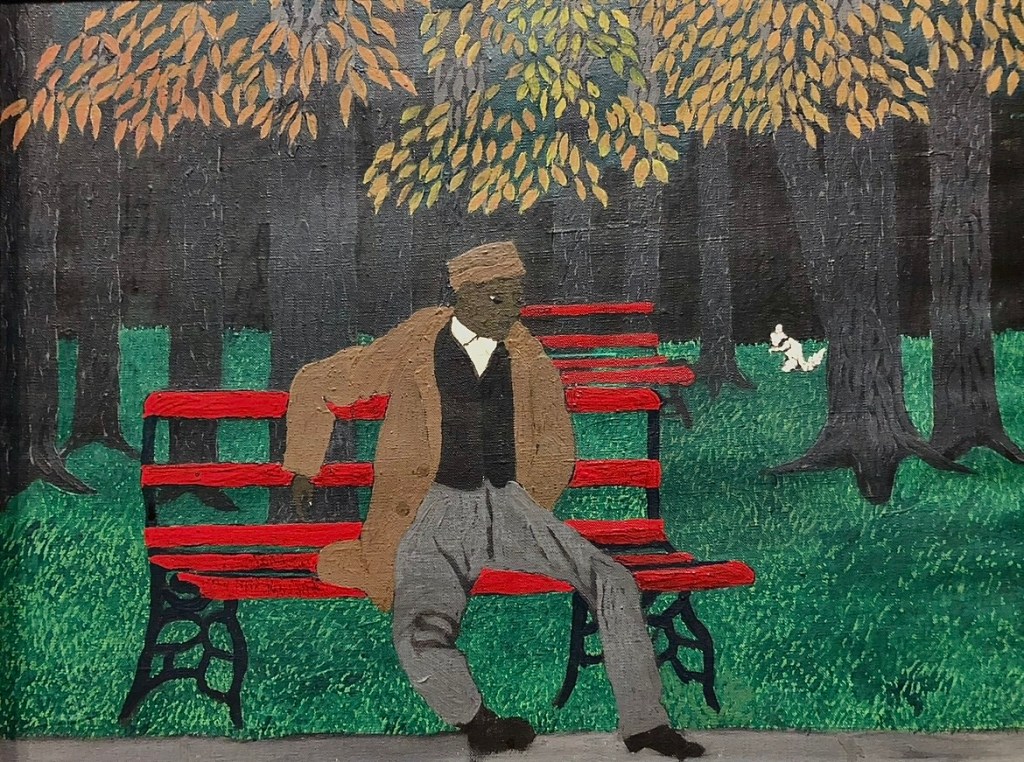
Even the New Jersey State Museum (Spotlight New Jersey: The State Museum) has a painting, illustrating the touch of red that shows up on many of Pippin’s works:

In addition to painting, Pippin developed an interest in wood-burning, which you can see on several of his works, including the Barnes Foundation’s “Supper Time (above).”
 Secrets of Philadelphia