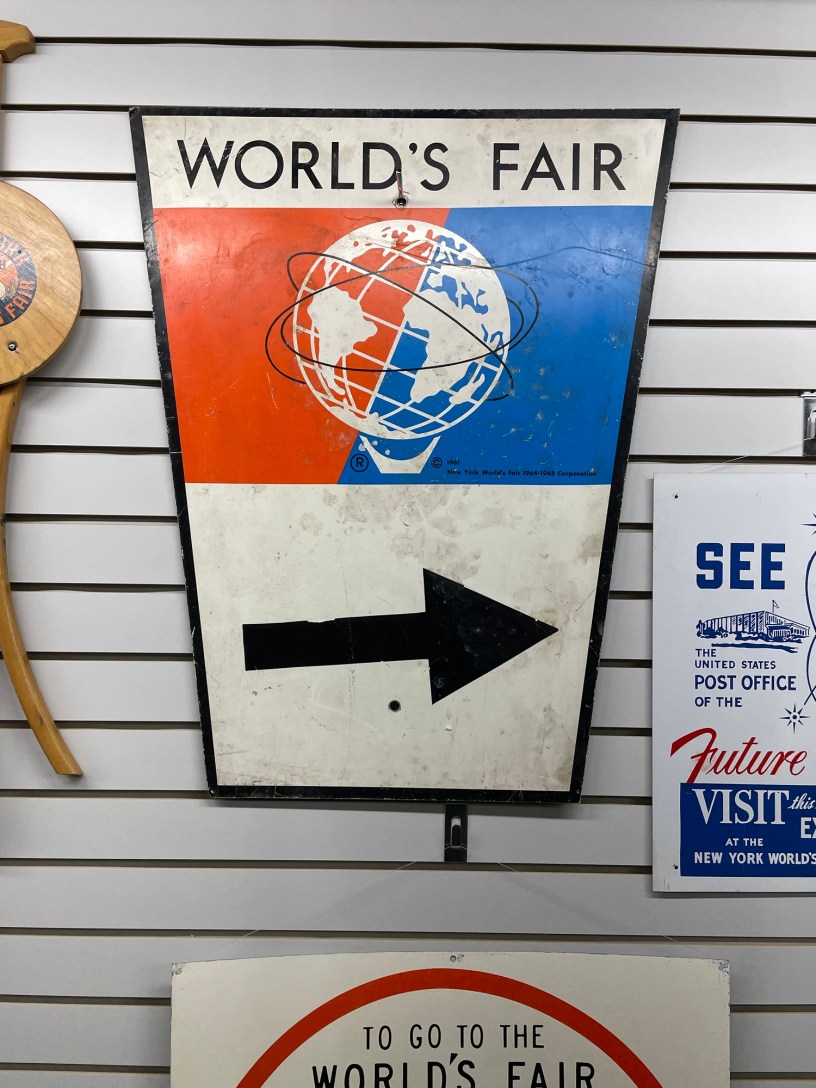
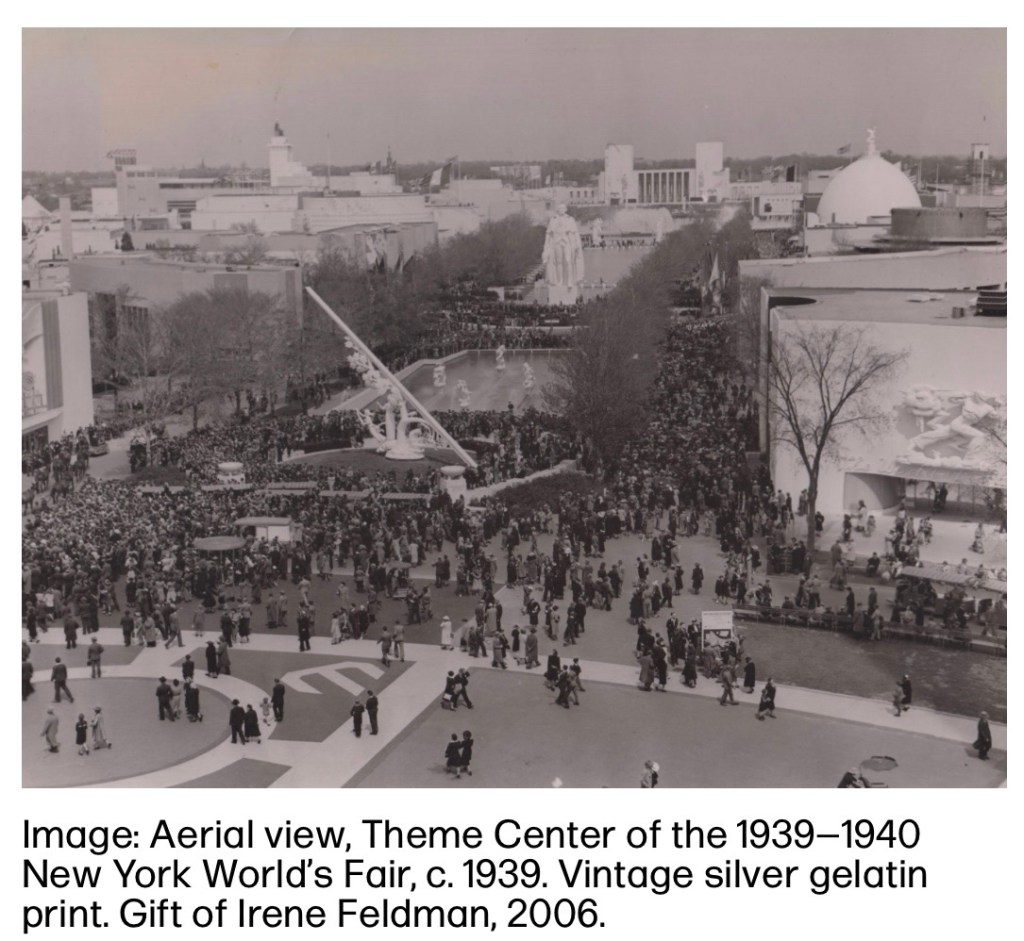
World’s Fairs proliferated in the 19th century as a way for counties to showcase their emerging technologies and promote their uniqueness to the world. Color television, touch screens, telephones and grapefruit were first debuted, and icons such as the Eiffel Tower and Space Needle remain. Queens, NY was host to two such fairs in 1939 and 1964.
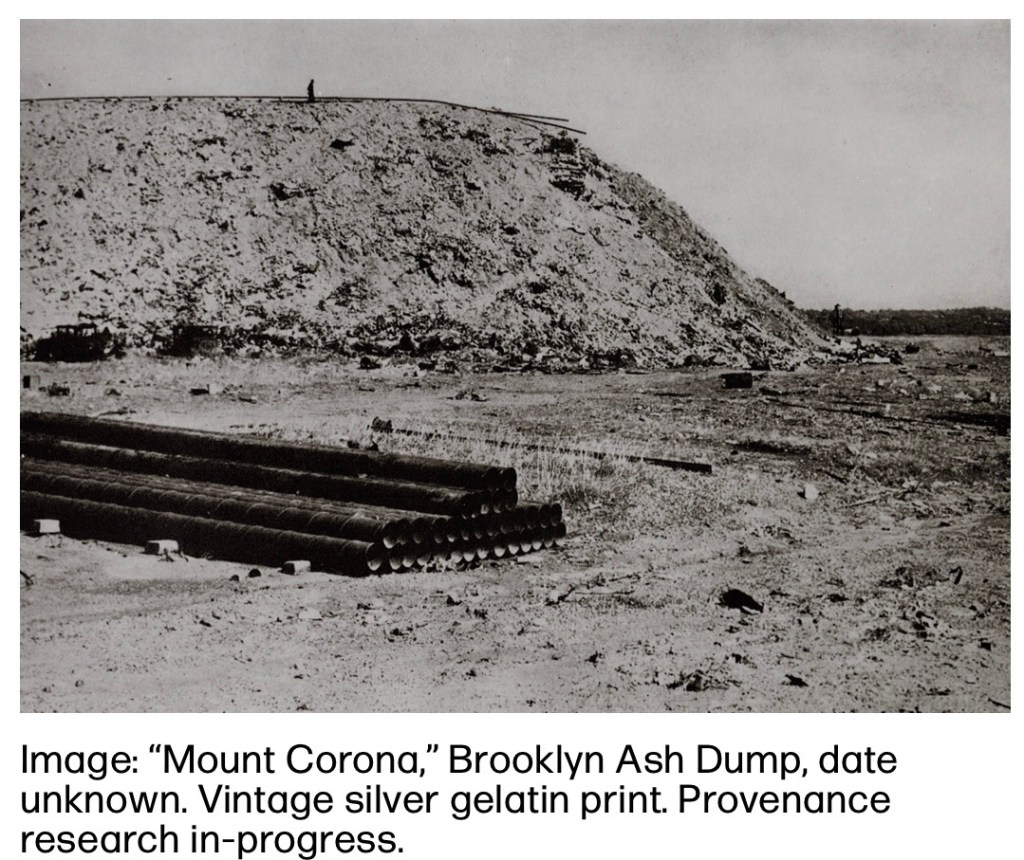
Today, the best place to catch a glimpse of this history is at the Queen’s Museum, built on the land that once contained the ash dumps described by F. Scott Fitzgerald in “The Great Gatsby.” The dumps were cleaned up to become the grounds for both NY World’s Fairs. Today, the museum is housed in the building that was 1939’s New York City Building, then housed the United Nations from 1946-50, and was revived again as the New York City Building for the 1964 fair. It opened as a museum in 1972. From the museum’s website:
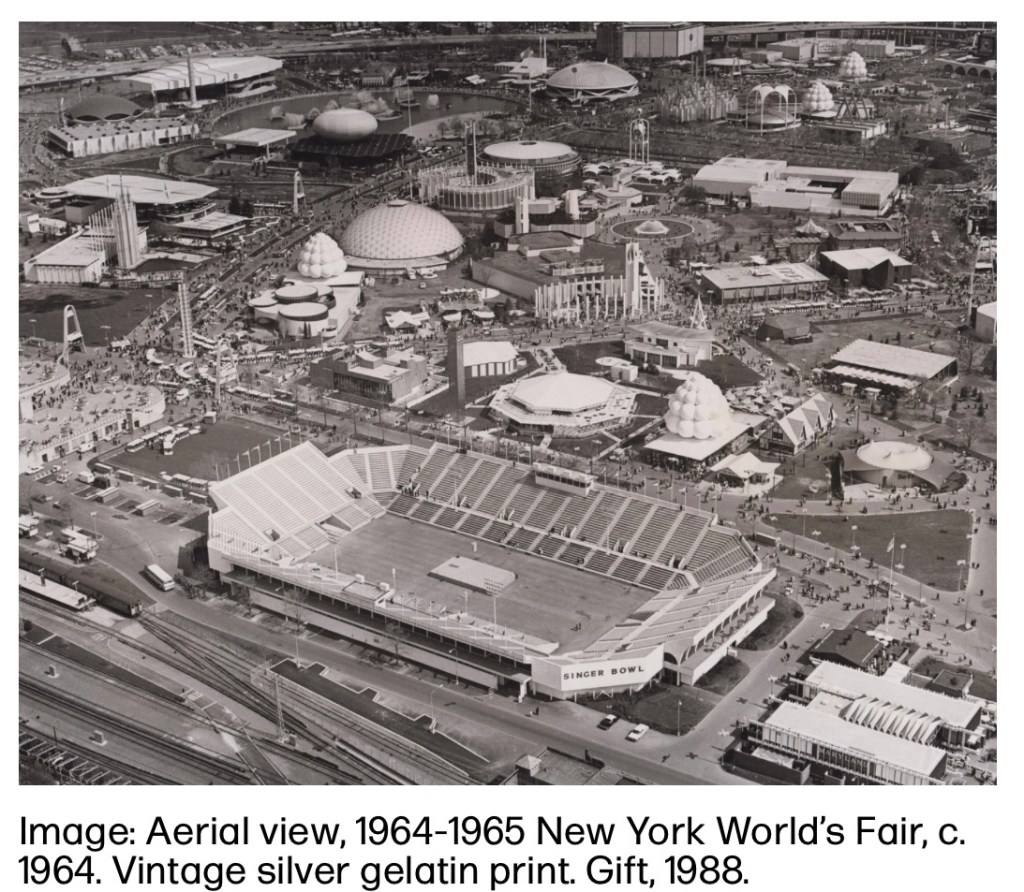
In addition to the rotating art displays and an amazing Tiffany exhibit, the museum devotes several areas to the World’s Fair. Start upstairs in a gallery filled with souvenirs, including irradiated dimes and the infamous Heinz pickle pin that got its wearer free pickles from the Heinz pavilion:
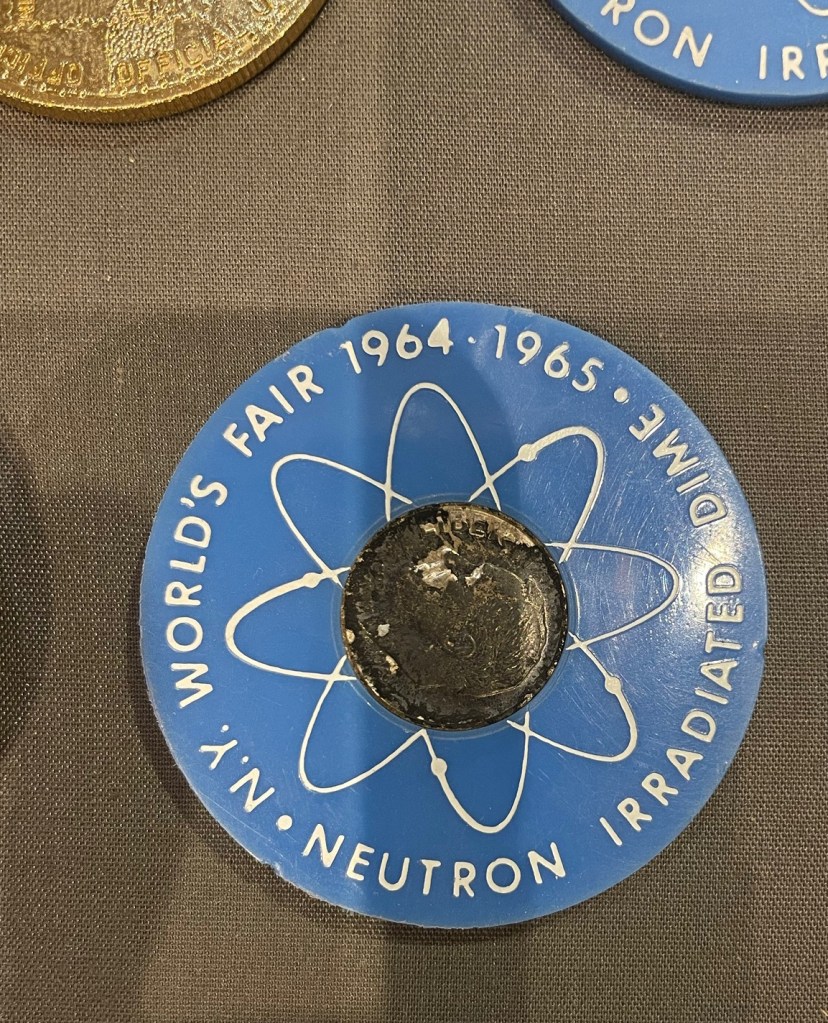
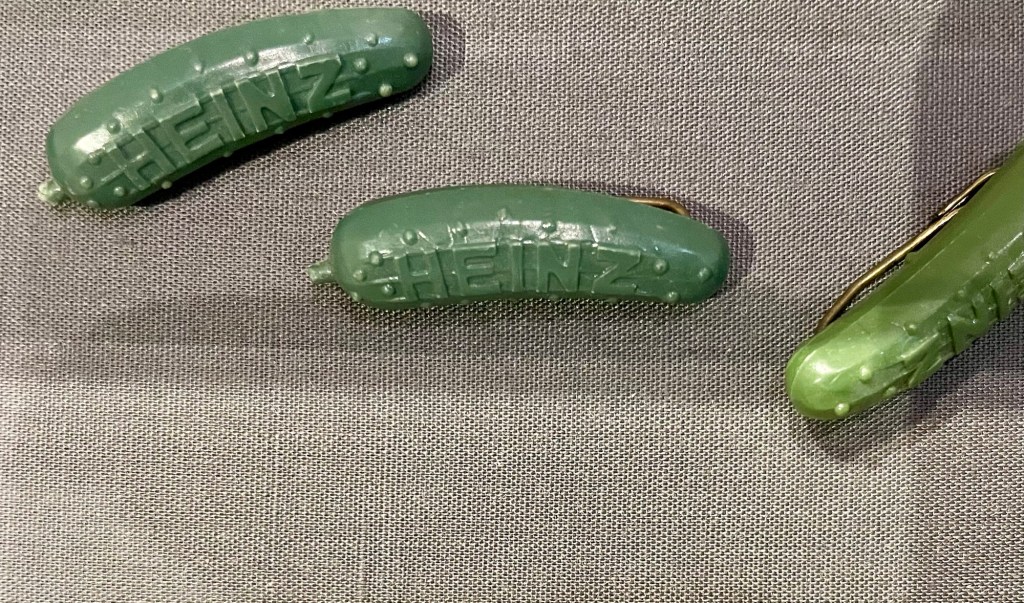
and a model of the 1964 fairgrounds:
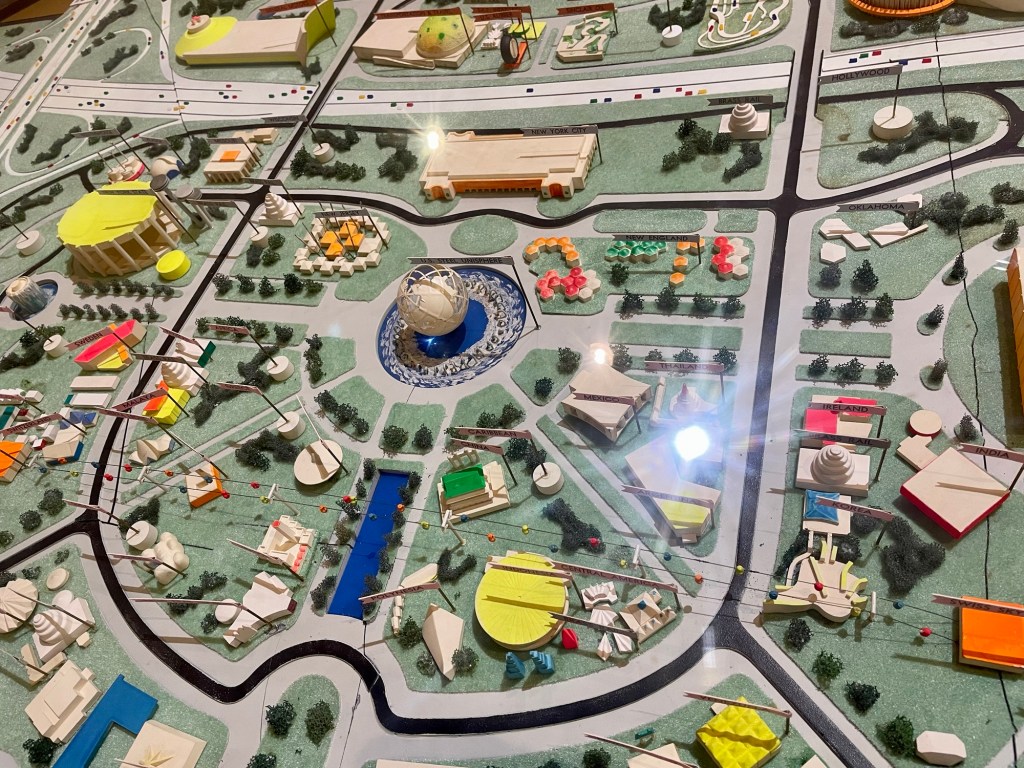
Downstairs is a large relief map showing the extent of New York City’s water supply system. Originally built for the 1939 fair, it was too large for the display space and never exhibited. After decades in storage it was rediscovered in 2005, restored, and put on display in 2008:
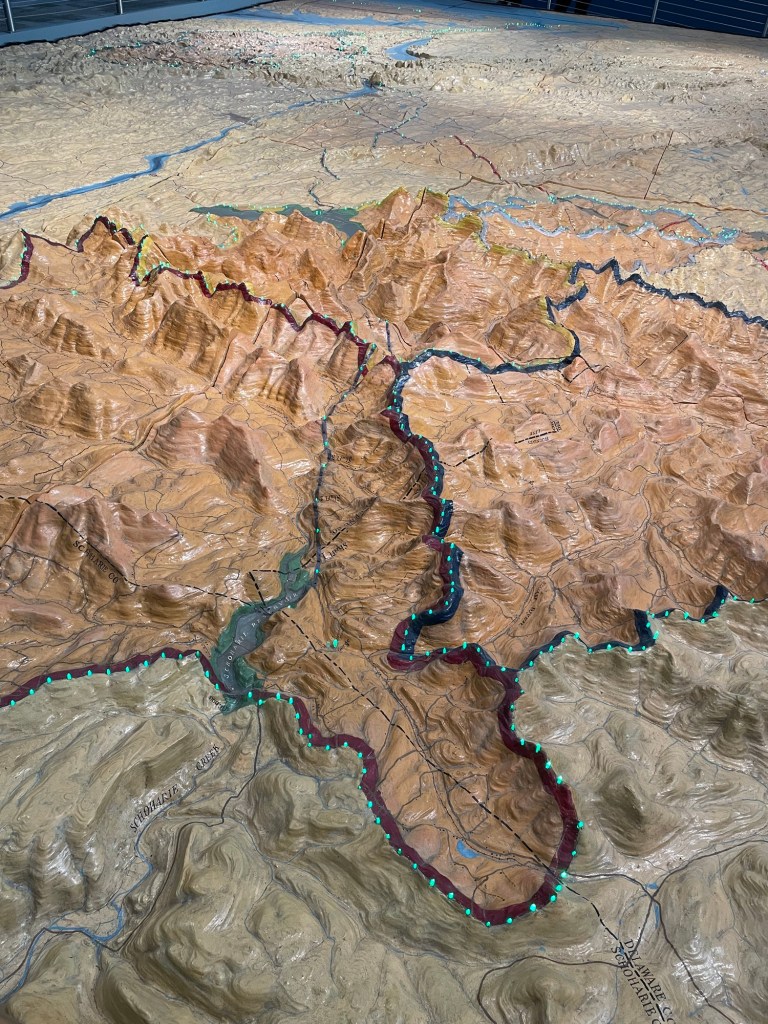

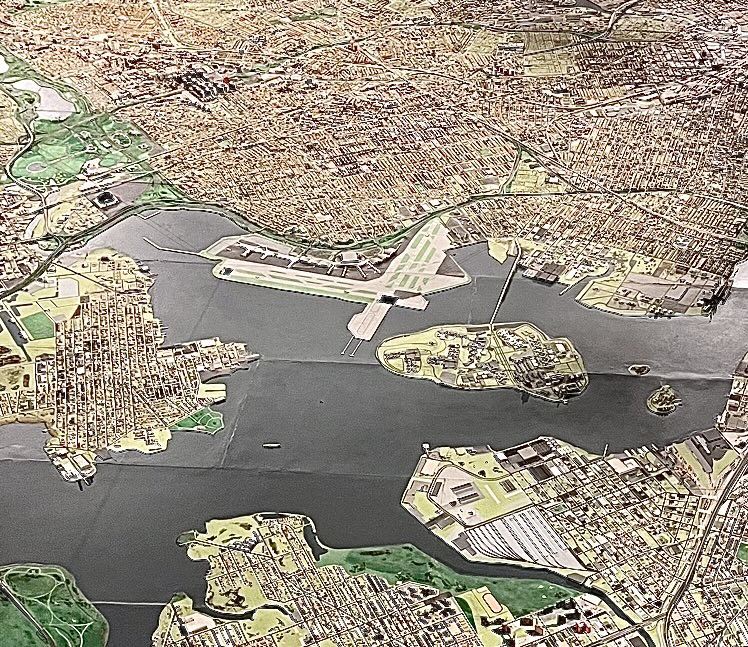
The highlight of the museum’s World’s Fair collection is the Panorama of the City of New York. Built for the 1964 fair on a scale of 1:1,200, it details each of the city’s five boroughs and at the time was the world’s largest scale model. Fair visitors could view the map from behind a second floor window or take a “helicopter“ ride around the perimeter. Alas, the helicopter is long gone, but viewing areas are now available on both the ground and second story level. In 1992, the original builders updated the panaroma with over 60,000 changes.
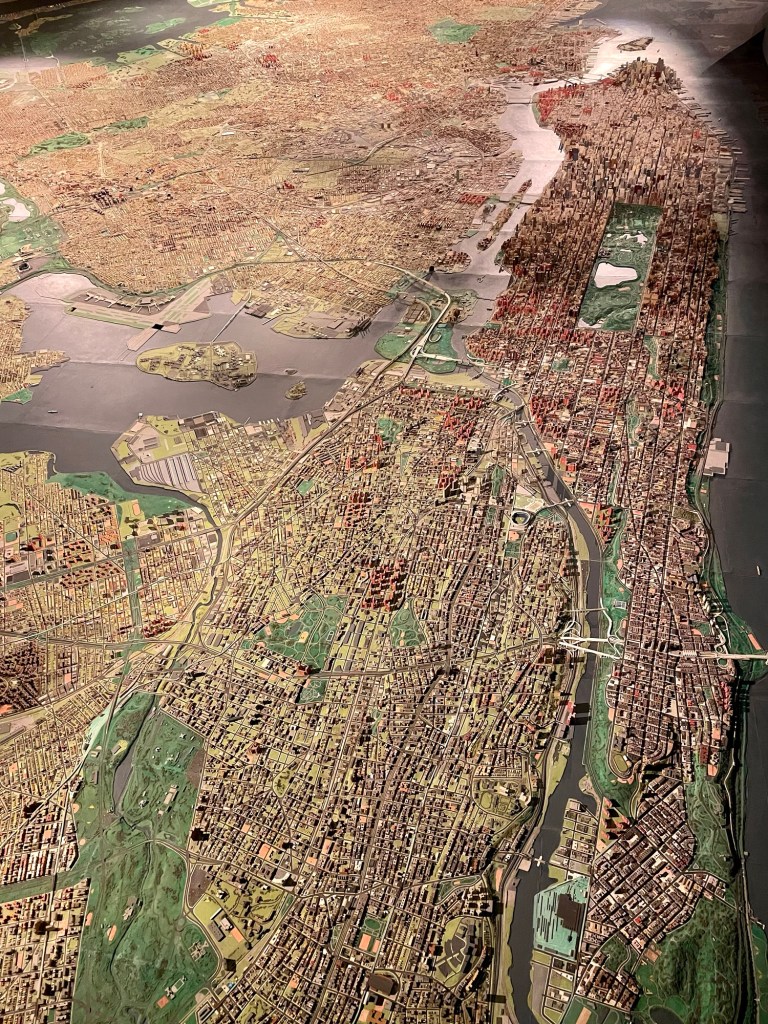
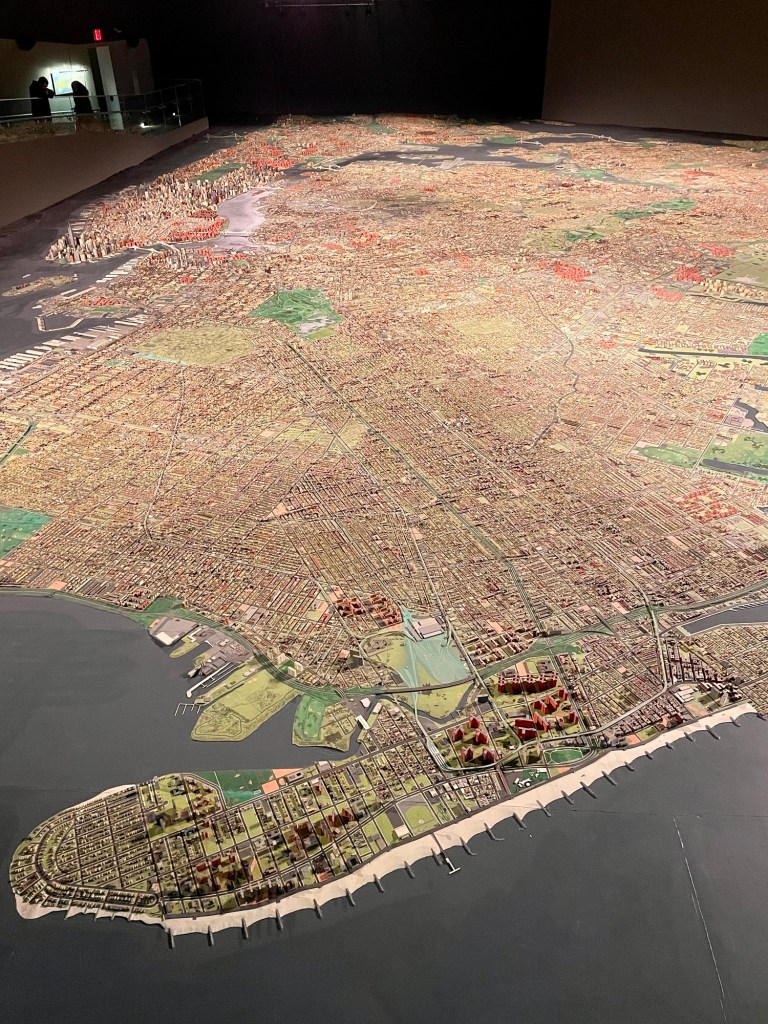
The best part? Watching the planes continuously take off and land at LaGuardia Airport.
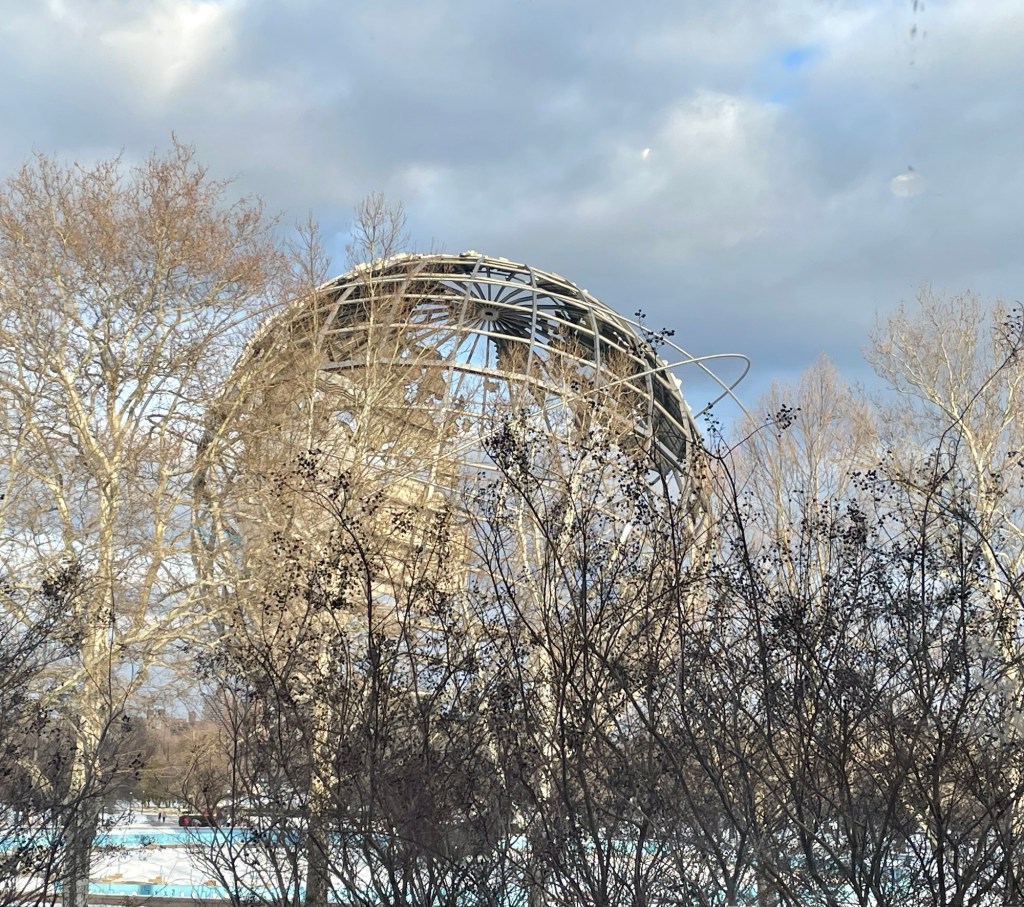
From the upstairs windows, you can look out at the Unisphere. Built for the 1964 fair to represent the fair’s theme of “Peace Through Understanding,” it also celebrated the beginning of the space age.
Other mementoes of the fair can be found around the city.
1939: Events surrounding World War II had an impact on the World’s Fair of 1939. Just behind the museum is a plaque honoring the two police officers killed while trying to diffuse a time bomb left at the British Pavilion. In Central Park you can visit the replica King Jagiello memorial which was displayed in the Polish Pavilion. The original, formerly located in Warsaw, was melted down for bullets by the Germans when they occupied Poland.
1964: Remains of the NY State Pavilion and observation towers are still standing, and located just a few minutes walk from the museum. There is an ongoing effort to try to preserve this evocative sight. Nearby is a memorial marking the site of the Vatican Pavilion, where Michaelangelo’s Pieta was displayed. You can also visit the site of the 2 time-capsules installed by Westinghouse to mark both fairs. The corrosion resistant capsules are buried 50’ underground and contain everyday items such as a Beatles album, Life Magazine, and Camel cigarettes. There are instructions that they shouldn’t be opened until 6939, 5,000 years after burial. The marina built for the fair is also still in use.
Although no longer in the city, “It’s a Small World,” might be the most well-known of the 1964 fair’s attractions. Built by Walt Disney in support of the United Nations Children’s Fund, it was a huge hit and was relocated to Disneyland after the fair closed.
 Secrets of Philadelphia