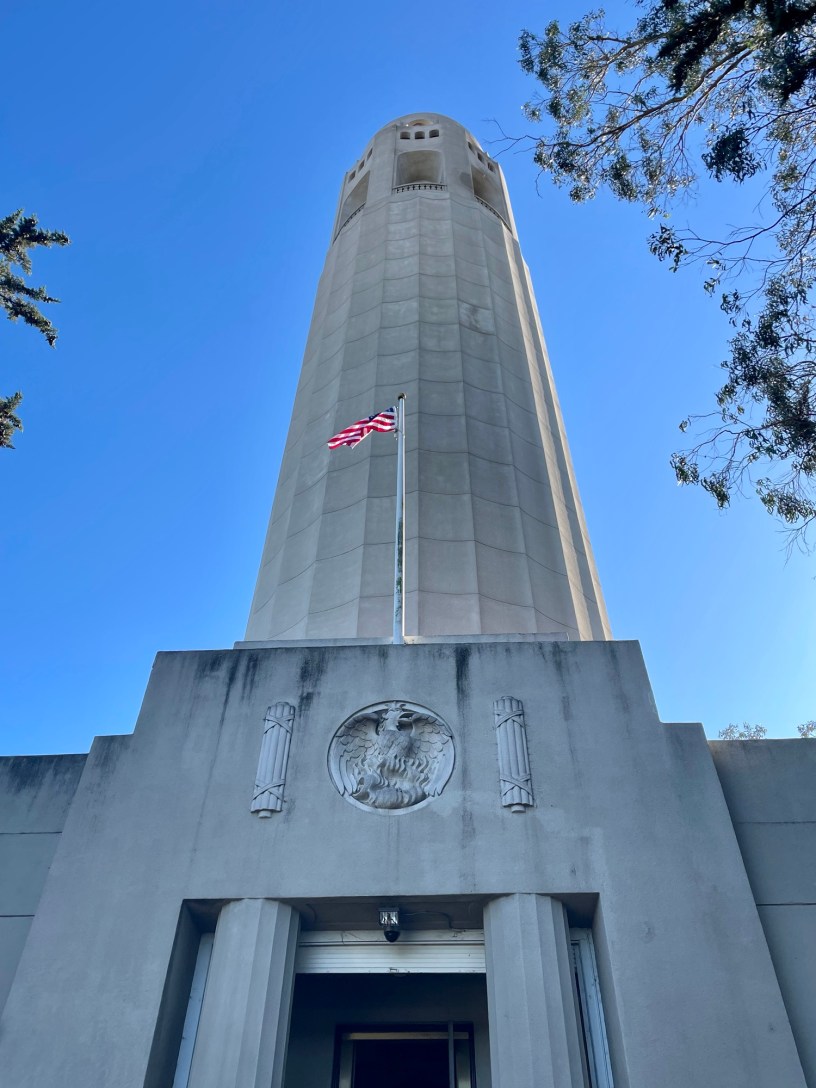
Coit Tower is home to the inaugural project of Roosevelt’s depression-era federal employment program for artists, and is one of the largest concentrations of WPA murals in the country – with 27 murals created by 26 different artists. Most are traditional frescos although one on the second floor is egg tempura and four in elevator lobby are oil on canvas.


It’s hard not to be dazzled as you step into the building and are immersed in the scenes of 1930’s California life surrounding you.
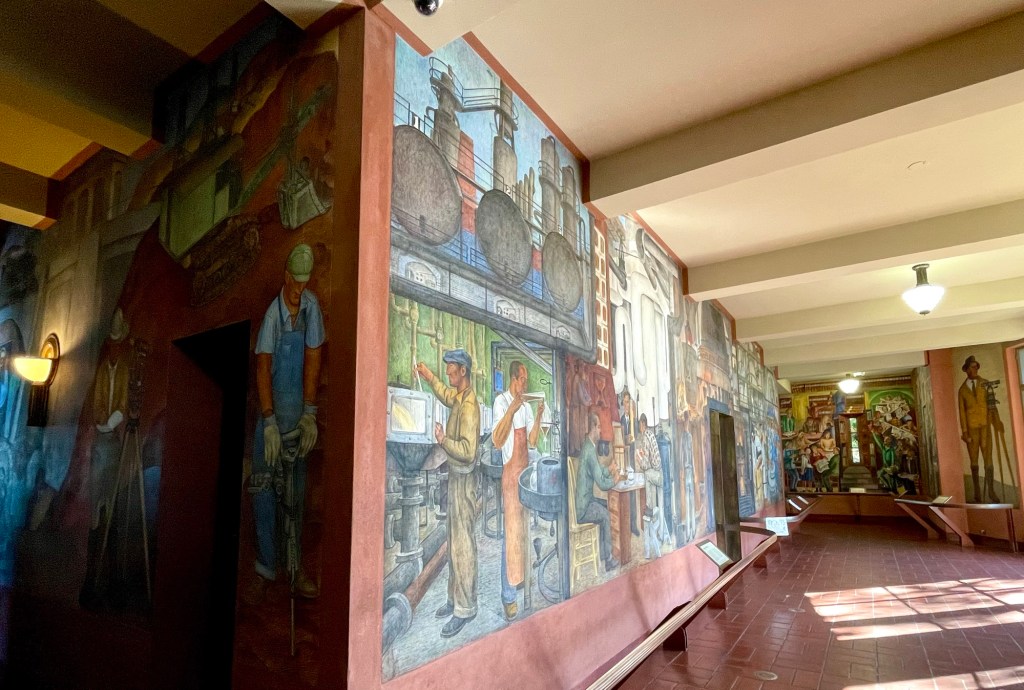
The artists incorporated the tower’s architecture into the murals:

and even utilized the staircase to the second floor to show the steepness of downtown’s hills:
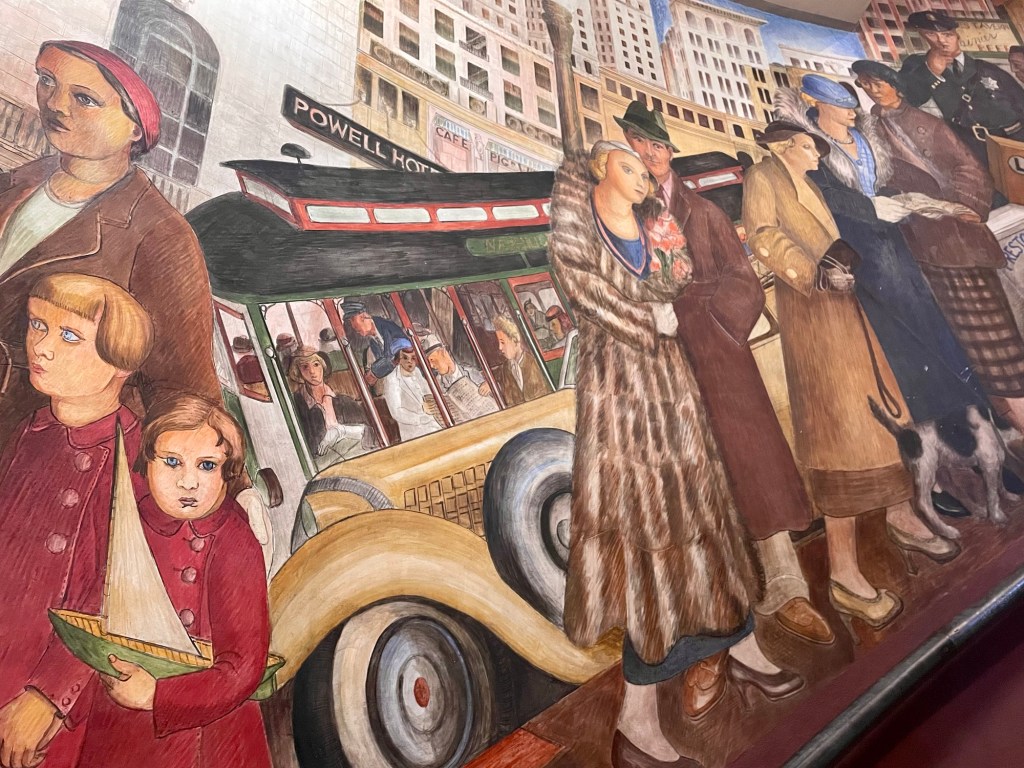
As fun as they seem at first glance, the project was not without controversy. Fear of socialism and communism was sweeping the country, with San Francisco in the midst of a union strike at the port that threatened to cripple the city. To channel the public’s anger towards the strikers and away from the employers, the mainstream press began publishing anti-communist articles designed to scare the public, and this carried over to the murals being painted in the tower.
After protests, counter protests, doctored newspaper photographs, a three month closure, and removal of several communist symbols, the tower and its murals finally opened to the public in the fall of 1934.

Although the hammer and sickle are gone, the artists’ sympathies with socialism and the plight of the depression-era workers remain. Check out the books in the library by Marx, Gorky and Hegel, the far-left newspapers, and headlines such as “Local Artists Protest Destruction of Rivera’s Fresco” (Rivera’s NY mural was destroyed shortly after creation because it contained an image of Lenin).

Look for this unflattering image of a wealthy family and their pooch “sightseeing” at a homeless encampment.

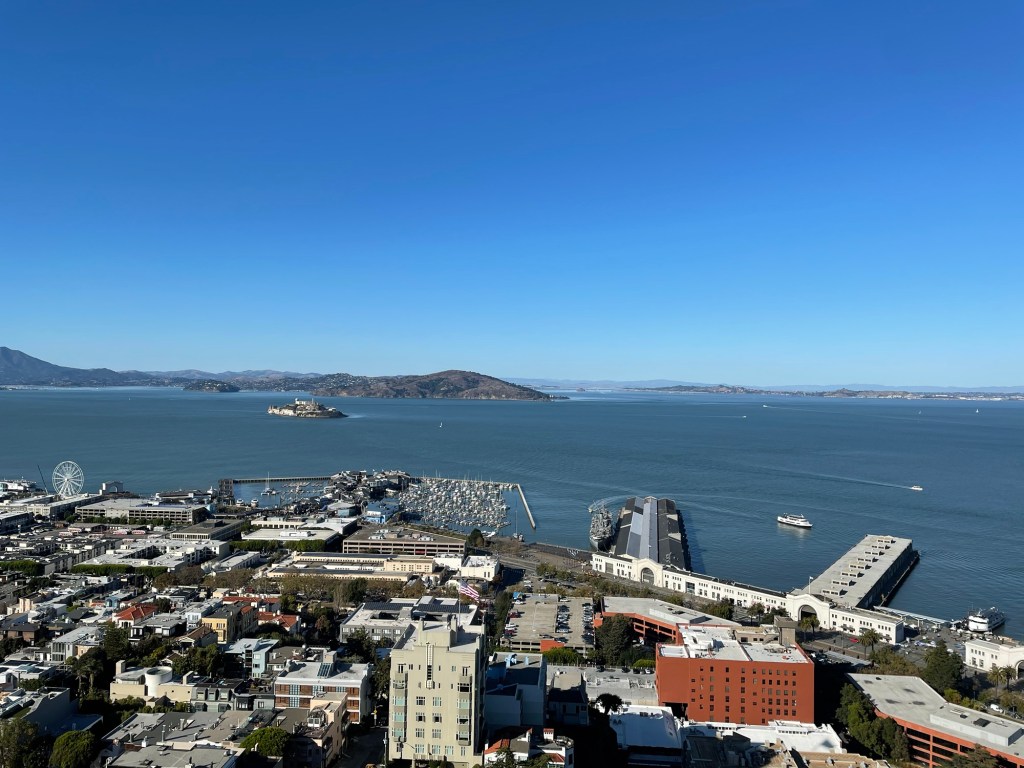
The bulk of the murals are on the first floor and are free to view. The murals in the spiral stairway and second floor can only be seen on tours – unless you get “lucky” and the elevator isn’t running so you have to climb the steps for the view (fee for the view level). What a view it is:

The art deco tower itself was built in 1932/33 using money left by a local socialite to “be expended in an appropriate manner for the purpose of adding to the beauty of the city which I have always loved.”
Heading back down to the waterfront? Take the stairs down to pass the amazing art deco Malloch Building at 1360 Montgomery Street.

 Secrets of Philadelphia