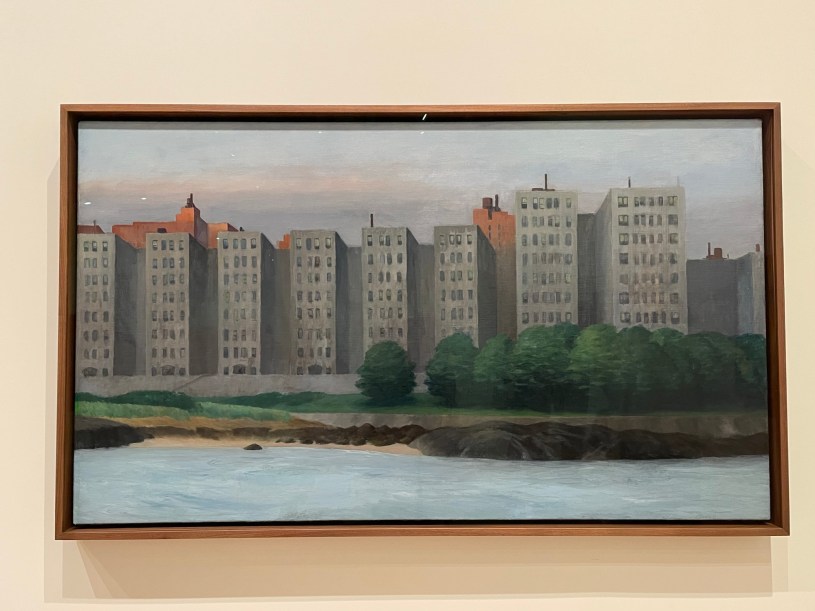
While other painters of his generation were focusing on New York City’s energy and modernity, Edward Hopper’s city is calm – its modernity hinted at only through a sense of isolation and loneliness.

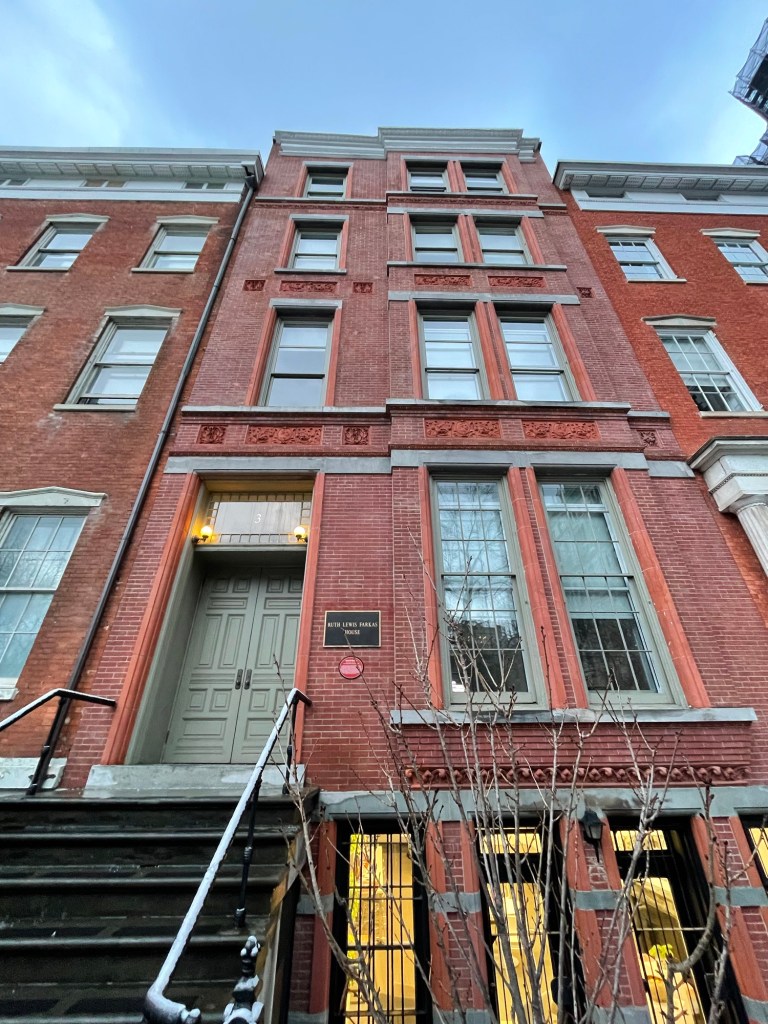
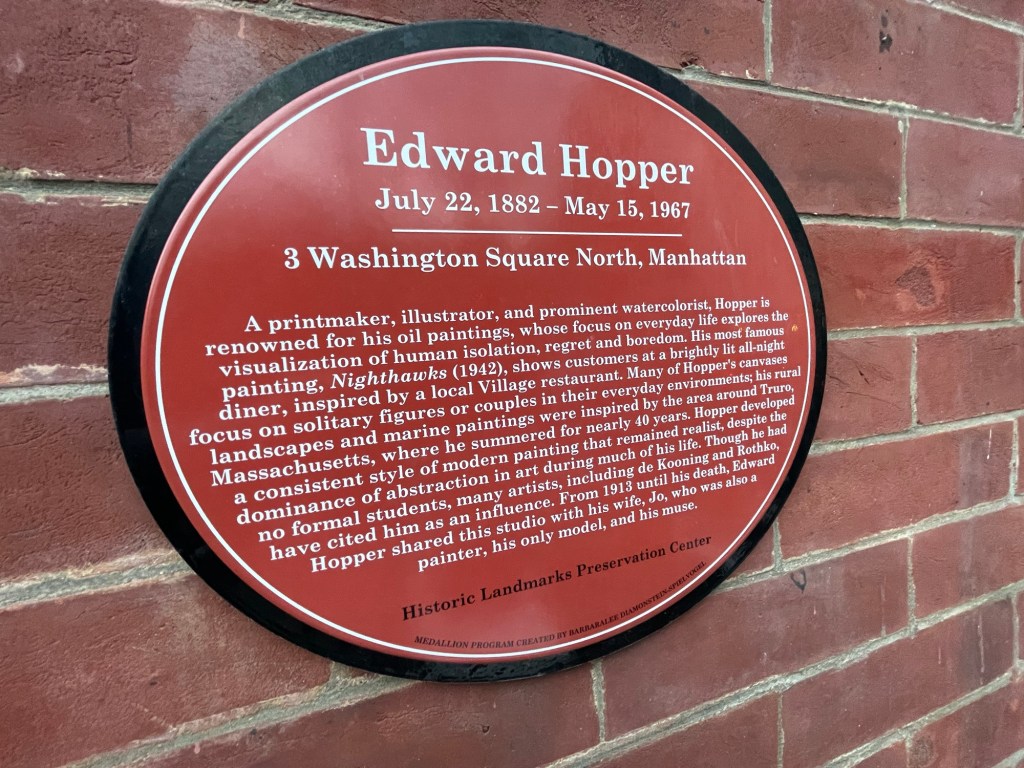
Born upriver in 1882, Hopper moved to the city in 1908, calling New York “the American city that I know best and like most.” From 1913 until his death in 1967, he lived and worked in this townhouse on Washington Square. The building is now owned by NYU. (note: as of 2024 it was closed to visitors)
“City Roofs” shows a view of the rooftop.

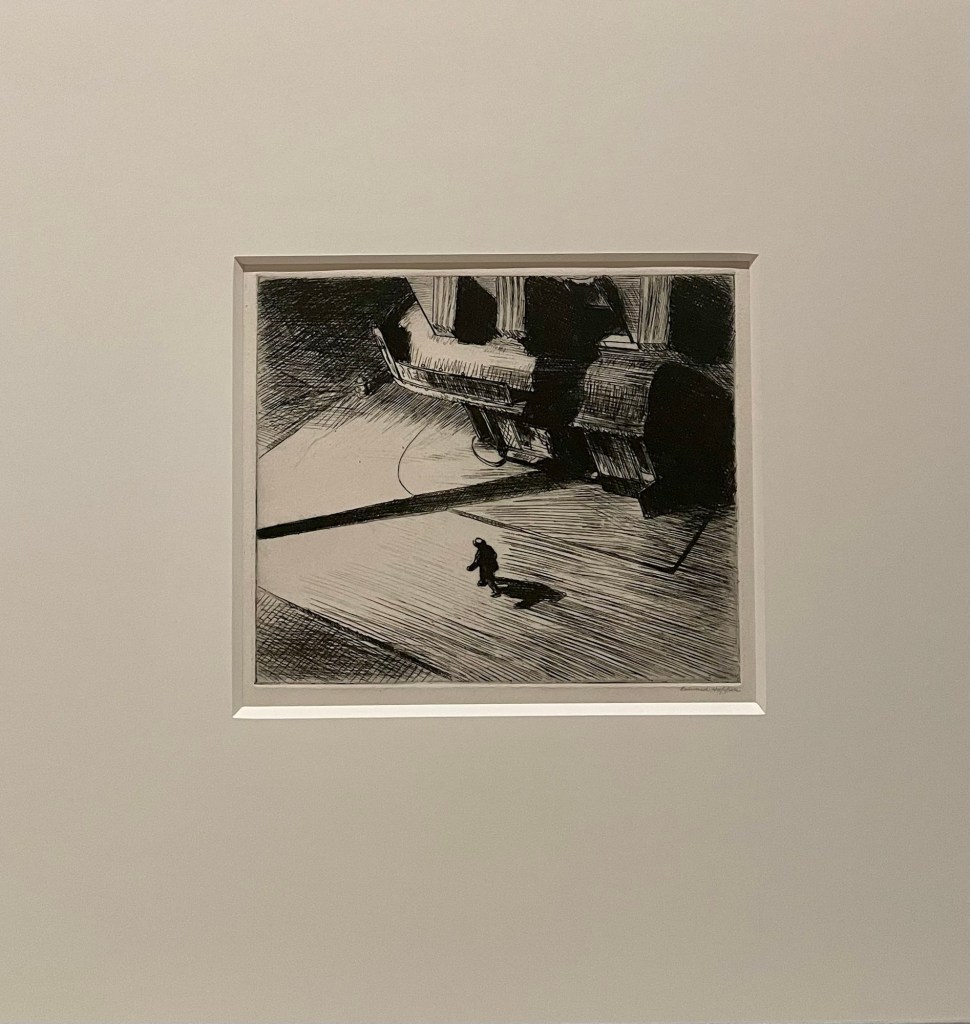
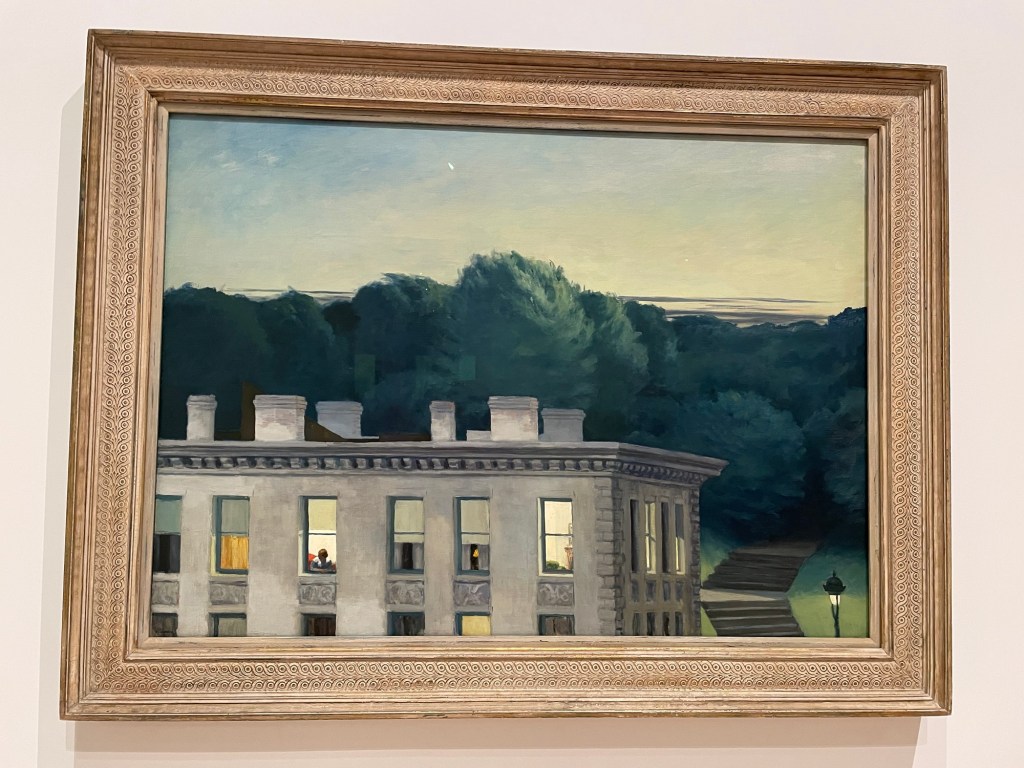
As the modern city grew around him, instead of focusing on skyscrapers, technology, or the abstract art embraced by his peers, Hopper chose realism on a human scale – but with his own distinctive twist. His works often have a slightly elevated perspective, as though viewed from the elevated trains he rode across the city:

They also often contain a sense of voyeurism – as the viewer stares in from the outside, heightening the feeling of loneliness that permeates many of his works, including that of his most famous painting “Nighthawks:”

The best place to see Hopper’s work is at the Whitney Museum. It holds the world’s largest collection of his work, with over 3000 items including paintings, sketches, and the ledger books in which he made sketches of his works and his wife added descriptions and sales information.

Hopper had his first solo exhibition at the Whitney Studio Club, the forerunner to the Whitney Museum. Later, his painting “Early Sunday Morning” was purchased as part of the Museum’s founding collection.

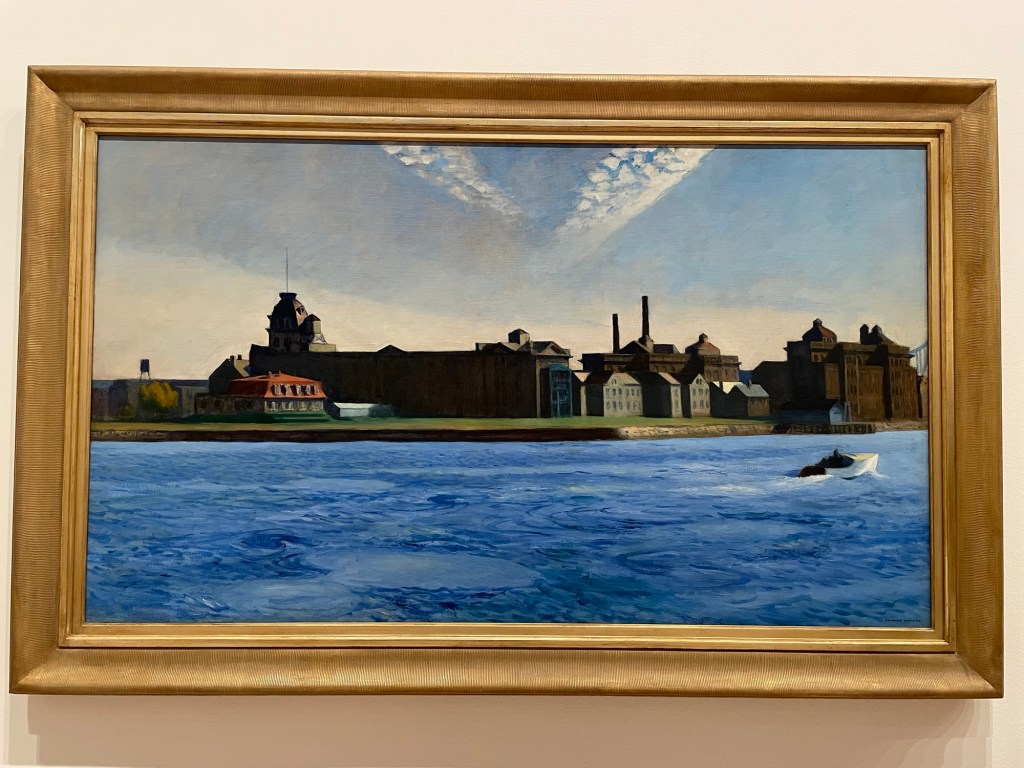
A selection of Hopper’s works are always on view. These are from the 2022/23 show “Edward Hopper’s New York:”



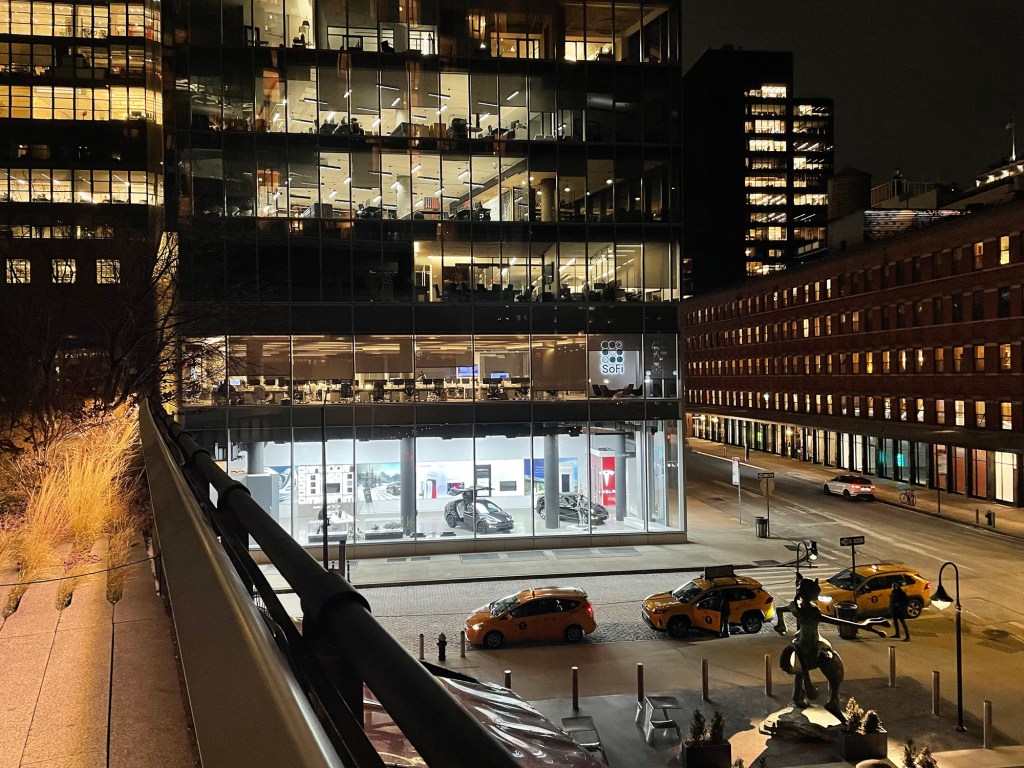
For a very Hopper-esque view of the city, step out of the Whitney onto the High Line. As you walk along the old elevated railway line, look down for an perspective of the neighborhood located not far from the site of “Nighthawks” and “Early Sunday Morning.”

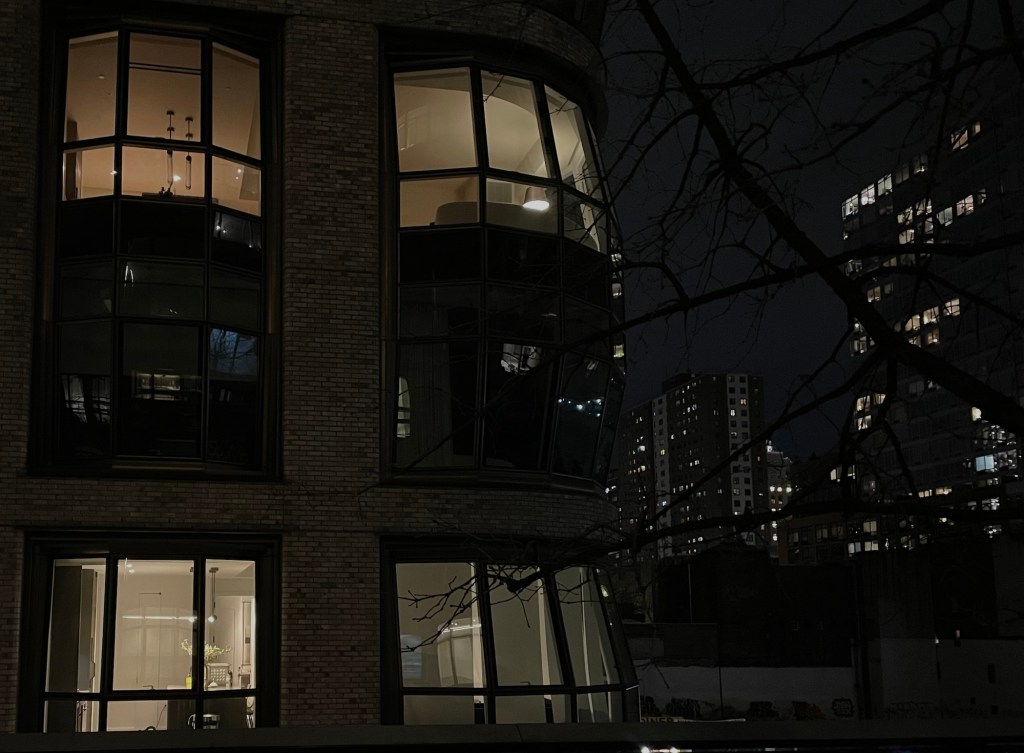
A nighttime walk gives that sense of voyeurism as you peer into the illuminated windows of the adjacent buildings.
For more Hopper you can visit the home in Nyack where Hopper lived until his move to New York City. The house was built in 1858 by his grandparents.
 Secrets of Philadelphia