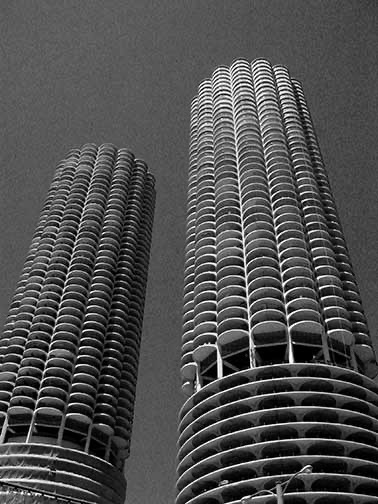
(Note: Sadly, I lost all of my photos except for the lead photo, which may look familiar to Wilco fans. All the rest of the pictures are from the Chicago Architecture Center website)
Founded on the banks of Lake Michigan, Chicago was incorporated in 1837, and quickly became a center for both east/west and north/south trade. By 1870, it was the nation’s second largest city, and by 1900 its stockyards alone employed over 25,000 workers in the meat packing industry (it was about the disgusting conditions in these factories that Upton Sinclair based his novel “The Jungle,” whose publication eventually led to the creation of the modern FDA).
Whether or not the busy city’s Great Fire of 1871 can be blamed on Mrs O’Leary’s cow, it was the resulting destruction of 17,500 buildings that left 100,000 people homeless combined with the city’s industrial wealth and recent inventions like Otis elevators and low cost steel that made Chicago ground zero for the rise of modern skyscrapers.
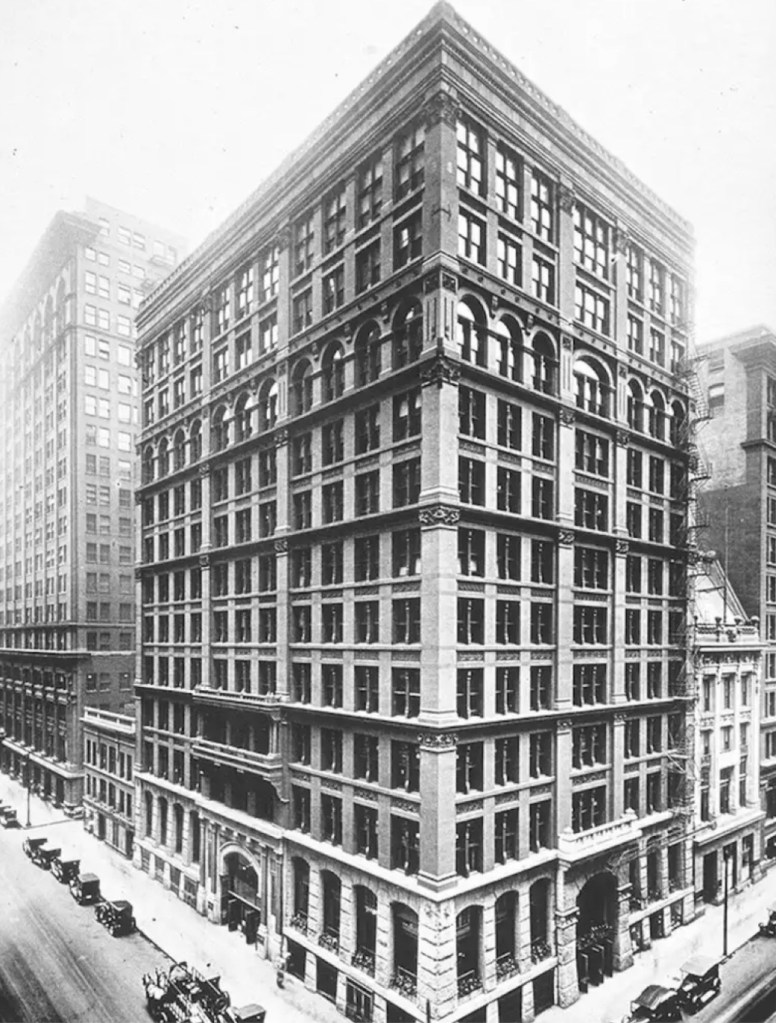
Rising up from the ashes was the world’s first skyscraper, the c.1885 ten-story Home Insurance Company building. This, along with the city’s other new post-fire buildings were constructed using steel in addition to cast iron, and were thus able to reach much greater heights than previous buildings, although, like the classic Victorian structures of the age, they were still decorated externally with brick, stone and terra cotta.
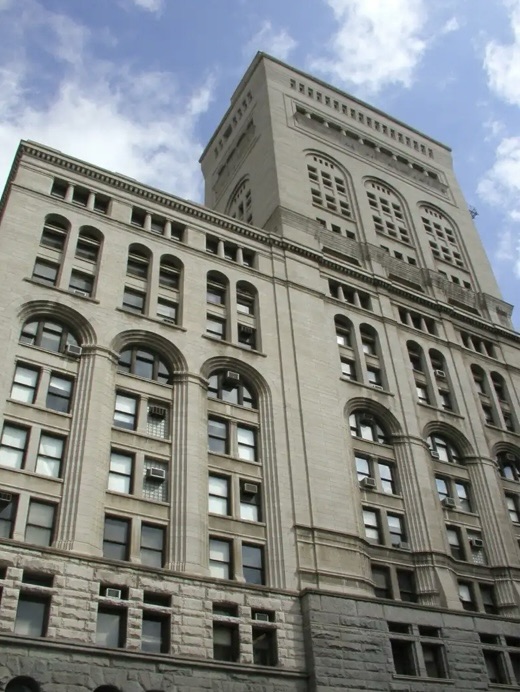
Louis Sullivan was an assistant to the architect that designed the Home Insurance Company building, and became the premier architect of this new “Chicago School” of architecture that emphasized the vertical nature of these new, taller buildings, and started adding more and larger glass windows as the internal steel structure took the need for heavy structural support away from the exterior walls. It was Sullivan who coined the phrase beloved by modernists: “form forever follows function.”
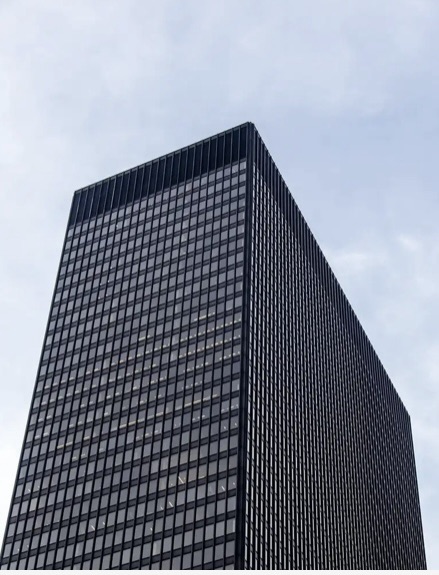
Expanding on these innovations, a “Second Chicago School” of architecture emerged in the 1960s under Mies van der Rohe that came to define post-WWII modern architecture.
By 1974, Chicago’s skyscrapers had risen so high that the 108 story Sears Tower became the world’s tallest building for almost 25 years, until it was dethroned by Malaysia’s Petronas Twin Towers in 1996. Today, most of the preeminent architects of the past century have designed buildings in the Windy City.
The best place to start exploring this legacy is a tour with the Chicago Architecture Center. They offer walks ranging from general skyscraper history to tours of specific buildings or with specific themes (the Tiffany glass tour is a definite on my next trip!). A great way to combine an architecture tour with another perspective of the city is to take one of their boat trips that cruise the waterways giving a history of the city while pointing out its historic architecture. They also offer tours by L, which gives another unique view of the city.
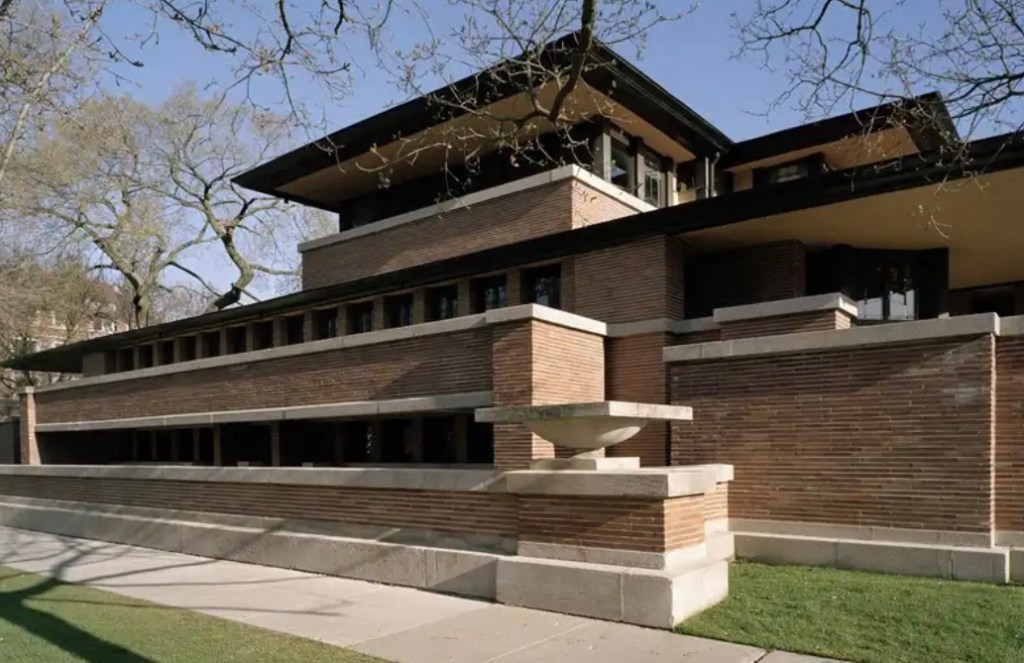
Once you’ve explored the architectural offerings of downtown Chicago, hop on the L to Oak Park, home to the world’s largest collection of buildings designed by Frank Lloyd Wright, Louis Sullivan’s most famous prodigy. After touring his home and studio, explore the surrounding neighborhood to see his Unity Temple plus a bunch of his residential properties (Oak Park is also home to Ernest Hemingway’s birthplace).
 Secrets of Philadelphia