
OK, obviously Charles Knight didn’t invent dinosaurs, but it’s thanks scenes like this Allosaurus v. Brontosaurus that changed the public’s perception from the Victorian image of sluggish and dull creatures to ones more dynamic and active.
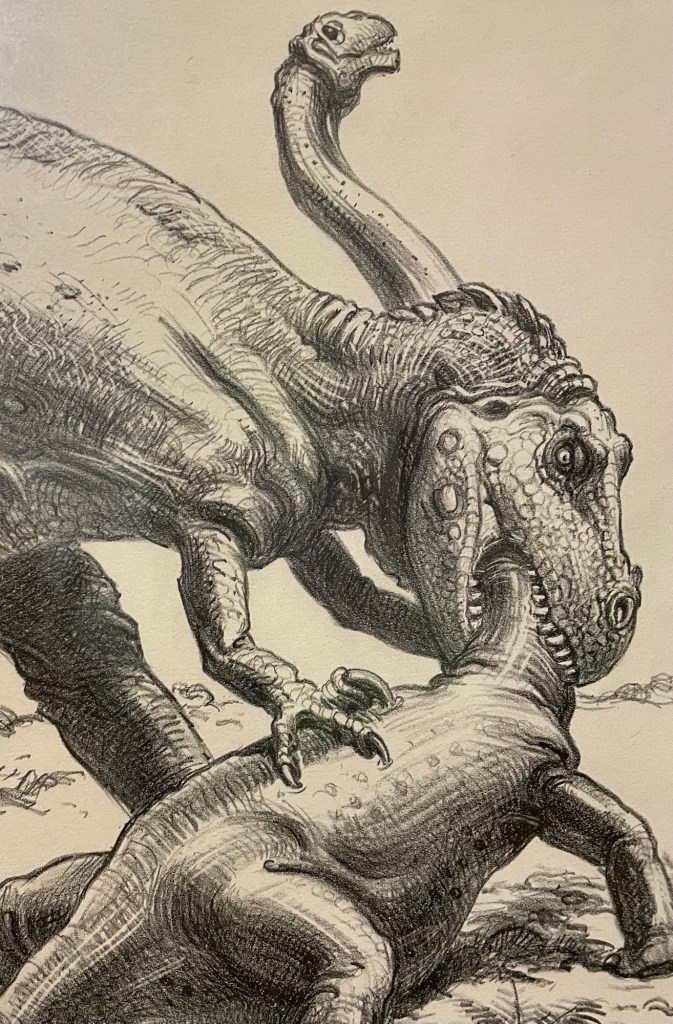
In addition to the dramatic poses, Knight used his knowledge of animal anatomy to draw them in a more (for the time) life-like fashion. Between 1900-1960 almost every illustrated dinosaur book contained at least one of his illustrations. All this despite the fact that he was legally blind.
I first discovered Knight at the NJ State Museum (Spotlight New Jersey: The State Museum) where the world’s first known carnivorous dinosaur (found in the marl pits of south Jersey!) is displayed in a pose based on his 1897 painting for NY’s American Museum of Natural History.


After Knight established his reputation with the paleontologists at the country’s premier natural history museum in New York, other museums began commissioning paintings and murals for their own collections. One of his “Life through the Ages” (1944-46) series is displayed in the beautiful rotunda of the Los Angeles Natural History Museum.


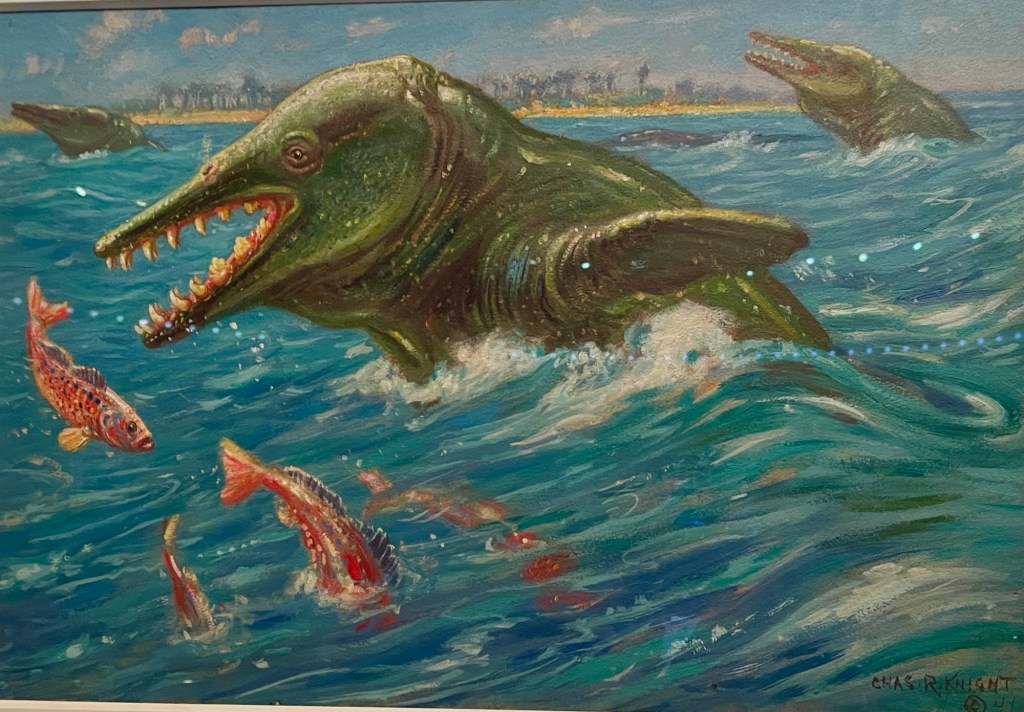
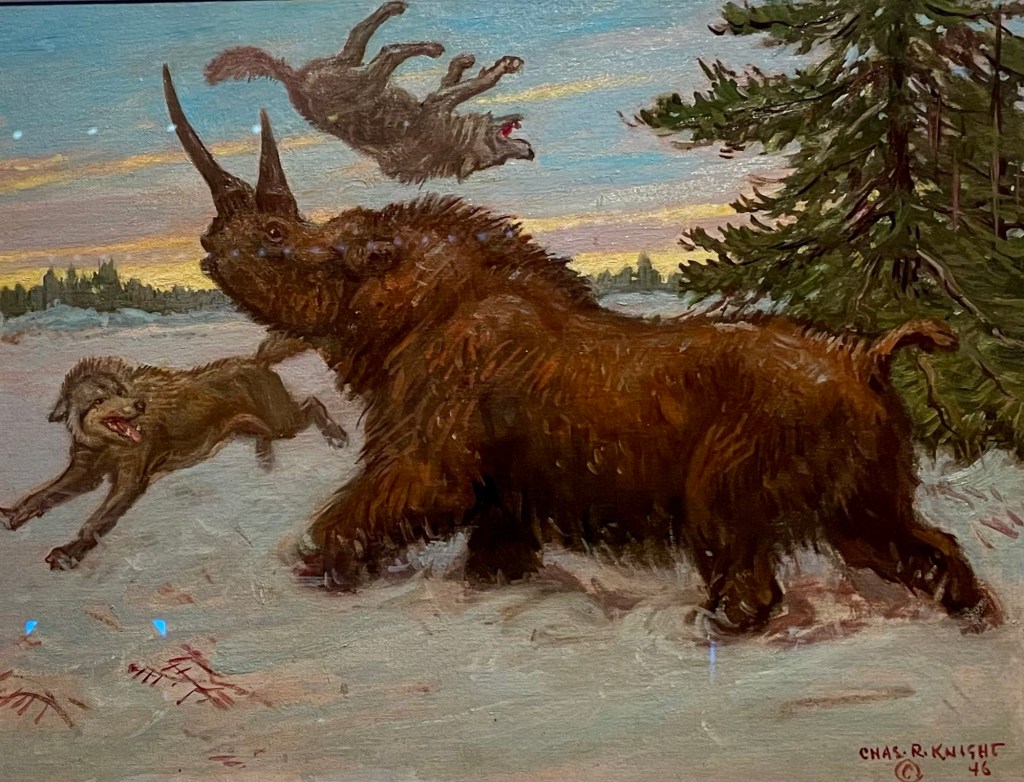
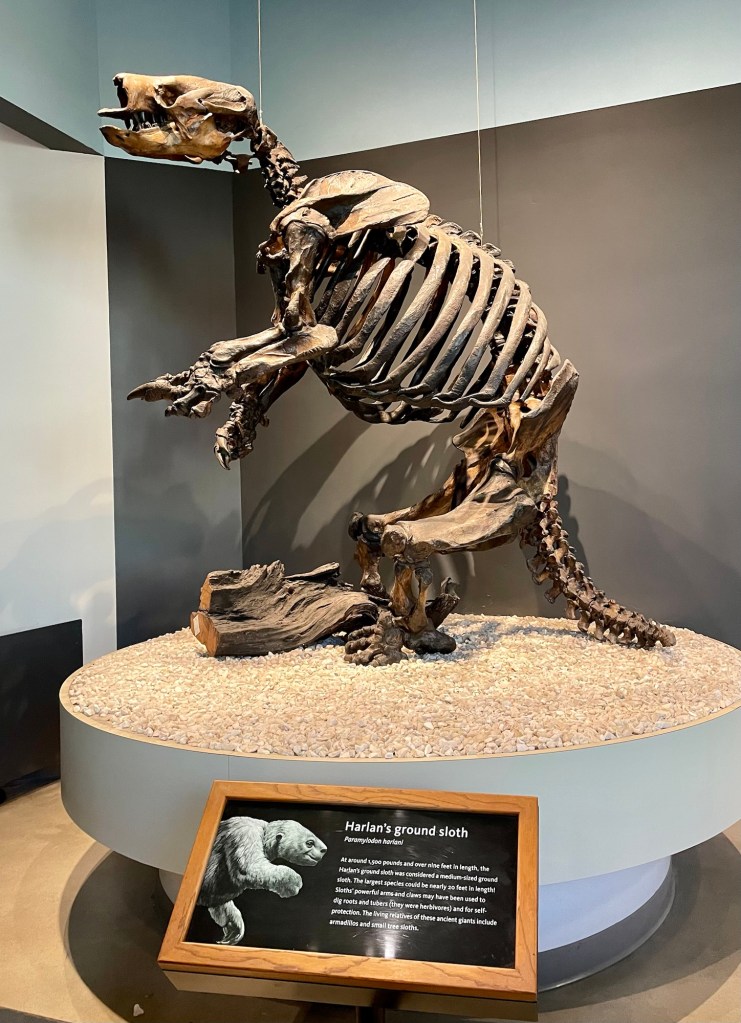
His painting of the La Brea tarpits, along with one of his palettes, is on view at the nearby museum, alongside fossils of the ice age animals portrayed (LA, California: Treacherous Goo (or) Deathtrap for Meat Eaters).

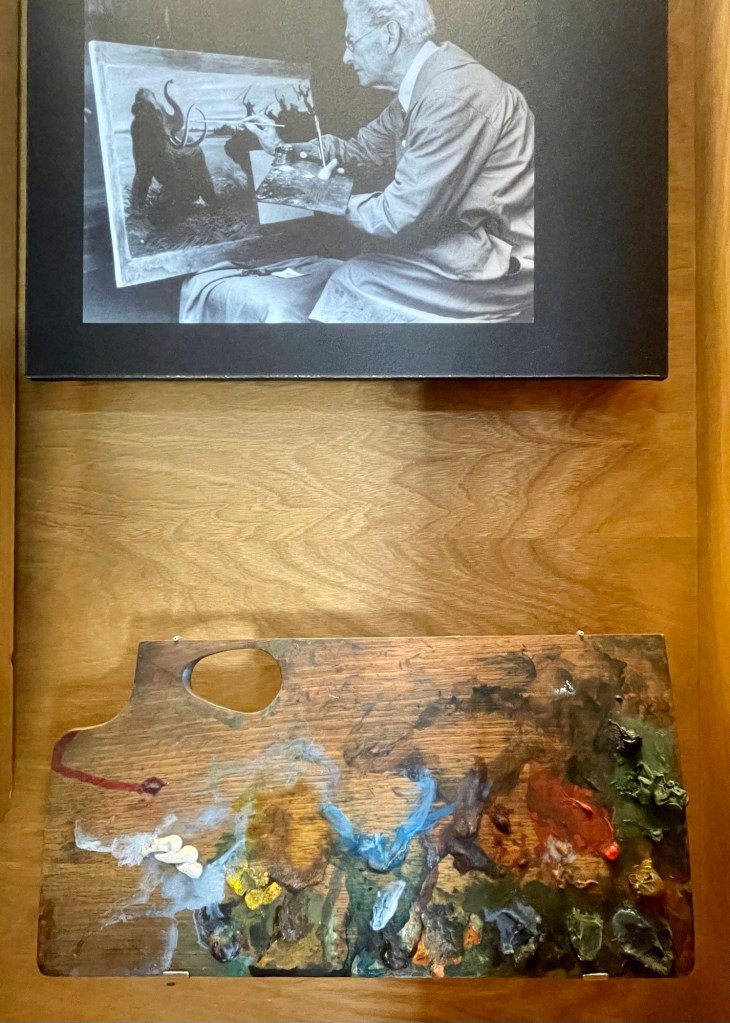
In 1951, Knight painted his last work, a mural of Pennsylvania’s Coal Age Landscape for the Everhart Museum in Scranton.

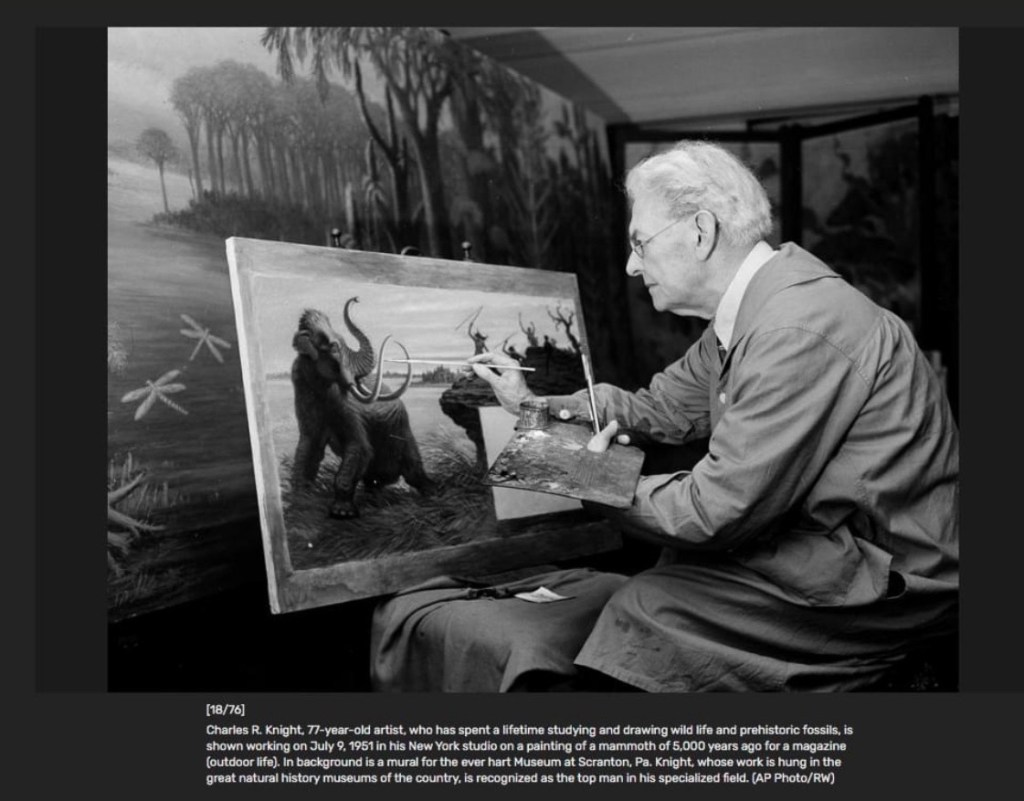
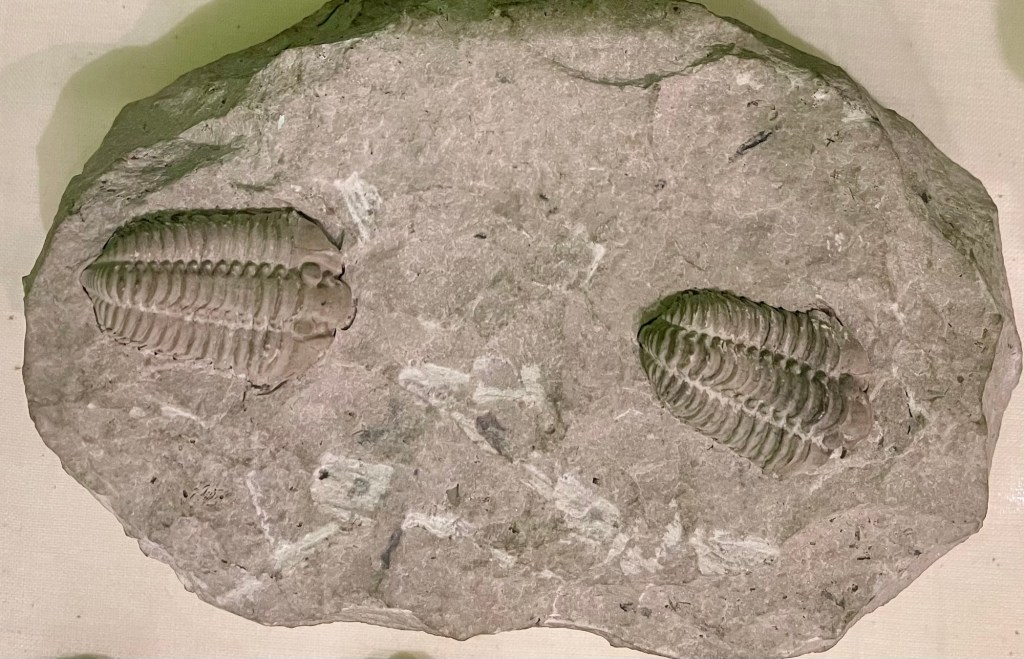
Today, the mural is surrounded by lithographs of his work and the Pennsylvania fossils they illustrate.



Times have changed, and scientists no longer view Knight’s work as cutting edge or wholly accurate, but they are still historic and beautiful representations of the ancient world.
 Secrets of Philadelphia