
“This most God-forsaken corner of the world”
“The desolate, lifeless moor. This, then, is the stage upon which tragedy has been played, and upon which we may help to play it again.”

Arthur Conan Doyle’s fictitious Dartmoor in The Hound of the Baskervilles is one of the most perfect literary settings, and is so central to the story that the book would not exist without it.
“there rose in the distance a grey, melancholy hill, with a strange jagged summit, dim and vague in the distance, like some fantastic landscape in a dream.”
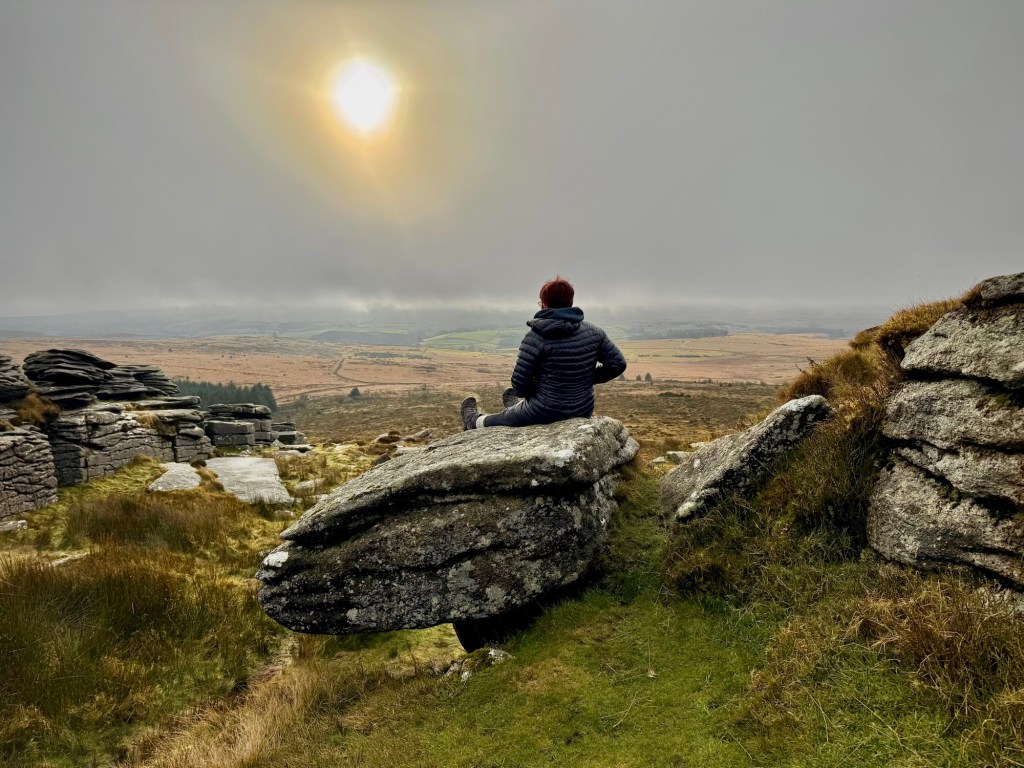
The stone-topped hills, called tors, are an integral part of the setting. It is atop one that Watson spots the mysterious figure that turns out to be Holmes, and from which he again spots the mysterious figure.
“I found the black tor upon which I had seen the solitary watcher, and from its craggy summit I looked out myself across the melancholy downs. Rain squalls drifted across their russet face, and the heavy, slate-coloured clouds hung low over the landscape, trailing in grey wreaths down the sides of the fantastic hills.”
It is also upon a tor that the convict, whose appearance enhanced the creepy setting, hid amongst the boulders…

“Over the rocks, in the crevice of which the candle burned, there was thrust out an evil yellow face, a terrible animal face, all seamed and scored with vile passions. Foul with mire, with a bristling beard, and hung with matted hair, it might well have belonged to one of those old savages who dwelt in the burrows on the hillsides.”
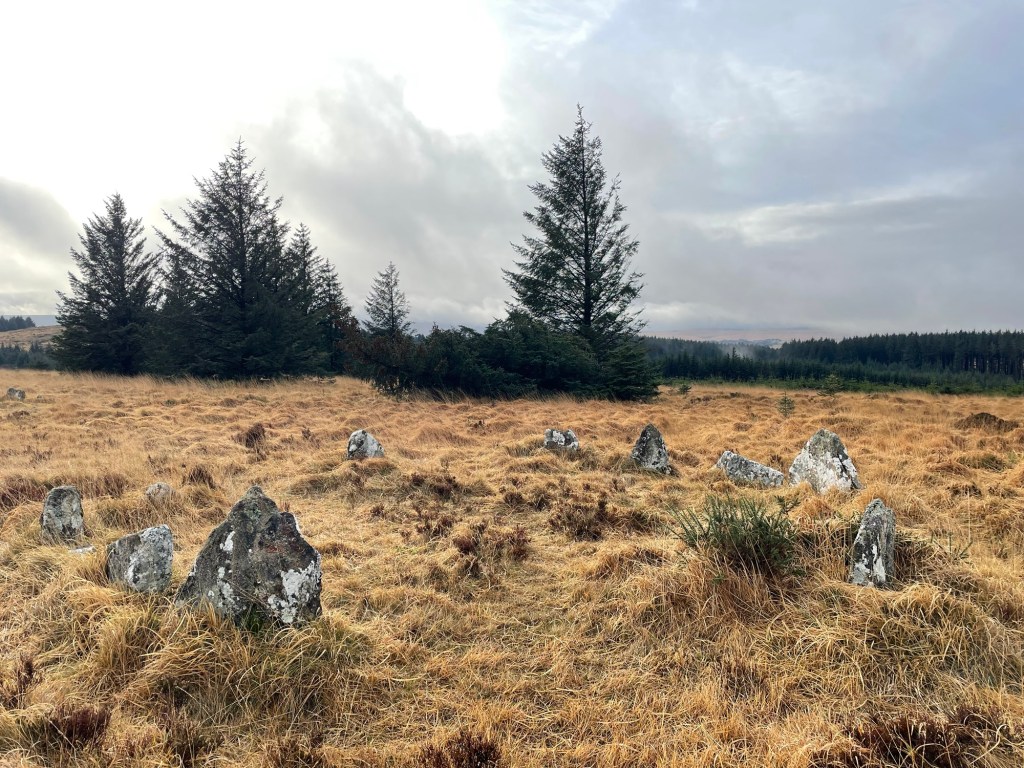
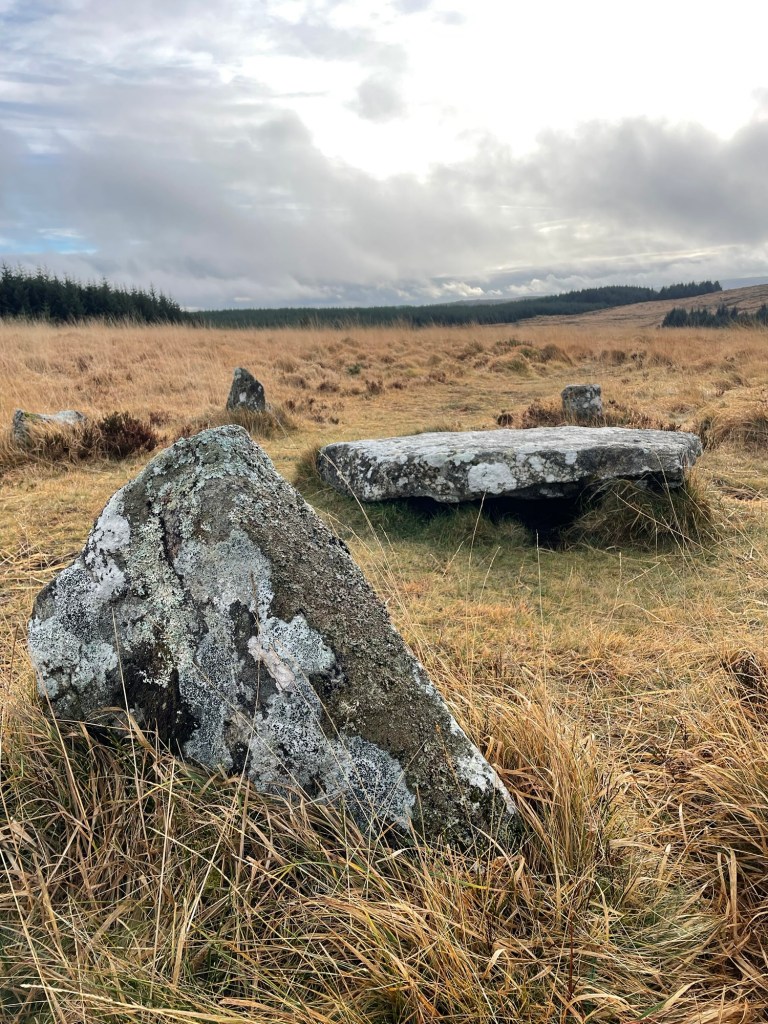
Also integral to the setting are the ruins of these “old savages.” Dartmoor contains the largest collection of Stone Age sites in Europe, including remnants of stone huts and burial sites scattered around the moor.
“you are conscious everywhere of the homes and the work of the prehistoric people. On all sides of you as you walk are the houses of these forgotten folk, with their graves and the huge monoliths which are supposed to have marked their temples. As you look at their grey stone huts against the scarred hillsides you leave your own age behind you”
In Doyle’s time several of these sites were so well preserved that the hut walls were unbroken, and had been reroofed by tin-miners during previous centuries. It was in one of these huts that Holmes hid until he was discovered by Watson.

Wandering over the moors are the wild Dartmoor ponies. It was their presence that adds the final, creepy coup de gras when a pony’s horrible death was described in a scene foreshadowing the story’s grisly end.
“That is the great Grimpen Mire, said he… A false step yonder means death to man or beast. Only yesterday I saw one of the moor ponies’ wander into it. He never came out. I saw his head for quite a long time craning out of the bog-hole, but it sucked him down at last.”
The features described in Doyle’s fictitious Dartmoor are so lifelike because he spent time exploring the region and its legends before writing the book. One good place view the varied landscape is the Bellever 6 mile circular hike starting from the visitor center in Postbridge, a village with a remarkable similarity to Doyle’s Grimpen. Along the trail are two tors to climb, plenty of squishy mire to navigate, Stone Age ruins, and (if you’re lucky) ponies. Lots of spectacular scenery, but no signs of a demonic hound.
The hike ends at Postbridge’s clapper bridge, built in the 11th century for carts and pack horses carrying tin from local mines to market. There is another clapper bridge along the hike in nearby Bellever.


https://www.dartmoor.gov.uk/enjoy-dartmoor/outdoor-activities/walking/audio-walks
 Secrets of Philadelphia