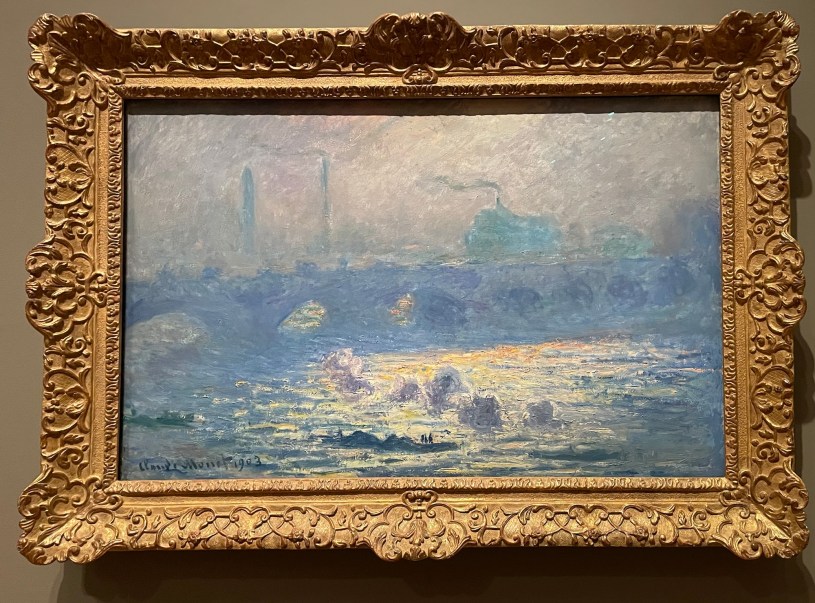
Dickens and Monet were both artists of the Industrial Revolution, but whereas Dickens used the smog blanketing London to add an eerie and grimy feel to his literature, “Fog everywhere… where it rolls defiled among the tiers of shipping, and the waterside pollutions of a great (and dirty) city,” Monet used it to create paintings that glowed with an inner light.
The French born Monet had always been fascinated by the play of light, whether on water, leaves or stonework, and would often paint for only a few minutes on each canvas, moving on to the next as the light shifted. During his time, London was the most polluted place on earth due to smoke from the coal-fired power plants and steam engines that powered the Industrial Revolution. This, combined with its location on the bank of the Thames, created atmospheric conditions that trapped these pollutants and moisture close to the ground creating the striking light effects that enthralled Monet. ‘I so love London! but I only love London in the winter… It’s the fog that gives it its magnificent breadth. Its regular and massive blocks become grandiose within that mysterious cloak.” A very different perspective to Dickens’s London!
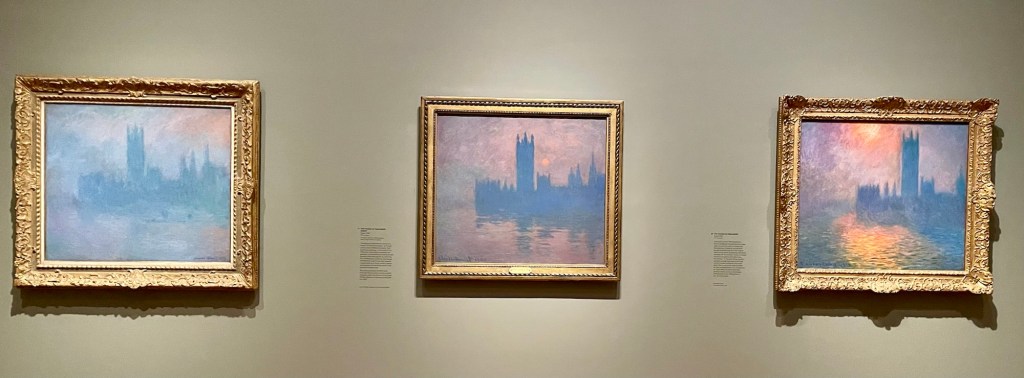
Monet made three visits to London between 1899-1901, and painted almost 100 views along the River Thames, focusing mainly on Waterloo Bridge, Charing Cross Bridge and the Houses of Parliament.
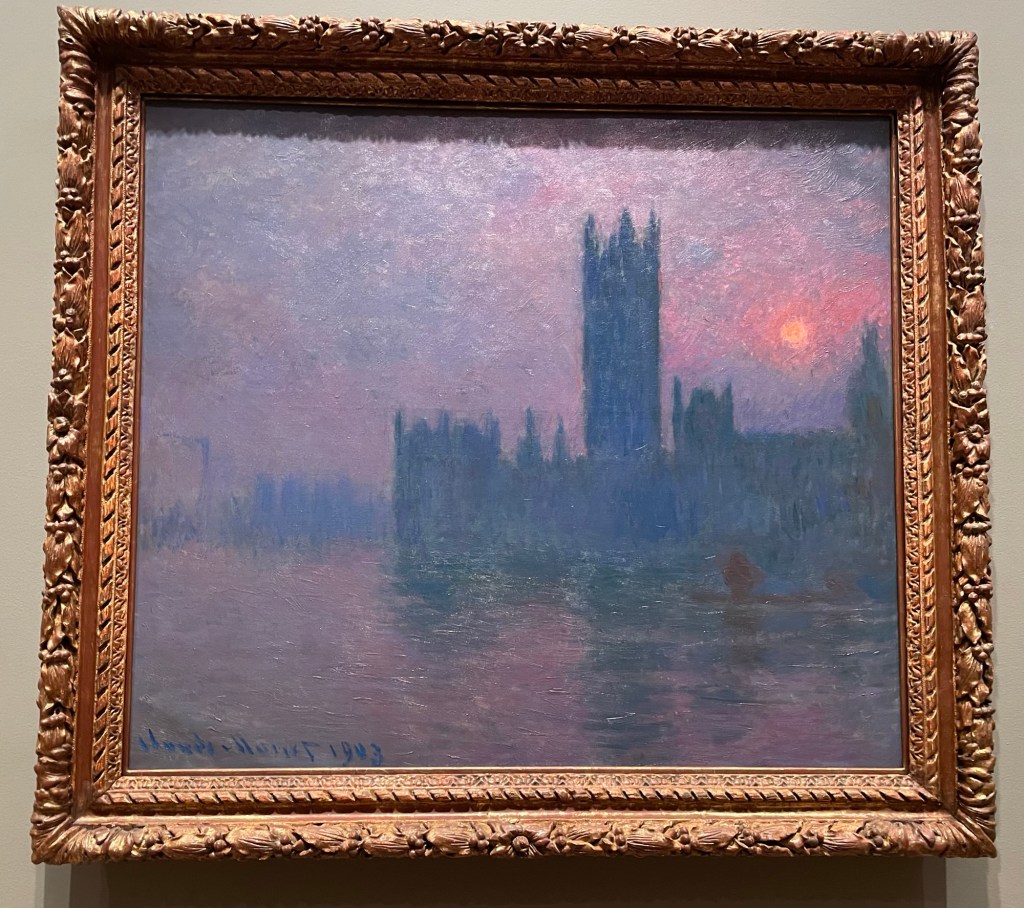
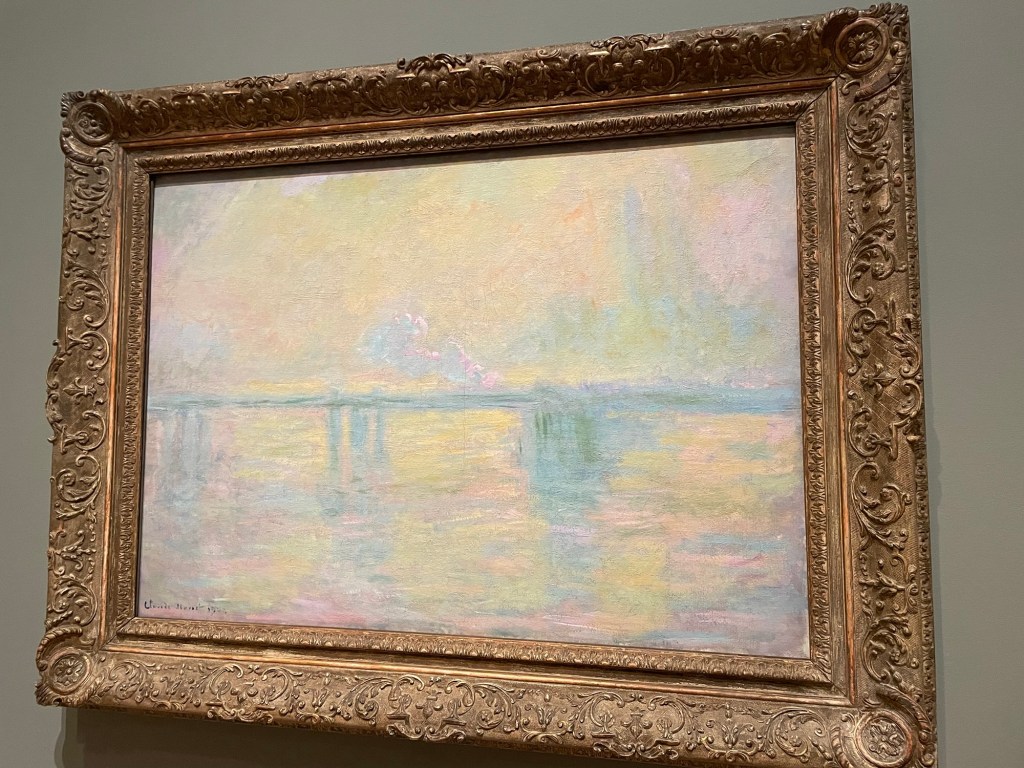
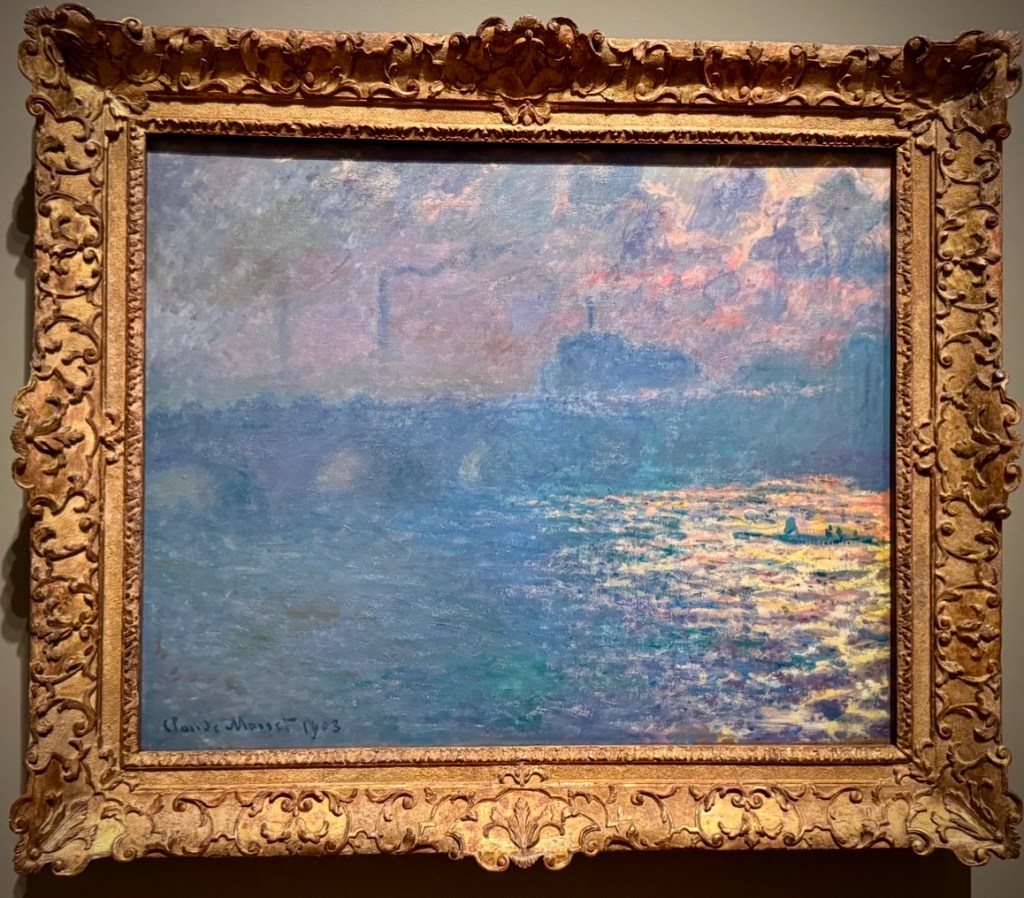
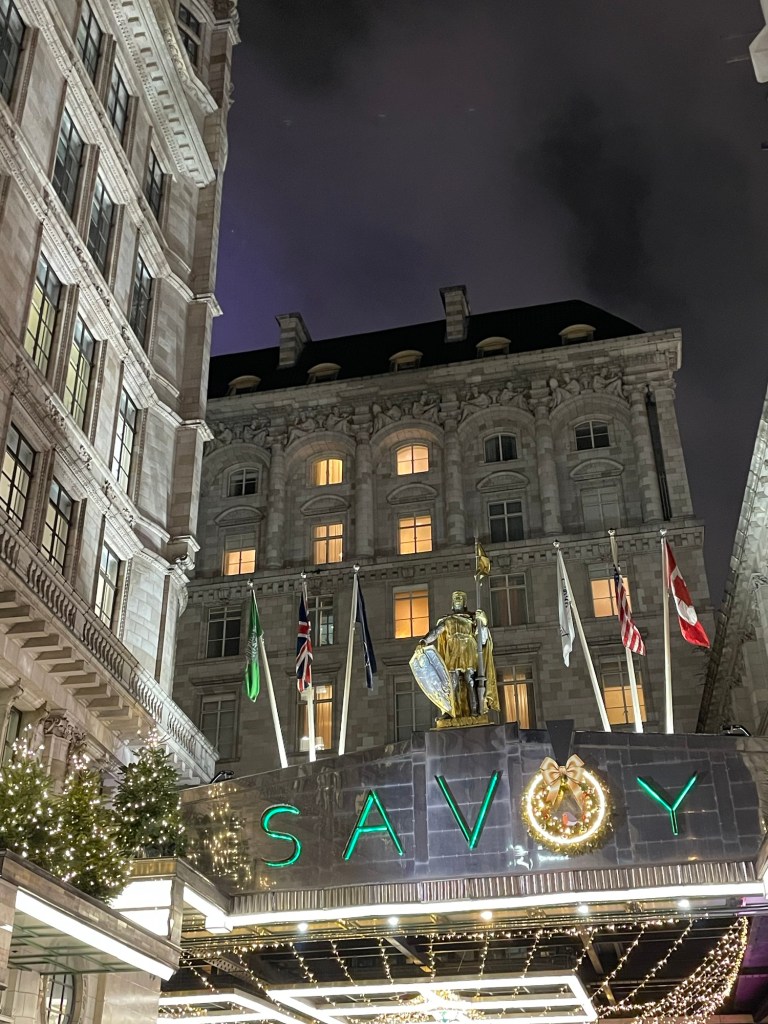
Many of the London series paintings were started from the balcony of his suite on the top floor of the Savoy Hotel and completed in the studio when he returned to France.
Sadly, none of Monet’s London series paintings remain in the city today, although an earlier painting of Westminster can be seen at the National Gallery.

 Secrets of Philadelphia