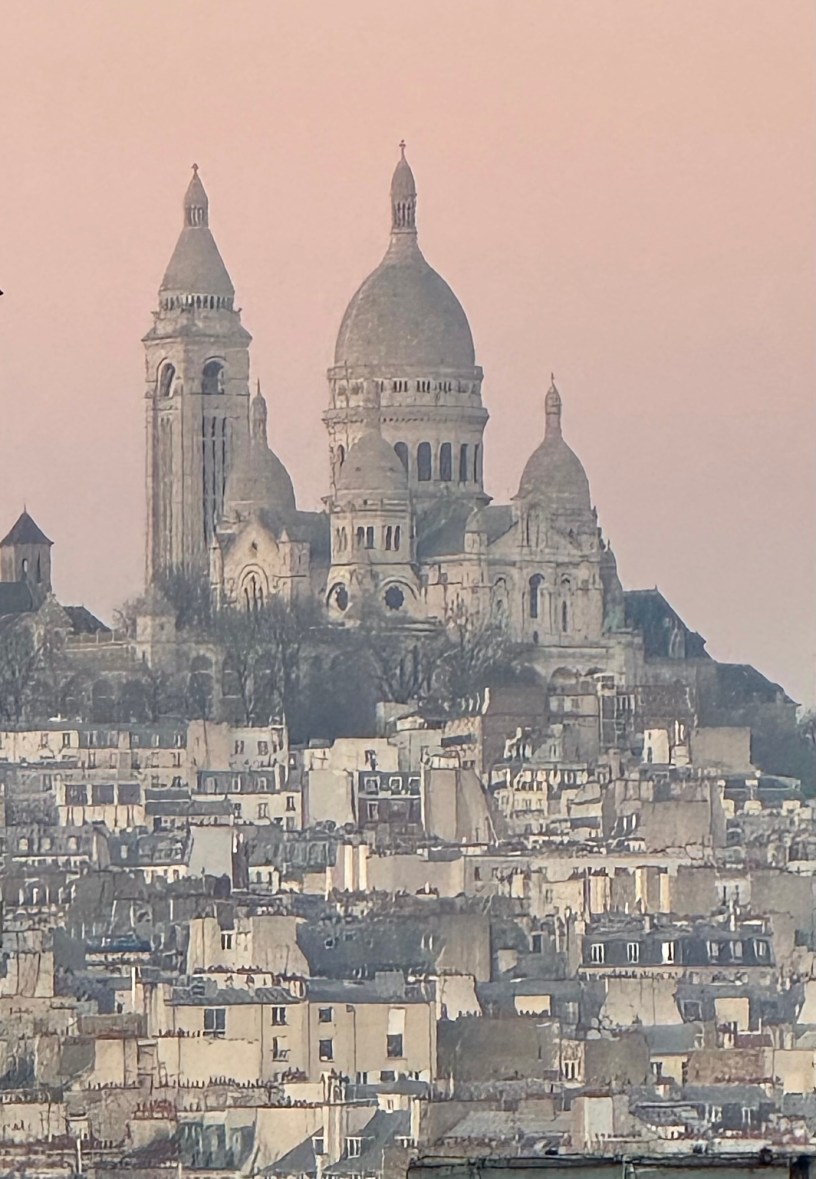
Once upon a time Montmartre was a rural village on the outskirts of Paris with windmills, vineyards, and gypsum mines. If you look beyond the crowds you can still catch a glimpse of this agricultural past.
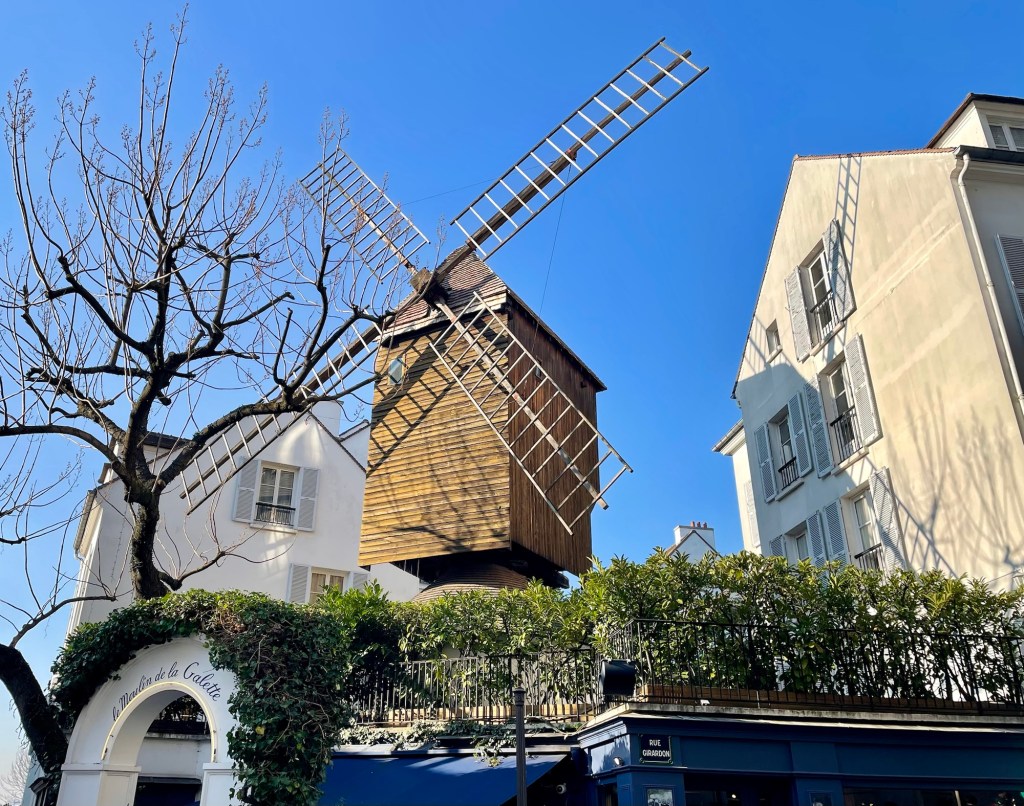
Back in the day moulins (windmills) once covered the hill, grinding flour and pressing grapes. Everyone is familiar with the fake windmill of the Moulin Rouge, but there is still an original windmill on the hill (although it no longer houses a flour mill). Dating back to the 1700’s, the Moulin Radet was moved to its current site by the Moulin de la Galette restaurant in 1924. The moulin was immortalized by Van gogh:

and the restaurant by Renior, who both lived and painted on Montmartre in the late 1800’s.

Growing on the slopes of Montmartre is also the last operational vineyard in Paris. The Vignes du Clos Montmartre has been in operation since 1933, and produces about 1,000 bottles per year. It’s generally closed the public, but easily viewed from street level
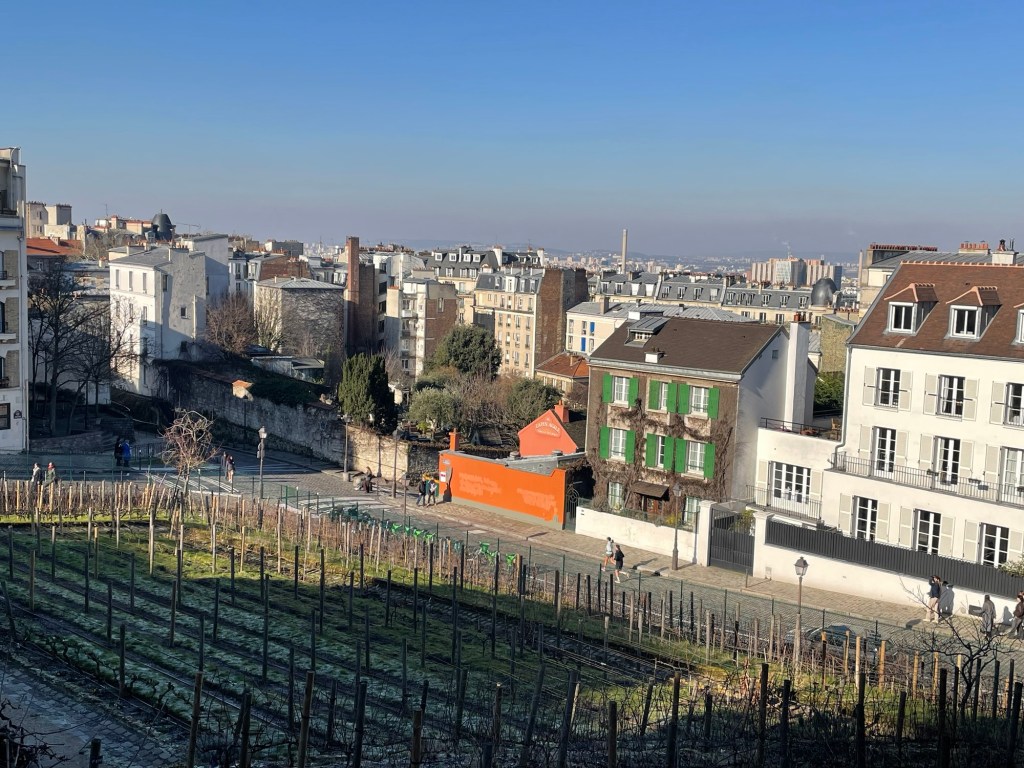
or from the windows of the adjacent Montmartre Museum.

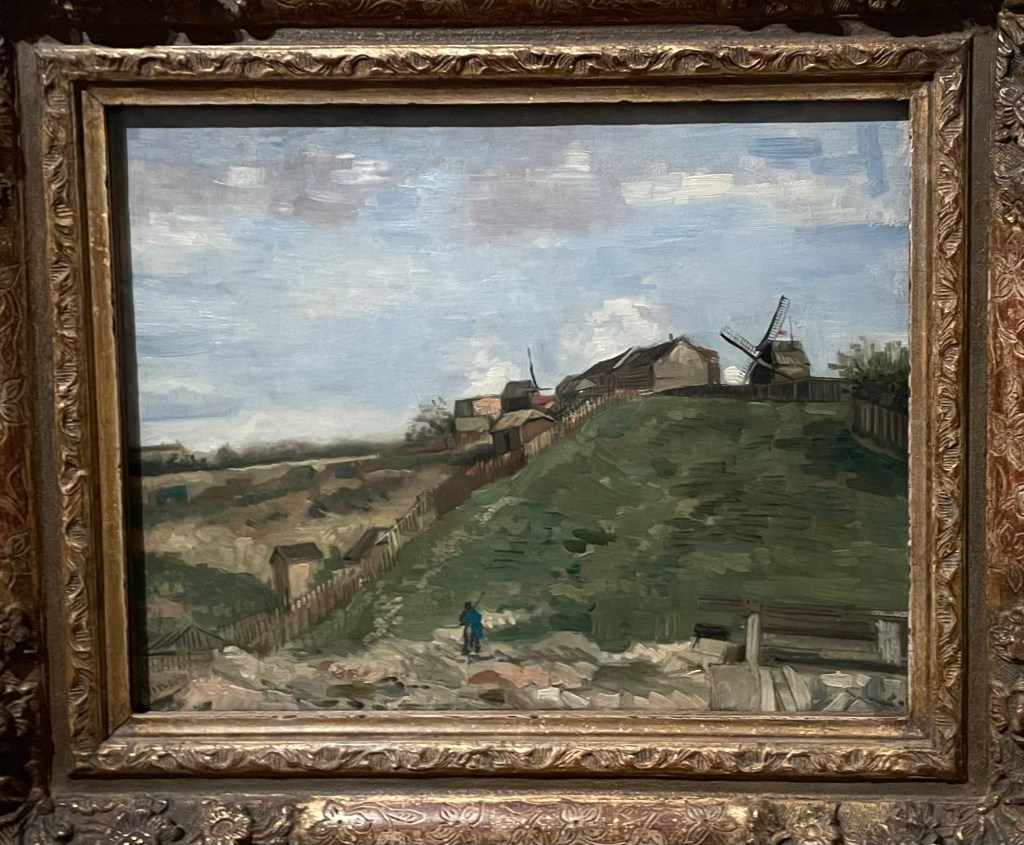
The gypsum mined here was the source of the famous plaster of Paris used for everything from building material to decorative carvings to anatomical models. Gypsum mining in Montmartre began during the Roman period and continued until 1860. By then, the hill was so riddled with tunnels the ground became unstable and difficult to build on. Building Sacré Coeur required foundations that descended 130 ft underground. Although the tunnels have been sealed, a stroll along the east side of the hill up to the church passes rocks that once contained gypsum quarries. Both the Montmartre Cemetery and Buttes de Chaumot gardens are built in former gypsum quarries and the local metro stop “Blanche” and “Rue Blanche” refer back to this time when the streets were covered with white gypsum powder.

Van gogh included both the windmills and mines in this painting:
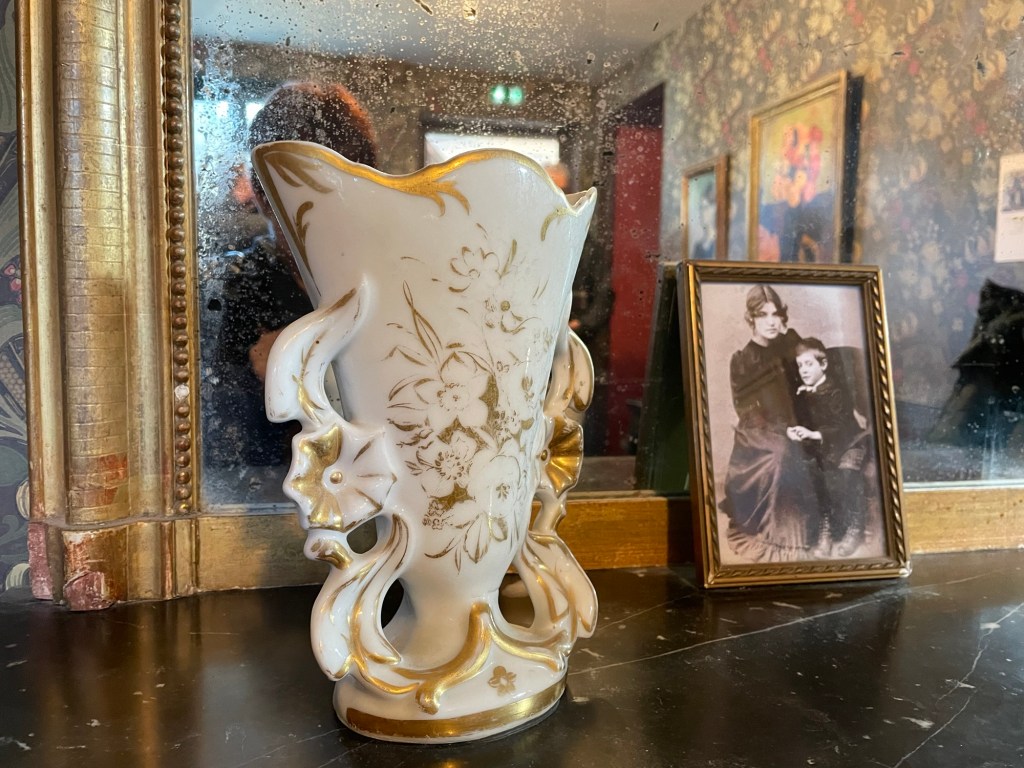
This is the same plaster that was mixed into white paint that helped to define Maurice Utrillo’s “white period.” Utrillo was a child of Montmartre. Son of Suzanne Valadon, painter and muse to many of the several of the impressionists, Suzanne and Maurice’s home and studio are now part of the Musee de Montmartre.



In 1860 Montmartre was annexed by Paris and became part of the 18th arrondissement. By this time it was shedding its agricultural past and becoming a bohemian neighborhood that became famous for its cafes, cabarets and artists of the Belle Epoch.
 Secrets of Philadelphia