
In 1948 Julia and Paul Child got off the SS America in Le Havre, hopped into their car and drove south to Paris, stopping for a meal in Rouen that changed Julia’s life.
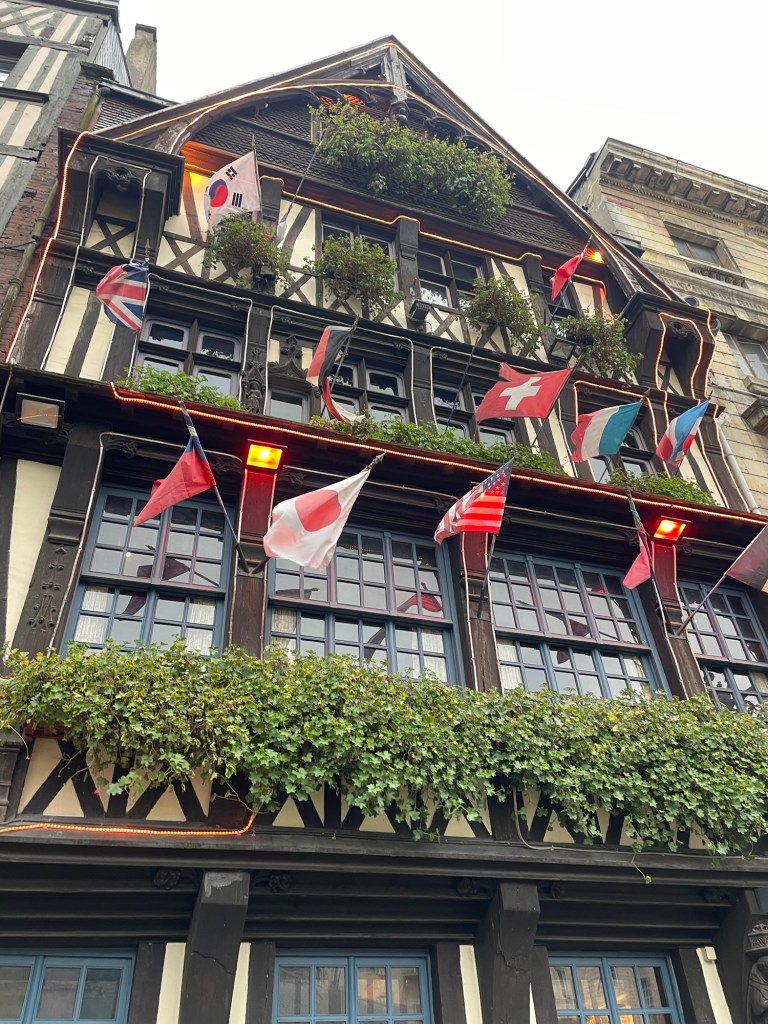
“Our first lunch together in France had been absolute perfection. It was the most exciting meal of my life.”
A poster of Julia looks down on La Couronne’s historic dining room. The 1345 inn claims to be the oldest restaurant in France, and patrons can still eat the meal that so impressed Julia: oysters, sole meuniere, salade verte, fromage blanc, and café filtre.
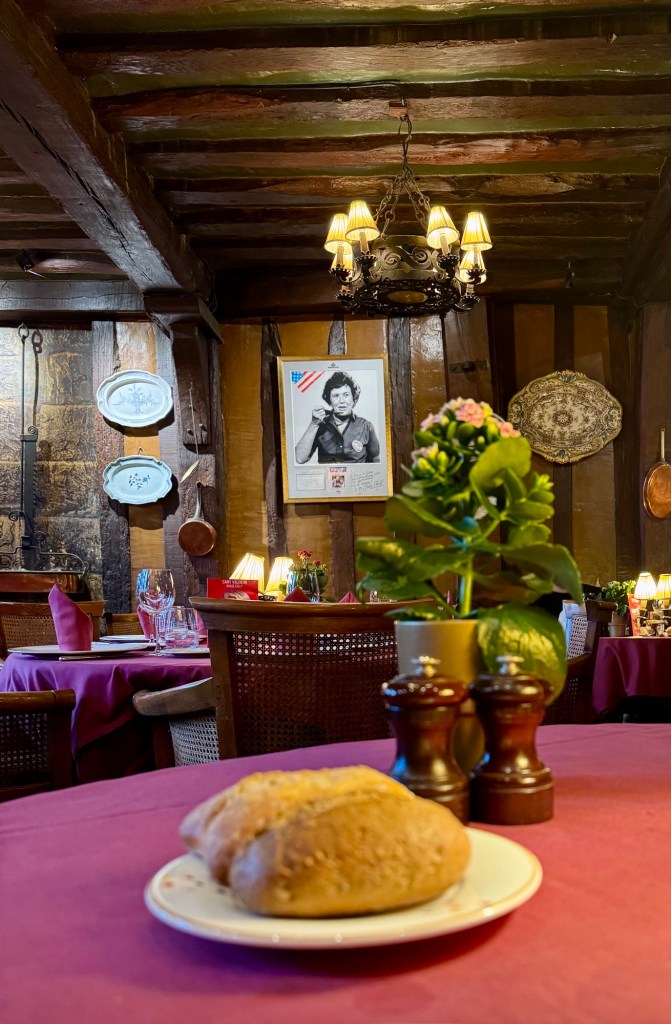
“I lifted a forkful of fish to my mouth, took a bite, and chewed slowly. The flesh of the sole was delicate, with a light but distinct taste of the ocean that blended marvelously with the browned butter. I chewed slowly and swallowed. It was a morsel of perfection.”


Paul and Julia were on their way to Paris where Paul had taken a job at the American Embassy running the exhibits office for the US Information Service, promoting French-American relations through the visual arts. Although Julia had no prior interest in or experience with cooking, she was so inspired by her first taste of French food that she began training at Le Cordon Bleu.
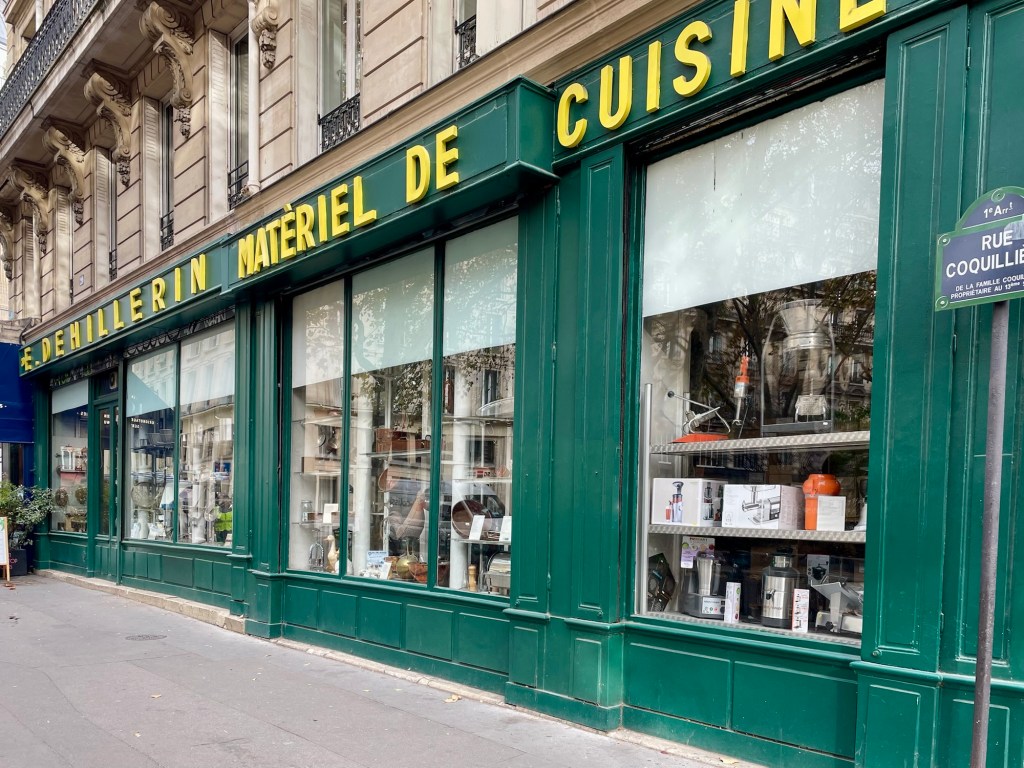
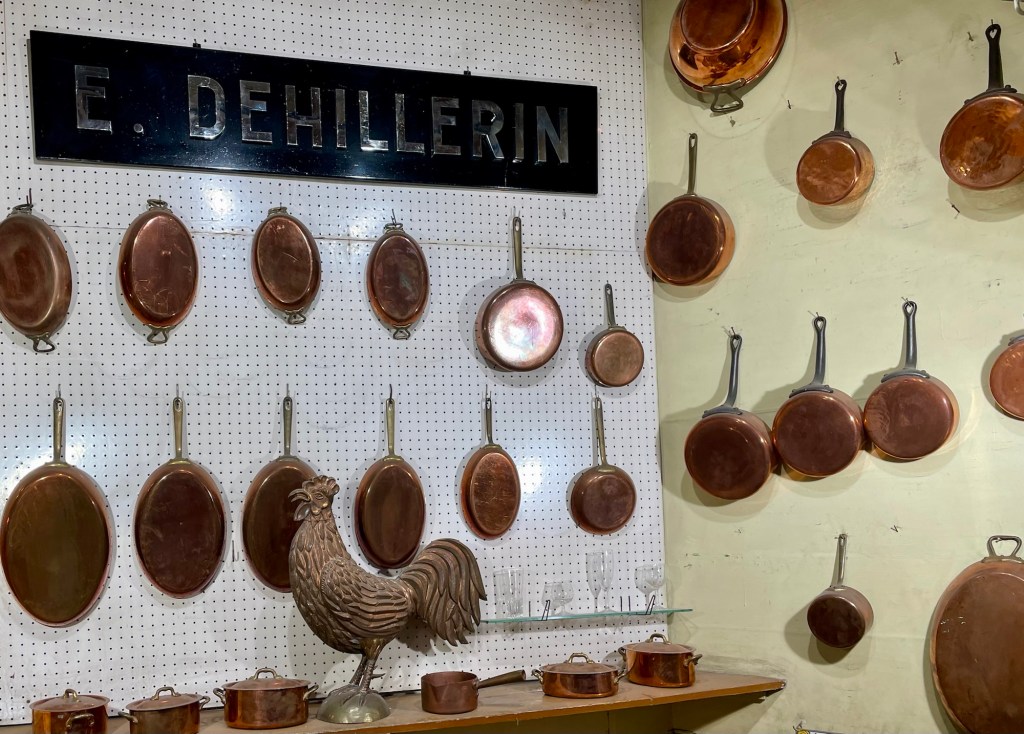
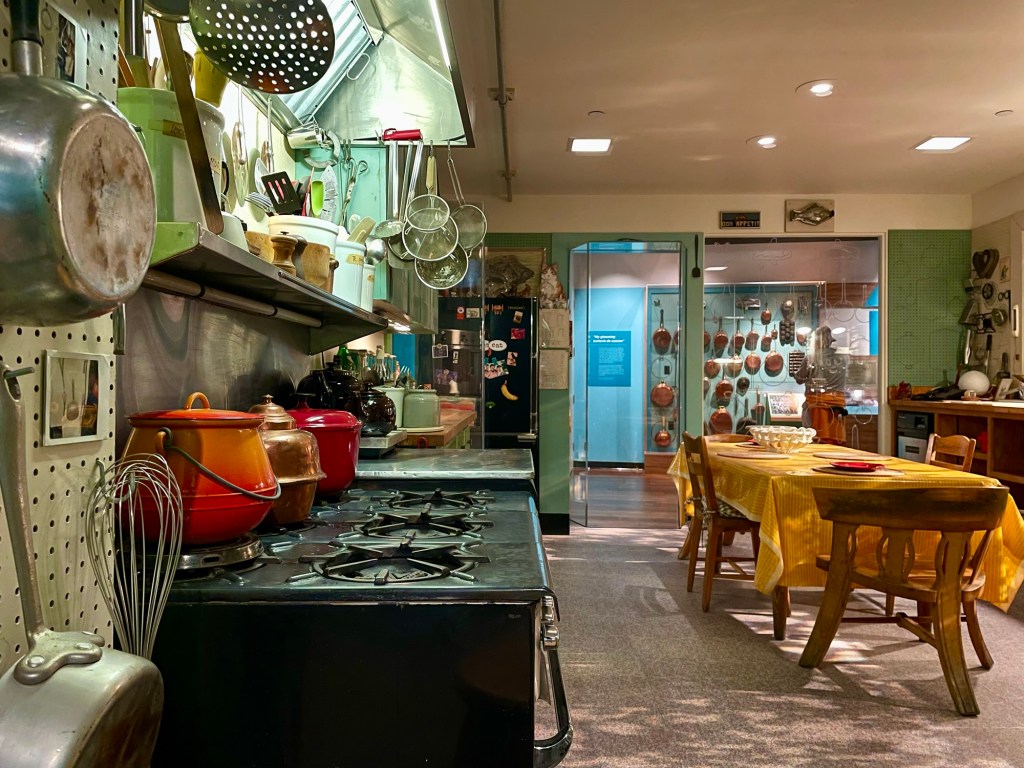
Today you can still visit the 200 year old store where Julia Child stocked up on kitchen supplies. “Eventually we arrived at Dehillerin. I was thunder-struck. Dehillerin was the kitchen-equipment store of all time, a restaurant-supply house stuffed with an infinite number of wondrous gadgets, tools, implements, and gewgaws- big shiny copper kettles, turbotières, fish and chicken poachers, eccentrically shaped frying pans, tiny wooden spoons and enormous mixing pad-des, elephant-sized salad baskets, all shapes and sizes of knives, choppers, molds, platters, whisks, basins, butter spreaders, and mastodon mashers.” The copper cookware she purchased can still be seen in her kitchen at the Smithsonian.

My fascination with Julia came from reading her autobiography. She met Paul in Ceylon during WWII where they both worked for foreign intelligence, they loved travel and food and art, and they made the cutest Valentine’s Day cards. According to Julia, the “Valentine cards had become a tradition of ours, born of the fact that we could never get ourselves organized in time to send out Christmas cards.” #relationshipgoals!!
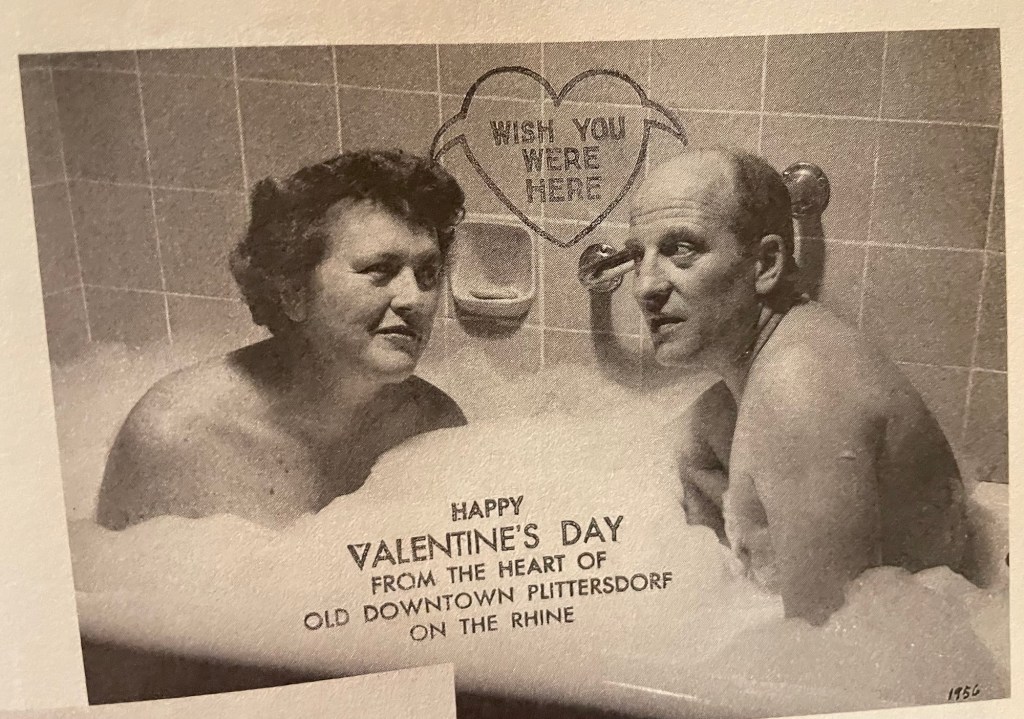
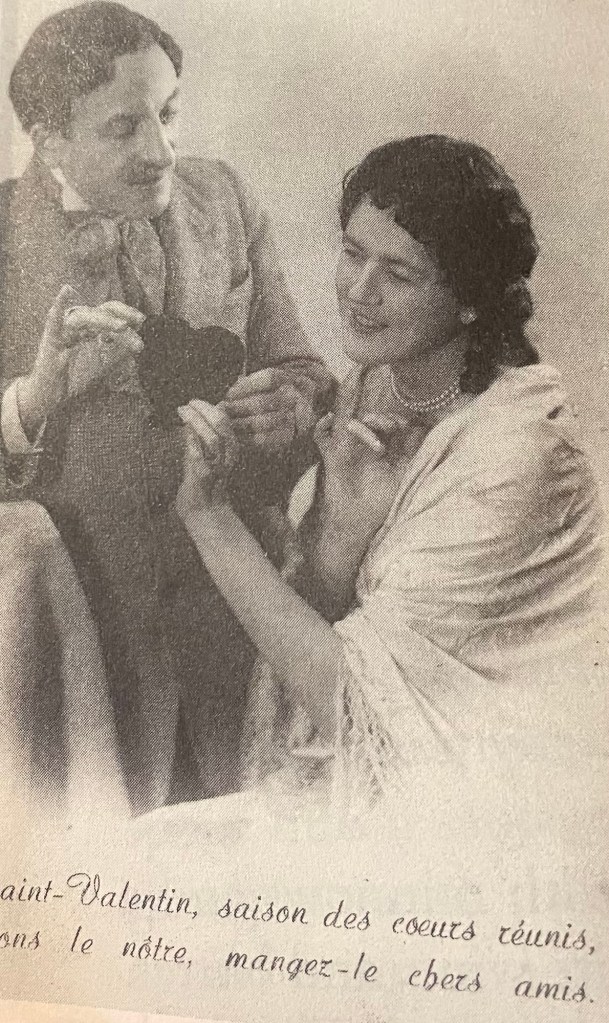
Following Paul’s retirement, they moved back to the US where Julia began work on volume 2 of “Mastering the Art of French Cooking,” and began her television career as “The French Chef.” In addition to assisting Julia with photography for her cookbooks and continuing his artistic career, Paul designed Julia’s kitchen which is now on display at the Smithsonian Museum of American History in Washington DC. If you look closely, you can see the photographs and outlines on the pegboard that helped keep the kitchen organized to her specifications.

Bon appétit!
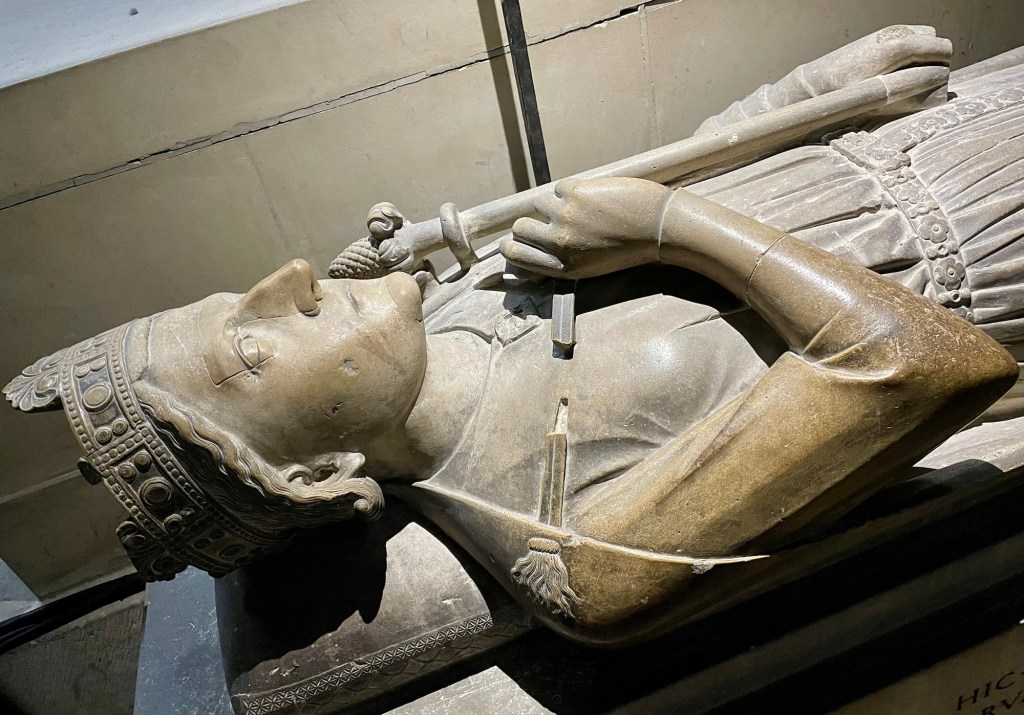
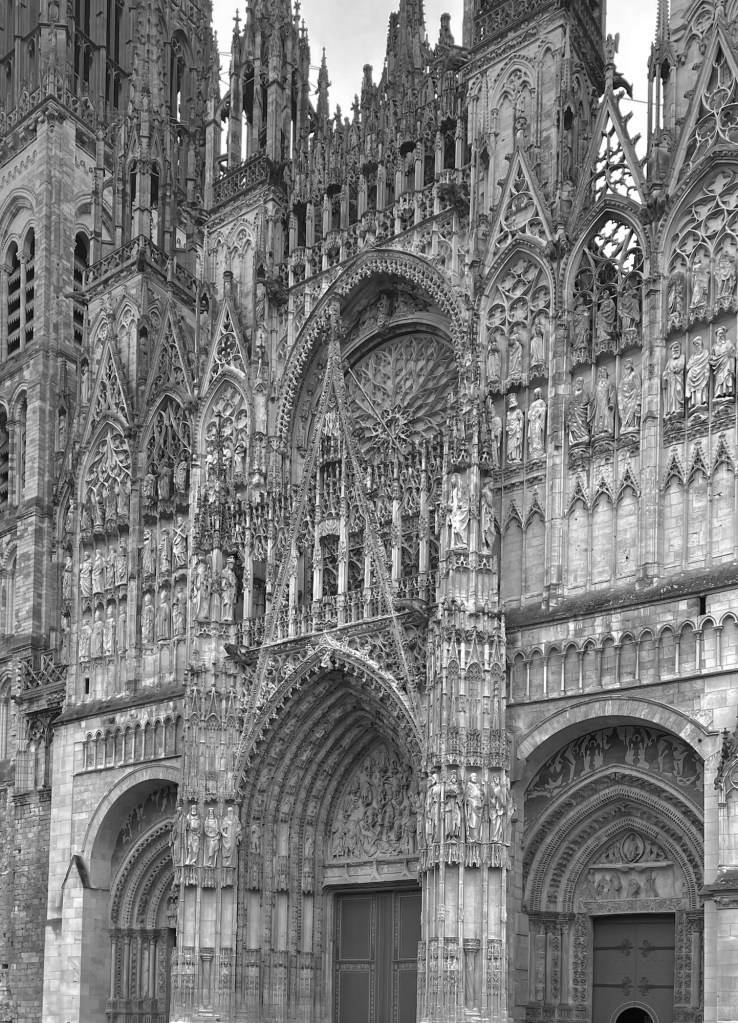
Bonus: In addition to Monet’s cathedral, the square where Joan of Arc was burned at the stake, the tomb containing Richard the Lionhearted’s heart and almost 2,000 medieval half-timbered houses,


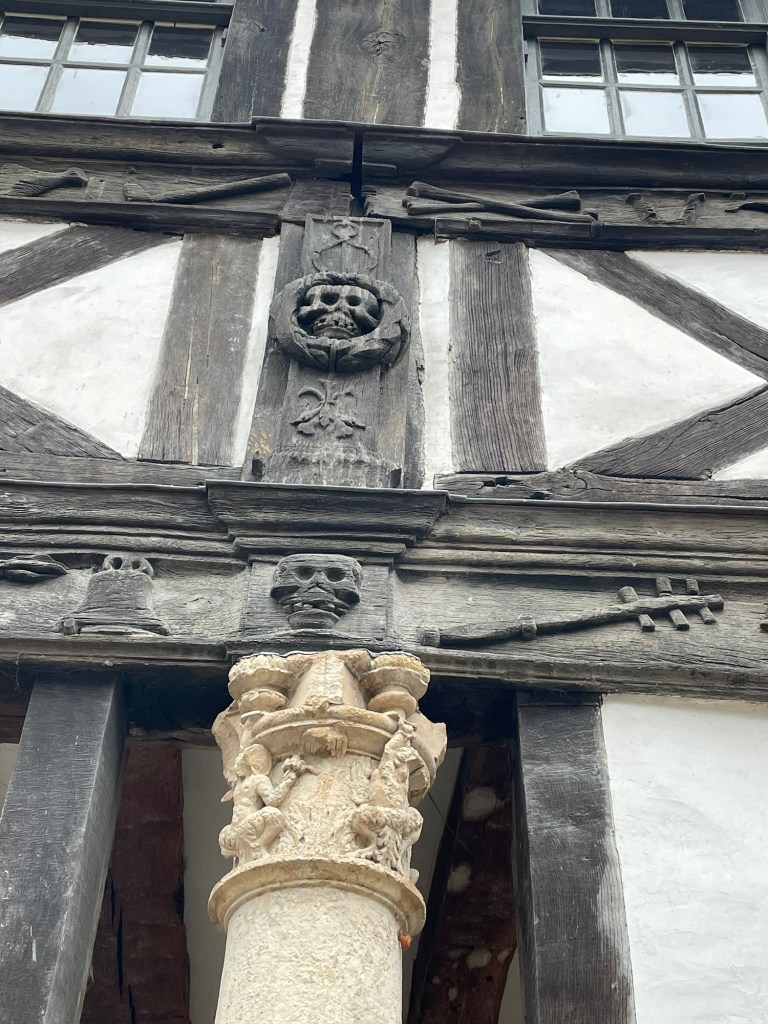
Rouen has the incredible Aître Saint-Maclou. Originally began as a 14th-century plague cemetery, it quickly ran out of burial space. Because the medieval church preached bodily resurrection, the graves could not simply be dug up and destroyed, so from 1526-1533 an ossuary was built around the cemetery to store the old bones in public view freeing up burial space in the cemetery.

Although the bones have been gone since urban burials were outlawed in 1779, there are still the wonderfully grotesque carvings of skulls, crossbones and gravediggers’ tools in the gallery’s woodwork and traces of the dance macabre carvings along the stone pillars.

 Secrets of Philadelphia
Well, this was a fun read, thank you! It feels like the best of a traditional blog 🙂
LikeLiked by 1 person
Thank you!
LikeLike