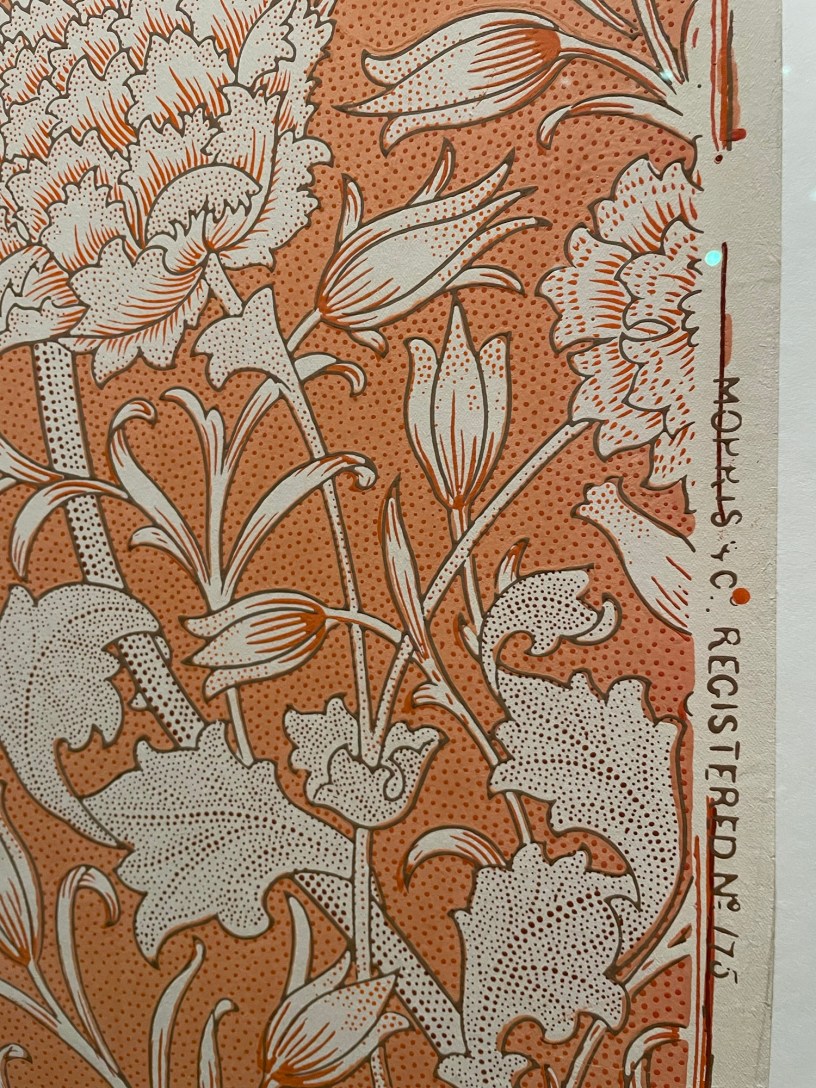
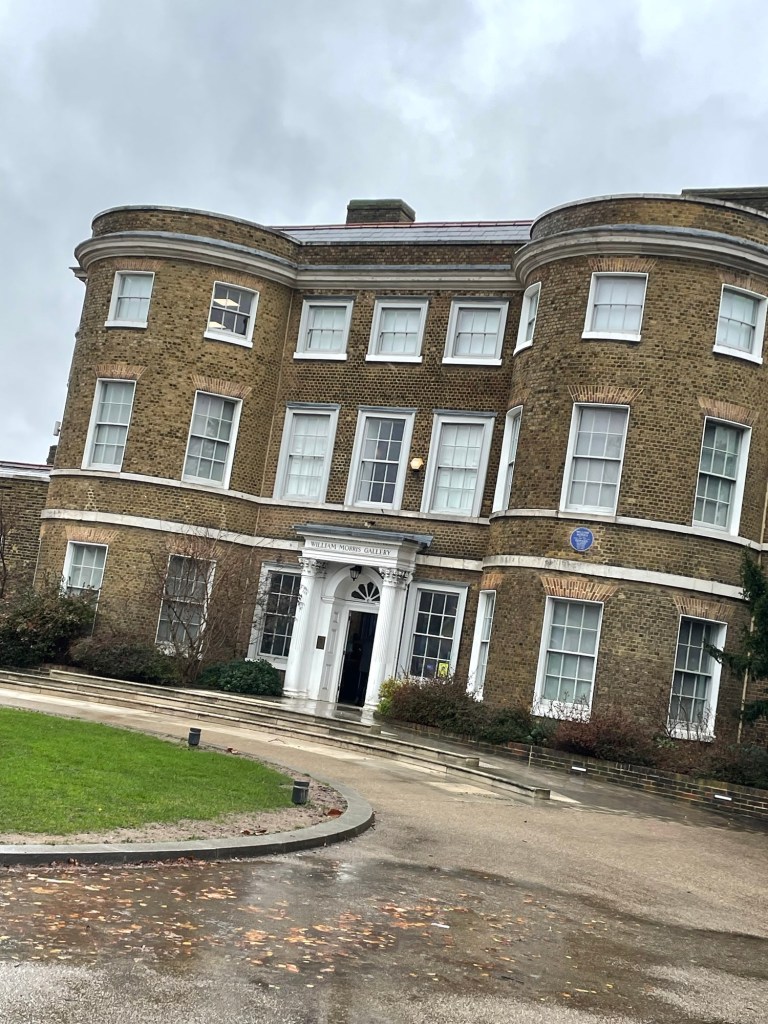
Painter, poet, political reformer, designer, printer, there are so many sides to William Morris besides his wallpapers. The best place to learn more is the William Morris Gallery, housed in the Georgian home where Morris lived as a teenager from 1848 to 1856 (free!).
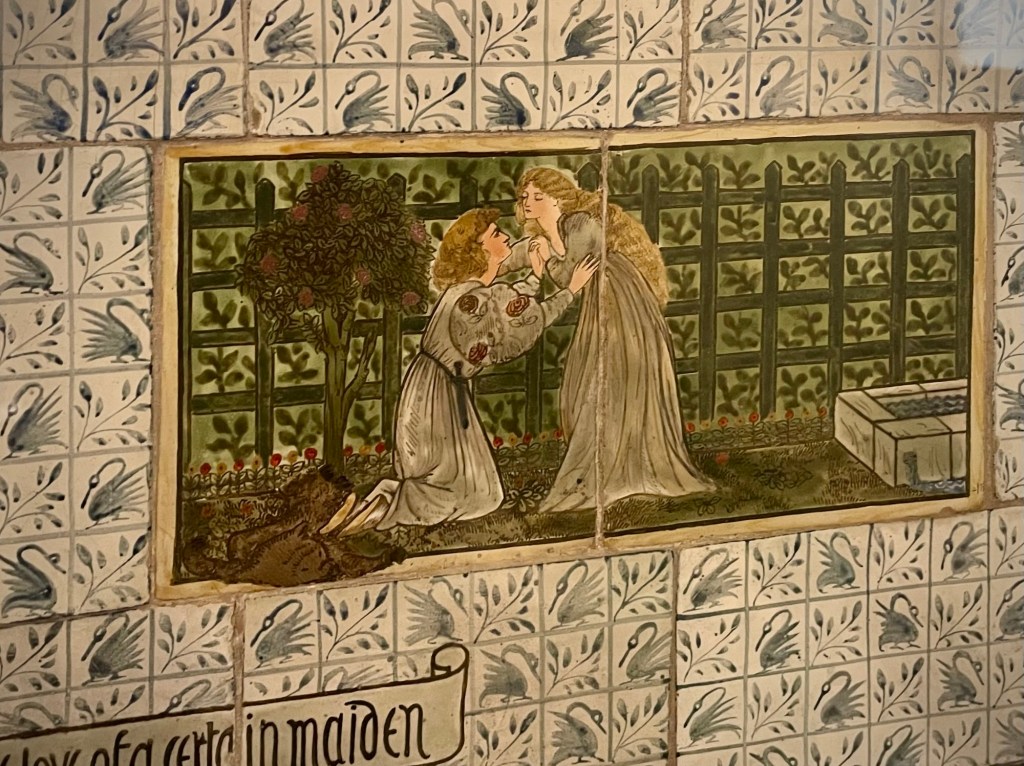
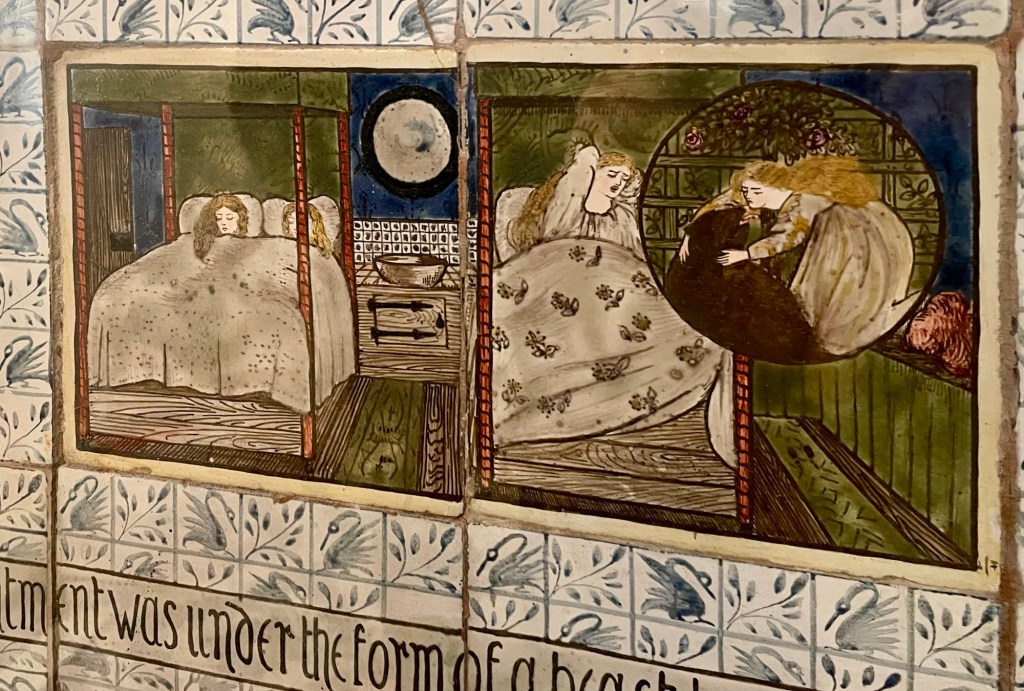
Its galleries hold so many milestones relating to Morris’s life. These Beauty & the Beast tiles are by Morris’s friend and fellow Pre-Raphaelite artist Edward Burne-Jones:
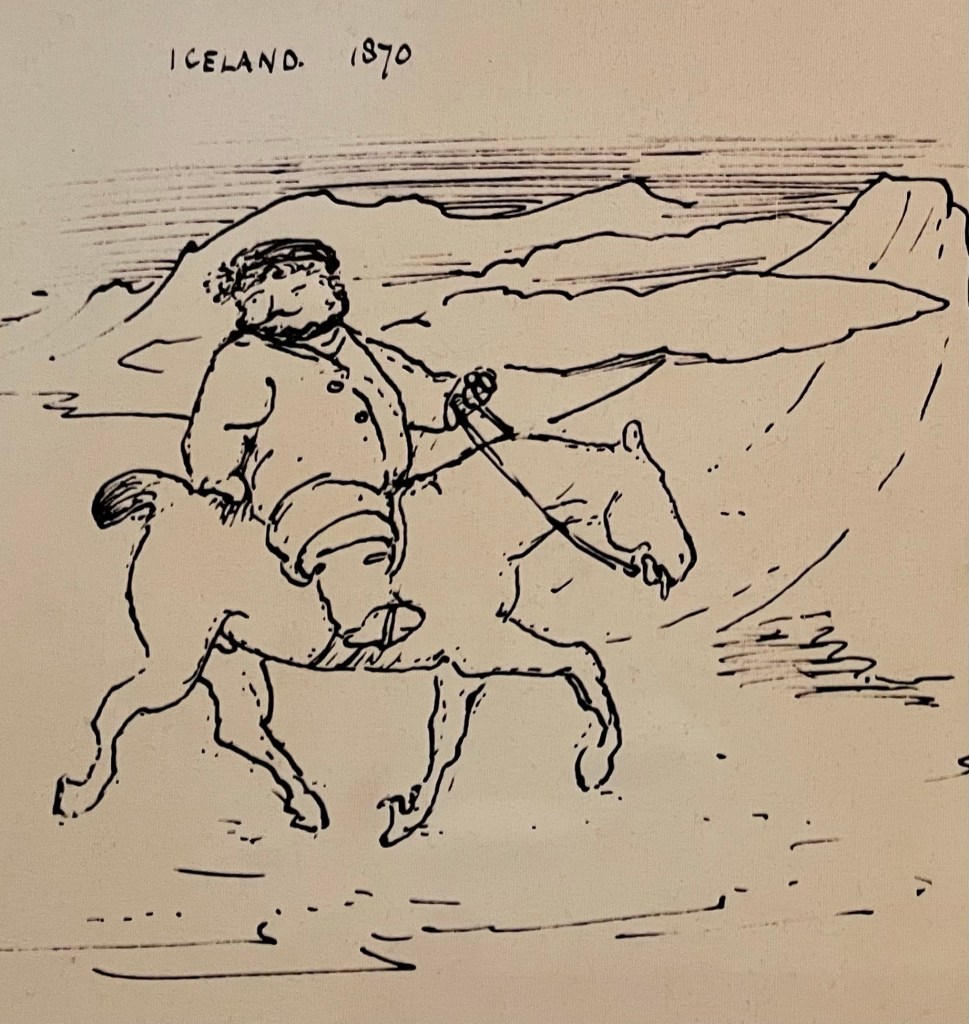
Burne-Jones also sketched this adorable image of Morris riding a pony during one of his trips to Iceland, where he trekked to places mentioned in the Icelandic sagas he loved. Morris returned home with one of the ponies, “Mouse,” as a gift for his daughters:
In the room devoted to Morris’s political career is the satchel he took to rallies and demonstrations stuffed full of socialist pamphlets and lecture notes.

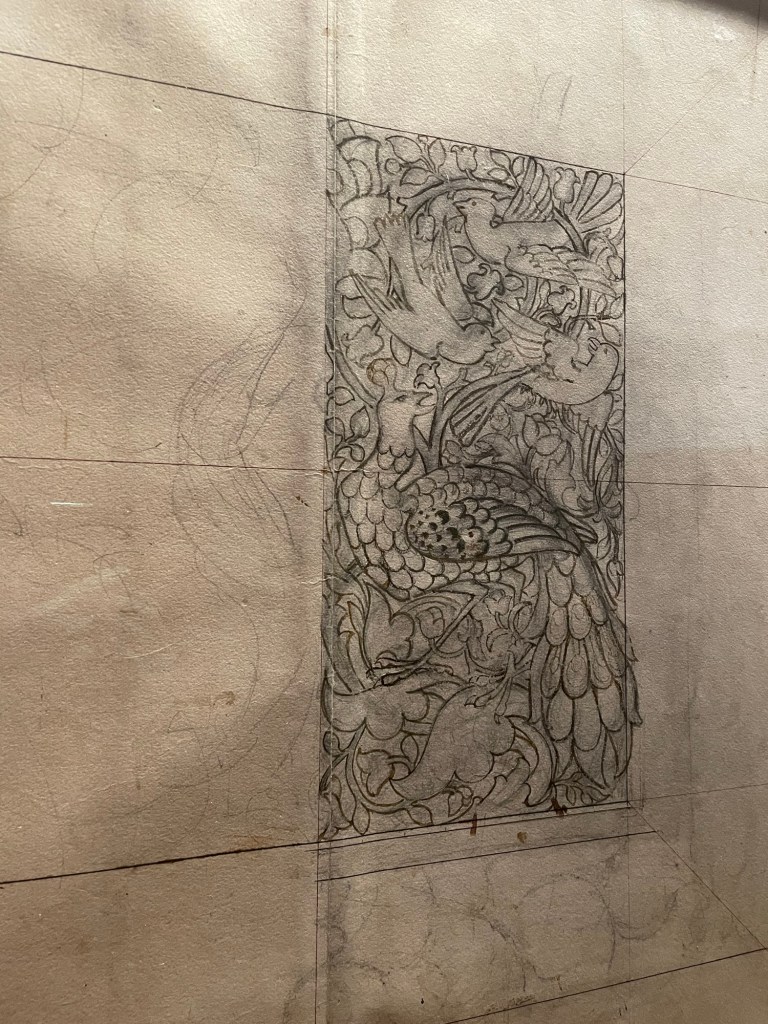
My favorite part is the galleries that focus on his company, workshop and store. They include the original sketch of his first wallpaper and carpet design:

You can even touch a hand-carved woodblock used to make the company’s Daffodil pattern wallpaper:

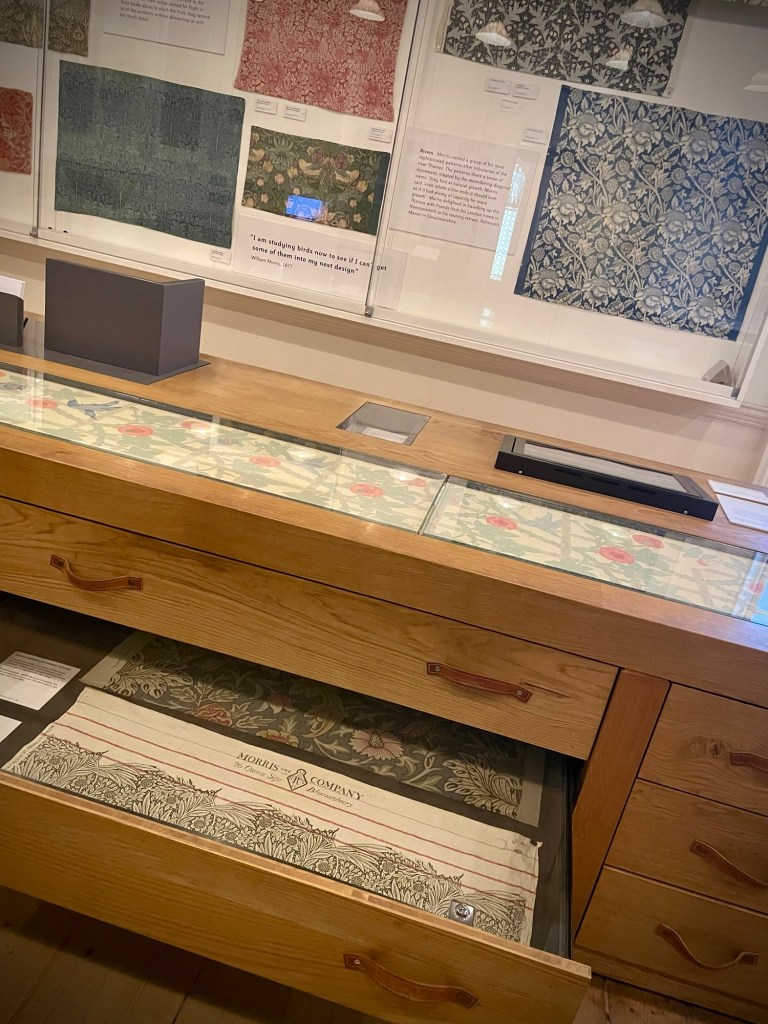
One room holds drawers full of wallpapers and textiles:
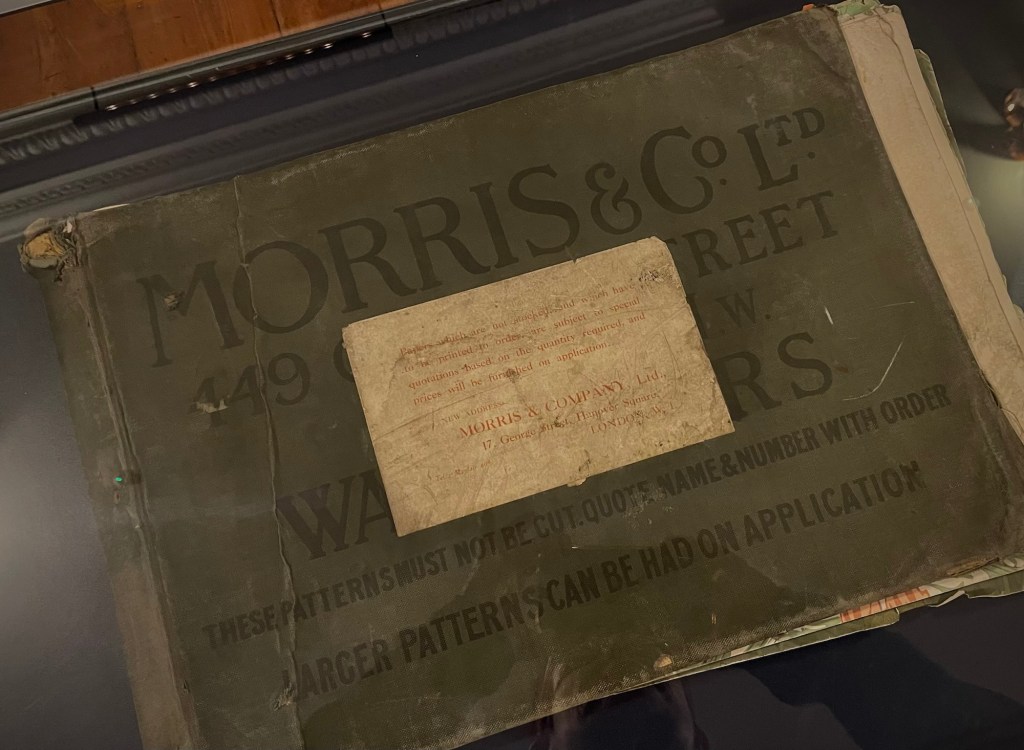
The adjacent room is set up to recreate the London shop, complete with original sample books:

Of course, the best way to truly appreciate Morris is to see his works in situ. The best I’ve found in London are the homes of Emery Walker and Lionel Sambourne. Walker’s home is just up the road from the house where Morris lived from 1878 to 1896 (FYI: Morris’s house is privately owned, but there is a small museum housed in its coach house, where Morris held Socialist meetings).
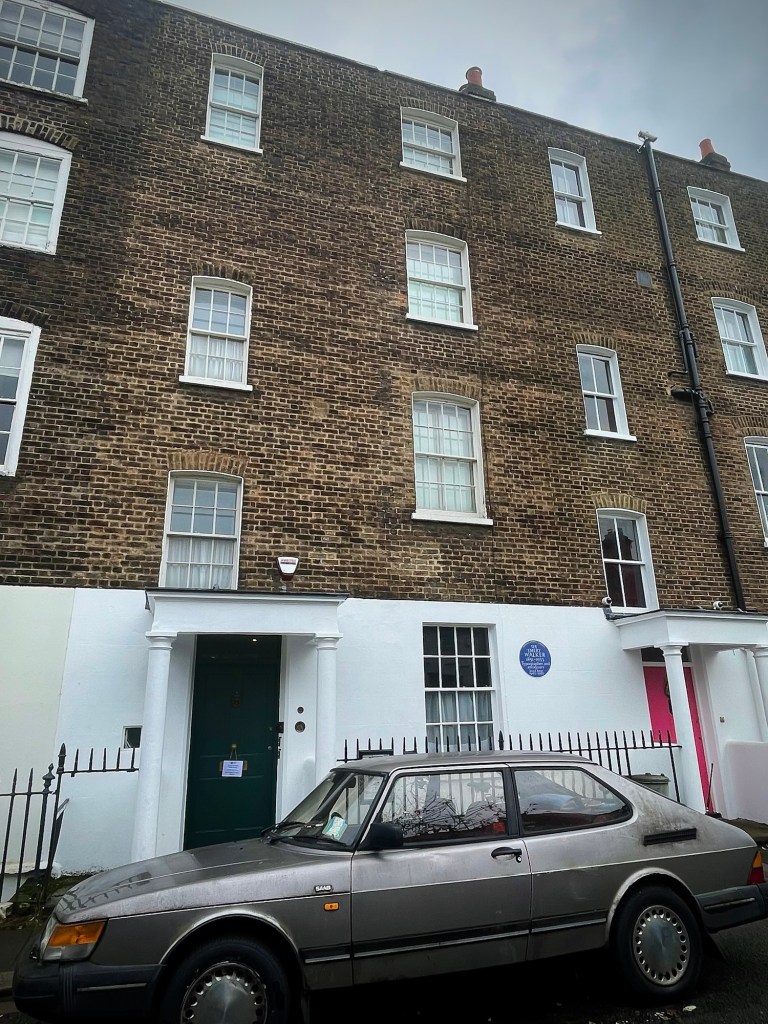
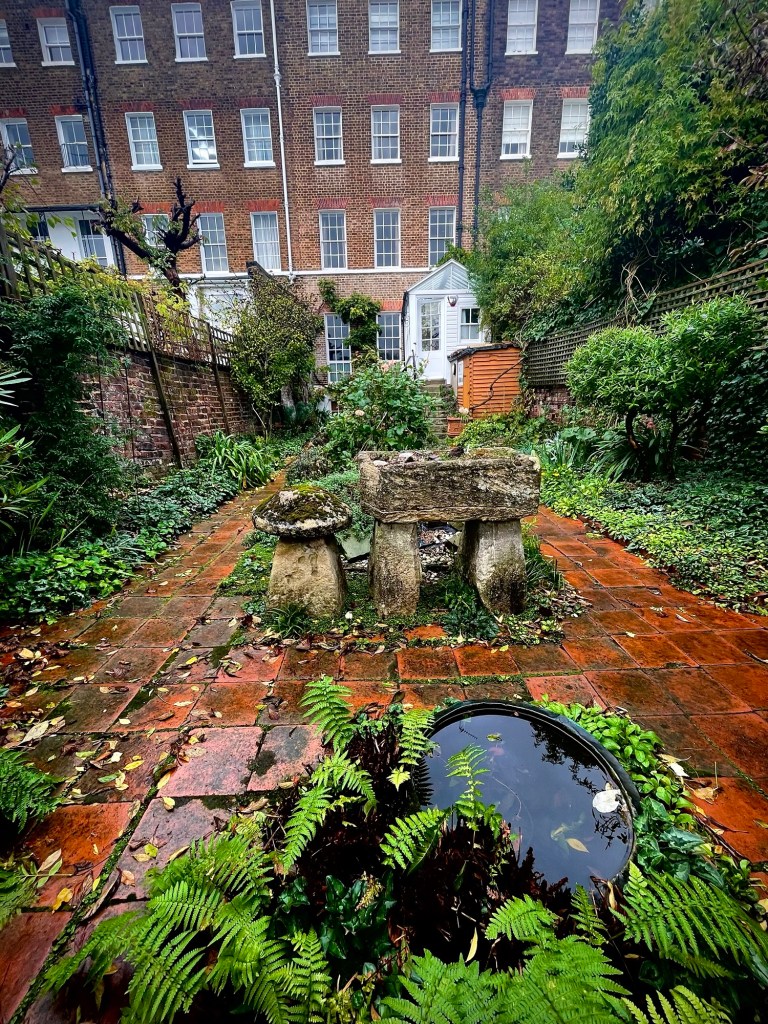
The two connected through their shared support of the Socialist movement. It was through Walker that Morris became interested in printing, and Walker helped Morris set up his Kelmscott Press. The families became friends, visiting each other almost daily, and the house is full of Morris memorabilia, including several pieces by Morris’s daughter, May. It is still decorated with original Morris wallpapers, textiles and furnishings. Unfortunately, photography is not allowed in the house, so these photos are from their brochure.
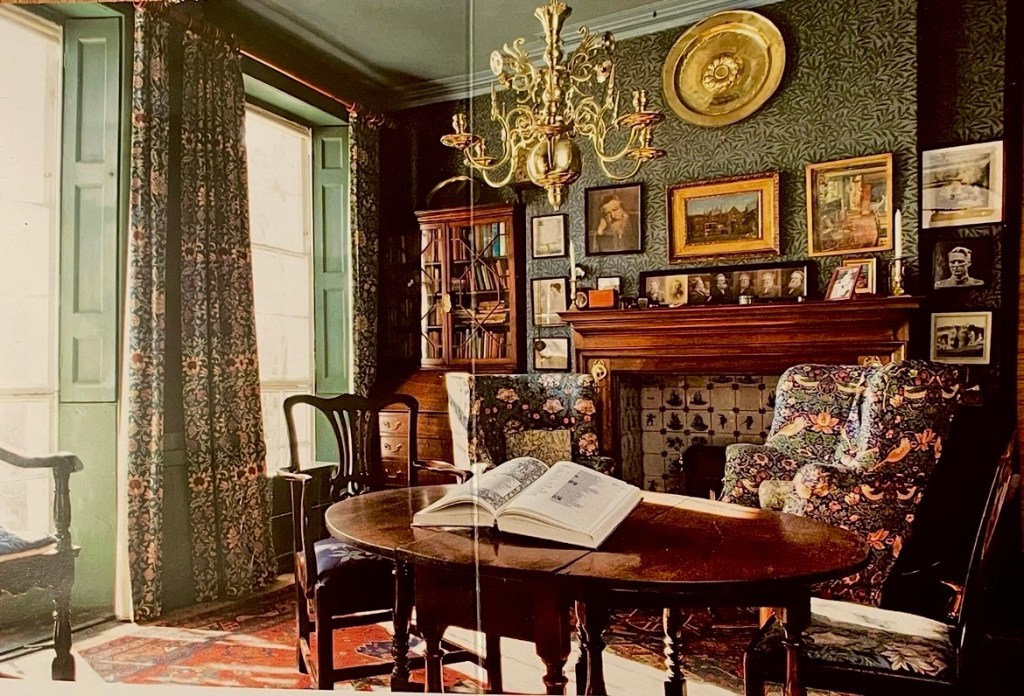
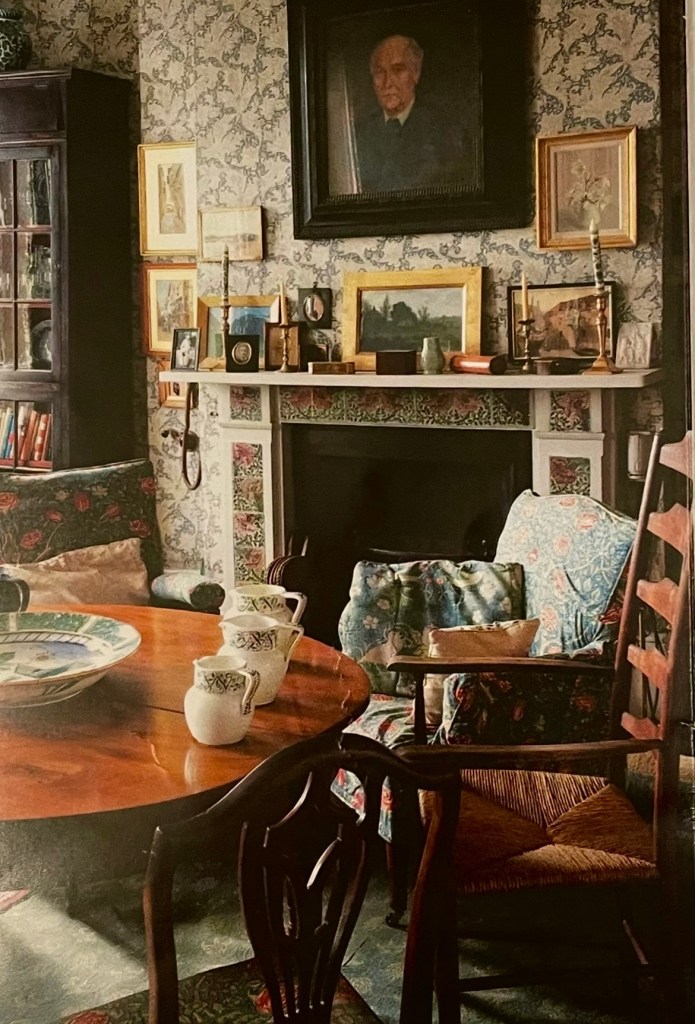
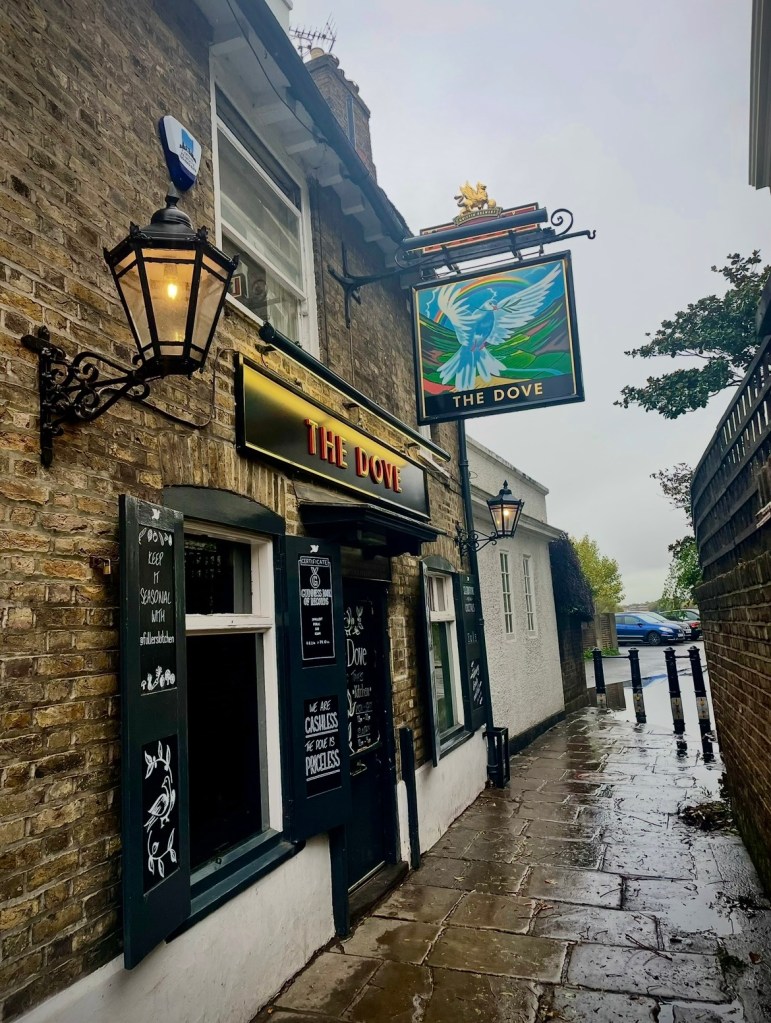
After a visit, stop in at The Dove (named for Walker’s printing company) for a coffee and snack and stroll along the river to the Hungerford Bridge, where Walker’s ex-business partner tossed the original typeface into the river after their acrimonious split. Look down: mudlark’s still find pieces, several of which are on display at the house.
Another fabulous place to see Morris’s work is the Linley Sambourne house. Sambourne was chief cartoonist for Punch Magazine, and lived at this house from 1875-1910. Luckily, pictures are allowed here, because there are so many fantastic details:
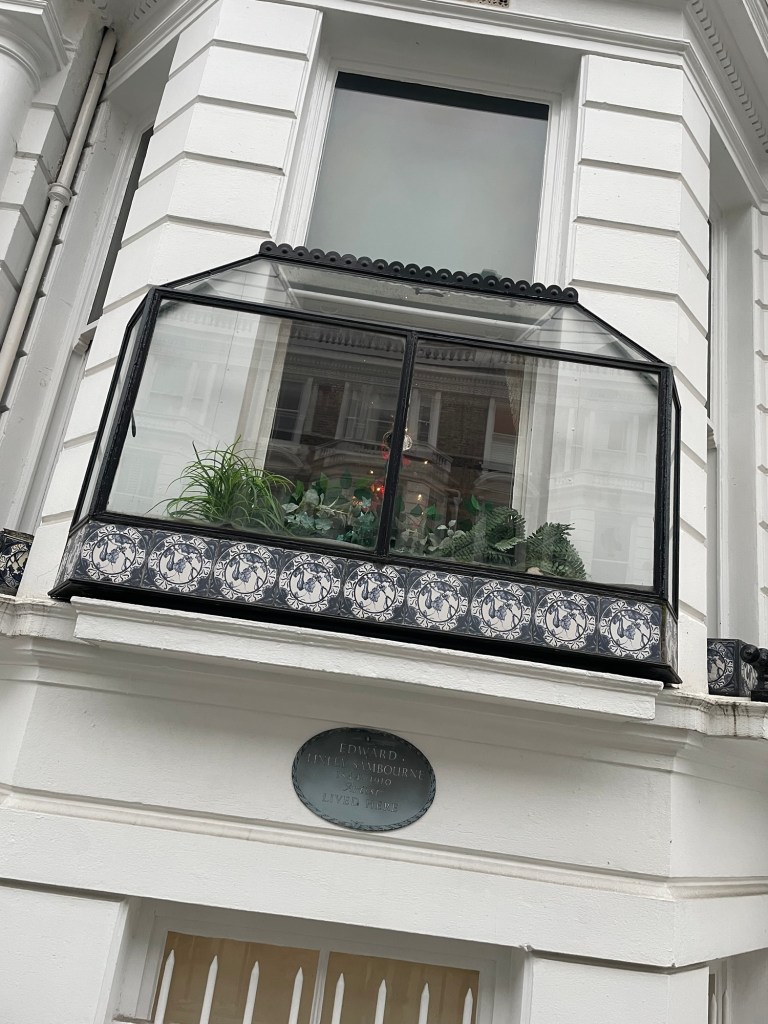
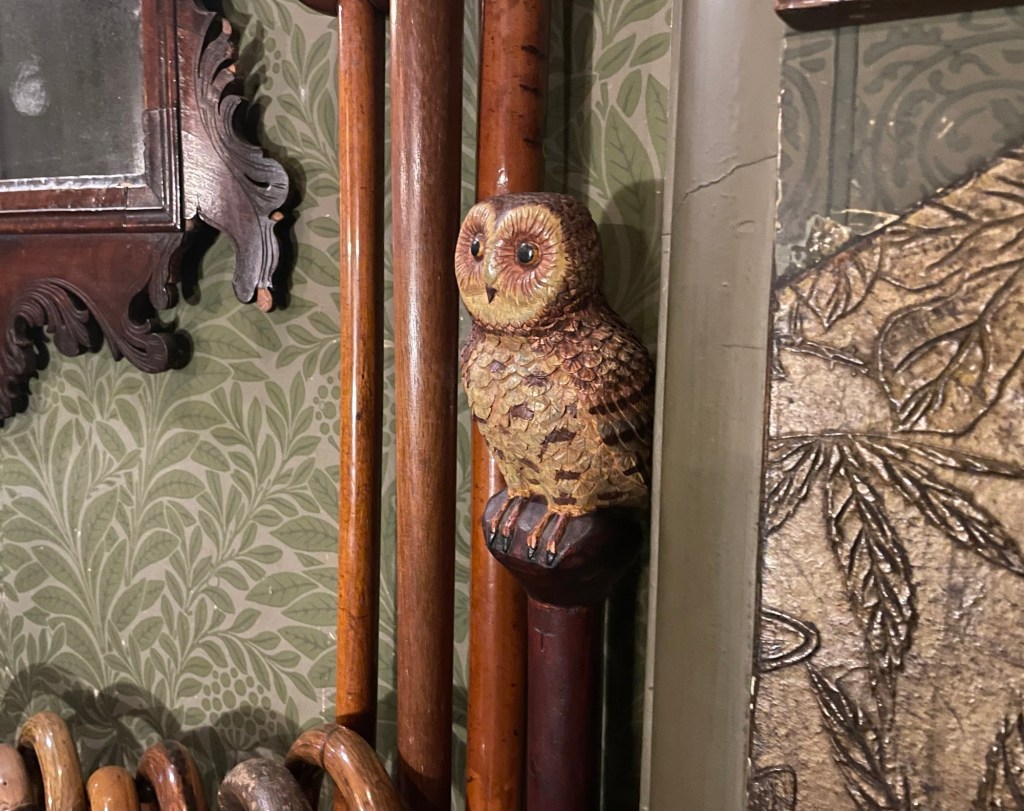
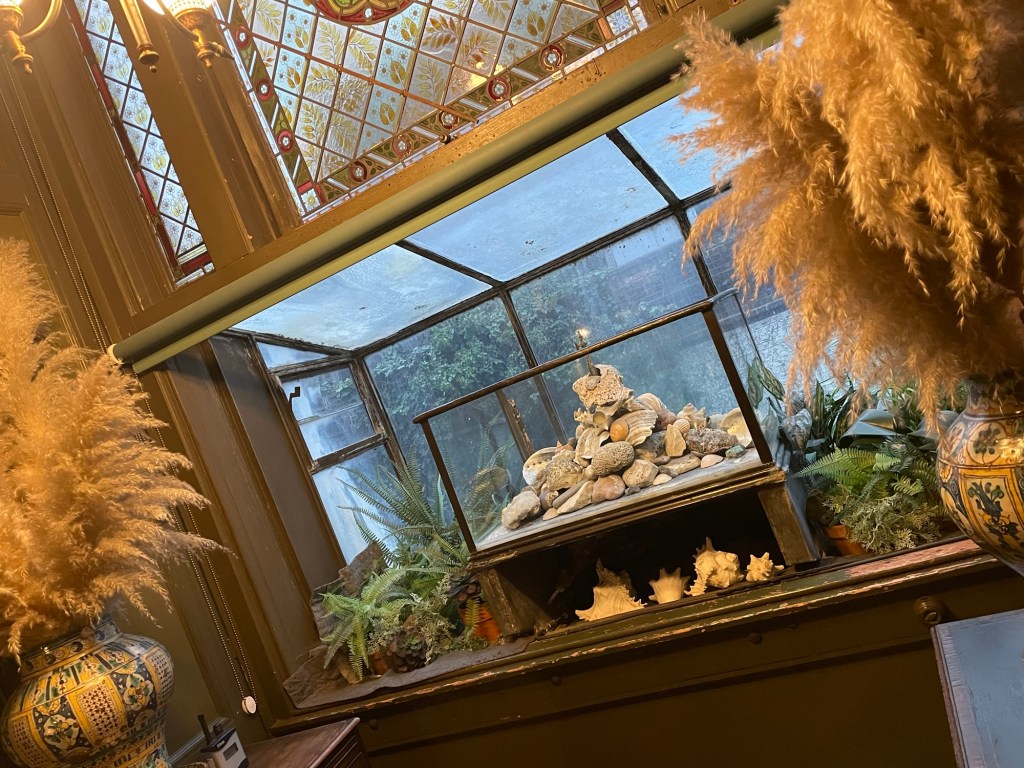
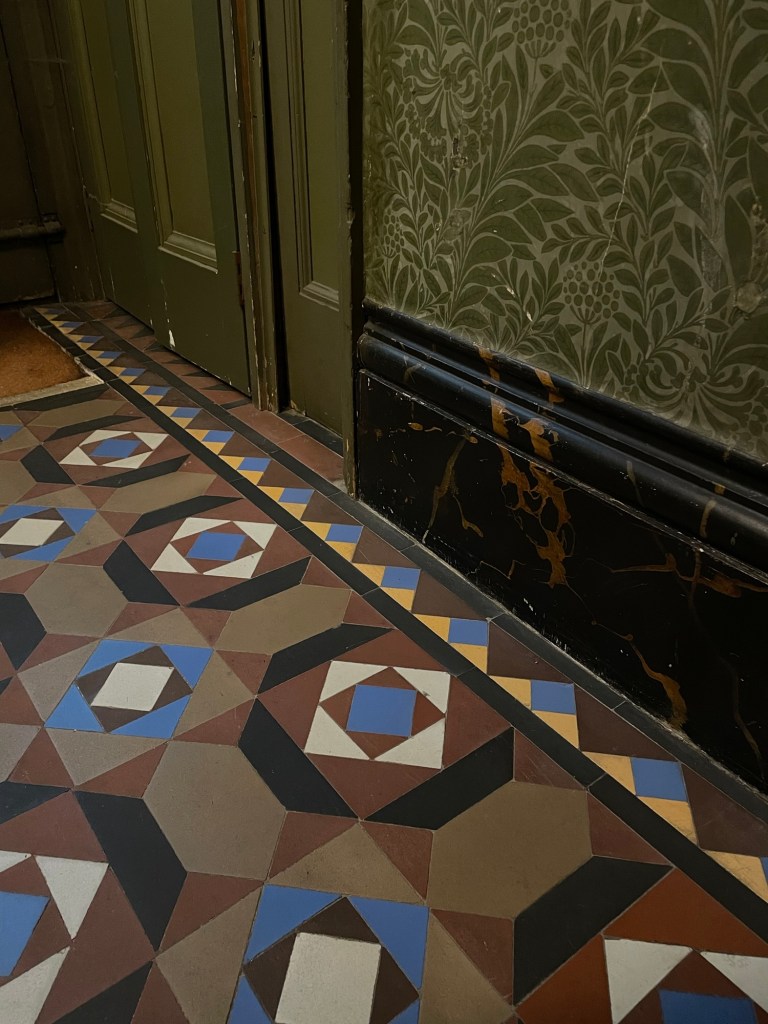
And, soooo many Morris wallpapers and fabrics:
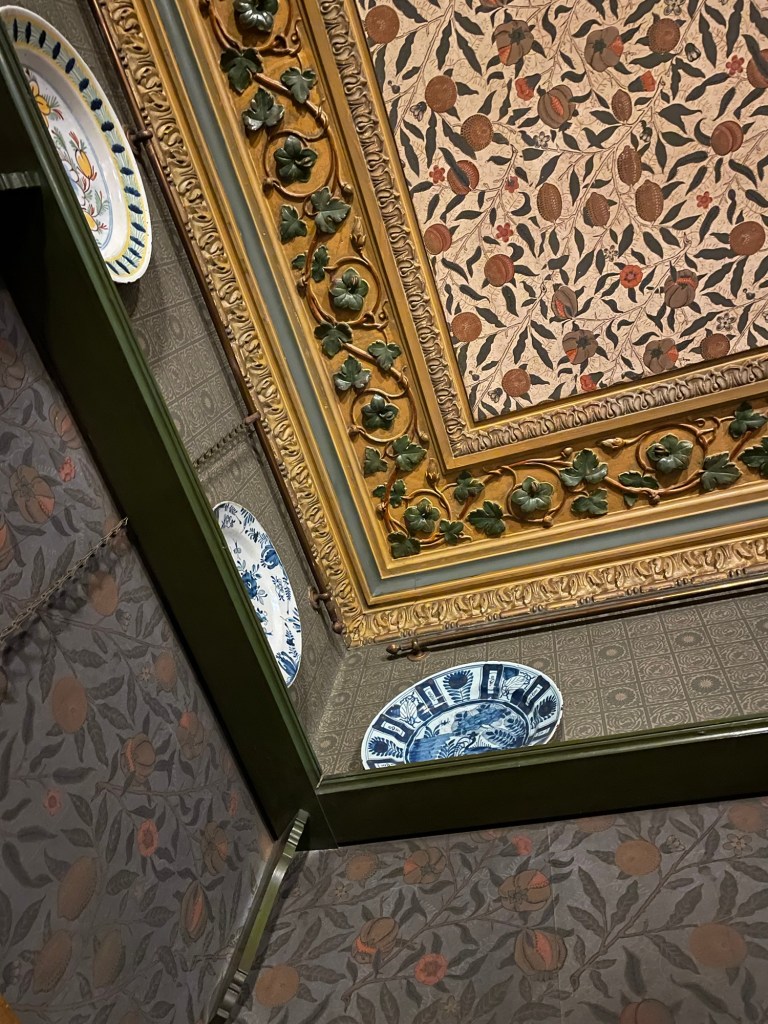
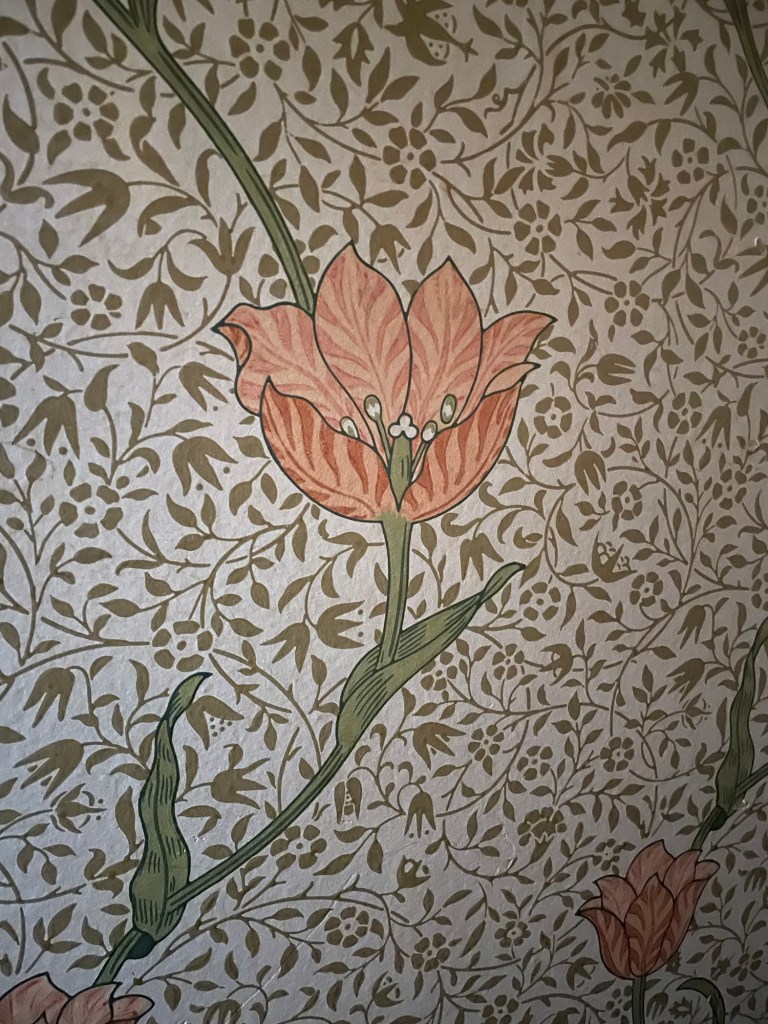
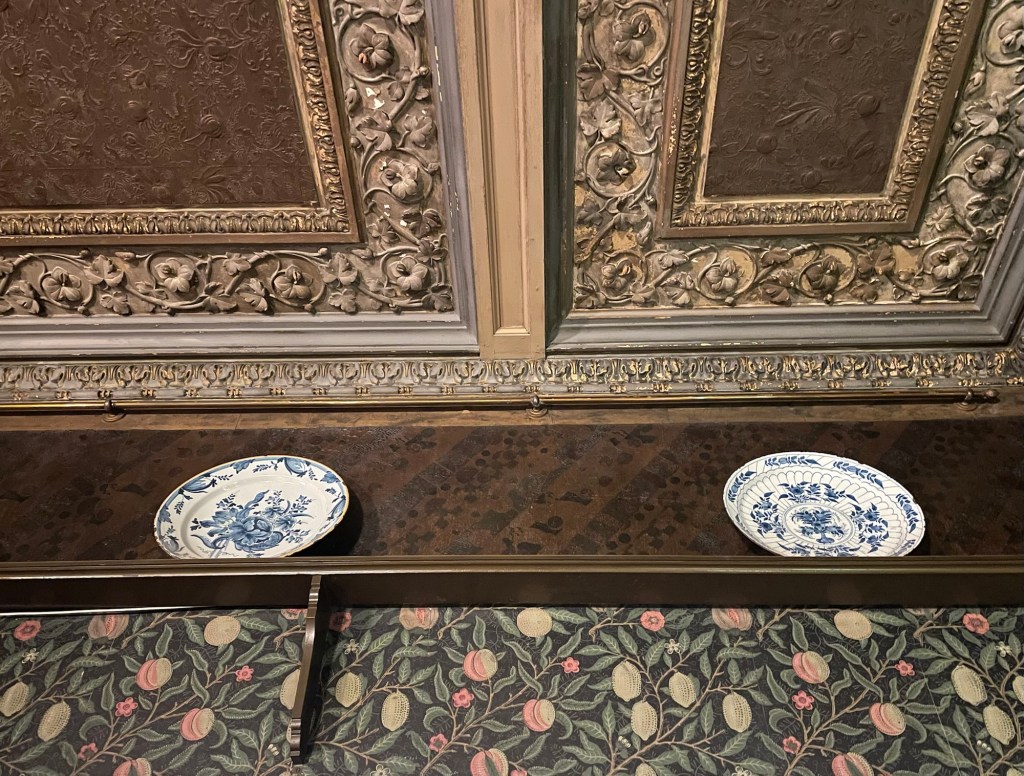
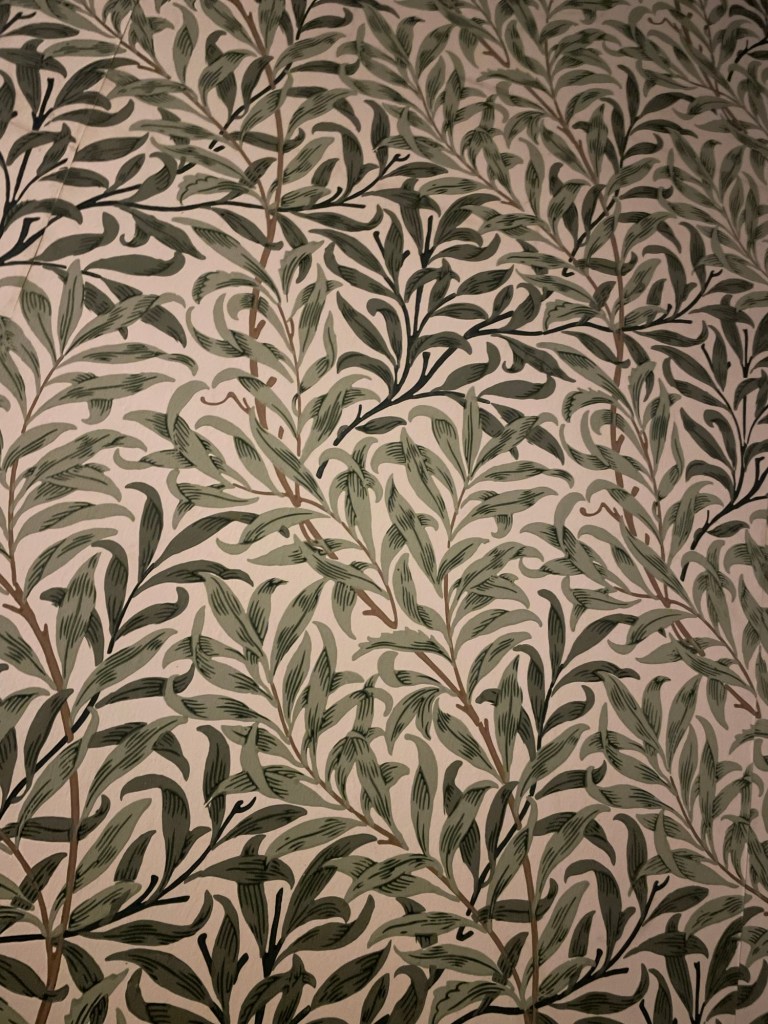
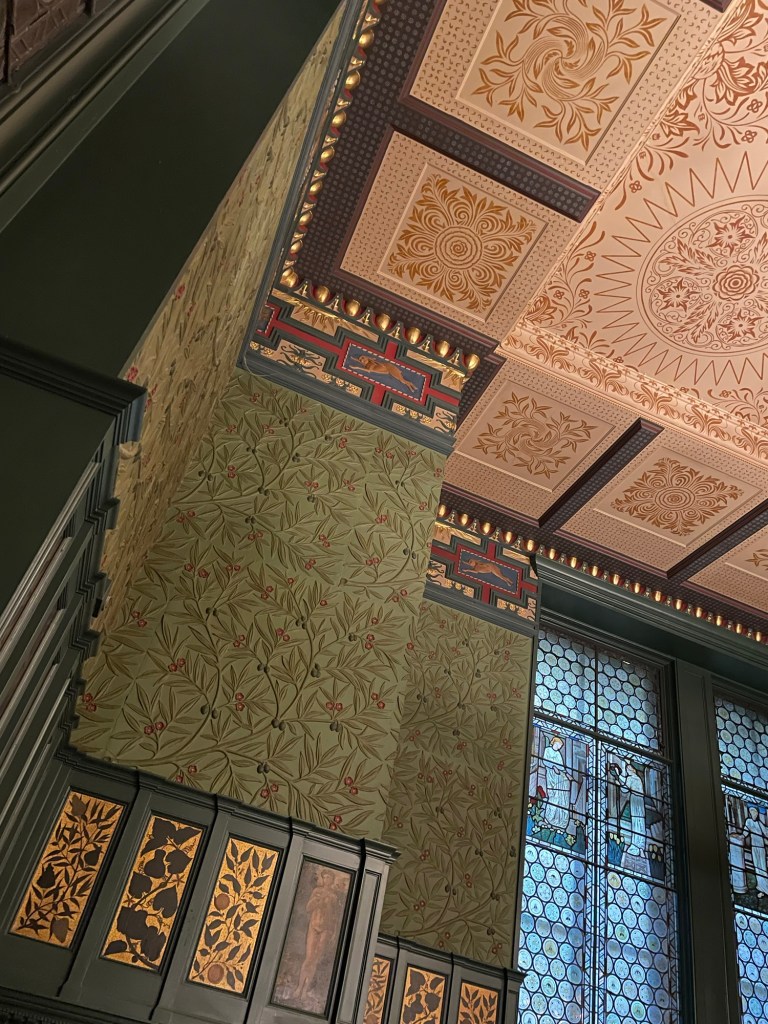
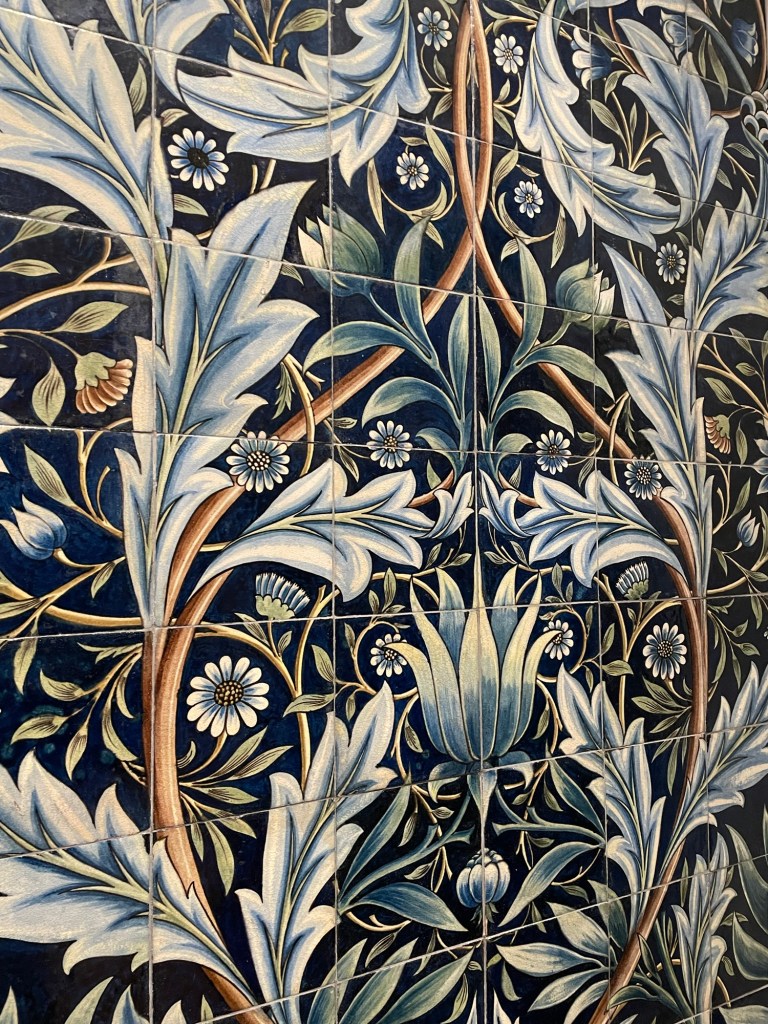
To dine Morris style, visit the dining room he designed at the Victoria & Albert Museum. It’s a perfect place for tea or lunch after tracking down some of his works in the collection.
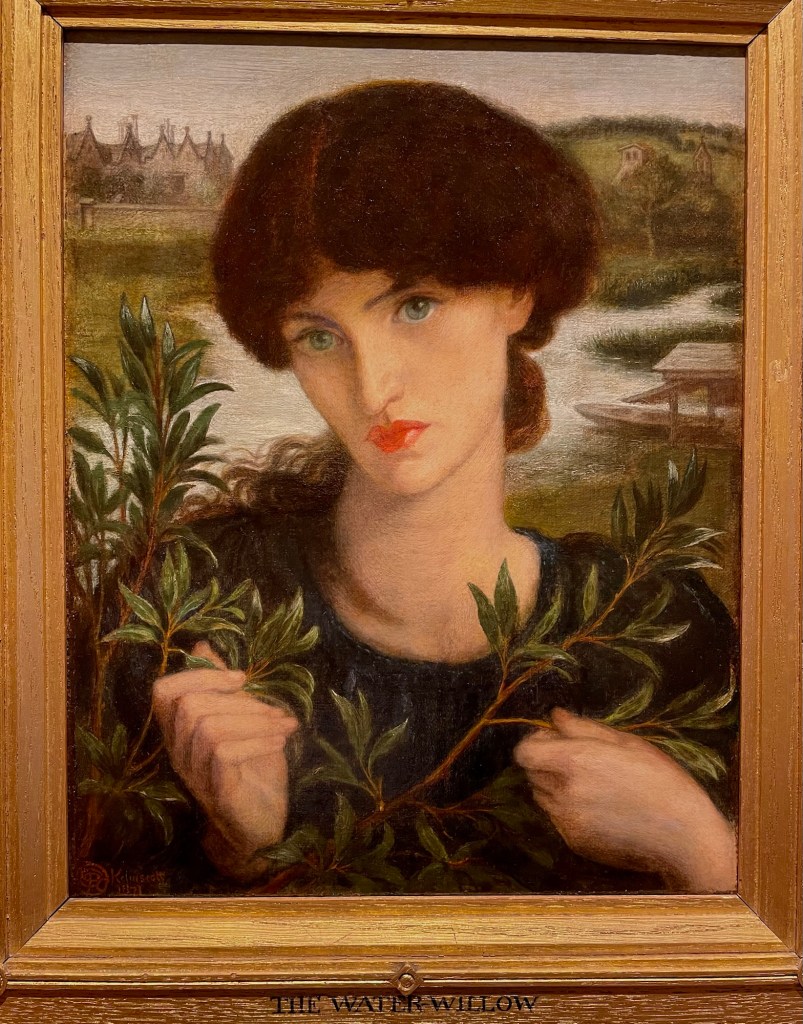
For my Philadelphia folks: The Delaware Art Museum has a fantastic collection of Pre-Raphaelites, including several pieces by Morris and a painting of his wife Jane by Gabrielle Rossetti, founder of the Pre-Raphaelite movement, friend and business partner of Morris’s, and Jane’s lover.

 Secrets of Philadelphia