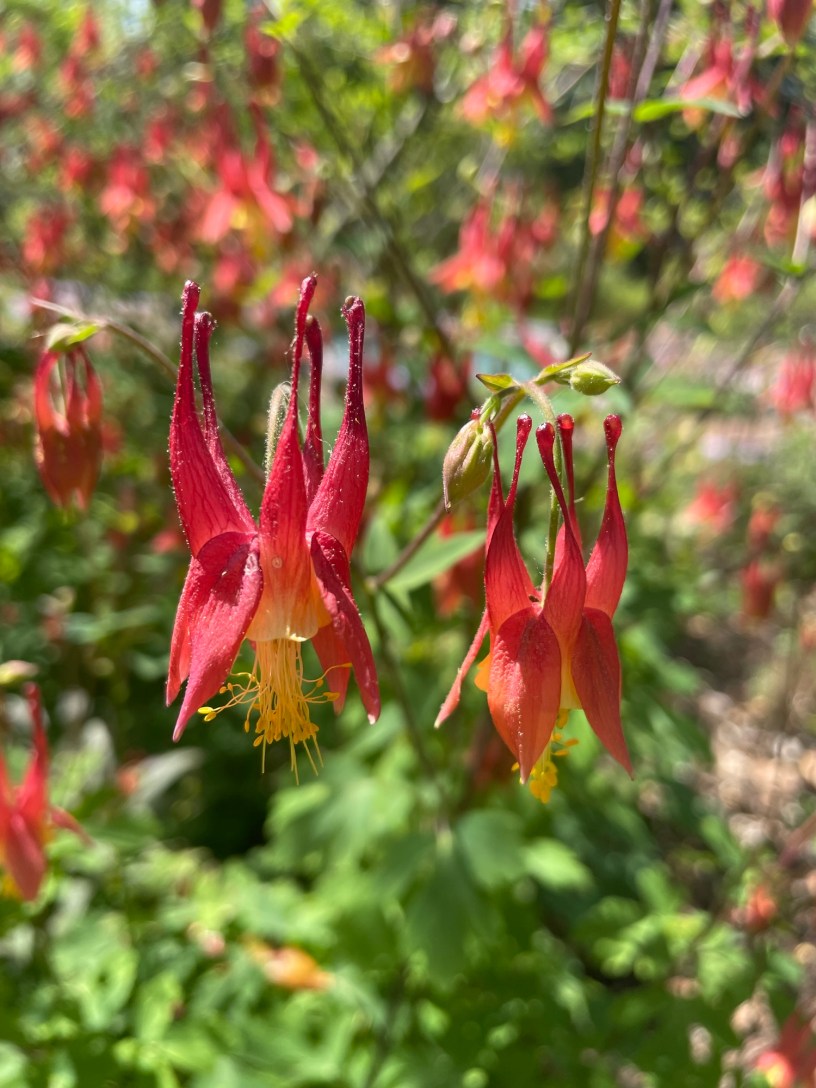
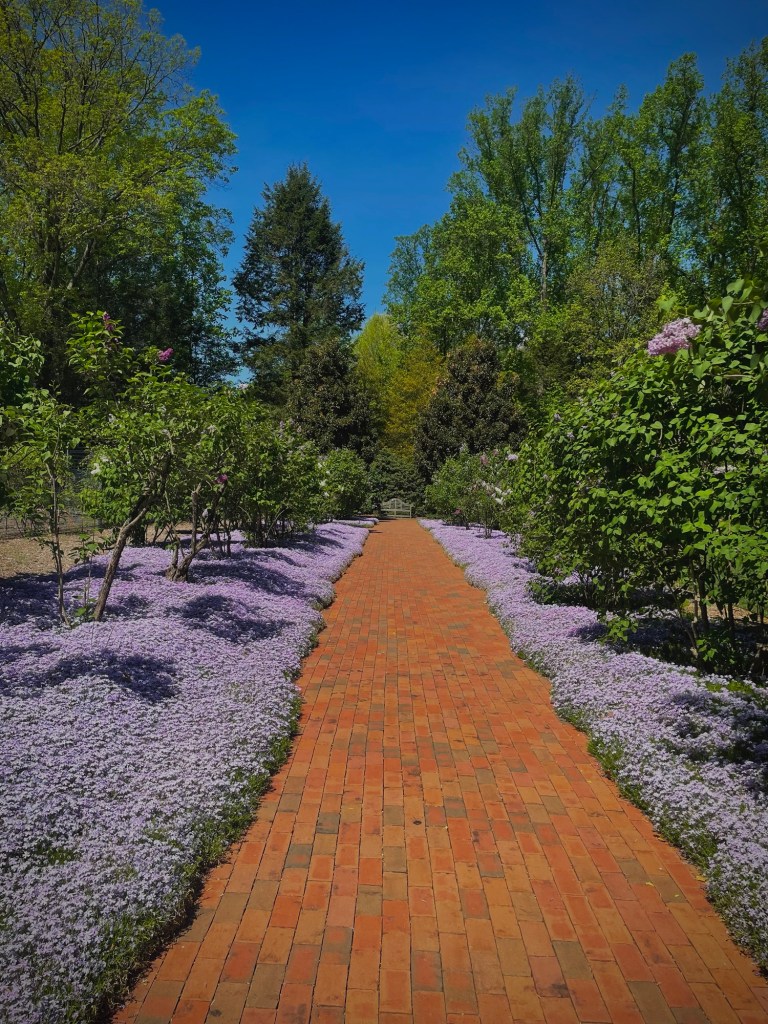
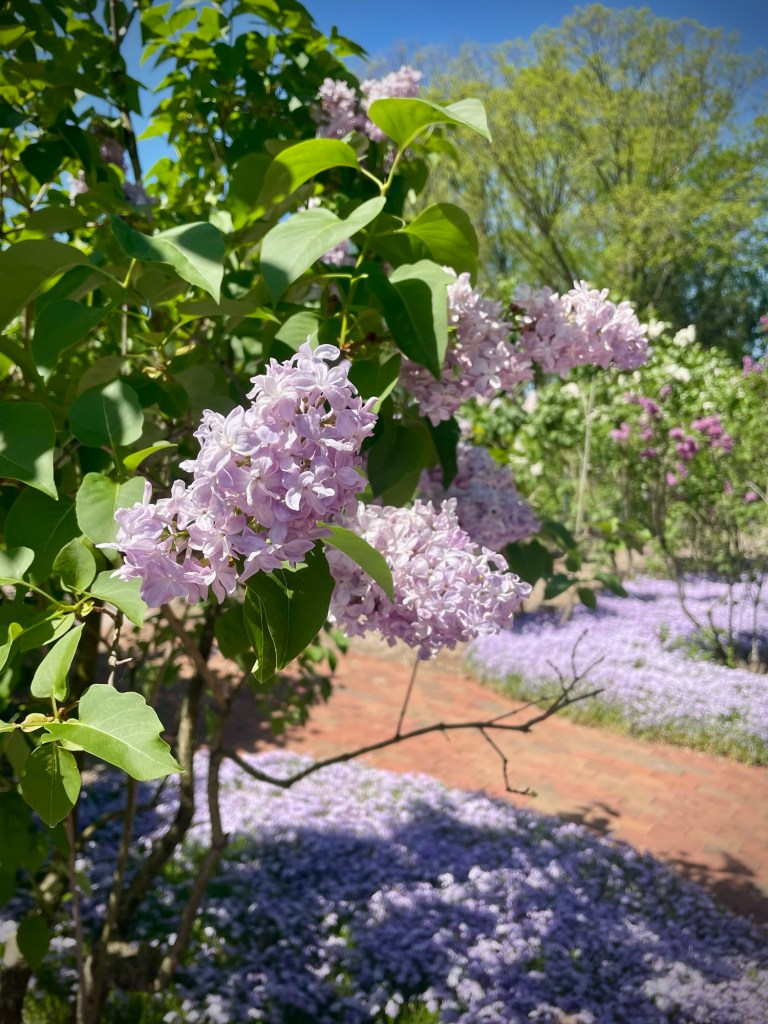
Between the formal beds, trial gardens, and wildflowers there’s always something blooming at Mount Cuba. However, late April/early May is by far the best time to visit, because it’s then that you can see (and smell!) the amazing lilac allee with its mounds of matching phlox.

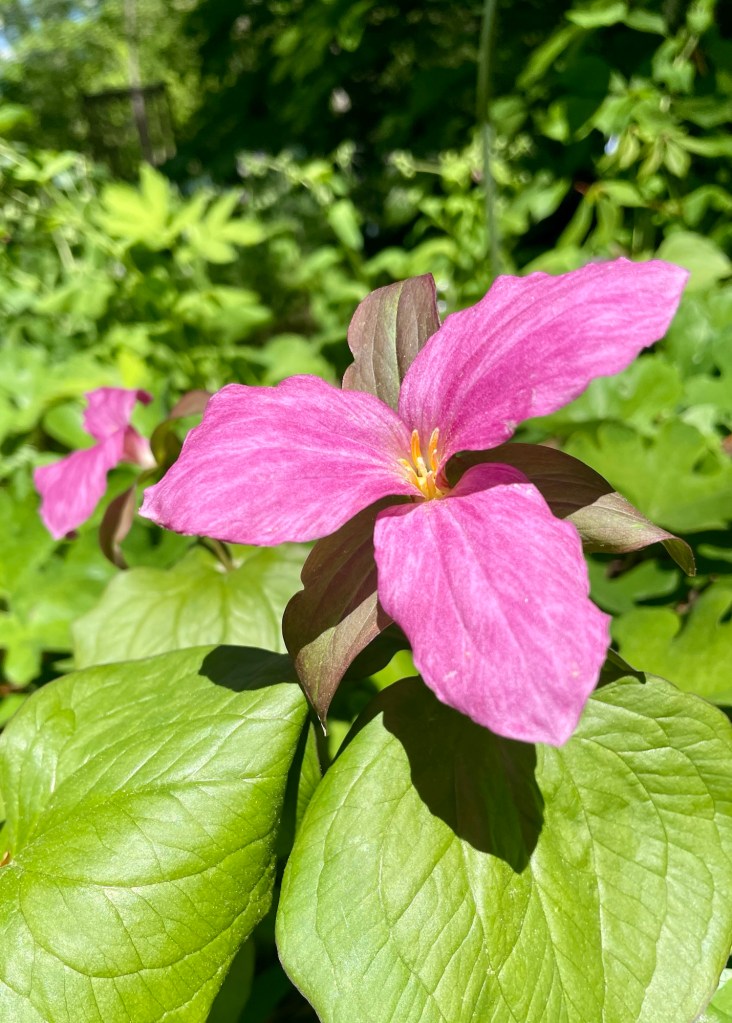
It’s also the time of year when its national collection of trillium is in full bloom.
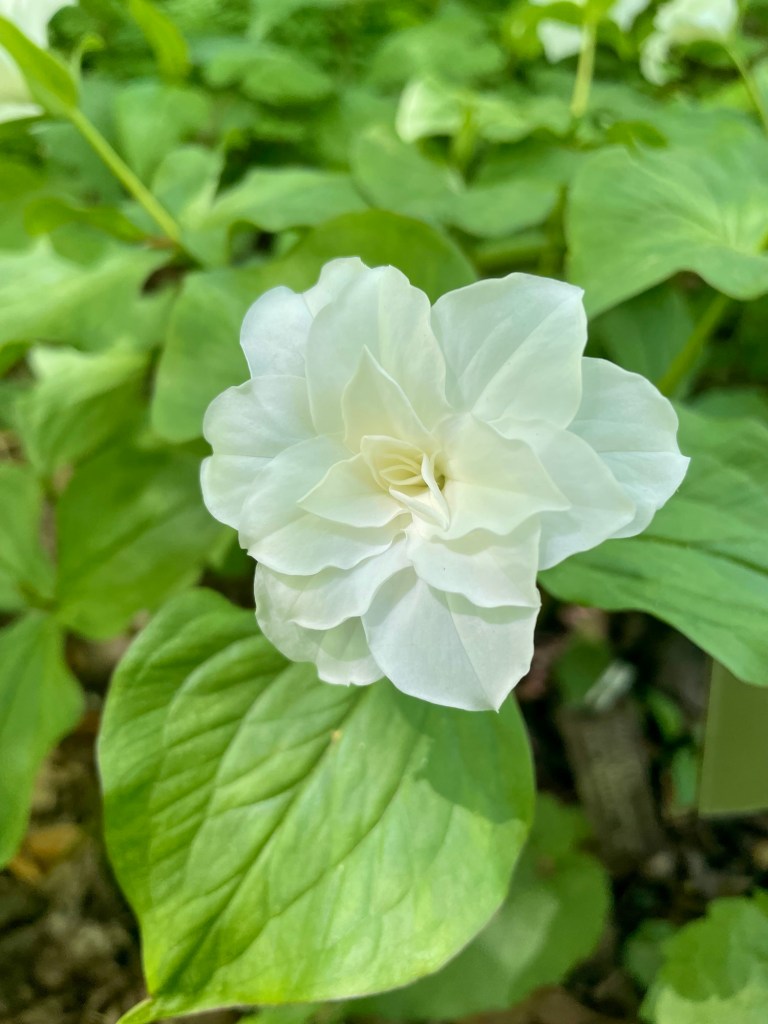
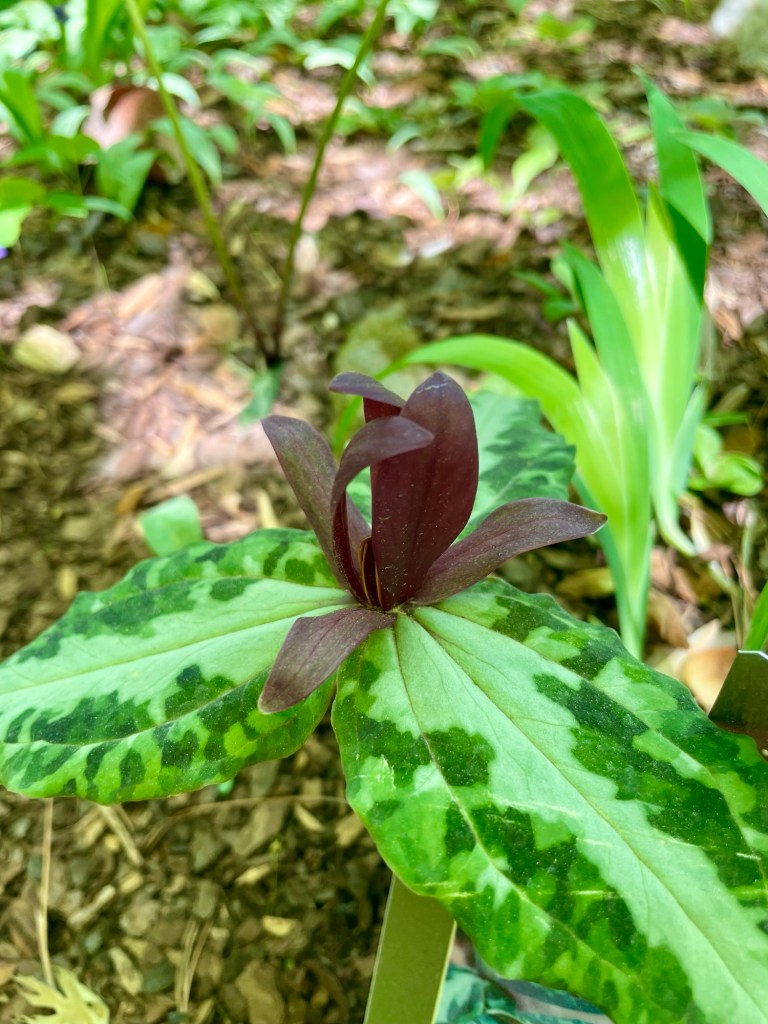
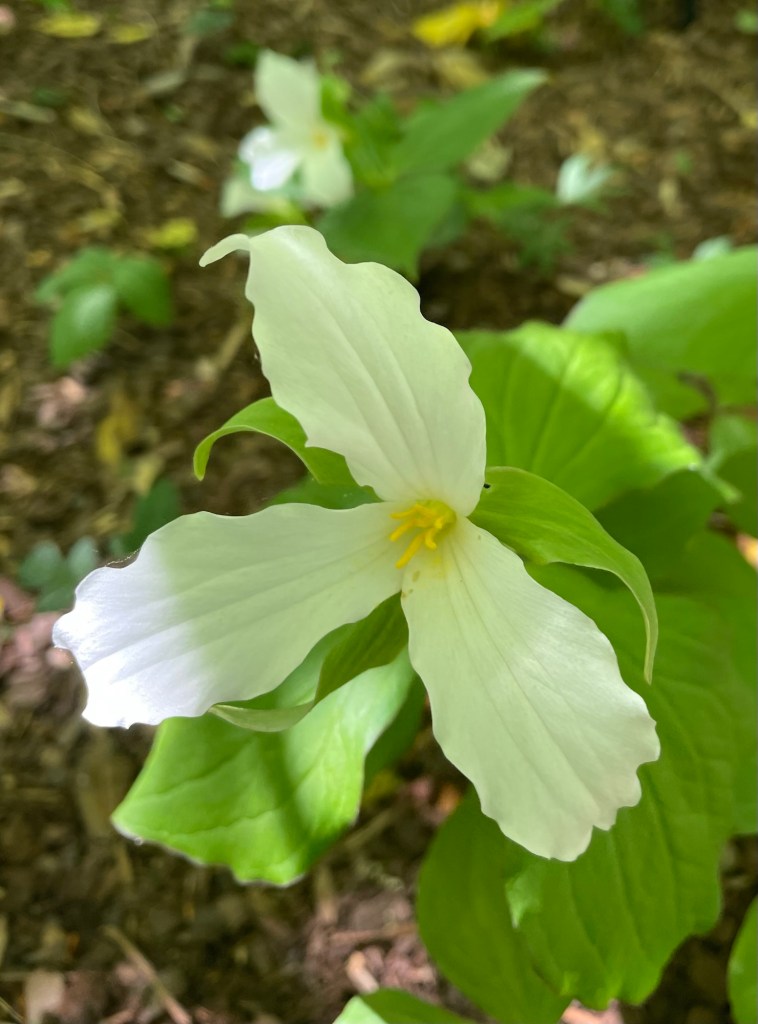

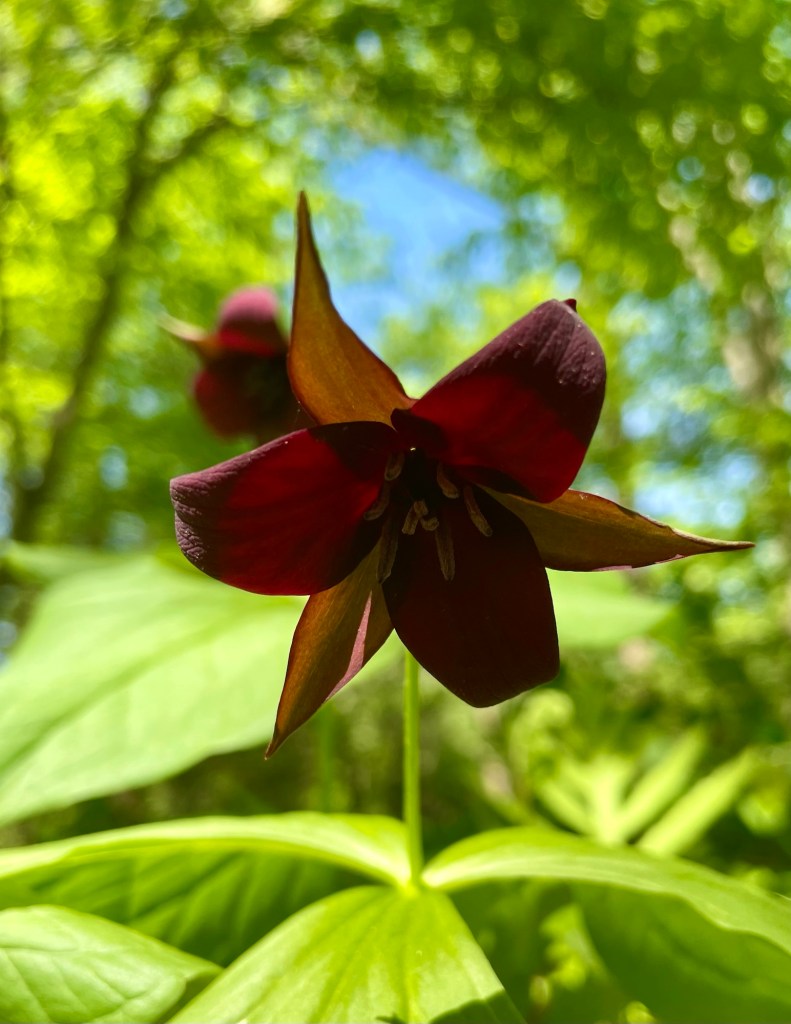
Past the formal gardens are trails through the forest and grassland and along the creek. The variety of habitats make this a birder’s paradise. My Merlin app picked up almost 30 different species.

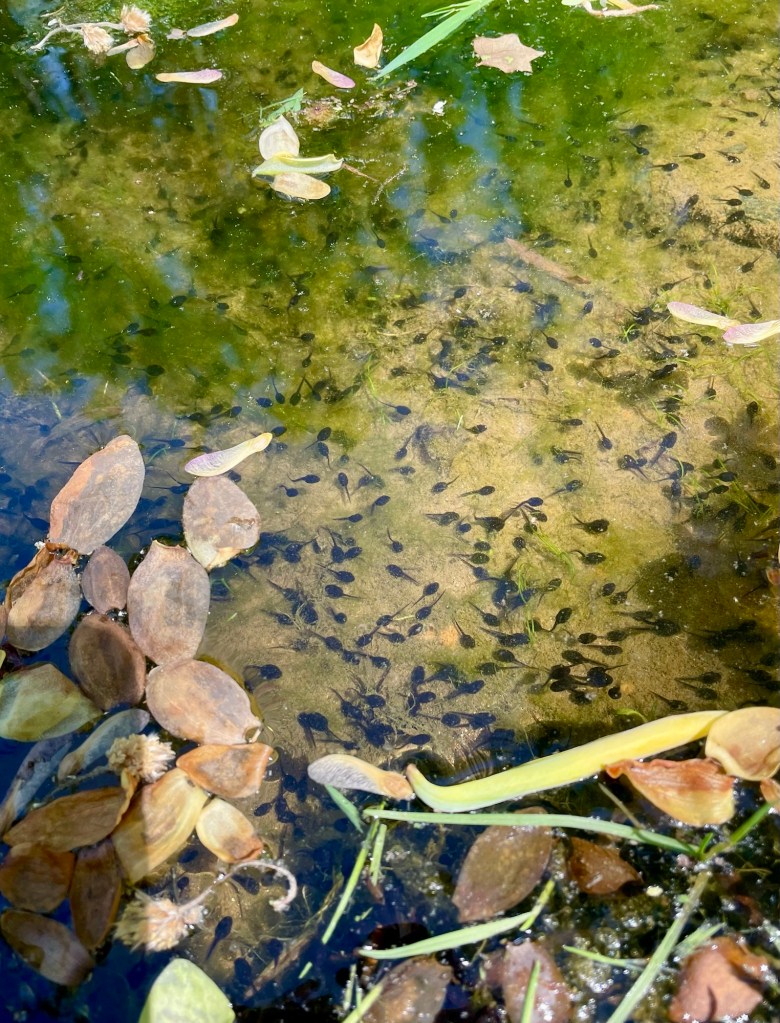
Spring means tadpoles!
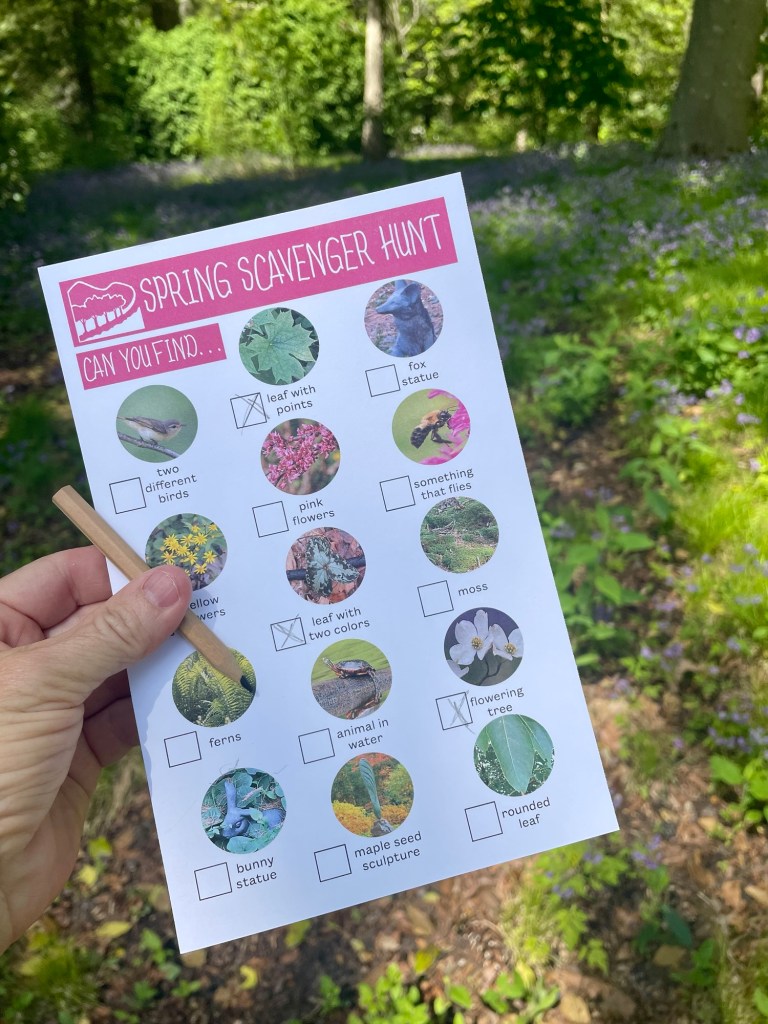
Seasonal scavenger hunts are available for kids (and kid-like adults!). Sadly, we never found the bunny statue, so no prize for us.
The property was originally home to Lammot and Pamela Copeland. Lammot was the great-great-grandson of DuPont’s founder and served as president of the company from 1962-67. So, along with Hagley (Hagley: The Founding of an American Chemical Empire), Winterthur (Winterthur: Antiques, Gardens, & Decorating the White House), Longwood Gardens and Nemours (Nemours: Upstairs/Downstairs in Delaware), it’s here thanks to DuPont money. The estate was originally designed with traditional landscaping, but as the Copelands became more interested in ecology and wildflowers the gardens were redesigned to incorporate native plants.
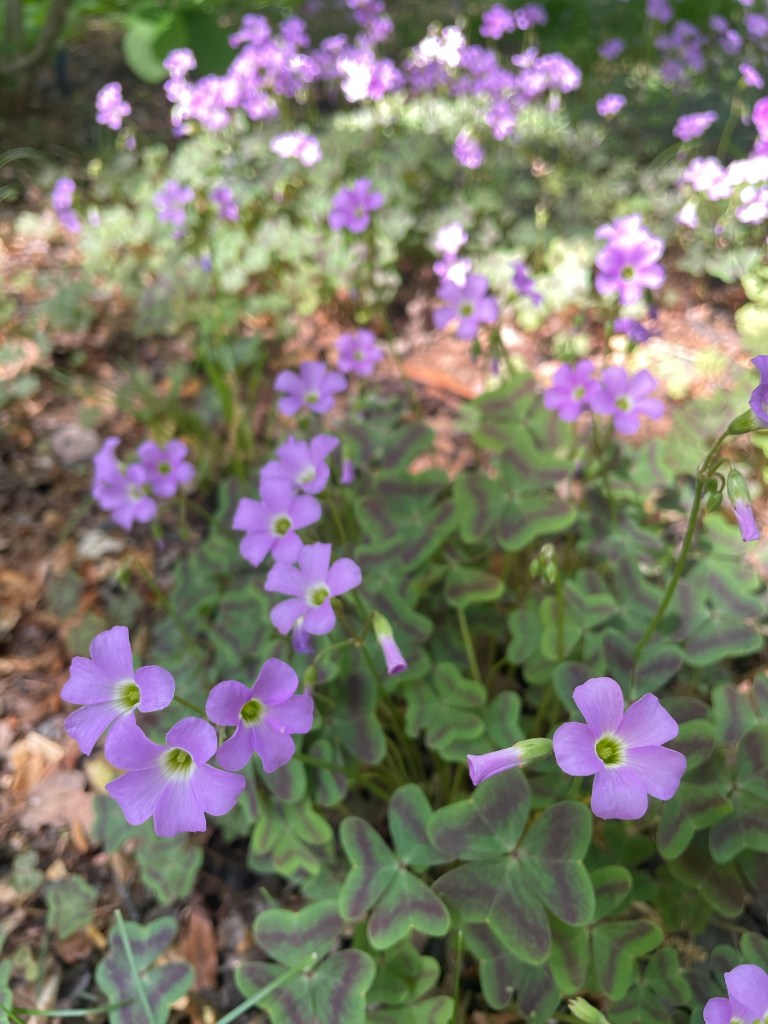
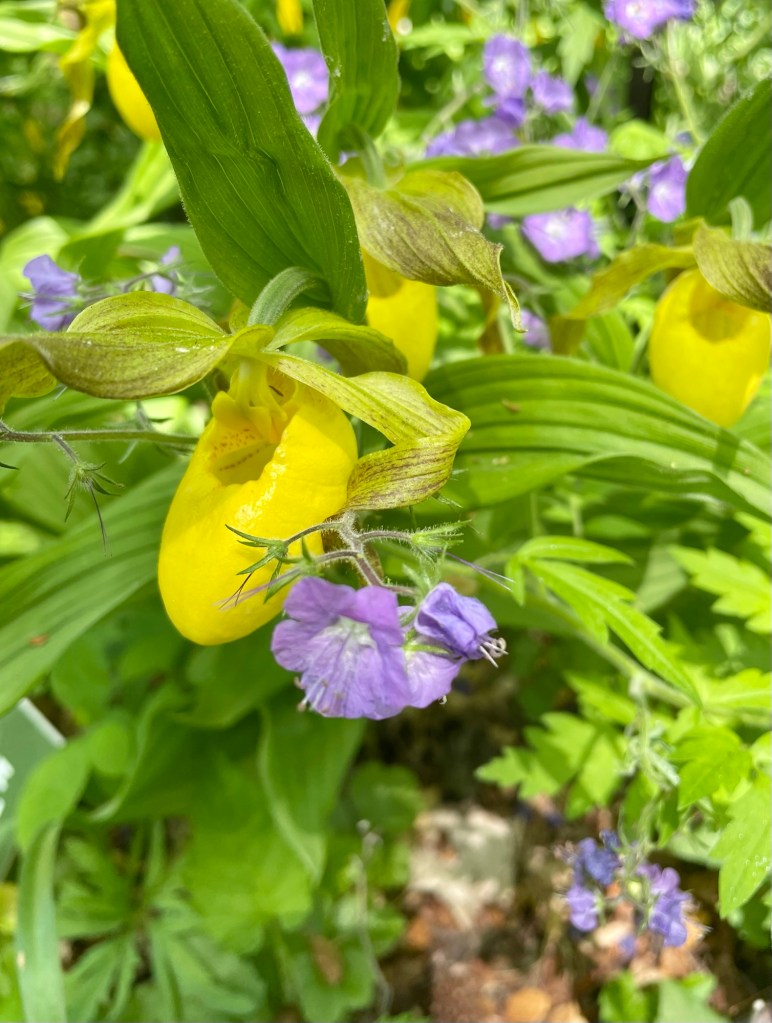
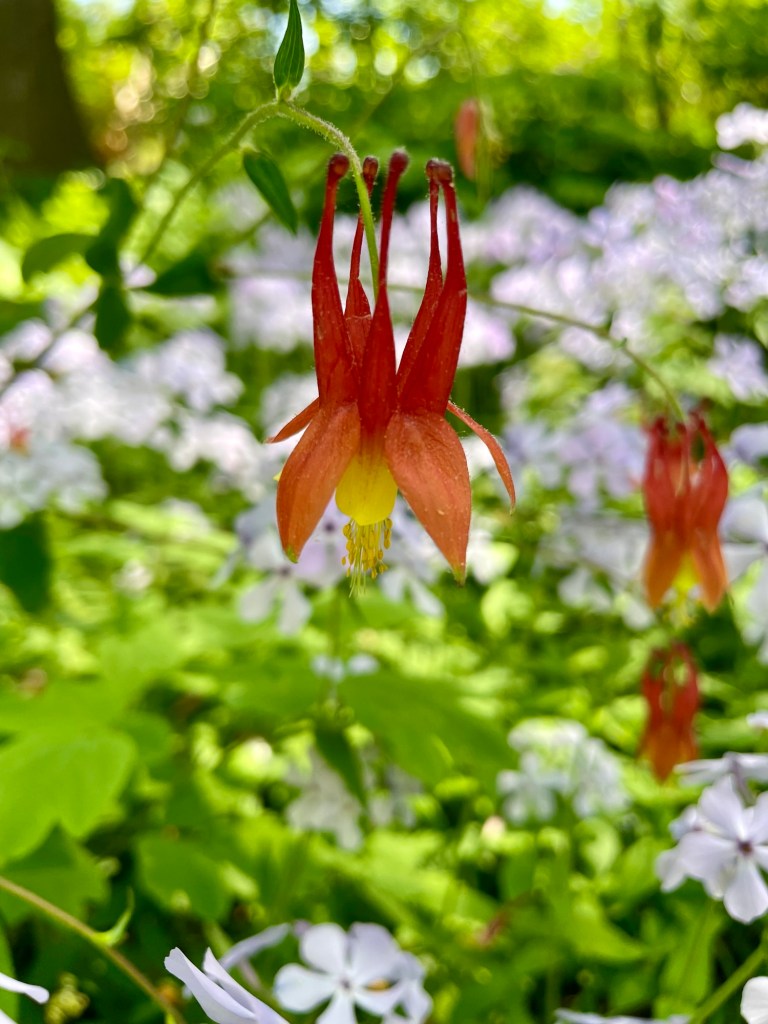
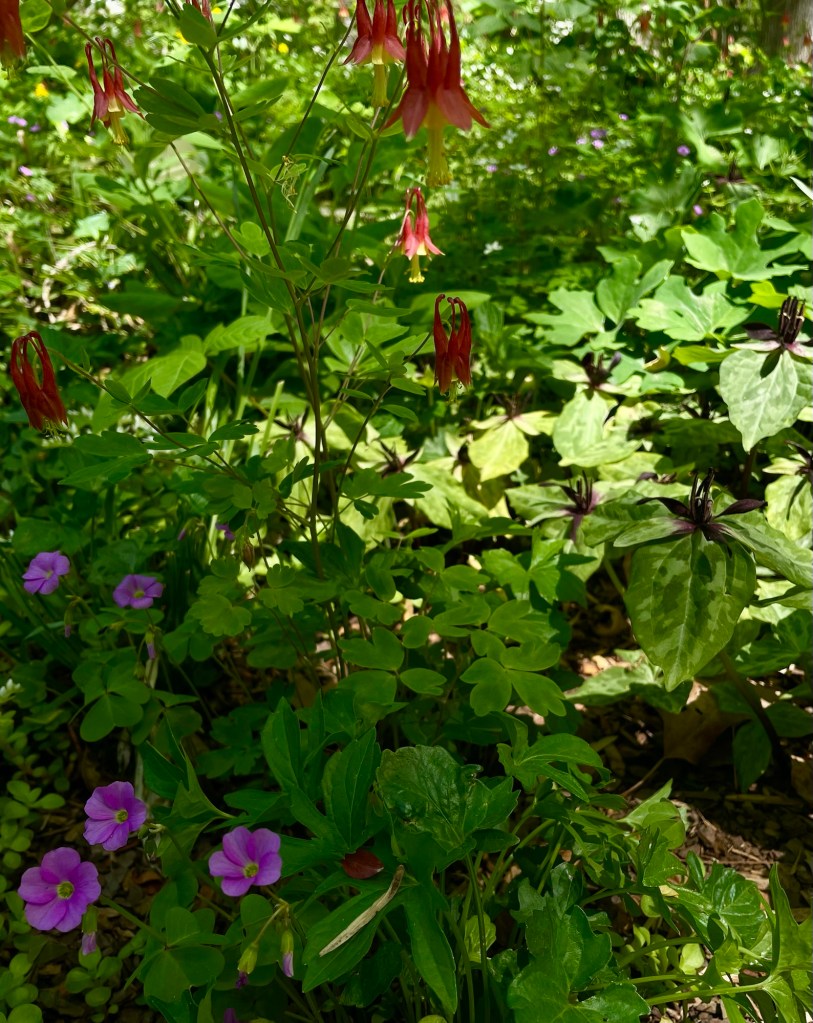
Today, the garden’s main focus is on developing and promoting native plants, and guests can visit the research and trial gardens.
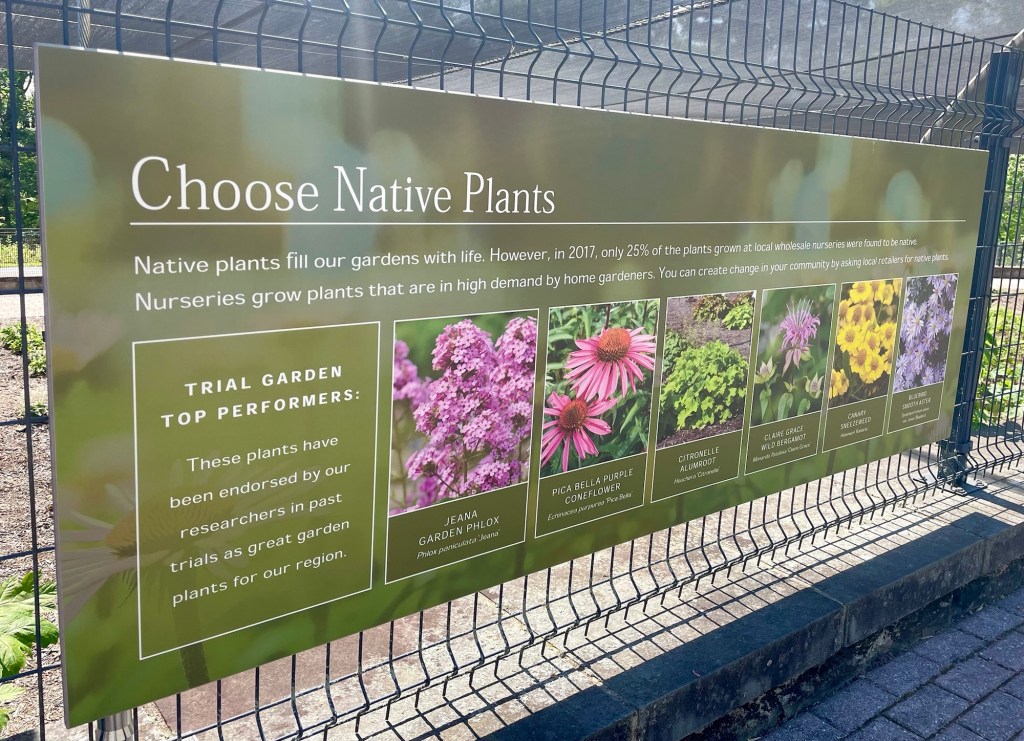

Open April-November
 Secrets of Philadelphia