
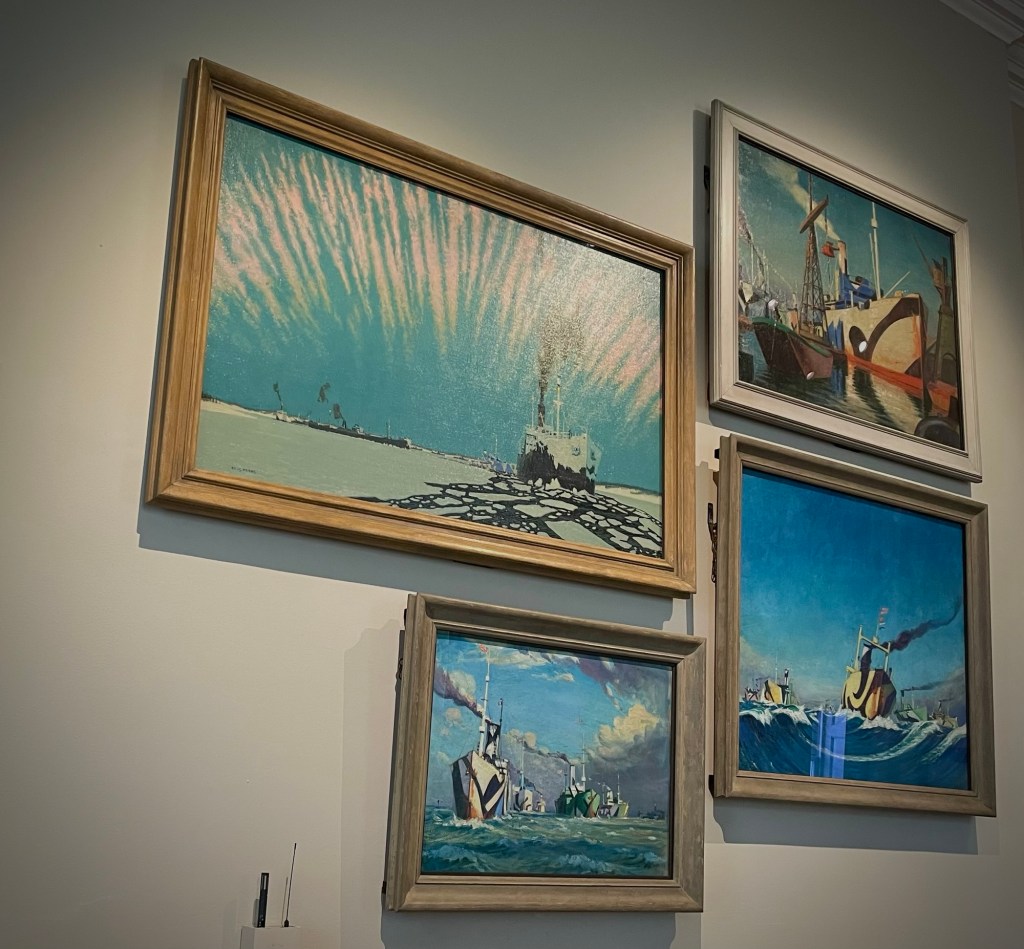
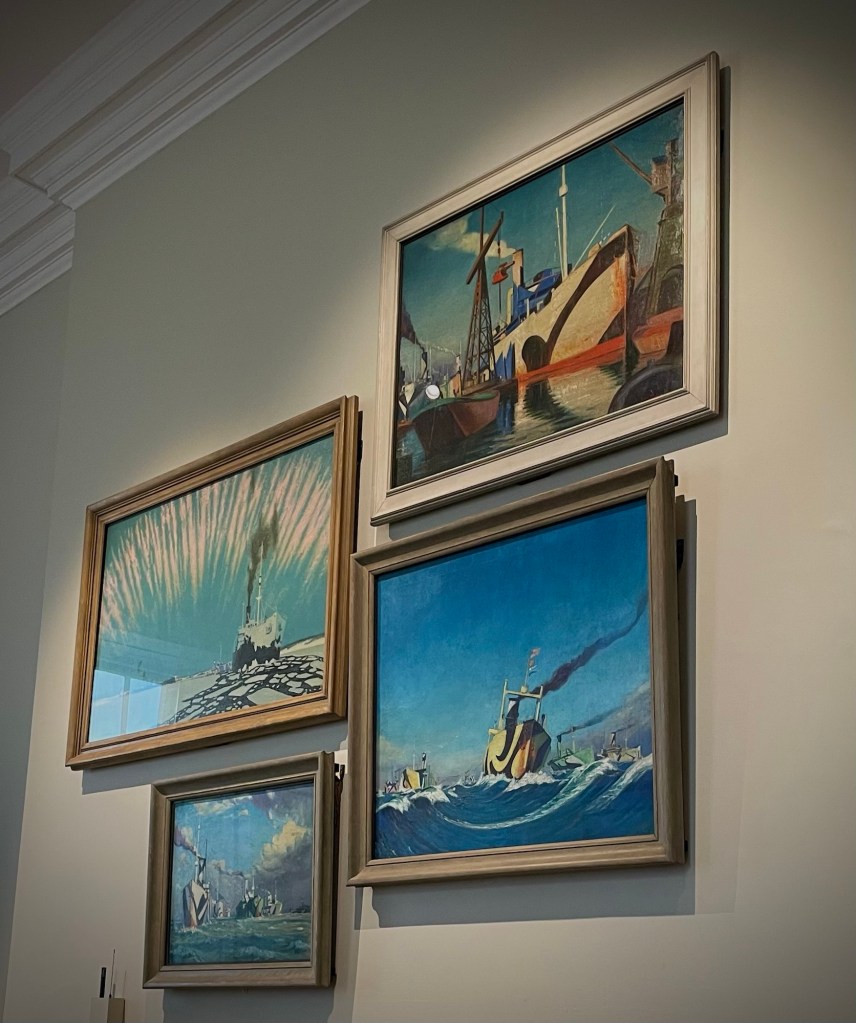
Dazzle was a type of camouflage developed in England during the first World War in response to the threat of torpedoes by German submarines. The opposite of traditional camouflage that disguises an object by blending it into the background, it was designed not to disguise, but to make it difficult for an observer to track the ship’s course, thus making it harder to shoot. Marine artist Norman Wilkinson is credited with the idea of painting ships “not for low visibility, but in such a way as to break up her form and thus confuse a submarine officer as to the course on which she was heading.” He was in charge of the naval camouflage unit that created the unique patterns (each ship’s dazzle pattern was different) and provided construction diagrams to the painters.

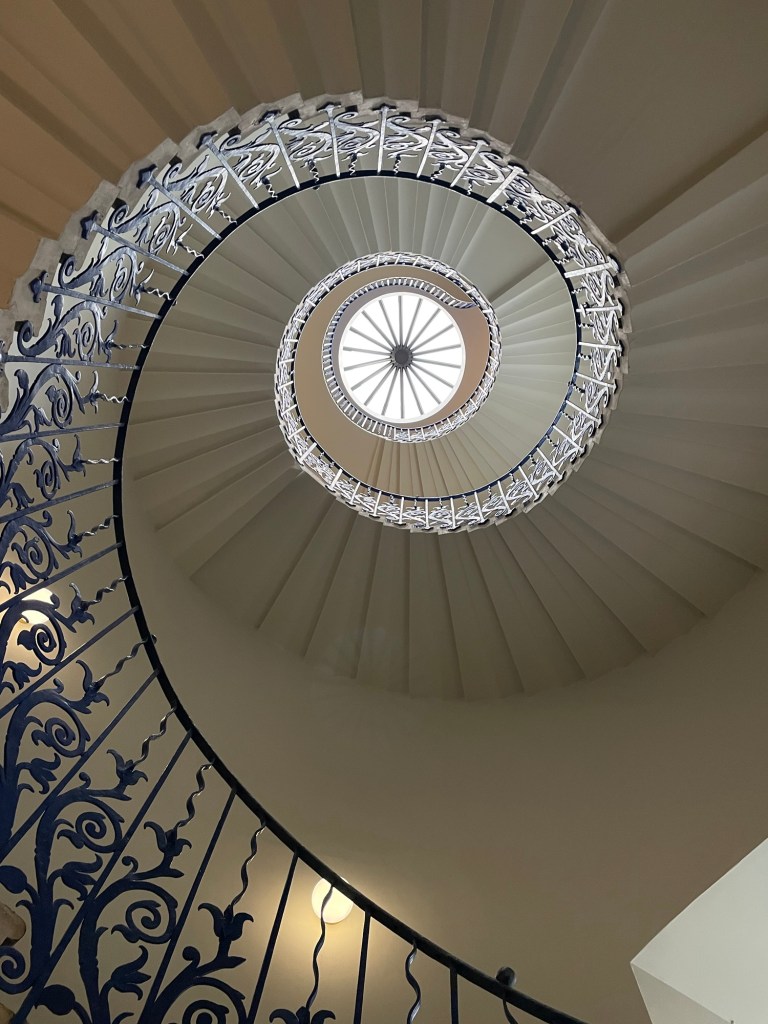
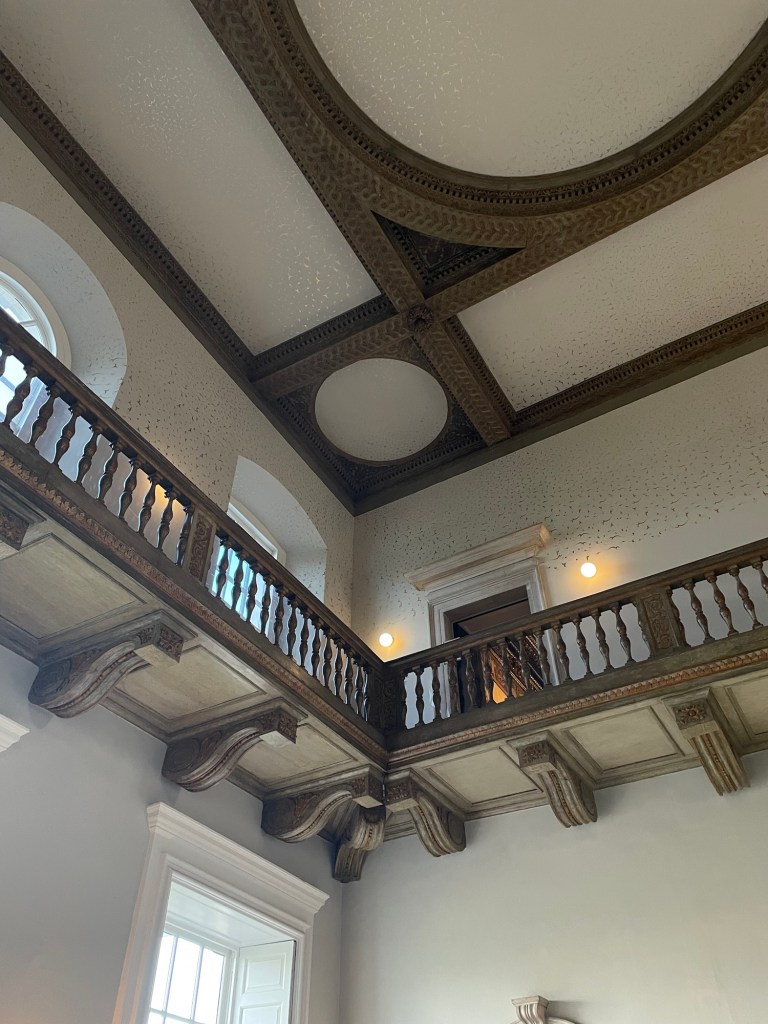
The 17th century Queen’s House in Greenwich is the country’s first truly classical building, and today displays the National Maritime Museum’s collection of paintings, including several relating to these Dazzle painted ships. On view during our 2024 visit were several paintings by Wilkinson:


Also on view were paintings by John Everett, probably the best known artist of Dazzle ships, who donated his 1,058 oil paintings.
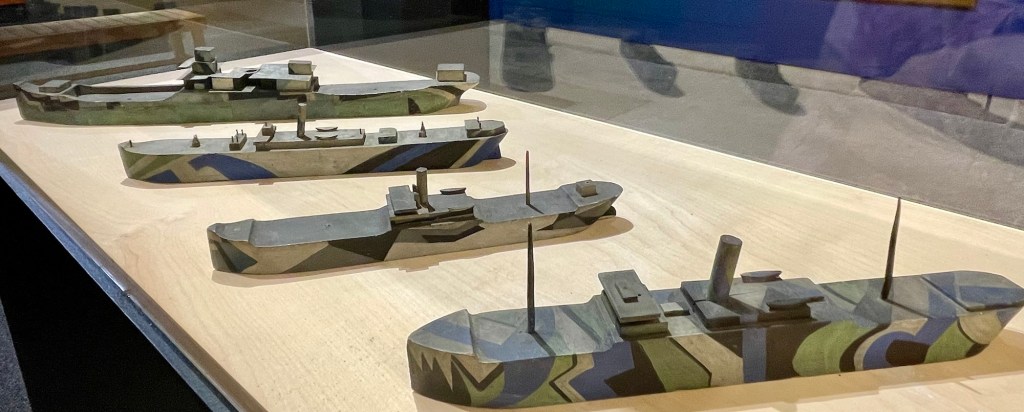
The Americans implemented a similar painting program in WWI and WWII. Like the British these were first tested on small wooden models viewed through a periscope in a studio. In 2022 these models were on display at the Independence Seaport museum in Philadelphia:

 Secrets of Philadelphia