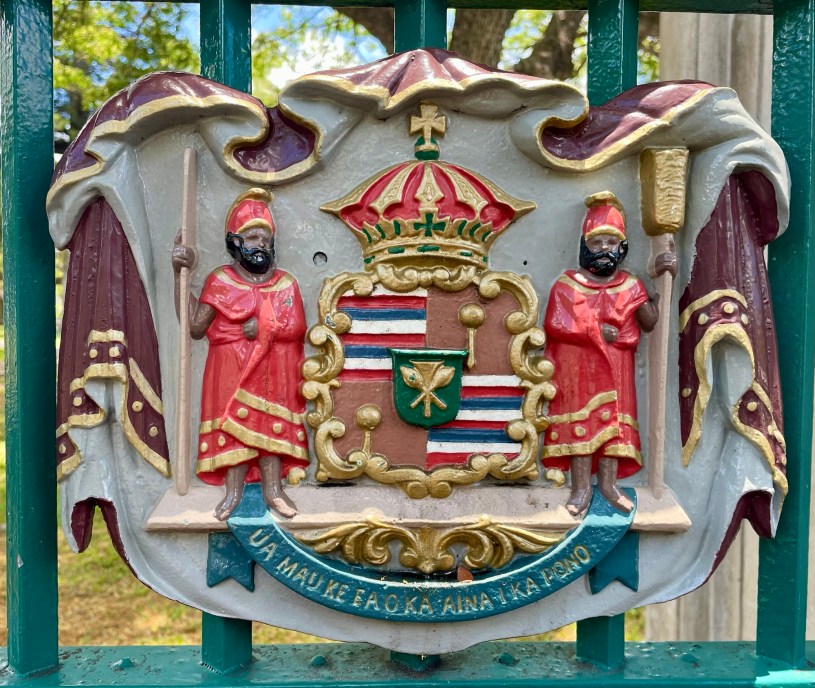
Prior to becoming America’s 50th state in 1959, Hawaii was an independent country ruled by a monarchy.

One of the best places to learn more is Honolulu’s Iolani Palace, the only royal palace in the United States.


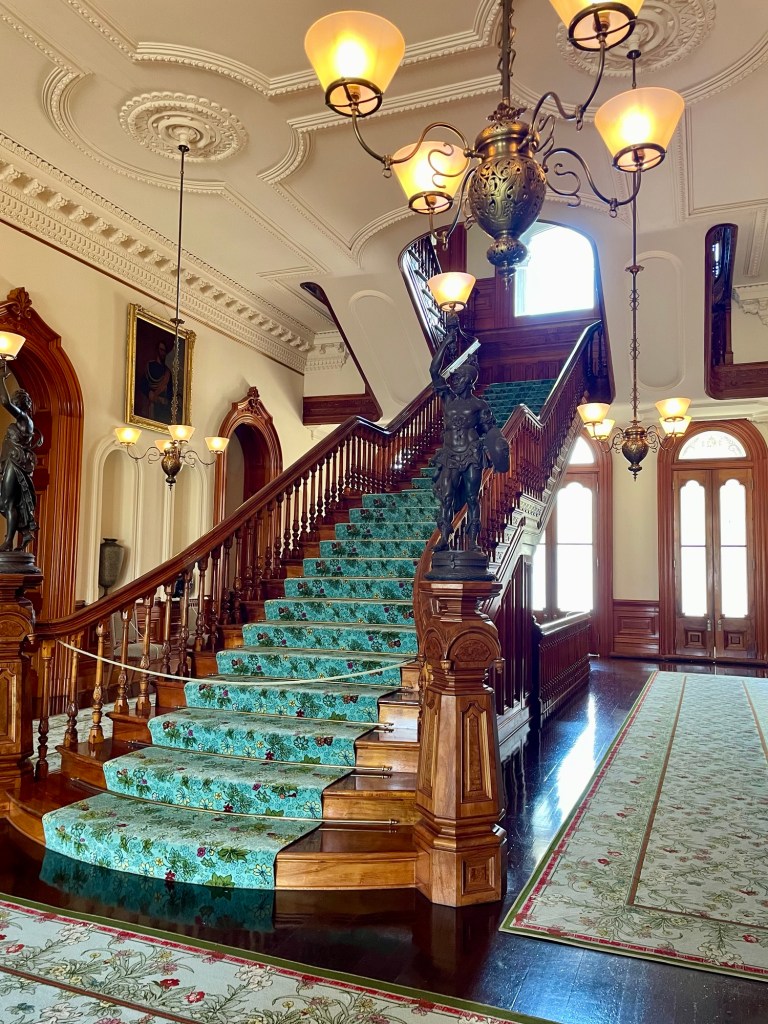
On the ground floor is the spectacular koa wood staircase surrounded by portraits of Hawaii’s royalty, but the Palace’s story really centers on the last two, King Kalākaua and his sister Queen Liliʻuokalani.

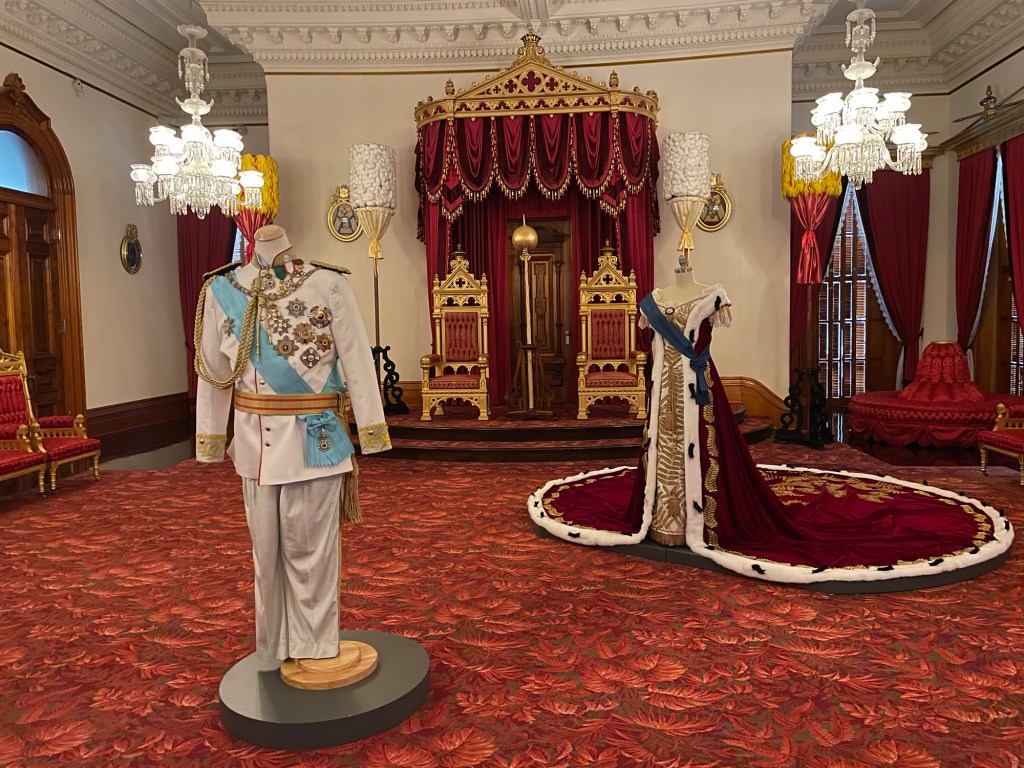
It was King Kalākaua who built Iolani on the site of a former palace in 1882. Although a popular monarch, it was during his reign that foreign interests began taking more and more political control over the islands. Despite his loss of power, Kalākaua traveled extensively promoting Hawaii on the world stage. He became the first monarch to travel around the world, circumnavigating the globe in 1881. His focus was to encourage immigration of labor for Hawaii’s plantations. Stops included Japan, China, and Portugal (explaining why Hawaii has such a diverse culinary scene today!). He also stopped in New York where he met Thomas Edison for a demonstration of electric lighting. In 1886 electric lights were installed in the Palace, four years before they were installed in the White House. There are still several of these original chandeliers in the throne room and one in the blue room.
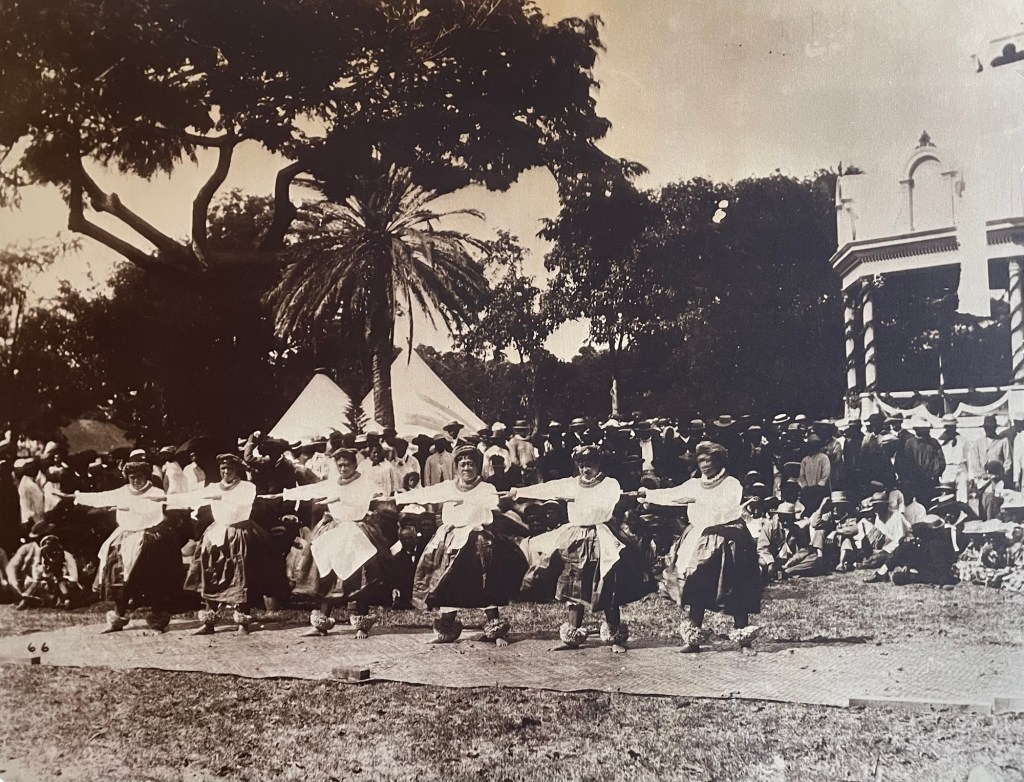
Because of civil unrest following Kalākaua’s 1874 election, he did not have a coronation ceremony. This was remedied in 1883, and it was during the coronation that the hula, which had been previously banned, was performed again in public. The pavilion where the ceremony took place still stands on Palace grounds.
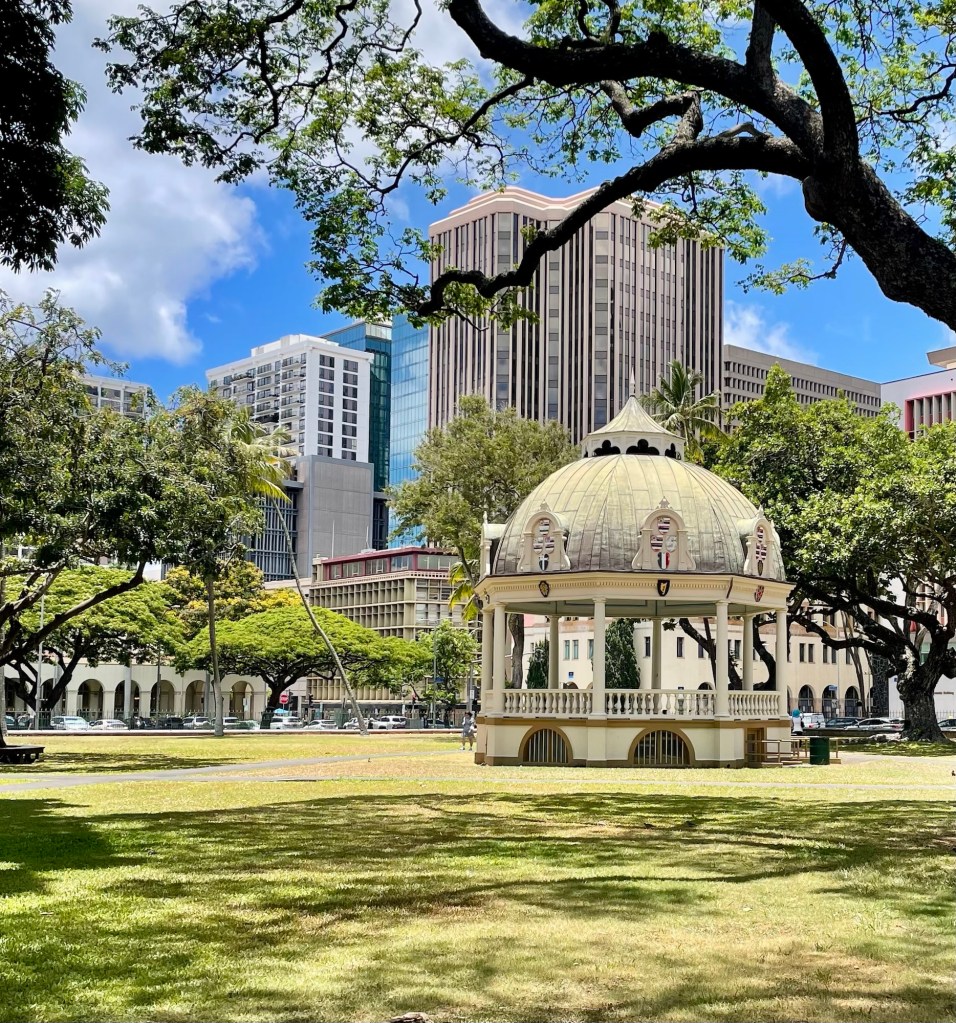
Following the ceremony, Kalākaua unveiled the King Kamehameha statue in front of the main government building nearby, which today houses the state’s Supreme Court.

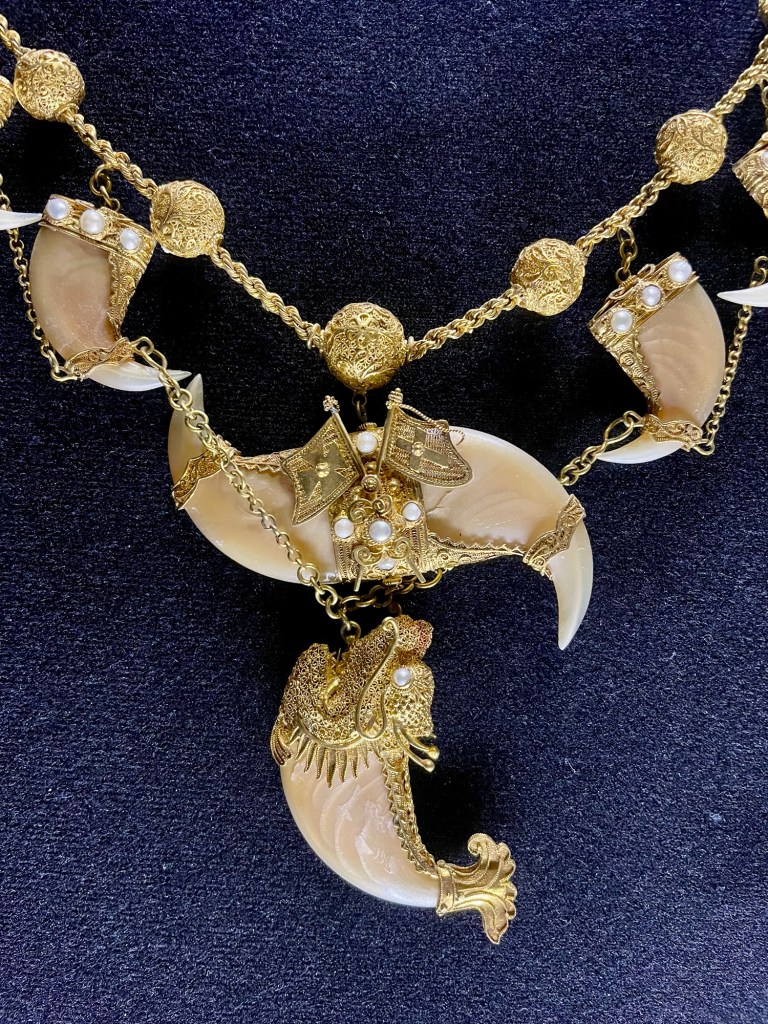
In 1887, Kalākaua’s wife and his sister, the future Queen Liliʻuokalani, traveled to London to represent the country at Queen Victoria’s Golden Jubilee. The Palace’s collection includes the butterfly broach Liliʻuokalani wore, as well as other jewelry the duo purchased during their trip. Apparently tiger claw jewelry was all the rage ☹️.


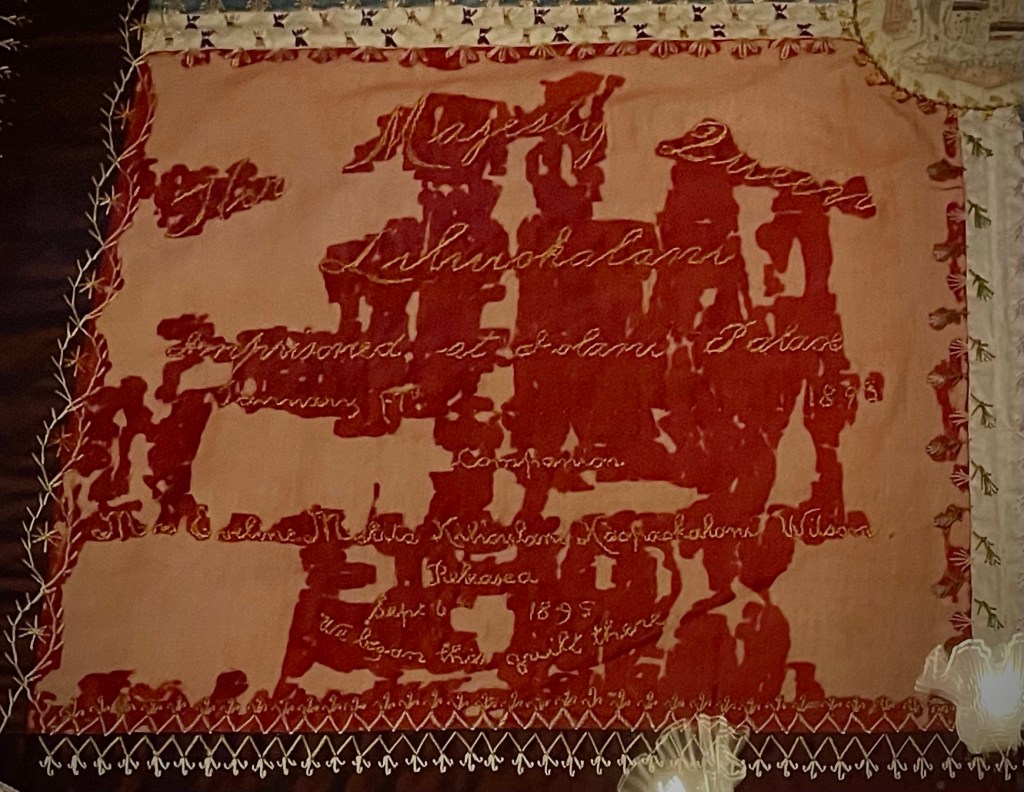
Upon Kalākaua’s death in 1891, his sister became Queen, and it transpired, Hawaii’s final monarch. In 1893 American businessmen, along with the US Marines overthrew her government, claiming the islands a protectorate of the United States. After unsuccessfully petitioning President Cleveland to uphold her rights, followed by an unsuccessful rebellion, Liliʻuokalani was placed under house arrest at the Palace. She abdicated her throne in return for the release and commutation of the death sentences of her jailed supporters. She stayed under house arrest in an upstairs bedroom for 8 months where she worked on a quilt representing the history of Hawaii, containing the inscription “Her Majesty Queen Liliuokalani. Imprisoned at Iolani Palace. January 17th 1895. Released Sept 6th 1895. We began this quilt here.” Today the quilt is on view in the bedroom where she was imprisoned.


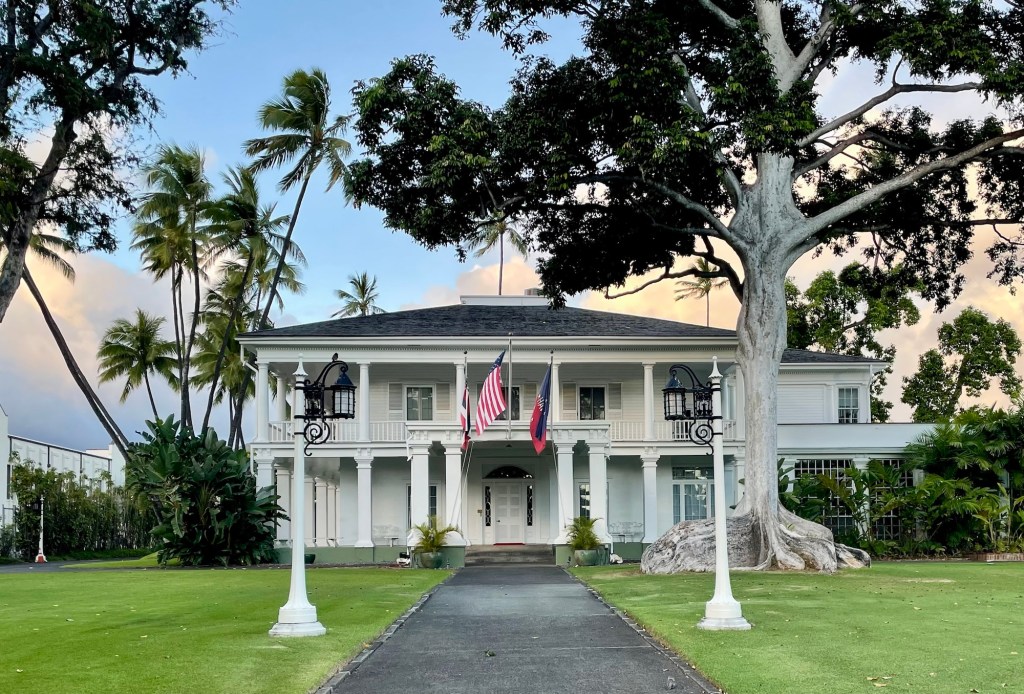
Living out the remainder of her life as a private citizen, Queen Liliʻuokalani died in 1917 at her home a few blocks away, later used as the governor’s mansion.
From 1893-1969 Iolani Palace was the capital of the provisional government/republic/territory/state. After the government moved out, it was restored to its original appearance and opened as a museum detailing the final days of Hawaii’s monarchy.
 Secrets of Philadelphia