
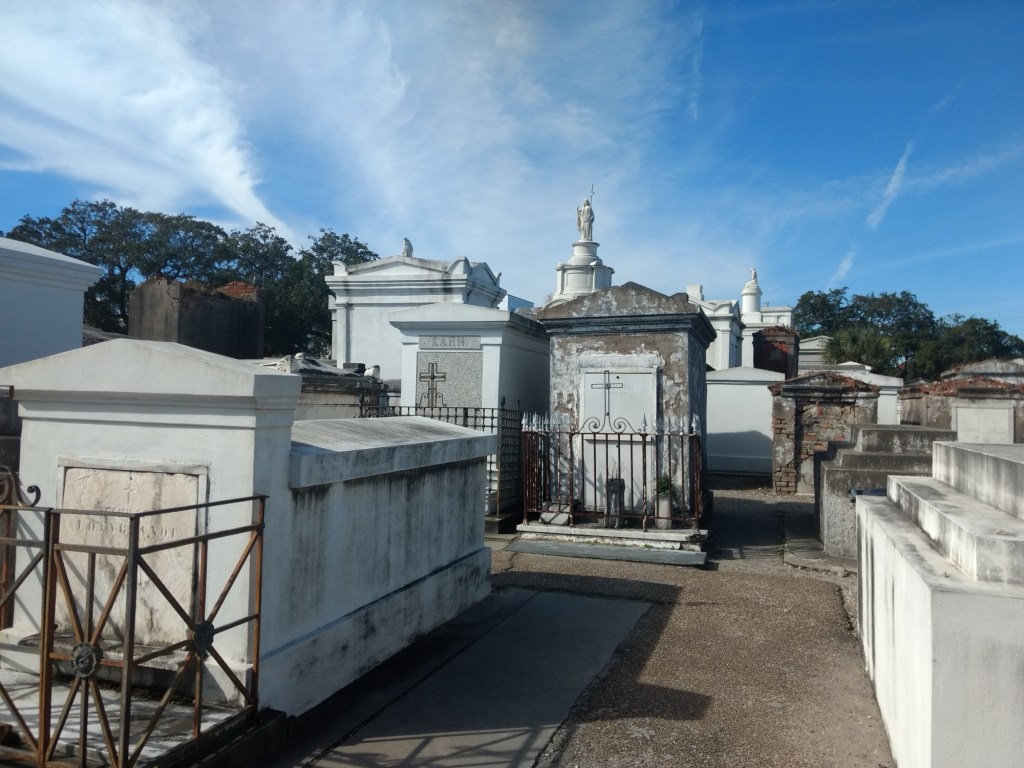
Just a short walk from the souvenir shops and bars of Bourbon Street are the narrow alleys and crumbling tombs of the oldest cemetery in New Orleans. St. Louis Cemetery #1 was opened in 1789 after a Yellow Fever outbreak required additional burial space. The first of the above-ground tombs that make the city’s cemeteries so atmospheric were erected by 1804. Building tombs above ground was a response to the challenge of burying the dead in swampy land below sea level, which often flooded leaving bodies floating on the surface. The tombs are an amalgam of the French, Spanish, and Caribbean influences that make this city so unique.


Vaults in the above-ground tombs are typically multi-generational and multi-level. When a new body is added, the remains of the corpse that was most recently interred is placed in a bag and moved to the bottom of the tomb while the new body set on the top level to decompose.

To address the need for burial of large numbers of people of modest means, larger group tombs and walls of “oven tombs” were built, often sponsored by fraternal societies. Stacked on top of each other, they are designed to hold coffins temporarily, allowing for the reuse of the chamber after the remains have decomposed.
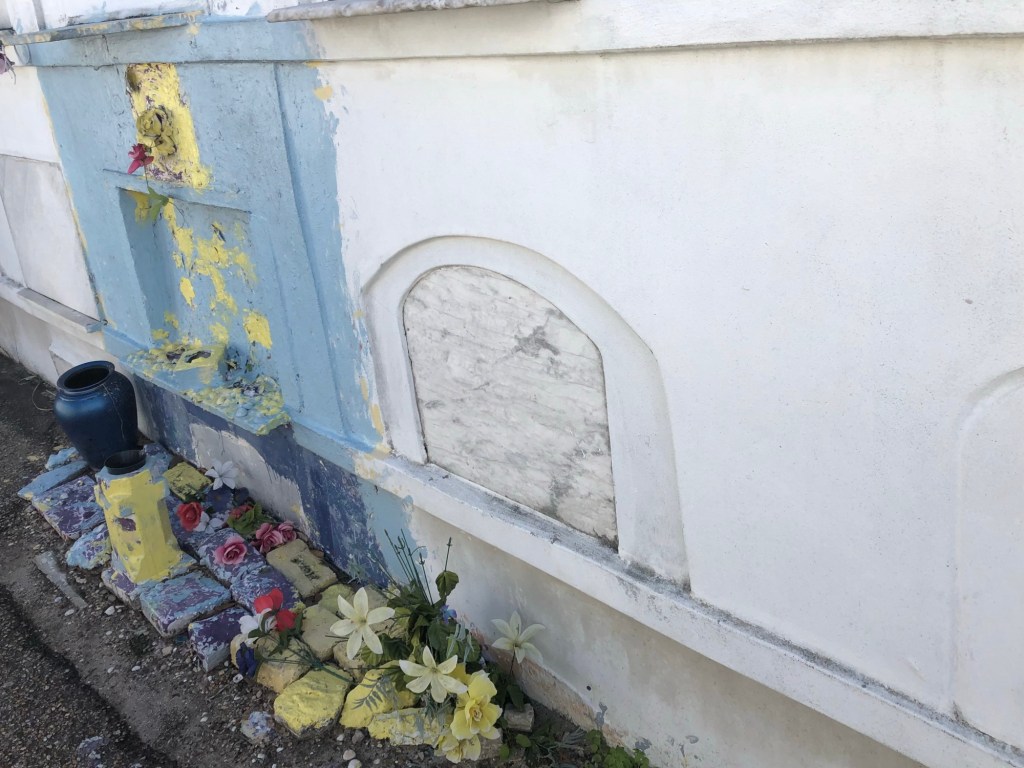
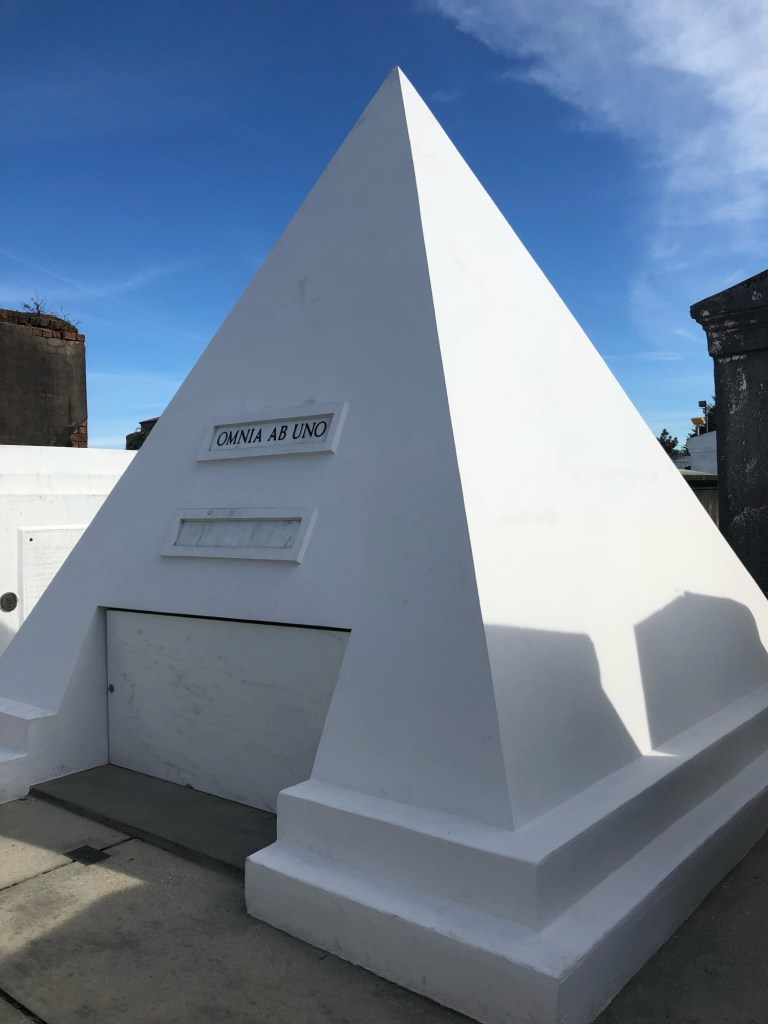
This cemetery has the distinction of being the final resting spot of legendary voodoo queen Marie Laveau, and the location of the pyramid shaped tomb that will one day hold the remains of Nicholas Cage.
The cemetery itself is just one square block, but is the resting place for thousands of bodies. There are similar cemeteries around the city. Several, including St. Louis #1, are only accessible by tour.
 Secrets of Philadelphia