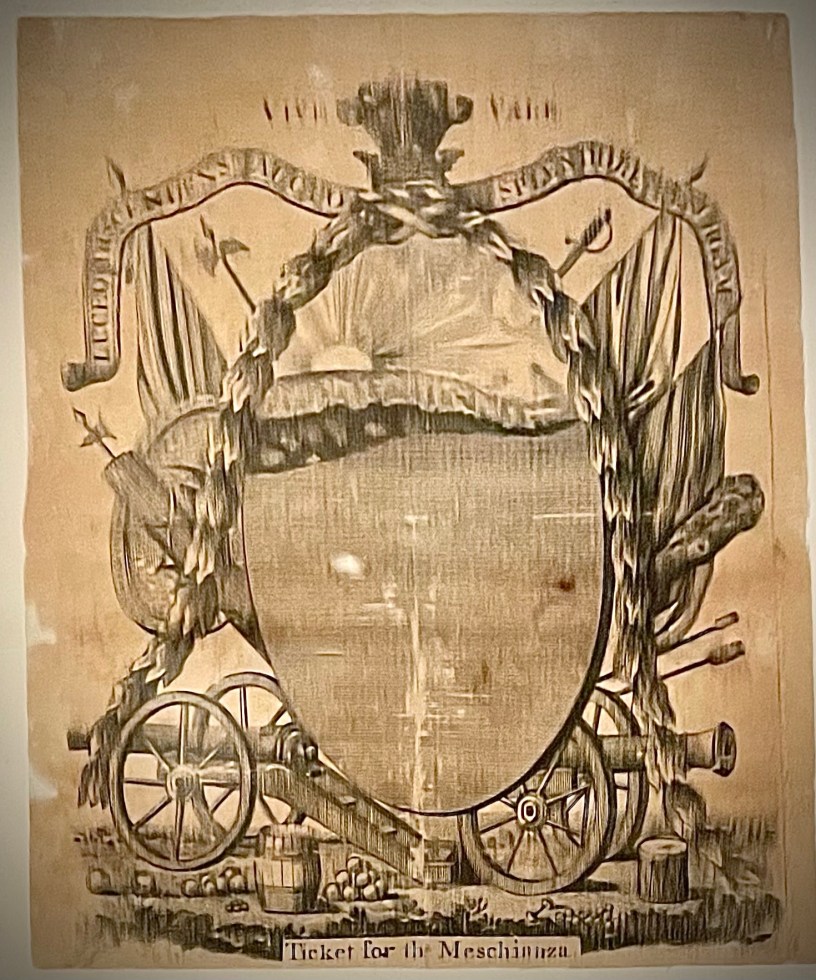
While Washington’s soldiers were enduring a brutal winter at Valley Forge, the British Army was living it up in Philadelphia following their successes at the battles of Brandywine and Germantown. Taking over the homes of the city’s elite, they settled in for the winter among the loyalists and others that stayed behind in the city. Philadelphia was apparently so comfortable that the British Army’s commander General Howe refused to leave the city to knock out Washington’s dispirited and ragtag army (thus allowing the war to drag on for several more years). A popular satire of the time claimed this was due to an affair with a fellow officer’s wife:
Sir William he, snug as a flea,
Lay all this time a snoring,
Nor dreamt of harm, as he lay warm,
In bed with Mrs. Loring.
That May, as Washington’s army was emerging stronger and revitalized from their winter in Valley Forge, Philadelphia was preparing an elaborate farewell party to celebrate Howe’s return to England. This “Mischianza” included a regatta down the Delaware River, a 17-gun salute by British warships, a tournament of jousting knights, and a ball with fireworks. Much of this was designed by British Captain John André, once described by a fellow officer as “the handsomest man I ever laid eyes on.” It was a ticketed event with over 400 guests, bringing together British military officers and prominent Philadelphia citizens, including several young local women, including Peggy Shippen and Peggy Chew, both from prominent Philadelphia families, and both personal friends of André.
Unfortunately, there’s no one place in Philadelphia to learn all about the event. My photos are a collection of items found in different places over the years.
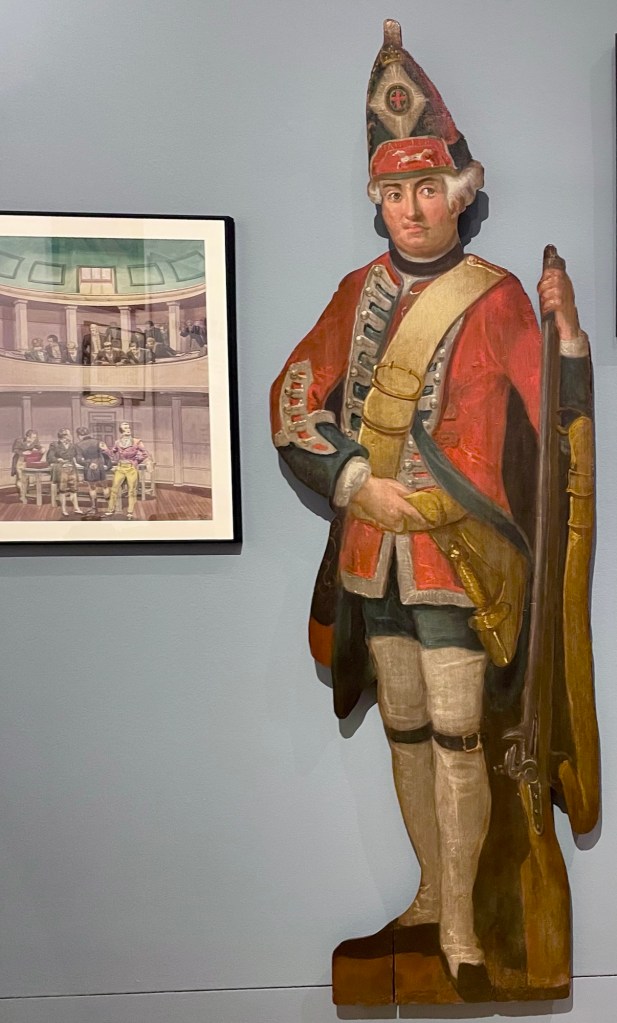
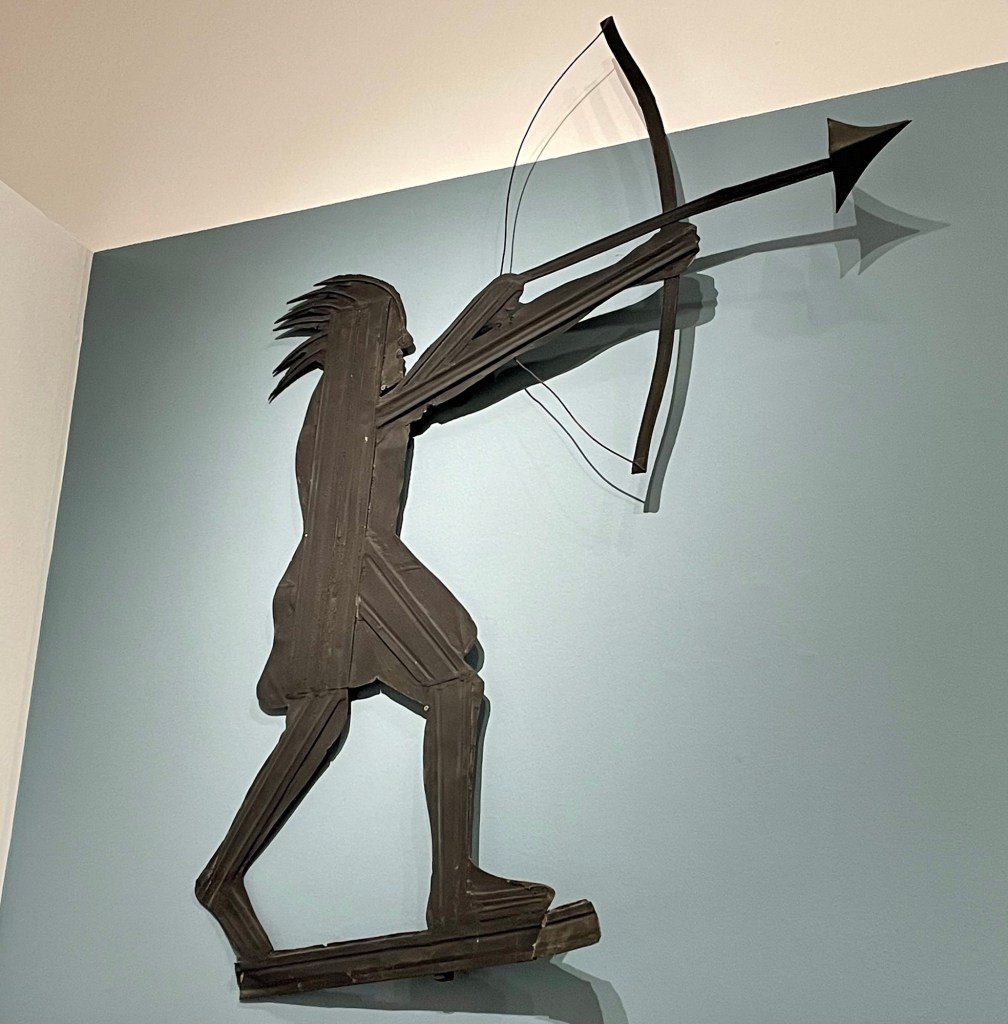
In the collection of the now closed Atwater Kent Museum is this figure of a British Grenadier used to decorate the ball, possibly the one described in the journal of local teenager Sally Wister (Grumblethorp: The Bloodstained Floor!) “We had brought some weeks ago a British grenadier from Uncle Miles’s on purpose to divert us. It is remarkably well executed, six feet high, and makes a martial appearance.” The iron Indian, also from the collection, is another possible decoration.
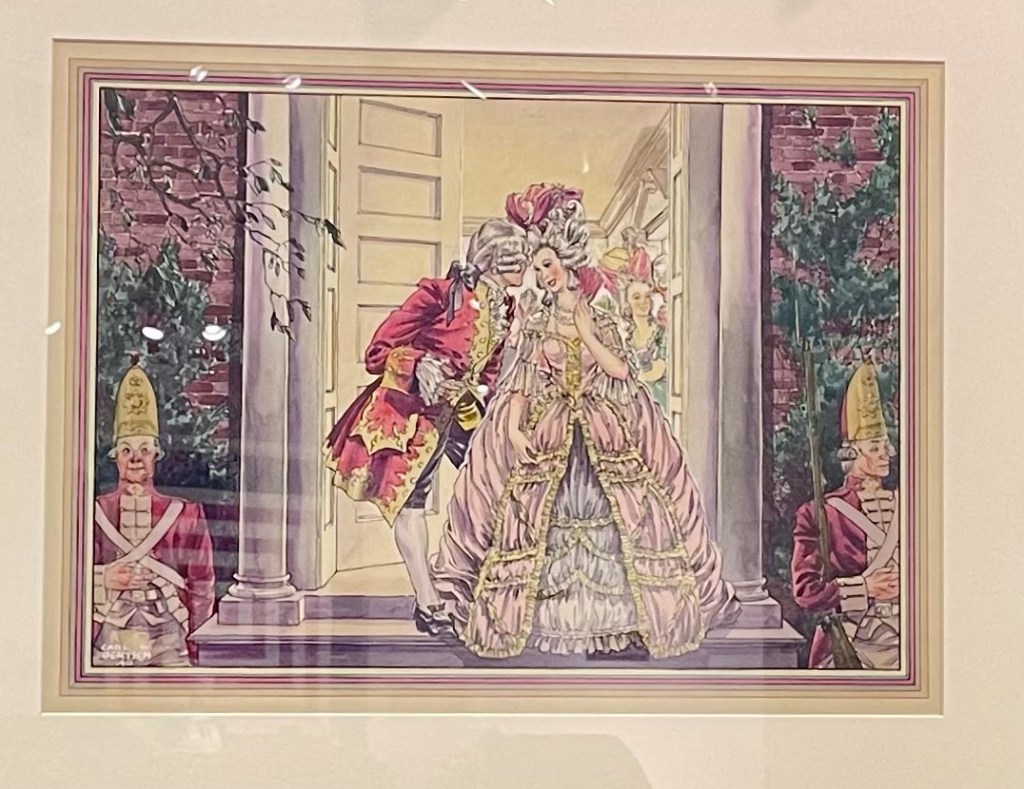
This WPA era painting depicts the event:
A more accurate portrayal is this image by André himself. In addition to being close friends with many of the local ladies, he was an artist who designed and illustrated much of the proceedings, including this image he presented to Peggy Chew after the event:
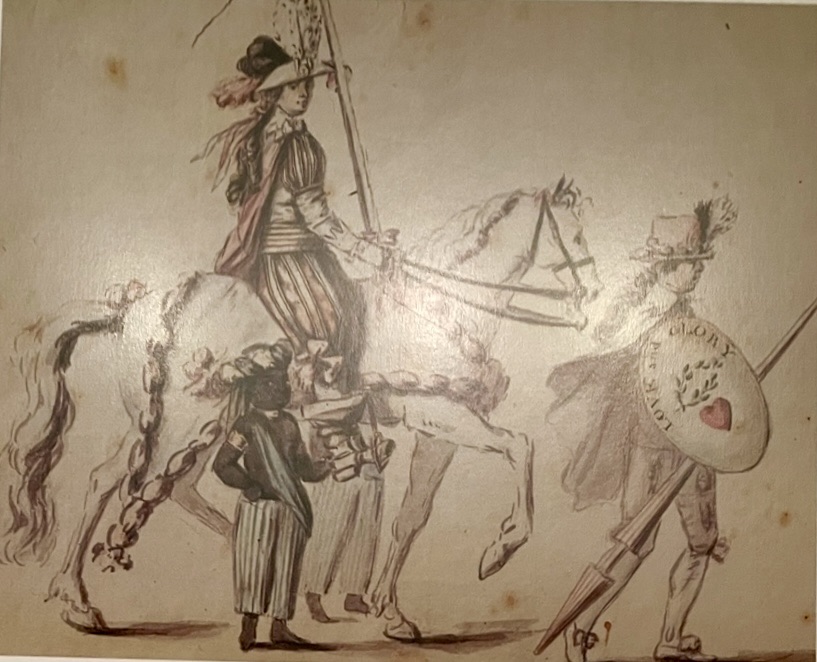
He also helped design costumes for the ladies in attendance:
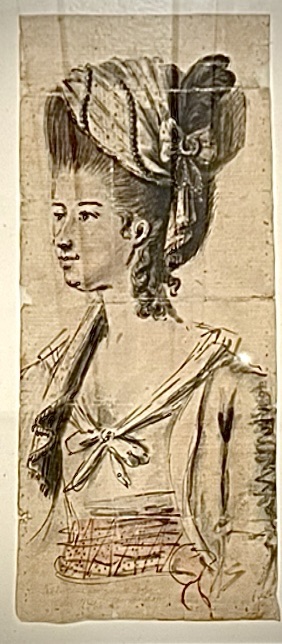
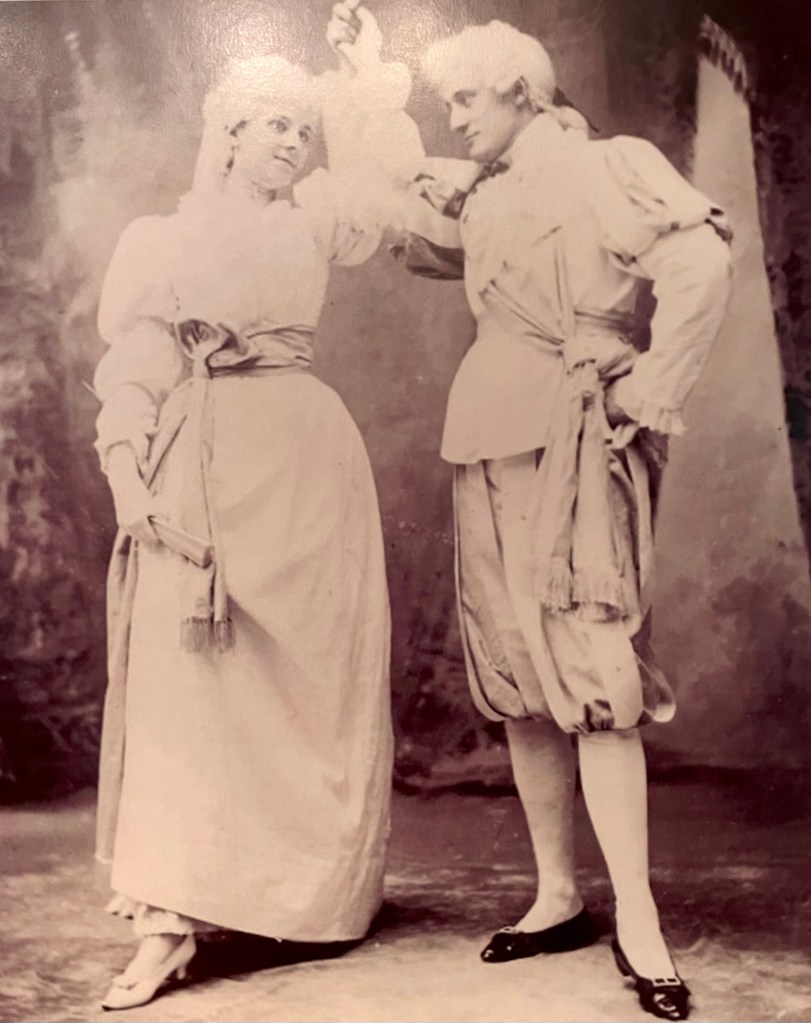
Peggy Chew, whose father (Cliveden: Colonial Bullet Holes & a Fabulous Retro Kitchen) was under house arrest by the Continental Congress in northern NJ at the time, was being courted by André and was invited to be his escort at the ball. In addition to the sketch of the event, he included a description of the ball which was used by Peggy’s ancestors to recreate the event in 1896:
Peggy Shippen was another of André’s admirers, (although there is a family story that Peggy’s father refused to let his daughters attend because of the “indelicacy of their costume.”). André drew this picture of Peggy in her costume (In the collection of Yale University):
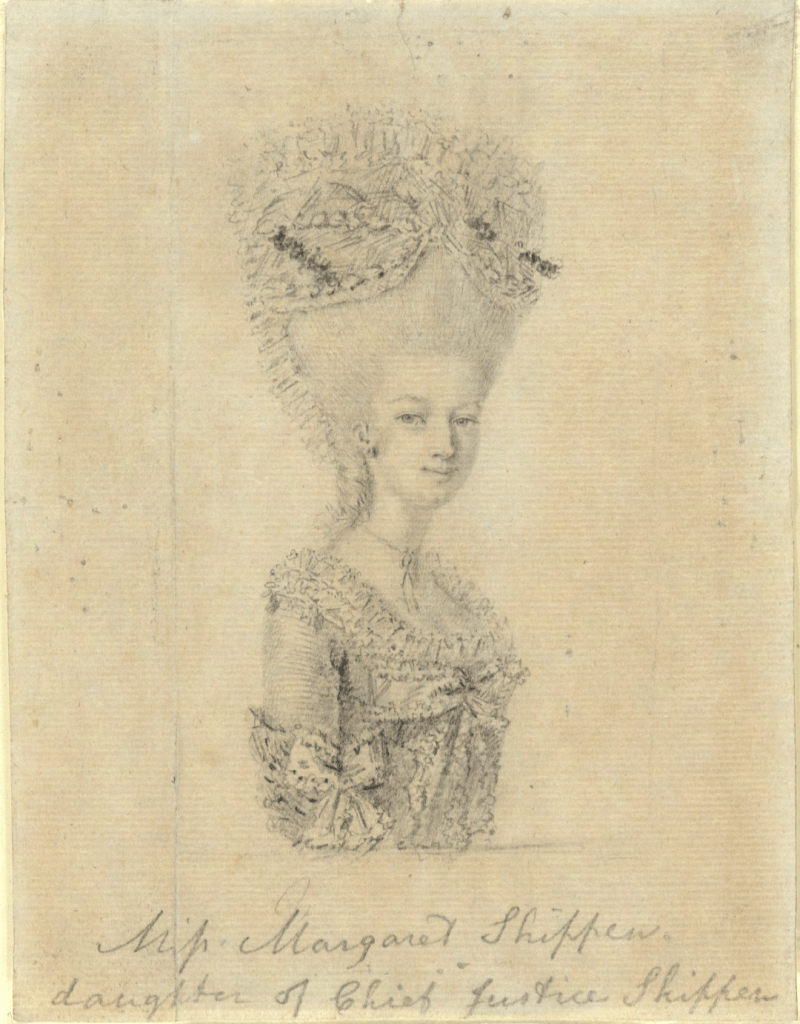
Although Peggy would go on to marry Benedict Arnold (Benedict Arnold & Treason in Philadelphia), the two remained friends (and co-conspirators) until André’s death.
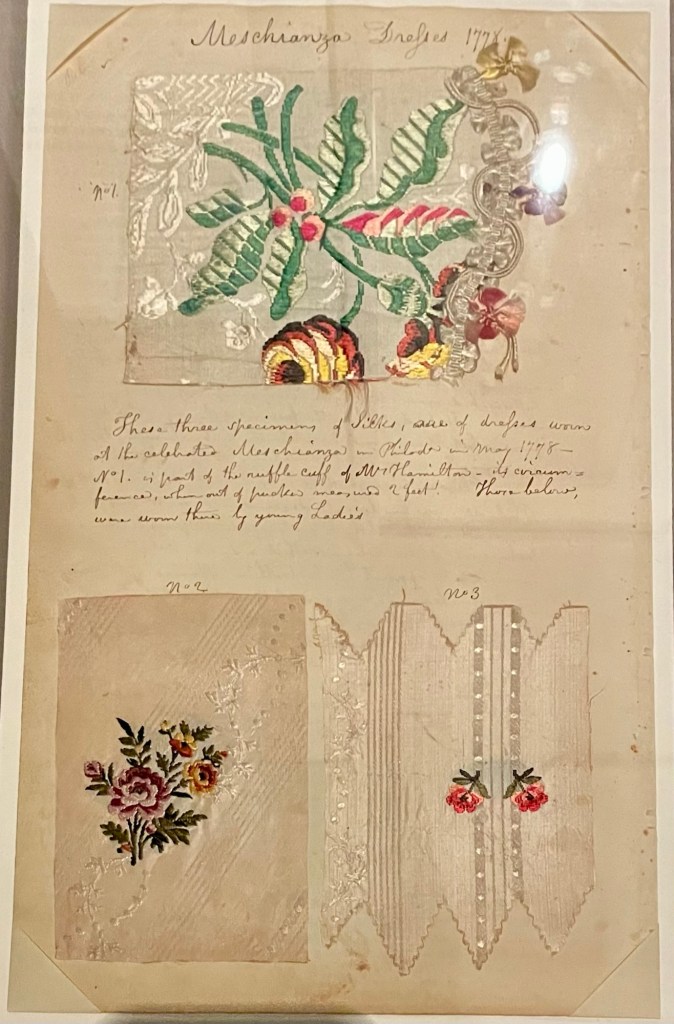
As shown in Andre’s sketches, the costumes were very elaborate. The 2025 exhibit at the American Philosophical Society displayed these fabric samples from partygoers’ dresses.
After the Mischianza the British left Philadelphia for New York City where they remained for the rest of the war. Although the event lived on in memory, it was not recalled favorably by either side. For the American patriots who returned to the city after the occupation the event demonstrated how those that remained in Philadelphia were complicit with the British, and in London the event was viewed as a decadent waste of money for a war that seemed like an endless drain on the economy.
 Secrets of Philadelphia