
Before homes and businesses were marked with street numbers, gable stones were used for identification. Today there are over 800 of these around the Amsterdam – some historic, some new, some relocated from their original location.
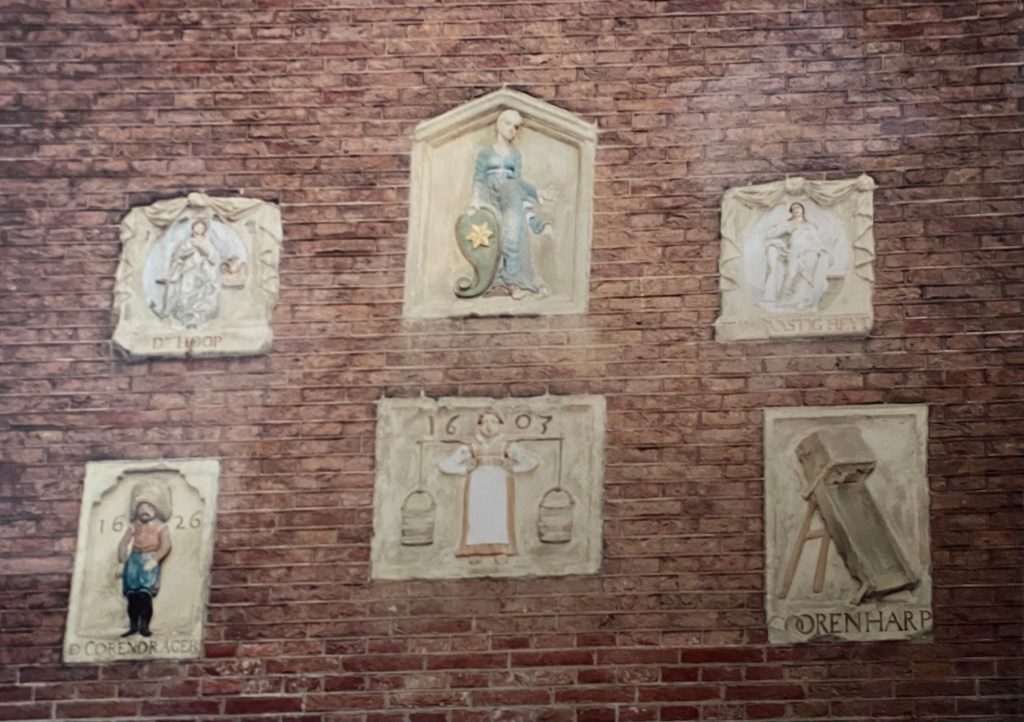
A good place to start is in the Begijnhof where these beautifully restored 17th century religious examples are hidden along a back wall:

There are plenty of articles listing tours and descriptions, but once you start looking you’ll find gable stones everywhere. Some are pretty easy to interpret – like the boats that are all over a city that once made its fortune by sea trade, indicating the homes of sea captains, warehouses, ship builders and sail makers.
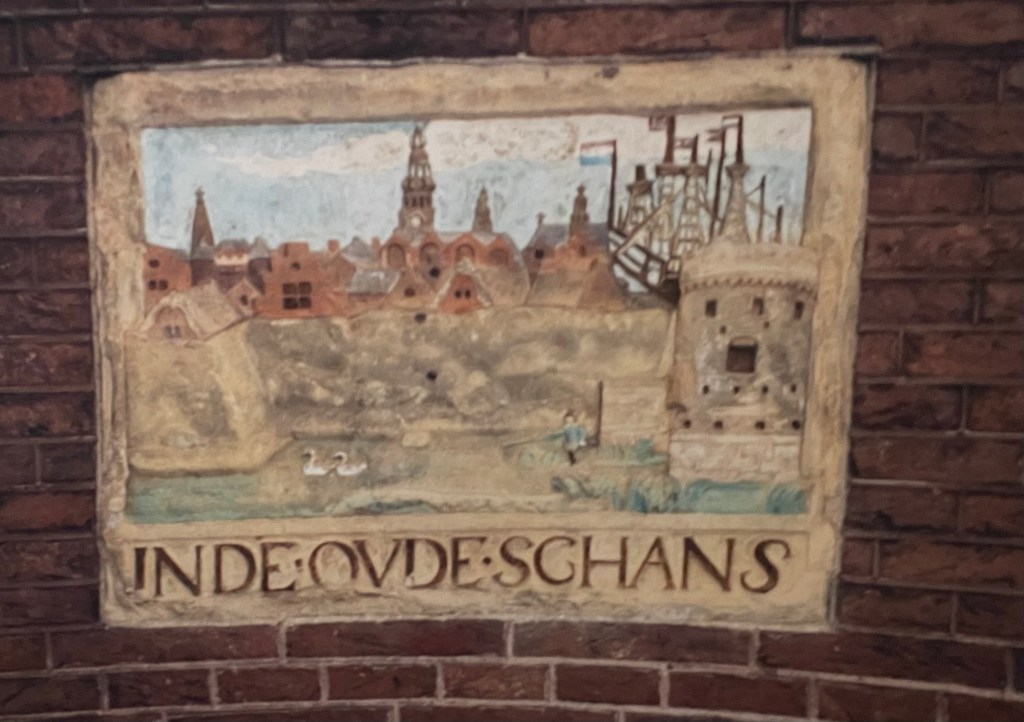
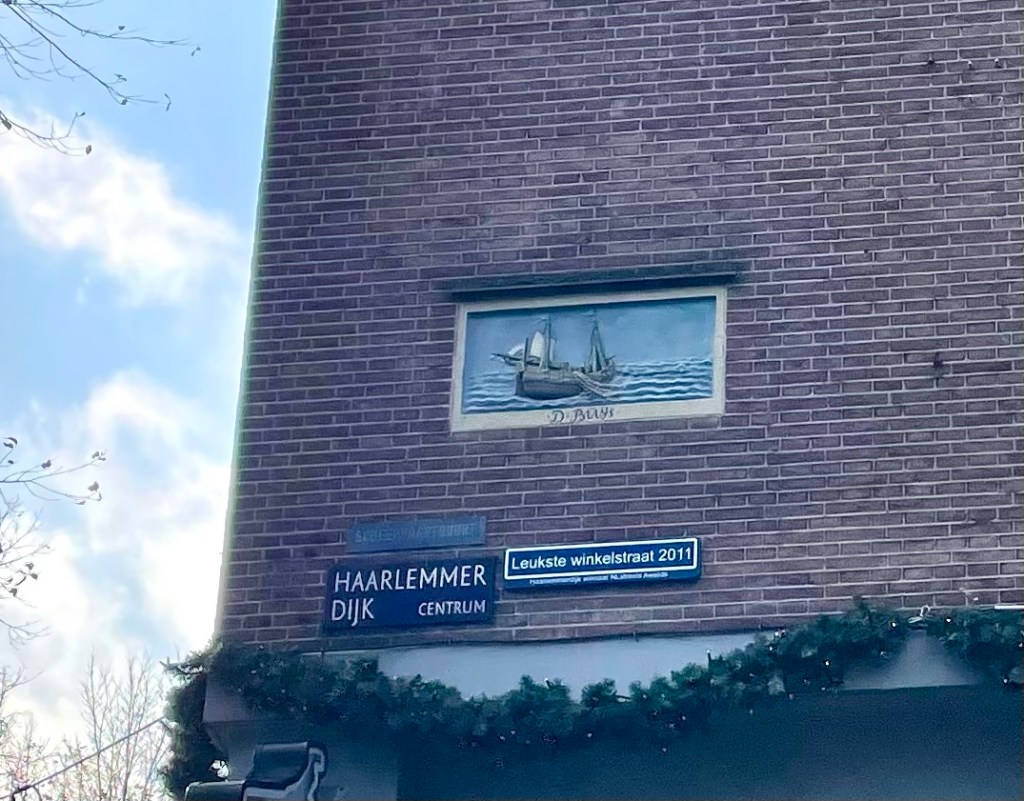

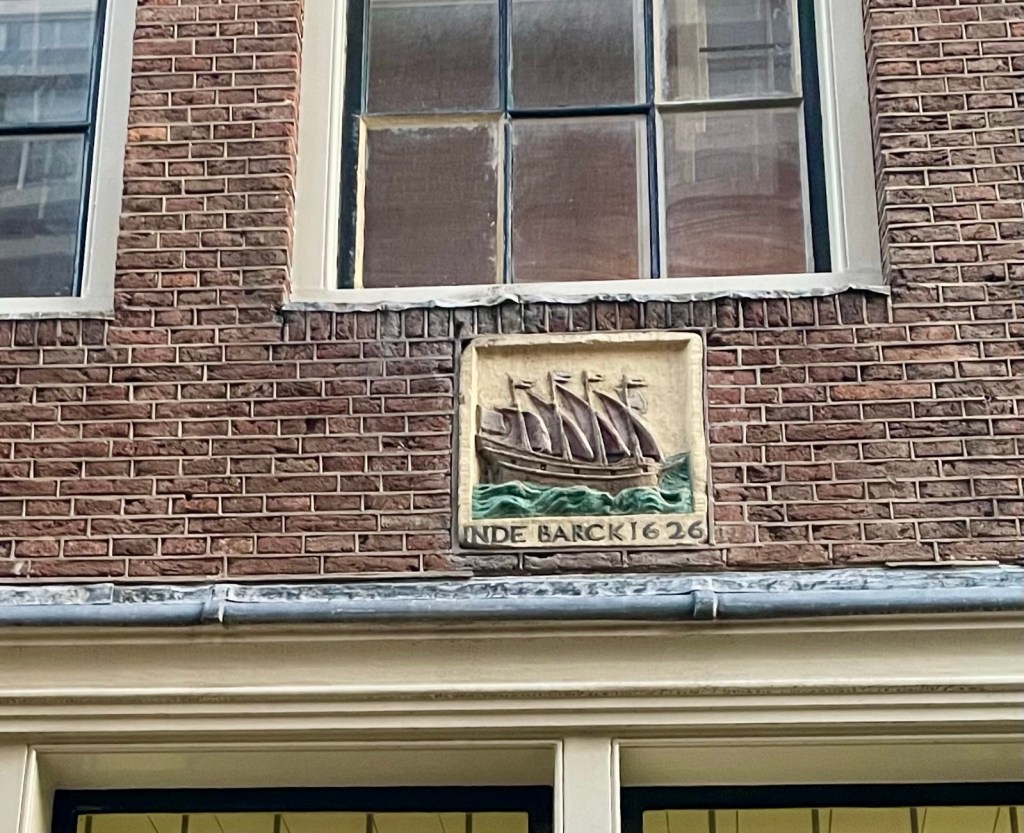
A smak was a type of 18th-century sailing ship for coastal shipping. A smak sail is the quadrangular sail used on these ships. A barck is another type of sailing ship.

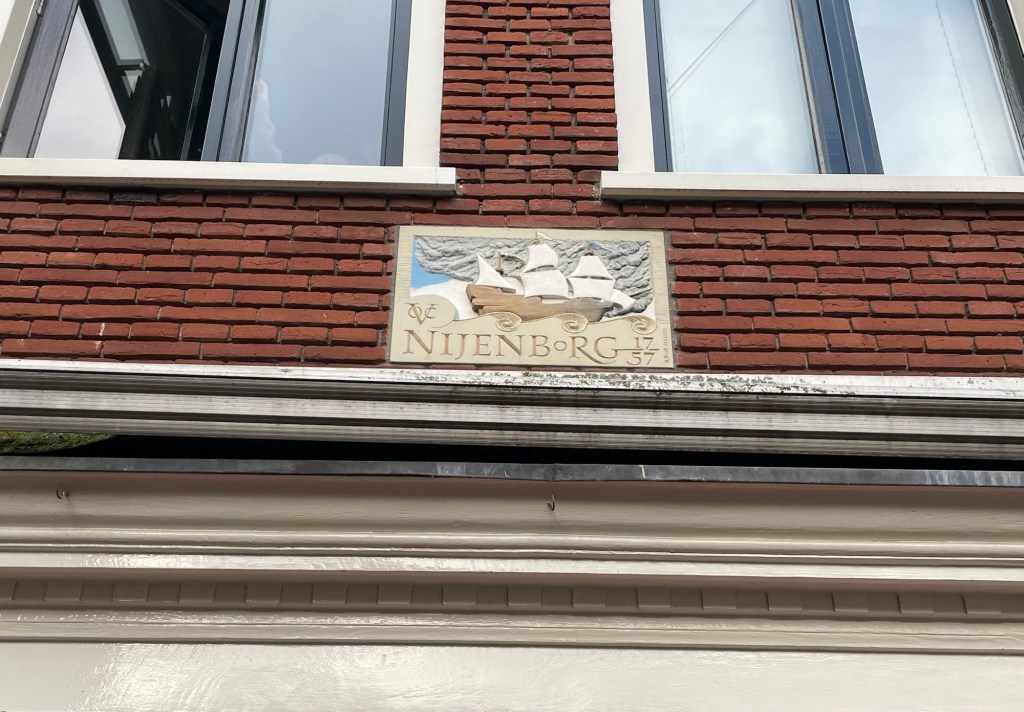
VOC was the abbreviation of the Dutch East India Company which traded from 1602-1799 and was one of the driving forces behind the trade wealth of the Dutch Golden Age. Built in 1756, the Nijenborgh sailed its global trade routes. She survived a crew mutany in 1763, but was later shipwrecked in the Indian Ocean.
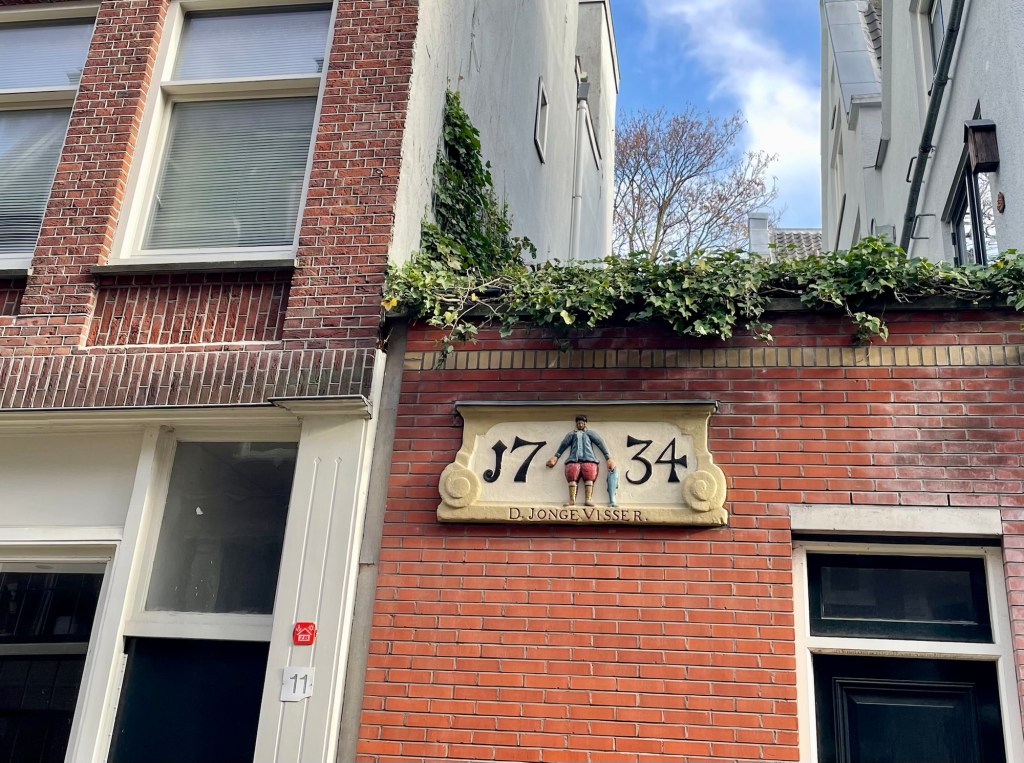
Fishing, as evidenced by this “young fisherman,” was another common profession.
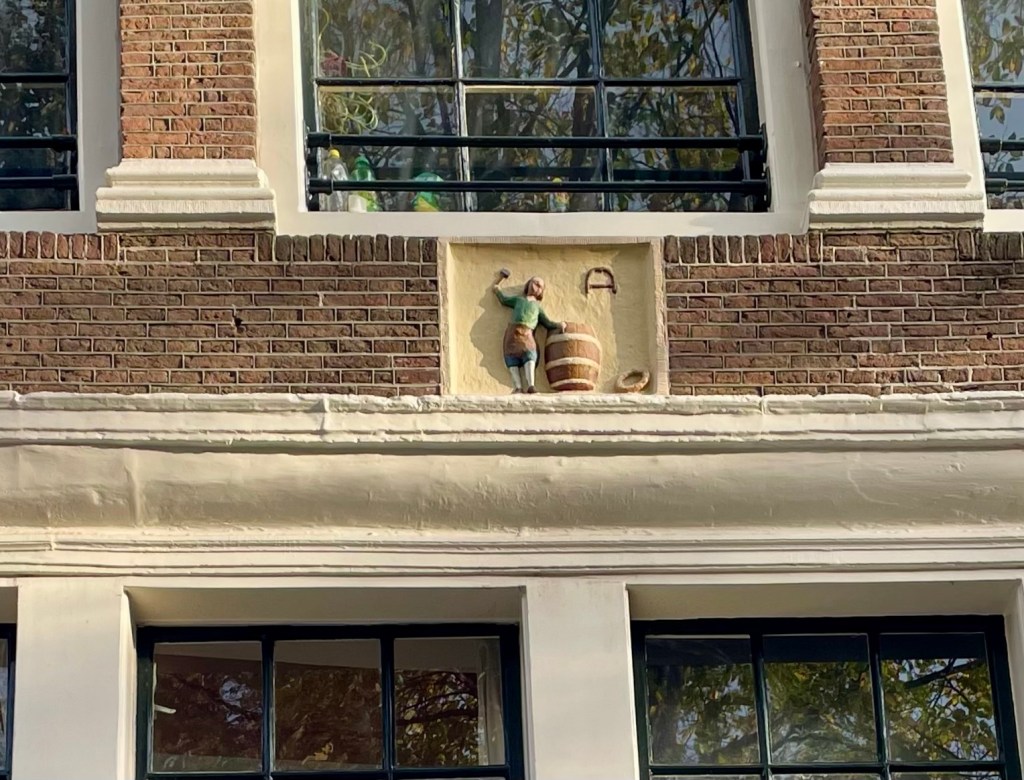
Coopers made the barrels used to transport the nation’s trade goods.
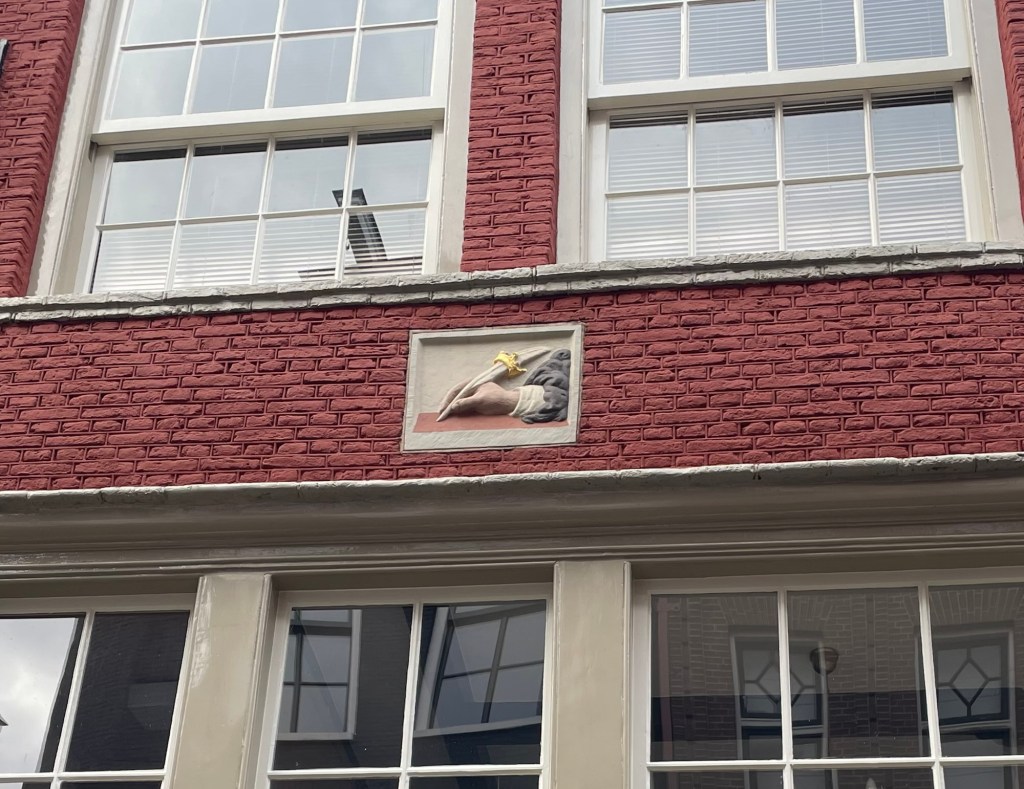
This is an advertisement for a scrivener, who read and wrote letters, taught writing and filled out forms.
This flying fox gable stone also contains a brush and broom, perhaps indicating that the broom maker was quick as a fox?

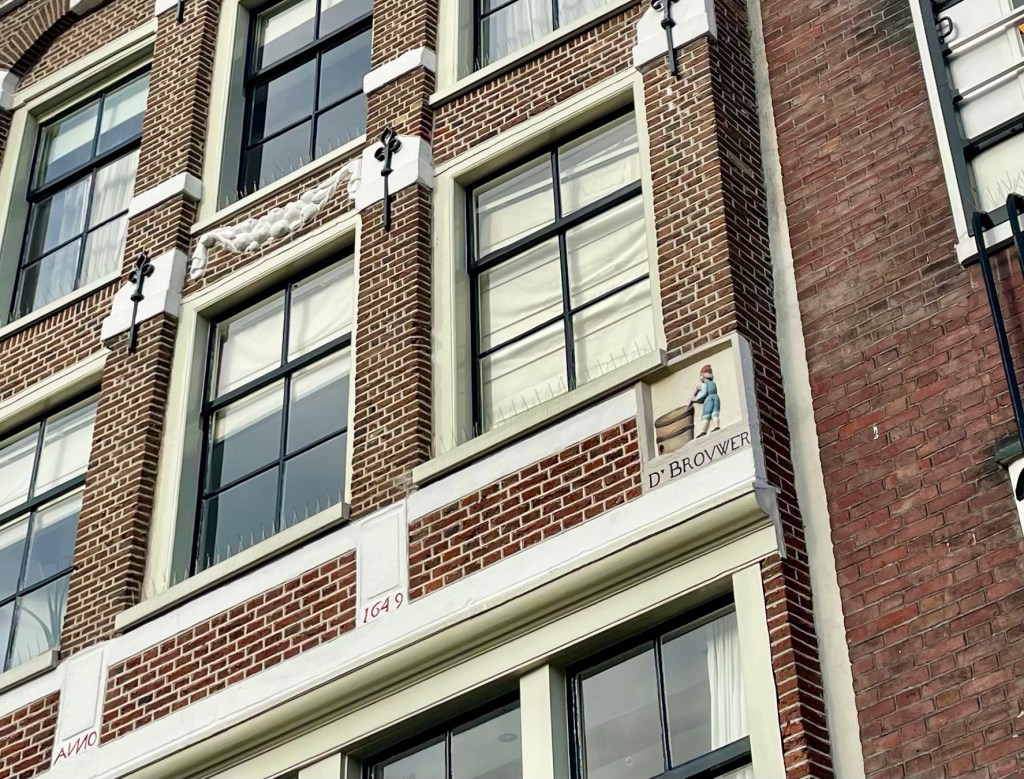
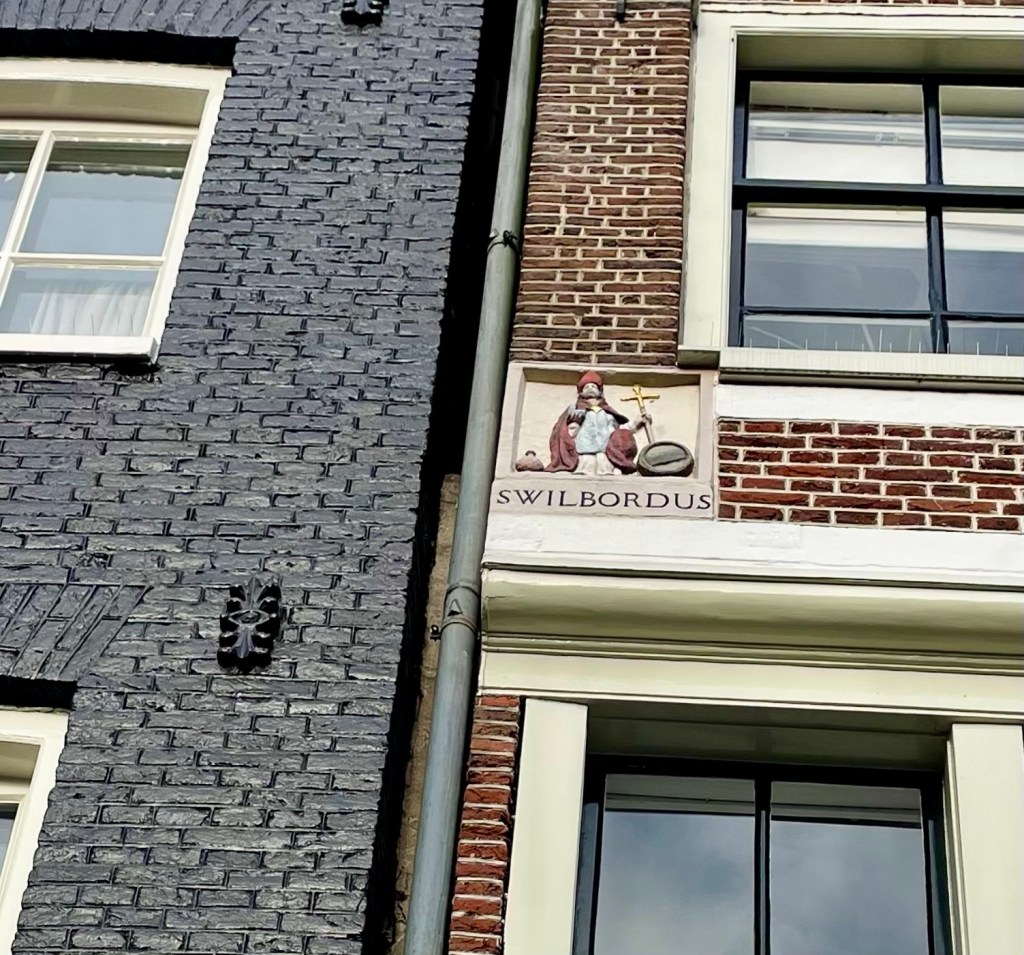
The two gable stones on this building show a brewer (brouwer) stirring a large cauldron and Willibrordus, a saint who turned a barrel of beer into a barrel of wine, indicating that the building was once a tavern.
Pakhuys is Dutch for warehouse.

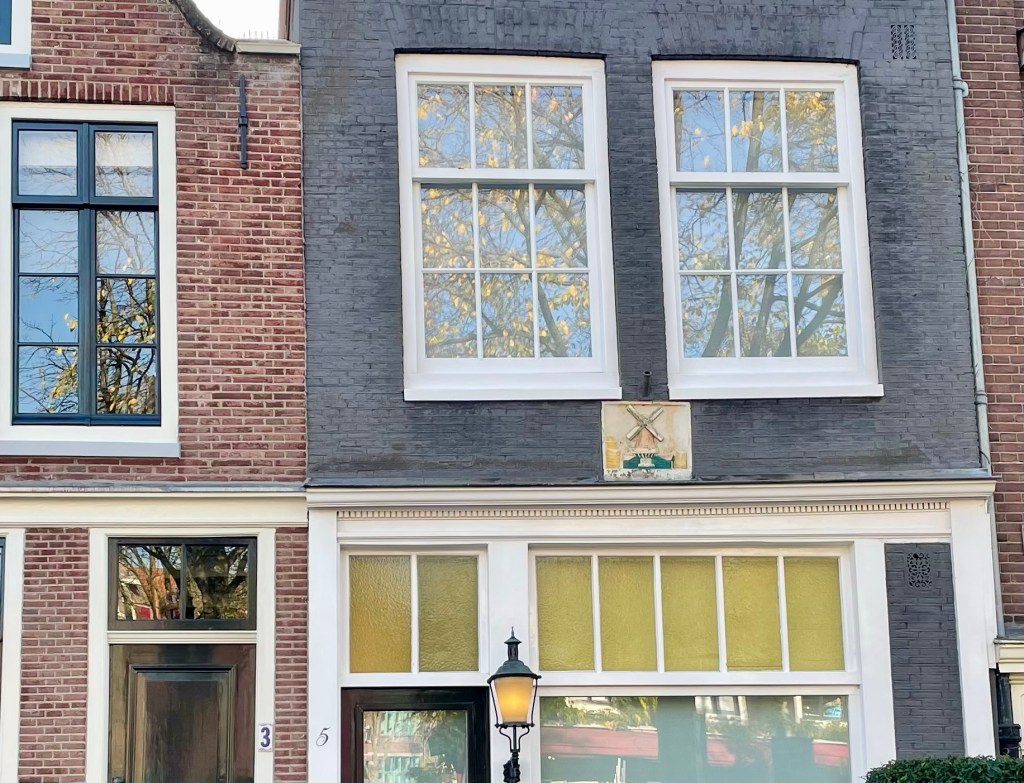
Today windmills are a symbol of a bygone era, but before the 19th century they were common and used to power grain and sawmills. The stacks of wood along side this mill are awaiting cutting.
This 1723 stone depicts an elaborate pastoral scene of sheep on a hillside.

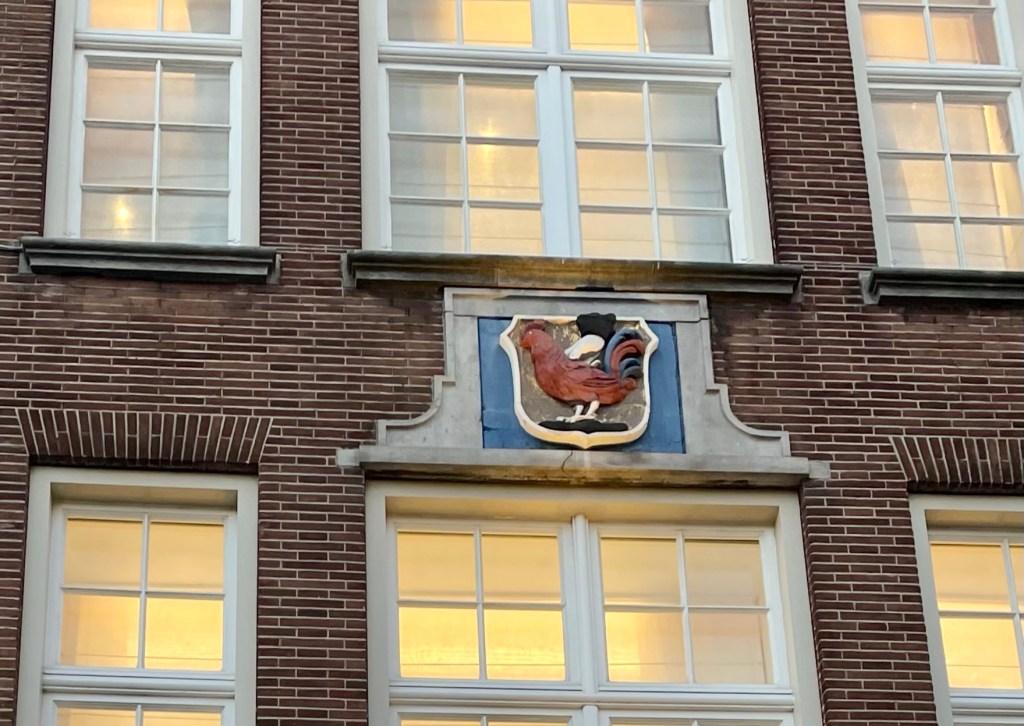
Gable stones also marked residences, often with symbols that represented the owner’s personal qualities, motto or visual puns. Perhaps this owner was named “Hancock?”
Who can guess the relationship between the client and this fox & crab? Perhaps it refers to an Aesop’s fable that urges one to be content with one’s life or a Russian fairy tale about a lobster who tricked a fox.

This stone marks the location of an almshouse offering free housing for the elderly opened by wealthy merchant Claes Claesz Anslo.

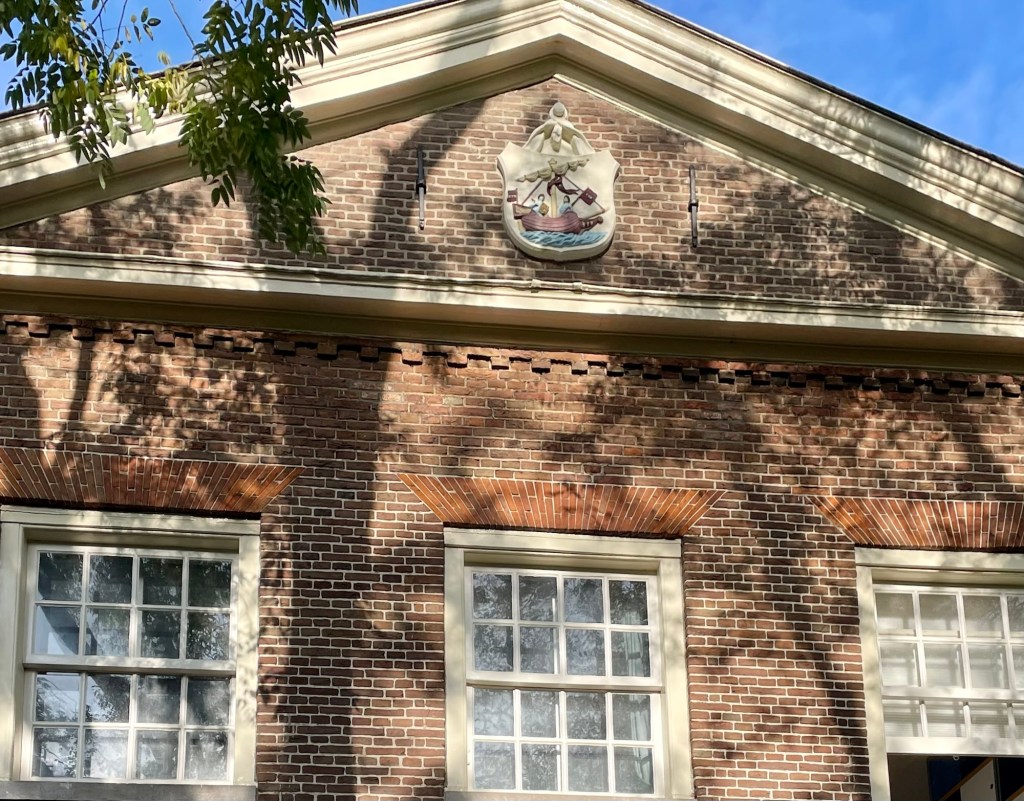
Another almshouse marked by a beautiful gable stone is the 1650 Karthuizerhof, built on the site of a medieval Carthusian monastery to house widows (often of sailors, hence the sailors and ship) and unmarried mothers with children.
This stone refers to the legendary founding of Amsterdam by two fishermen looking to escape a storm in the Zuiderzee. The story goes that their sea sick dog jumped ashore and vomited at the spot where the city was founded. Note the tiny dog’s head under the left side fisherman’s sheild!

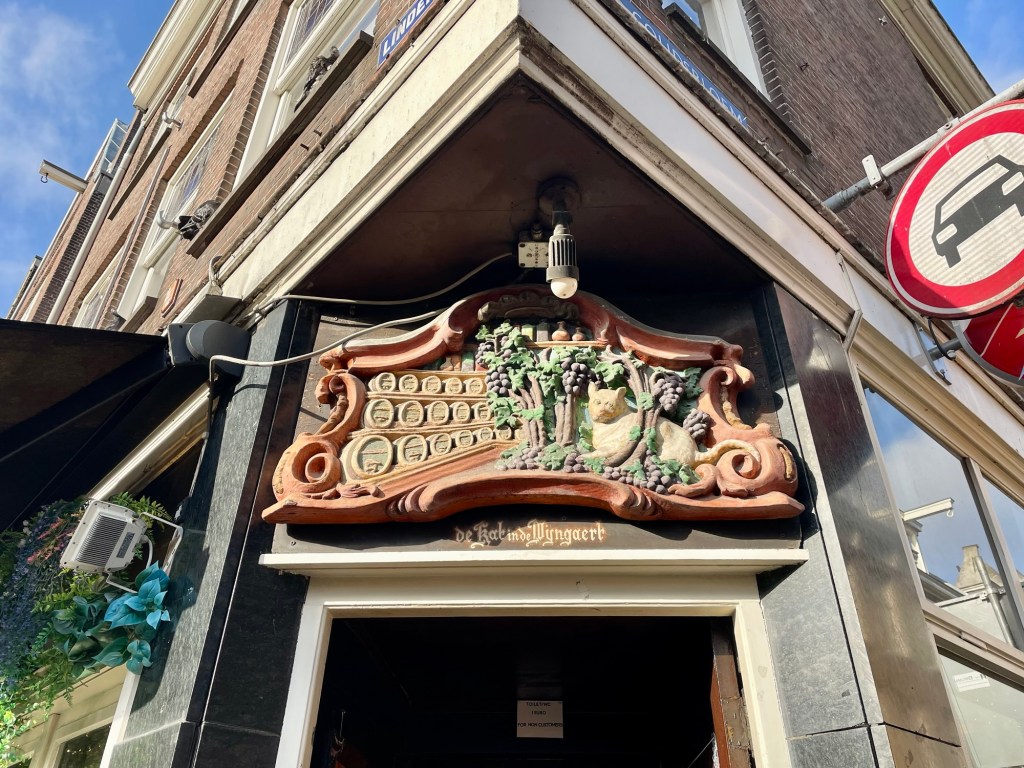
Although technically not a gable stone, this 18th century wood carving served the same purpose, probably marking the location of a wine cellar as indicated by the carving of stacks of wine barrels and grape vines, although what is the meaning of the hidden cat?
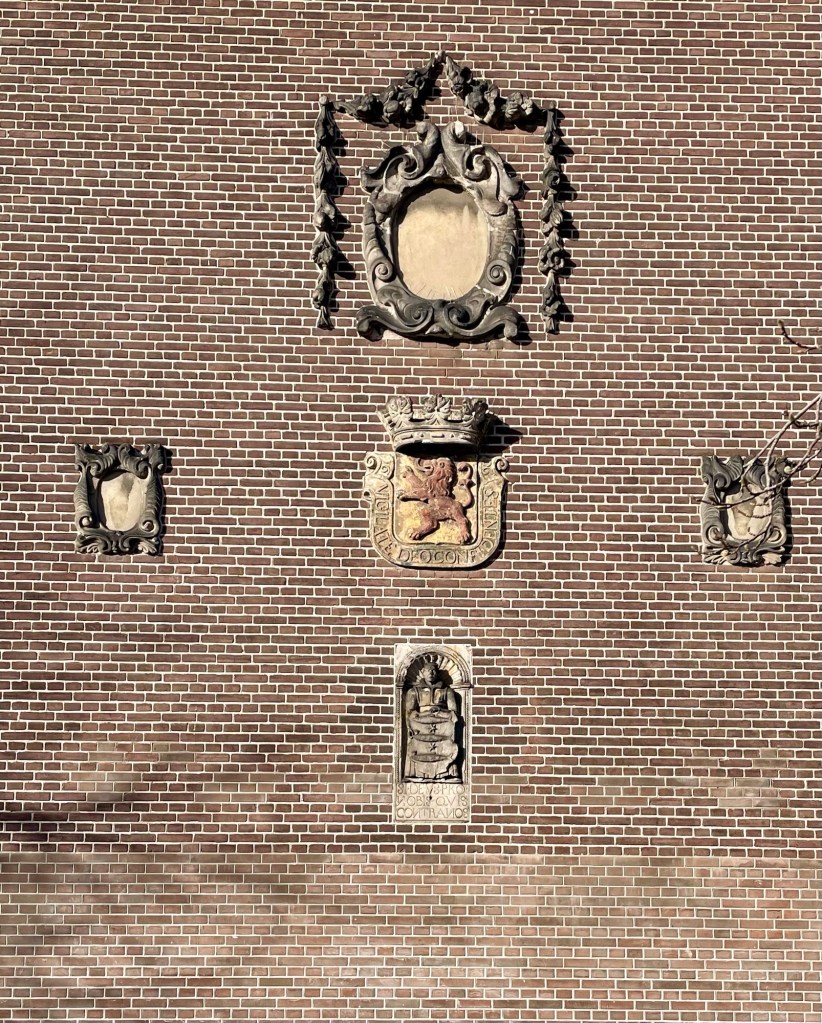
There are many relocated stones attached to the outer walks of the Rijksmuseum. The bottom stone translates to “If God is for us, who can be against us,” a saying popularized during the Eighty Years’ War against Spain. This is probably the coat of arms of the Dutch city of Enkhuizen, an important fishing and trading port during the Dutch Golden Age. The stone above it translates to “Be vigilant, trusting in God,” and is the coat of arms of South Holland.
More stones are located on the exterior of the Amsterdam Museum:
Most stones have no explanation on line, so figuring them out is mostly guess work.
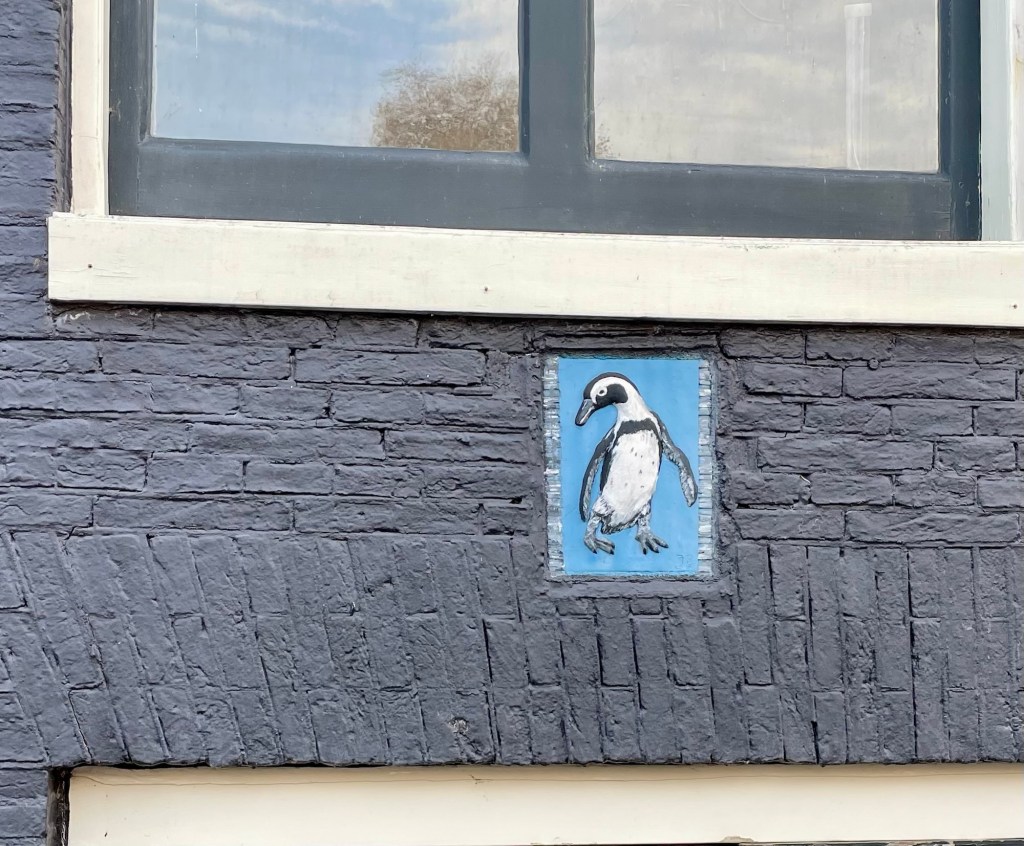
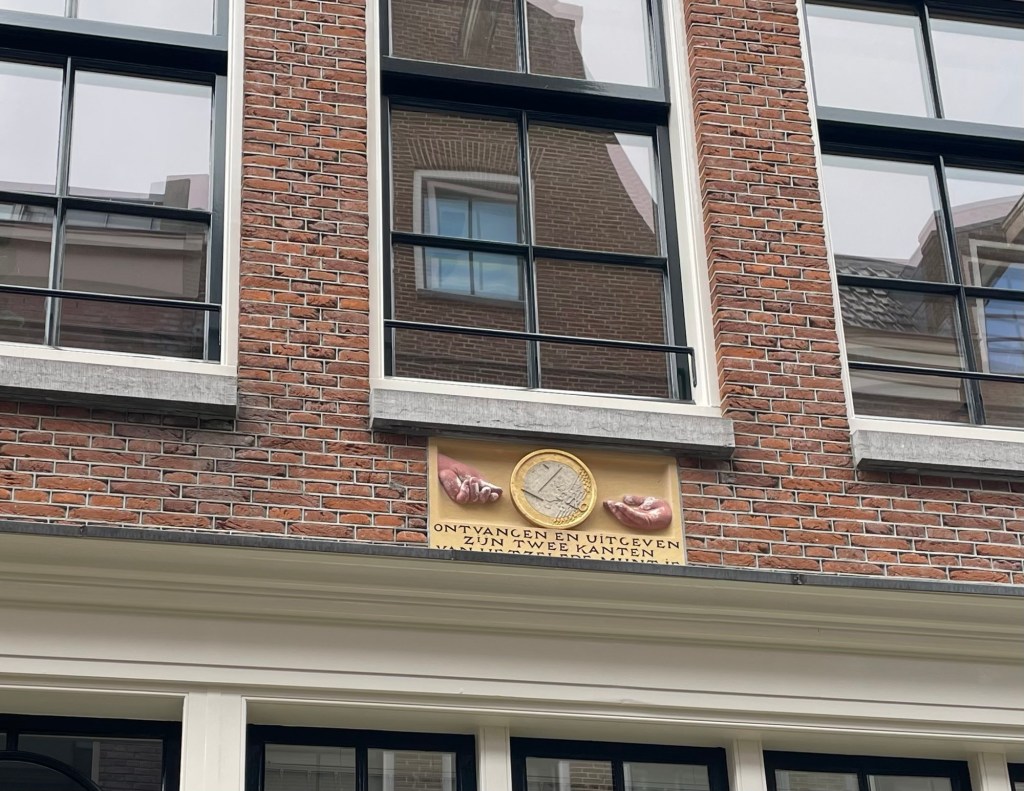
The tradition of gable stones ended during the French occupation of the Netherlands when Napoleon introduced street numbers. However new stones are still commissioned, so there are modern examples all around.
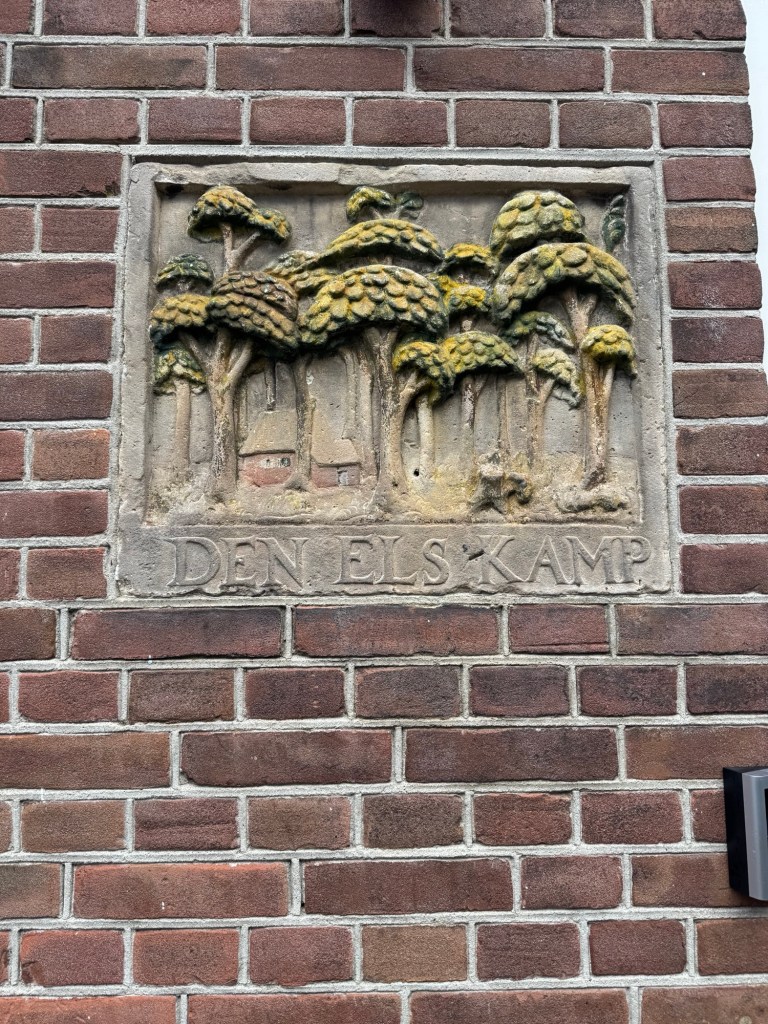
FYI: Gable stones can also be found in other cities in the Netherlands and surrounding countries.
 Secrets of Philadelphia