About suffering they were never wrong,
The Old Masters: how well they understood
Its human position; how it takes place
While someone else is eating or opening a window or just walking dully along
How, when the aged are reverently, passionately waiting
For the miraculous birth, there always must be
Children who did not specially want it to happen, skating
On a pond at the edge of the wood:
They never forgot
That even the dreadful martyrdom must run its course
Anyhow in a corner, some untidy spot
Where the dogs go on with their doggy life and the torturer’s horse
Scratches its innocent behind on a tree.
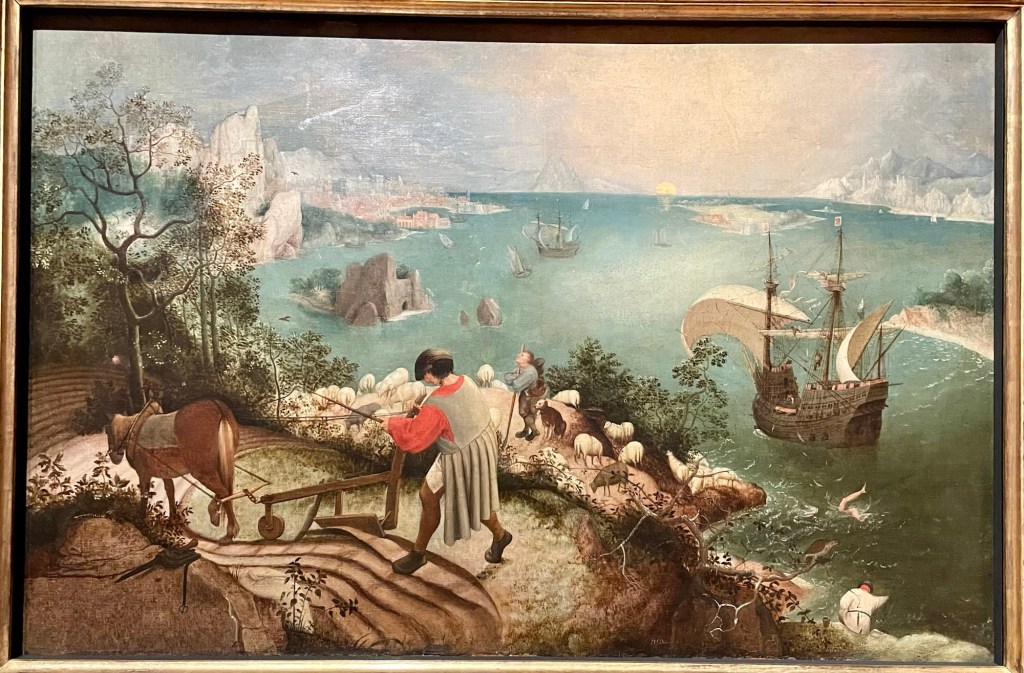
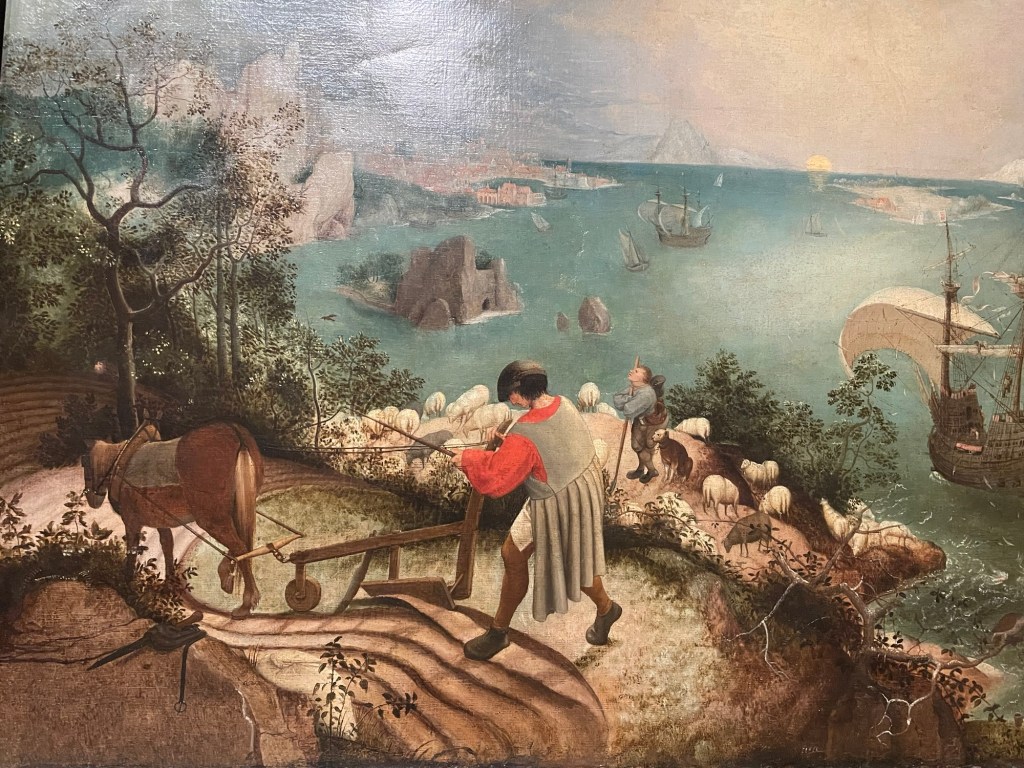
In Brueghel’s Icarus, for instance: how everything turns away
Quite leisurely from the disaster; the ploughman may
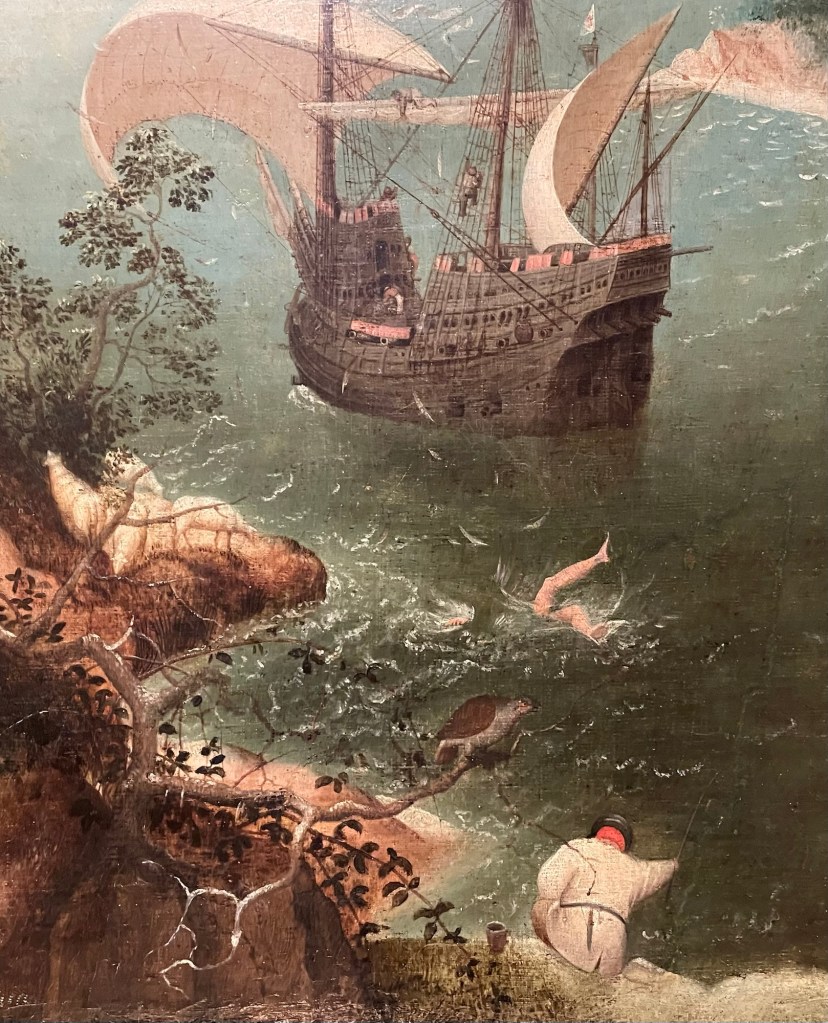
Have heard the splash, the forsaken cry,
But for him it was not an important failure; the sun shone
As it had to on the white legs disappearing into the green
Water; and the expensive delicate ship that must have seen
Something amazing, a boy falling out of the sky,
Had somewhere to get to and sailed calmly on.
WH Auden 1938 “Musée des Beaux Arts”
So much unacknowledged drama as everyone blindly proceeds with their everyday lives in this small room in a corner of the Brussels Old Masters Museum.
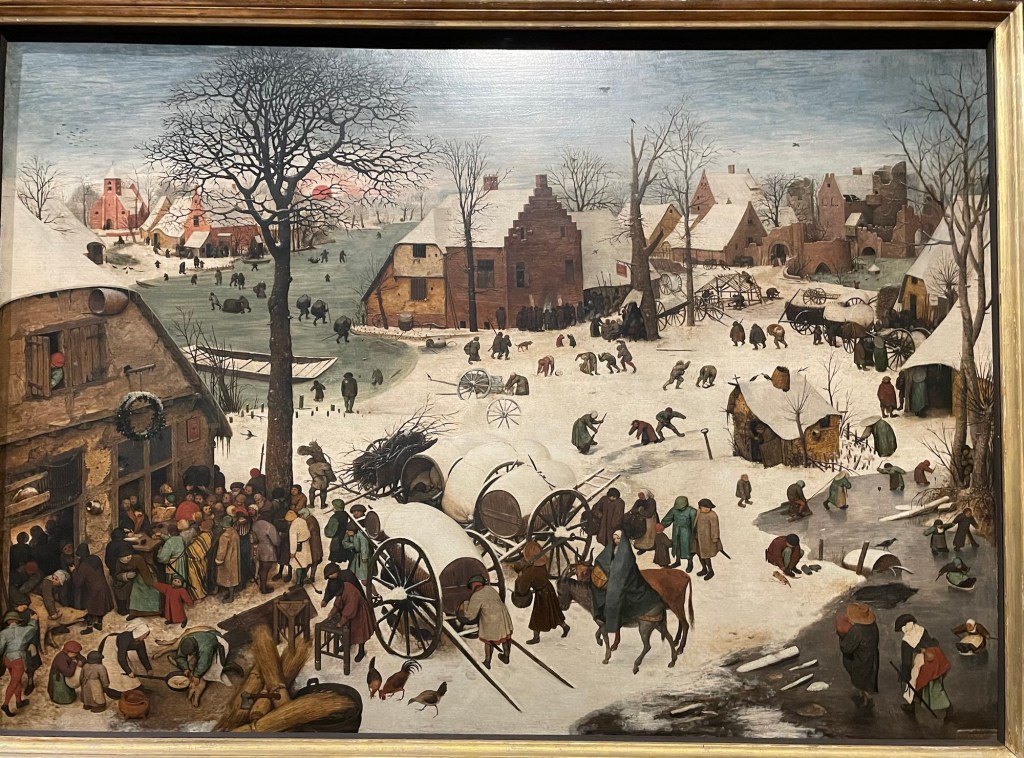
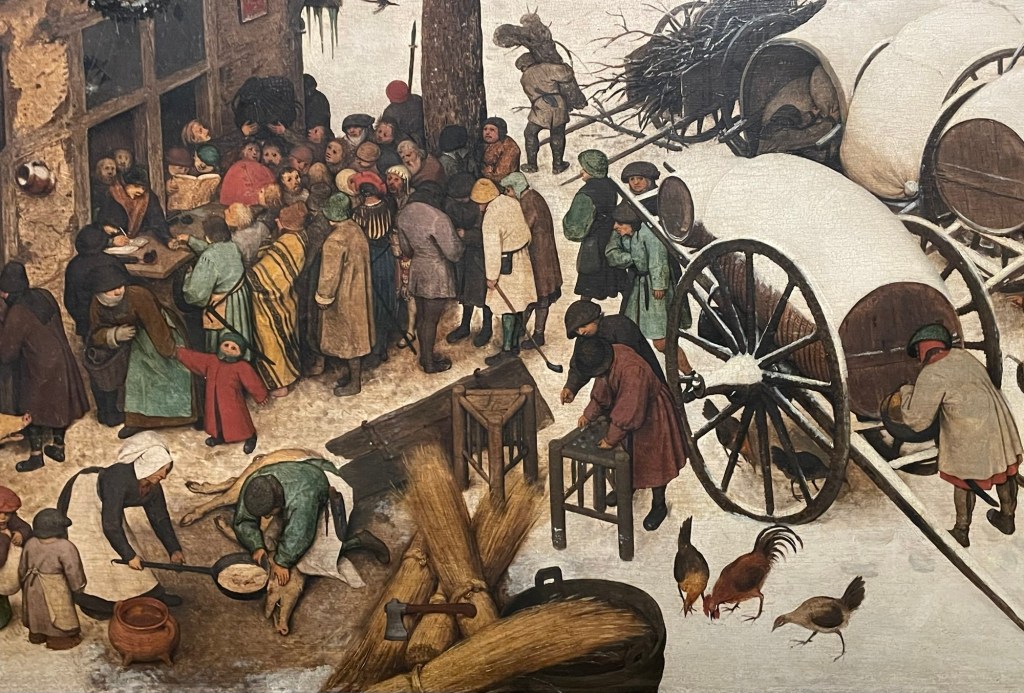
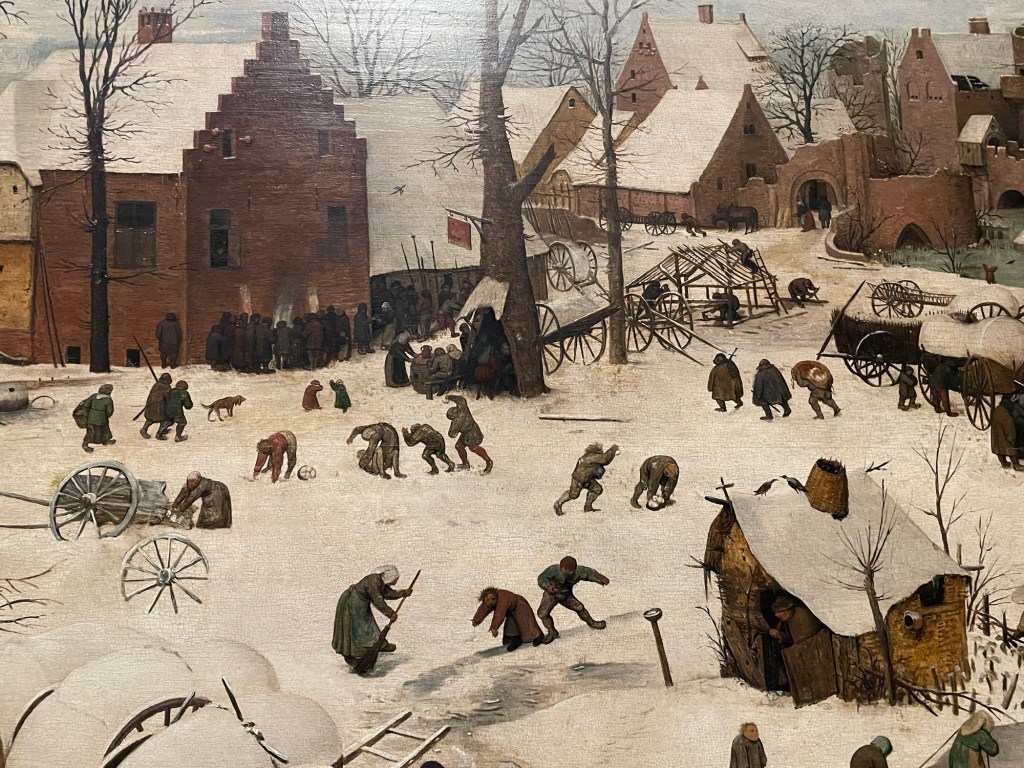
In “The Numbering at Bethlehem,” a pregnant Mary and Joseph enter Bethleham just prior to the miraculous birth of Jesus, but no one notices them, all too busy with their own day: having snowball fights, slaughtering a pig, paying taxes. Each involved in their own personal dramas.
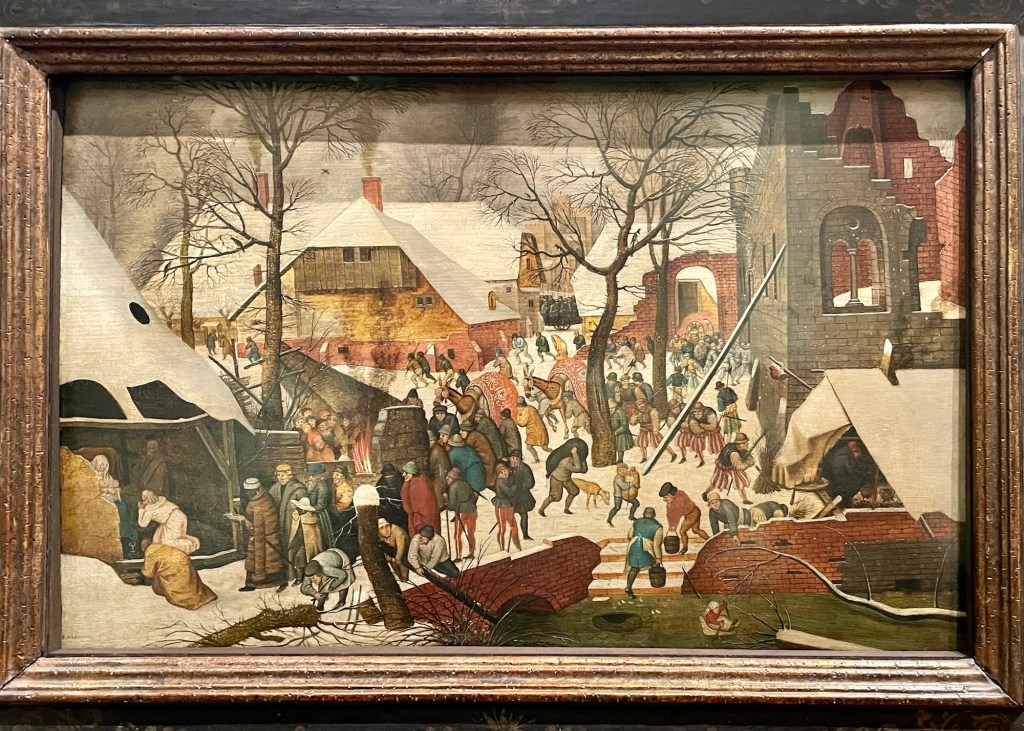
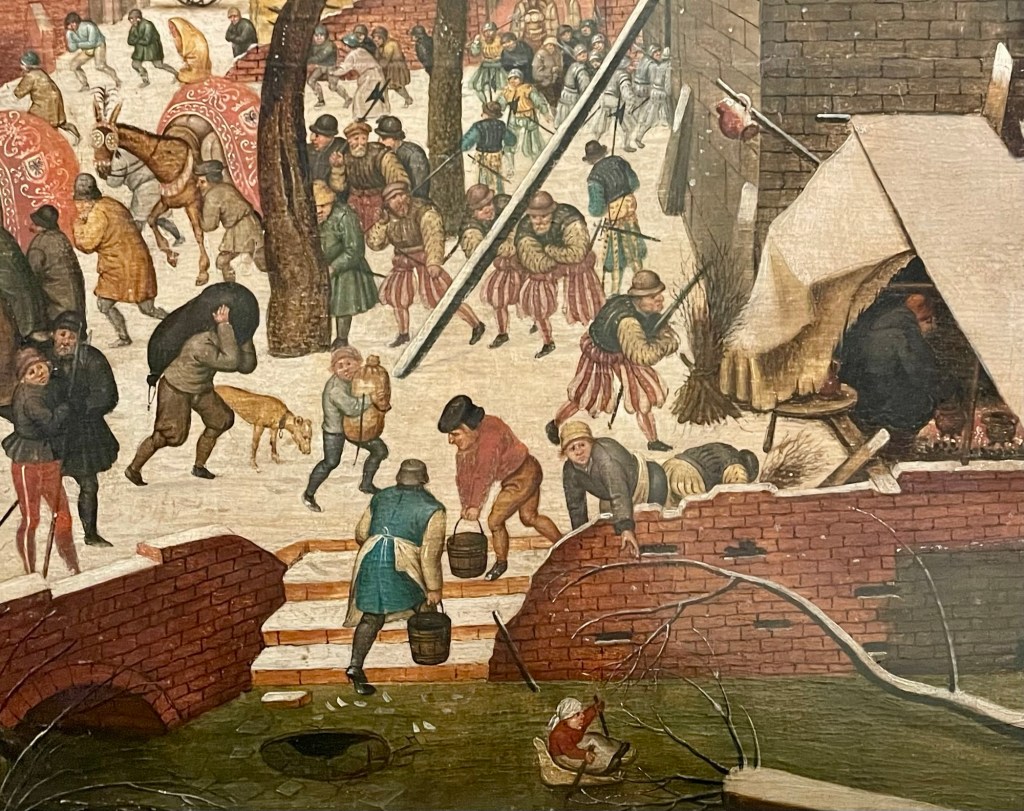
Even in his painting of “The Adoration of the Magi in the snow,” (the one in this gallery is a copy by his son Pieter), the religious drama takes place almost out of sight, tucked away in the dark in a bottom corner while the majority of the canvas is devoted to the townsfolk leading their own everyday lives, from the child playing on the ice to the adults’ focus on getting water and gathering wood for warmth.

In 1960 William Carlos Williams returned to Bruegel’s Icarus in his own poem, which would later help earn him a Pulitzer Prize in Poetry:
According to Brueghel
when Icarus fell
it was spring
a farmer was ploughing
his field
the whole pageantry
of the year was
awake tingling
near
the edge of the sea
concerned
with itself
sweating in the sun
that melted
the wings’ wax
unsignificantly
off the coast
there was
a splash quite unnoticed
this was
Icarus drowning
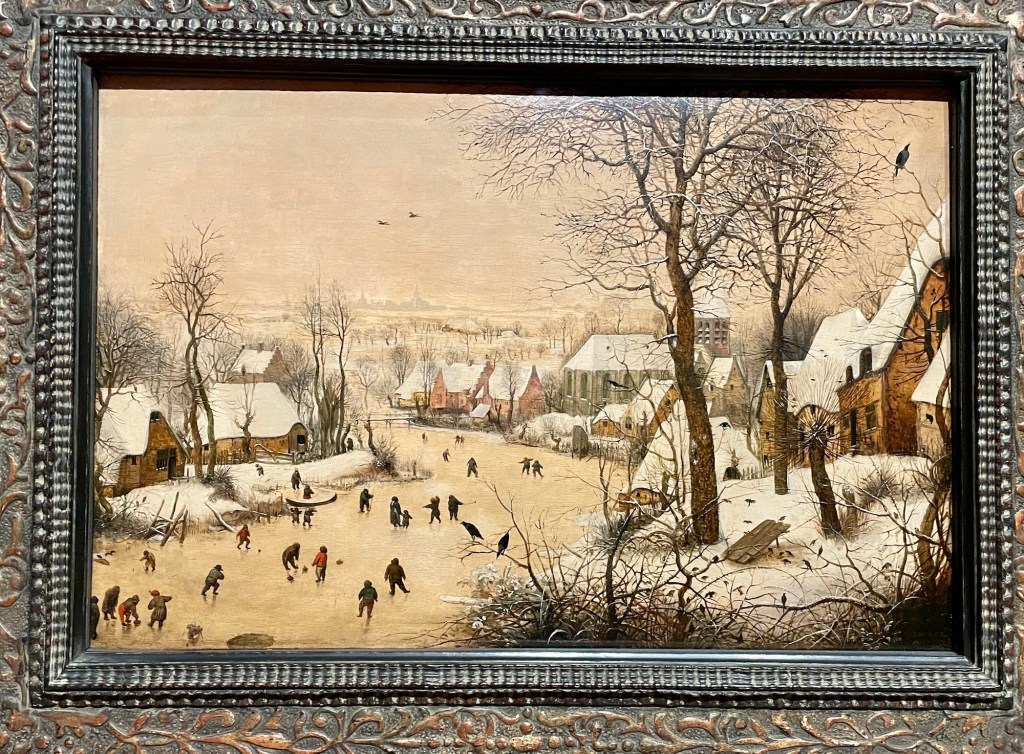
Bruegel the elder is generally credited with inventing the winter landscape, and his original of the magi in the snow is thought to be his earliest winter painting. The gallery also contains another of his winter scenes, “Winter Landscape with Bird Trap,” his most copied painting:
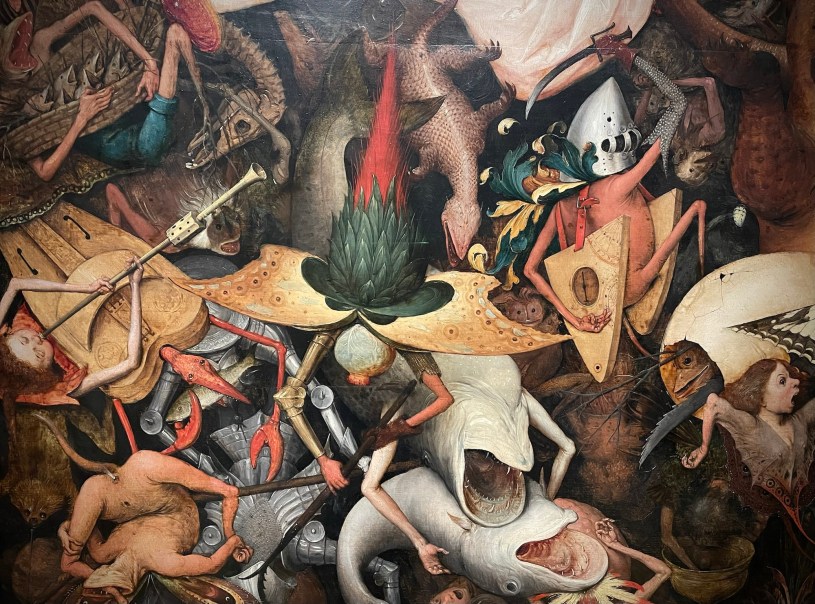
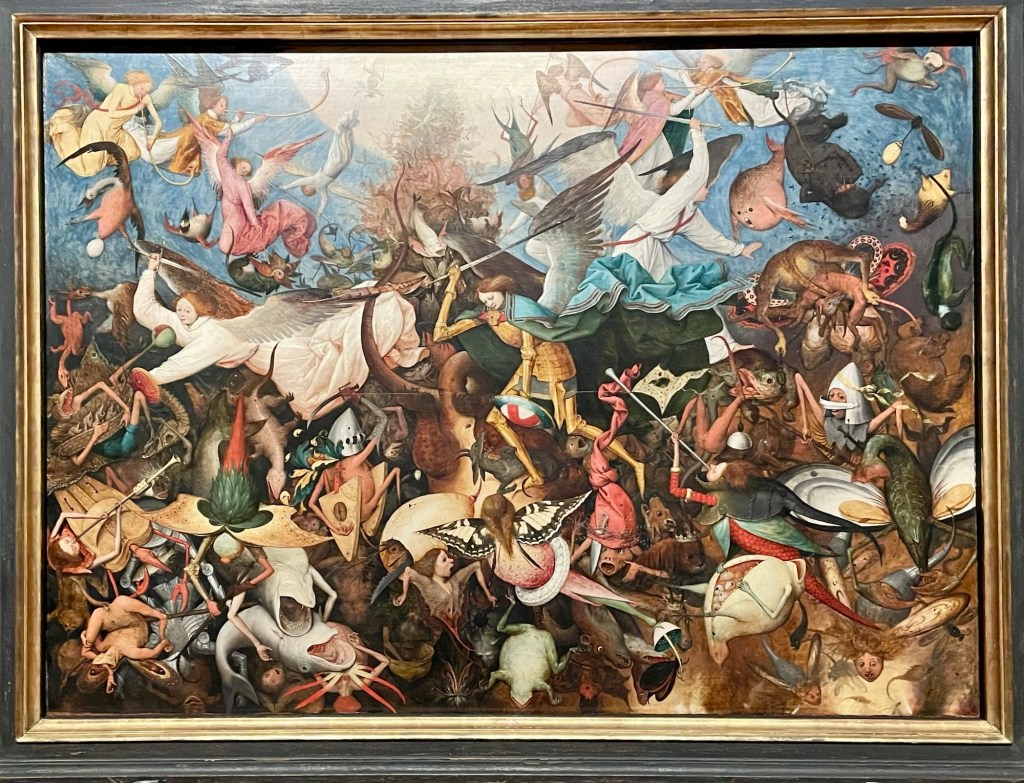
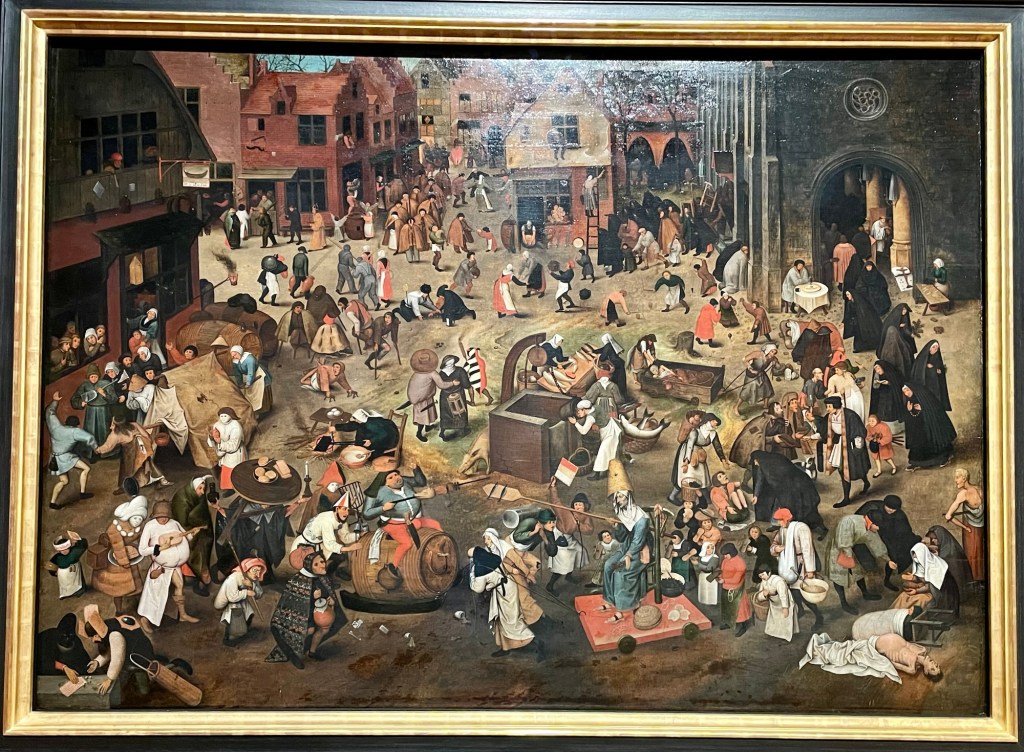
Also in the gallery are two of the fantastical religious scenes first popularized by Bosch, “The Fall of the Rebel Angels” by Bruegel and “Battle of Carnival and Lent,” by his son.
 Secrets of Philadelphia