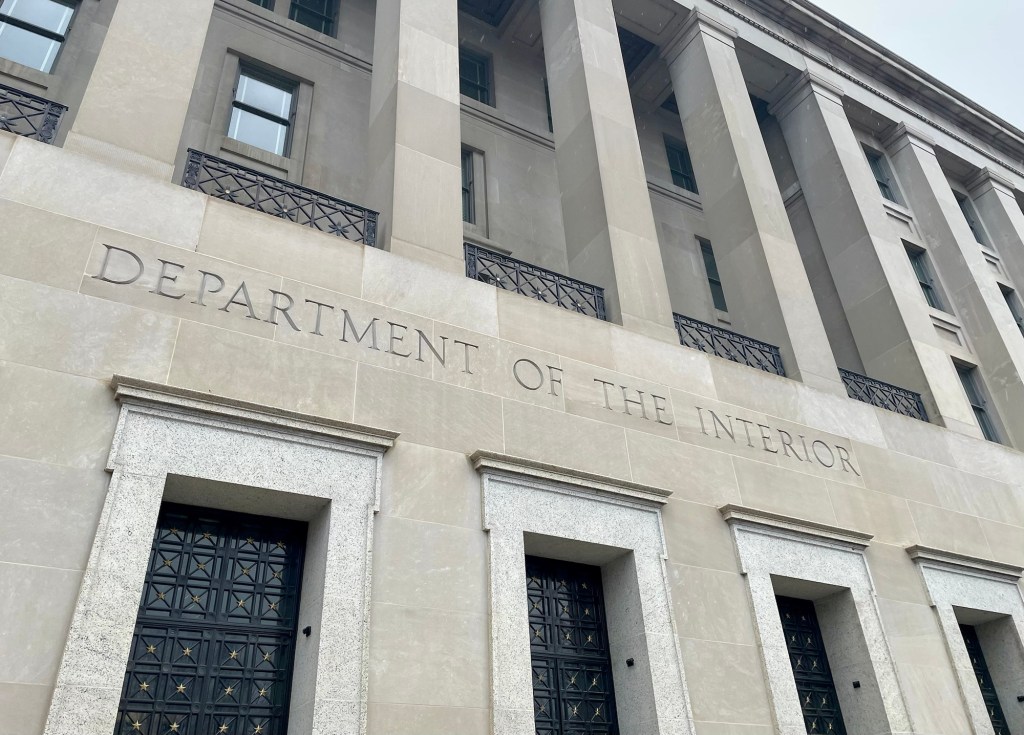
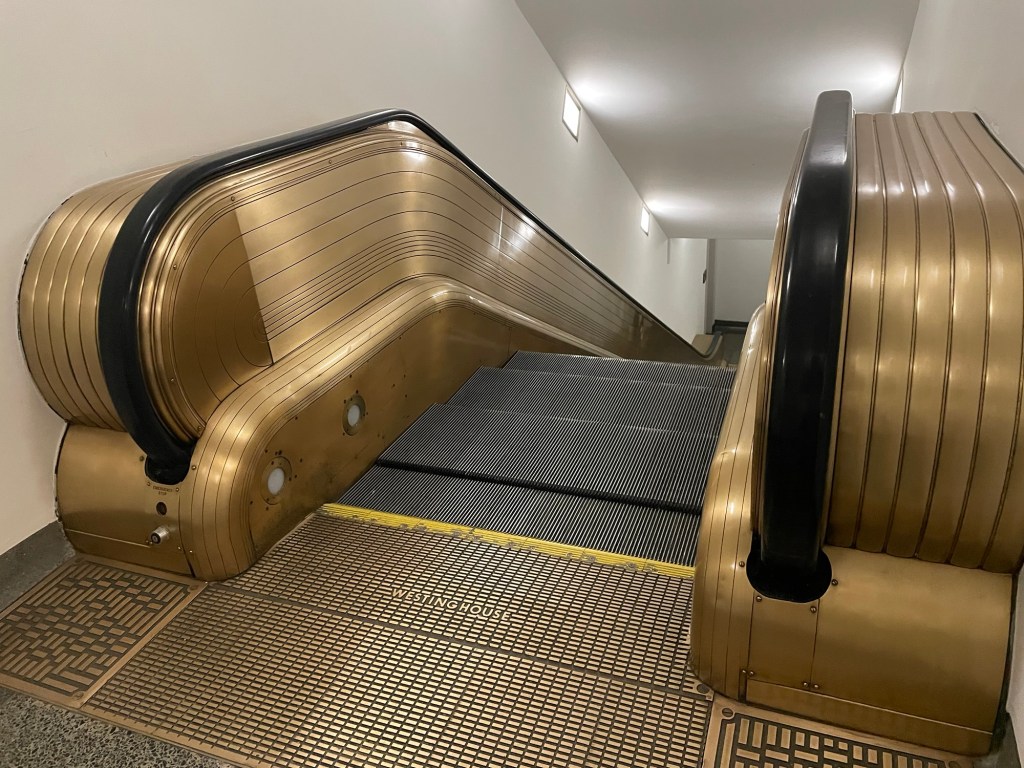
By the time Franklin Roosevelt was inaugurated, the “Department of Everything Else” as the Interior Department was known had outgrown its headquarters. The replacement was the first building in DC authorized, designed, and built by the Roosevelt Administration. It was funded through Roosevelt’s Public Works Administration, of which Interior Director Howard Ickes was in charge, and construction was completed in December 1936. Although the building’s construction centered on “utility and economy,” (it cost 10-15% less to operate than other federal buildings) during the Depression, it was Ickes’s focus on employee comfort that resulted in a building that had the first central air conditioning system of a major government building, was the first federal building to contain escalators, had an employee gymnasium, cafeteria and lounge, plus the building was decorated with more public funded artwork than any other government building.
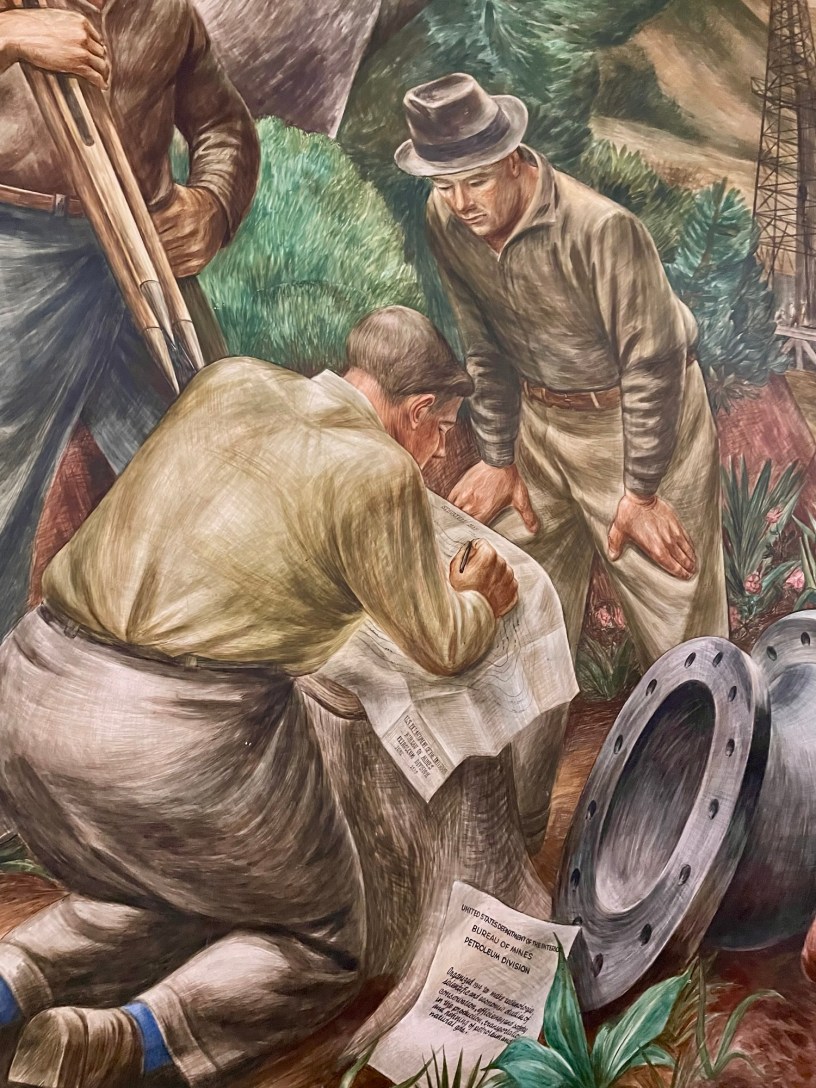
These murals are on view during the department’s free weekly tours. Register in advance- phone number is on the website. All visitors must go through airport-type screening with Real ID (or passport) to enter the building.
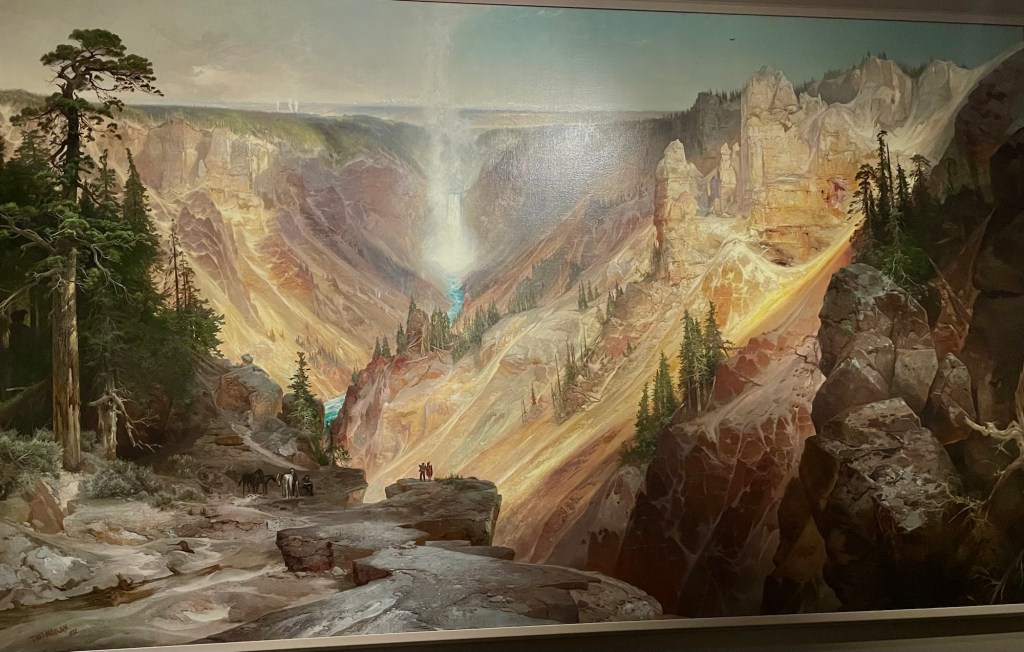
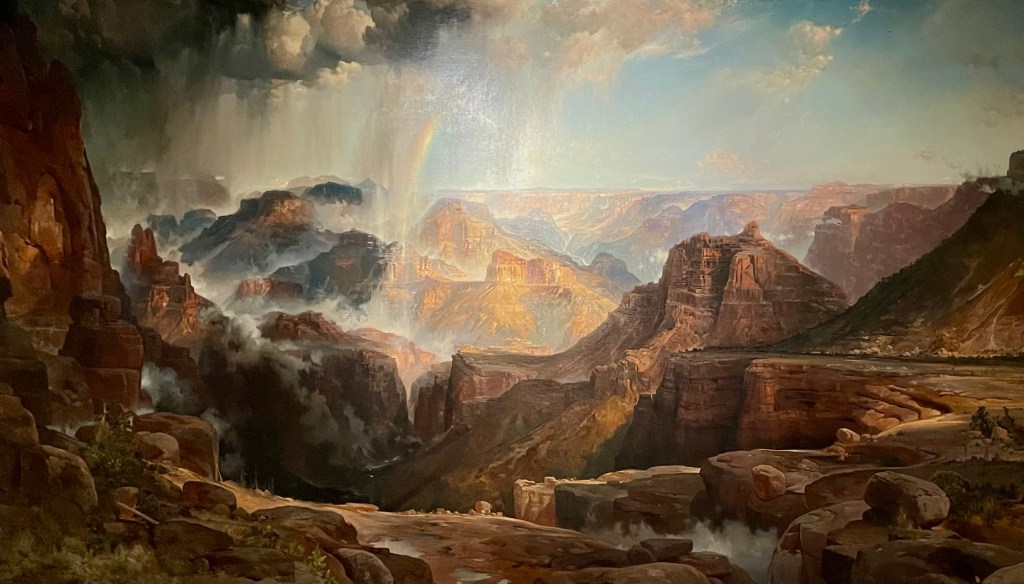
Once inside, check out the small museum whose highlight is the pair of paintings by Thomas Moran: The Grand Canyon of the Yellowstone (1872) and The Chasm of the Colorado (1873–1874) that influenced Congress to establish the country’s first national park.
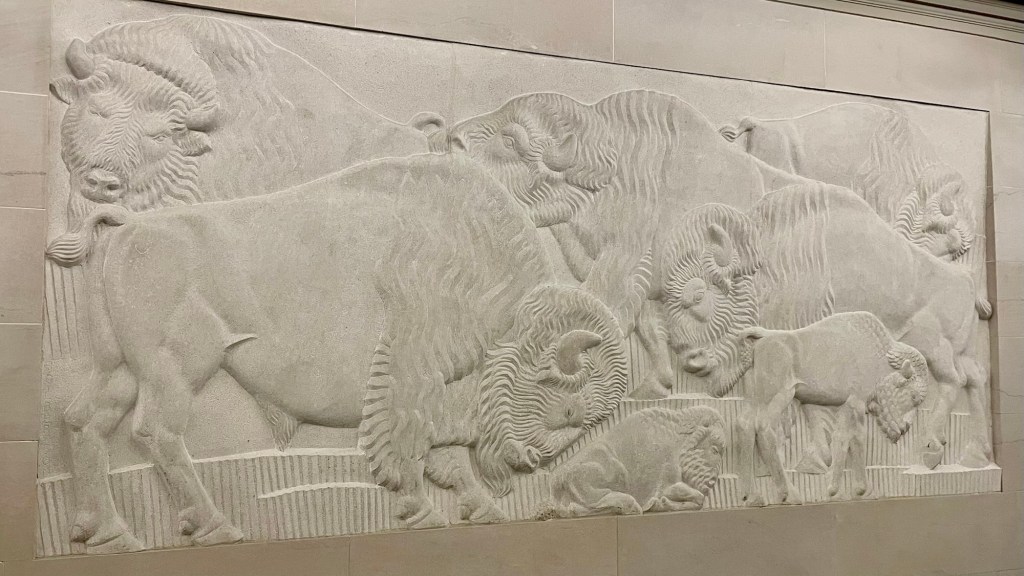
Just outside the museum are these beautiful reliefs. The buffalo is the symbol of the Interior Department.
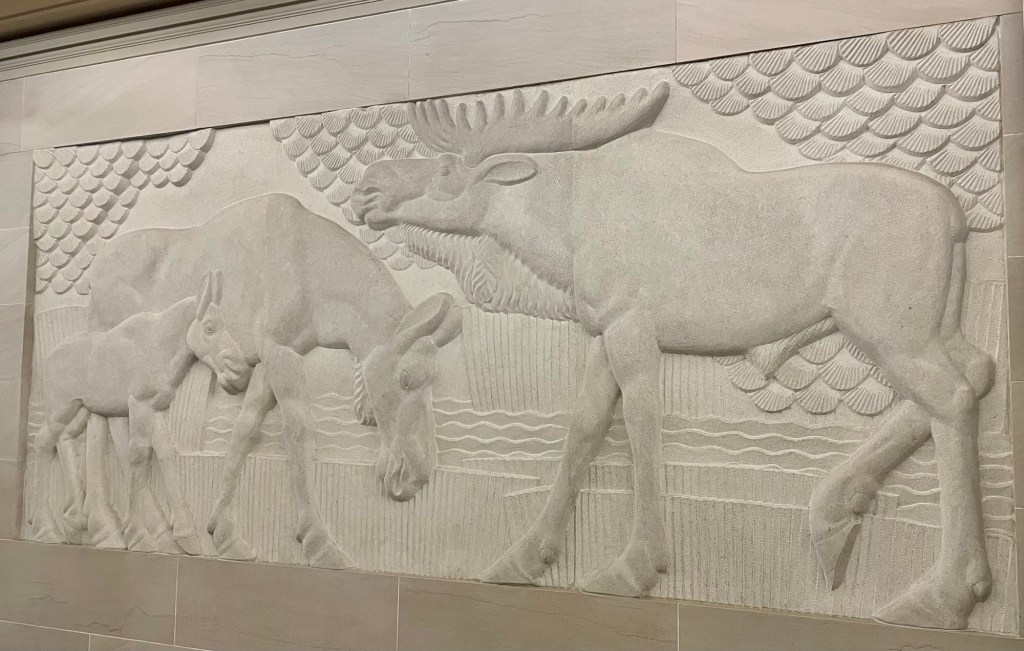
There are over 40 murals located within the building, about a dozen of which are highlighted on each tour. They reflect the department’s “everything else” responsibilities, including the Bureau of Reclamation, Bureau of Mines, National Parks and the Bureau of Indian Affairs. Many have “secret” meanings incorporated by the artists which are highlighted on the tours.
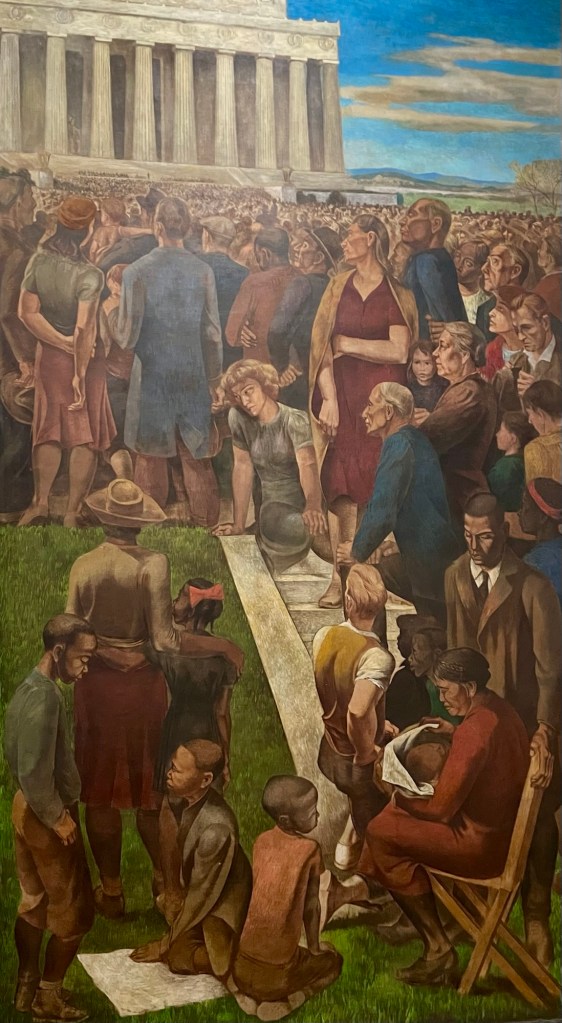
The focus of one of the few murals where photography is allowed was provoked by the building’s neighbor, the Daughters of the American Revolution whose refusal to let black contralto Marian Anderson sing in their auditorium led to Eleanor Roosevelt cancelling her membership and encouraging Ickes to allow Anderson to sing on the steps of the Lincoln Memorial. Note Eleanor in the center-right of the mural. It’s definitely not prime real-estate for the first lady, but rather centered in among everyday people.
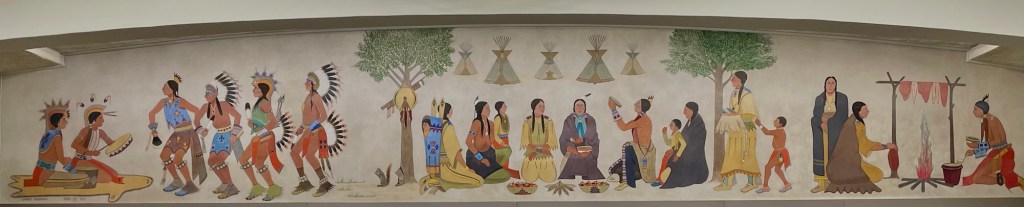
The adjacent cafeteria contains murals by Native American muralist James Auchiah, painted only a few years after a federal law suppressing Native American culture was reversed.

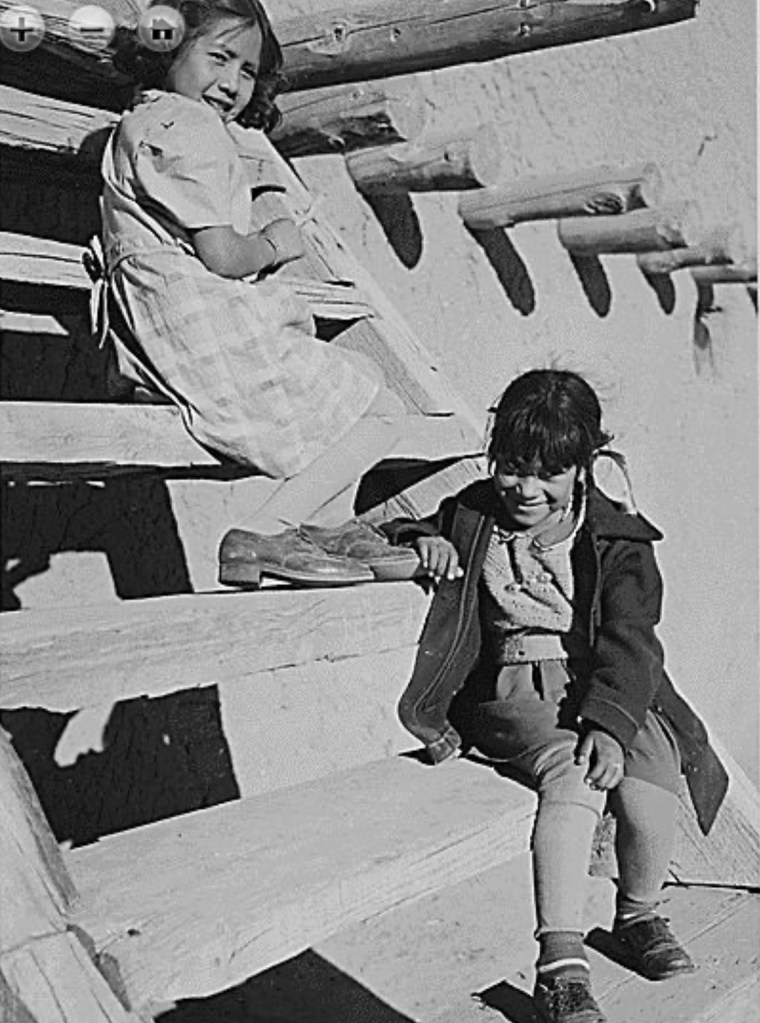
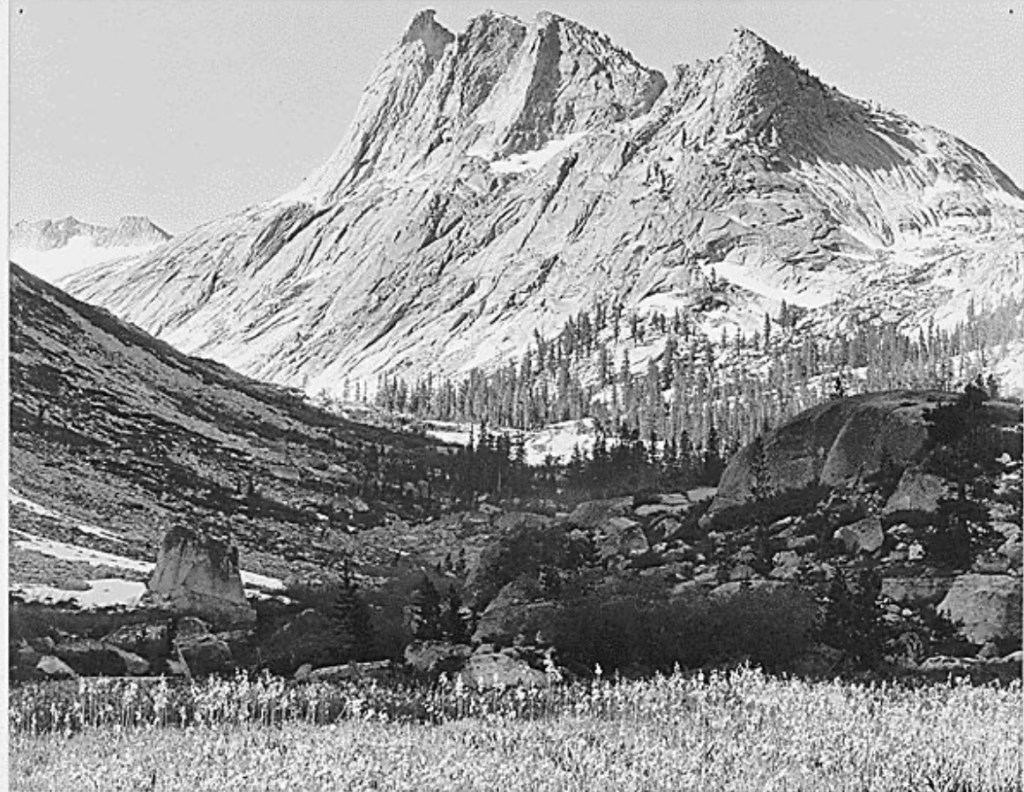
A more recent addition are the large scale photographs by Ansel Adams, who Ickes admired and hired to create a series of photographs relating to the Bureau. Due to the outbreak of WWII none of the photographs were ever reproduced, but in 2020 they were rediscovered and rehung (from the National Archives website).
Fun Fact: The building’s address is 1849 C Street to commemorate the founding of the Department in 1849.
 Secrets of Philadelphia