

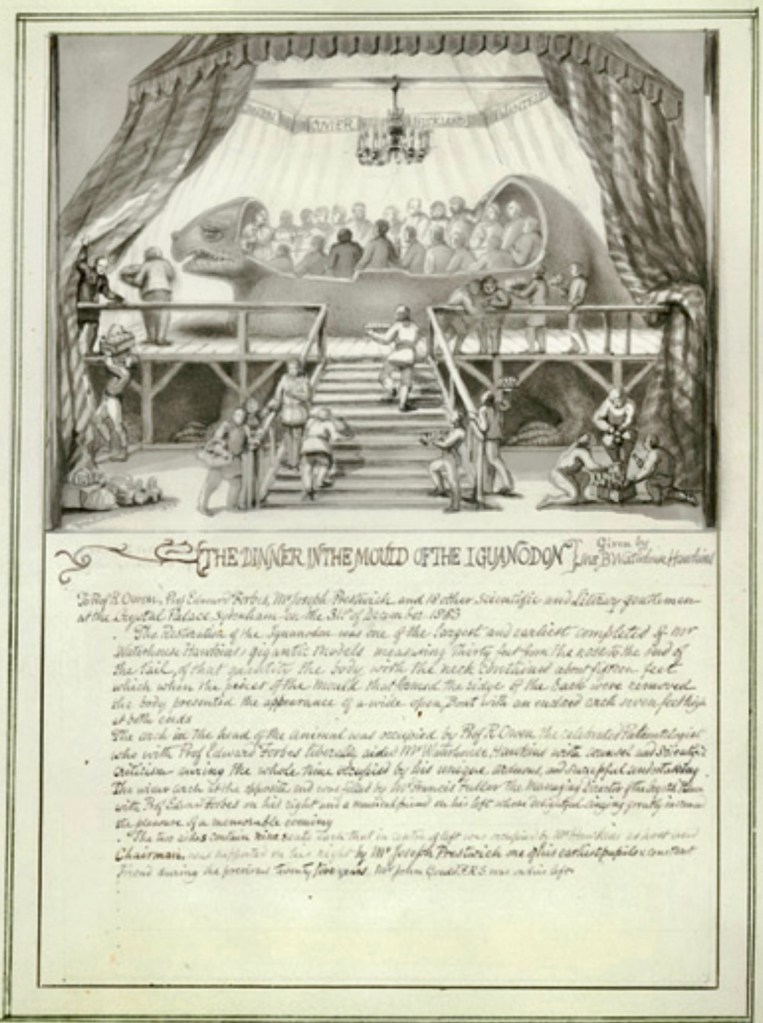
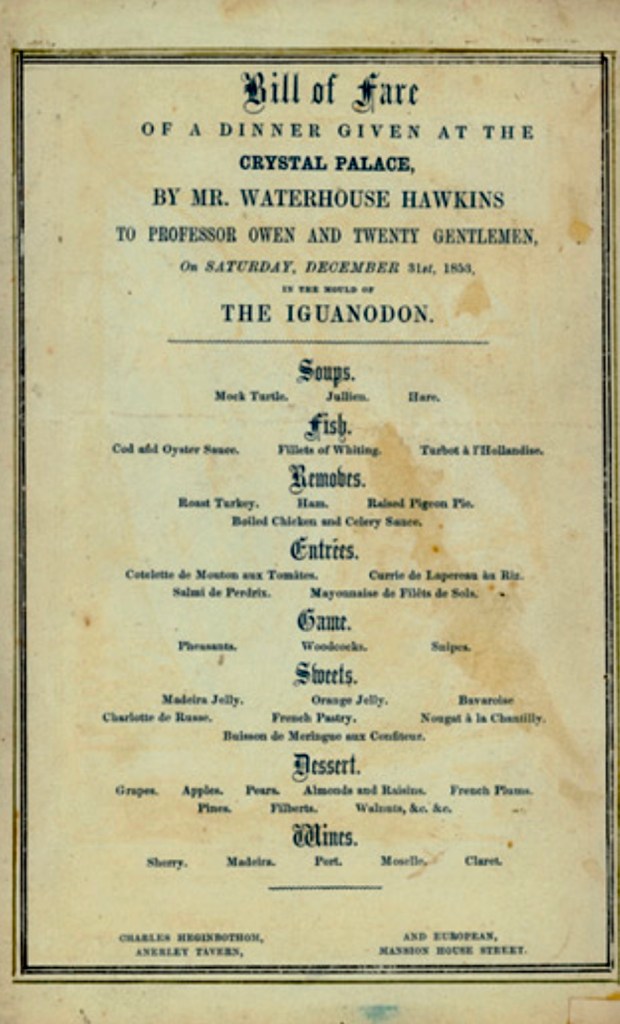
Oh, to have been one of the lucky Victorians to have received an invitation for “…dinner in the mould of the Iguanodon at the Crystal Palace…!” Those lucky few got to dine on mock turtle soup, cod & oyster sauce, woodcocks, snipes, and orange jelly.
Alas, today we can only view Iguanodon from afar, but at least he’s still around. He and his friends are almost all that’s left of a park created in the 1850’s to house the Crystal Palace, the centerpiece of London’s Great Exhibition of 1851. After the exhibition closed, the palace (the world’s largest glass structure) was moved here to sit in a pleasure ground filled with statuary, fountains, a maze, and a special landscape designed to showcase approximately 30 statues and 5 geological displays illustrating the newly emerging fields of paleontology and geology. These were the world’s first full-scale reconstructions of dinosaurs and related animals. They were so popular that Victoria and Albert visited several times.
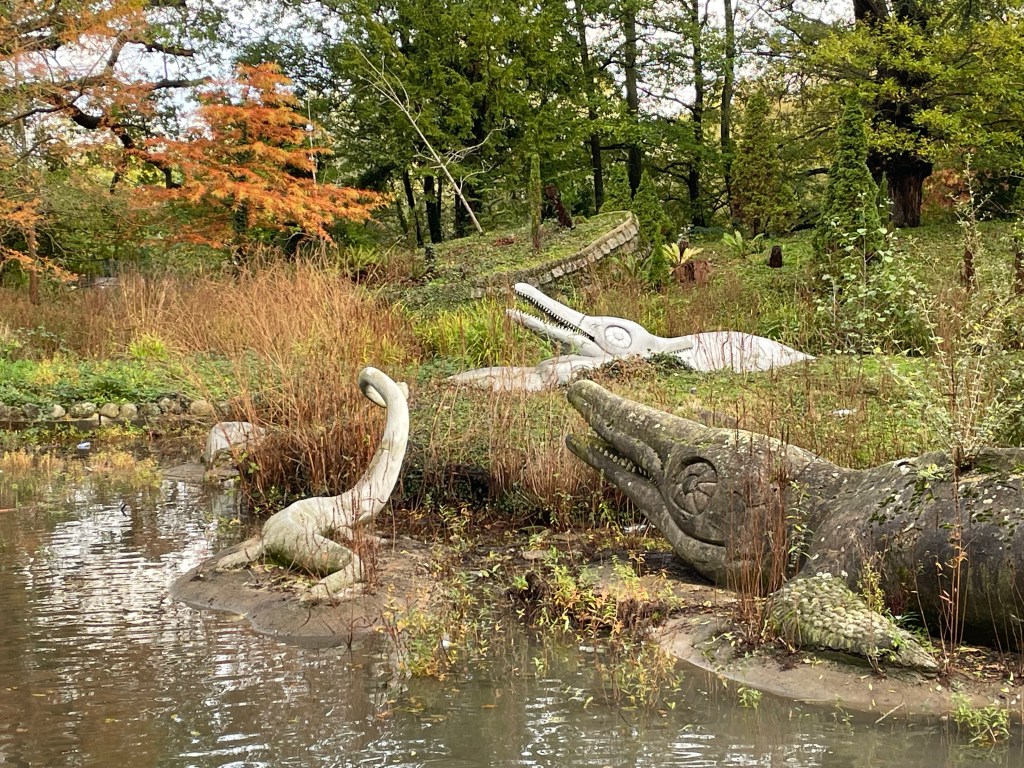

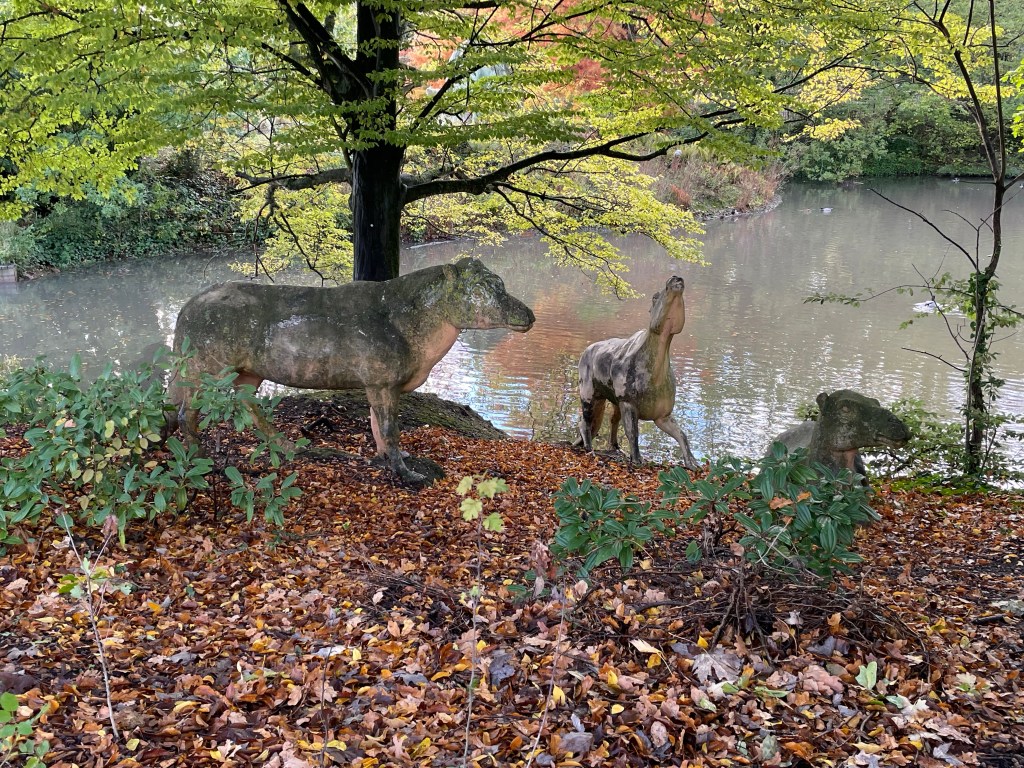
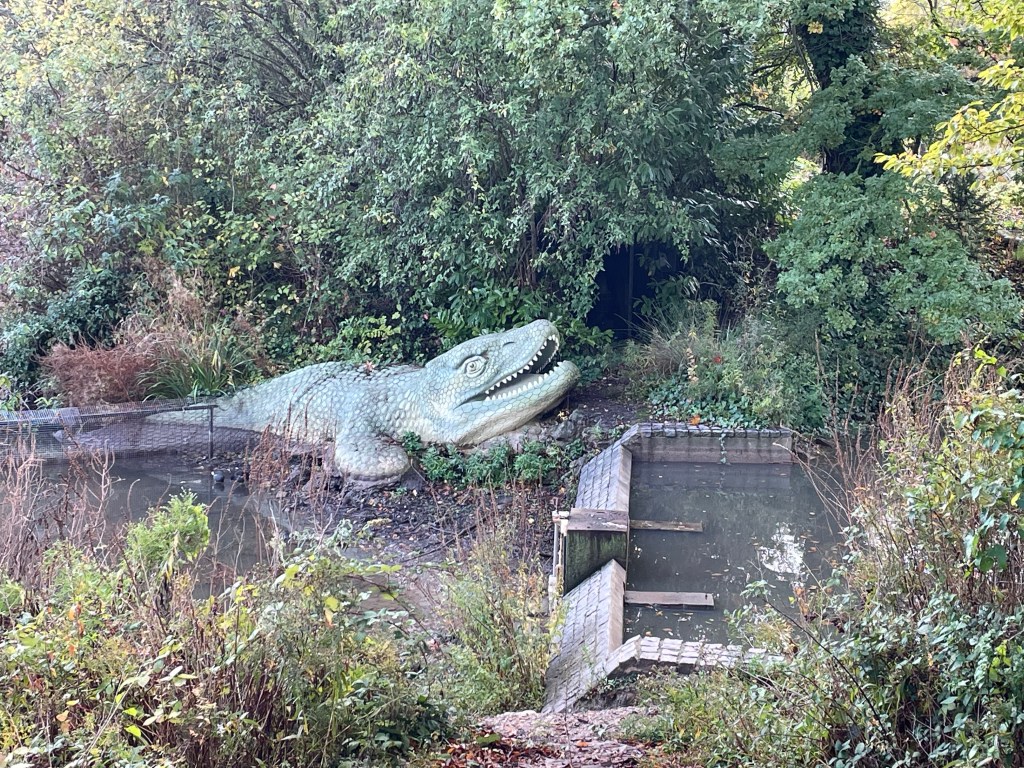
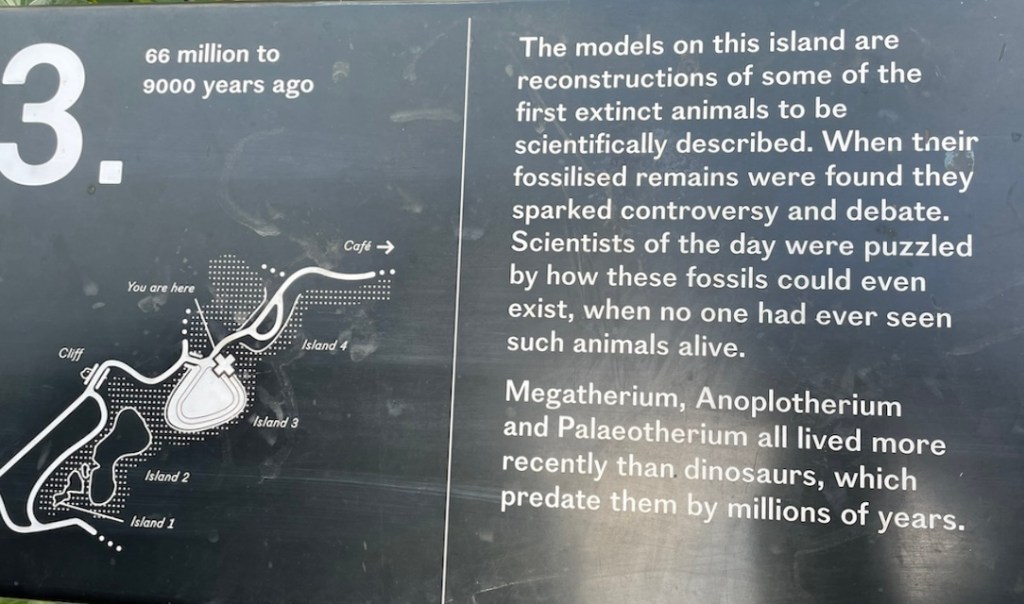
The four “islands” are encountered chronologically, from oldest to youngest- from amphibious animals older than the dinosaurs to recently extinct animals, such as the Irish Elk.
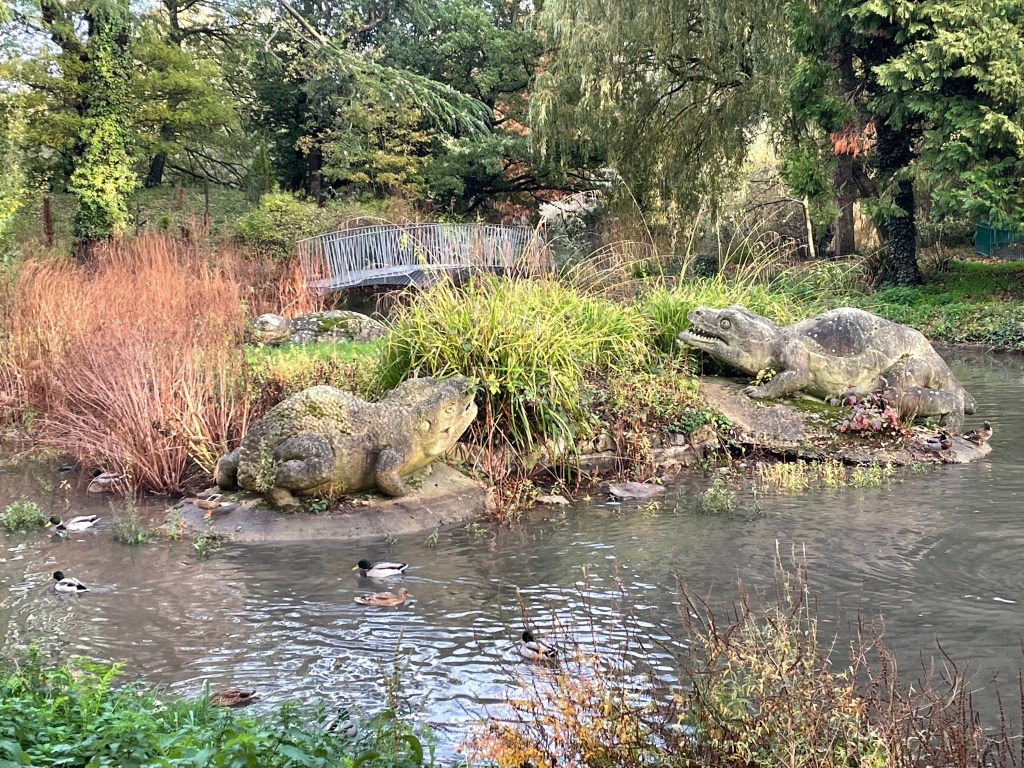
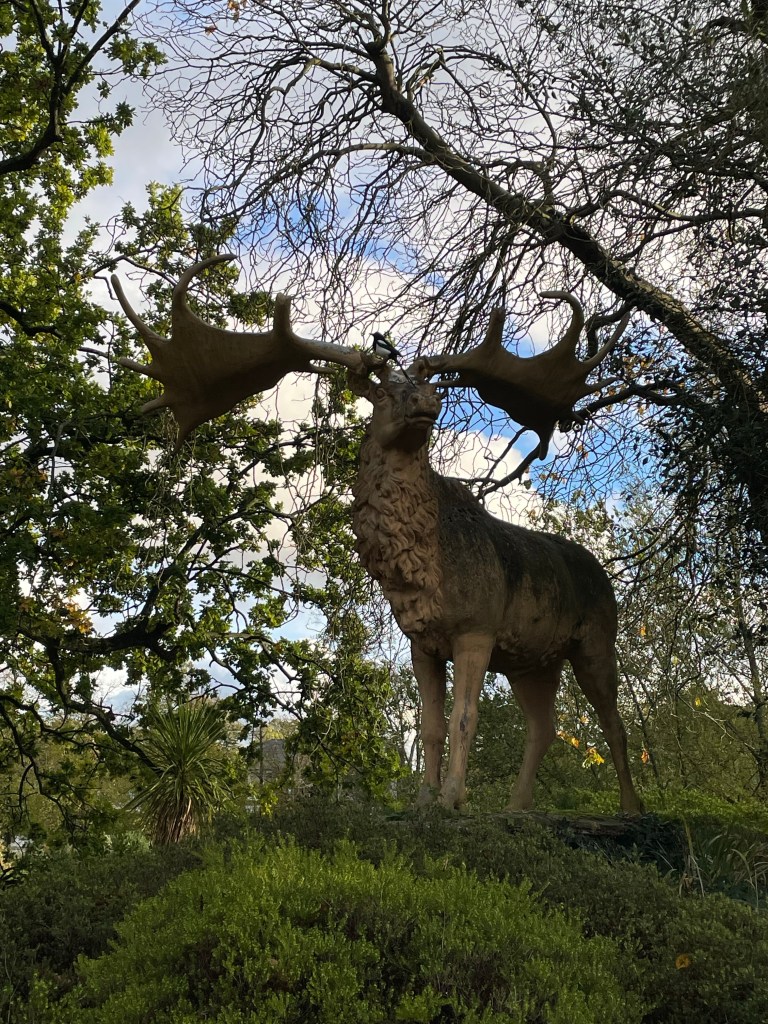
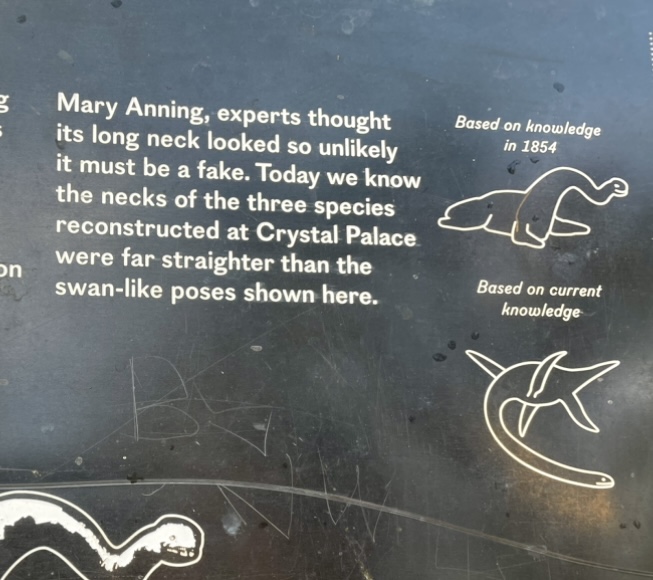
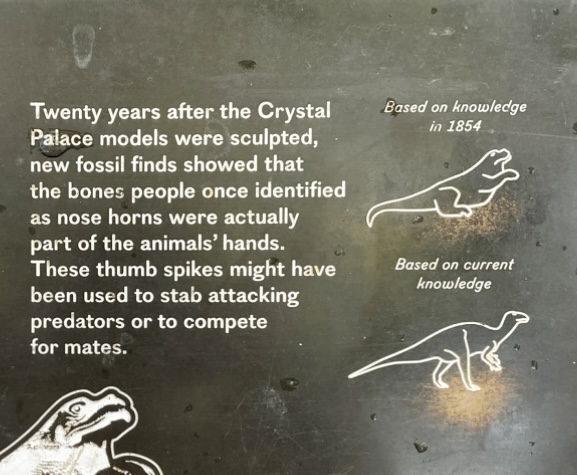
One of the pleasures is seeing how far the field of paleontology has progressed. From the horn on iguanodon’s nose, which turned out to be a thumb spike, to labyrinthodon, who apparently looked much more like a crocodile than the squat little guy seen here. Still, the guesses were impressive for the time, considering the limited number of bones that had been discovered.
It’s a big park, so after stepping back in time, you can visit the cafe and wander the rest of the trails before heading back to central London.
 Secrets of Philadelphia