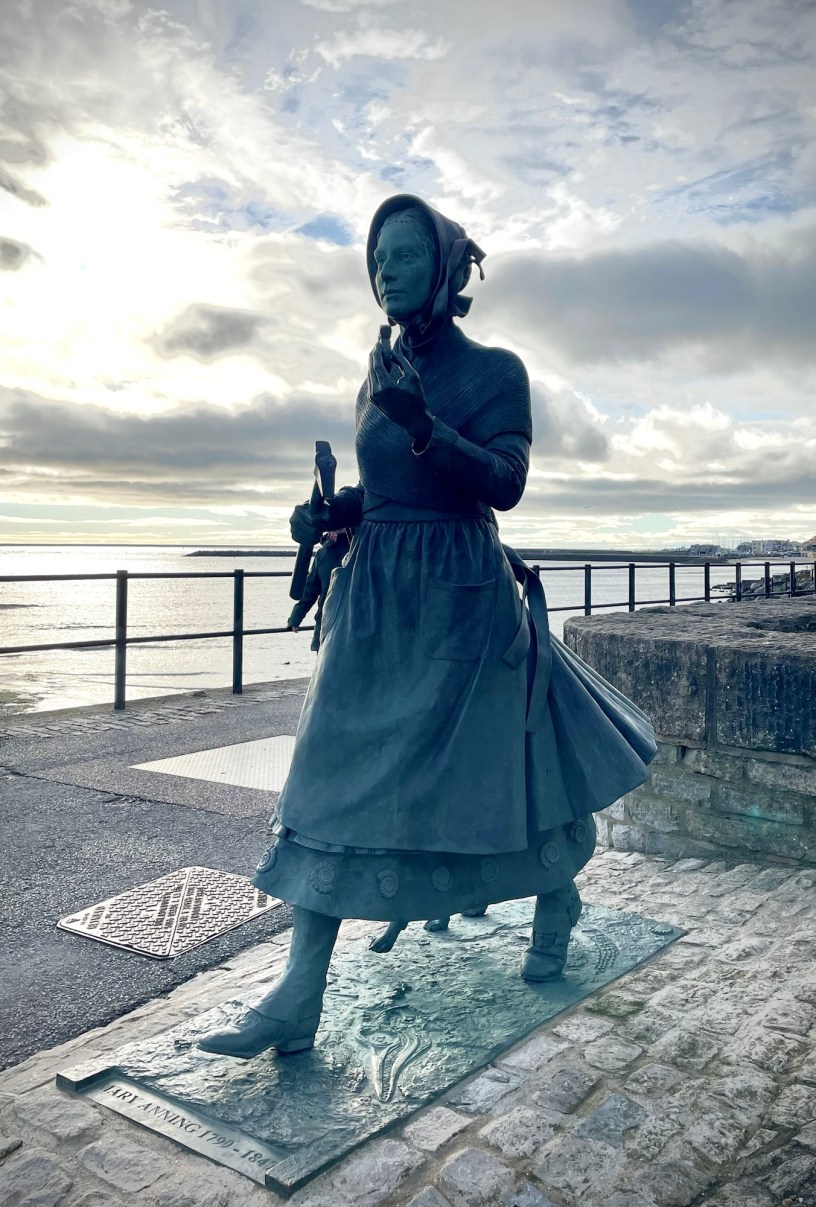
Whether the old tongue twister was really about Mary Anning or not, there is no doubt that this Victorian fossil hunter played a pivotal role in the field of paleontology.
With the Age of Enlightenment came an interest in geology, the age of the earth, and fossils. By the late 1700’s scientists were beginning to accept extinction as a fact, rather than the idea that fossils were just the remains of creatures yet to be discovered in undiscovered places, and fossils became cool collectibles for every gentleman’s cabinet of curiosities.
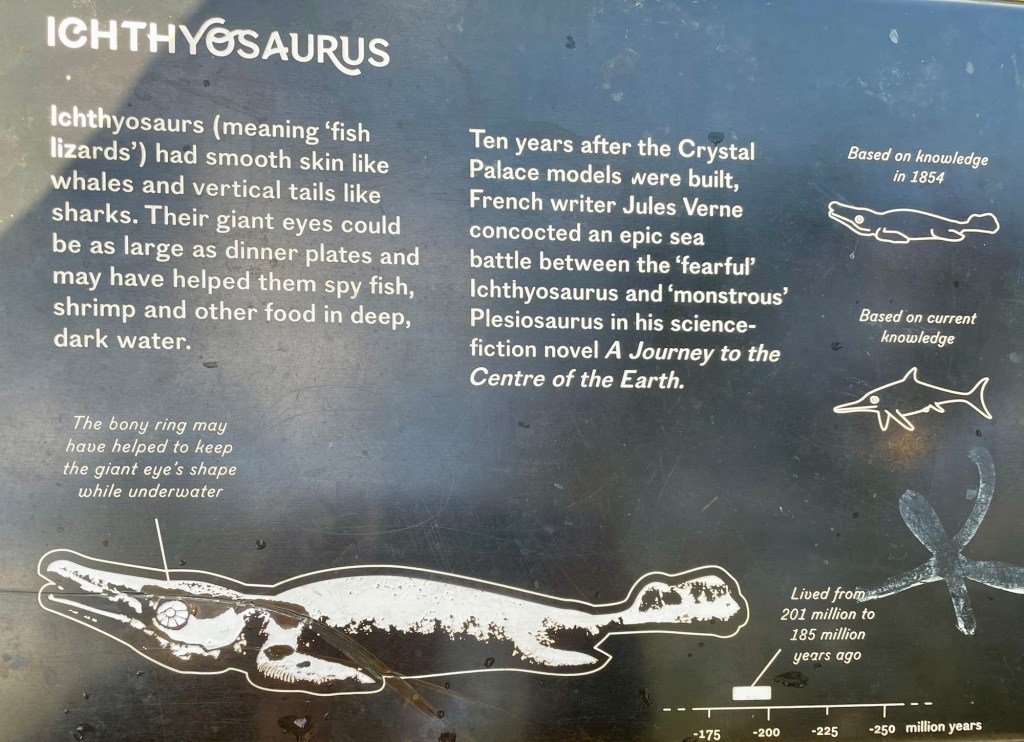
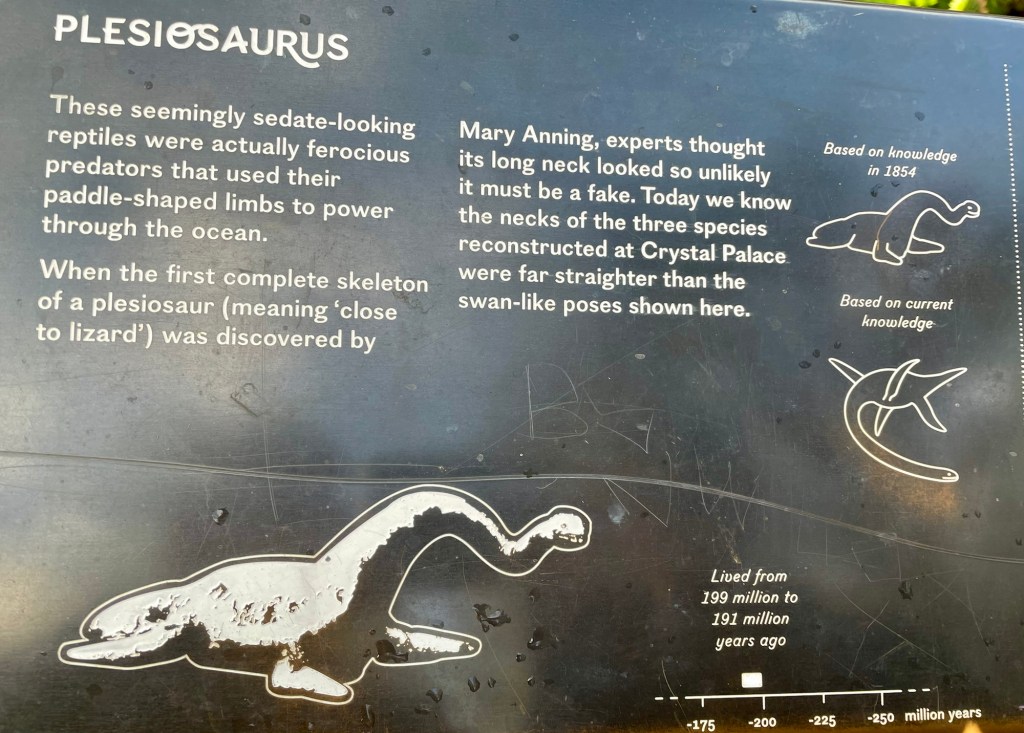
Born in 1799, Mary’s father often took her and her brother fossil collecting on the beaches of Lyme Regis to supplement their income. The siblings’ first major find occurred when Mary was 12. Her brother Joseph found the first correctly identified ichthyosaur skull and Mary found the rest of the skeleton a few months later. Mary became a professional fossil hunter and would go on to find the first complete Plesiosaur skeleton and the first British pterosaur. Her observations played a key role in discovering that coprolites were fossilized poop, and that belemnites were related to modern cephalopods. Despite her sex, and the fact that she was rarely credited for her discoveries, Mary became one of the leading Victorian fossil collectors, with a reputation that extended throughout Europe and North America.
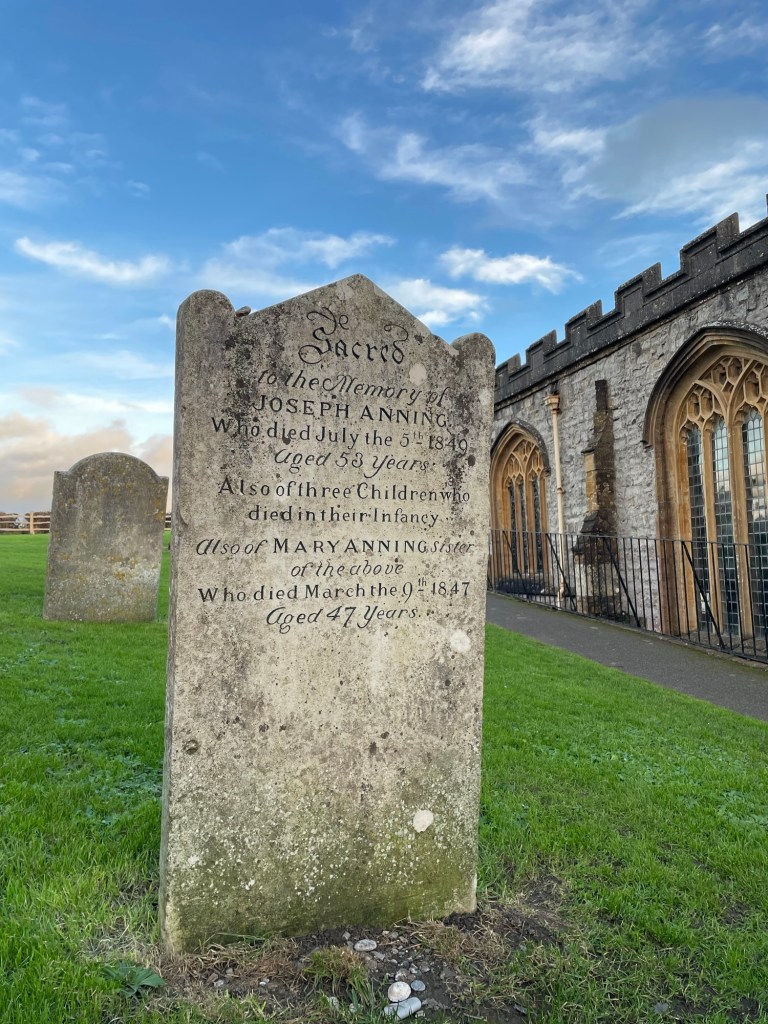
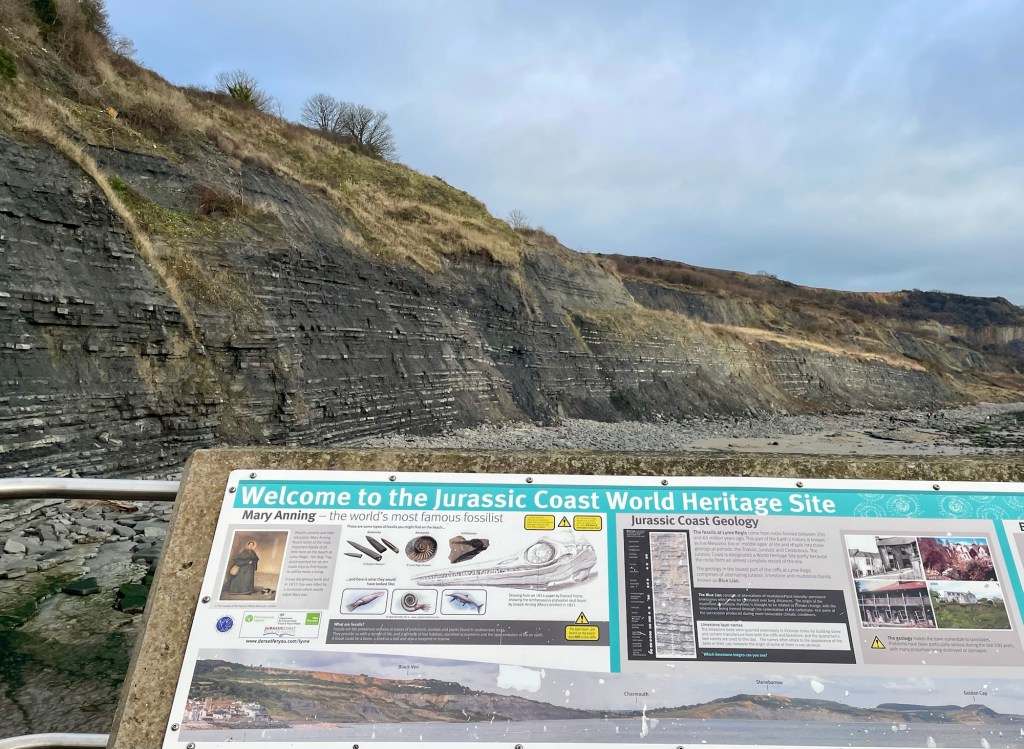
Ground zero for a Mary Anning pilgrimage is Lyme Regis and the fossil beds that made her famous. First stop is St. Michael’s church where Mary and her brother are buried.
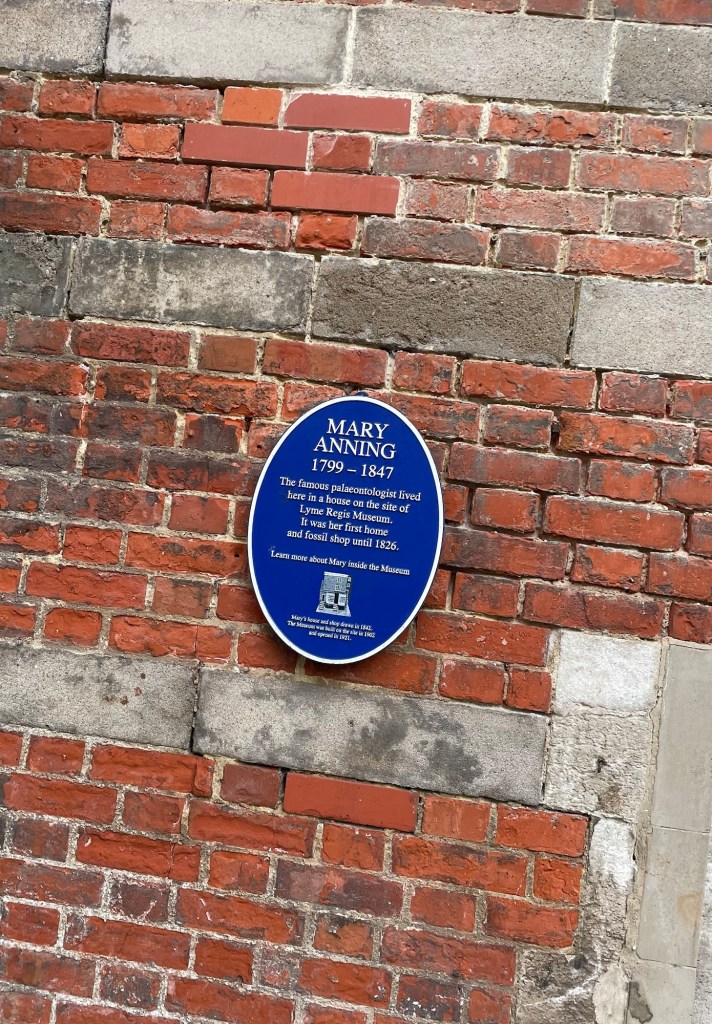
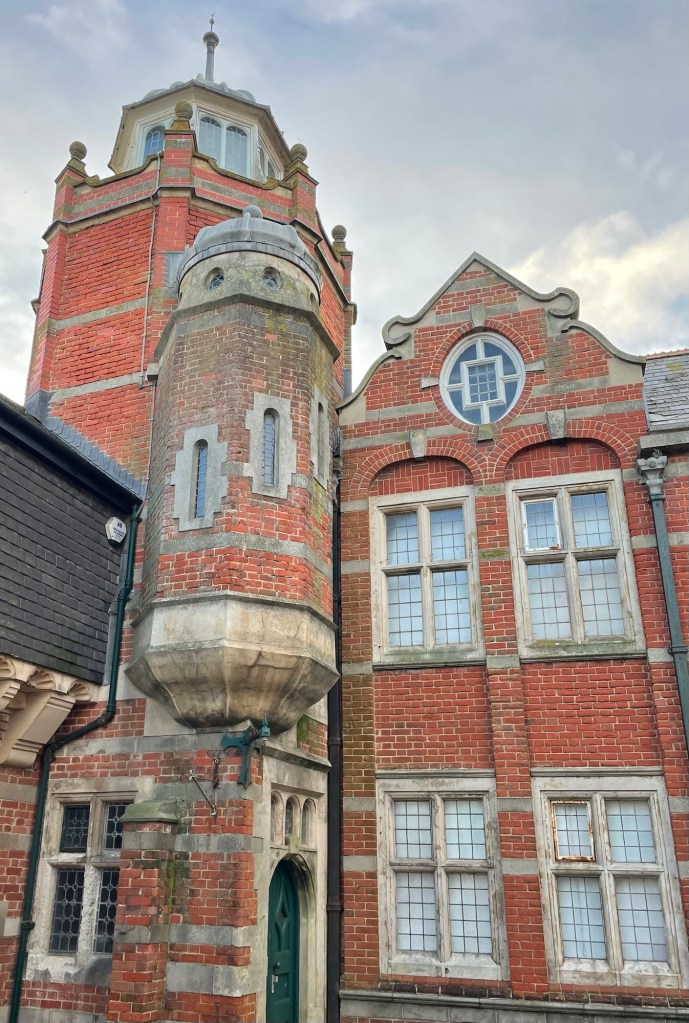
Although her home/fossil shop no longer exists, the Lyme Regis Museum now stands on the site and has a gallery devoted to local fossils and fossil hunters.
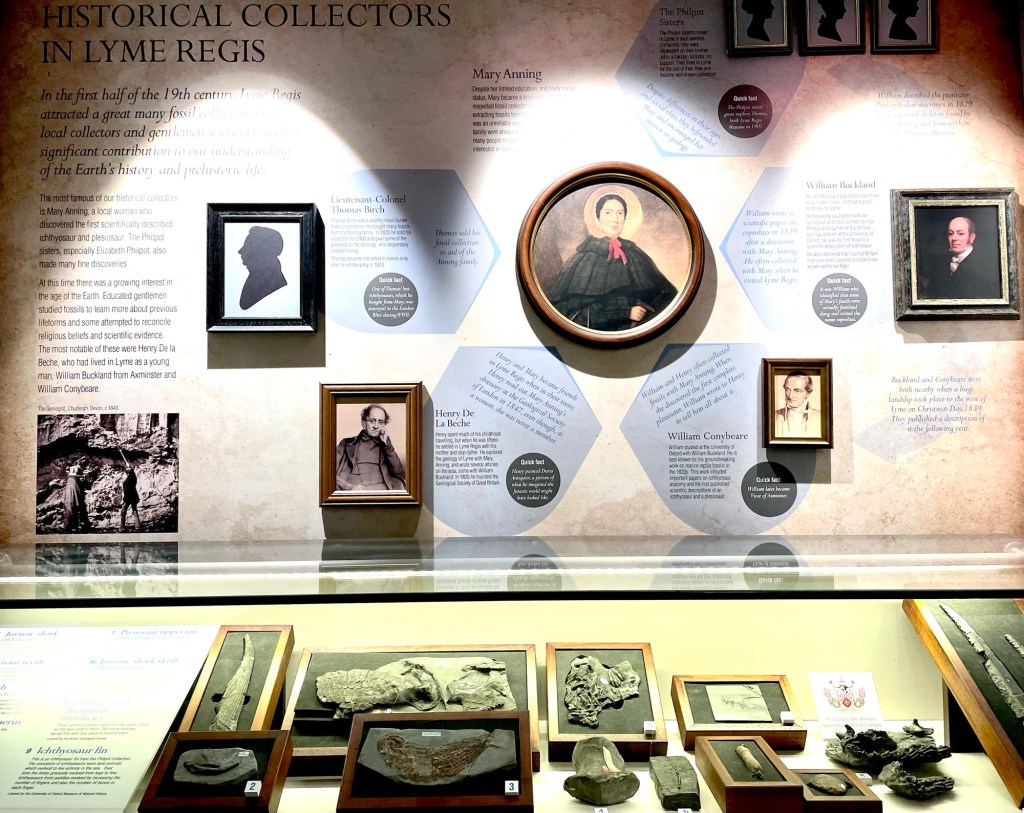
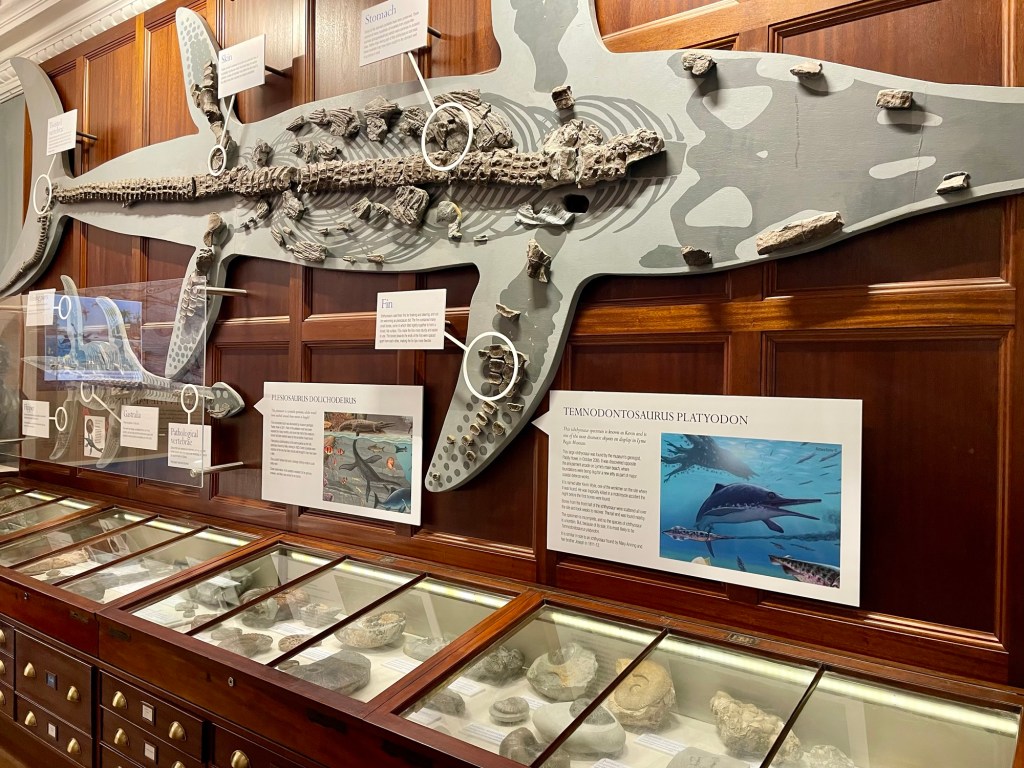
They also run fossil collecting tours that take you to the same beaches where Mary collected her fossils and teach you how to find and identify your own specimens.
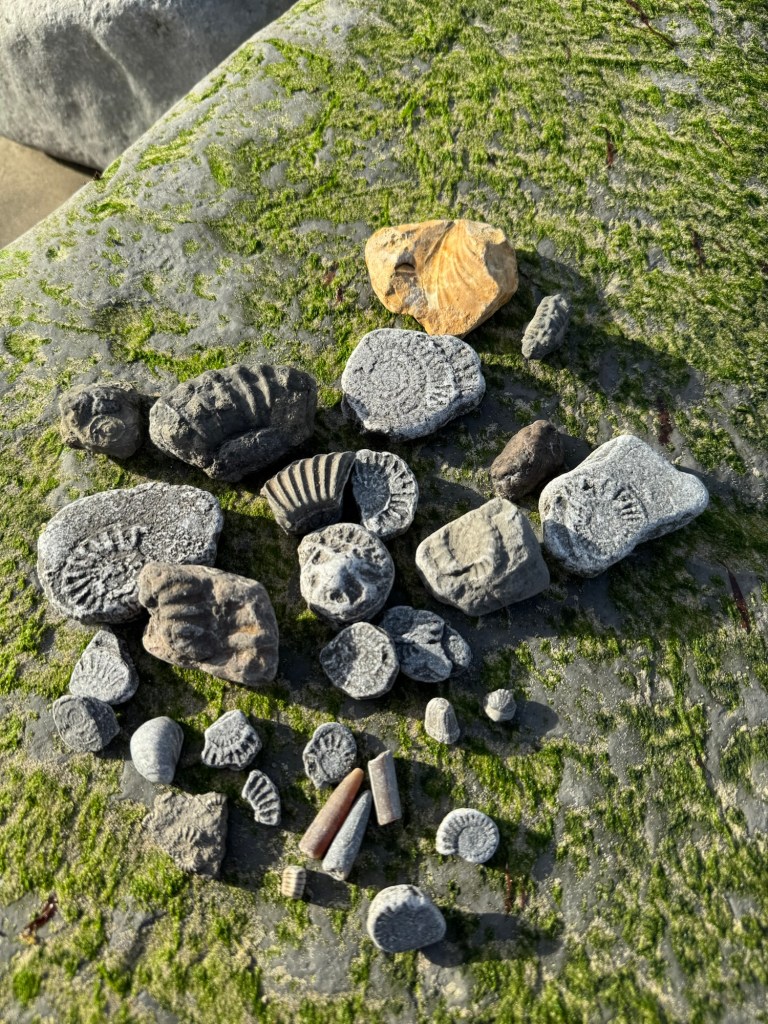
Two hours of collecting netted us a handful of fossils: ammonites, a coprolite, a piece of crinoid, belemnites, and a mollusk shell (plus lots of Victorian-era refuse being eroded out of a dump site).
Casual beach strollers can still enjoy spotting fossils, since many of the larger stones on the beach have fossils clearly embedded in them.
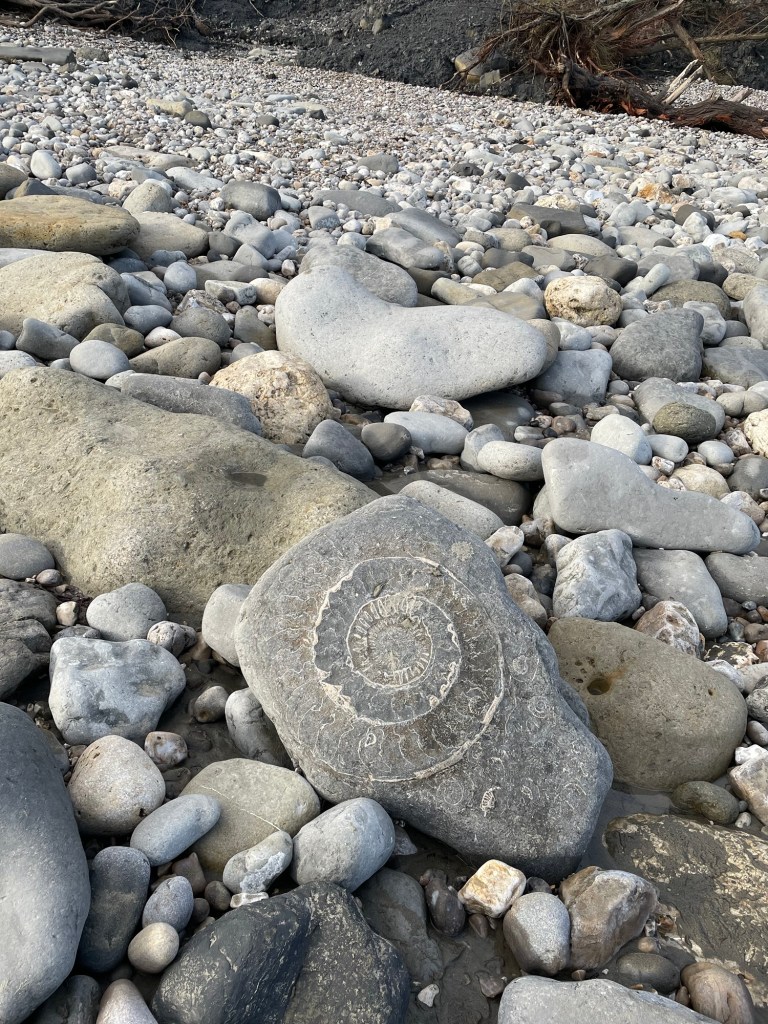
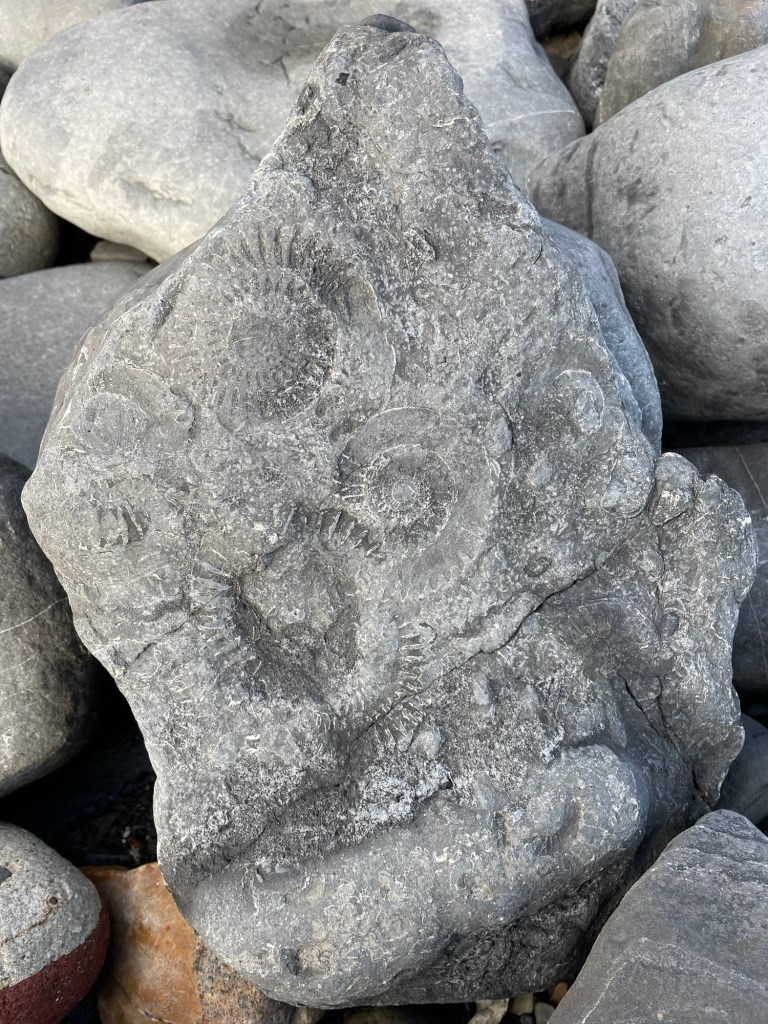
For a truly unique experience take a short walk along the beach west of town to Monmouth Beach and its amazing ammonite pavement, with hundreds of embedded fossils visible around low tide.
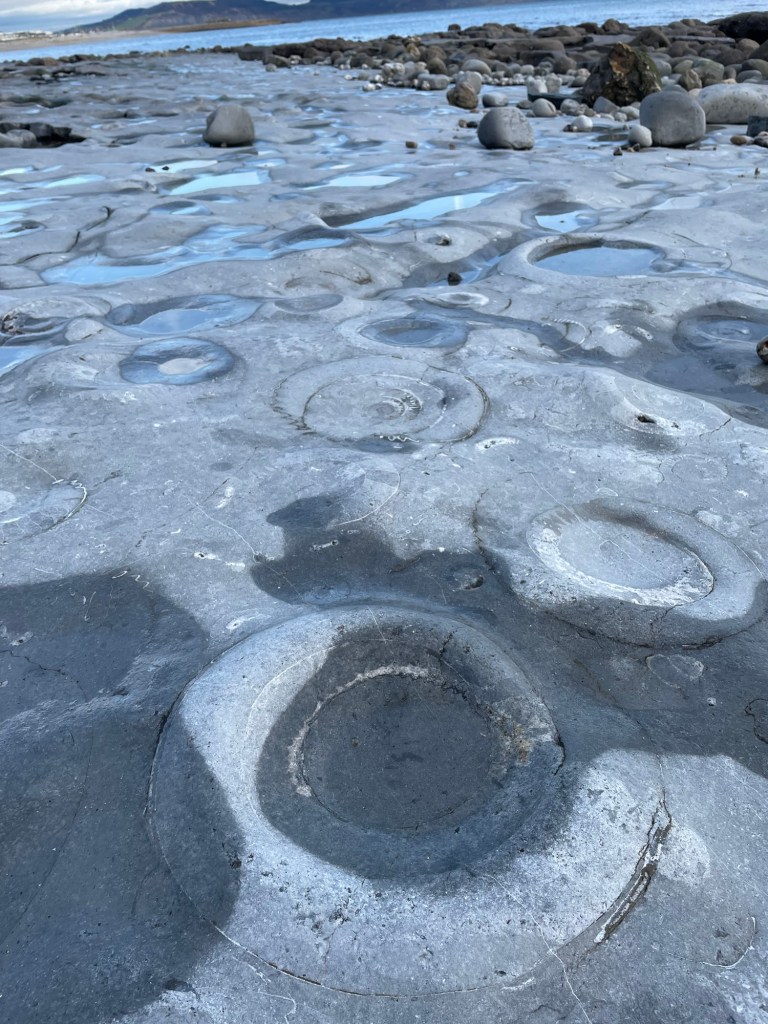
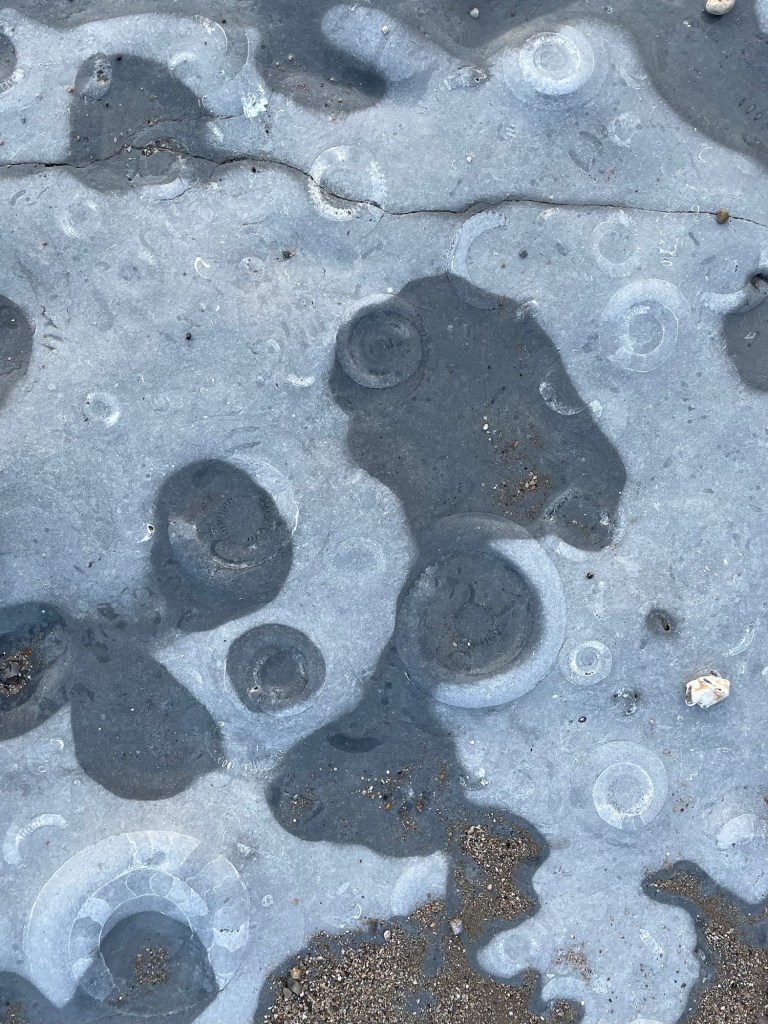
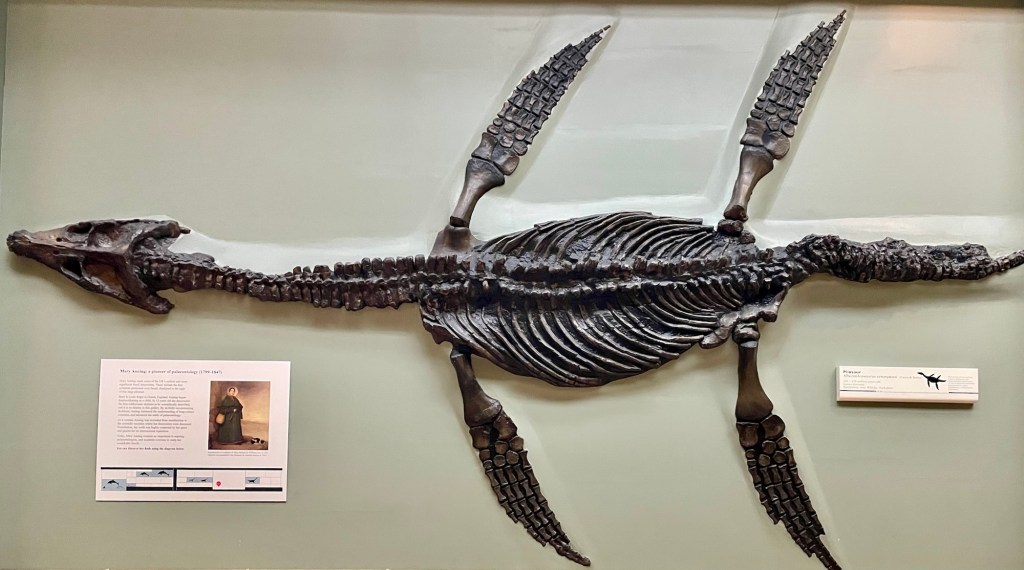
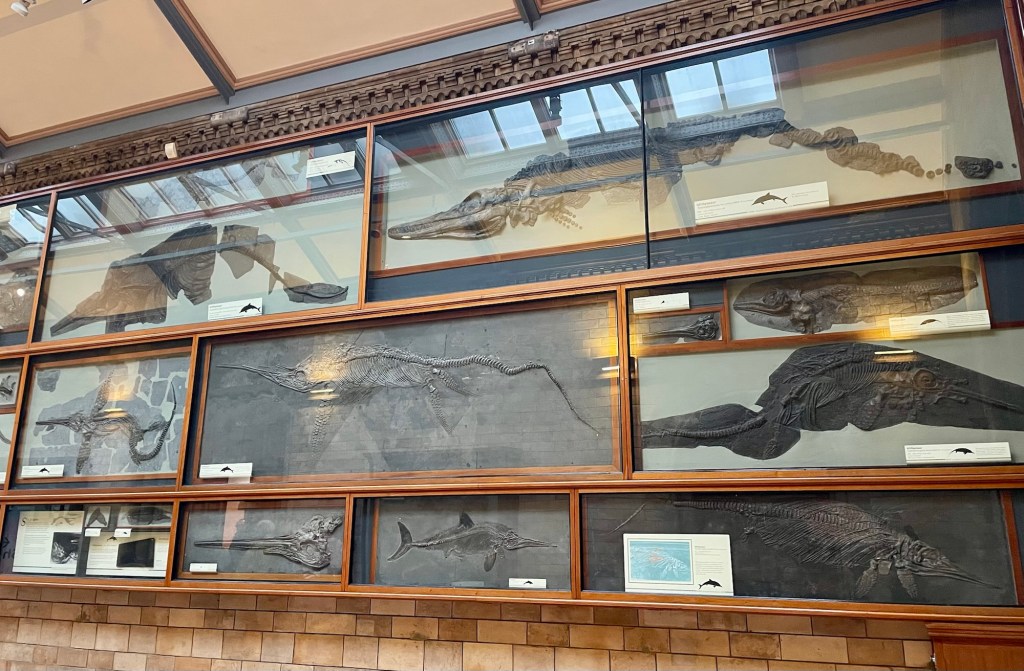
Seeing the actual fossils collected by Mary requires a visit to the Natural History Museum in London, where many of the specimens collected by her now live. Unfortunately, the glass covers make photos difficult, so my best ichthyosaur fossil photo is not actually one of Mary’s.
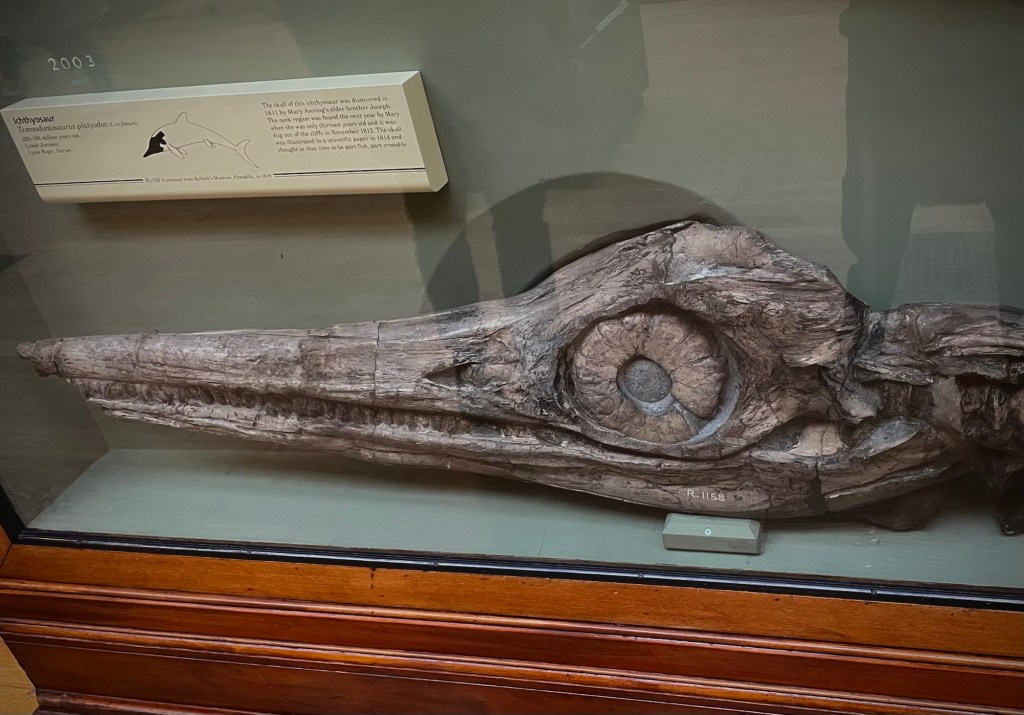
Among the fossil specimens on display is the skull originally collected by her brother. Sadly, the rest of the body collected by Mary has been lost.
Thomas Hawkins was one of Mary’s clients, and one of the few who acknowledged her contributions. He sold his collection of fossils to the British Museum, and it was eventually transferred to the Natural History Museum. Several of the fossils still have their original mounts.
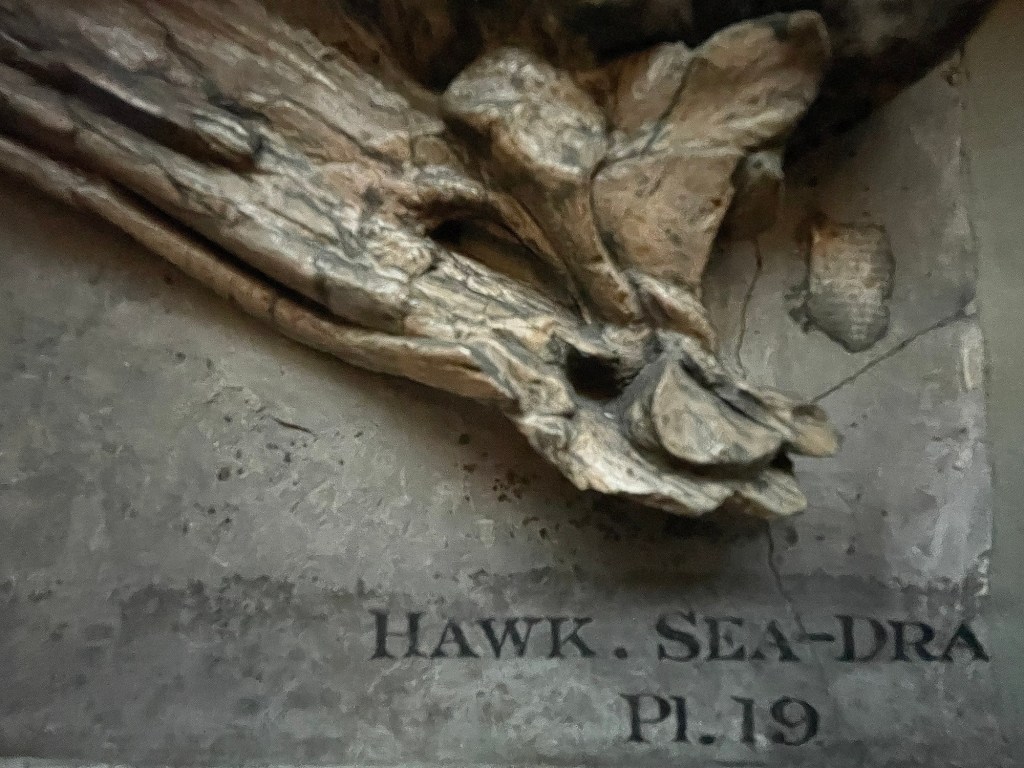
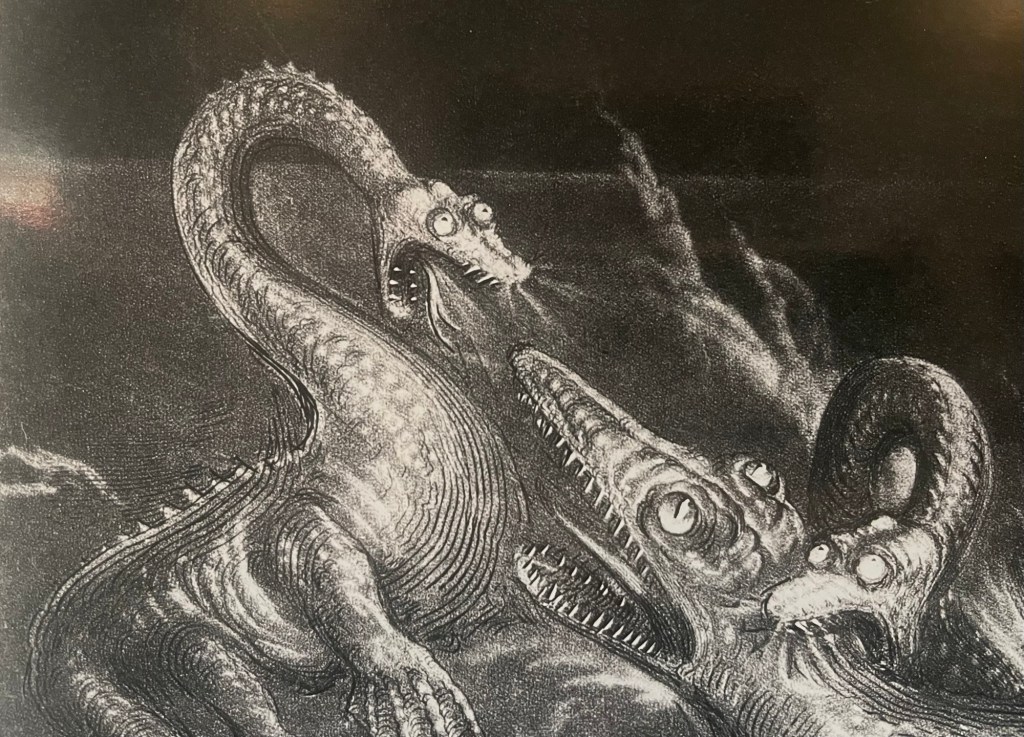
Mary’s fossils inspired his Book of the Great Sea Dragons, with its fantastic illustrations.
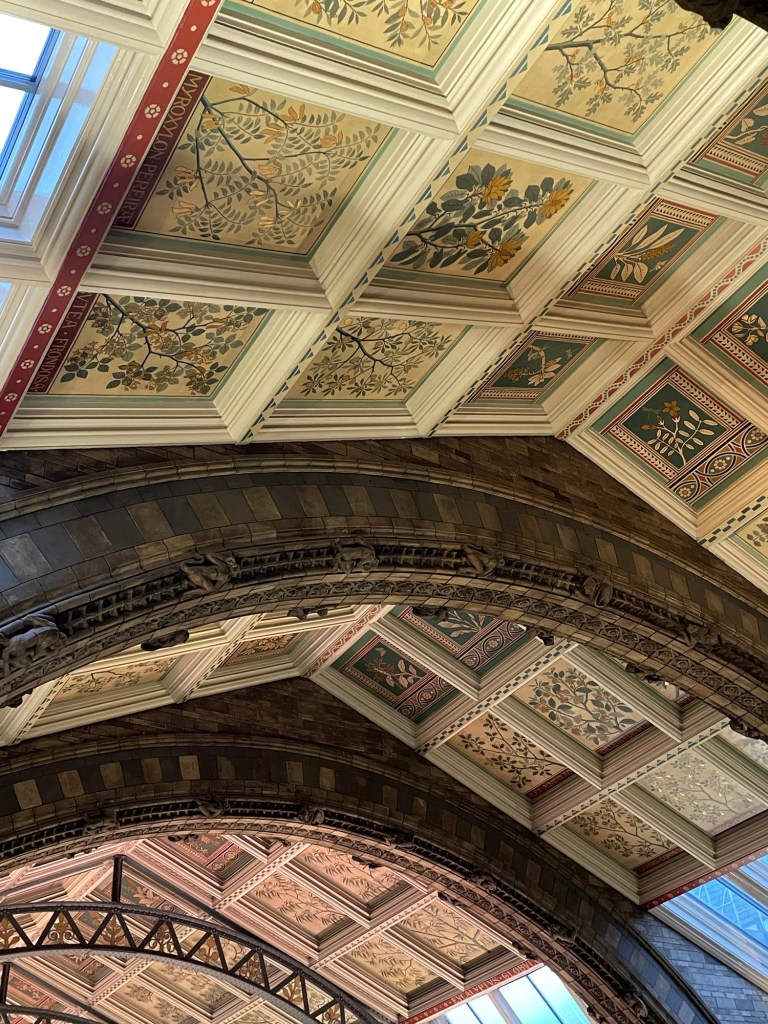
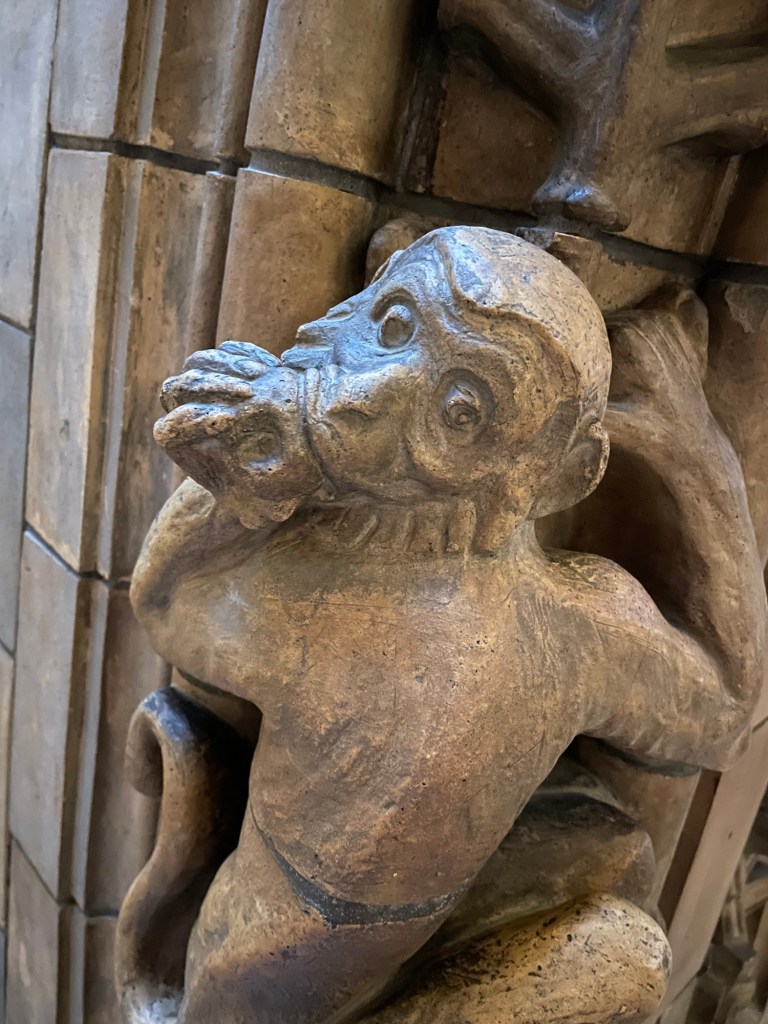
After viewing the Marine Fossil Hall, be sure to take some time to check out the museum’s “Treasures” collection, with its historic artifacts, and the amazing Victorian architecture.
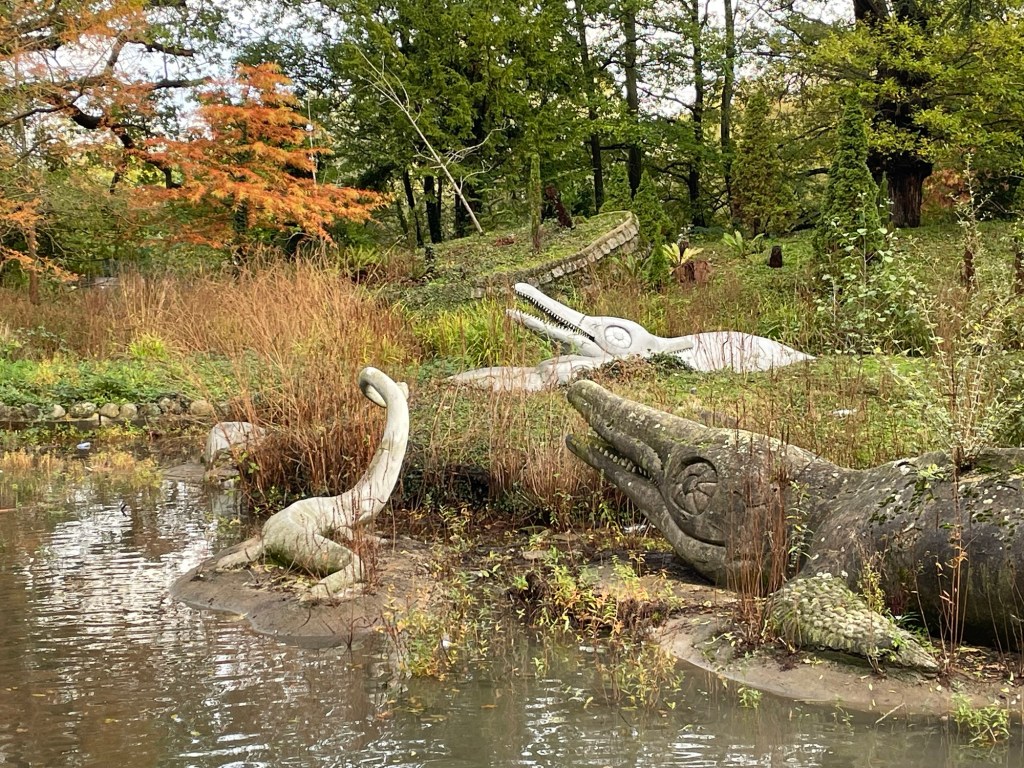
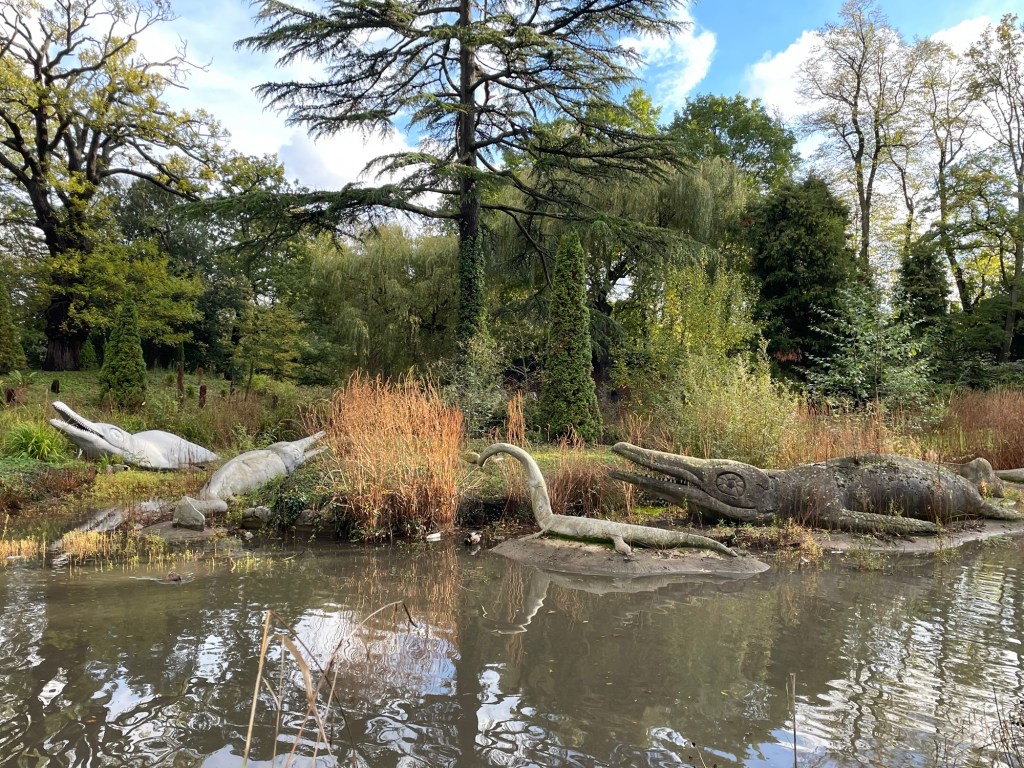
In 1854 British sculptor Benjamin Waterhouse Hawkins debuted his version of Mary’s plesiosaur and ichthyosaur at the Great Exhibition in London. They were later moved to Crystal Palace Park where they are still on view (London: Dino-Mania, Victorian style).