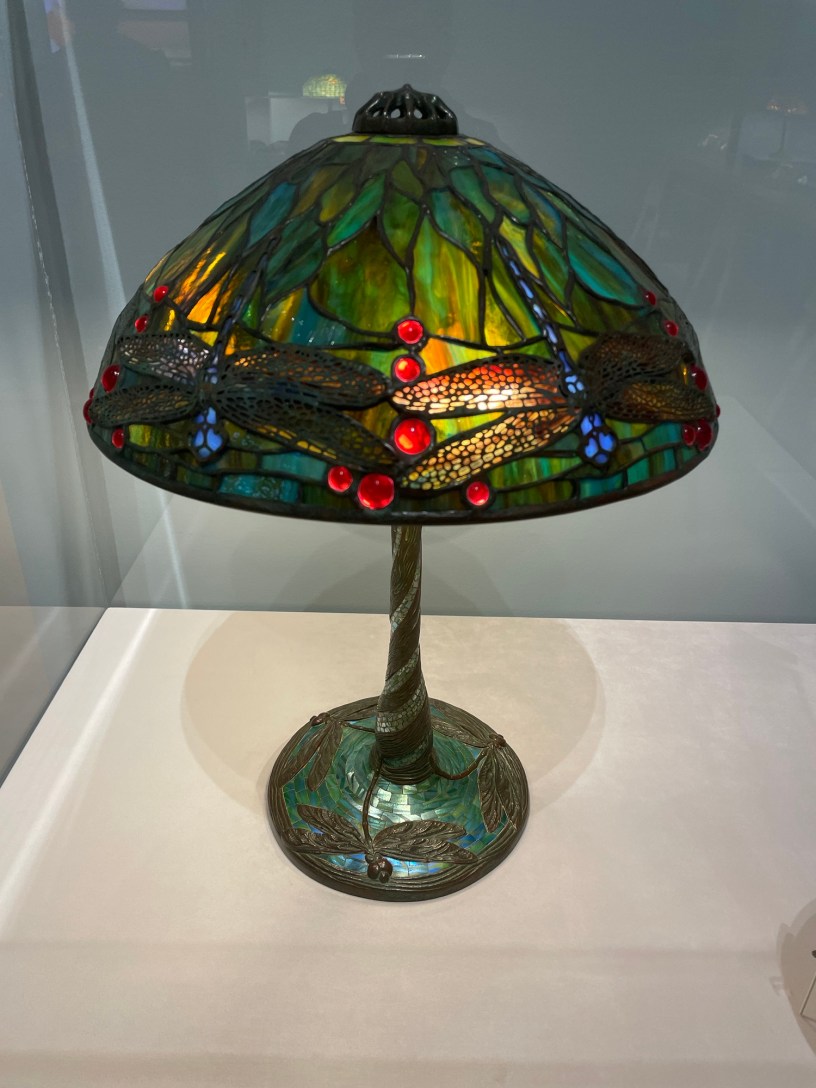
As one of my favorite artists, it’s hard for me to believe that Tiffiny fell so out of fashion that you could buy his lamps for a pittance – definitely not the case today! For fans of his work, New York City is ground zero for a pilgrimage.
Louis Comfort Tiffany (1848-1933) was a son of Charles Tiffany, founder of Tiffany & Company jewelers. He started his artistic career as a painter, and continued to paint and sketch throughout his life. This sketchbook housed at the Met is one of only three known to have survived:

However, he soon became interested in glass, working at several glasshouses in Brooklyn before opening his own firm in 1885. He first used glass from established companies, but opened his own glassworks in Queens in 1892. It was here that he created the uniquely colored, textured and layered glass that he became so famous for.
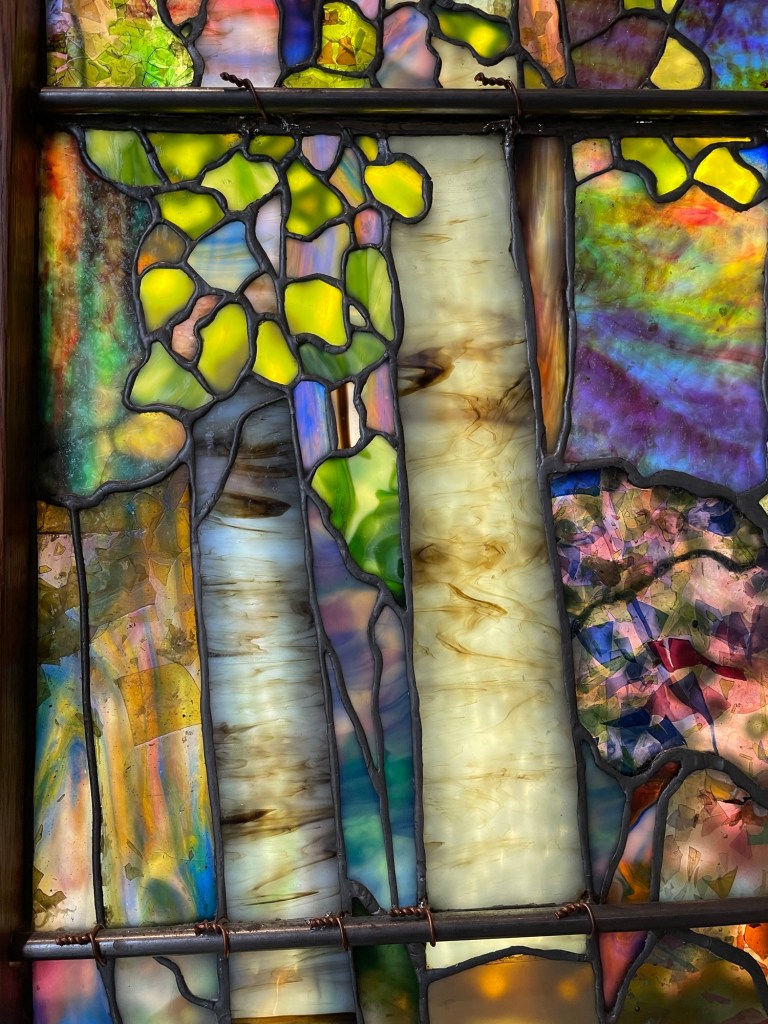
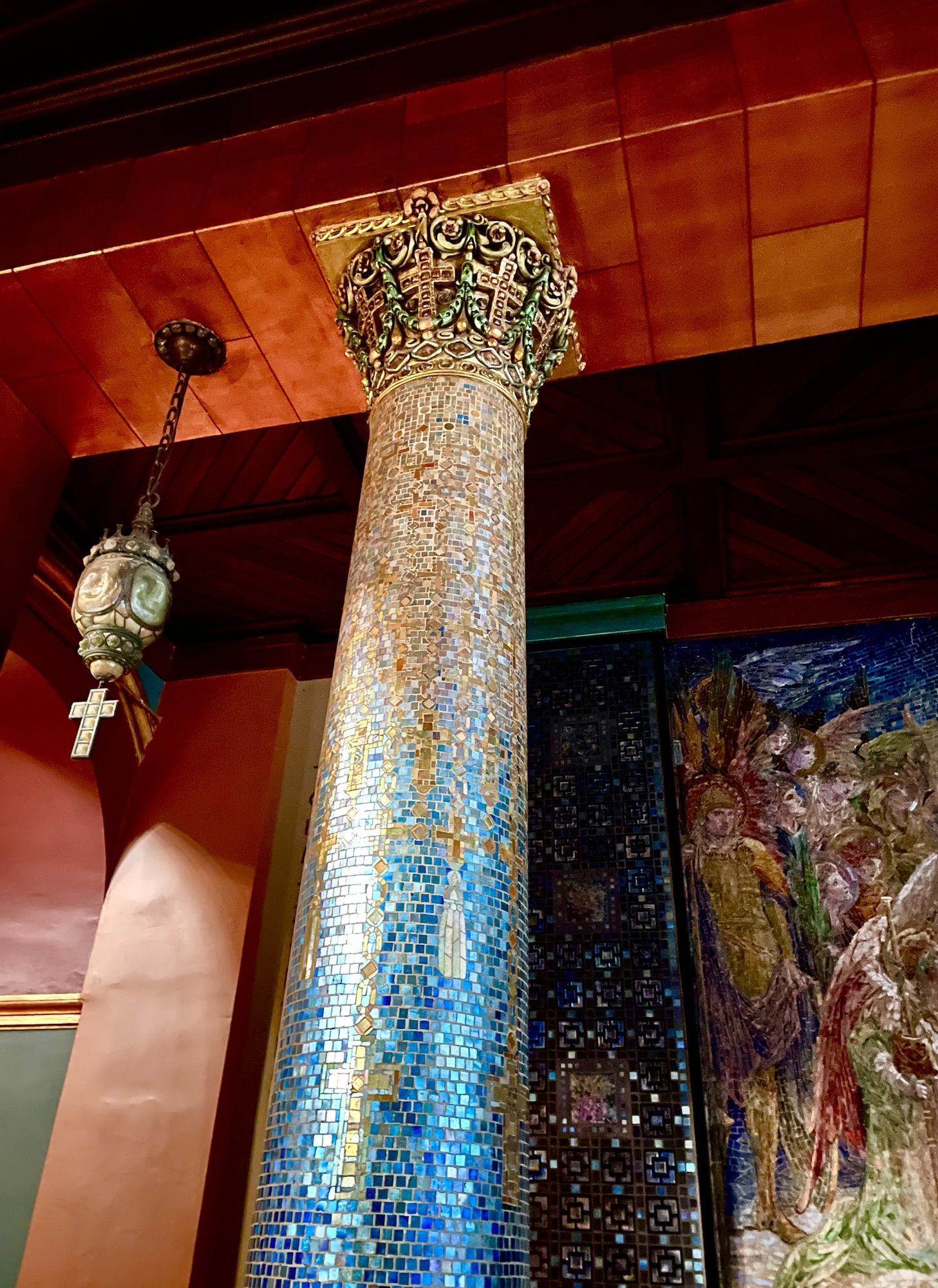
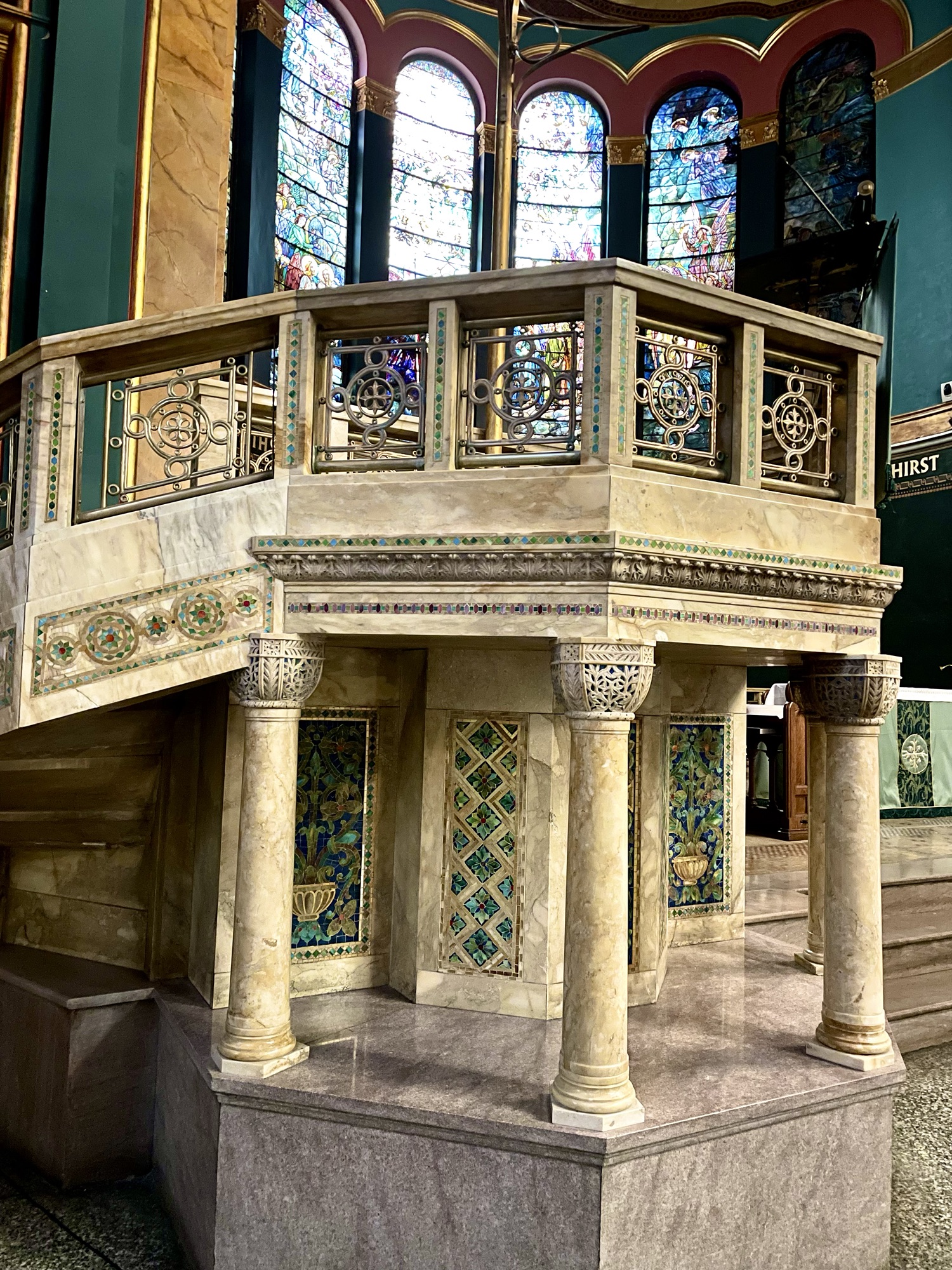
Tiffany windows and mosaics became the height of fashion and were installed in churches, businesses, and mansions worldwide. One of the best places in NY to view an installation that includes windows, mosaics and chandeliers in their original setting is St. Michael’s Episcopal Church at 225 West 99th St. (They are currently open for visitors 11-2 on Tu/Th):

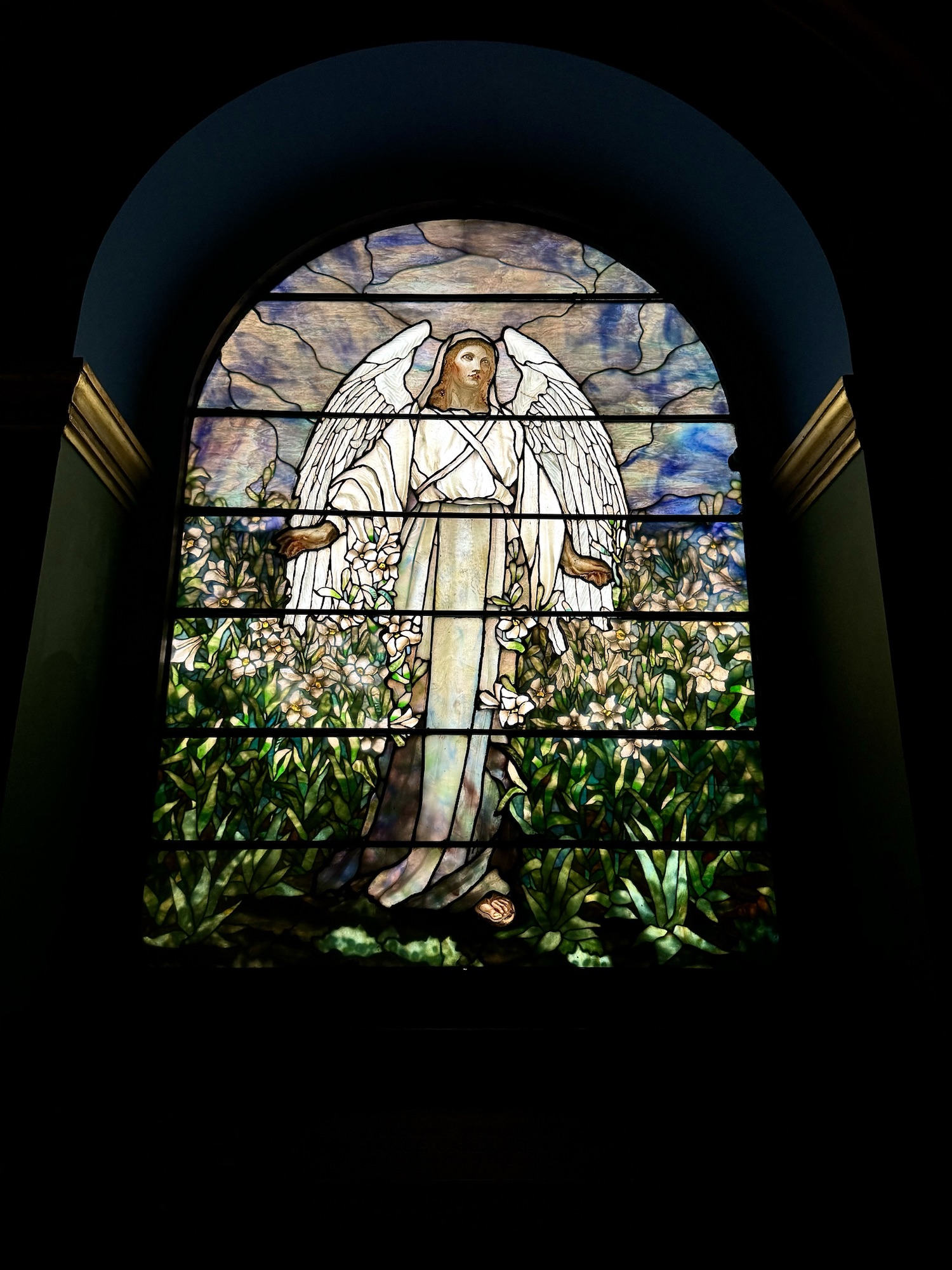
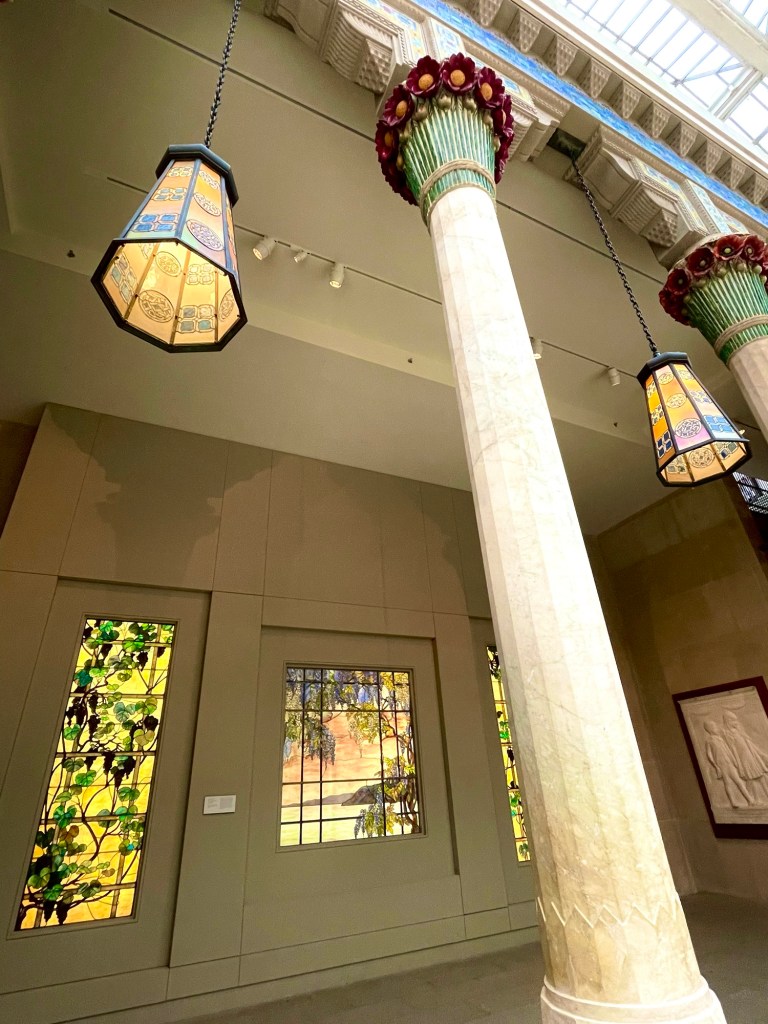
By the late 1910’s Tiffany had fallen out of fashion and the Great Depression finished off the business, which filed for bankruptcy in 1932. Illustrating just how far Tiffany’s work had depreciated is the story of Laurelton Hall, Tiffany’s once fabulous art nouveau mansion on Long Island. The estate cost about $2,000,000 to build in 1905. By 1949 in had fallen into disrepair and sold for $10,000. It burned down in 1957. The remains were taken to the Charles Hosmer Morse Museum in Winter Park, Florida (definitely worth a visit!). They donated the entrance loggia to The Met, where it is on display today:
Enter Hildegard and Egon Neustadt, the NY couple who put together the world’s largest collection of Tiffany lamps. It started with this:
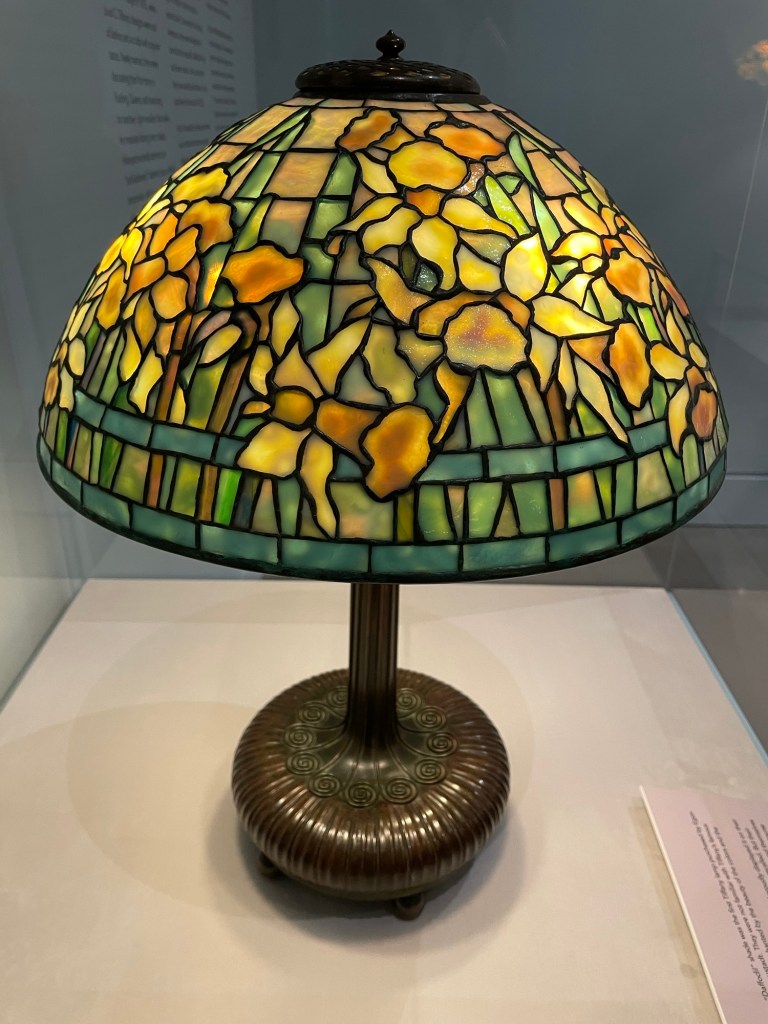
Purchased for only $12.50 at a Greenwich Village shop in 1935, it was the beginning of a lifelong quest. When Eron died in 1984, the collection contained over 350 lamps, as well as a huge collection of glass that was left behind when the glassmaking business closed. The Foundation occasionally offers tours of its warehouse, but the best place in the city to see the lamps is at the Queens Museum and New York Historical Society. The Queens Museum (Queens, NY: The World’s Stage) is located less than two miles from the site of Tiffany’s glassmaking workshops. It is decorated with historic photographs of the factory and showroom, two large cases of Tiffany glass, and, of course, the lamps.

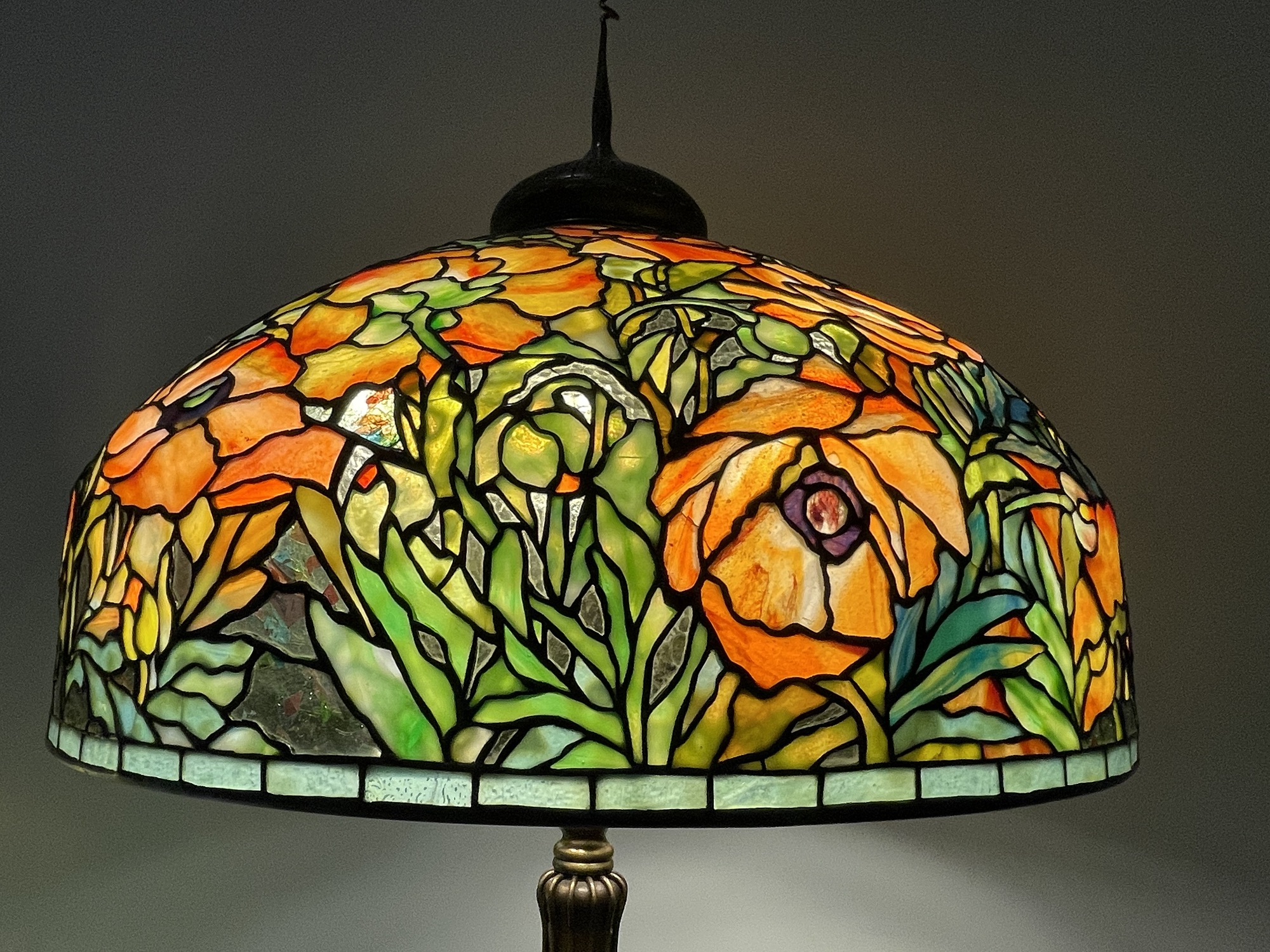
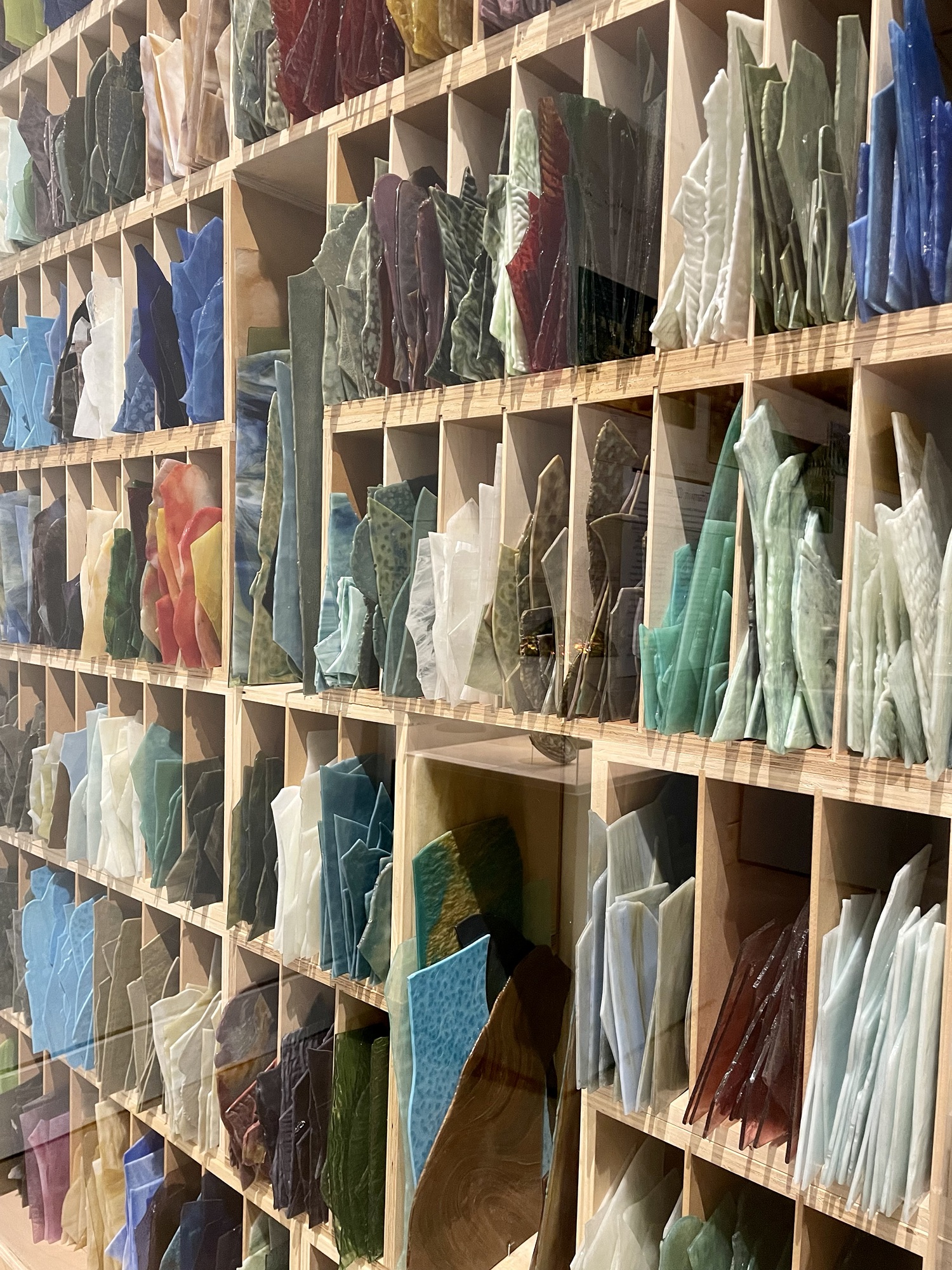

The NY Historical Society houses an even larger collection of the foundation’s lamps in a beautiful, recently renovated gallery. Here you can see not only the lamps, but tools, templates, and sketches. They also have information about the uncredited “Tiffany Girls” who created many of the now iconic stained glass pieces.

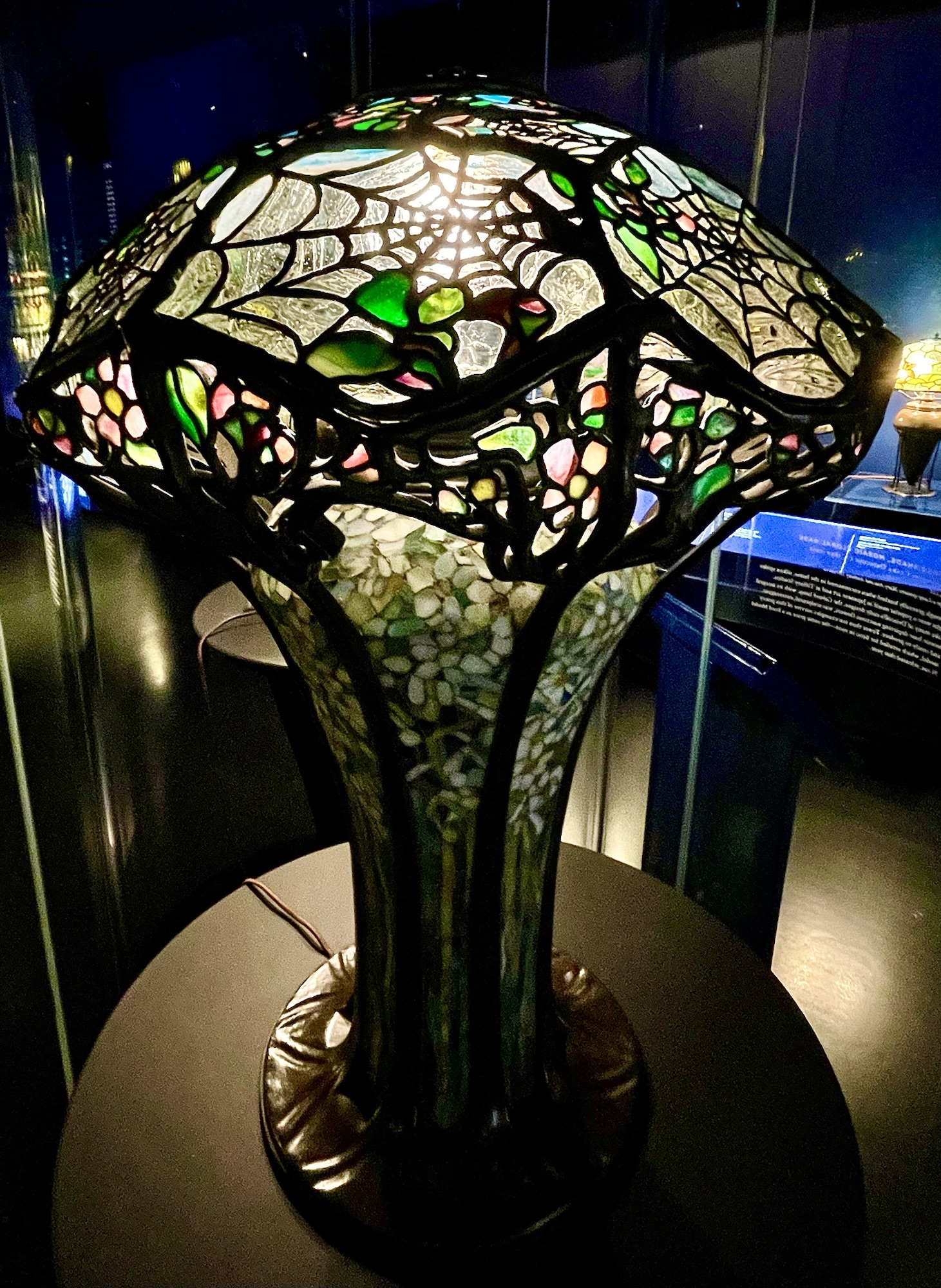
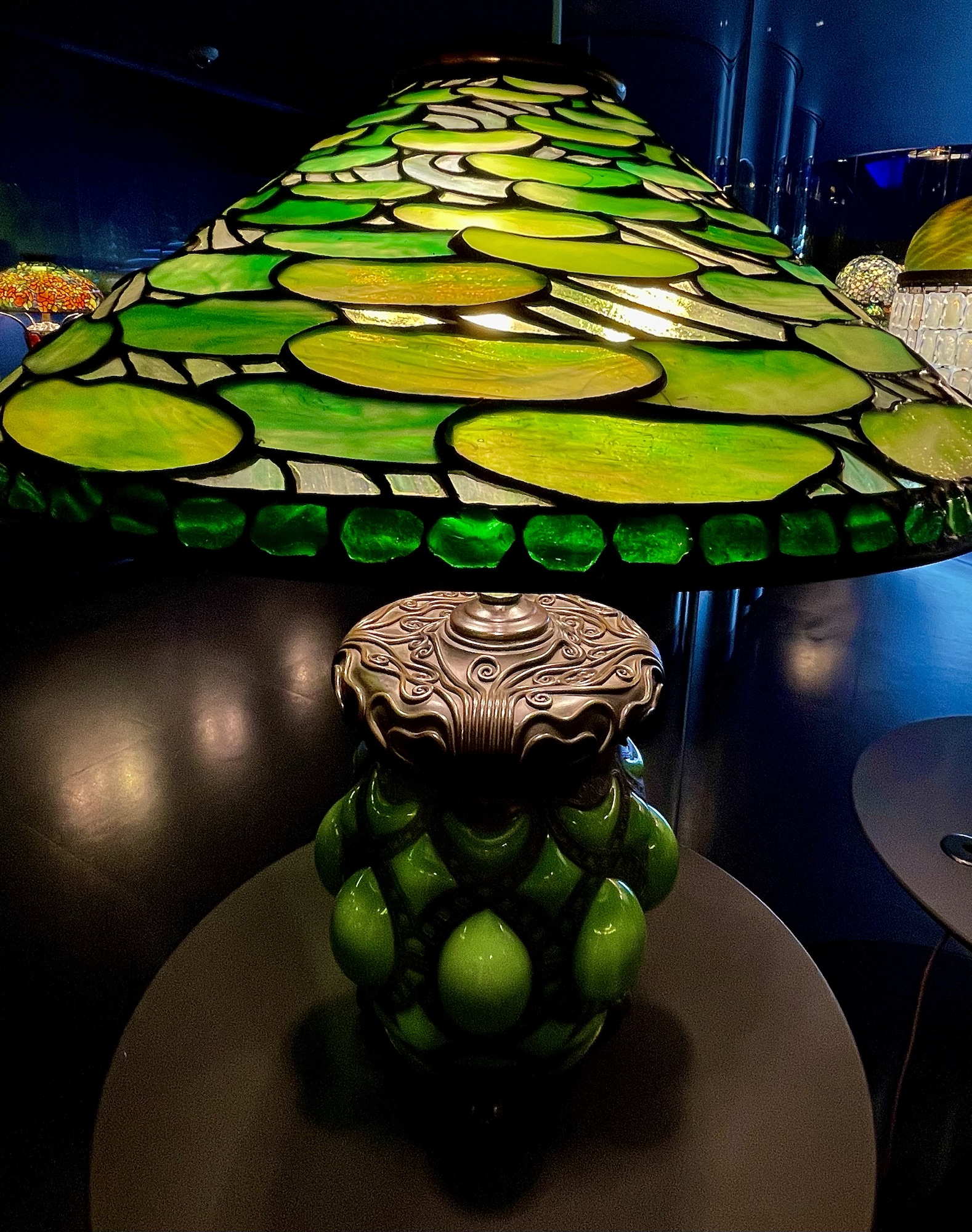
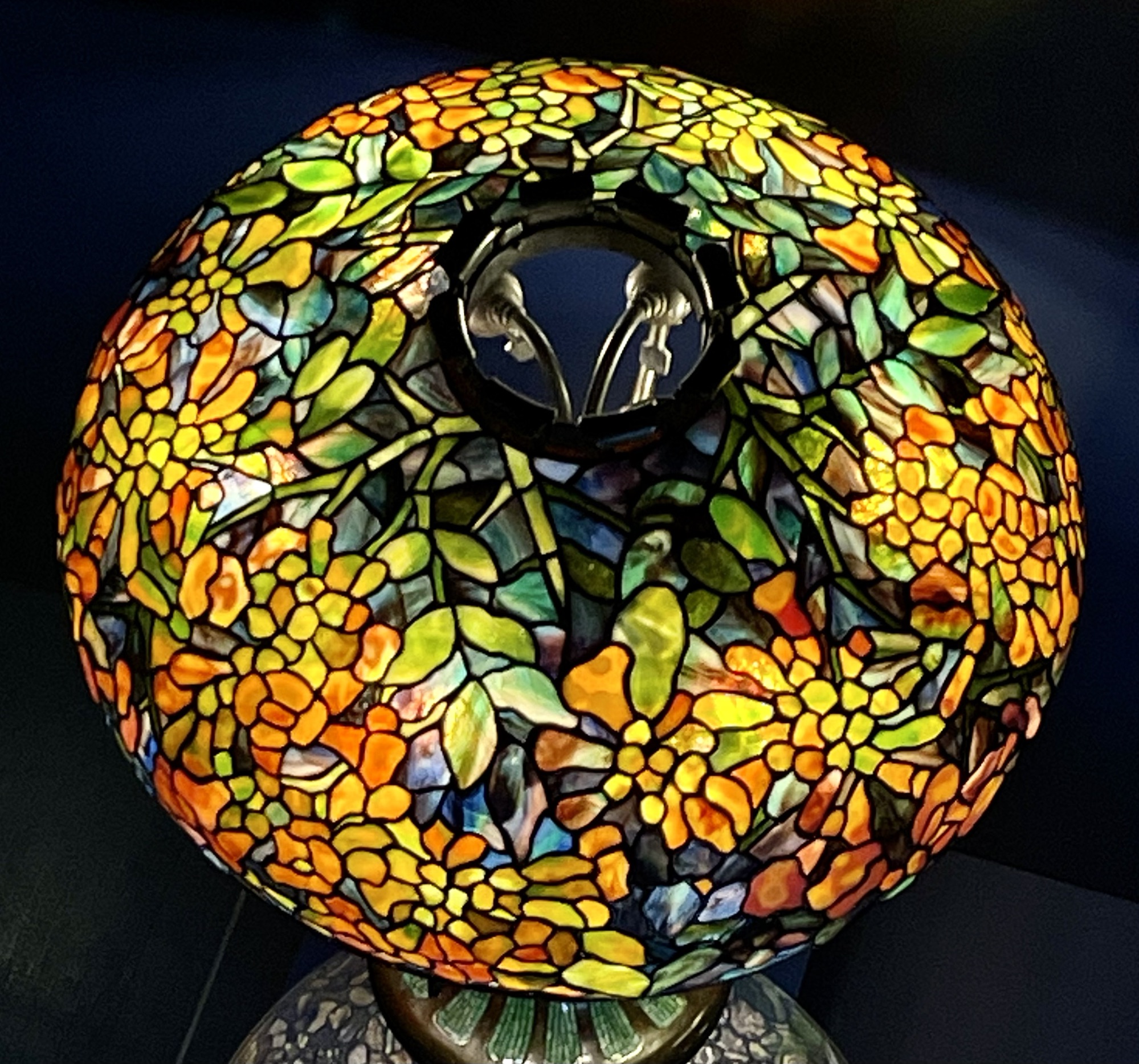
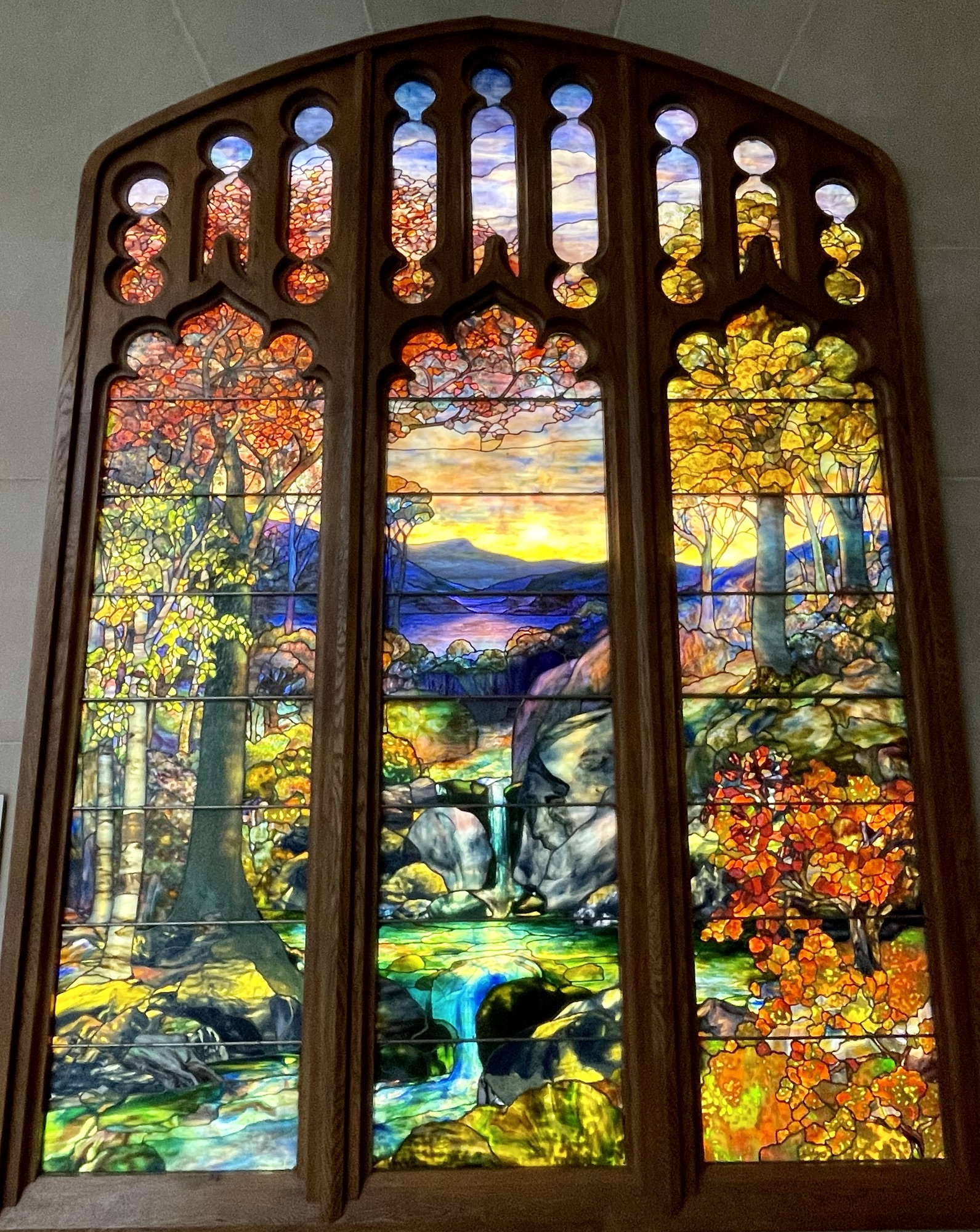
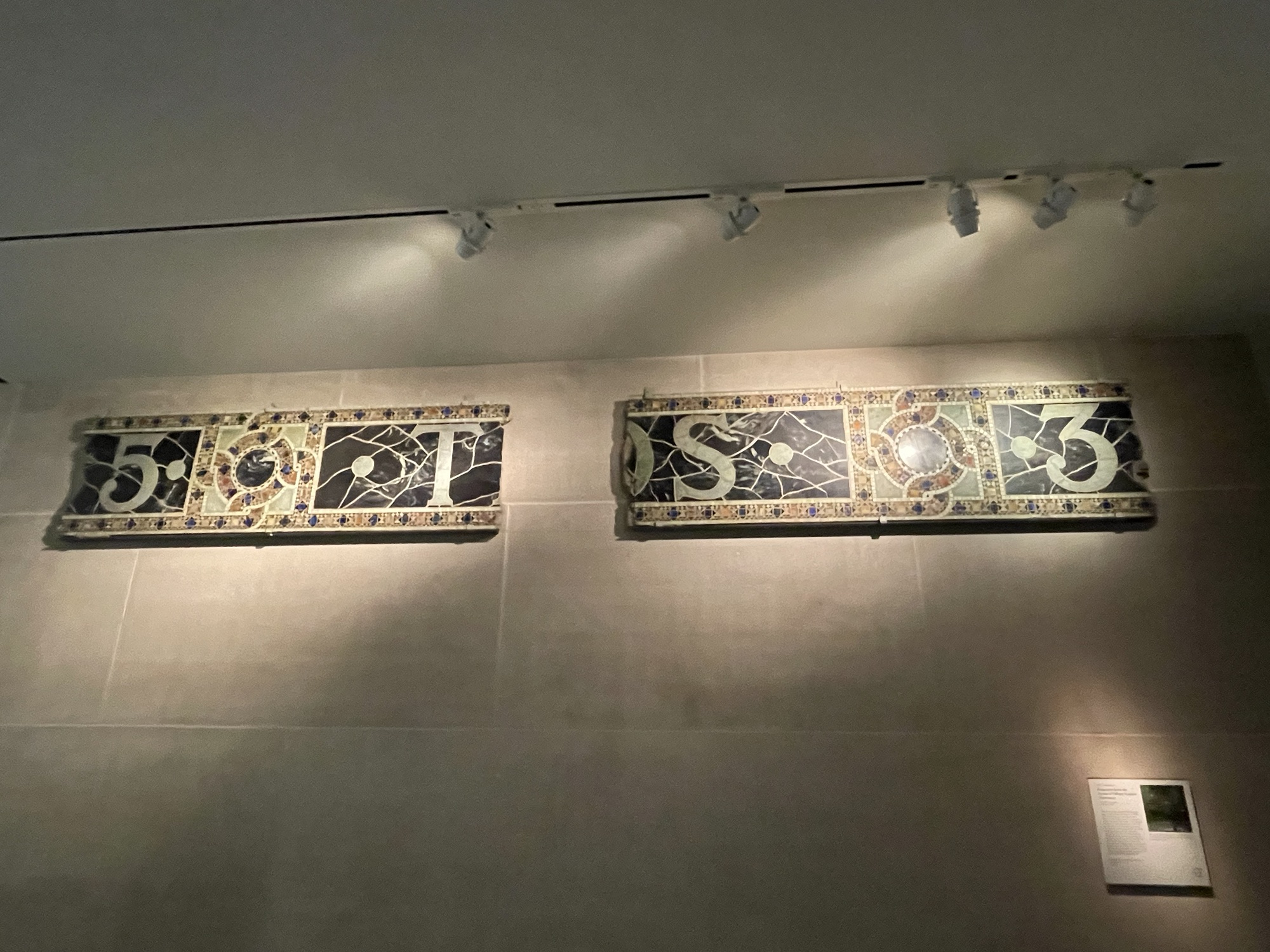
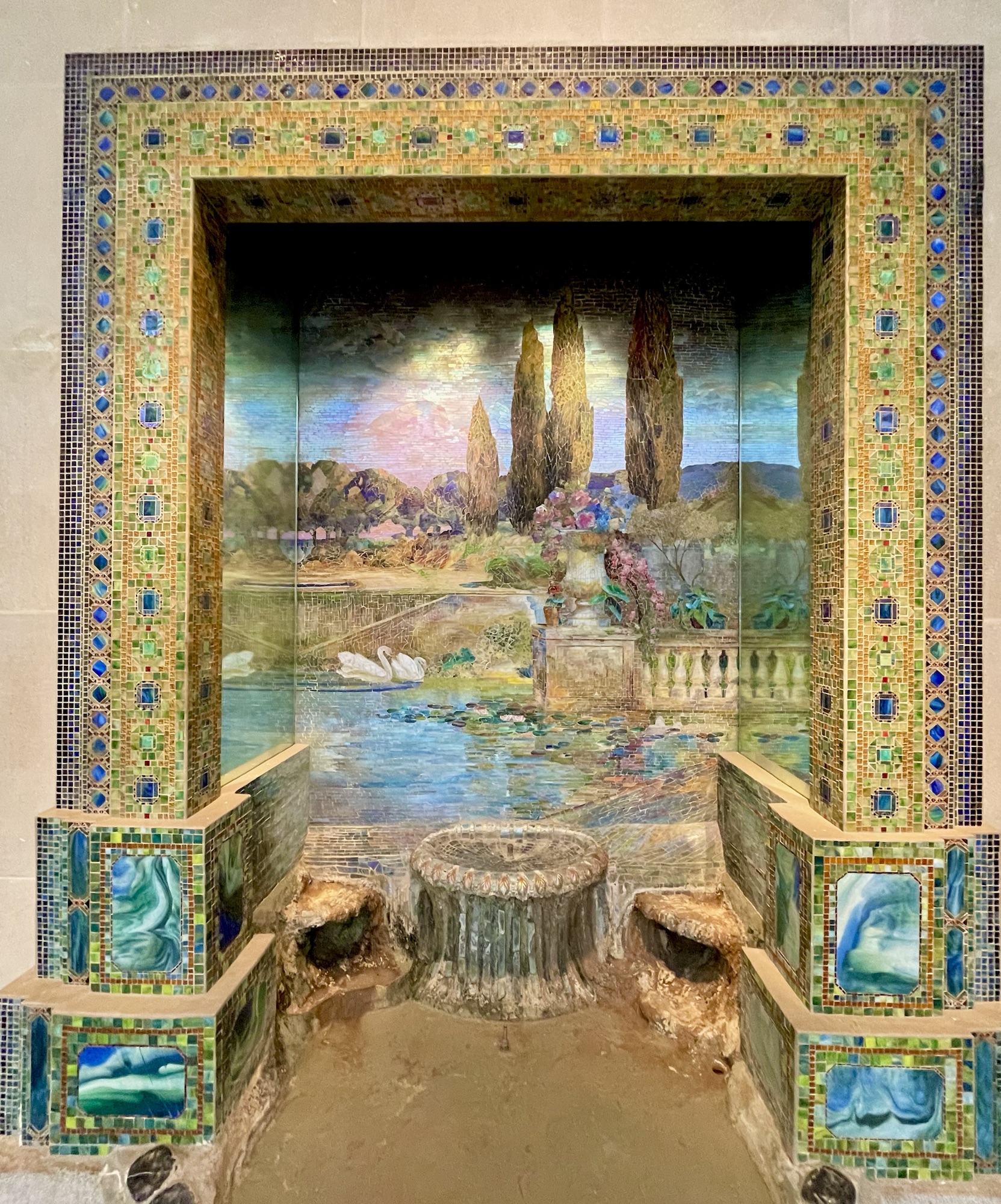
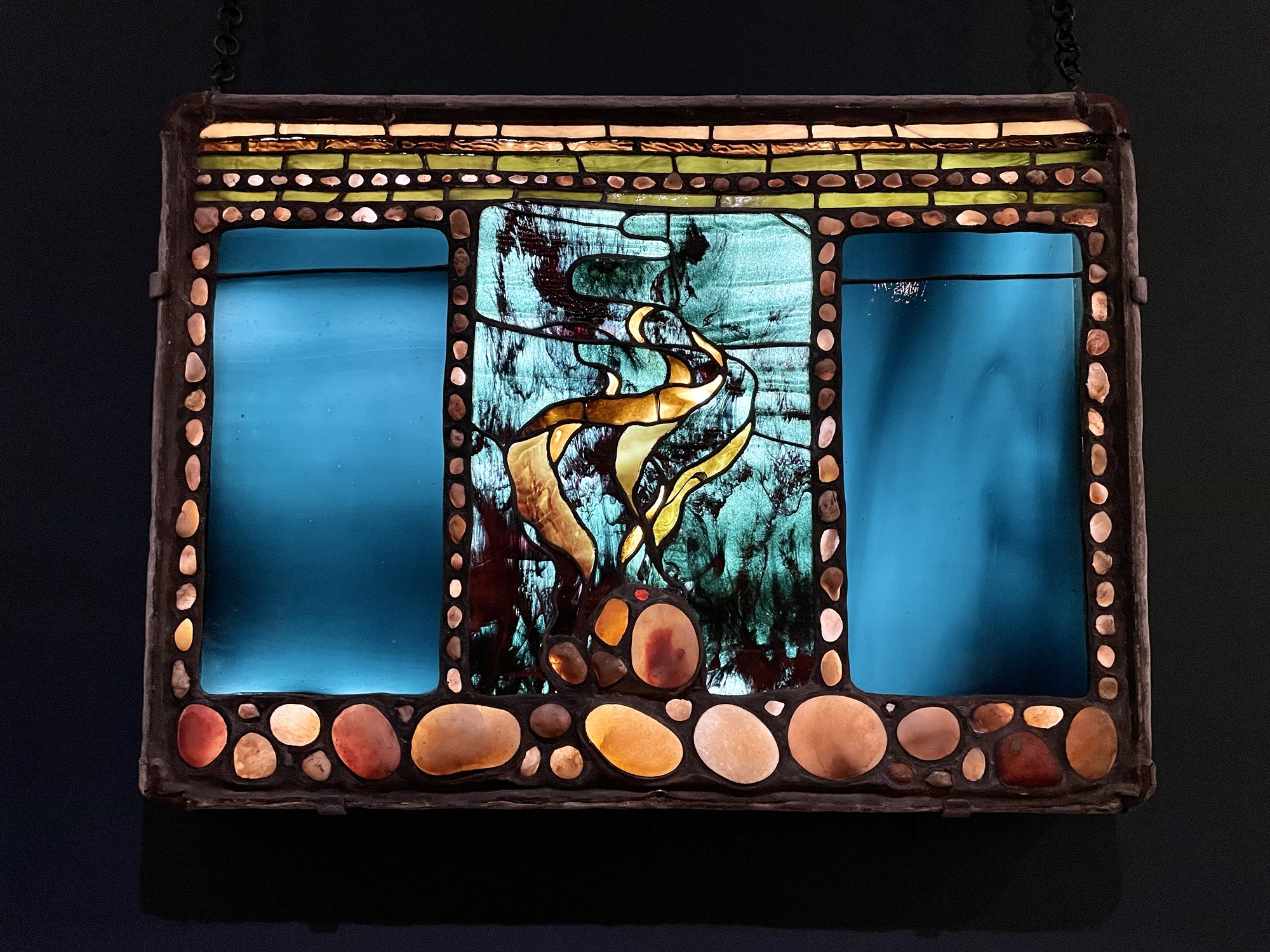
The final stop on this NY Tiffany quest is The Metropolitan Museum of Art. The courtyard of the American Wing contains several large scale pieces, including the aforementioned entrance to Laurelton Hall, fragments from the NY Tiffany Studios Showroom sign, a mosaic fountain, and my favorite stained glass window, Autumn Landscape. There are also loads of Tiffany objects scattered around the first floor galleries, including lamps, vases, and paintings.
For Tiffany fans in Philadelphia (A Secret Tiffany Masterpiece)
For Tiffany fans driving down 95 in VA (Virginia: A Tiffany Stained-glass Memorial to Civil War Soldiers)
 Secrets of Philadelphia