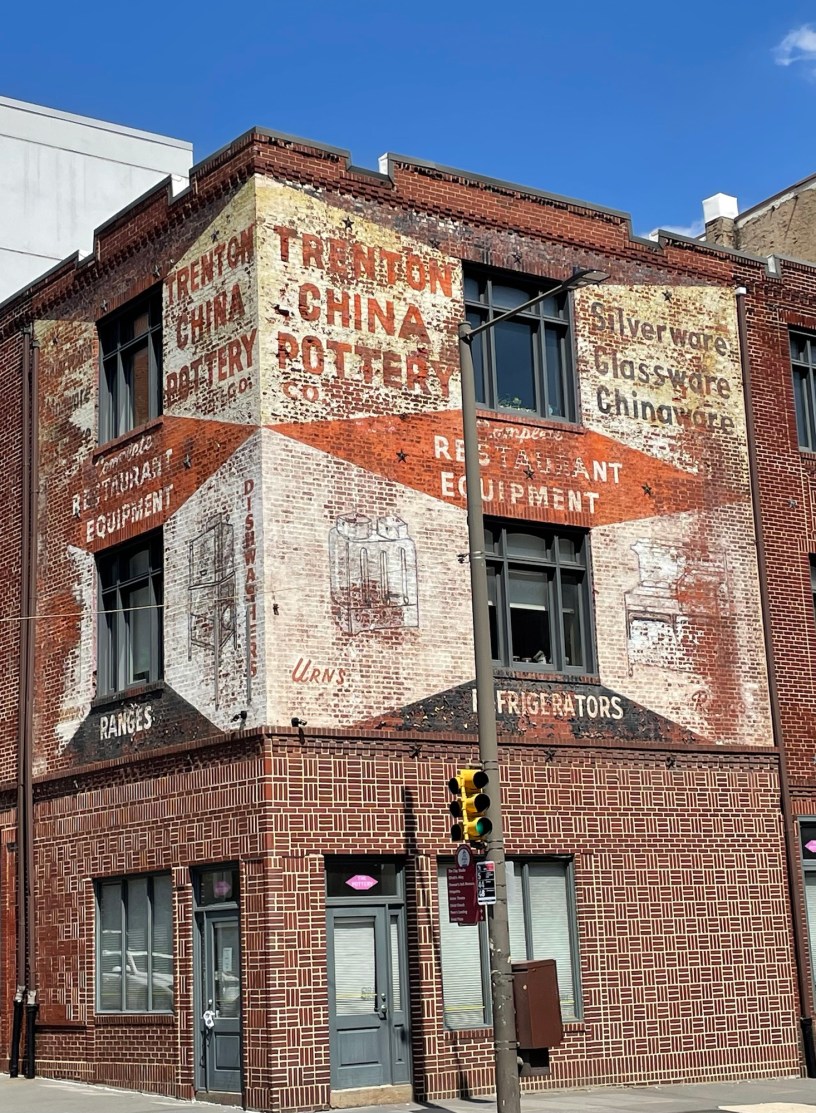
A perfect combination of art, history, and exercise is a walk through Old City looking for the ghost signs found on the sides of buildings, over doorways, and on the pavement. Many of these date back to the 19th and early 20th centuries, when Philadelphia had a thriving port and was known as the “workshop of the world.”


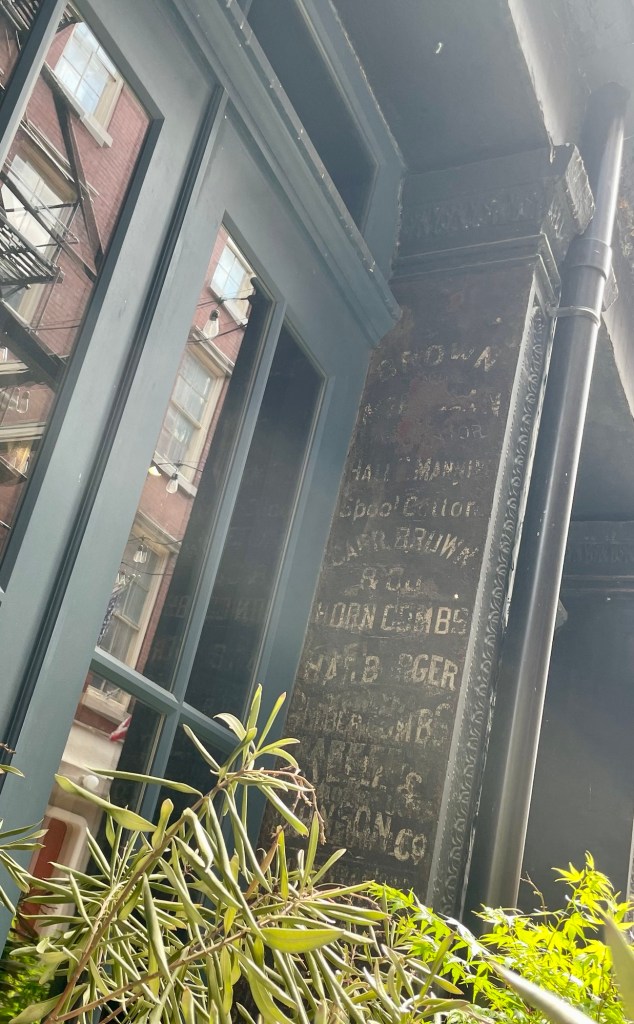

Because of the quality of light, construction and fading, the signs you spot will be different each time, but after you’ve appreciated the aesthetics, check out the company on-line for a look into its history. Although many of the advertised businesses are from days past, several are still going strong, and as businesses left the city they’ve moved to the suburbs and farther afield.
Many of the signs are associated with businesses connected with the port. One nautical ghost sign can be spotted on the west facing wall of 241 Chestnut Street. Although faded, you can still make out the word “nautical” and the compass rose. It was a sign advertising the adjacent John E Hand company. John immigrated to Philadelphia in 1873, and started this company that made watches, surveyor’s tools and nautical instruments.
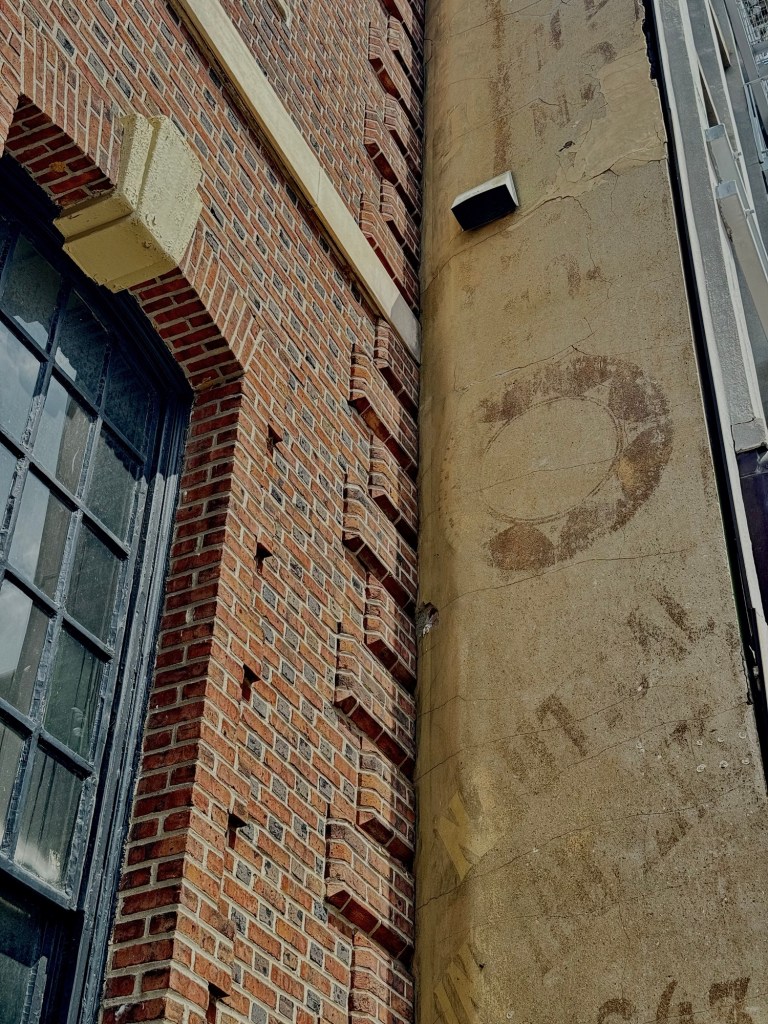
Another business that had links to the port was Riggs & Brother. Founded in 1818 as a watch and clockmaker, they later manufactured and supplied nautical instruments, as well as publishing nautical almanacs.

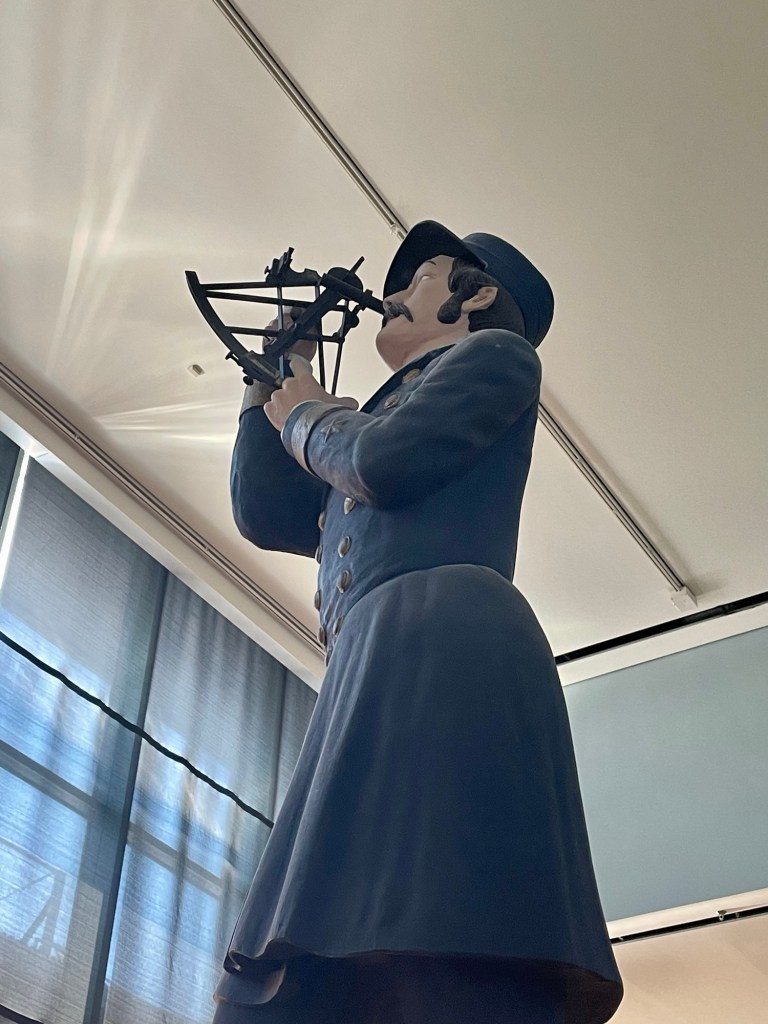
Although the over-the-door sign is covered/lost, the pavement sign is still in front of 310 Market Street, as is the pedestal that once supported a wooden sculpture of a navigator.

The navigator himself now lives nearby in the Seaport Museum (Maritime Philly).
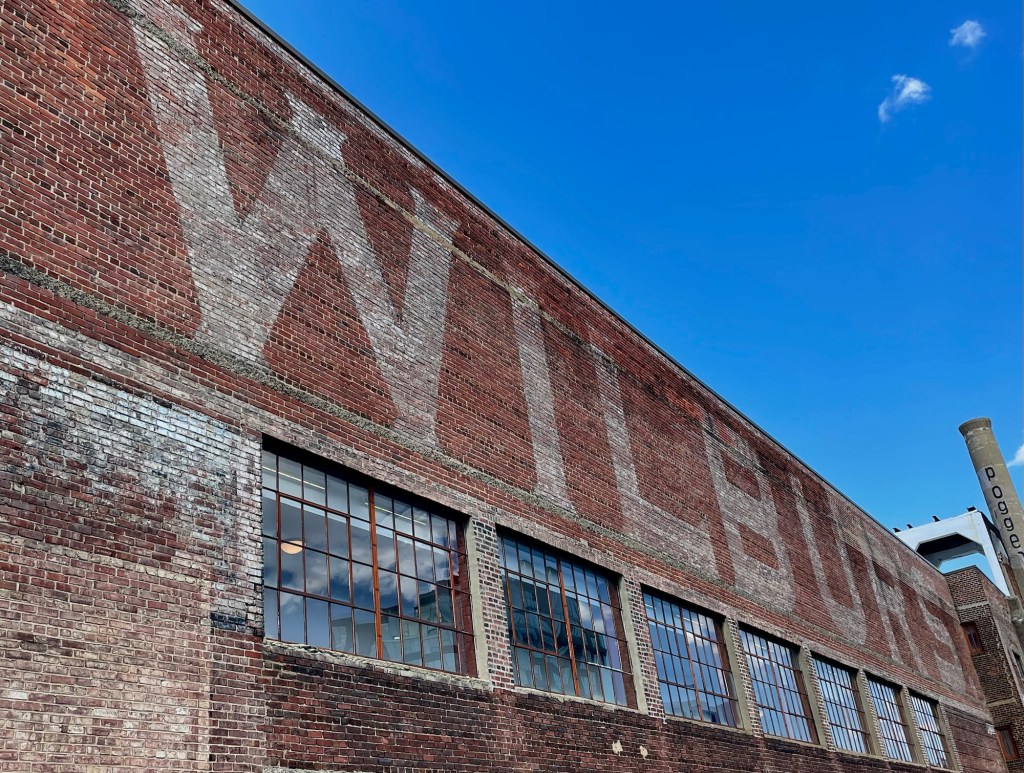
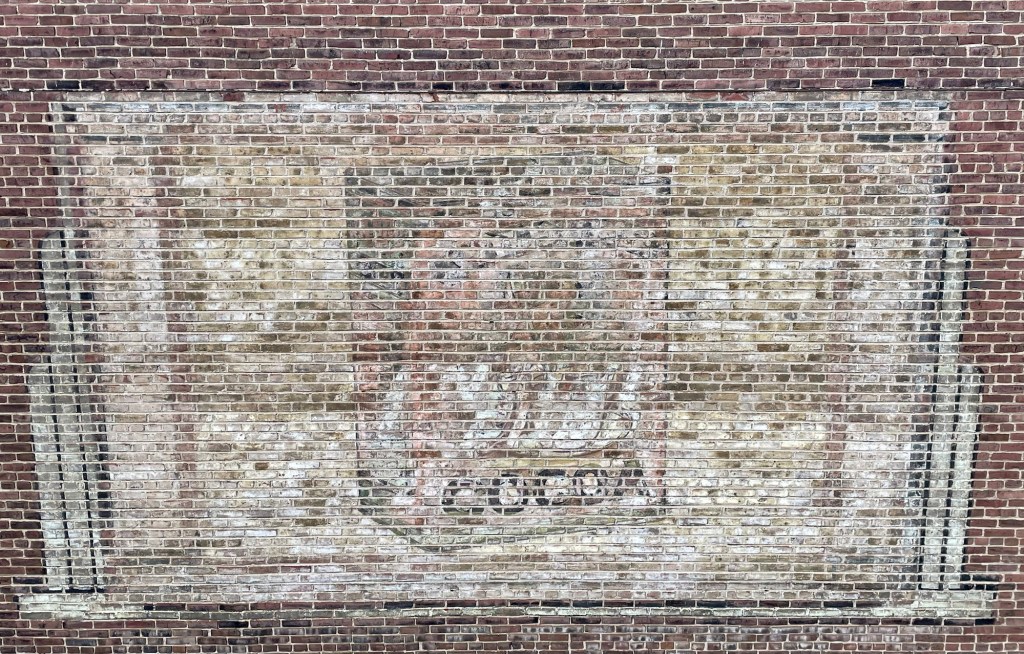
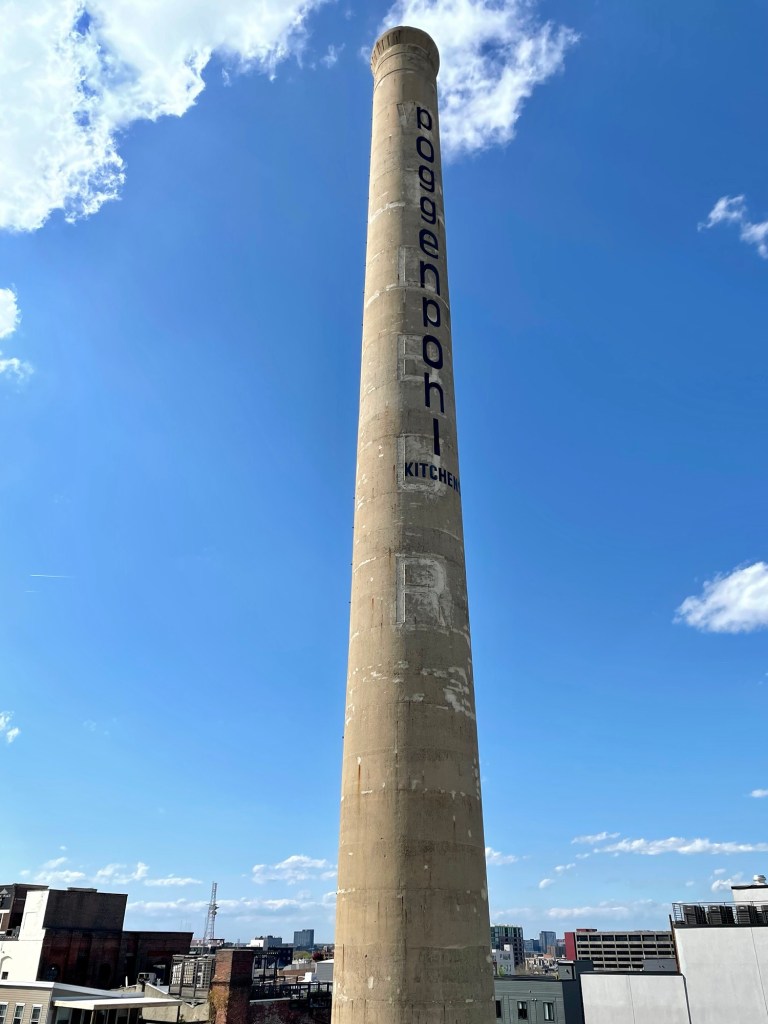
Another great sign can be found on the side of the Chocolate Works building. Wilbur started in Philadelphia in 1865 making molasses candy. In 1887 they opened the factory that now sits adjacent to the Ben Franklin bridge. It was here in 1894 that they began production of “Wilbur buds,” the candy that may (or may not) have given rise to the Hershey’s kiss. In 1930, the manufacturing operations were moved to Lititz, PA, where they remain today. The ghost signs (also look for the carved letters on the smokestack) are best viewed from PATCO coming into the city from New Jersey or by walking over the Ben Franklin bridge (Walking the Ben Franklin Bridge).
While some signs are so faded they are barely there, others have been renovated. Trotter’s business was founded in Philadelphia in the 1750’s as a metal importing business, and is still in business today in the suburbs. This 1830’s warehouse on Front Street has been converted to residences.


As you check out the ghost signs, look for a small signature at the bottom, a mark of the person who painted the sign.
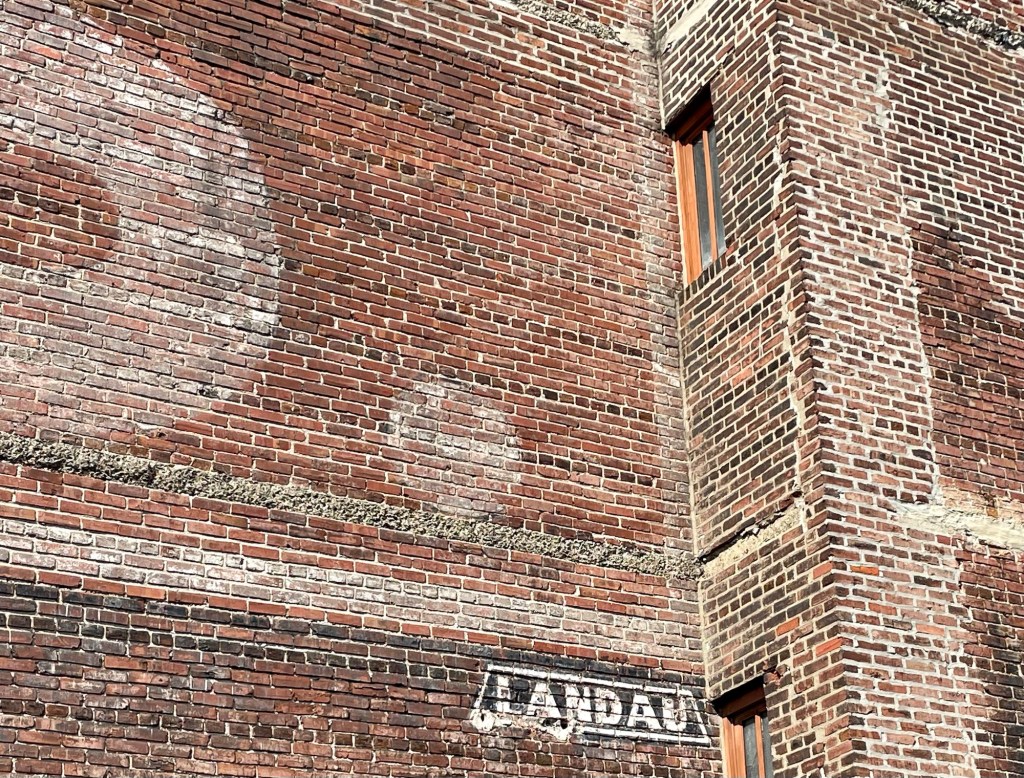

One such sign maker worked until quite recently at 1125 Race Street. Baker the Sign Man opened in Philadelphia in 1870. Now closed, all that’s left is this ghost sign.

Although most ghost signs are painted on the buildings themselves, there are still a few of these hanging advertisements. Although illegal to install today (I guess so they don’t fall on pedestrians), there are still a few old ones hanging around the city like this fabulous example at 116 N 3rd.

Note: Many of the details and inspiration for this post come from a 2024 Hidden City walking tour (Architecture & History Tours in Philadelphia).
 Secrets of Philadelphia