The Romans arrived in London in 47 AD and established the town of Londinium at the spot where the Thames was narrow enough to build a bridge. They stayed for almost 400 years, and although this wasn’t their largest city in Britain, evidence of their occupation can still be found over 1500 years later.
Today, this part of London is not only its oldest area, it is also the country’s uber modern financial center, so Roman ruins pop up right next to contemporary buildings.
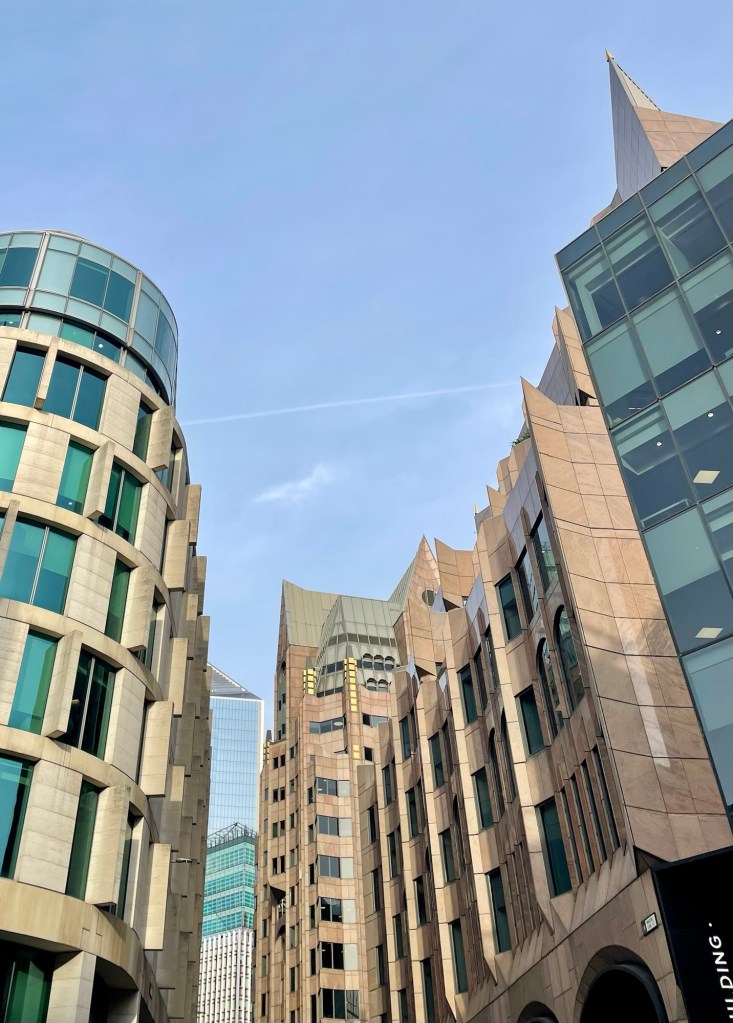
Explorers can follow the route of the wall that once enclosed Londinium (much of which conveniently follows a road called London Wall), viewing remaining sections of the original Roman wall, plus explore several small museums showing other remains of the Roman city that are still being uncovered today. All of the sites in this post are free!
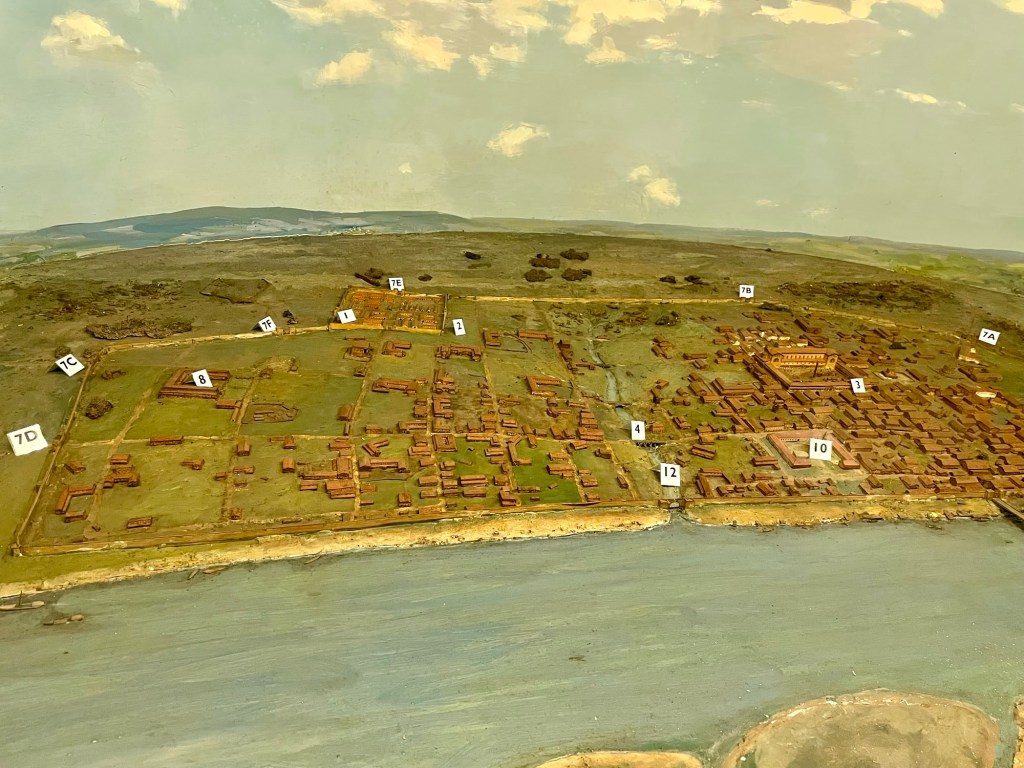
A good place to start a Roman London quest is All Hallows church, whose tower is a rare survivor of the Great 1666 fire, thanks to William Penn’s father who in his role as Admiral of the Navy had the surrounding buildings blown up to act as a fire break, and who watched the fire’s progress from the tower. Its basement crypt houses a small museum that in addition to the book recording William Penn’s 1644 baptism, contains a 1928 model of Roman London.
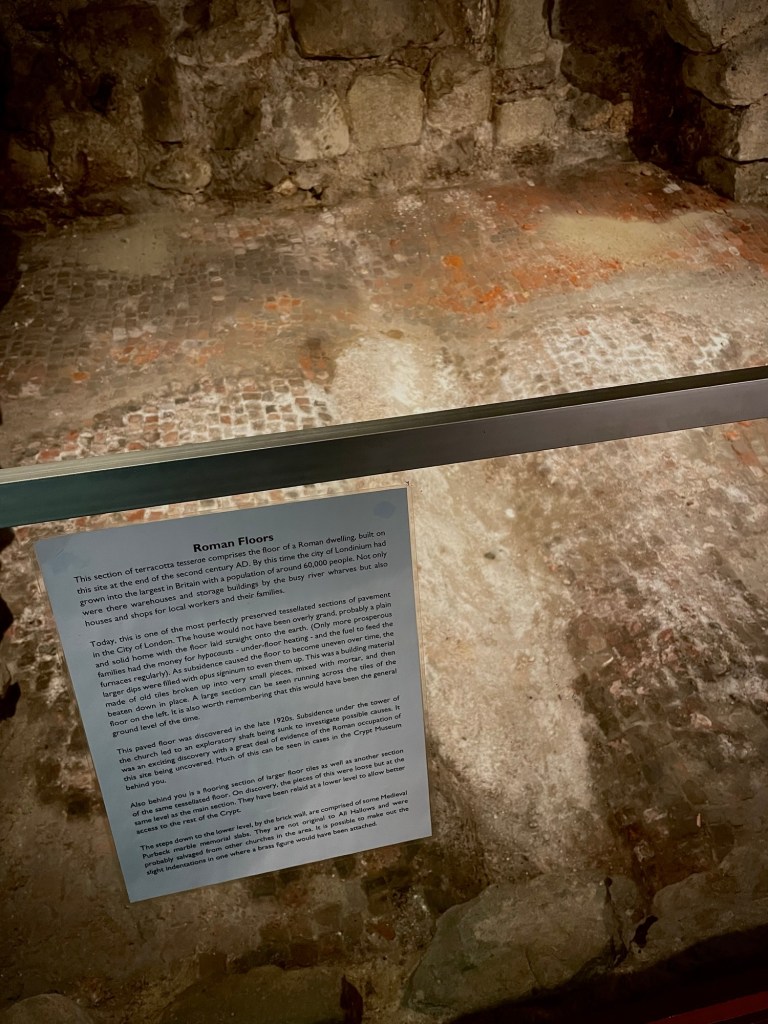
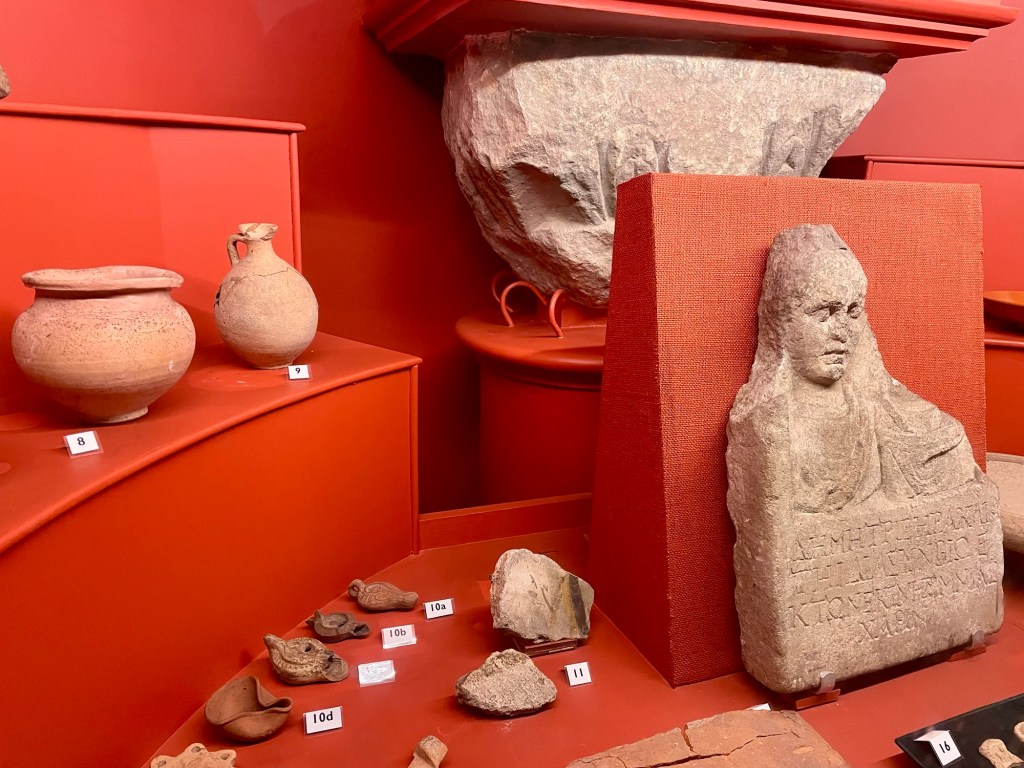
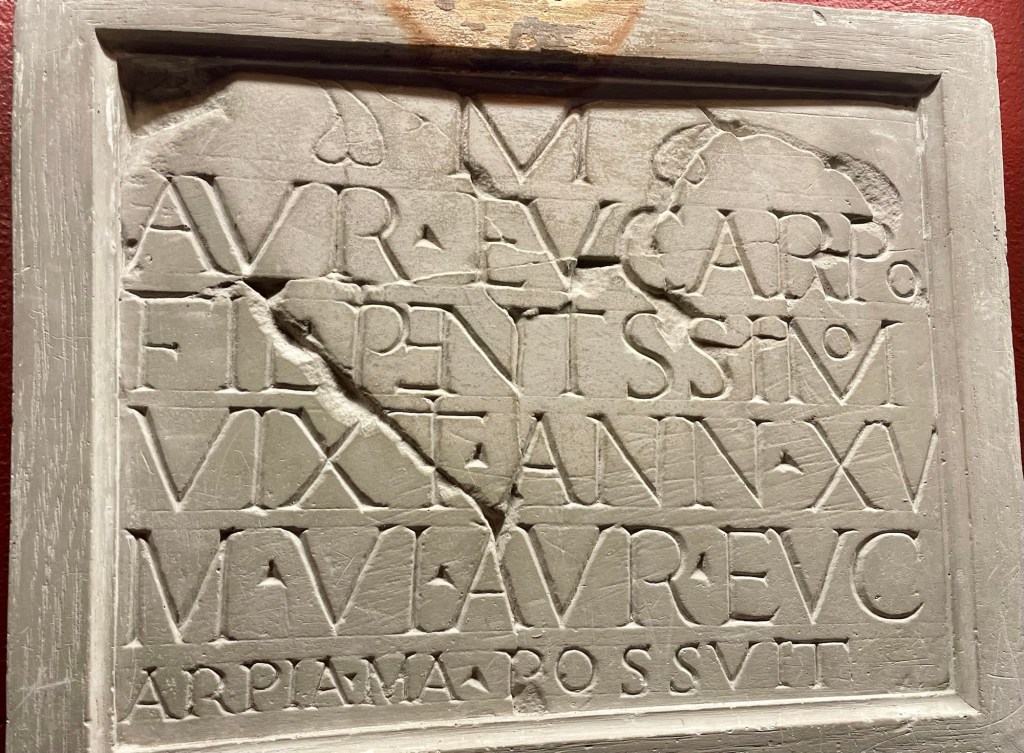
The crypt also has a surviving section of Roman tessellated flooring from a late 2nd century domestic house discovered in the 1920’s when repairs were made to stabilize the church. Excavations also discovered other Roman-era objects which are on display, in addition to several casts of Roman gravestones found nearby, including this one to a “most devoted son.”
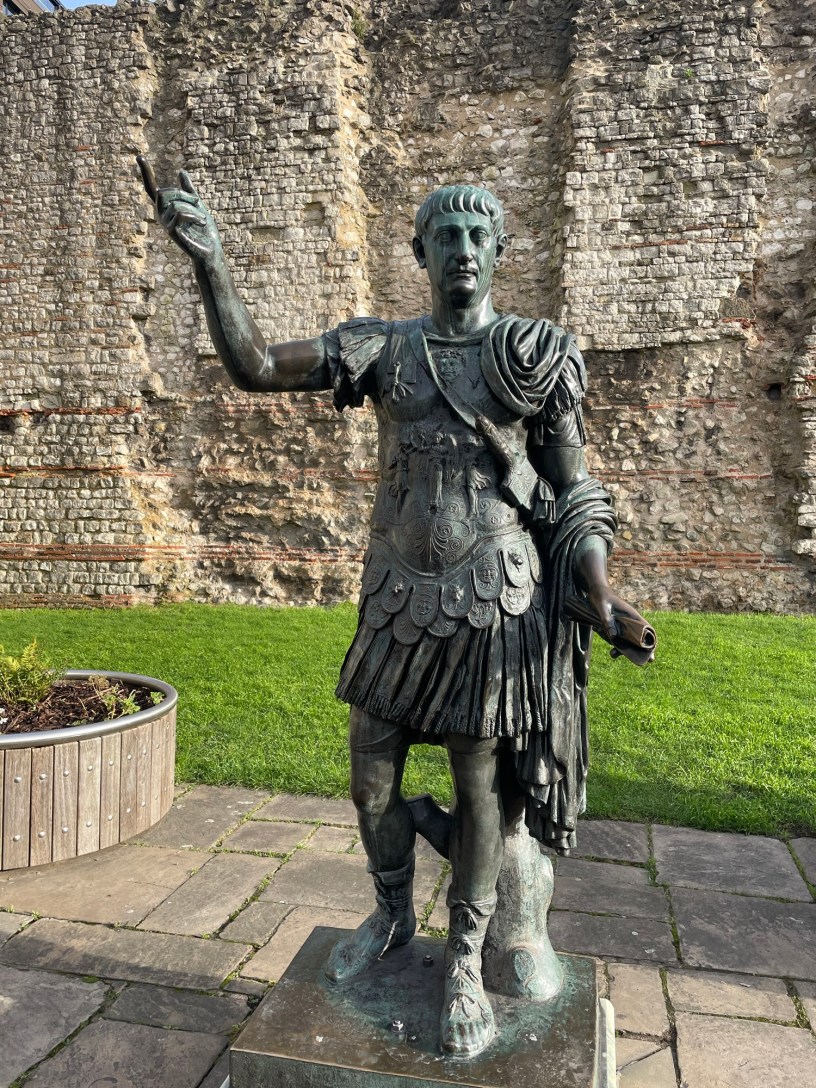
Just down the road outside of Tower Hill tube station is a large section of the Roman wall overlooking the Tower of London. Like most surviving sections it has a Roman base topped by stonework added during the Middle Ages. The Roman sections are stone with red brick running horizontally throughout. Standing by the wall is a statue of Emperor Trajan- a bit odd considering he never visited Londinium, but a nice photo op.
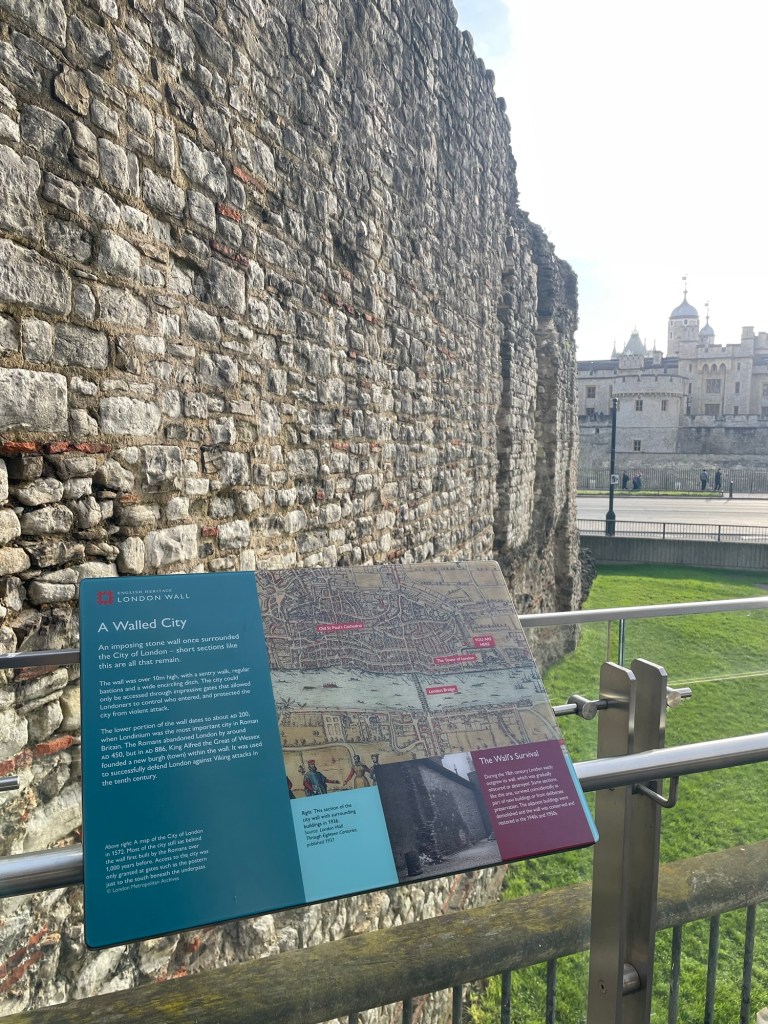
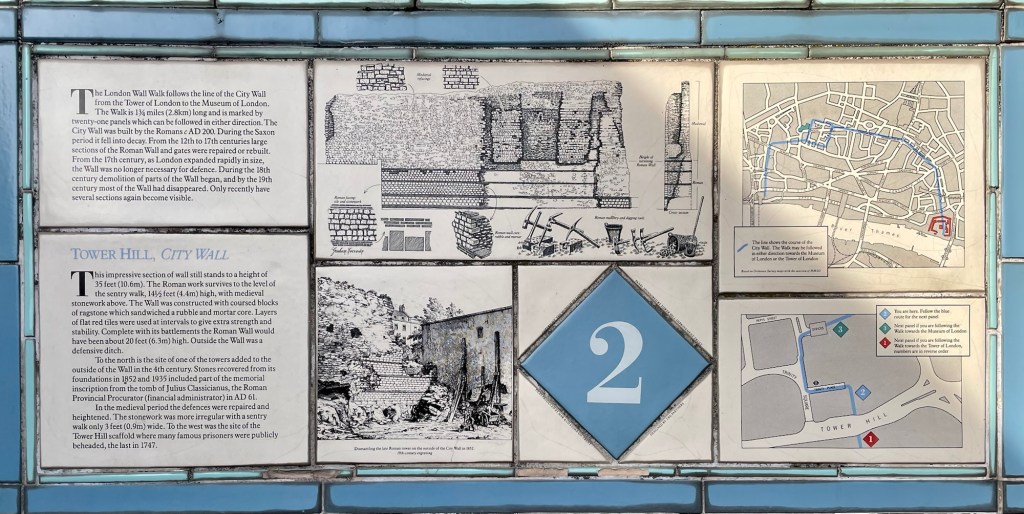
Many of these wall ruins have signage giving historical insight and directions to nearby sections. The whole route of the wall covers about 2 miles from Tower Hill to Blackfriars Station.
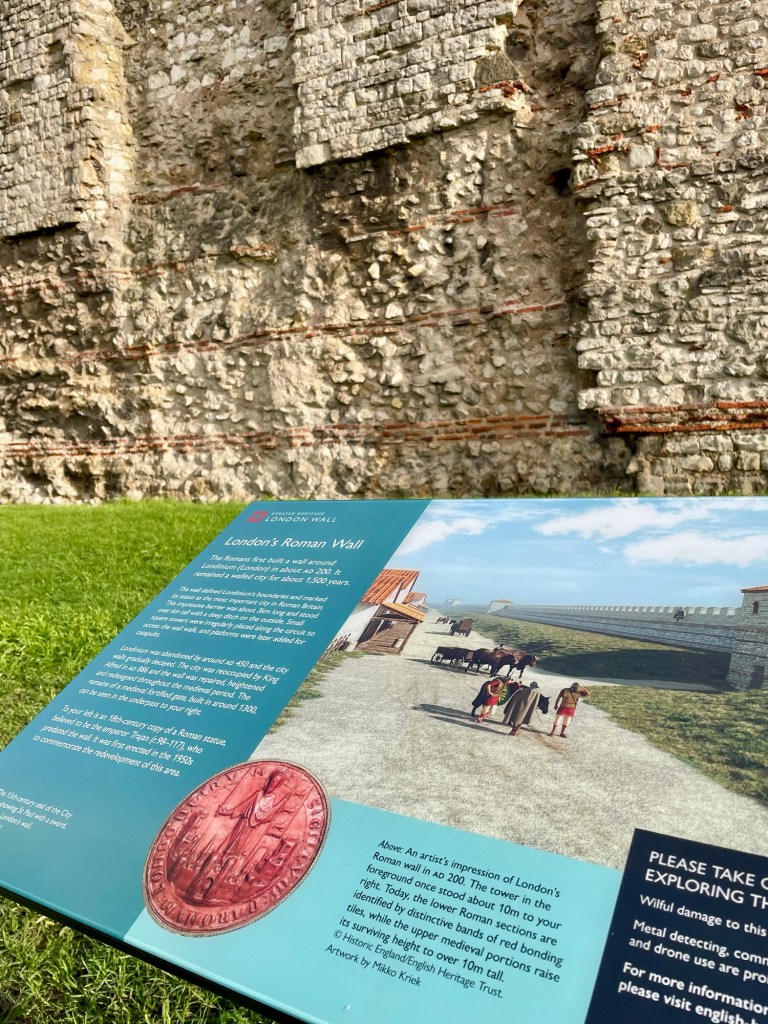
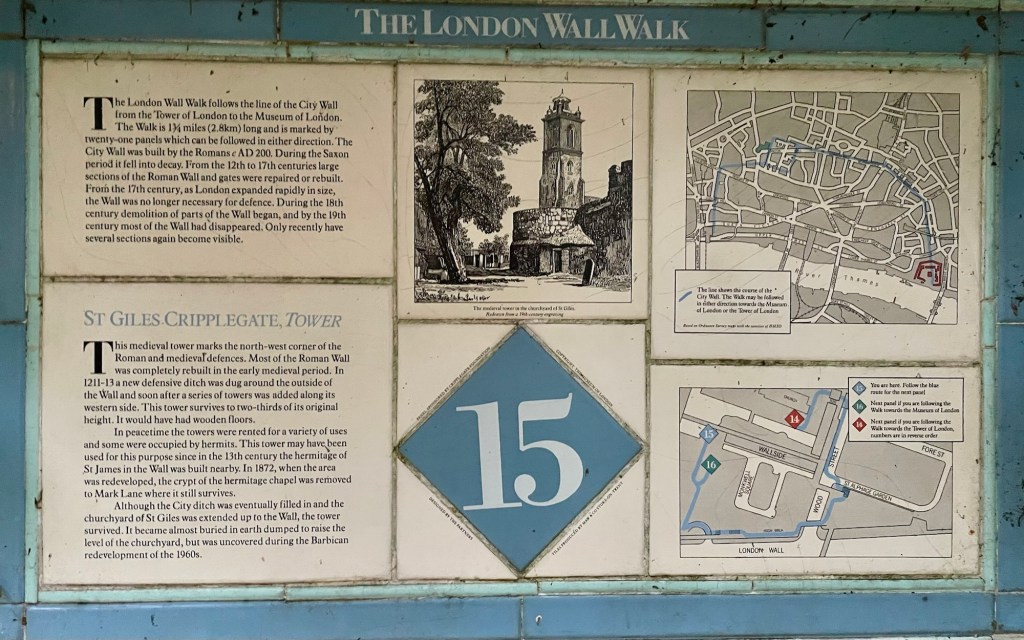
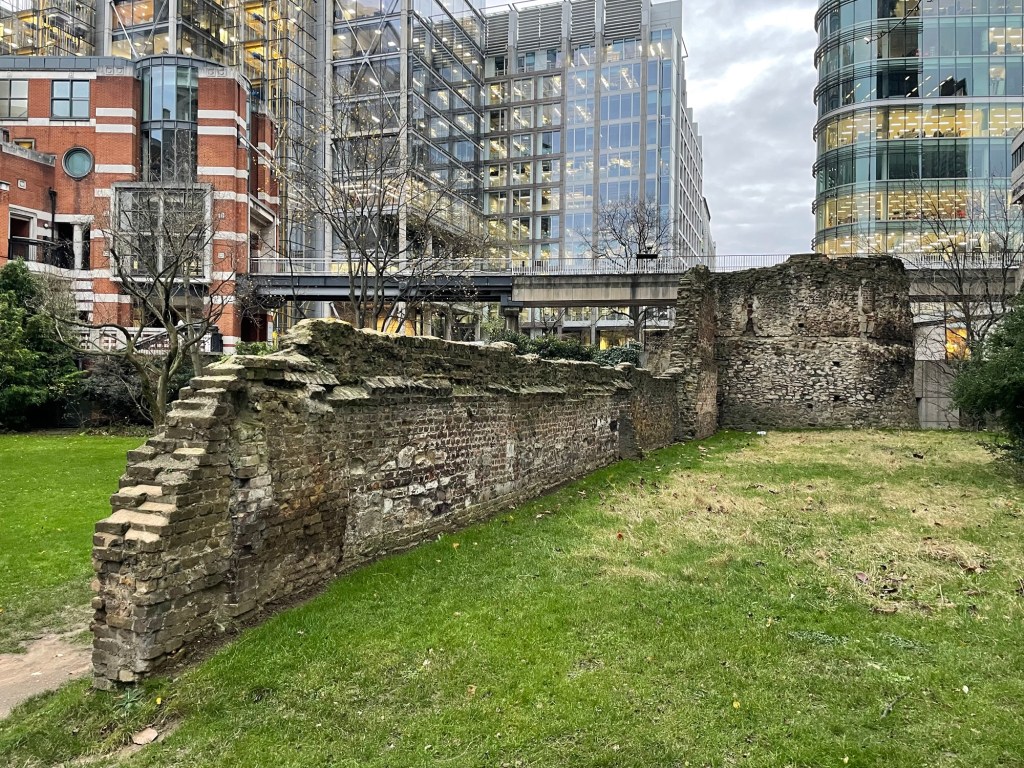
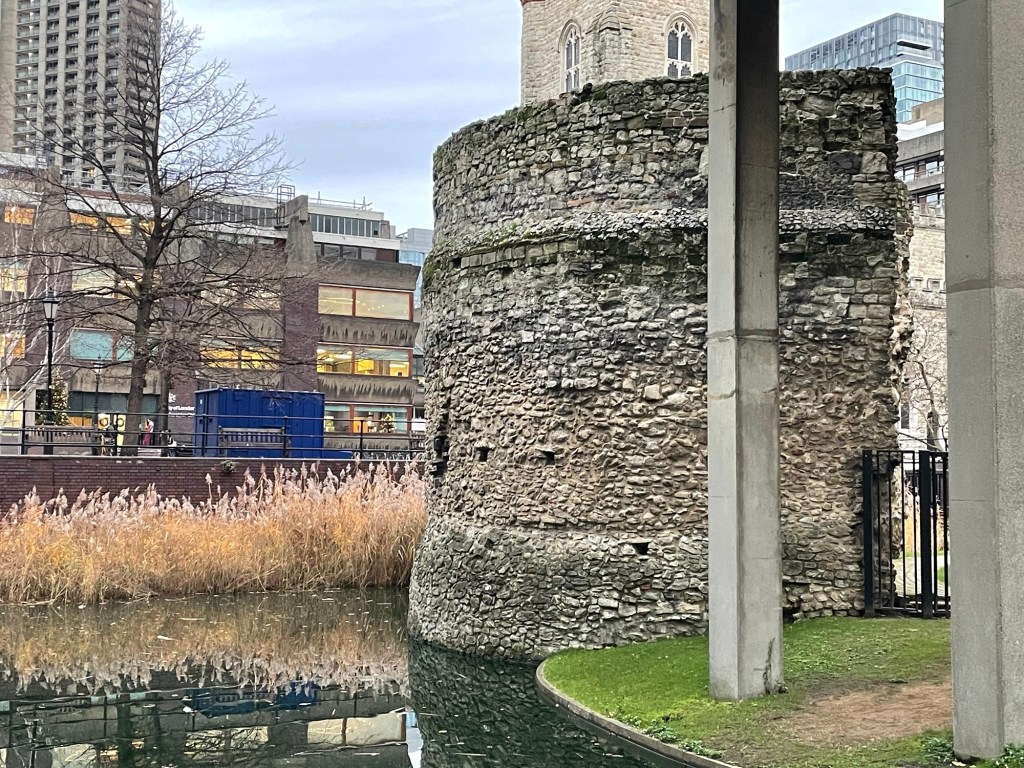
Seeing the most off the beaten path section of wall involves a subterranean dive to find slot #52 in an underground car park.
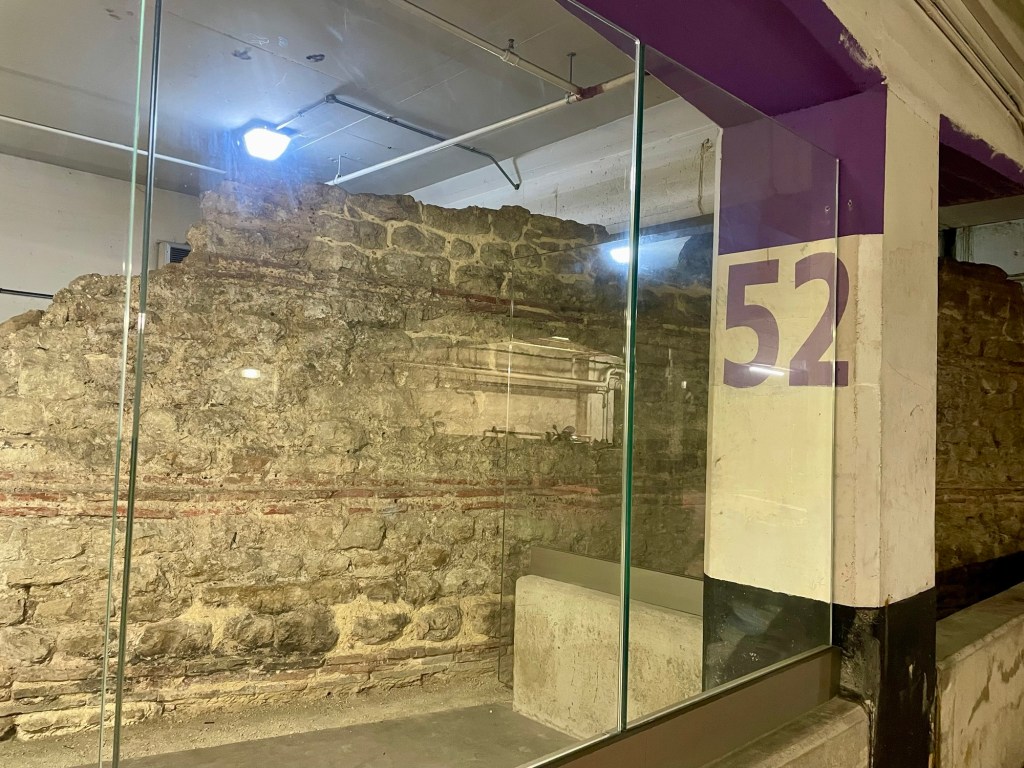
The only Roman defensive tower (bastion) still found along the wall is in the City Wall at Vine Street museum. Discovered during a construction project in 1905, it was excavated by archaeologists in 1979 and is now the centerpiece of this new museum.
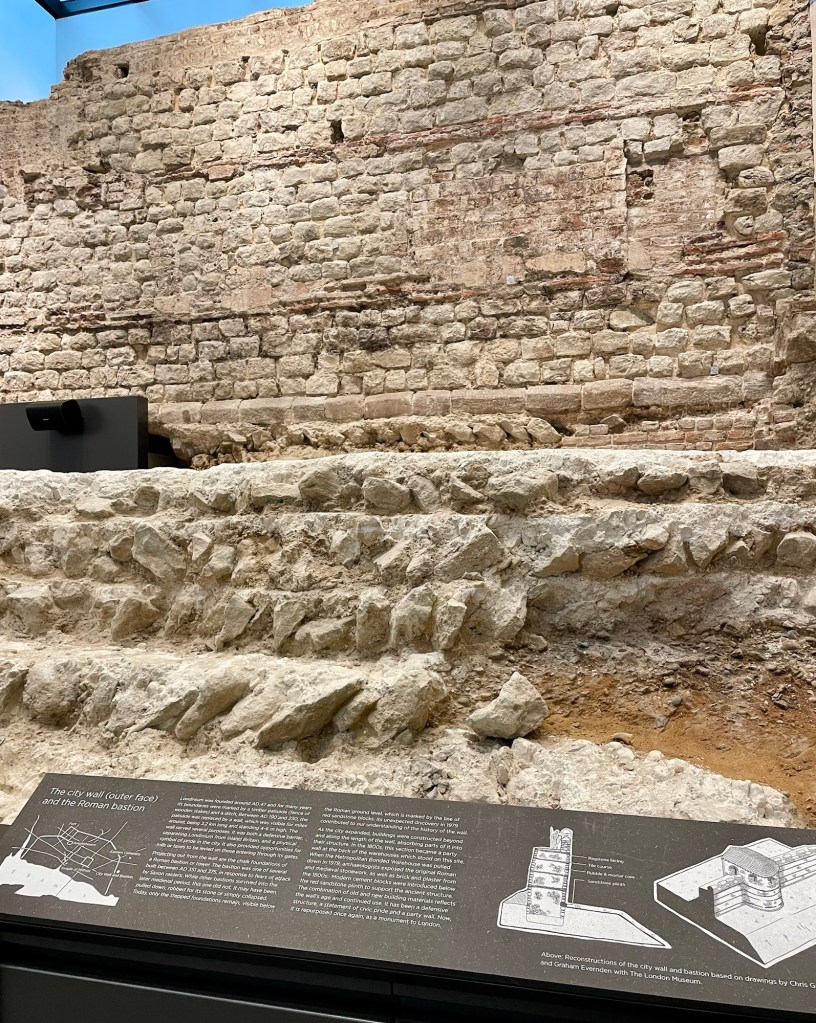
The museum not only displays the wall, but also associated Roman objects found during excavation, including this Roman-era cat paw print.

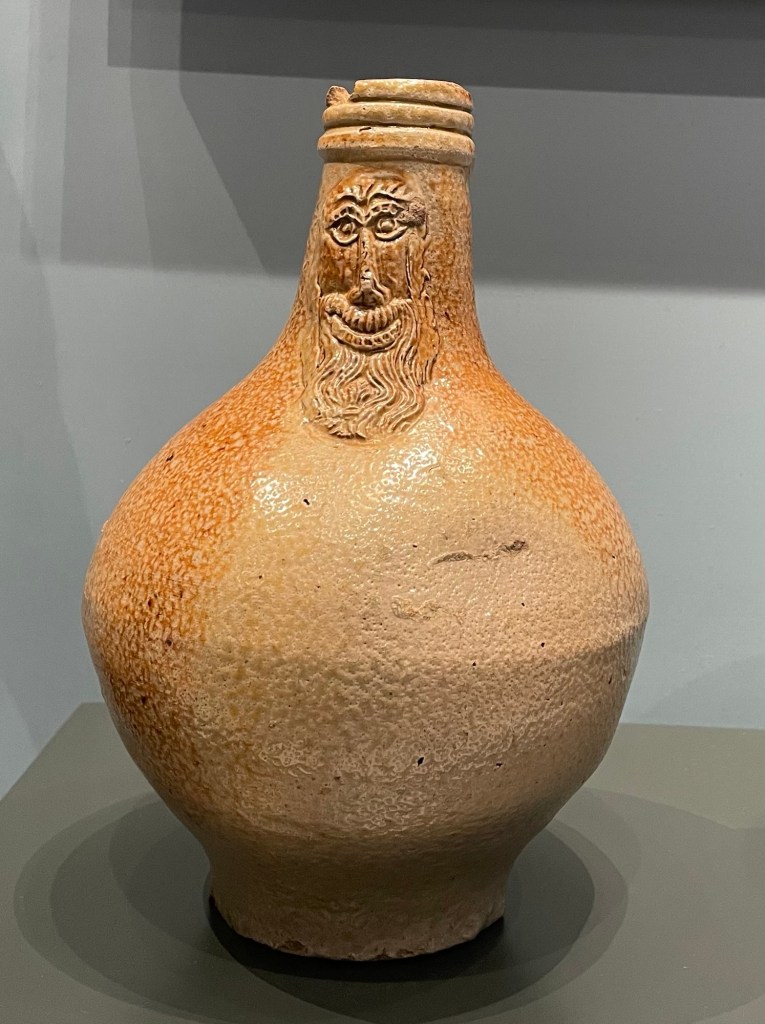
Displays also highlight more recent history of the area with other objects uncovered on site.
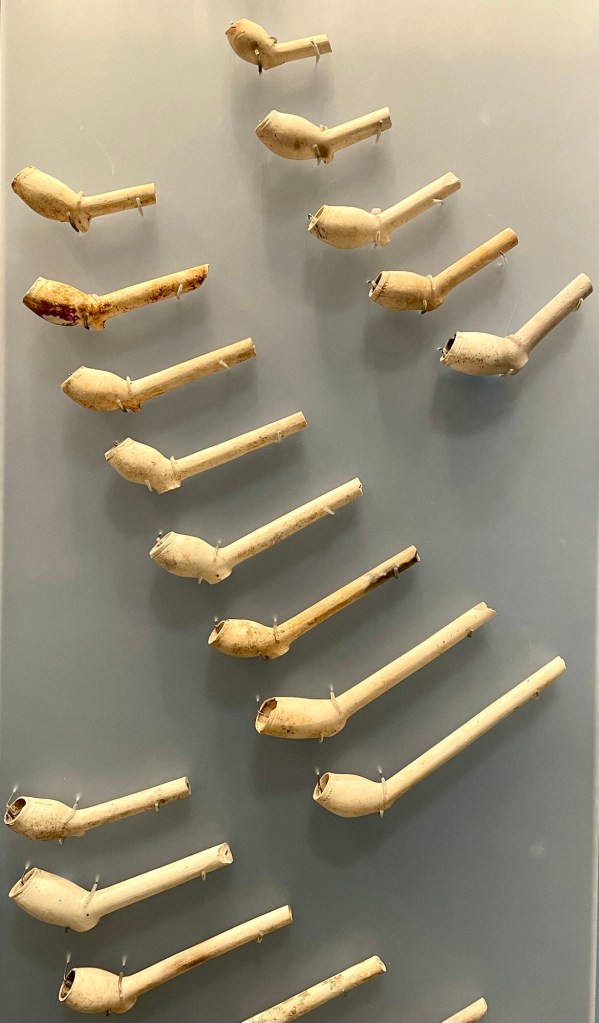
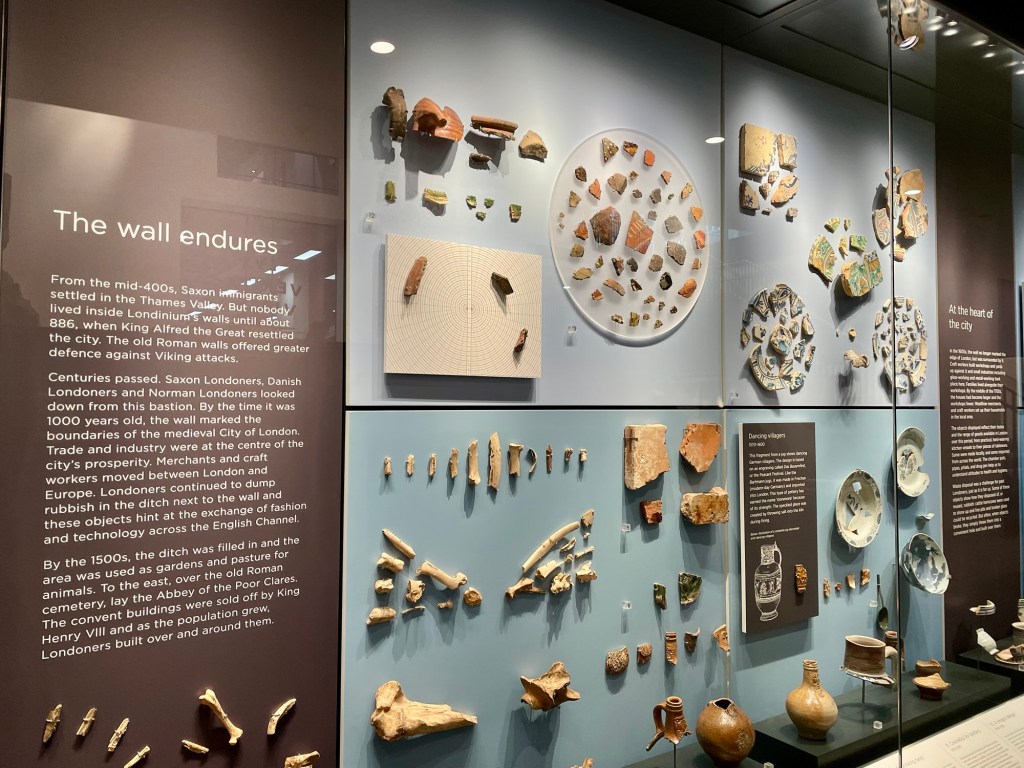
In addition to the wall, other parts of the Roman city have been uncovered and are highlighted at the Guildhall Museum and the Bloomberg building.
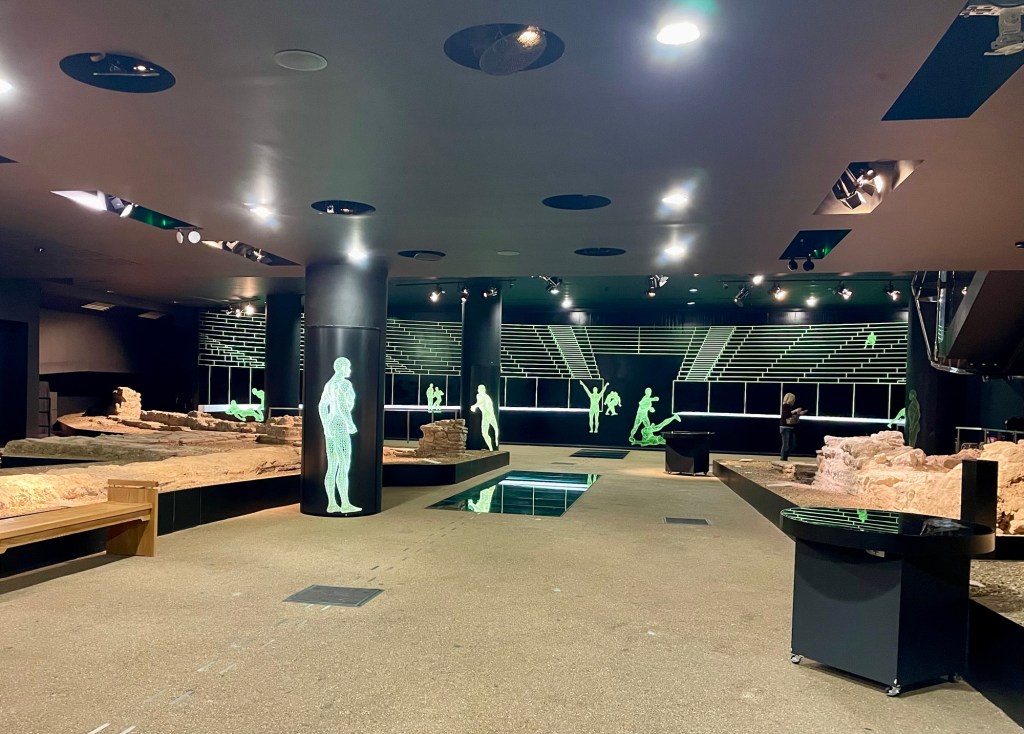
The lower level of the Guildhall Museum contains the remains of Londinium’s amphitheater, discovered in 1988 when archaeologists excavated the site in preparation for construction of the new art gallery. The surviving remains include part of the entrance tunnel, east gate, and arena walls. Illuminations illustrate the missing parts of a structure that once housed wild animal fights, public executions, and gladiatorial combat.
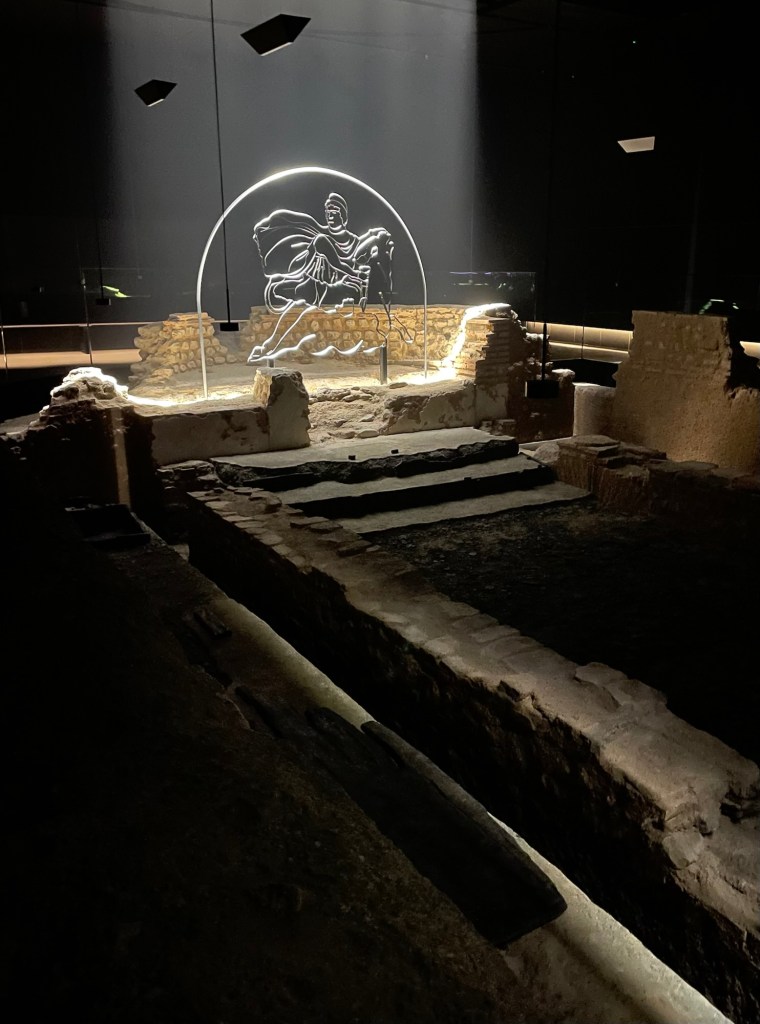
The Bloomberg building contains the remains of a Roman Mithraeum that was discovered in 1954 in an area that had been bombed during WWII. During construction on the site, the foundation of a stone structure was found, and on the final day of excavation archaeologists discovered a sculptured head of the god Mithras, confirming the site as a Roman Mithraeum temple. The remains were removed and rebuilt 100 meters away in an open air display. Before completion of the Bloomberg building, archaeologists conducted another excavation on the original site and thousands of additional Roman artifacts were found. The temple was then reinstalled underground at what was once street level of Londinium, close to its original location where it can be viewed today (during a slightly odd “experience”) along with a wall displaying original artifacts and copies of the sculptures of Mithras and Mithras slaying a bull that was found nearby in 1889 and is assumed to have come from the Mithraeum.
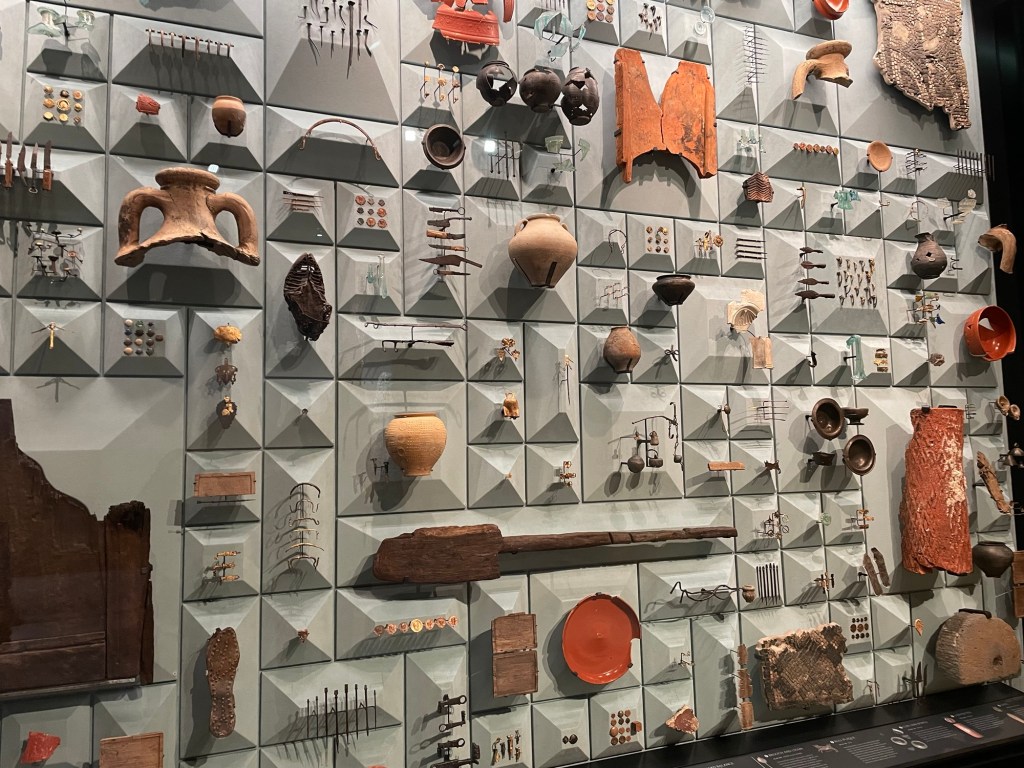
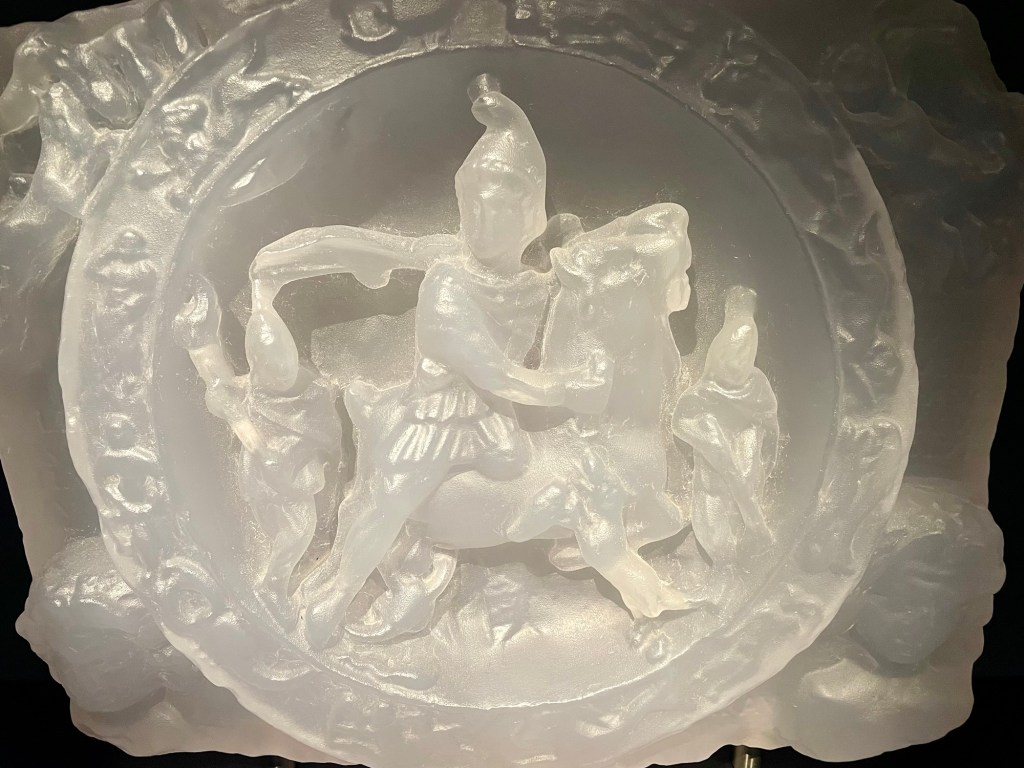

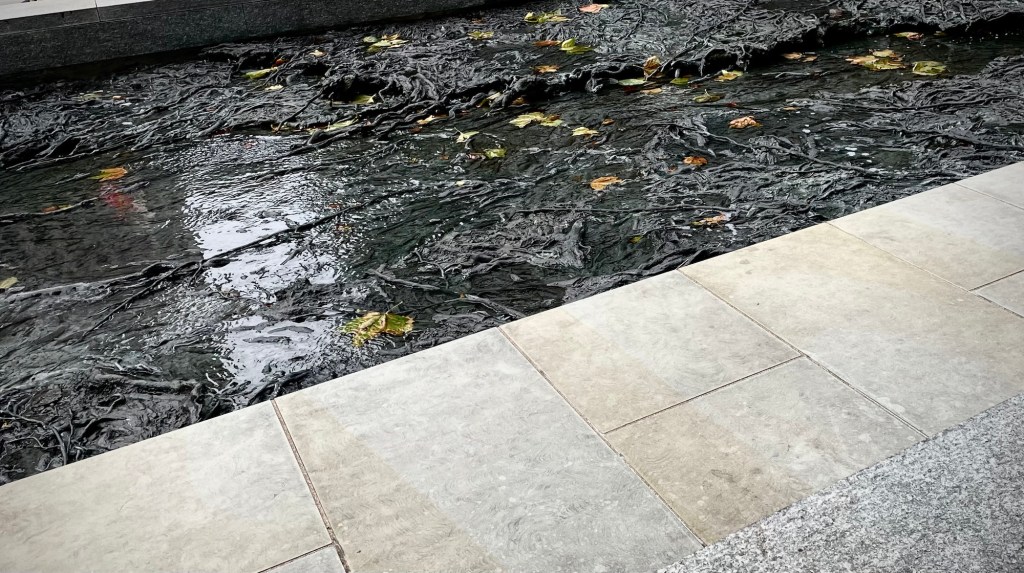
Outside of the Bloomberg building is the Forgotten Streams sculpture. Today, almost all of London’s waterways have long since been buried underground, but during Roman occupation the Walbrook would have crossed this section of London. Sadly, my photo doesn’t capture it well.
Unfortunately, we made it only half way around the wall walk before jet lag set in, leaving more Roman adventures for a future trip.
https://www.ahbtt.org.uk/visit/crypt/
https://citywallvinestreet.org/
https://www.thecityofldn.com/directory/londons-roman-amphitheatre/
 Secrets of Philadelphia