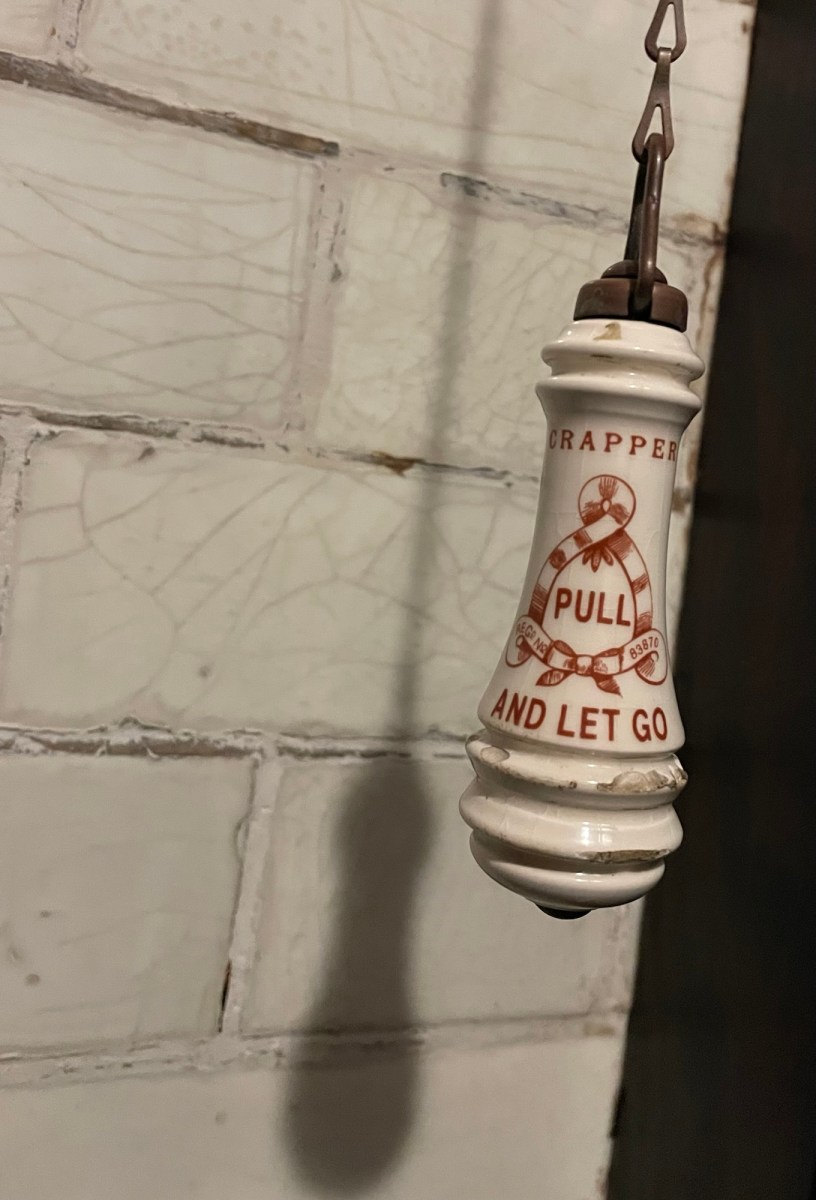
(*Bonus points if you can still use them!)
The Victorian’s may have invented the telephone, the combustion engine, and x-rays, but nothing more appreciated than the indoor bathroom. Components have been around for thousands of years, but it wasn’t until the mid-1800s that all the pieces (including sewer systems, indoor plumbing, the flush toilet and stationary bathtub) came together to create the modern bathroom. It’s such fun discovering survivors!
*Wesley’s Chapel, City Road London
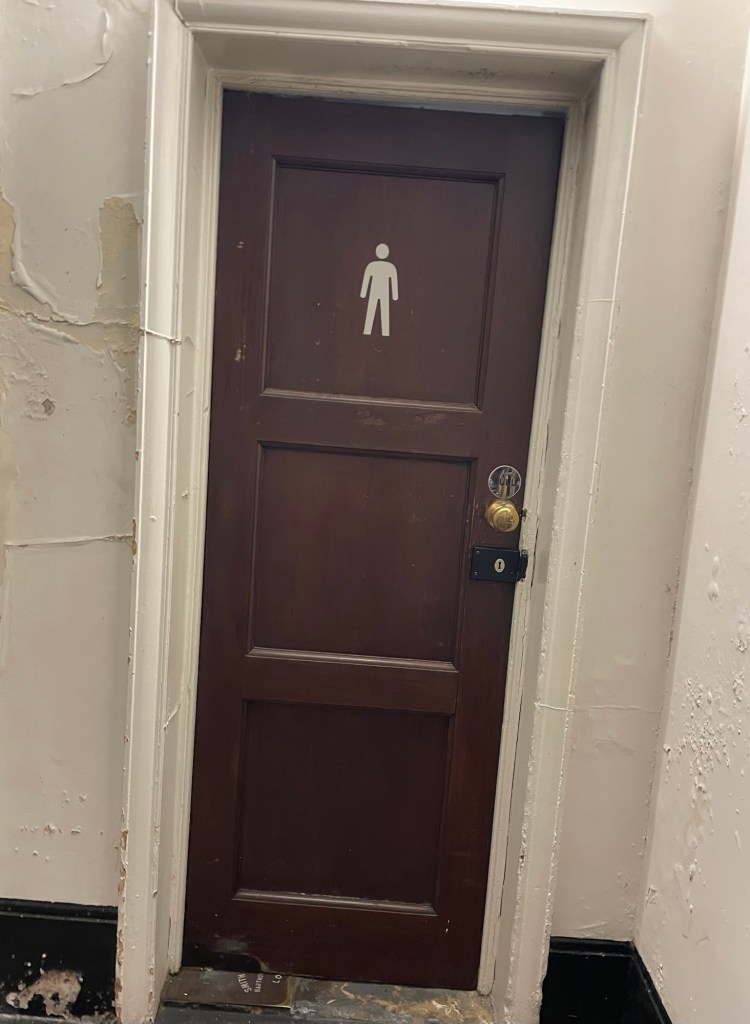
Behind this ordinary door lies a men’s room that hasn’t changed since it was built in 1899. The door opens directly outside, where steps lead down to this historic gem.

Still the original wooden seats. Still the original pull-chain Crapper toilets. Still the original Jennings urinals. And, few visitors, so women can check it out (i.e. use!), too. Amazing.
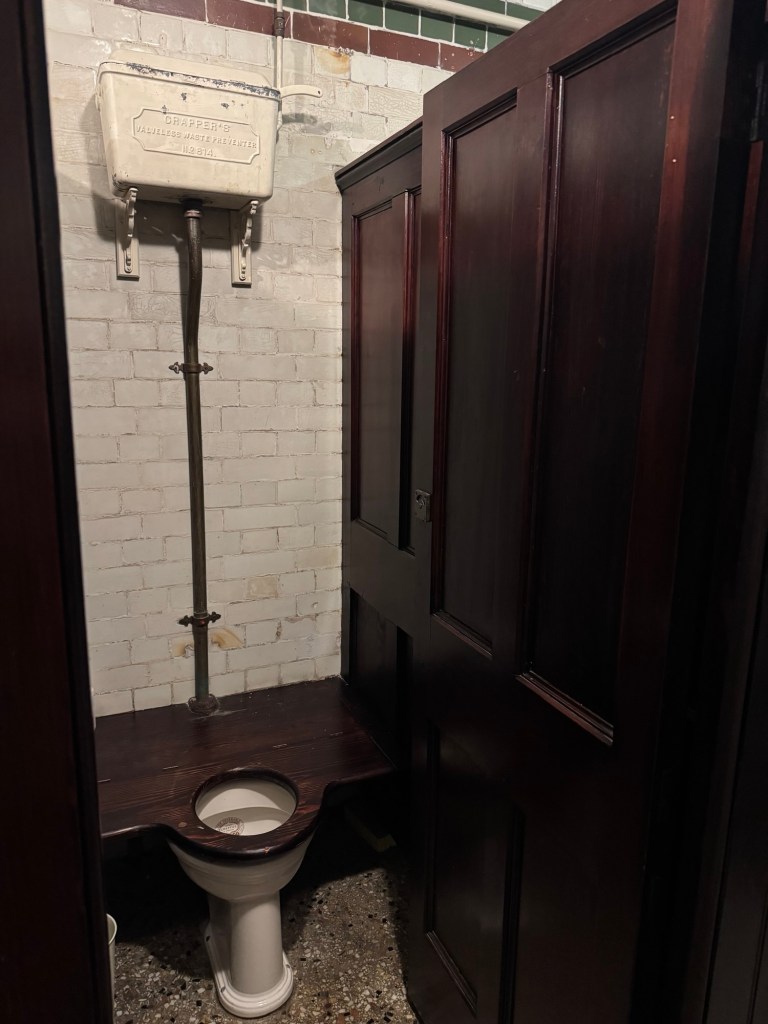
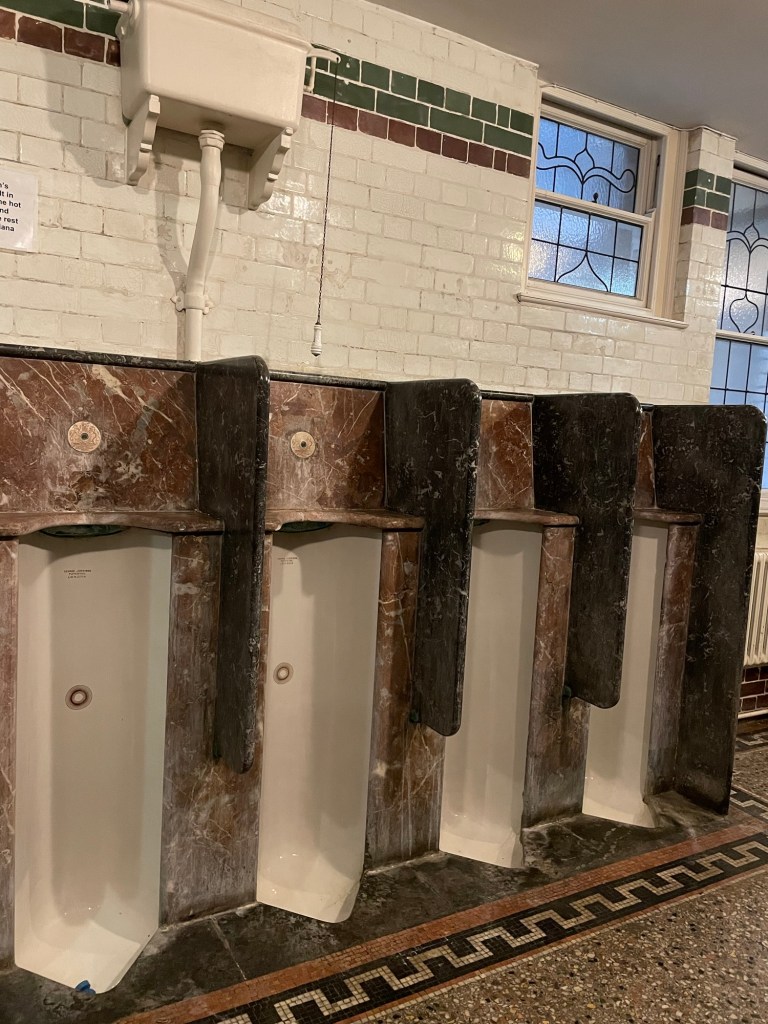
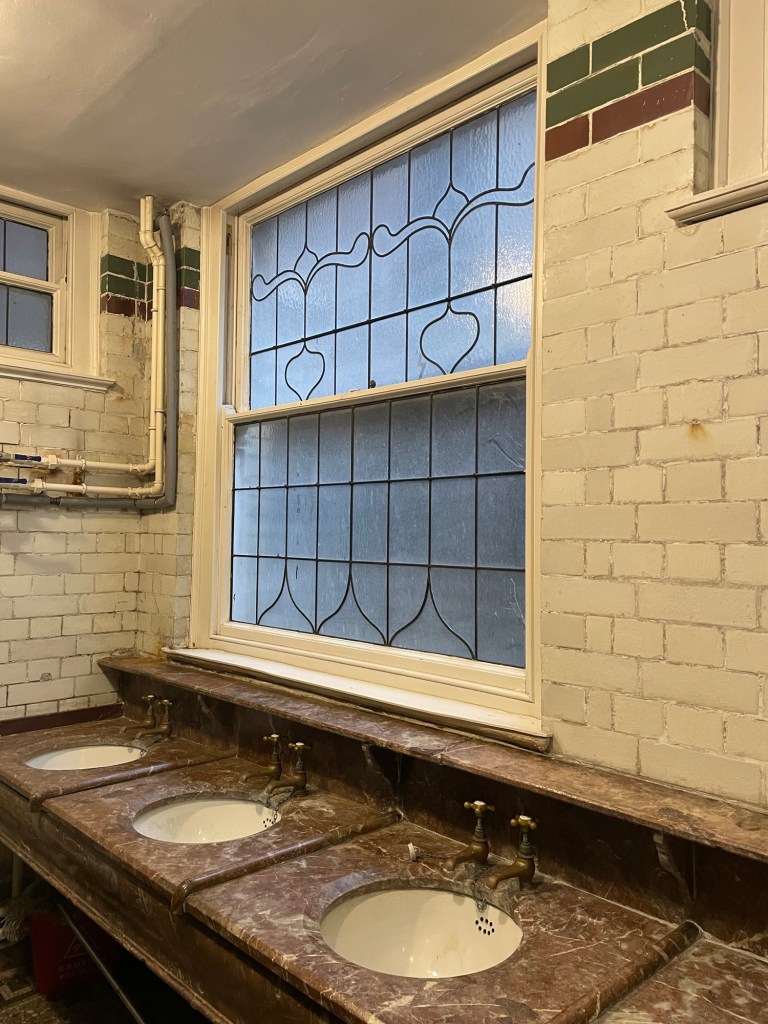

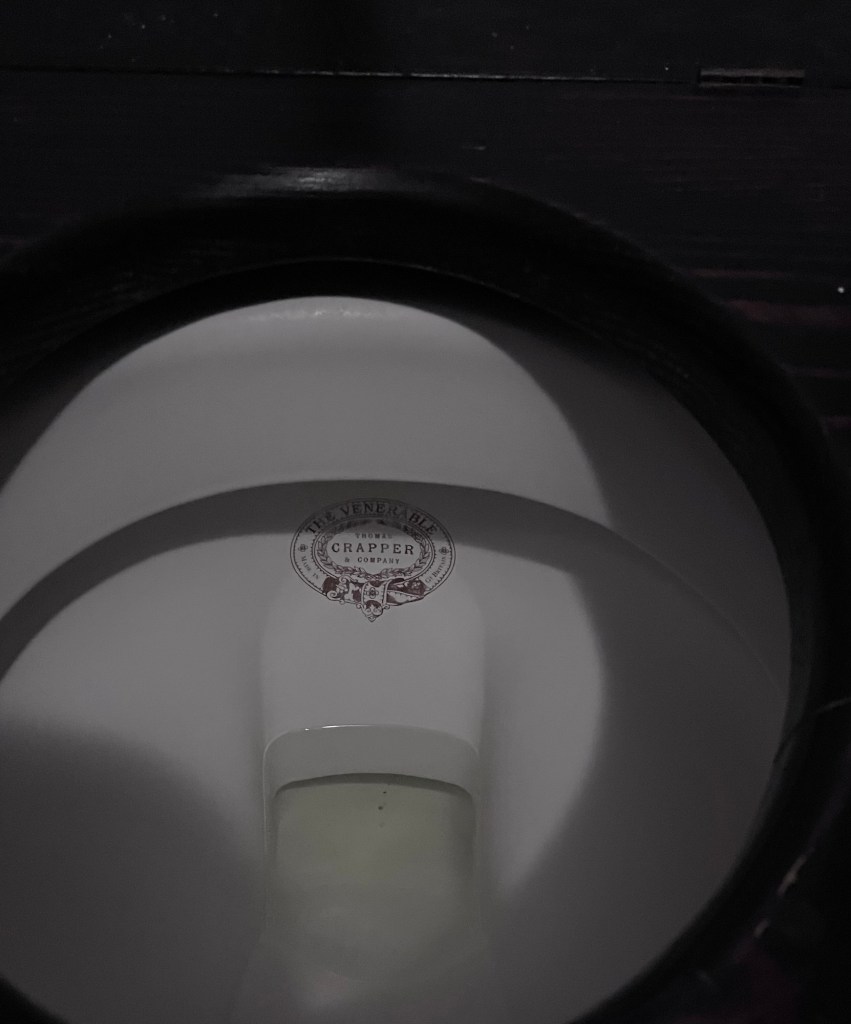

Thomas Crapper is probably the best known of these Victorian plumbing engineers, and was the first to set up public showrooms displaying these conveniences, but his name is a total coincidence… the term crap actually dates back to the middle ages.
*Victoria & Albert Museum, London
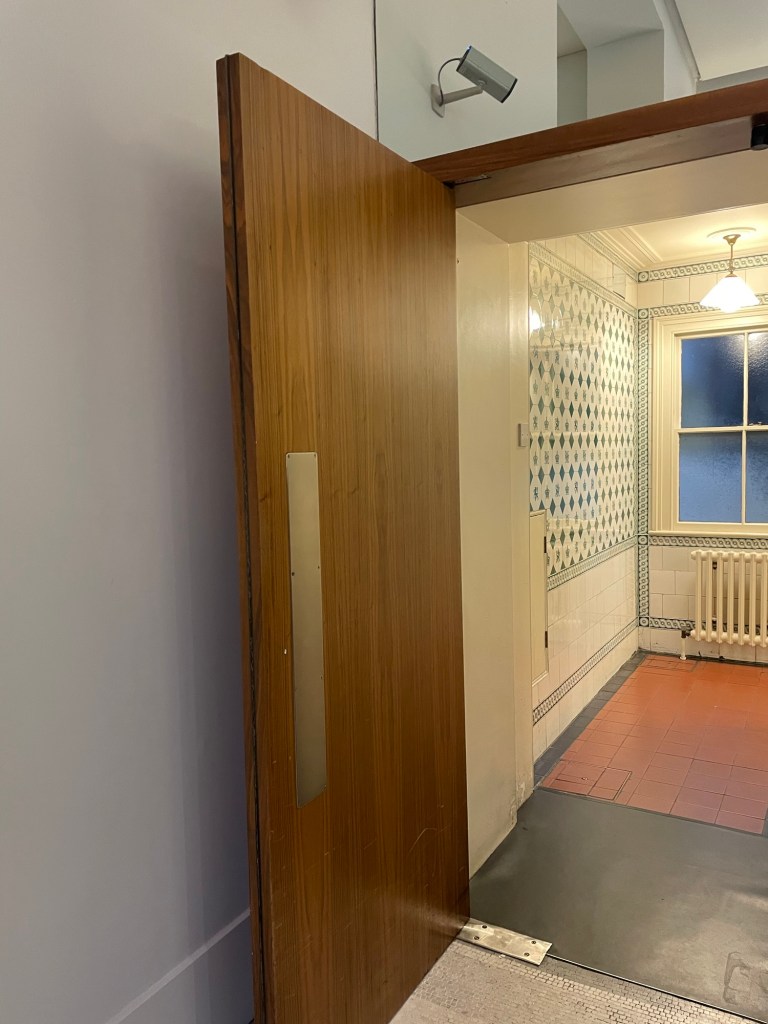
Behind another boring wooden door next to the world’s first museum dining rooms are the original bathrooms. The sinks and tile-work are original.
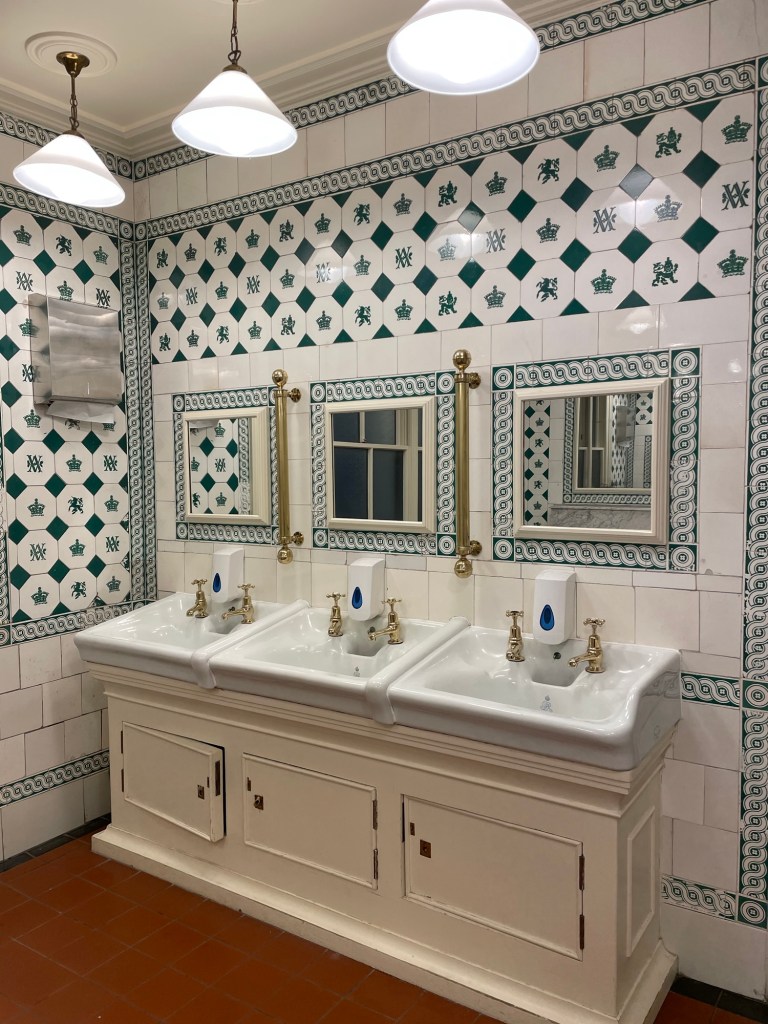
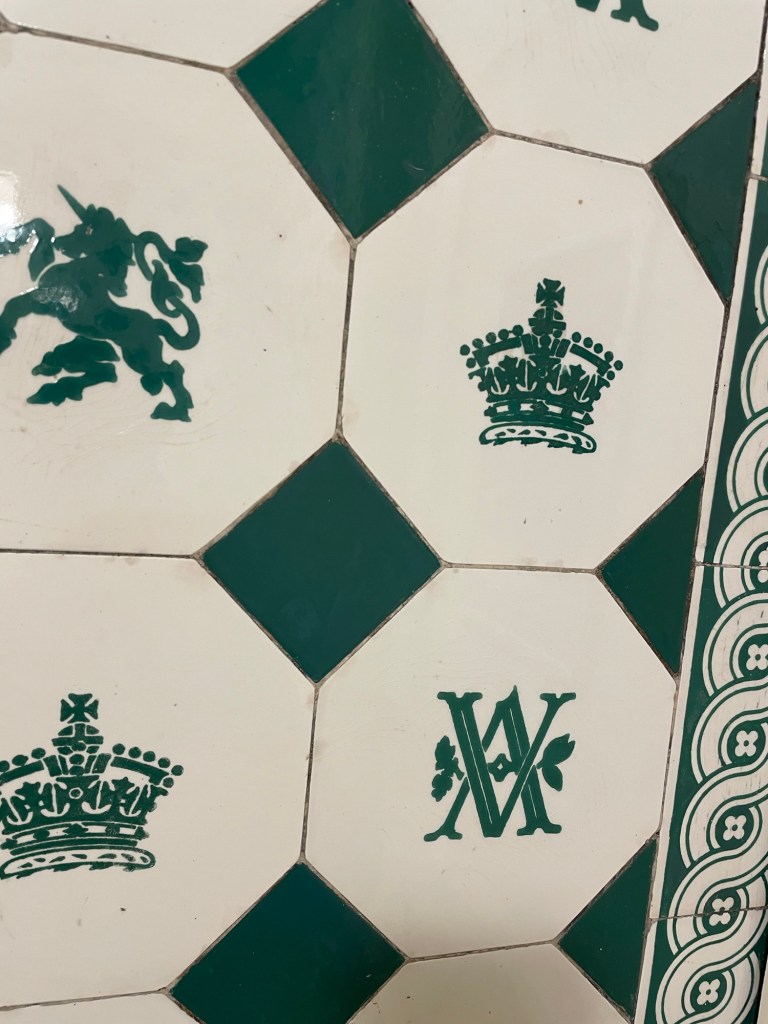
*Russell-Cotes House, Bournemouth
Speaking of beautiful Victorian tile-work… check out the upstairs ladies’ room of this gallery/museum that was given by the town’s mayor as a birthday gift to his wife.
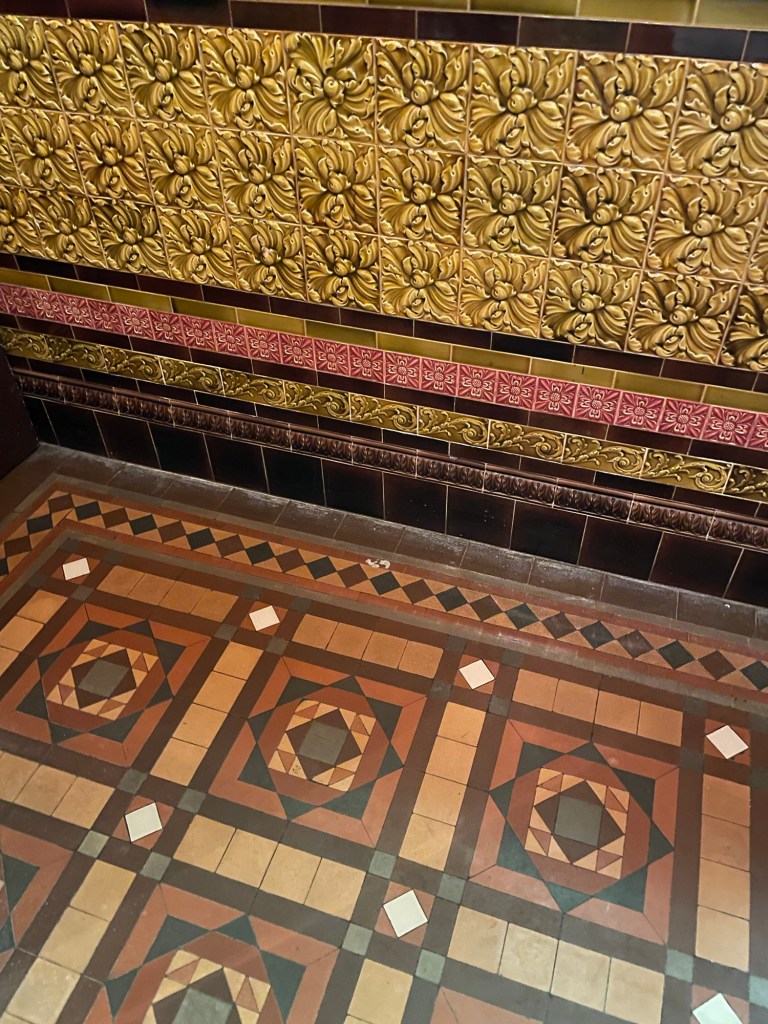
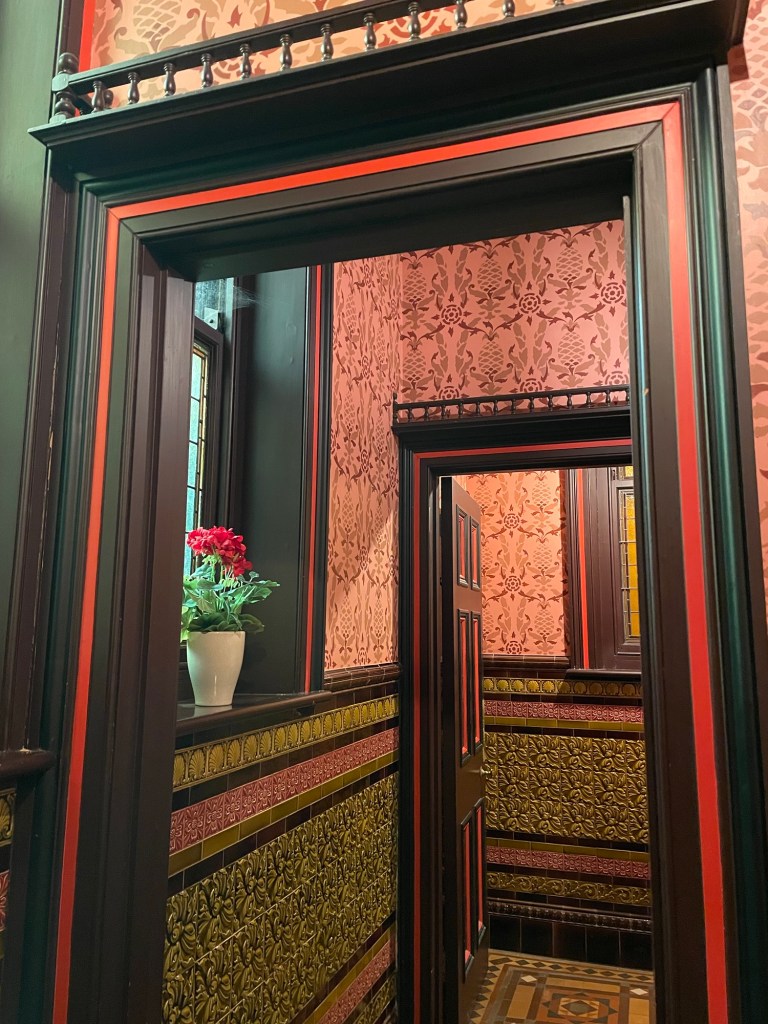
Sambourn House, London
Another house museum, this one belonging to Punch illustrator, Linley Sambourne. Unfortunately, you only get to look at this one, but how great is that “occupied” indicator?! Never seen that on a private house bathroom.
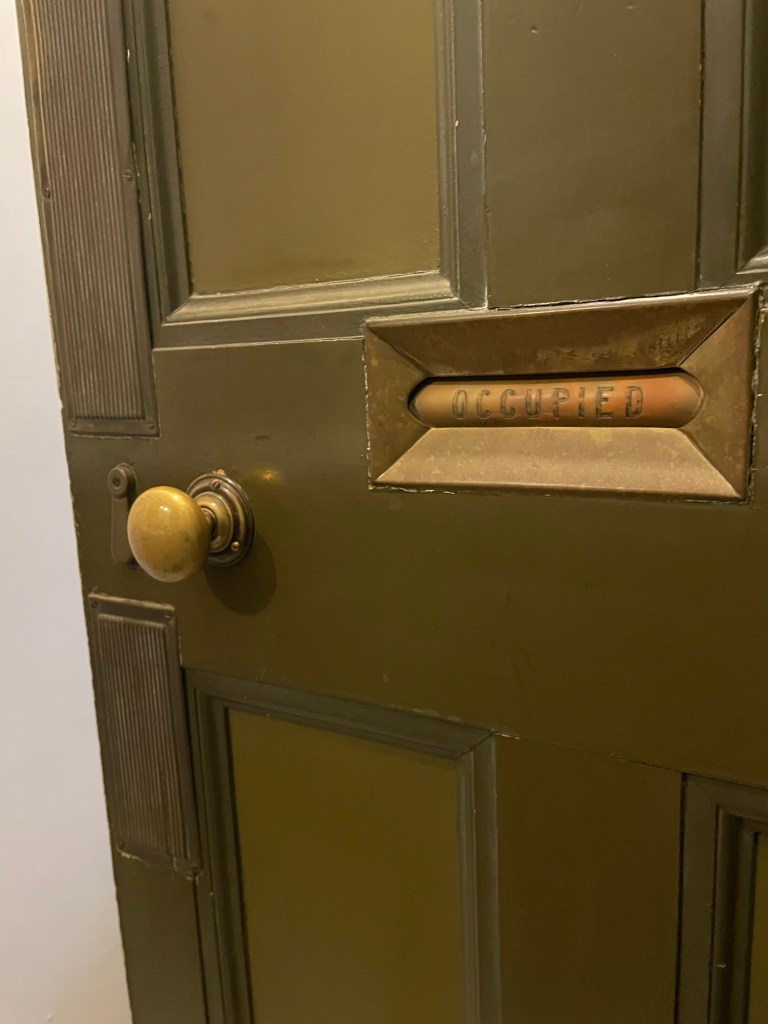
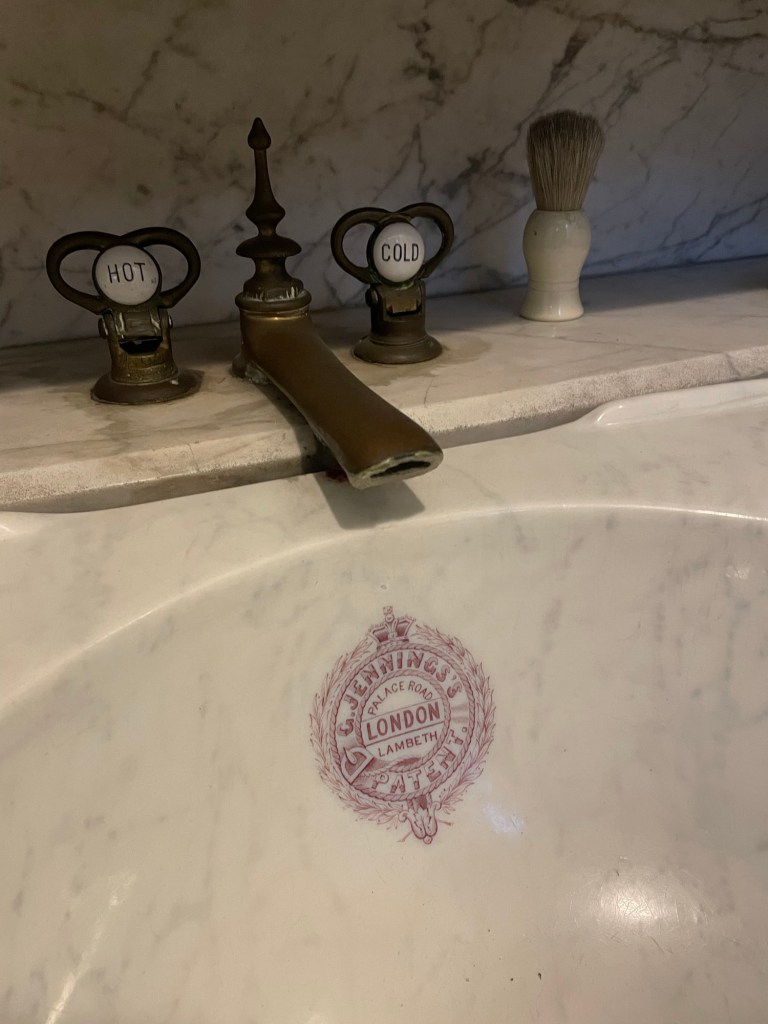
Plus, it still has the original Jennings tilt sink with its original brass taps. Rather than having a drain, this style tilts allowing the contents to be poured directly into a waste bucket. It was manufactured by George Jennings, one of the first major purveyors of sanitary wares, and the guy credited with creating the first public flush toilets.
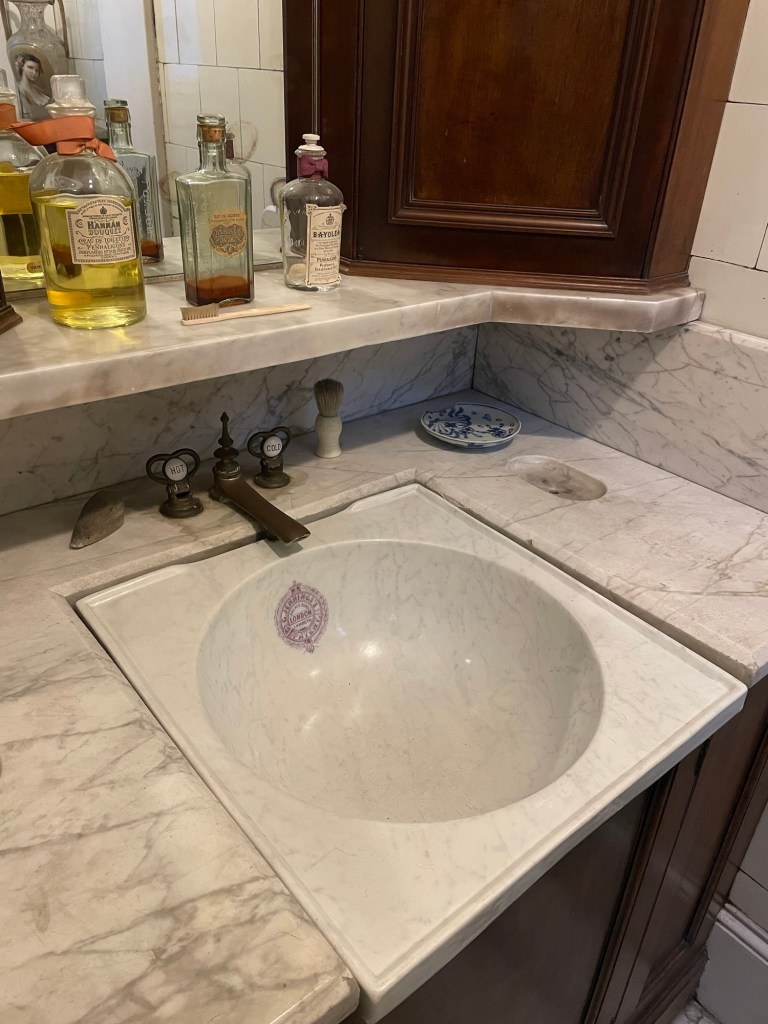
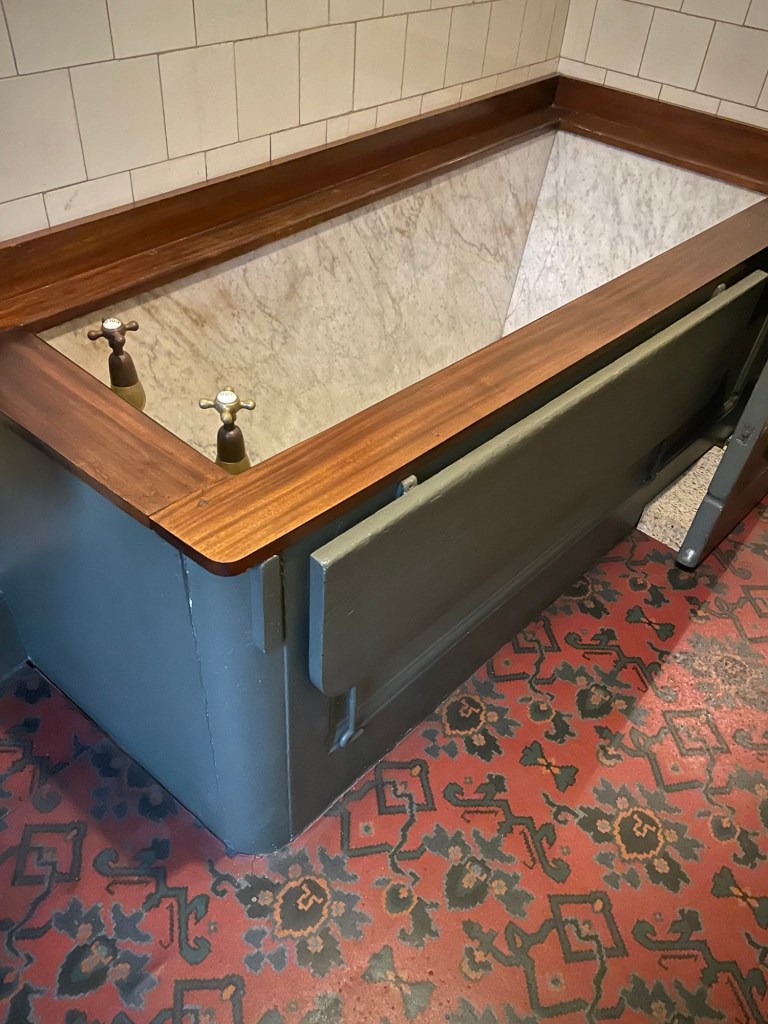
Upstairs is a flat-bottomed marble bath, installed in 1885 by Sambourne to develop his photos.
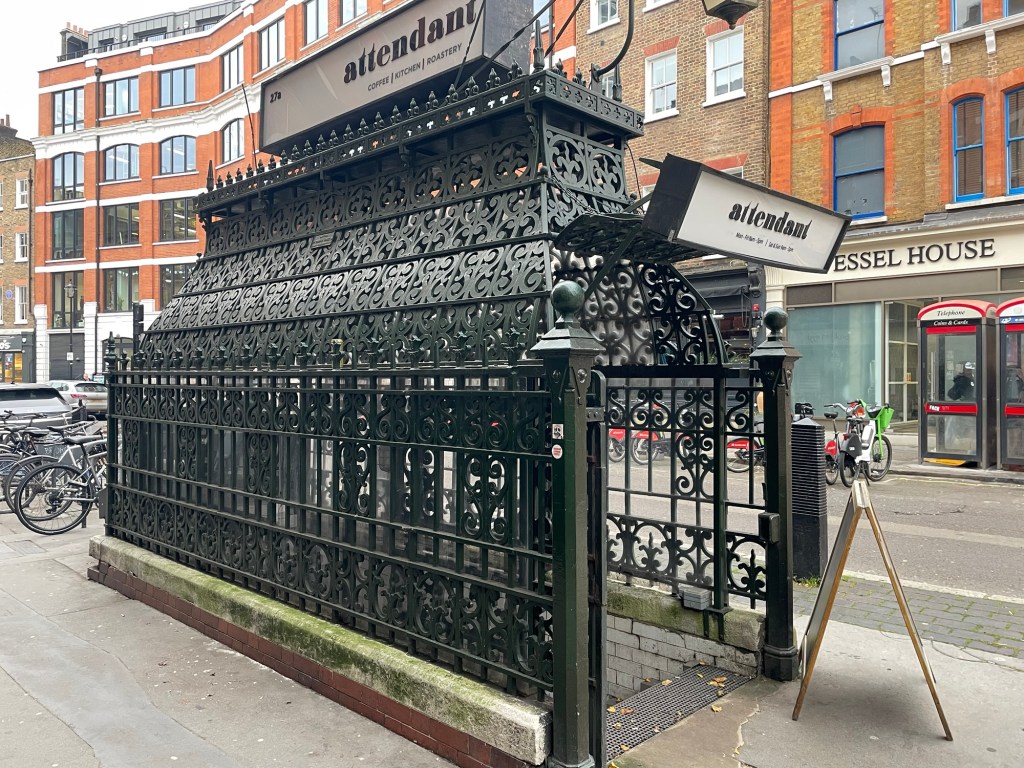
Attendant Coffee, Fitzrovia London
This is an example of the public toilets that were installed in the 1890’s (gentlemen only!) Another one for looking only, but you can have coffee and a meal while doing it.
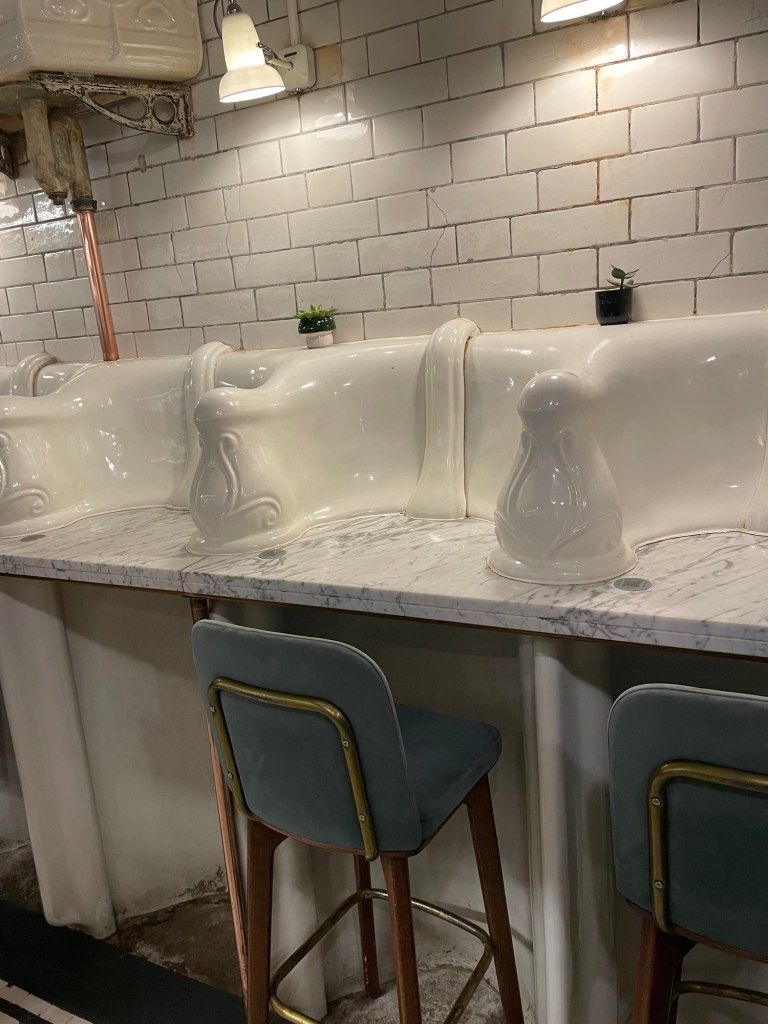
Urinal, Star Yard London
Another no longer functional public urinal, it was manufactured in 1851 and lives in Star Yard, resting against the walls of Lincoln’s Inn.
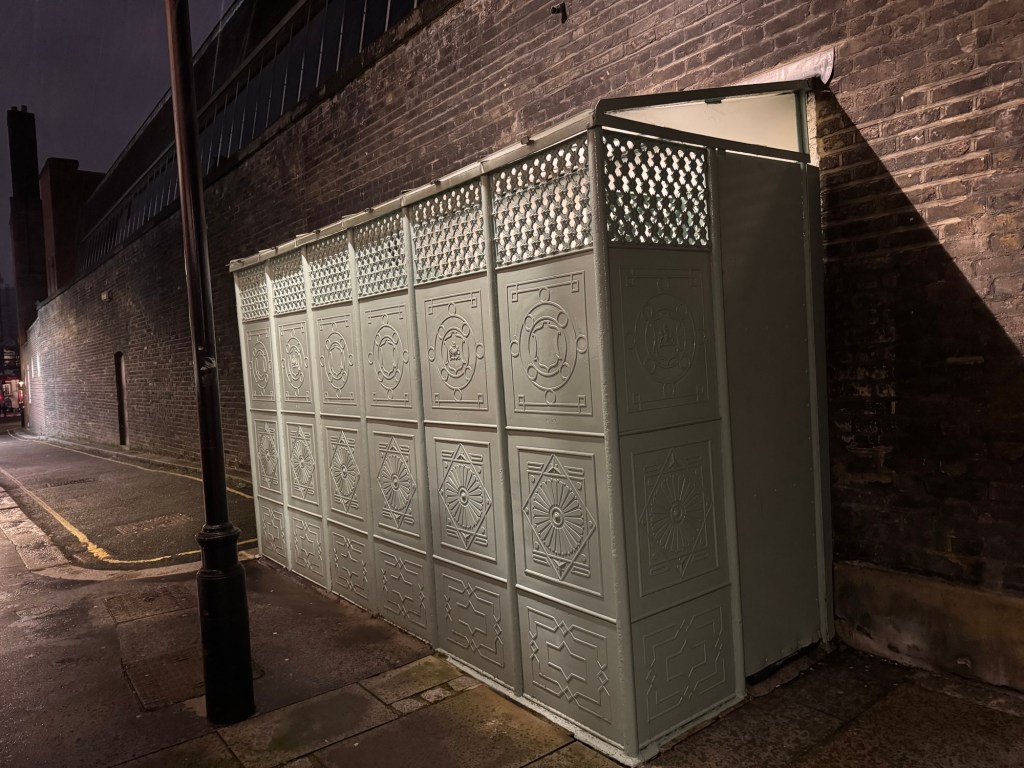
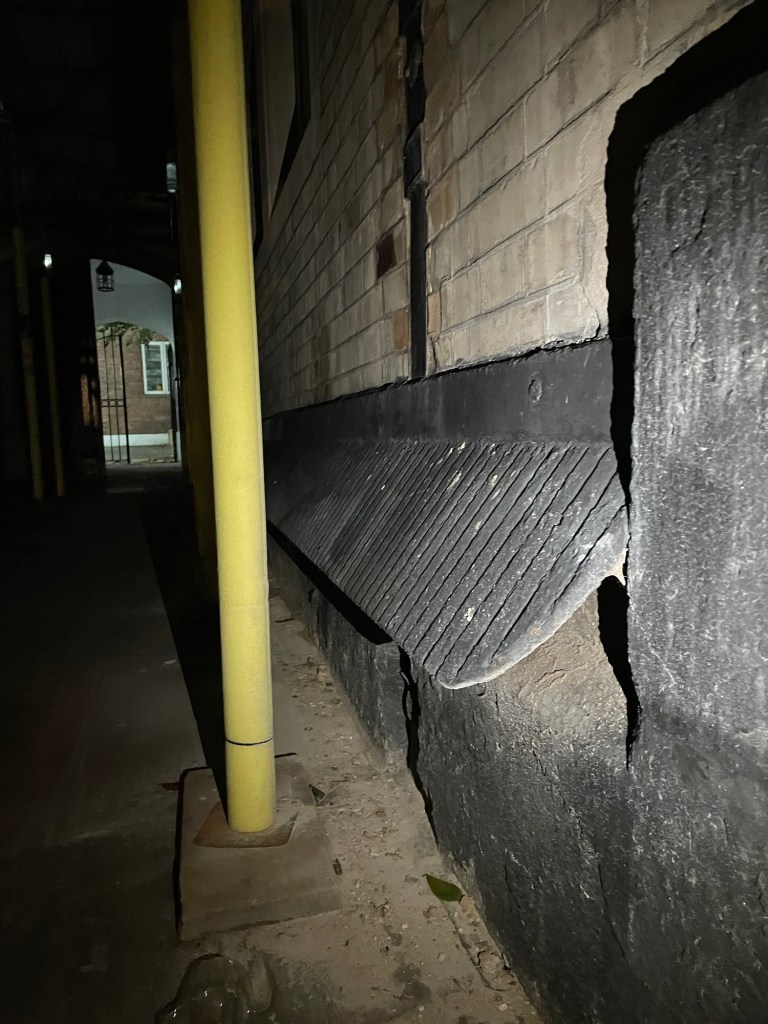
Urine Deflectors, Clifford’s Inn Passage
The opposite of a public convenience, these were added in the 1800’s to protect the walls from men too lazy or unable to find a public toilet. The long strips of metal are angled to drain back onto the shoes of the offender.
Obviously, this is just a small selection. If you know of any others, please send details so I can compile a list for future adventures.
Bonus: since I can’t resist a good toilet… Here are a few other (non-Victorian) examples: The Elsan Closet from the Churchill War Rooms was an early chemical toilet – basically just a seat and formaldehyde-based chemical filled bucket.
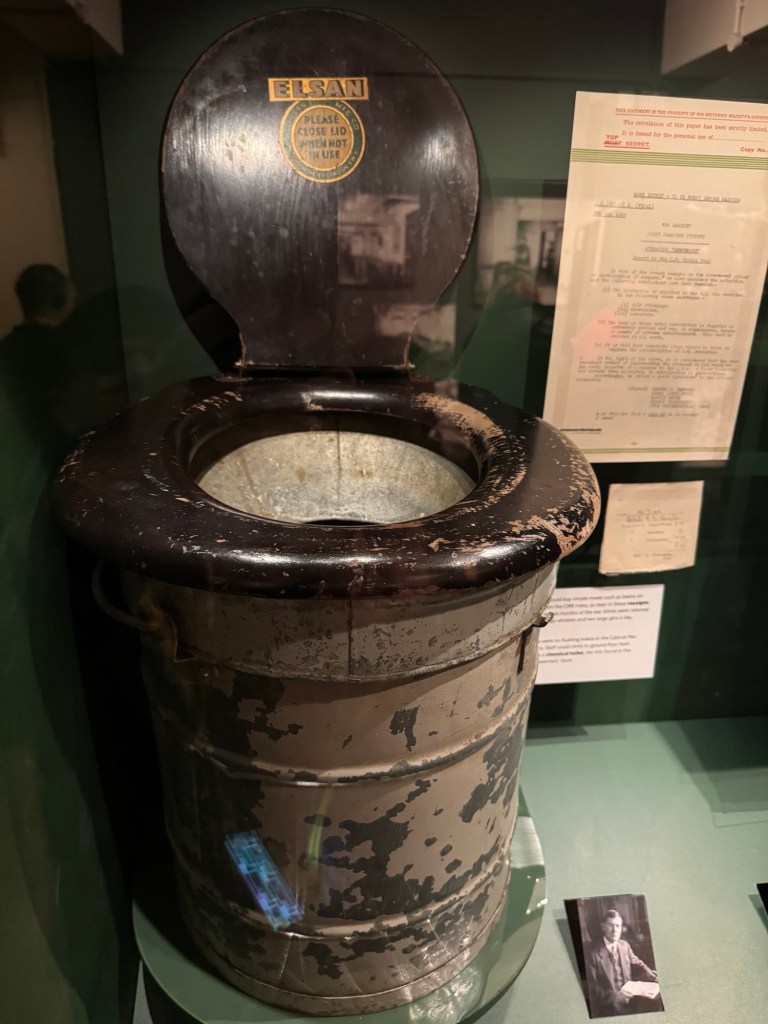
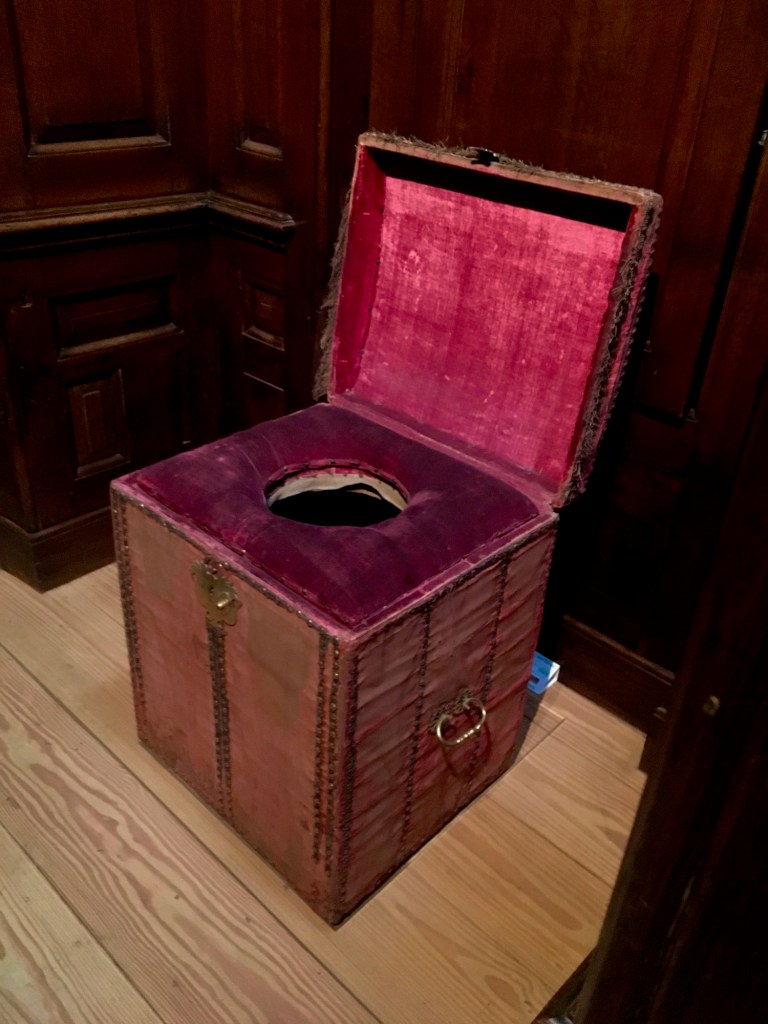
It’s a bit less luxurious (but maybe less smelly?) than this c. 1699 portable toilet or ‘close stool’ probably made for William III in the collection at Hampton Court Palace.
 Secrets of Philadelphia