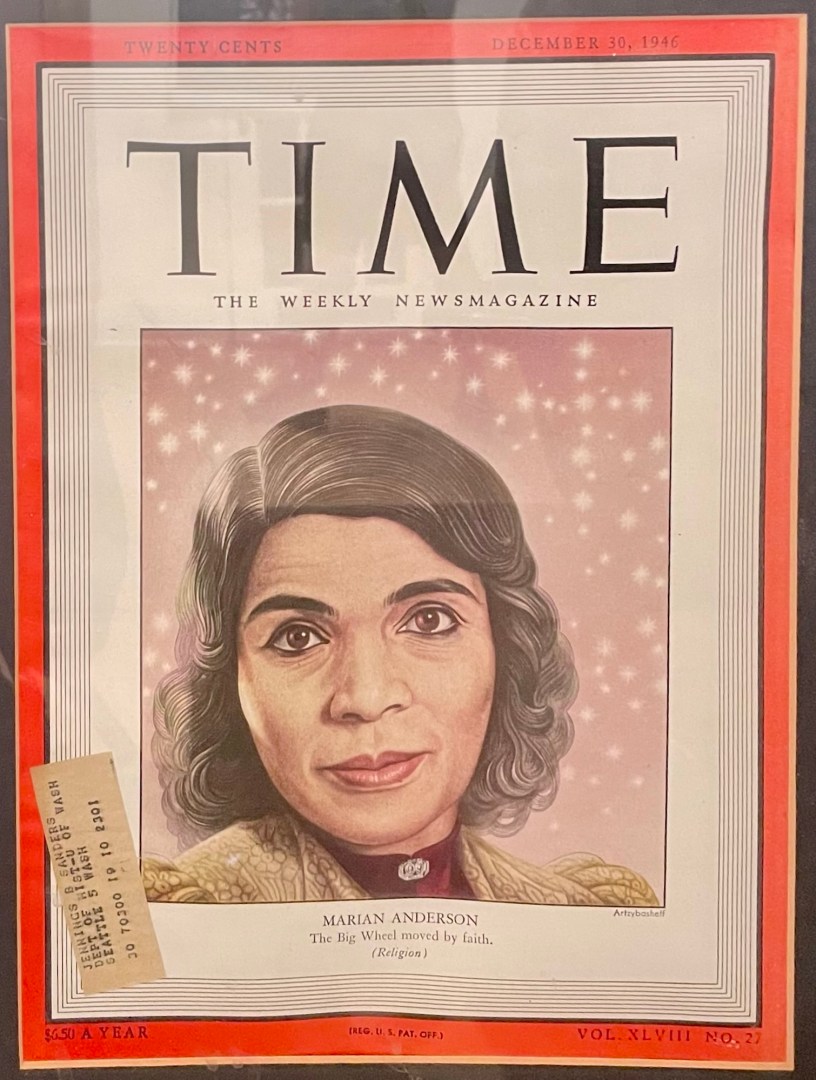
Eleanor Roosevelt resigning her membership to the Daughters of the American Revolution was one of the most visible cultural moments of the early Civil Rights Era. Because of the DAR’s segregationist policies refusing to allow Marian Andersen to perform a fundraising concert in what was then DC’s largest auditorium, Roosevelt worked with the Department of the Interior Secretary to permit Anderson to perform on the steps of the Lincoln Memorial, an event that attracted a crowd of 75,000 and a radio audience in the millions. She would later return there to perform during Martin Luther King Jr.’s March on Washington.

By the time of the first concert in DC, Marian Andersen was a hugely popular classical singer. She was the first African American artist to sign with RCA Victor Recording Company, the first African American artist to solo with the New York Philharmonic, she had highly successful tours of Europe and the United States, and had became friends with Albert Einstein, who hosted her in his home after she was denied a hotel room while performing at Princeton University.
Born in Philadelphia in 1897, Marian Anderson began her singing career in the churches of South Philadelphia. She used her earnings from the RCA deal to purchase this c.1870 row home in the neighborhood where she was born. However, as a black singer in the Jim Crow era, Anderson struggled with finding training and opportunities in the United States, so she moved to Europe to study and perform. Upon her return, she lived here until 1943. Today it’s home to the Marian Anderson National Museum.

The house is filled with memorabilia relating to Marian’s life and career. Highlights include: The broom used for her parent’s wedding

Her first photo taken at Philly’s Strawbridge & Clothier c.1898

Performance outfits
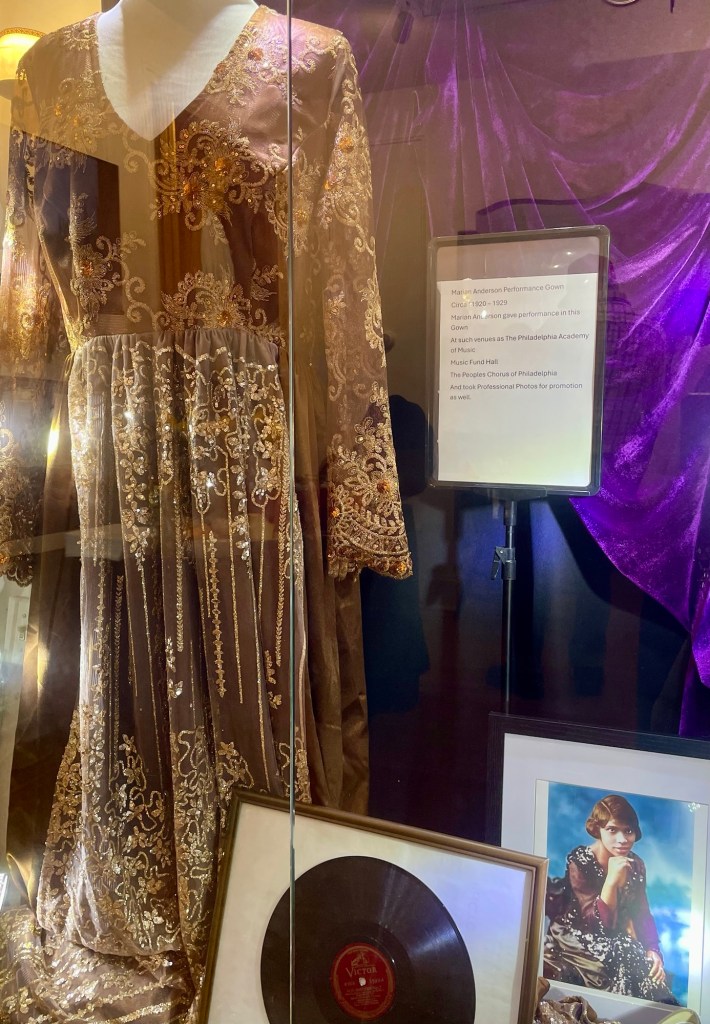
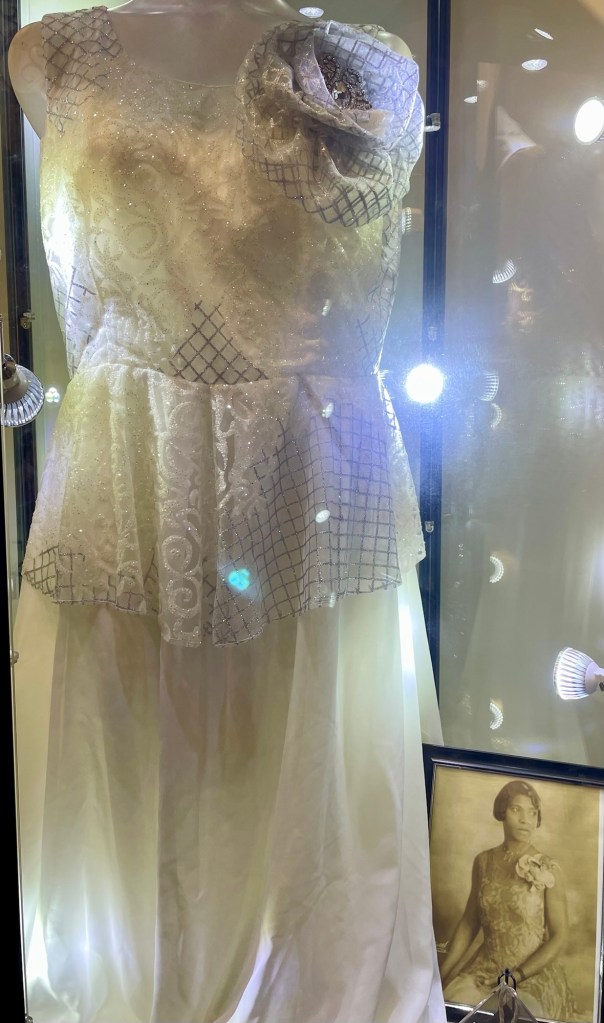
Recordings


Andersen is buried outside Philadelphia in Eden Cemetery.
The museum is open 10-4 Monday-Saturday. *NOTE: As of spring 2025 reservations are required.


https://wp.me/PgKXhz-1b
LikeLike