What is now the centerpiece of Burlington County’s park system was once a Victorian-era Industrial village. It’s one of the few remaining intact Industrial-era villages in the region, and today contains a 1840 Greek Revival Mansion, worker’s cottages, and remains of a factory that once produced everything from bicycles to radiators.
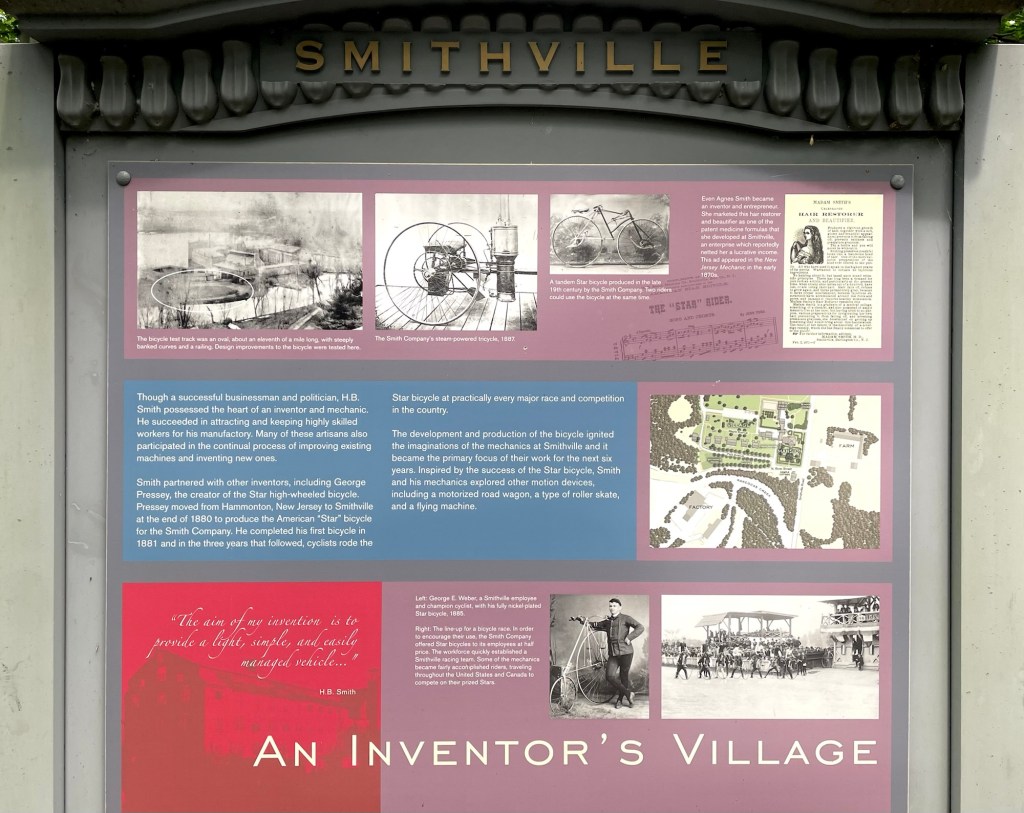
Although the land was first purchased in 1676, the area’s industrial past dates back to 1776 when it was bought to construct a mill on the Rancocas Creek. In 1831 the Shreve brothers purchased the property and expanded the mill into a cotton cloth manufactury, building the first worker’s cottages and mansion. In 1865, Massachusetts businessman Hezekiah (HB) Smith purchased the property and expanded it into the village you see today. There are several areas to explore, with signage providing information and historic photos.
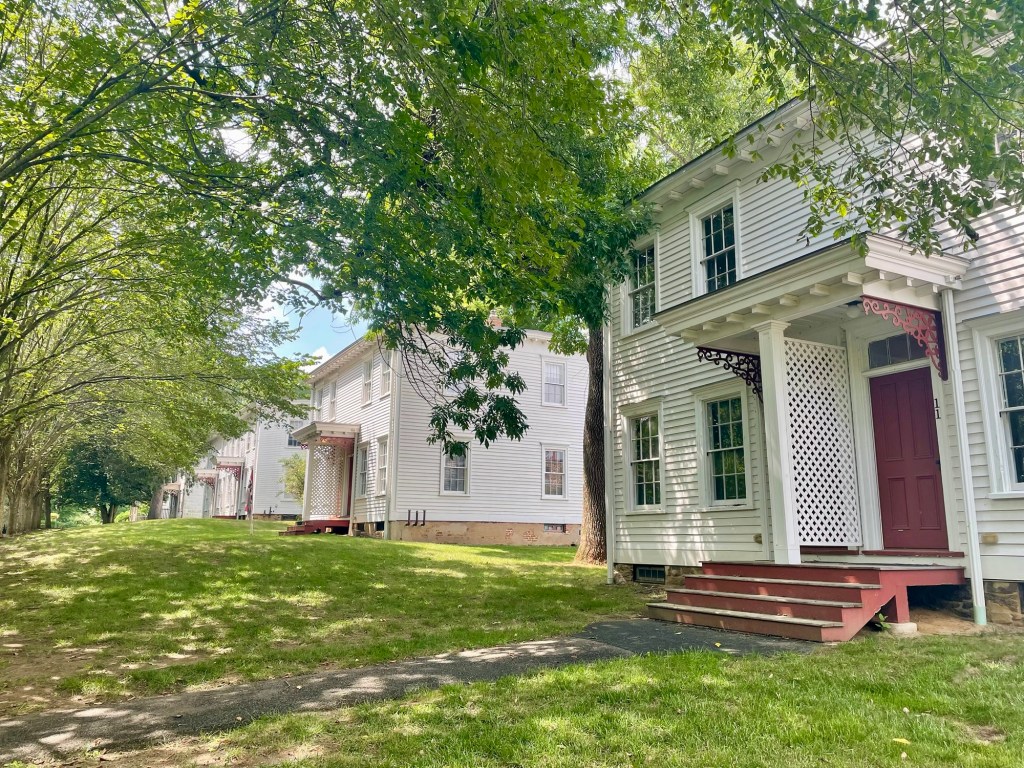
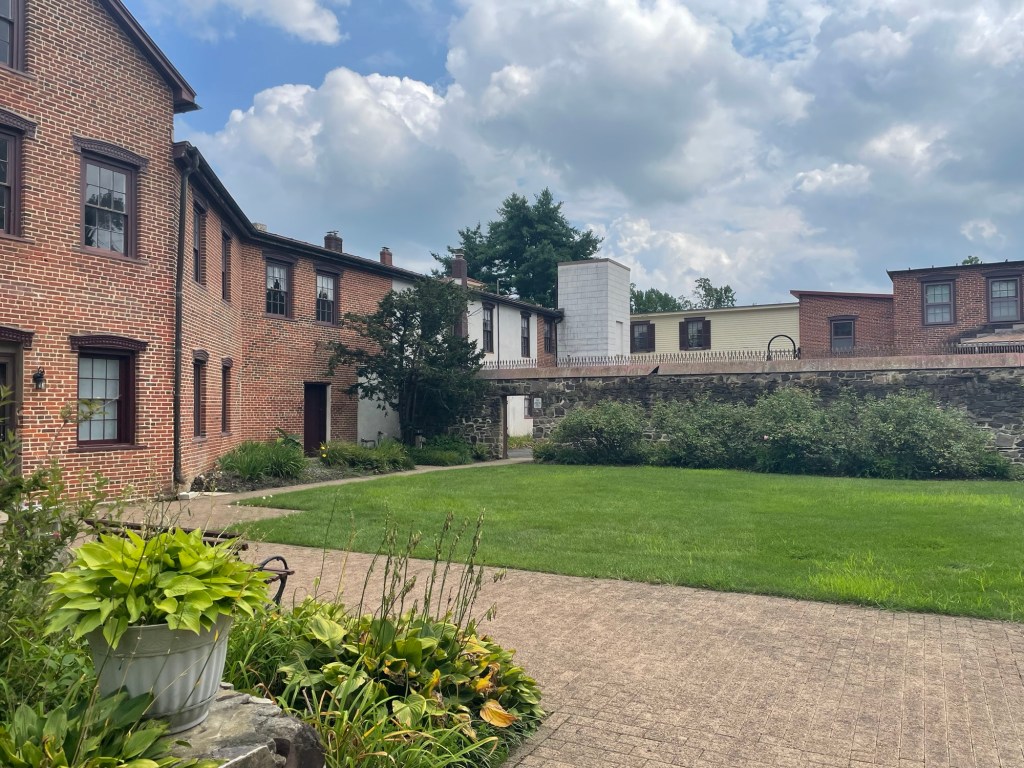
The best preserved area of the village is the row of worker’s cottages:
and the 1840 mansion, which is open for tours several days a week (fee).
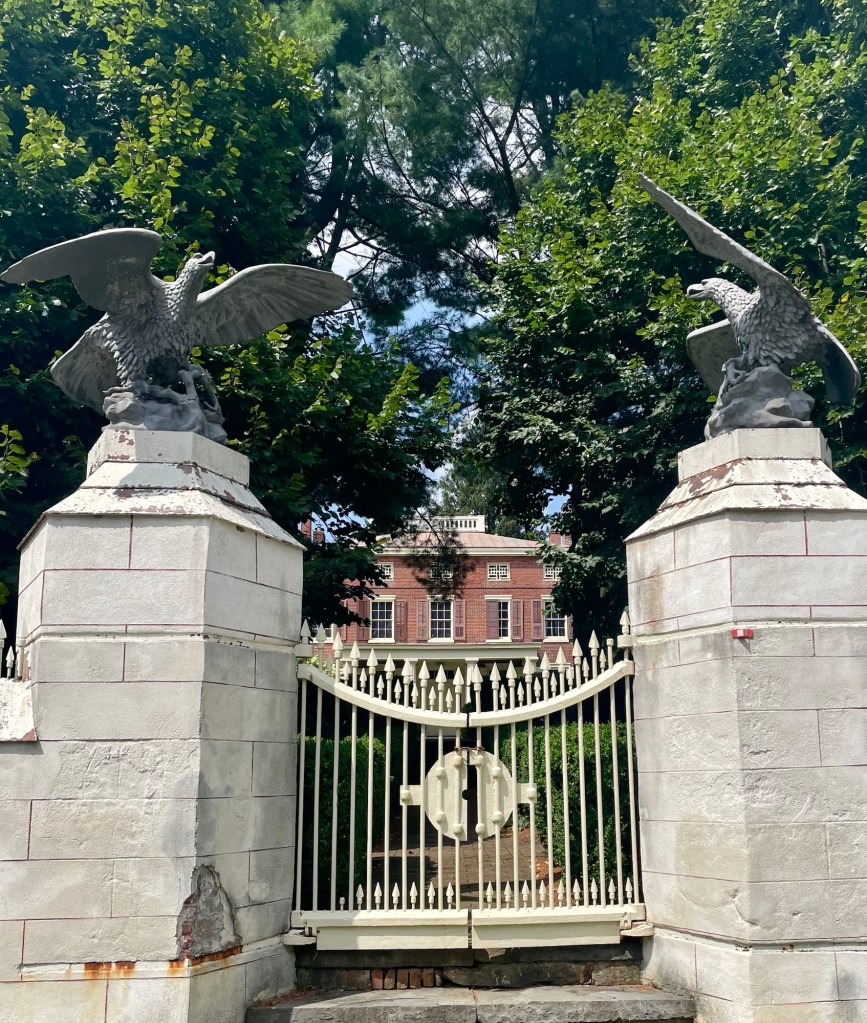
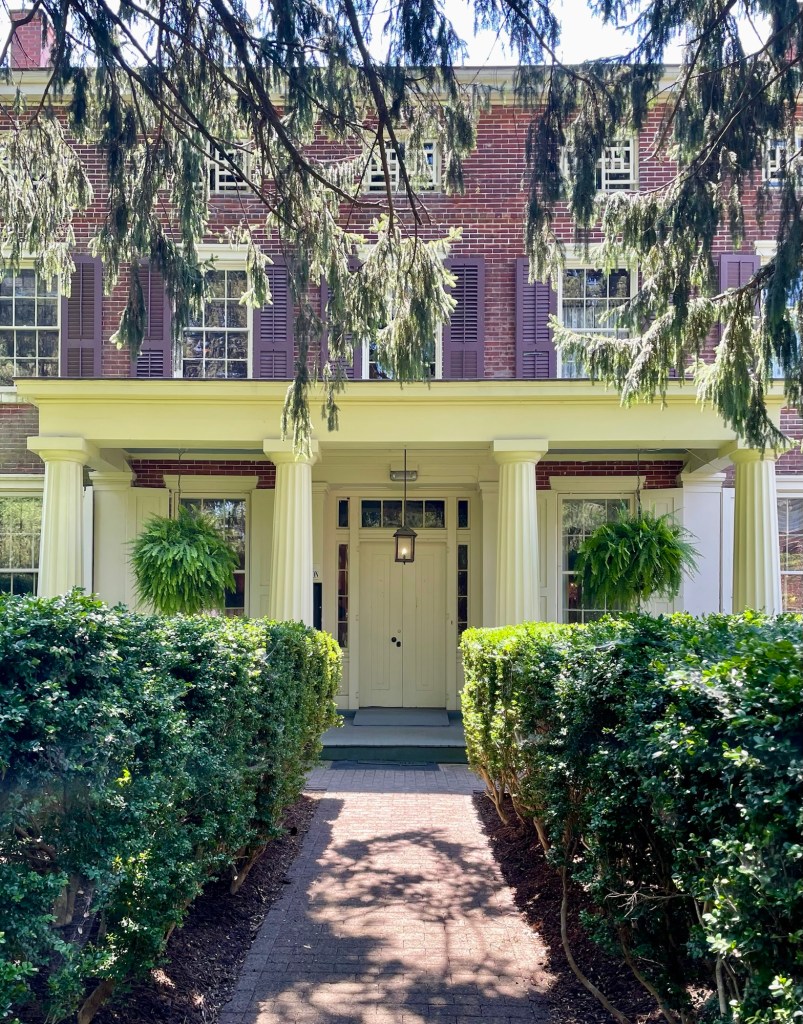
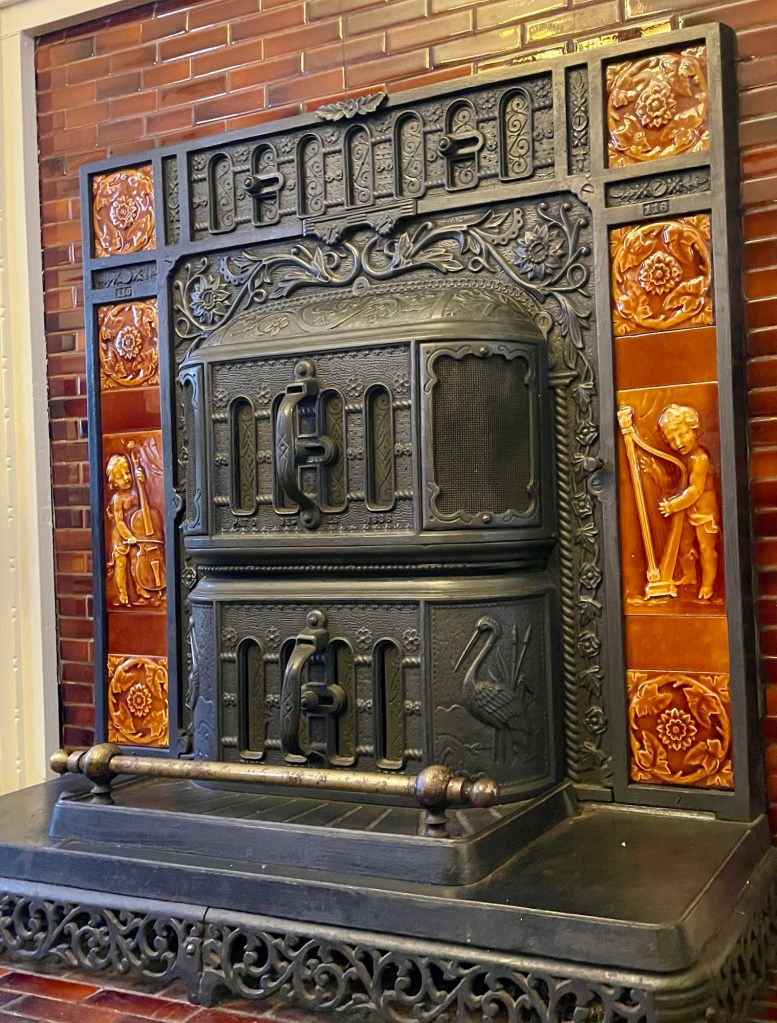
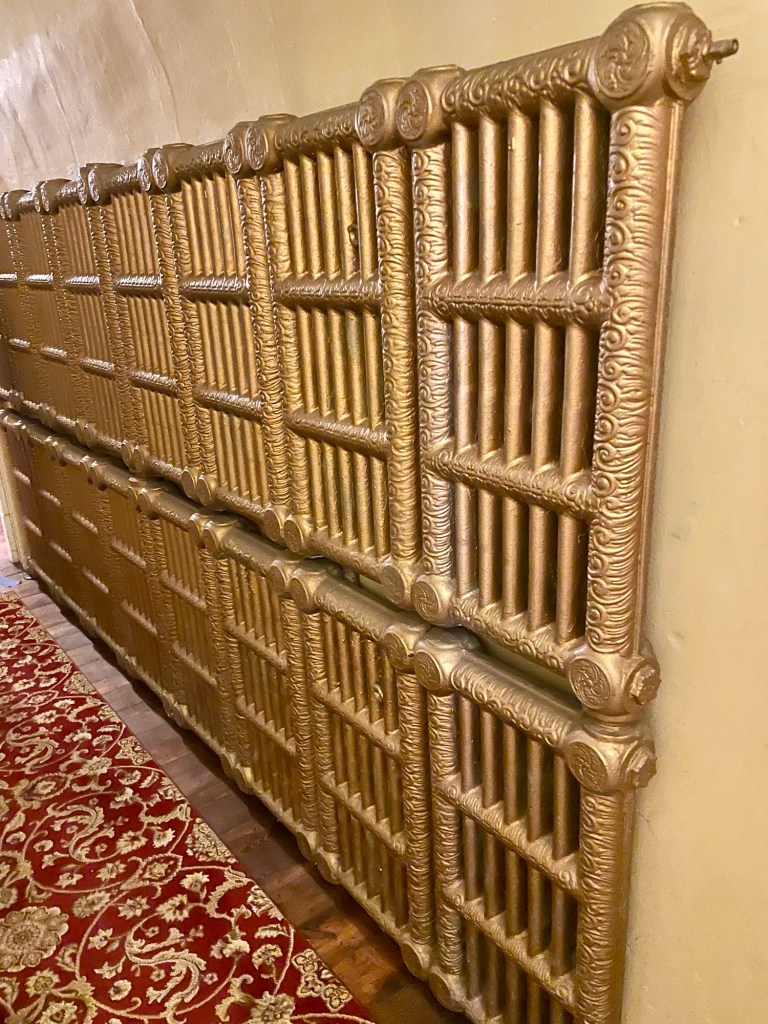
Although many of the cottages and the mansion were built by the Shreve family, interpretation of the sprawling mansion complex dates to the Smith era, when the site was at its peak. Although most of the original furnishings are gone, the mansion is decorated with period antiques and you can see portraits of Hezekiah and his “wife” Agnes, the original woodwork, and these amazing radiators and fireplaces, which were products of the Smithville factory (with Trenton-made tiles).
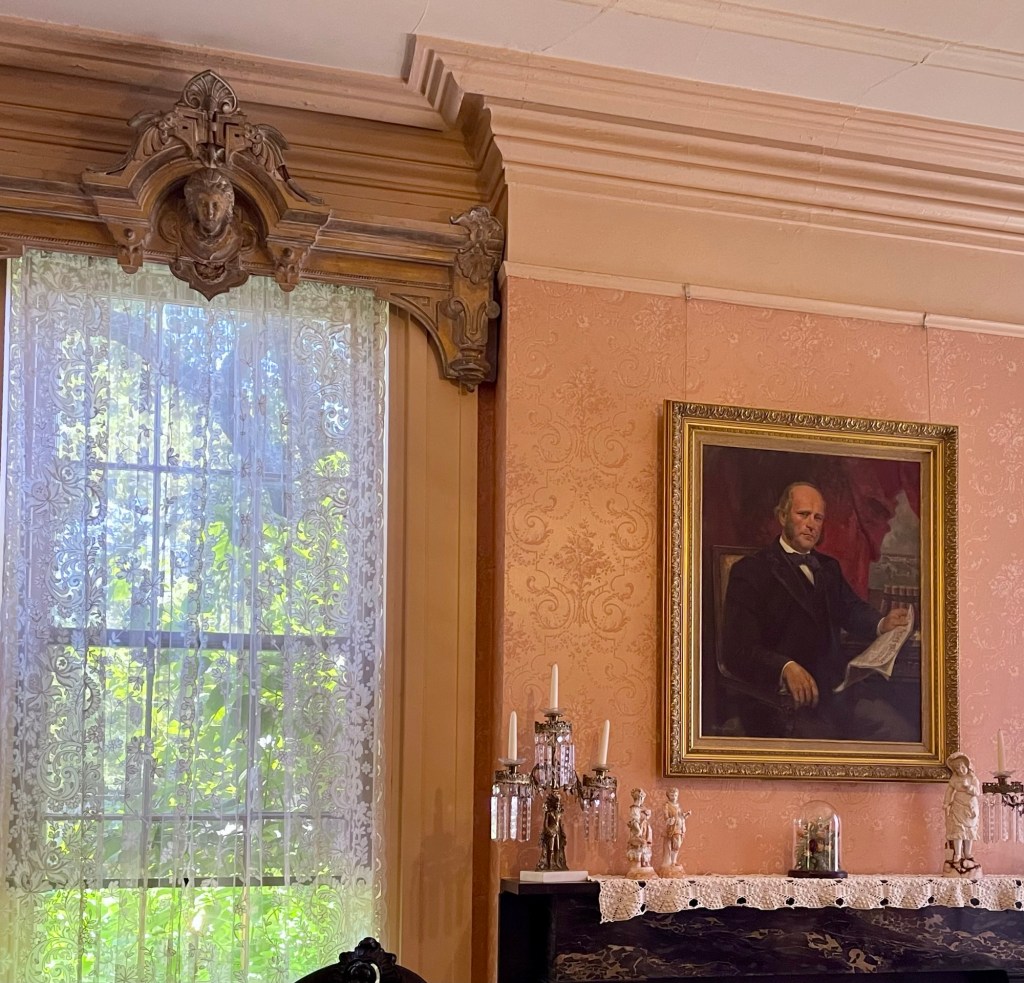
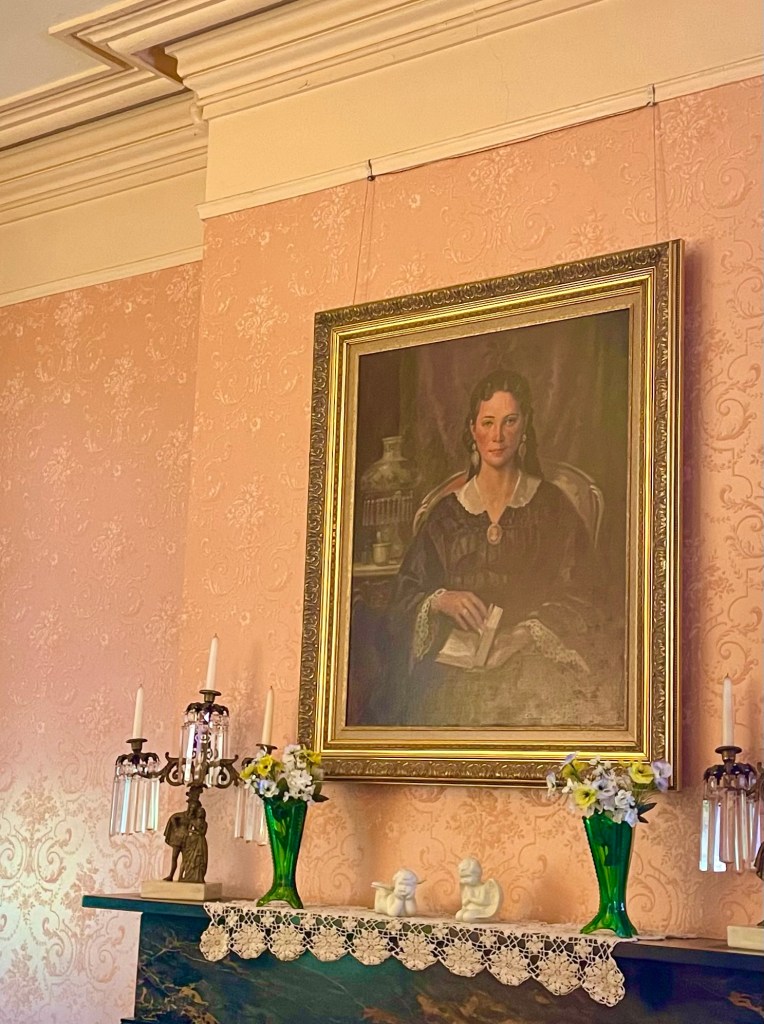
Why the quotes? Hezekiah never divorced his first wife, so he and Agnes were not officially married, despite his attempt to erase the marriage by cutting the evidence out of the family bible:
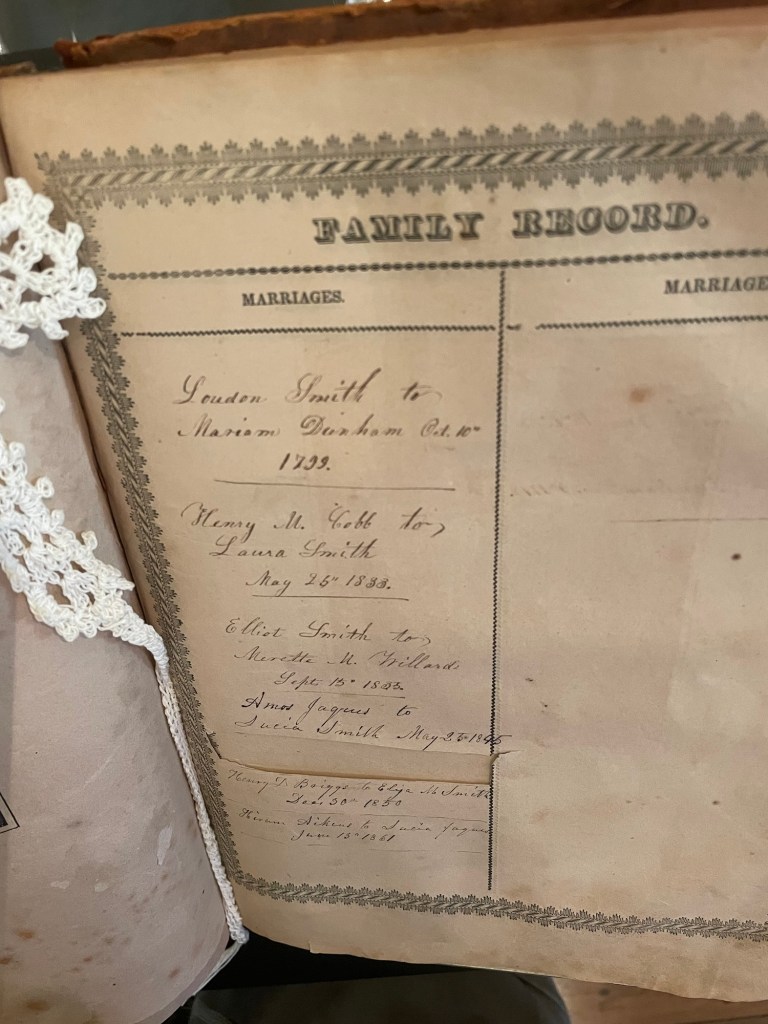
The scandal this caused when it became public was apparently enough to dash HB’s 1881 congressional reelection campaign, but wasn’t enough to prevent his election to the NJ State Senate, where he served from 1883-85.
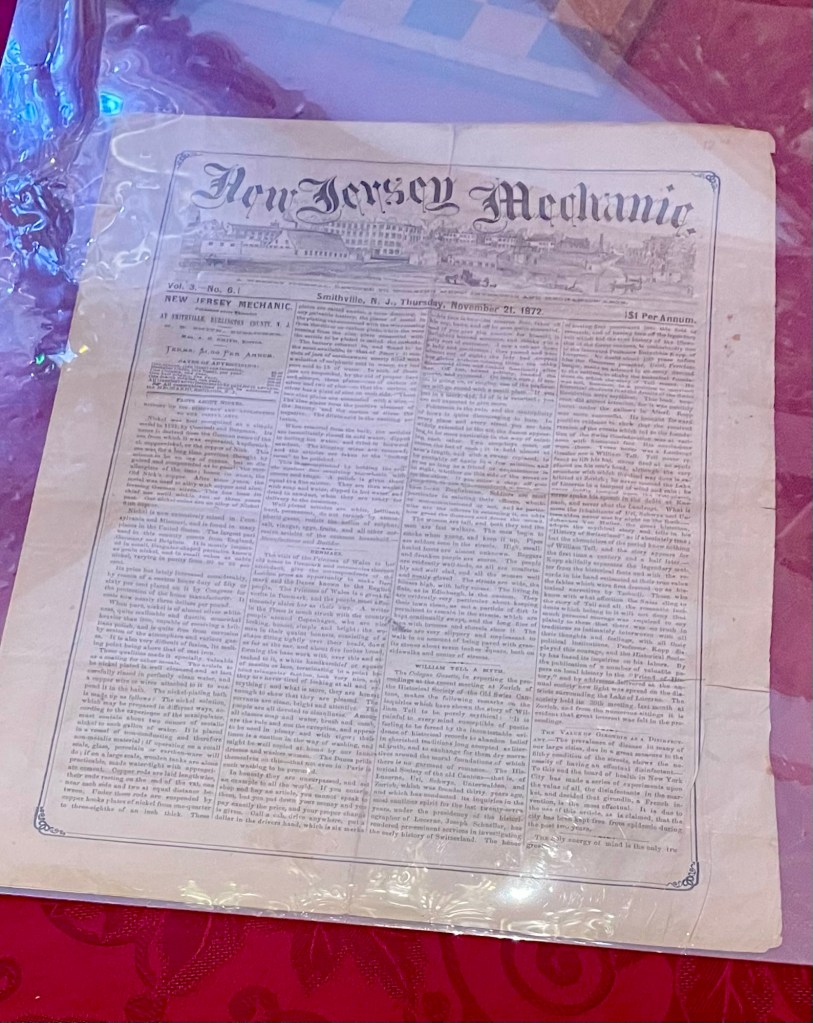
Agnes herself was quite a woman. She began life as a mill girl in a Massachusetts factory, but after her “marriage” to HB she went on to study medicine at Penn (and provided medical care to workers in the village), wrote and edited the “New Jersey Mechanic,” and became an inventor, creating a hair restorer and beautifier.
In addition to seeing a few remaining items from HB’s son’s (from his first marriage) residency, it’s also interesting to explore the rabbit warren maze of interconnected walkways and outbuildings that HB added to the original mansion. His pool table room now has several displays of items manufactured in the factory.
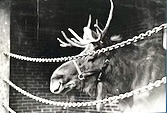
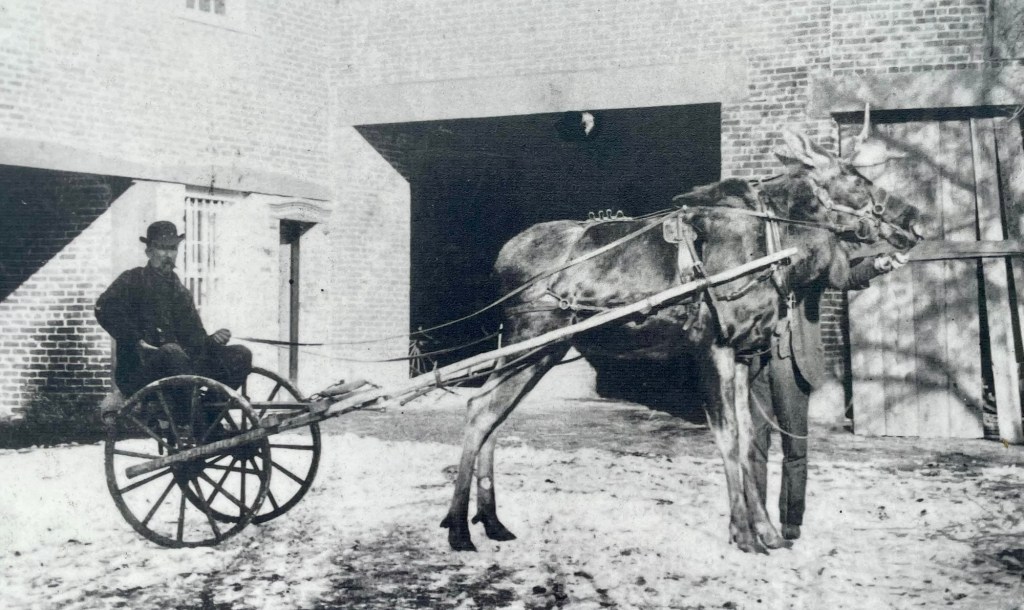
Like all good (rich) Victorian gentlemen, HB’s mansion had a large exotic plant conservatory, as well as a menagerie that included elk, deer, caribou, and February, the carriage-pulling moose:
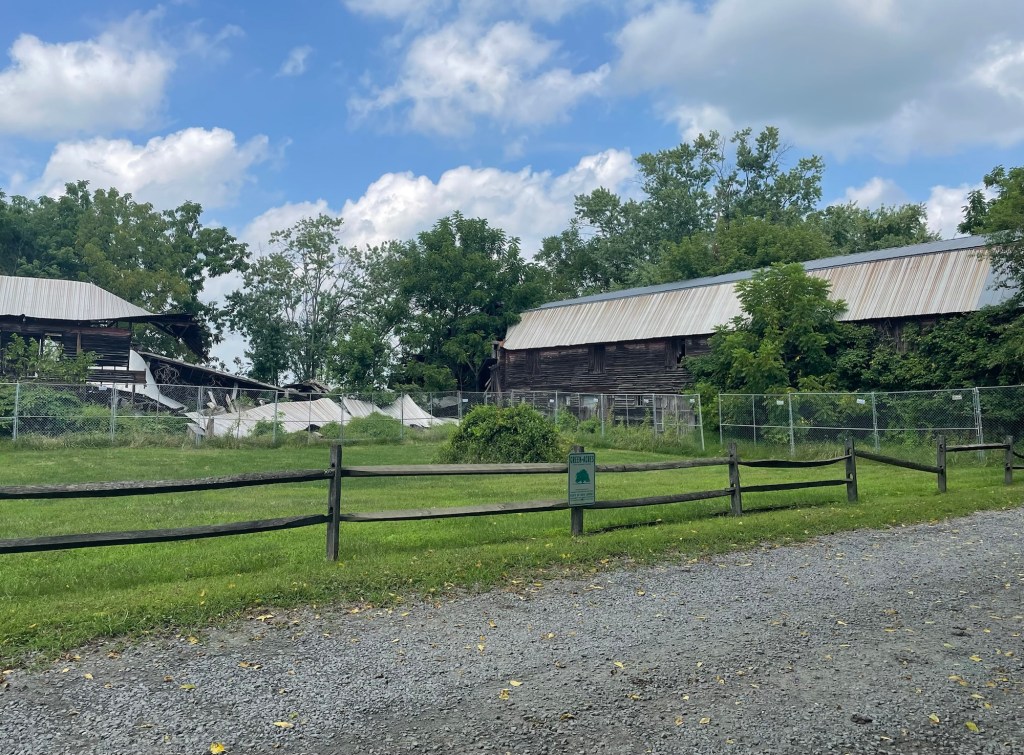
HB and Agnes believed in worker’s rights, and they ran Smithville as a utopian community, with recreational, artistic, and educational opportunities including an opera house, library, and a public park. The area across the street from the factory was known as “Smith’s Forest,” and served as one of the main recreation areas in the village. Today, trails wind along the creek and through the Beech forest. There is also a playground, picnic pavilion and butterfly garden. Across the street from the mansion are the remains of the large farm that once produced crops for the village.
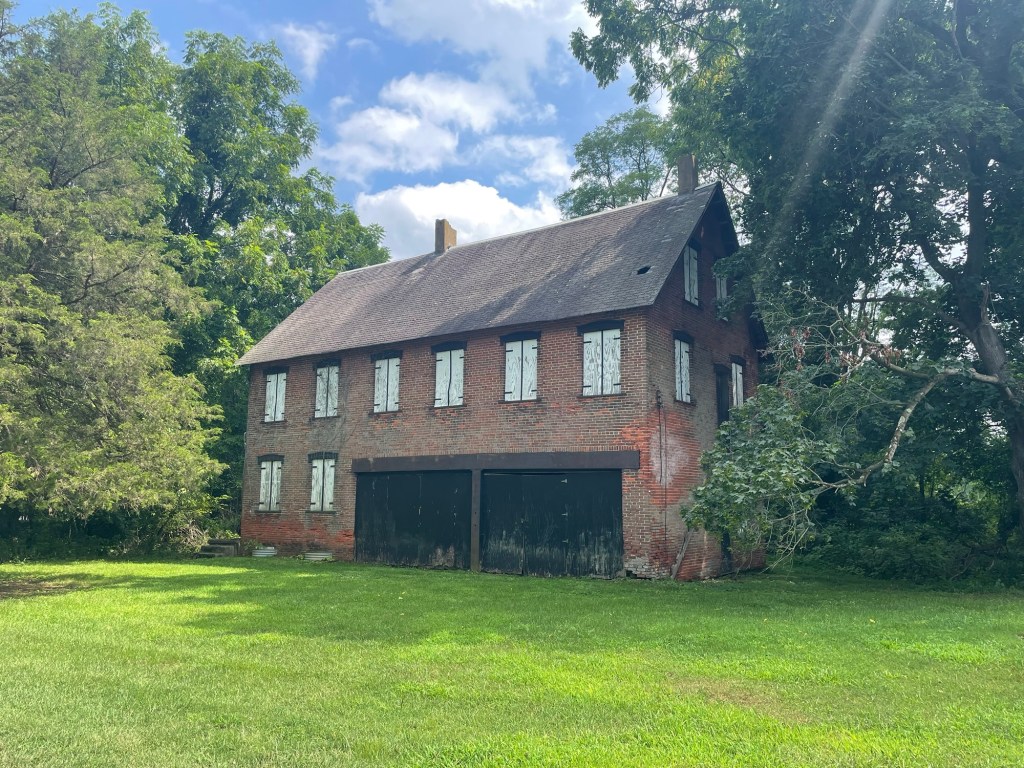
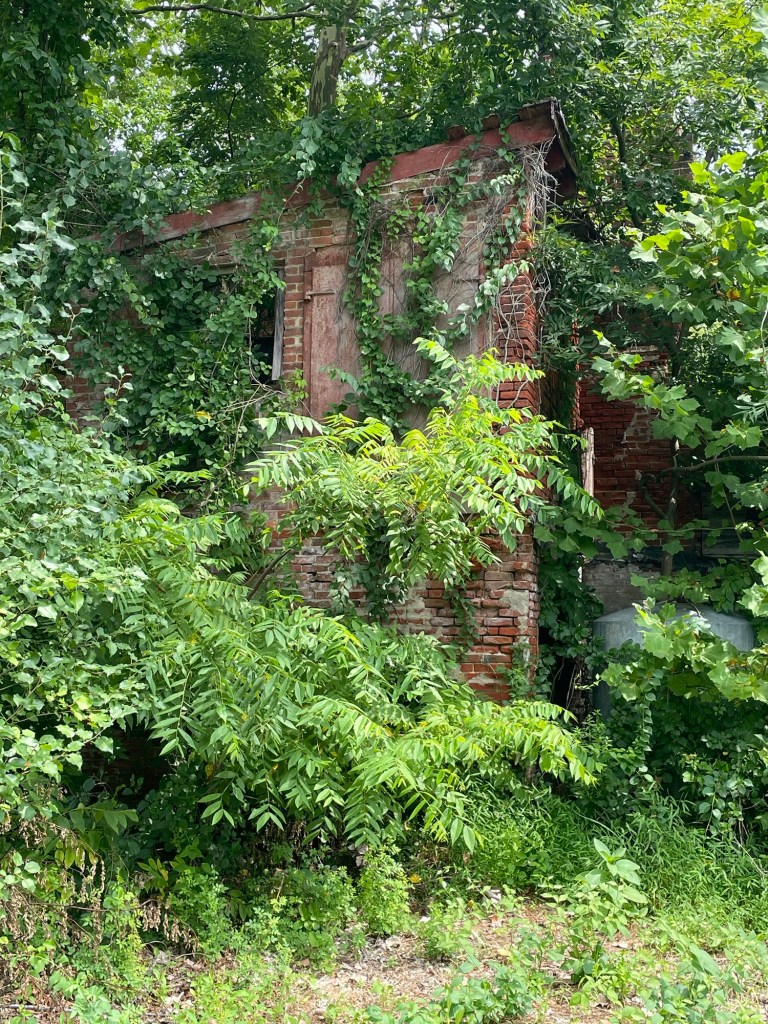
Although most of the factory is gone, there are still a few walls showing where it once stood.
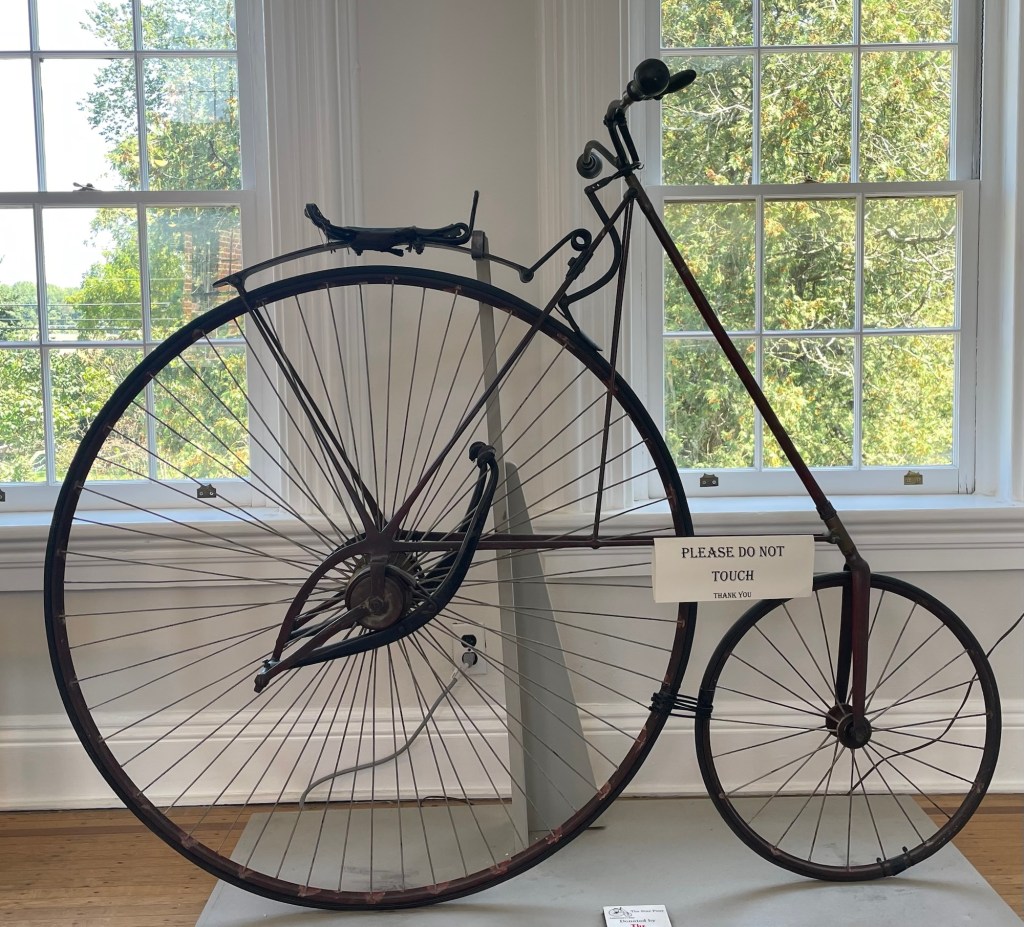
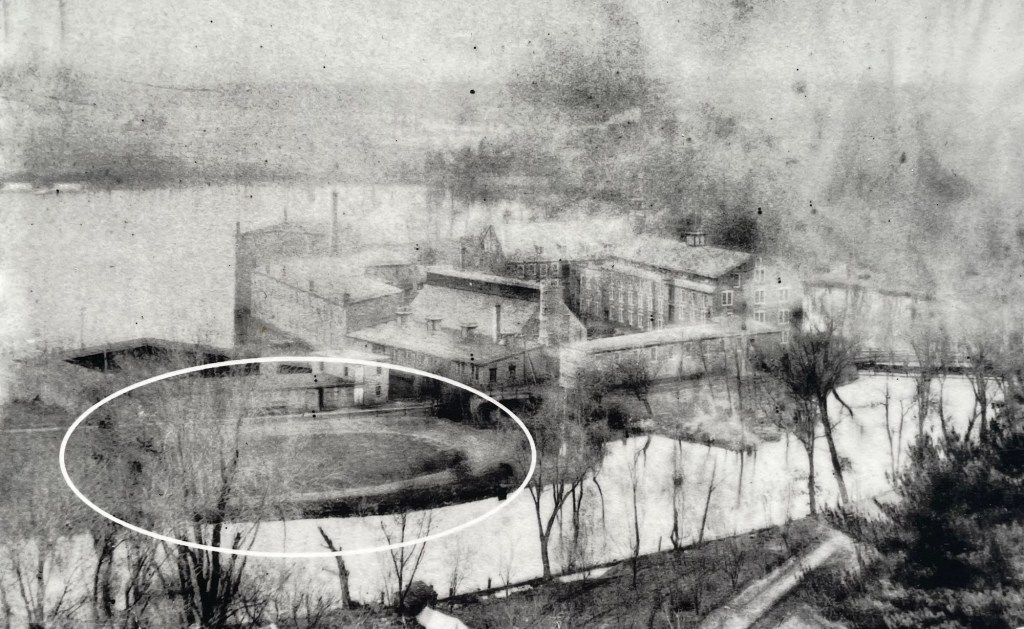
In addition to creating his own products, HB partnered with other inventors, including George Pressey, the creator of the Star high-wheeled bicycle. Star bicycles were offered to employees at half price, and the factory had its own racing team that competed nationally. The factory’s test track was located adjacent to the factory.
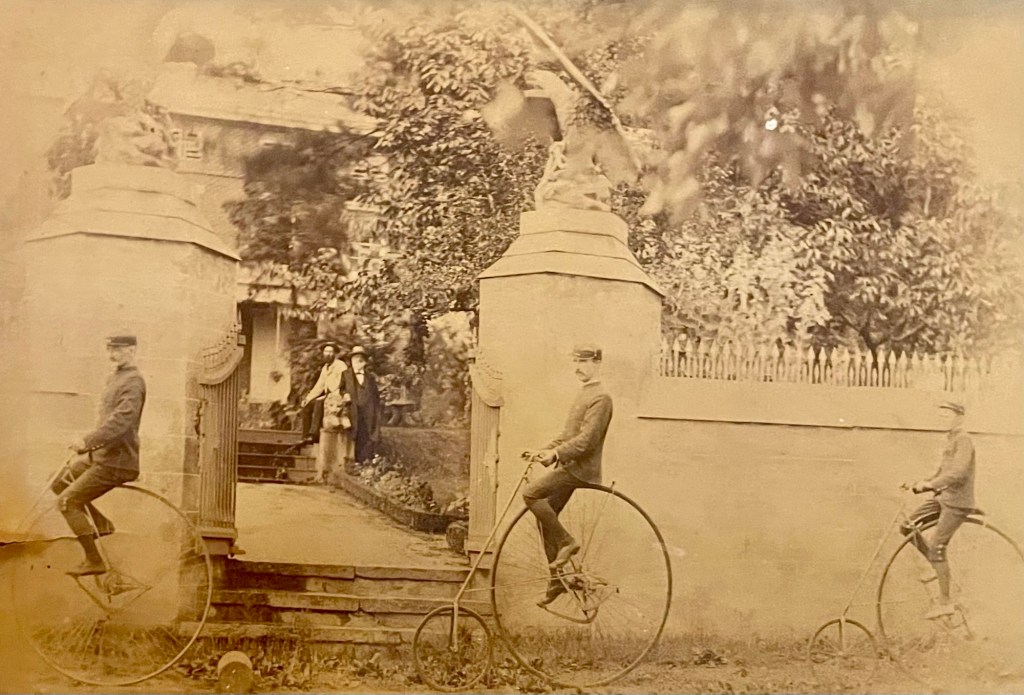
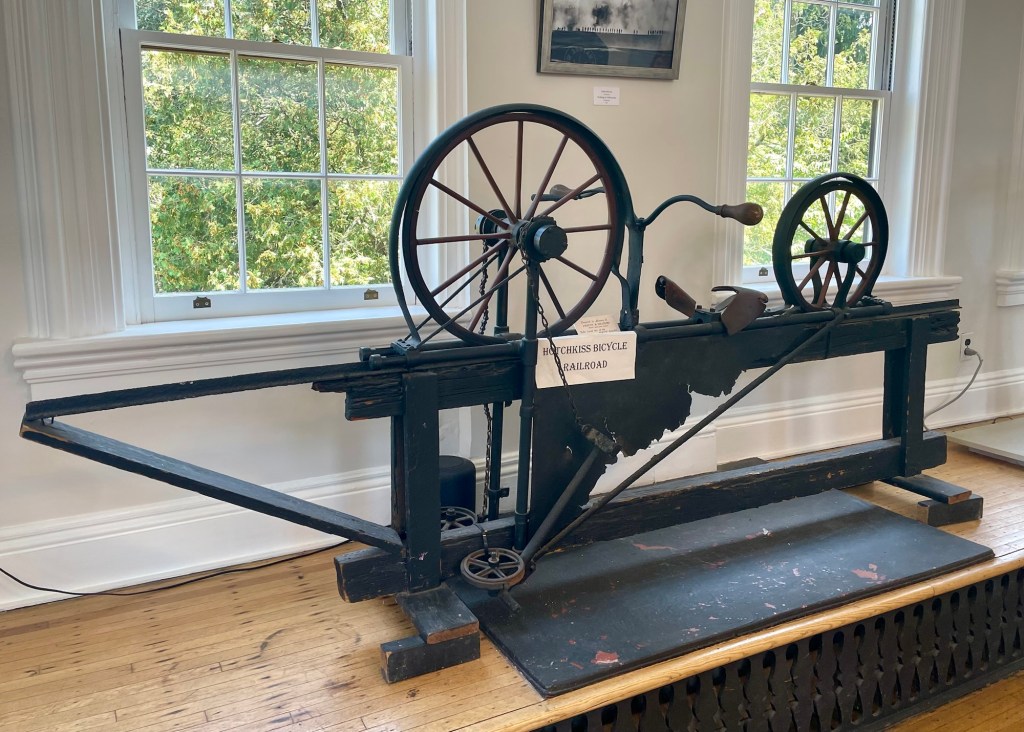
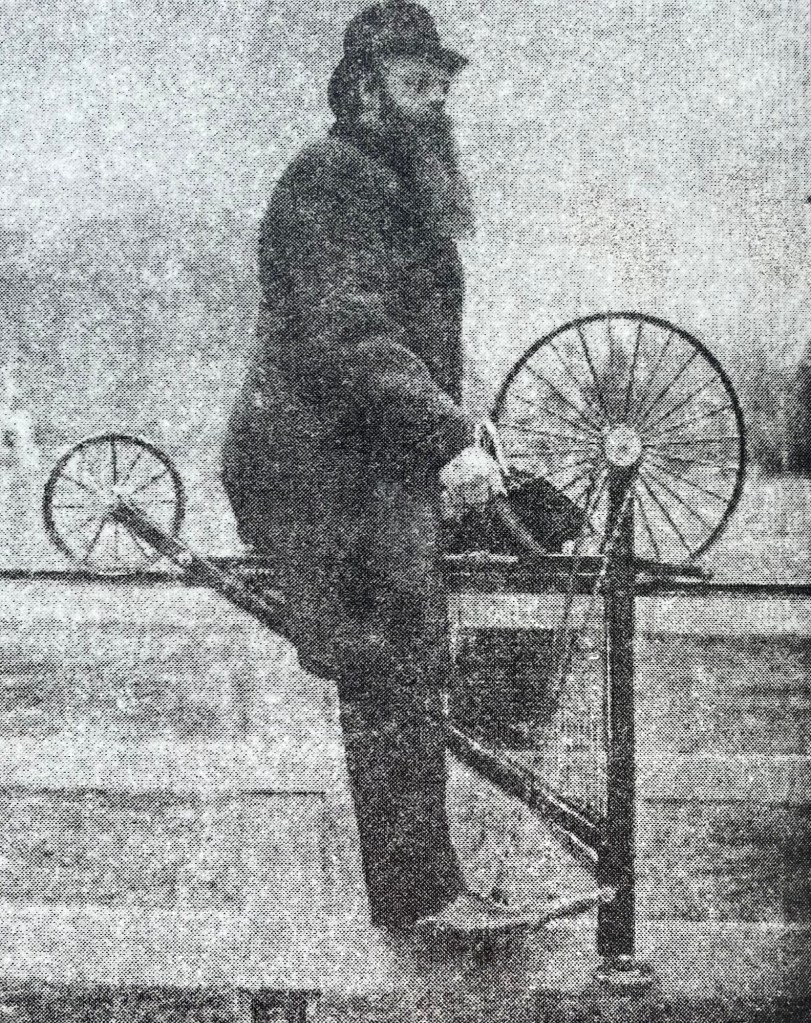
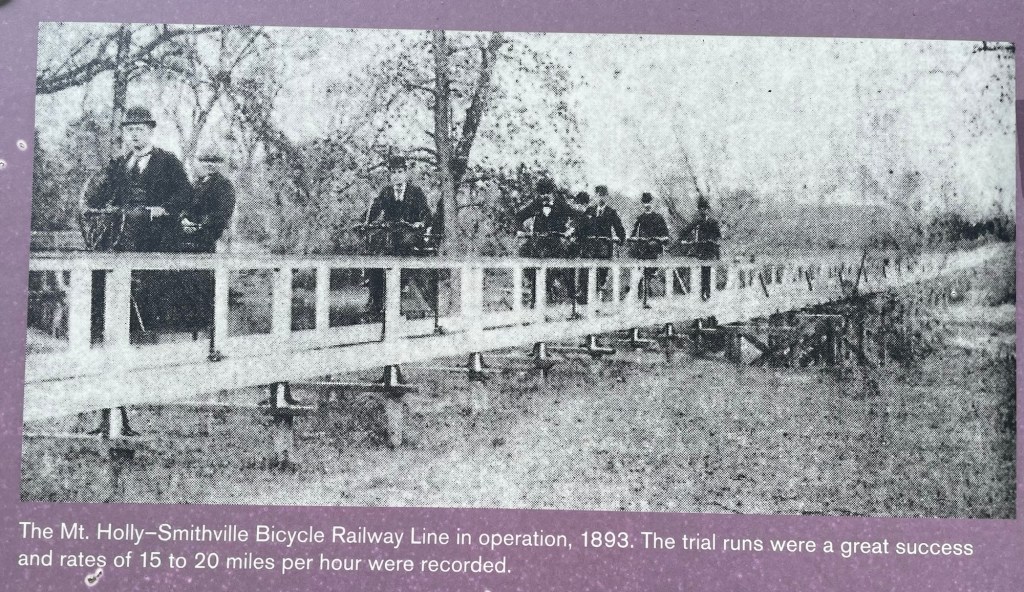
One of the most interesting products manufactured here was the bicycle railroad, the first of which was built here for workers to commute between Smithville and Mt Holly. Unfortunately, it was not financially successful and closed it 1897. You can see a portion in the mansion.
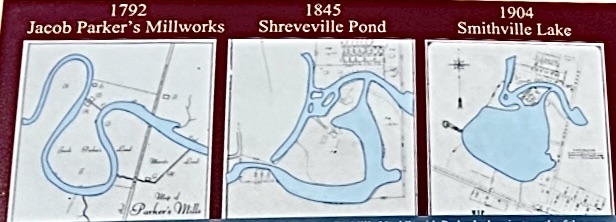
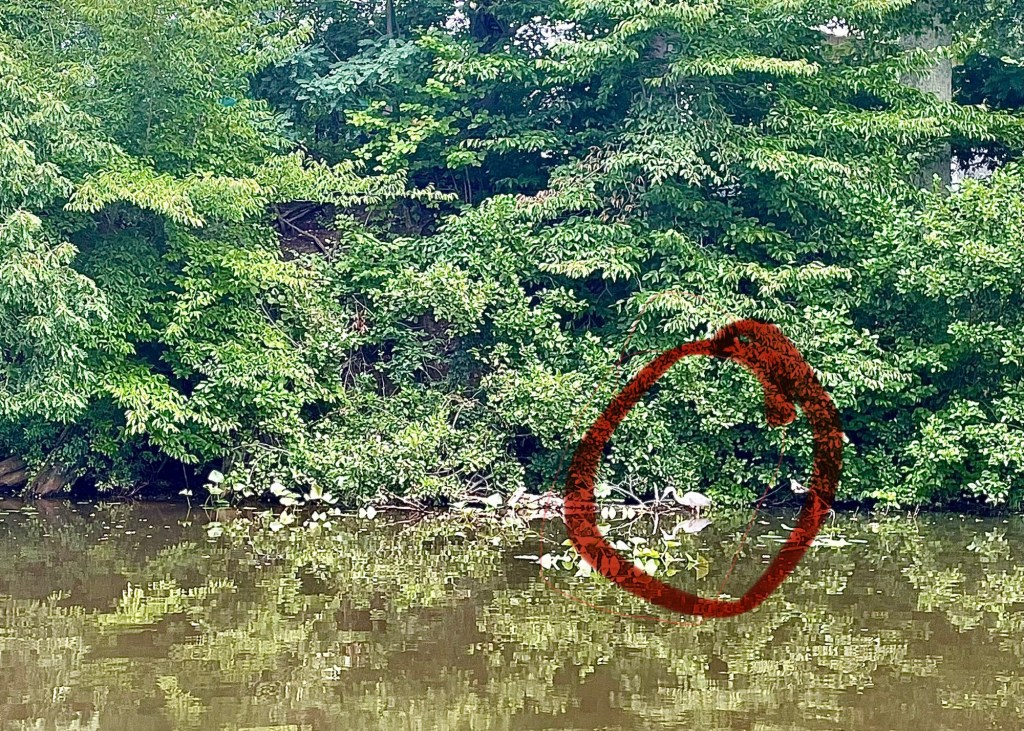
Adjacent to the factory is the Rancocas Creek, which provided power for the site’s manufacturing. It’s course has been modified significantly throughout the years, and today it feeds a large shallow lake that’s home to water lilies and provides habitat for fish, turtles, and a large great blue heron population. I’ve rarely crossed the boardwalk without spotting several.
The park is open daily, but the mansion and cottages are open on a more limited basis. Check the website for opening hours.

