
Although George Washington lost more battles than he won, it was his (many!) tactical retreats that kept the American army alive and able to fight another day that were critical to securing Britain’s eventual defeat.
One of the most significant was the Battle of Monmouth, which took place in June of 1778 as the British left their cozy winter occupation of Philadelphia (A Revolutionary Party) and headed back to New York City, afraid that with the French entering the war on the American side their navy might blockade the Delaware Bay, trapping them in Philadelphia.
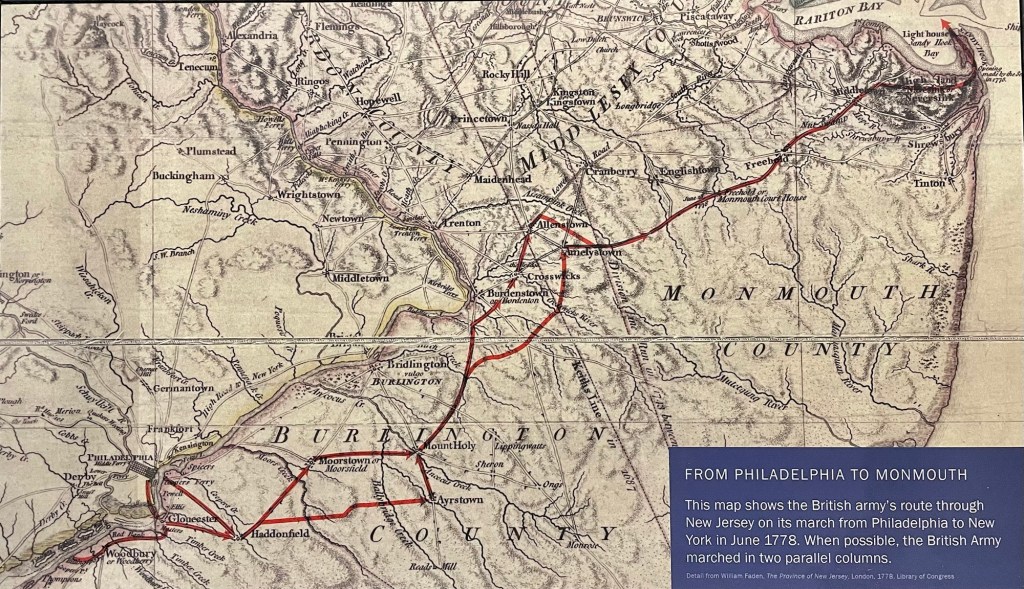
Washington’s troops had spent a long winter at Valley Forge after losses at Germantown and Brandywine allowed the British to take Philadelphia. Although almost 20% of Washington’s troops died in the miserable conditions, it was here that Prussian officer Baron Friedrich von Steuben trained the soldiers in essential military skills. Monmouth became their proving ground.
Although the battle ended without victory for either side, it was the first time that Washington’s troops showed they could fight effectively in open combat. Rather than continue to engage, the British retreated to New York. This success helped Washington secure his position as Commander-in-Chief, and was the last major battle between the two main armies in the north.
Today, the site is Monmouth Battlefield State Park.
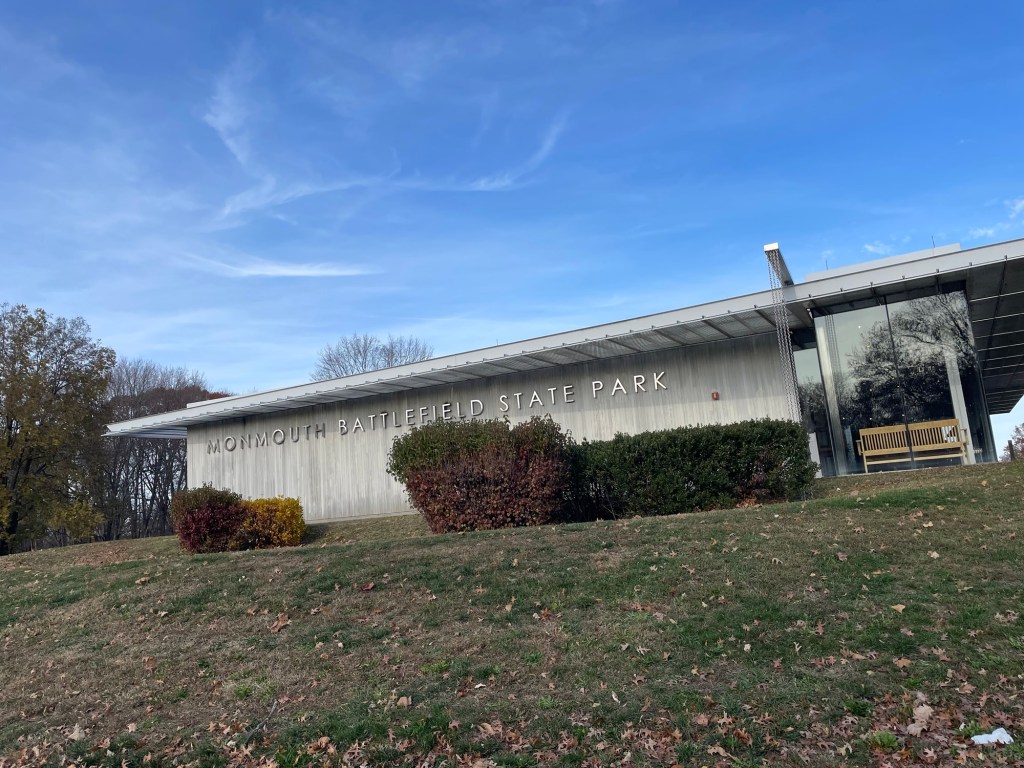
The park’s visitor center sits on the ridge where one group of Washington’s cannons fired on the British during the largest land artillery battle of the American Revolution. It contains exhibits and a movie detailing stages of the battle.

There are artifacts including this 1795 copy of Baron von Steuben’s “Regulations for the Order and Discipline of the Troops of the United States,” the army’s official guide until 1812.

There are also a few historic buildings and extensive hiking trails with signage illustrating pivotal points in the battle.

For more Revolutionary War history near Philadelphia, check out Trenton, the site of Washington’s first victory (Trenton: A Turning Point in the Revolution).
 Secrets of Philadelphia