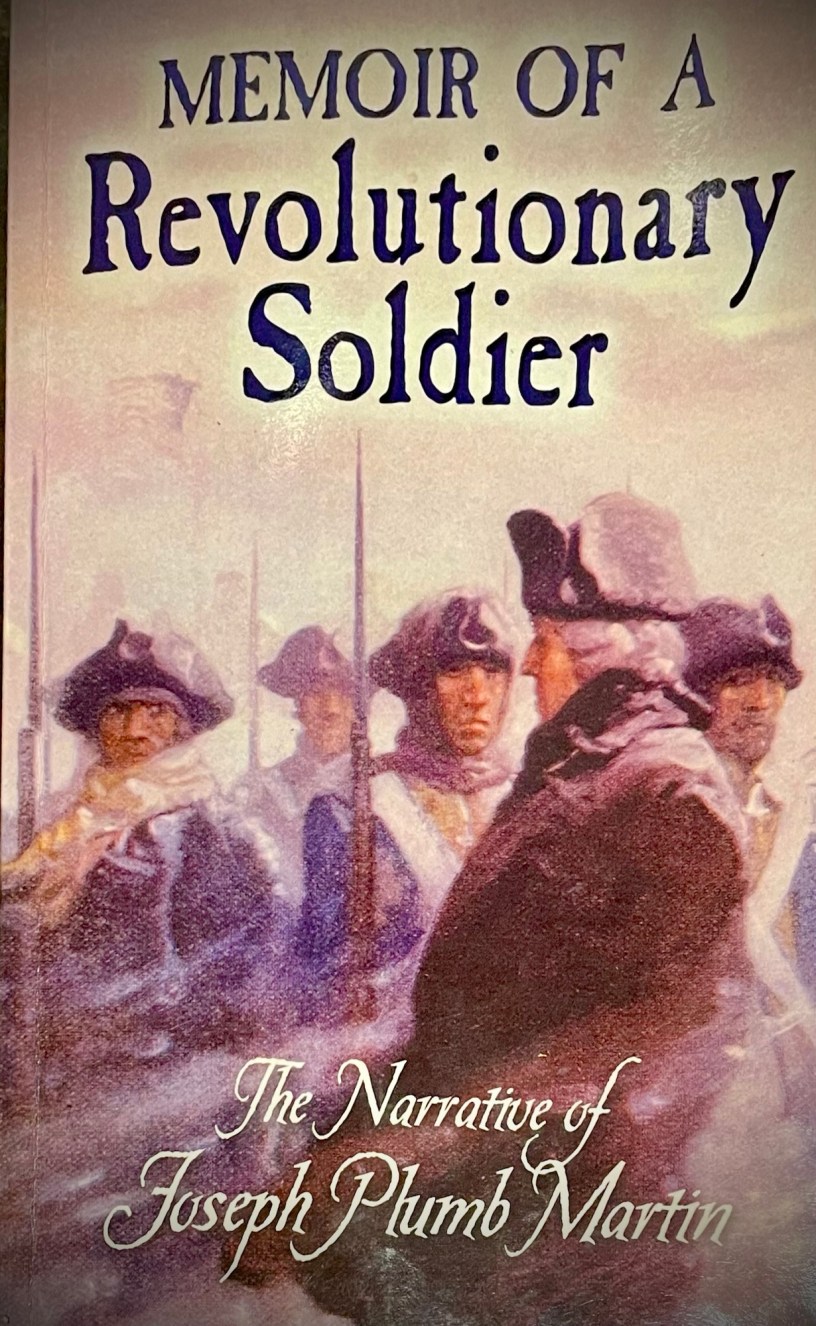
Finding food, preparing food, vomiting food, going for days without food…. what hits first in Joseph Plumb Martin’s autobiography is the ever present hunger.
Then there are all the other hardships: days without sleep, winters without clothes, sleeping in the rain, virtually no pay. Yet, despite these deprivations the soldiers were “willing, nay, we were determined to persevere as long as such hardships were not altogether intolerable.”
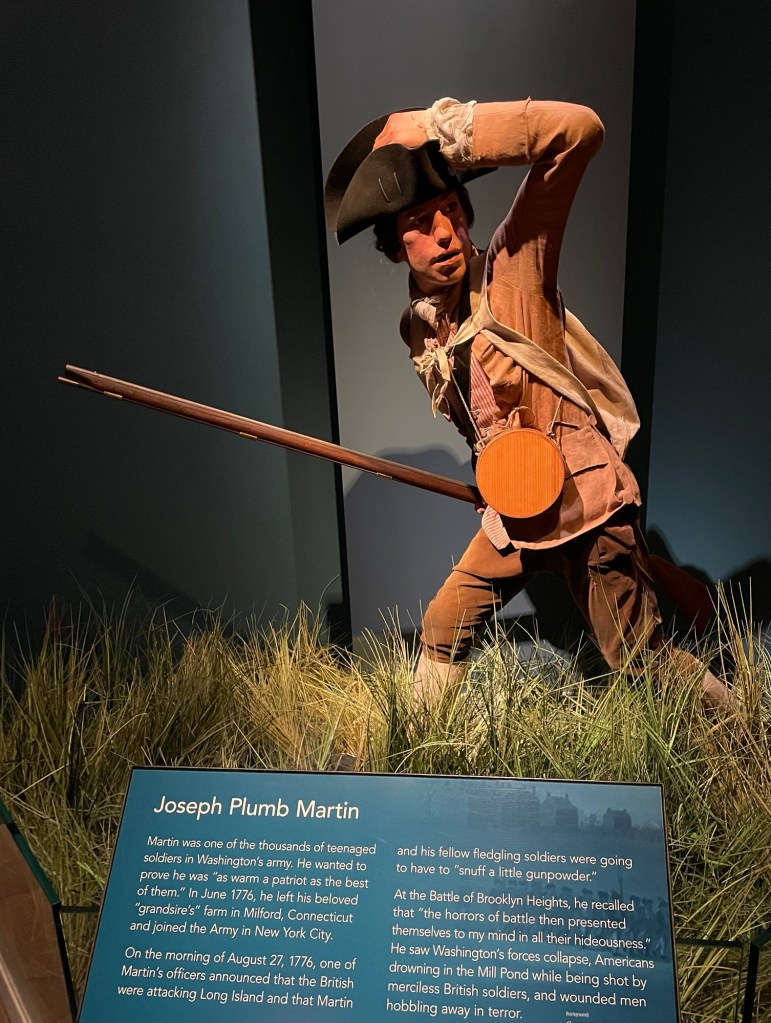
Joseph Plumb Martin was 15 when he enlisted in June of 1776, and aside from a few months off that winter, he served for the duration of the war. When Martin was seventy he published an autobiography of his war years that gives the best first-hand account of the life of an enlisted Continental soldier. Because of this, he pops up frequently at historic sites. He’s at the Museum of the American Revolution in Philadelphia, Monmouth Battlefield, Morristown National Park, and there’s a trail named for him in Valley Forge Pennsylvania.
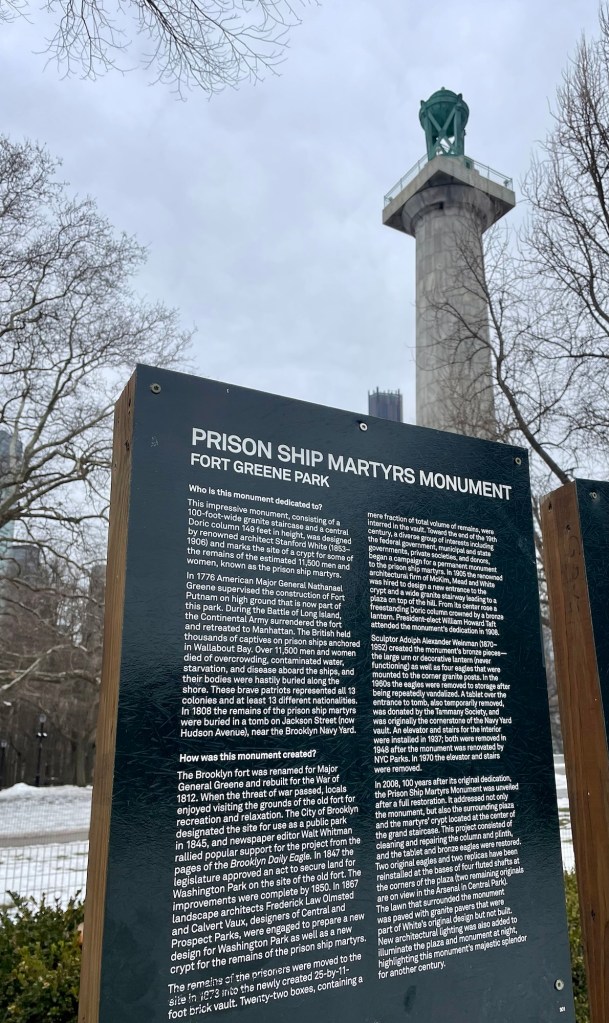
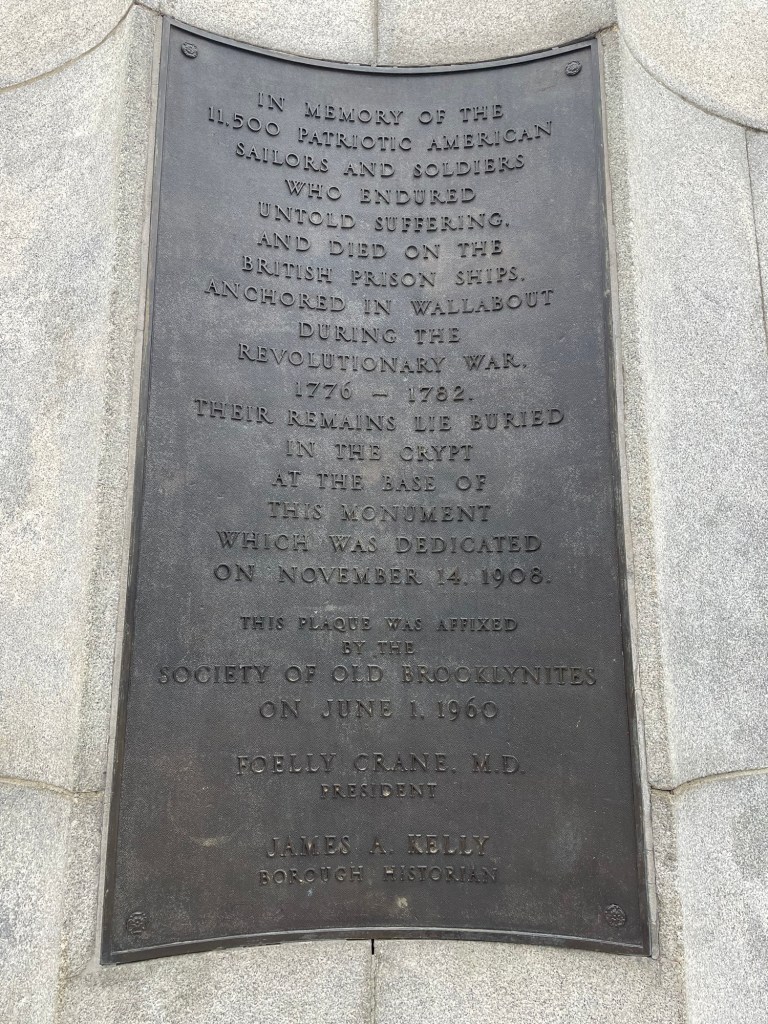
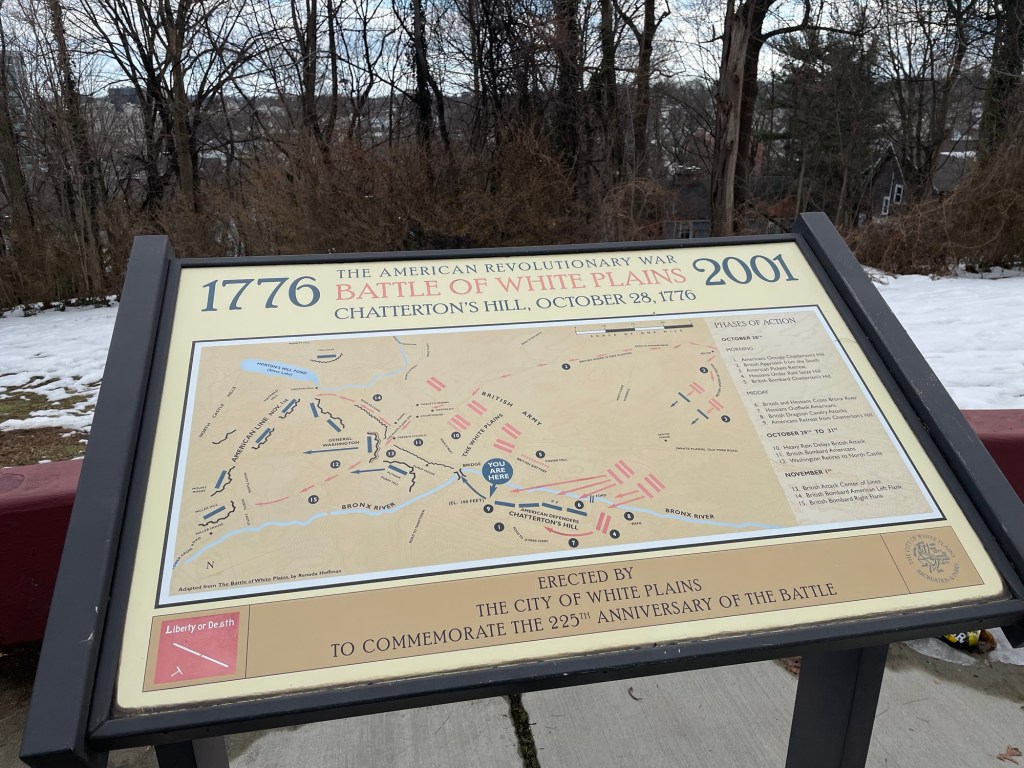
After Martin’s enlistment he was quickly sent south to New York City where he witnessed firsthand the Continental Army’s defeat at the Battles of Brooklyn and Manhattan. At one point during the chaotic retreat Martin hid in a bog while the “British came so near to me that I could see the buttons on their clothes.” He was present at the subsequent Battle of Harlem Heights, Washington’s first battlefield success, and also at the defeat at the following Battle of White Plains. While most evidence of these battles is long gone (definitely no bogs to hide in!), there’s still some traces around the city. In Brooklyn the Prison Ship Martyrs Monument contains a crypt holding the remains of over 11,000 prisoners captured during the American’s chaotic retreat that died on British prison ships anchored off the island. The monument sits on a hill that once held Continental Army fortifications.
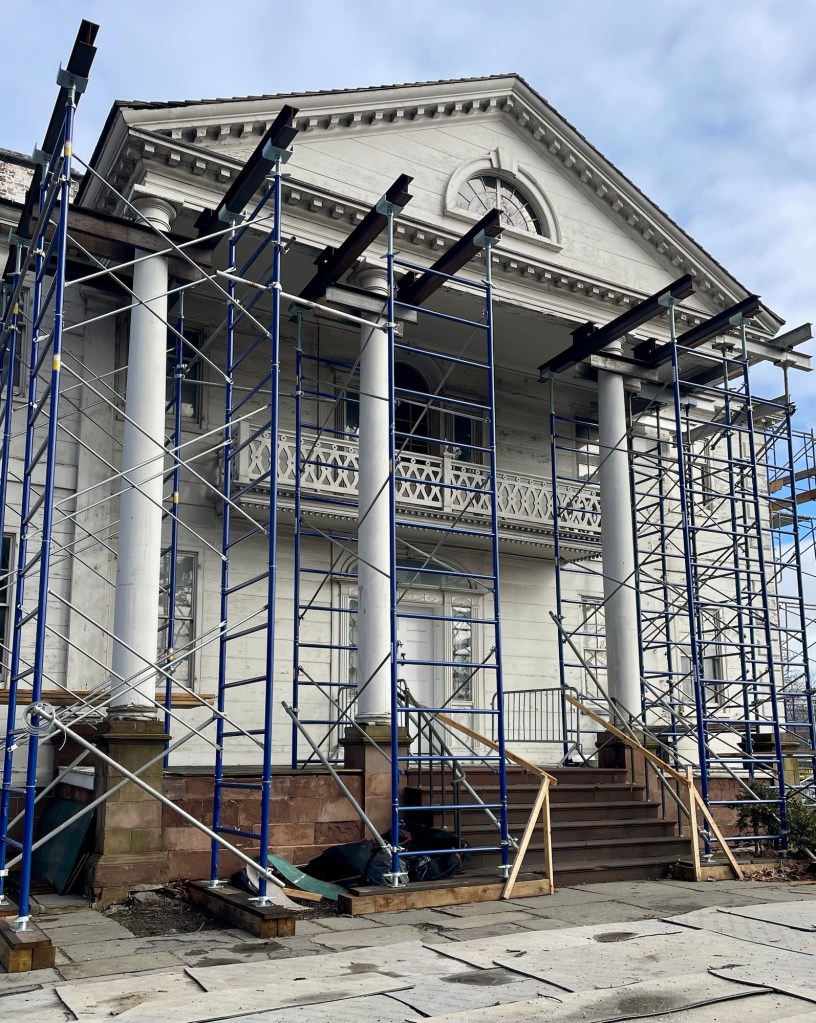
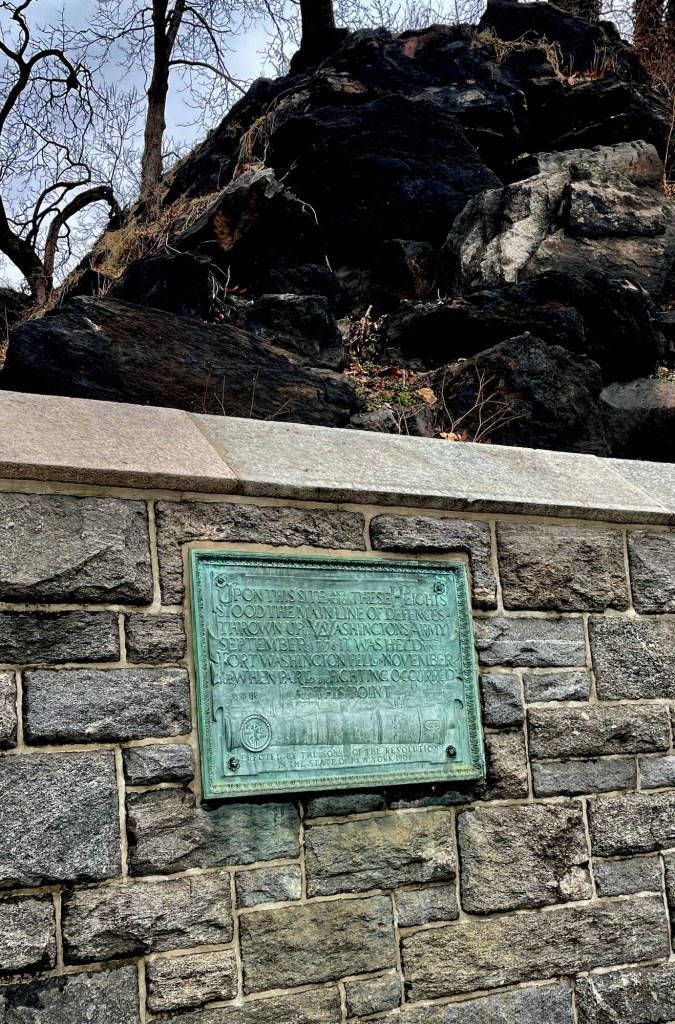
The Morris-Jumel mansion was used by Washington as headquarters during the Battle of Harlem Heights, and is now a museum. Nearby is a plaque marking the location of the Continental Army’s main line of defense.
White Plains has a small park on the site of the battle.
Martin’s enlistment expired just before Christmas and he returned home, missing out on Washington’s significant (but rare!) victories at the Battles of Trenton and Princeton (Trenton: A Turning Point in the Revolution).
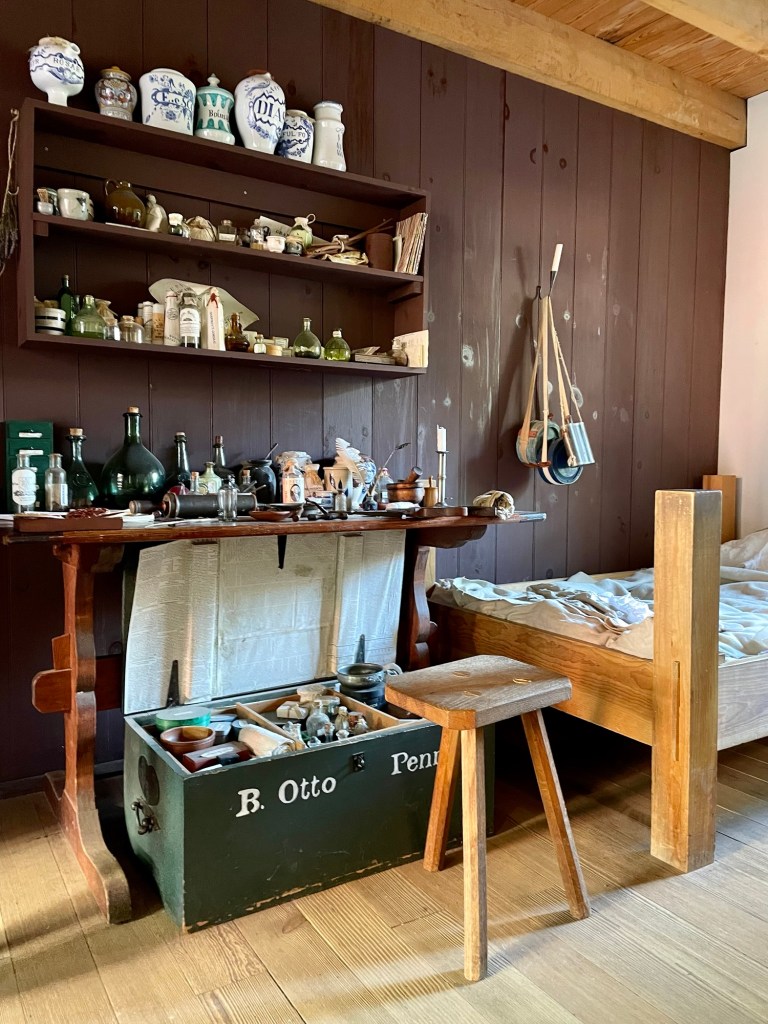
Martin re-enlisted that spring and was soon chasing the British Army through Connecticut. Shortly afterwards he was sent to Fishkill, NY for a smallpox inoculation. The disease was responsible for killing more soldiers than combat, so in 1777 Washington mandated inoculations for all new recruits. Dr Otto established a similar inoculation site at the Old Barracks in Trenton:
After his recovery (which involved sitting submerged in a stream while fishing to flush the smallpox pustules) Martin was sent south to defend Philadelphia. While there he participated in the losing battles of Brandywine and Germantown (Germantown: That Other Colonial Town (and a lost dog)). While the victorious British settled into Philadelphia, Martin was sent to Fort Mifflin (Fort Mifflin: Airplanes, Turtles & a Colonial Fort) where Continental forces were attempting to prevent British warships from supplying the city. Soon after arriving, he saw the British warship Augusta hit a chevaux de frise. “While manoeuvreing one dark night she got on the chevaux-de-frise which had been sunk in the channel of the river. As soon as she was discovered in the morning we plied her so well with hot shot, that she was soon in flames. Boats were sent from the shipping below to her assistance, but our shot proving too hot for them, they were obliged to leave her to her fate; in an hour or two she blew up.” Pieces of the chevaux de frise can be found in both the Camden Historical Society and Independence Seaport:
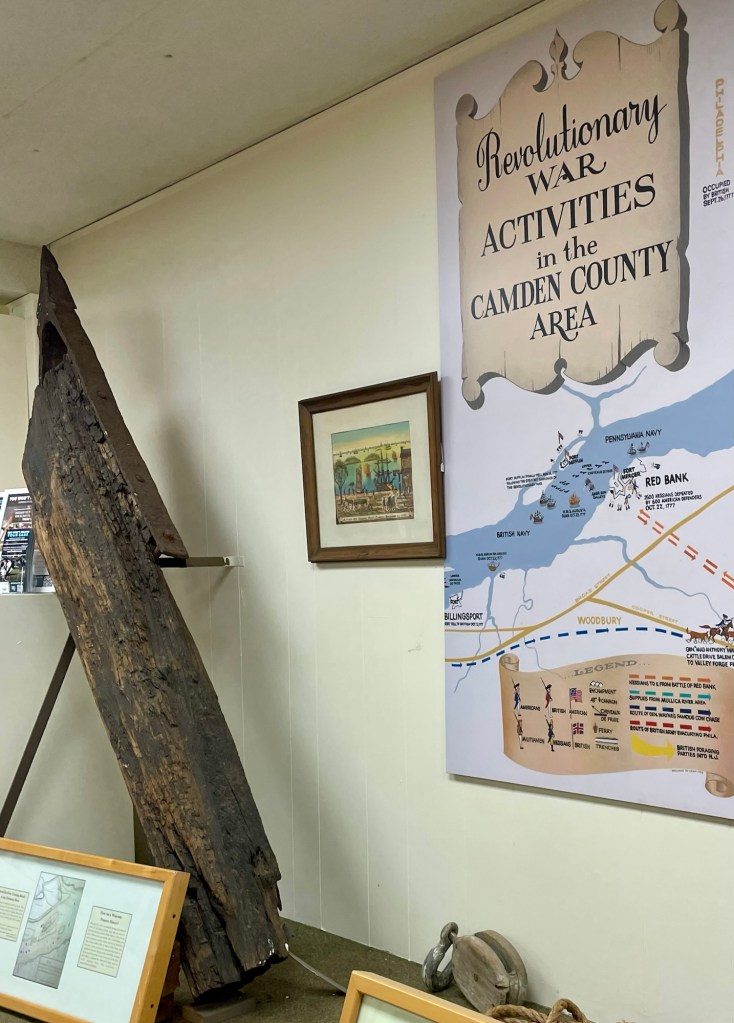
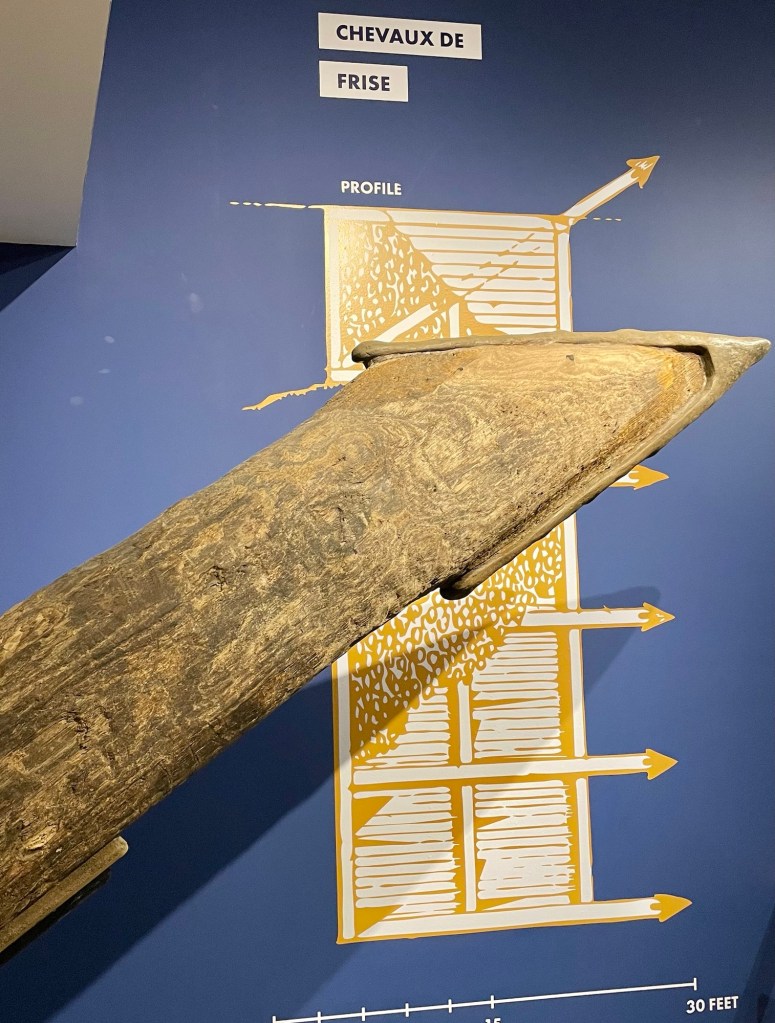
Souvenirs were made from the ship’s remains:
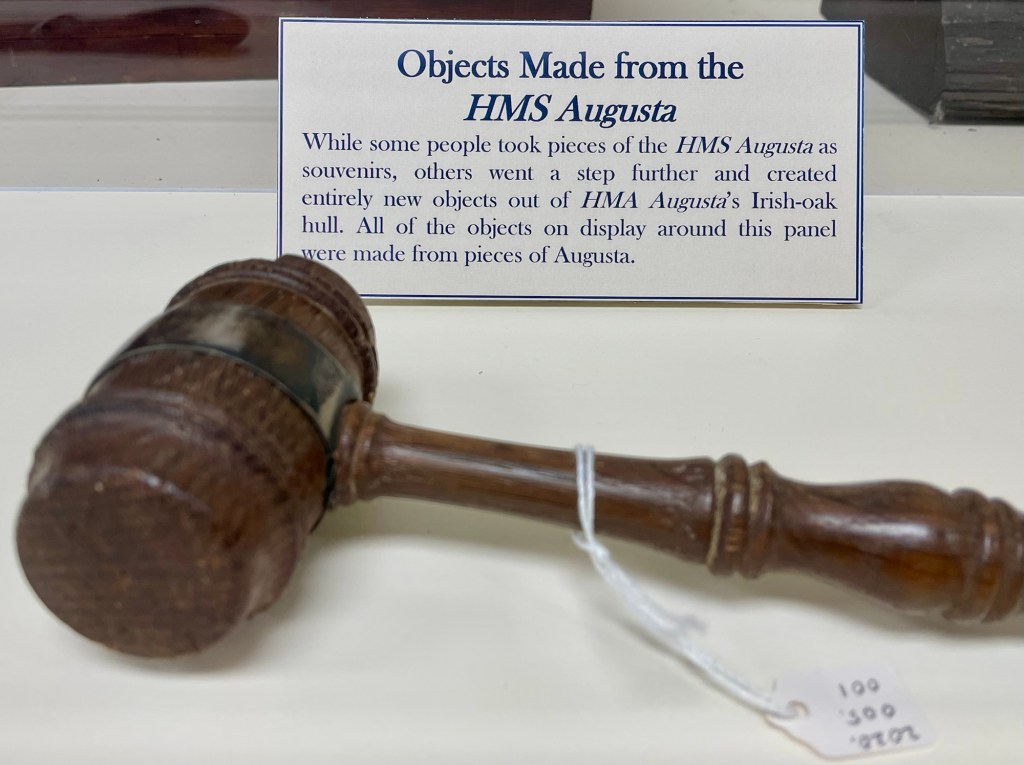
After the fort fell, Martin retreated to New Jersey and headed north, stopping on the way (near my house) in Mount Holly to catch a chicken and cook it in a random house (quite surprising the occupants!) before heading to the winter encampment at Valley Forge, where “Our prospect was indeed dreary. In our miserable condition, to go into the wild woods and build us habitations to stay (not to live) in, in such a weak, starved and naked condition, was appalling in the highest degree.” Martin spent the winter training with Baron Von Stueben and going on foraging parties.
After breaking camp in the spring of 1778, Washington’s army followed the British troops through New Jersey as they headed back to New York City. Along the way the sky darkened with a solar eclipse. Just four days later, the armies met in the scorching heat at Monmouth for the largest artillery battle of the war (Monmouth, NJ: Another Turning Point in the American Revolution ), where Martin overheard Washington’s rage towards the retreating General Charles Lee.
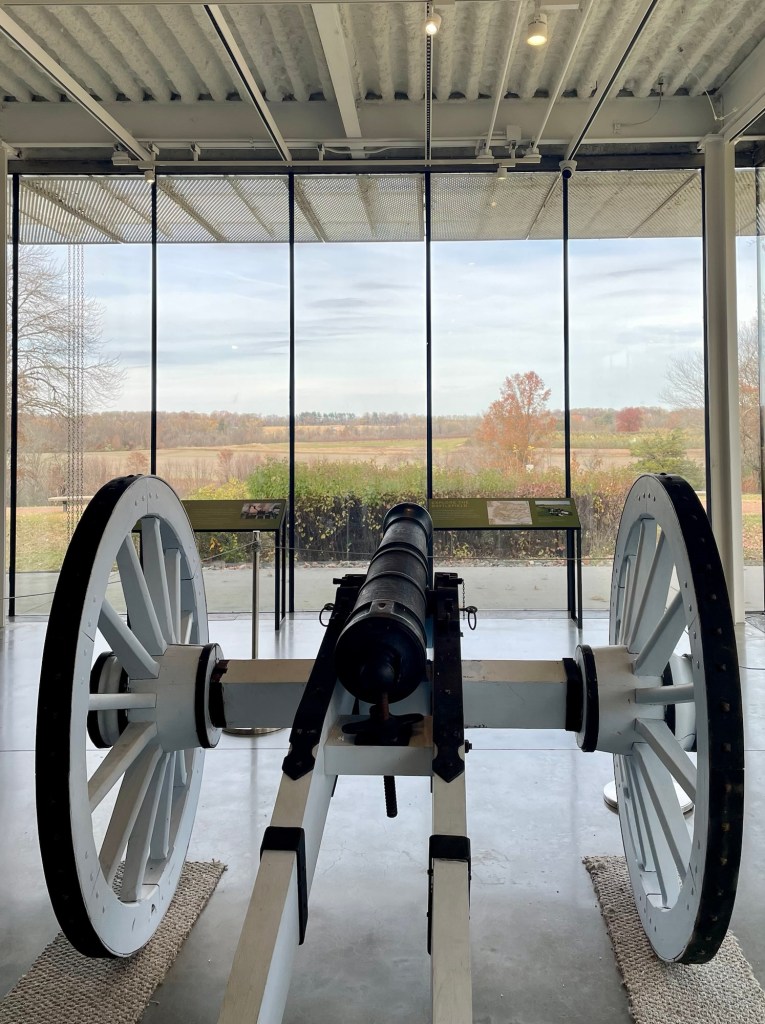
For the rest of that year his unit operated against Tory sympathizers along the Hudson River, once returning to the battlefield of White Plains where he saw skulls and bones left from the battle he’d participated in two years earlier.
Each chapter covers a campaign year and begins with a short poem, like this one from the campaign of 1779:
“You may think what you please, sir. I too can think-I think I can’t live without victuals and drink; Your oxen can’t plough, nor your horses can’t draw, Unless they have something more hearty than straw; If that is their food, sir, their spirits must fall-How then can I labour with-nothing at all?”
That year’s winter encampment was at Morristown, with the hardest winter in New Jersey’s recorded history. The region endured 28 snowstorms, sub-zero temperatures, and snowdrifts 4 to 6 feet deep. New York Harbor froze completely solid. Troops had to build huts from scratch before they were able to camp indoors.
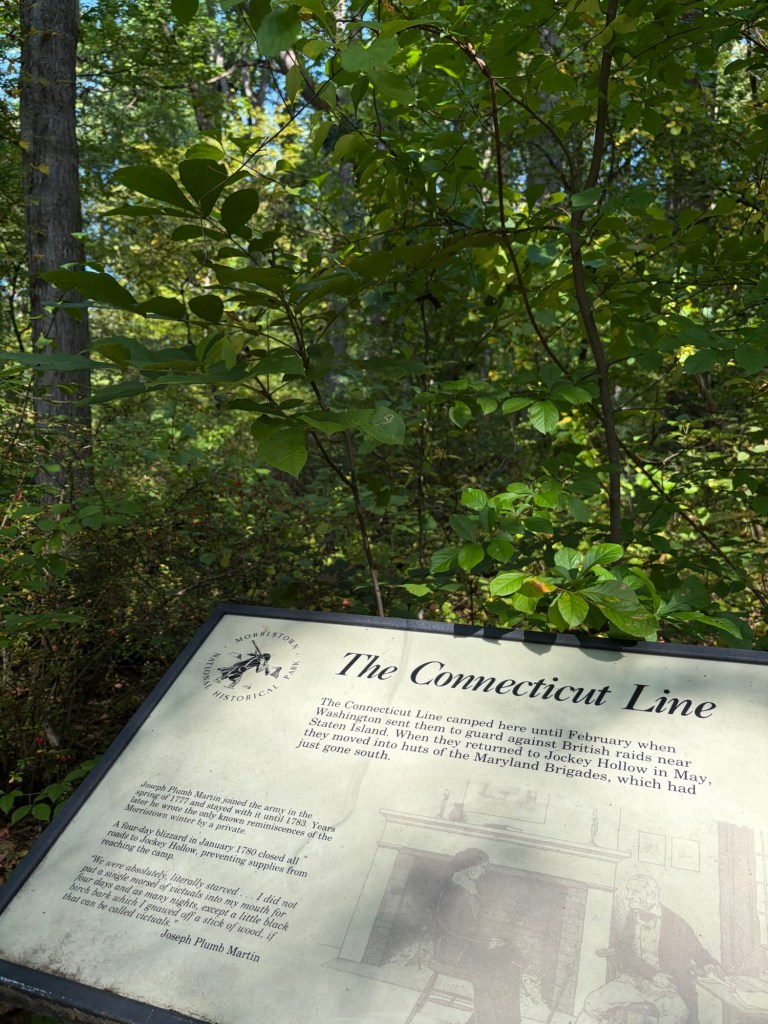
Once again Martin’s writings detail the fight against starvation:
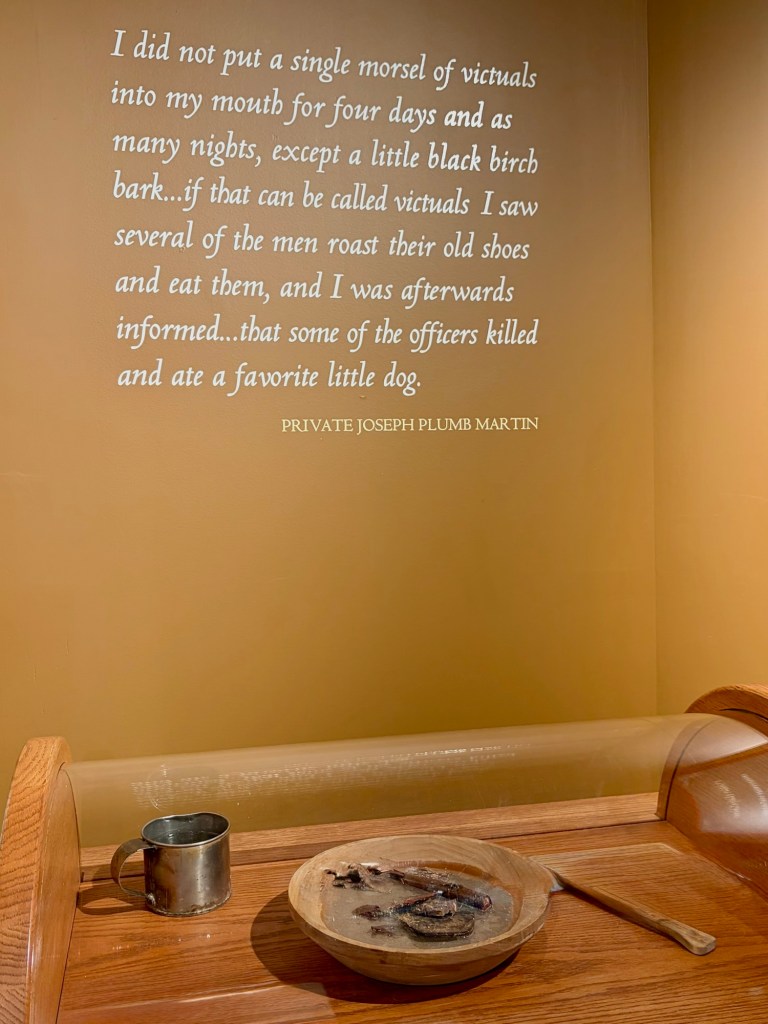
An exhibit at the park’s museum displays Joseph’s birch and shoe leather soup (at least I assume it’s not doggie soup!).
Shortly after, the Connecticut troops were sent away from camp on outpost duty, but conditions didn’t improve, as “we had next to nothing to eat… we had no wheat flour, all the breadstuff we got was Indian cornmeal and Indian corn flour…” They hoped when they returned to camp in mid-May they would get proper food, but it did not happen. Thus, “The men were now exasperated beyond endurance; they could not stand it any longer. They saw no alternative but to starve to death, or break up the army, give all up and go home.” Mutiny threatened, but was ultimately abandoned because the men remained “unwilling to desert the cause of our country, when in distress.”
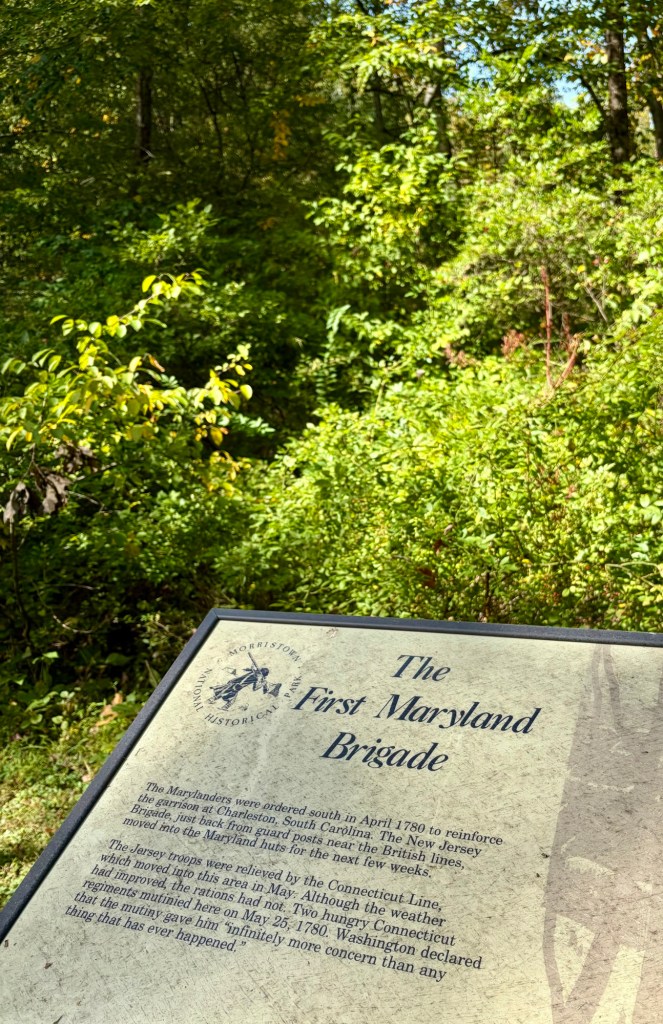
Note: It was here at Morristown National Historic Park where Martin’s original book was rediscovered in the 1950s.
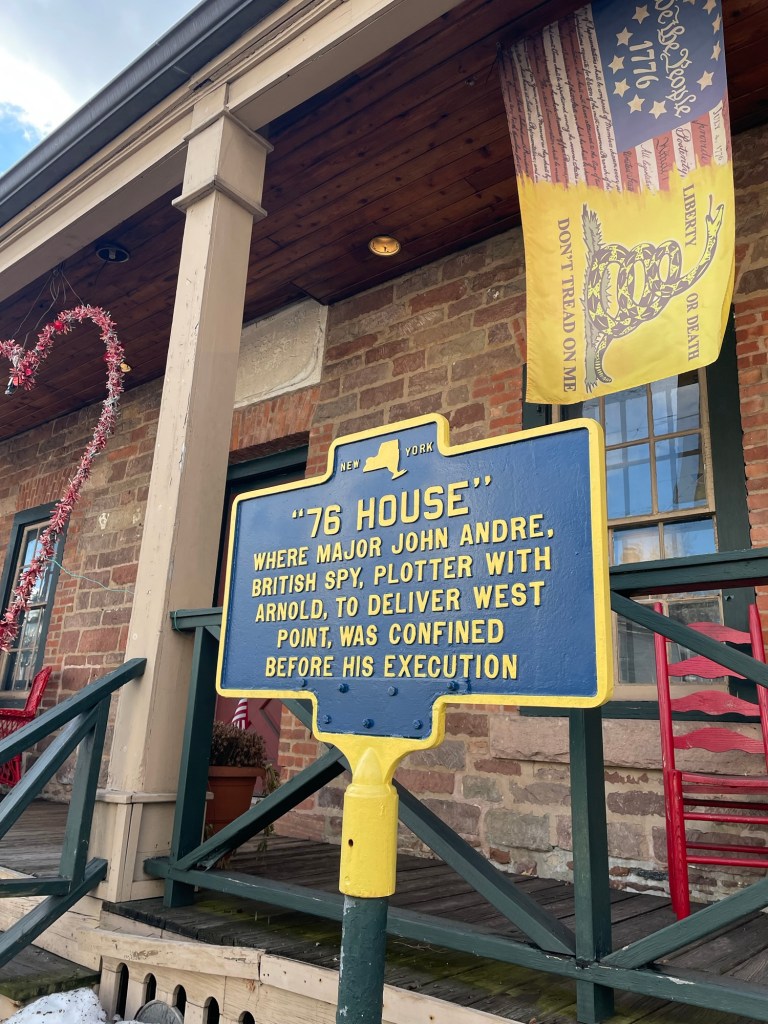
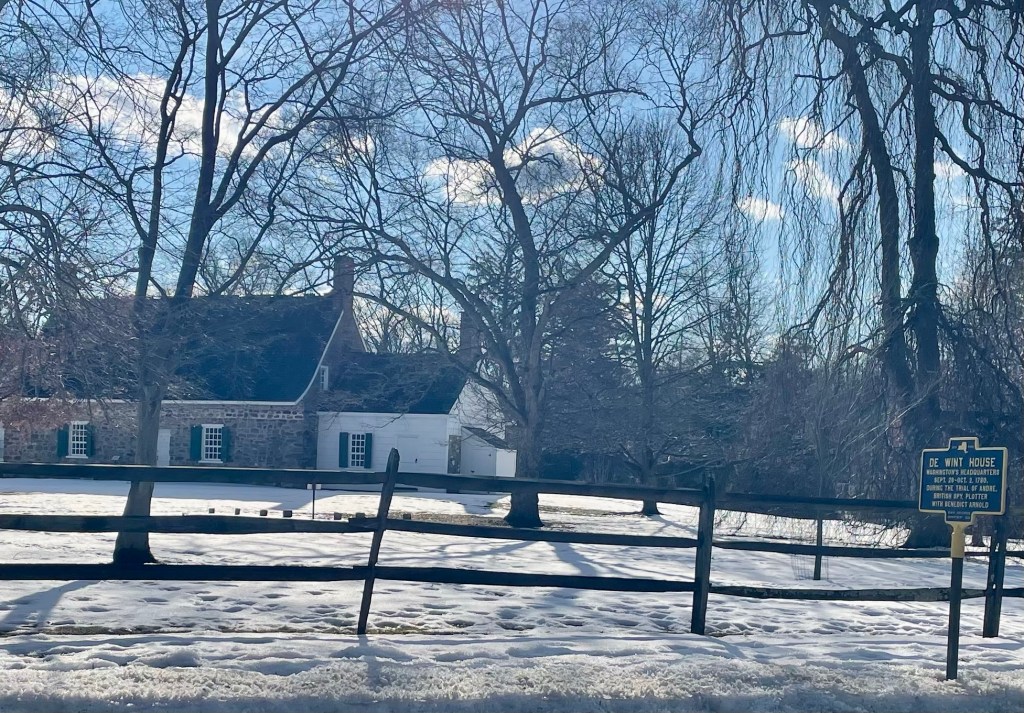
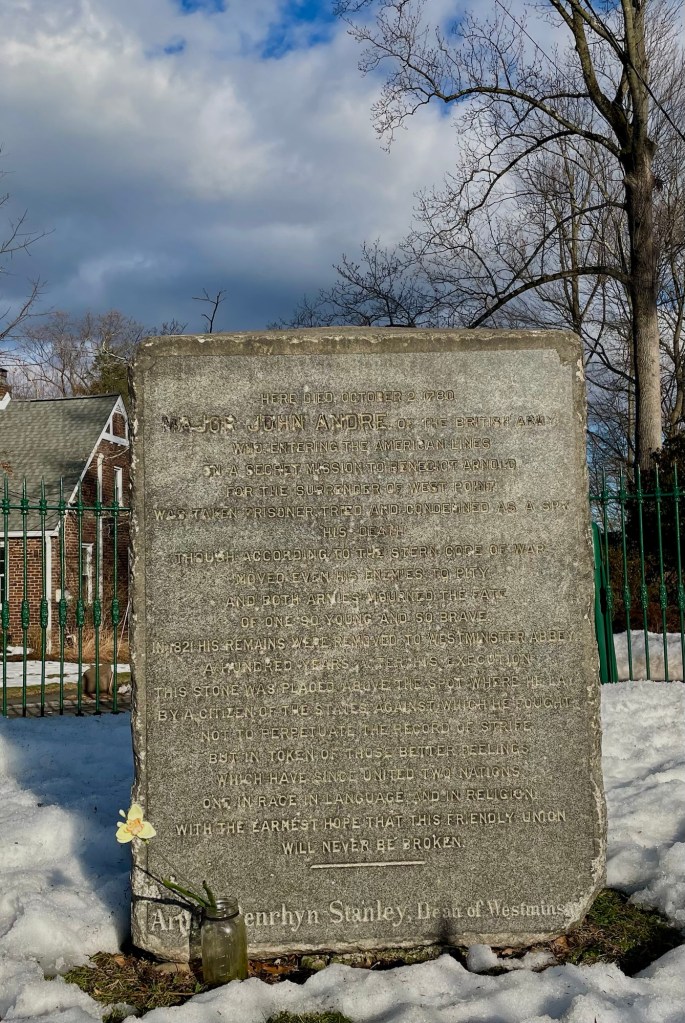
In August Martin was promoted to a sergeant in the new Corps of Sappers and Miners, an engineering unit tasked with building fortifications, repairing roads, and constructing saps (the approaches to enemy works during a siege). Martin spent most of 1780 near West Point where he saw much of the drama surrounding Benedict Arnold’s treason (Benedict Arnold & Treason in Philadelphia). He observed Arnold sailing downriver to New York City, later learning that he’d deserted. He wrote about being on guard duty when Andre and Arnold were having their clandestine meetings, saying that if he’d known, “I might twice have put Arnold asleep without any one knowing it.” Martin saw Andre before his execution, but was on duty when the publicly hanging occurred. Today you can dine in the house in Tappan that served as Andre’s prison and see the house where George Washington stayed while overseeing his trial.
A memorial marks the site of Andre’s hanging.
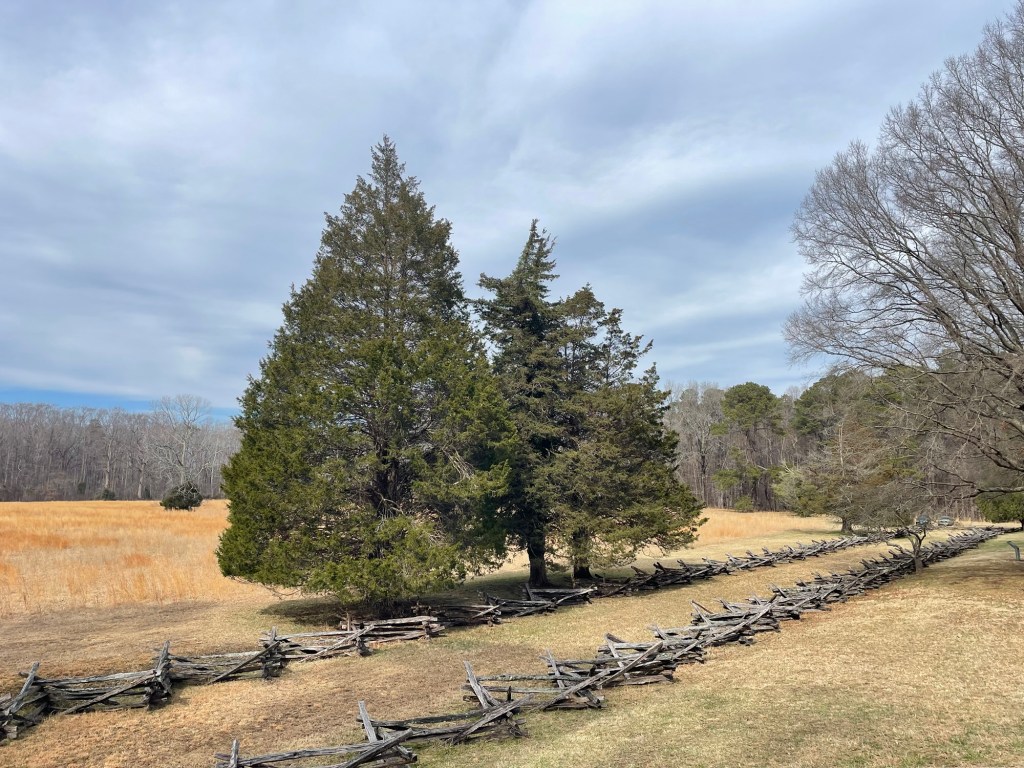
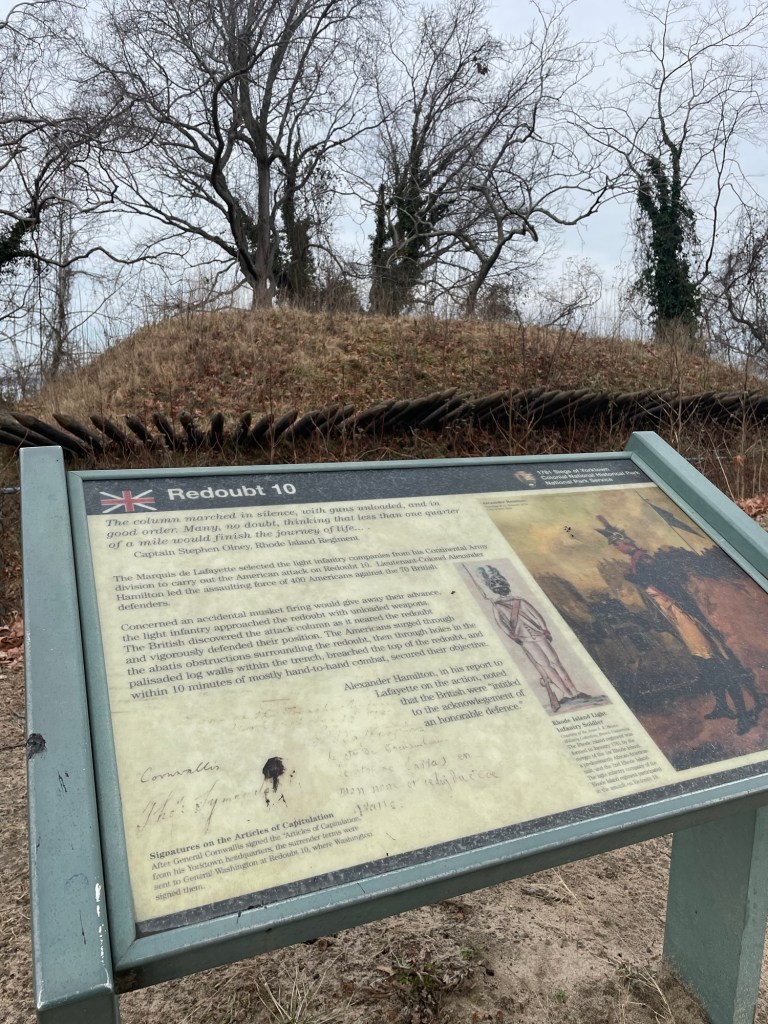
In the summer of 1781 Martin headed south for Yorktown where he had an eventful few months digging trenches, briefly meeting George Washington, storming a British redoubt with Alexander Hamilton and the Marquis de Lafayette, and witnessing the British troops laying down their arms in surrender. While the redoubt he stormed is now a re-creation close to the original site (the original having eroded into the river), you can still visit the site of the surrender.
After Yorktown, Martin made his way back north, wintering (near my house once again!) in Burlington, New Jersey staying in what was formerly the British Governor’s mansion (sadly long gone, but other Revolution-era buildings remain) (History Along the Delaware: Burlington, NJ).
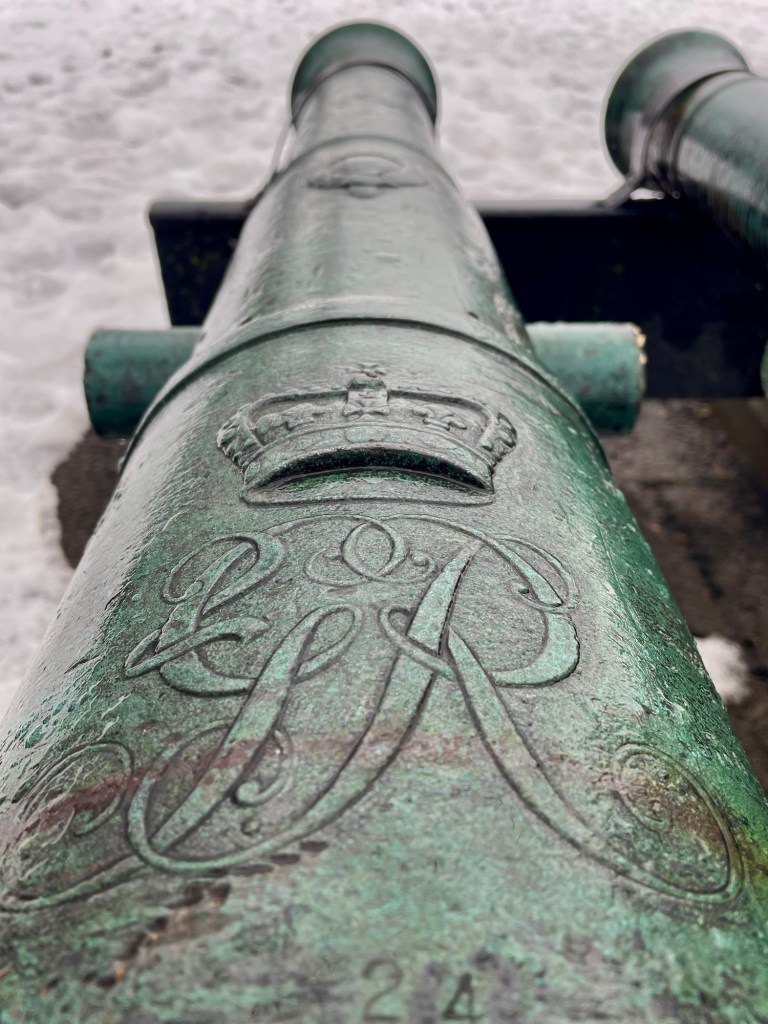
In 1782, Martin was once again stationed in New York along the Hudson, spending much of his time repairing the fortifications at West Point and overwintering nearby. Today there are a few remains of West Point’s Revolutionary War fortifications on the academy’s campus along with a collection of captured artillery, some dating back to the revolution.
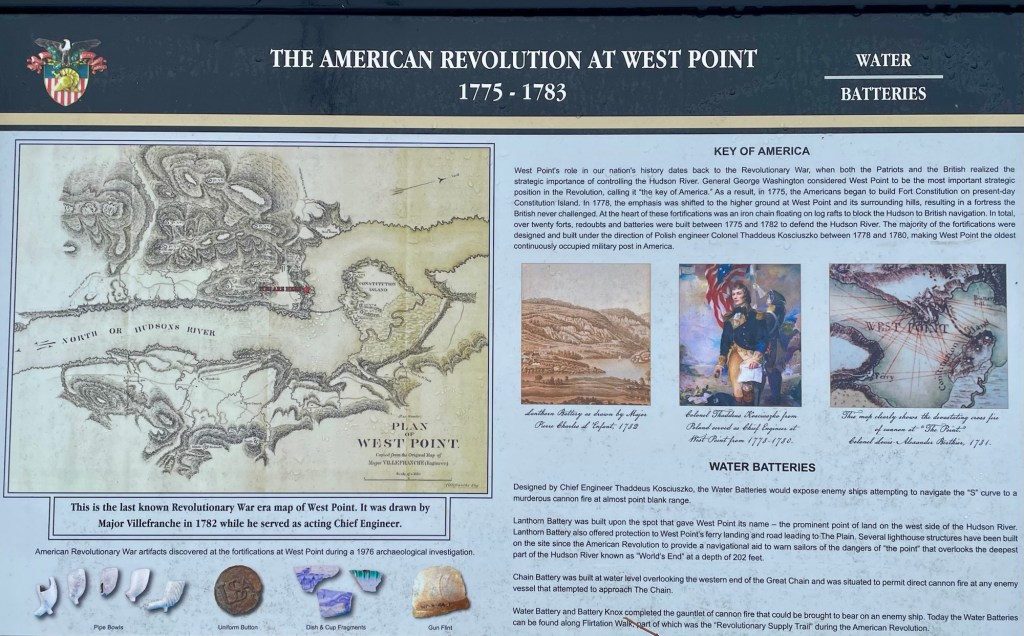
The Academy is also home to part of “The great chain that barred the river at West point… (that chain which the soldiers used to denominate General Washington’s watch chain; every four links of which weighed a ton,).” Martin describes how the soldiers judged the progress of peace negotiations with Britain based on whether the chain was to be reinstalled that year (a link is also at the museum in Morristown).
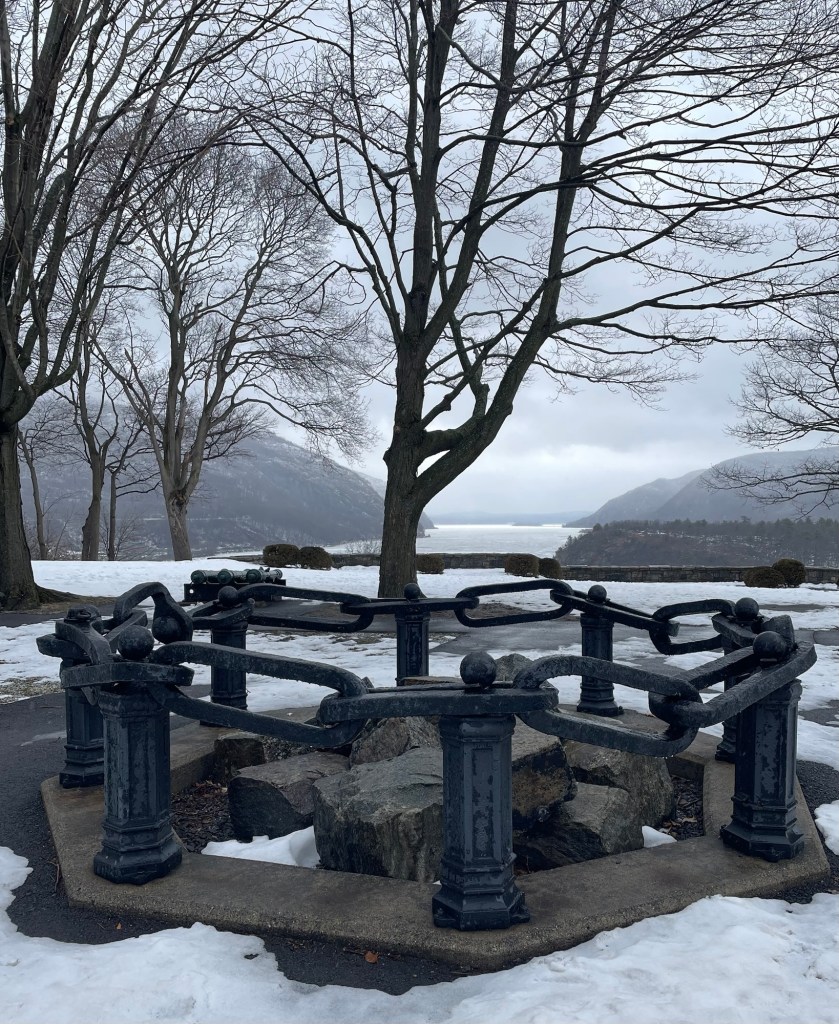
Peace prevailed and the chain was never returned to the river. In the summer of 1783 the Continental Army was disbanded and Martin returned home. Later in life he published his autobiography, “A Narrative of Some of the Adventures, Dangers, and Sufferings of a Revolutionary Soldier, Interspersed with Anecdotes of Incidents that Occurred Within His Own Observations.” The memoir was promptly lost to history before being re-discovered in the 1950’s when its contents became perfect fodder for museum educators.
Note: In order to enter West Points’s grounds, you must get a guest pass in the basement of the visitor center. Real-ID required.

