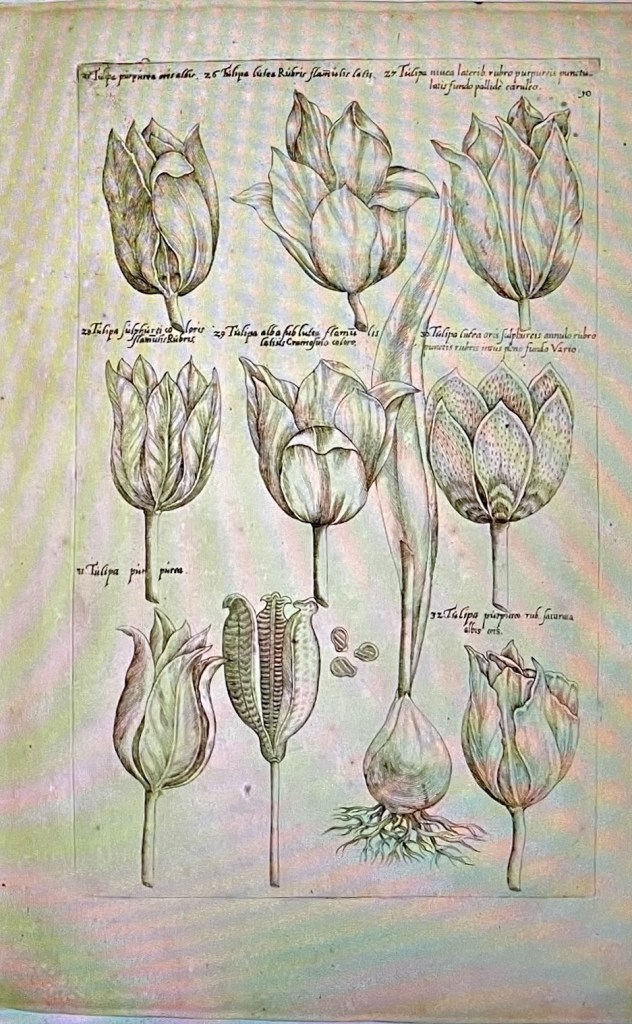
Although typically associated with the Netherlands, tulips are actually native to the mountains of central Asia. They gradually moved westward along trade routes, and by the early 16th century they were being bred in the Ottoman Empire. By 1559 they were blooming in the gardens of Bavaria. In 1593 the first tulips were planted in Holland. This Dutch catalog shows several of the varieties that were for sale in 1641.
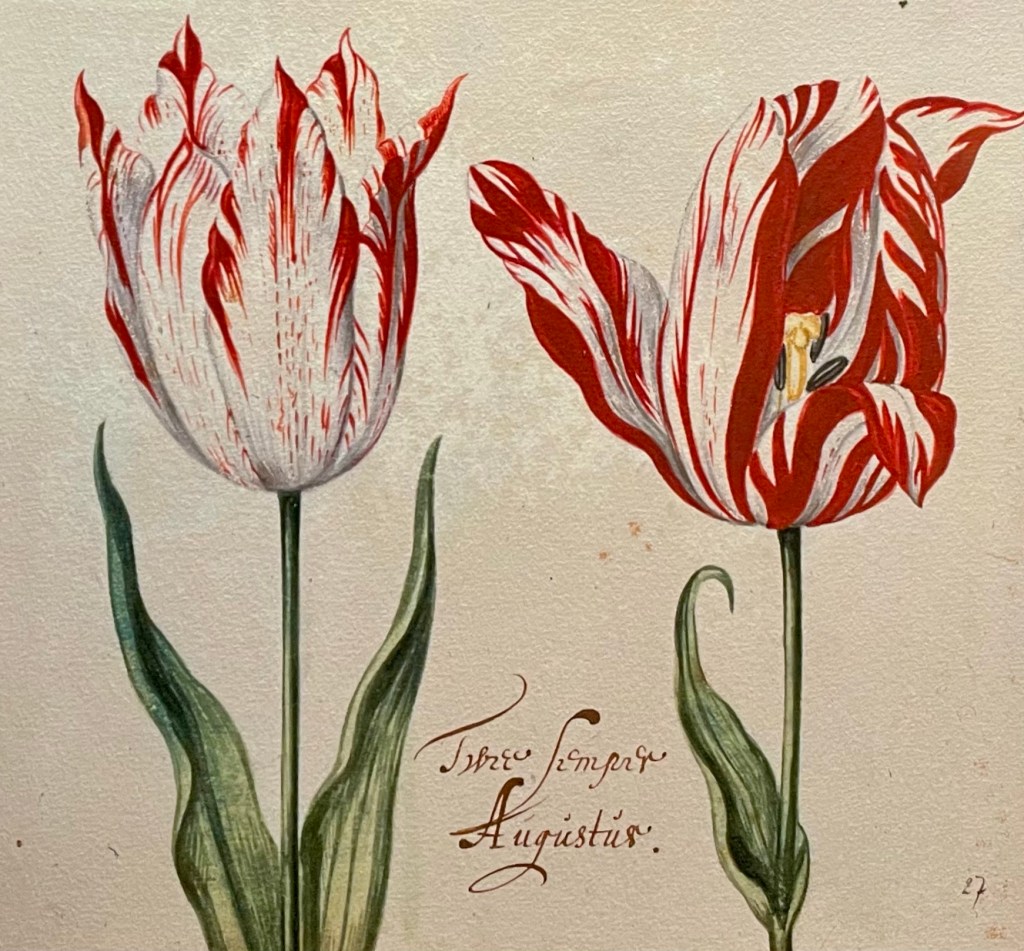
By 1634 the Dutch tulip craze had begun. One of the most coveted blooms was the Semper Augustus, a “broken” white and red variety whose price jumped from 1200 guilders in 1624 to 10000 guilders for 3 bulbs in the winter of 1636–1637. At the height of Tulip Mania a single bulb could cost as much as a fancy canal-side house.
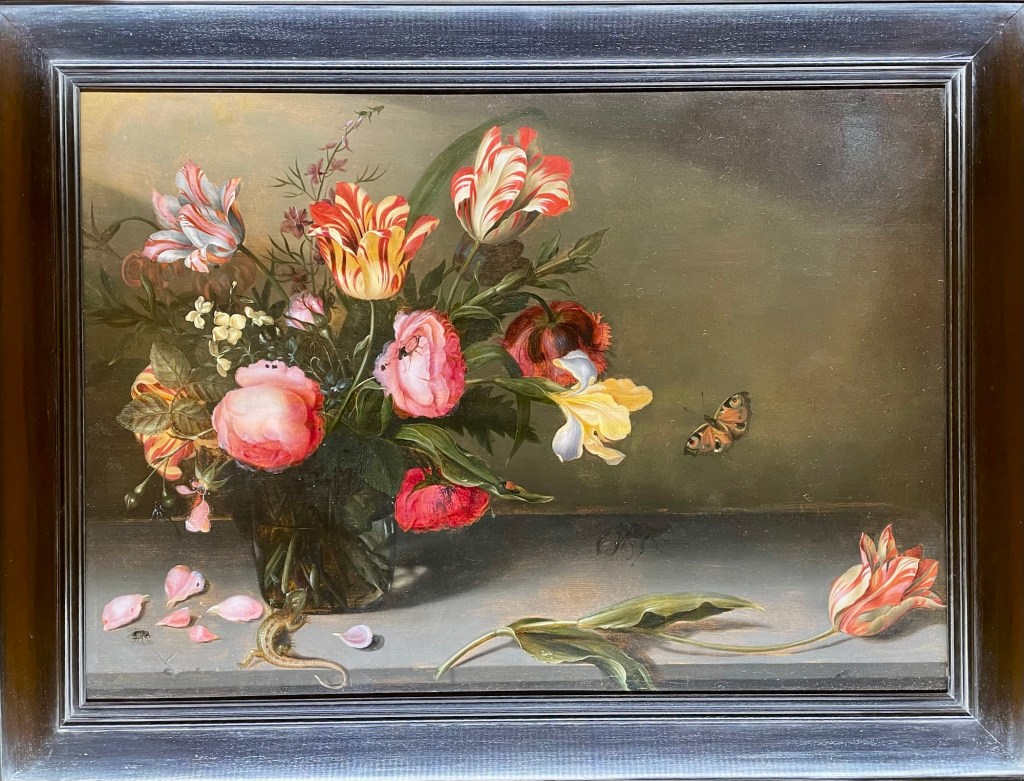
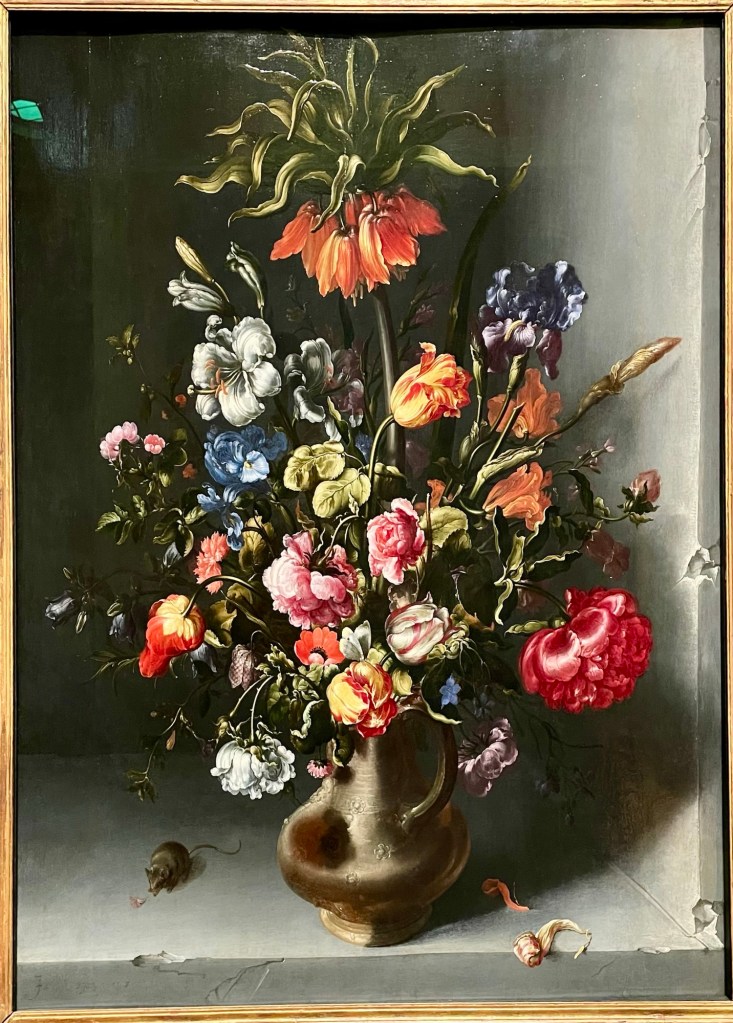
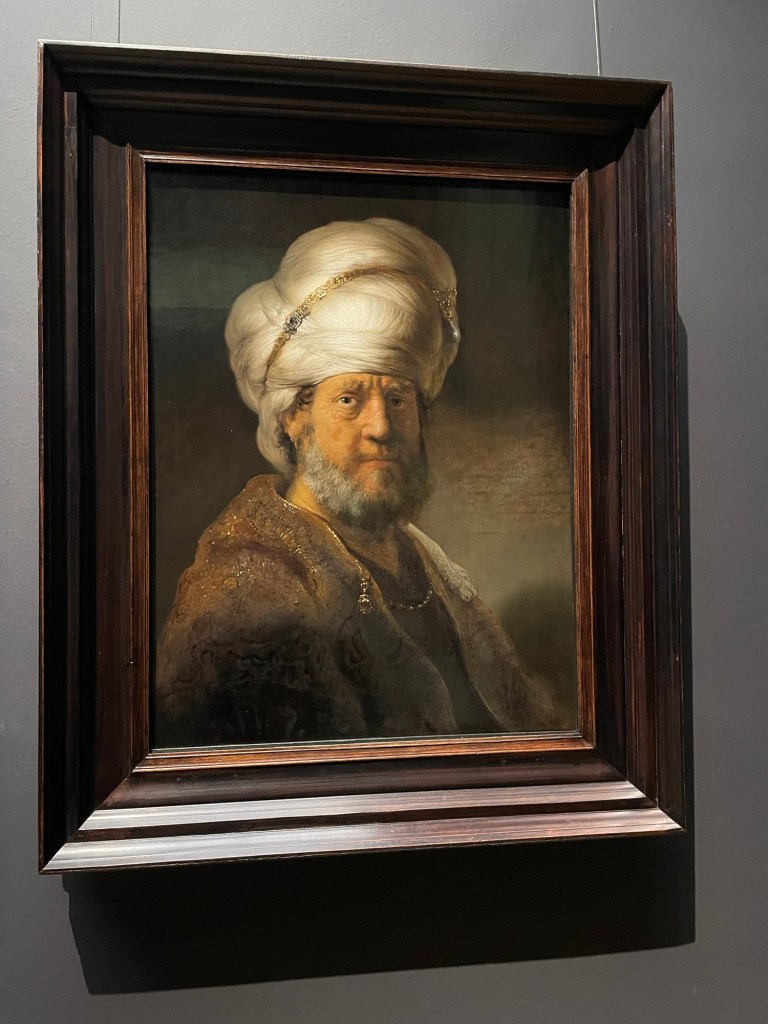
Industries grew up alongside the obsession. Artists were devoted to immortalizing the blooms in still life paintings, and often portrayed men wearing turbans. The name “tulip” comes from the Turkish word for turban, due to the flower’s shape resembling its folds.
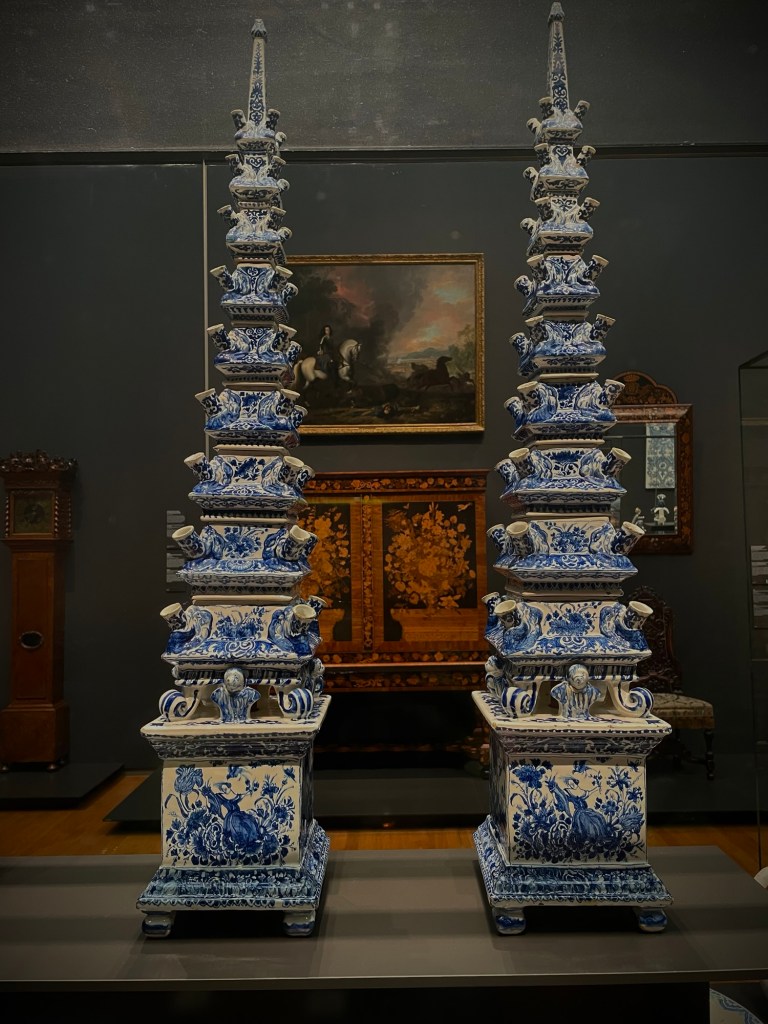
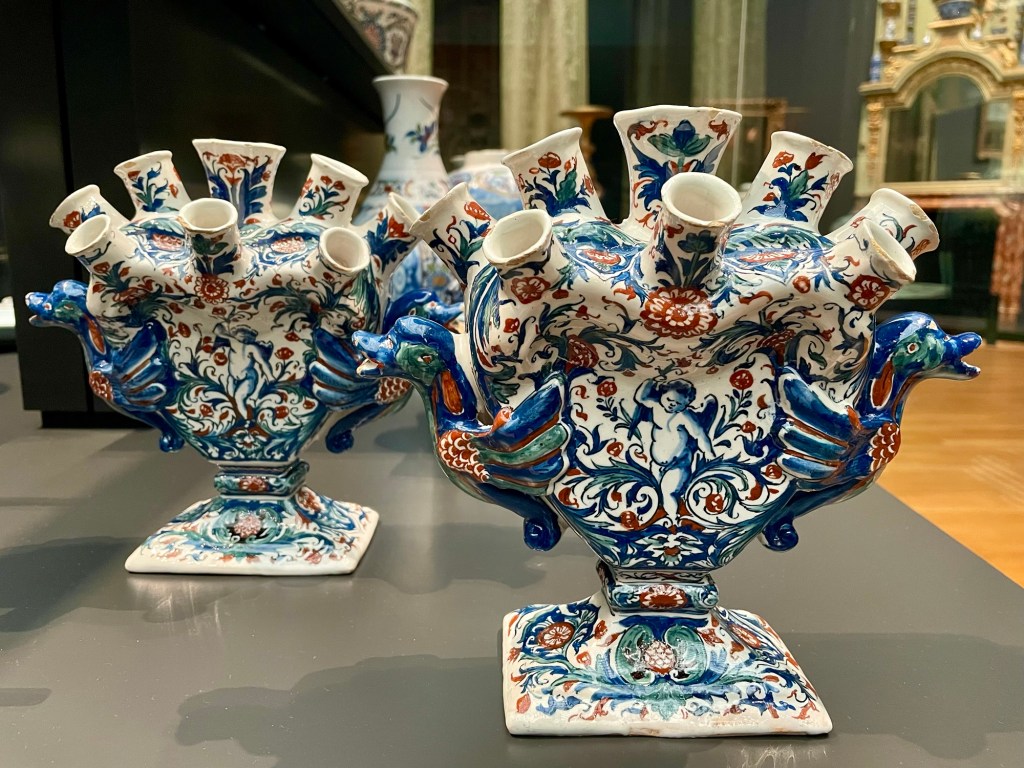
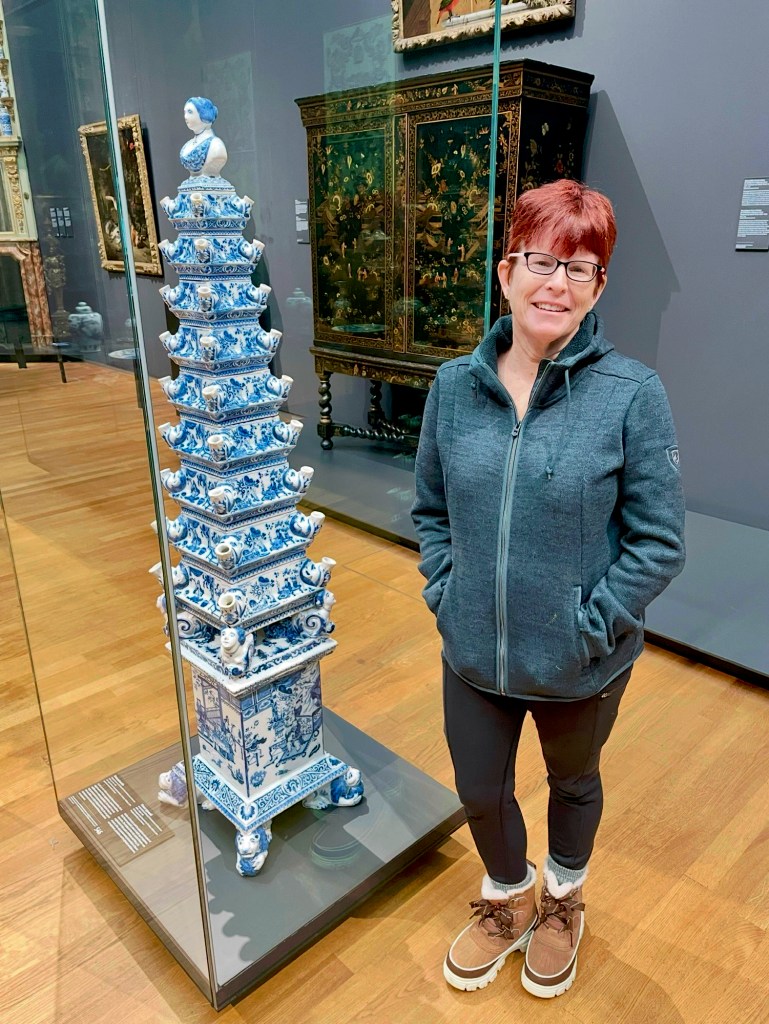
Delft potteries began creating unique and extravagant vases to display the blooms.
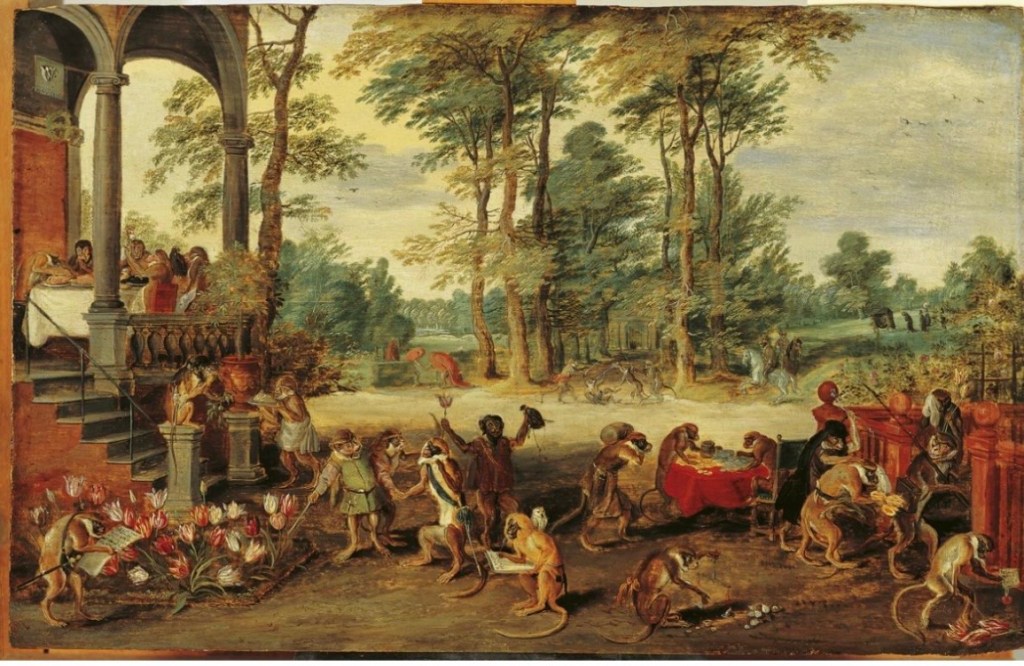
Prices became so outrageous that fortunes were made and lost on the speculation of tulip bulbs. By February 1637 the tulip market crashed. In this c.1640 painting, Jan Breughel the Younger portrayed these speculators as foolish monkeys. Hidden among those conducting business are details such as a monkey urinating on tulips, buyers fighting, and a speculator being carried to his grave- all while an oblivious group continues to eat and drink.
The Tulip Museum in Amsterdam documents this rise and fall, which is viewed by economists as the first recorded speculative bubble.
Even after the crash, tulips remained popular in the Netherlands to the extent that during the World War II “Hunger Winter” of 1944–45 many Dutch, including a teenage Audrey Hepburn, survived by eating tulip bulbs.
Horticulture remains central to the Dutch economy, making up 3-10% of the total GDP and supplying 50-60% of the global cut flower trade. They produce 90% of the world’s tulip bulbs, and Royal FloraHolland in Aalsmeer is the world’s largest flower auction.
Amsterdam’s floating flower market was established in 1862. It was described by Vincent van Gogh (On the Van Gogh Trail: Amsterdam), who often walked past during his time in the city, and you can still buy flowers (or bulbs depending on the season) at its many shops.
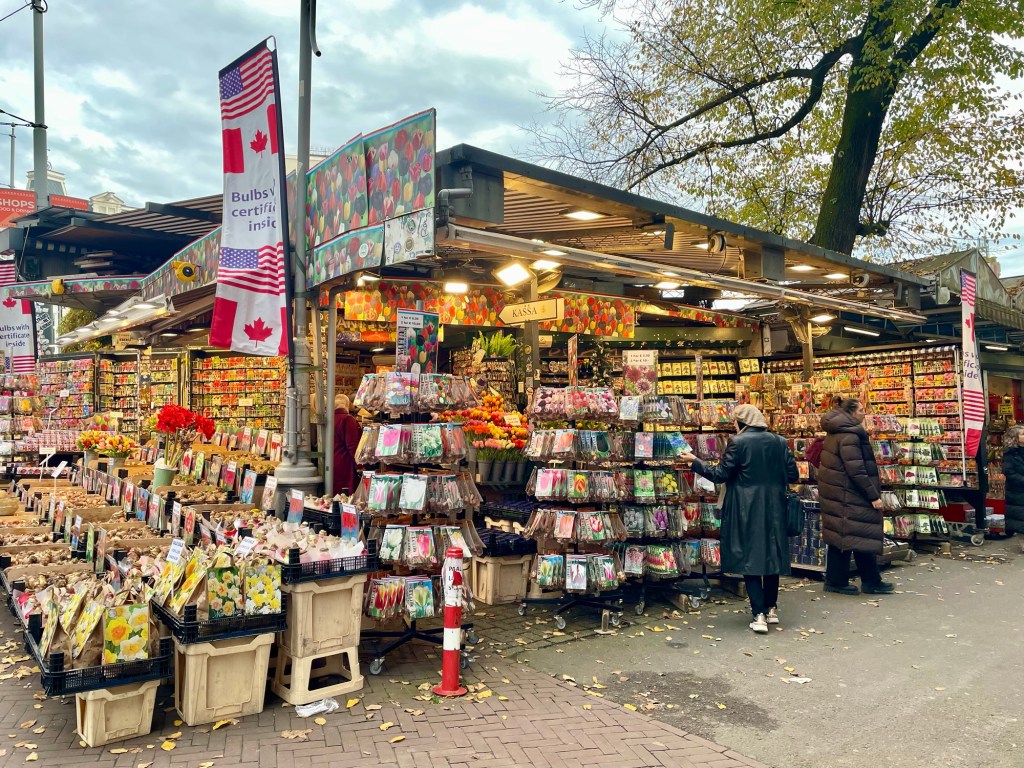
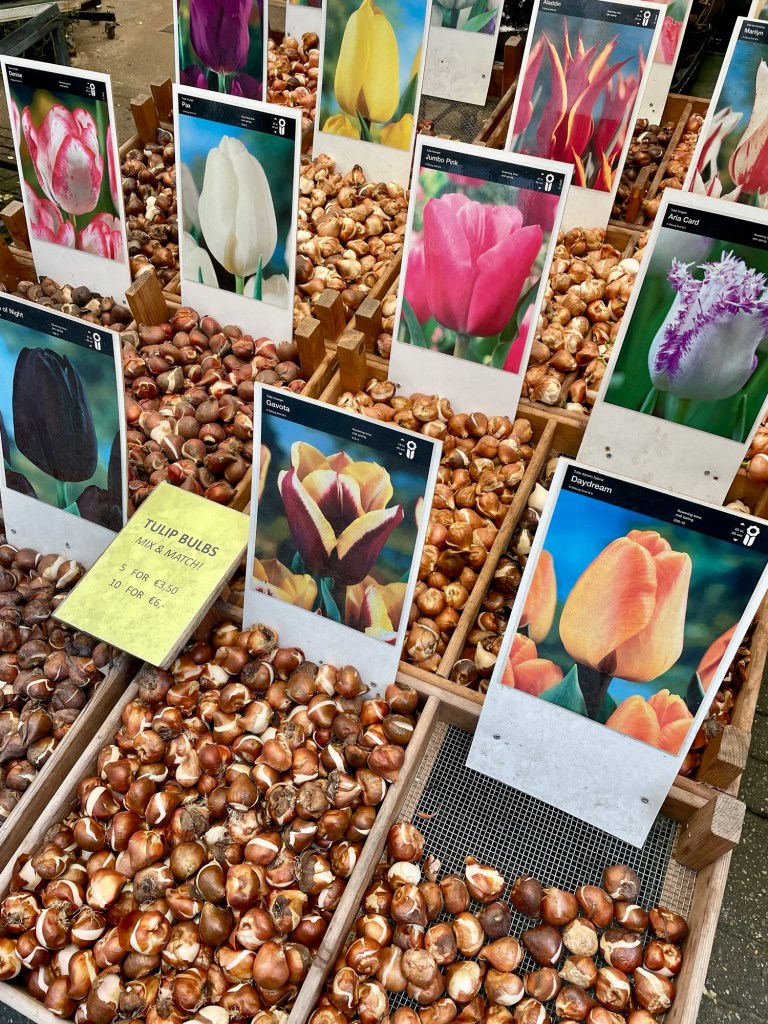
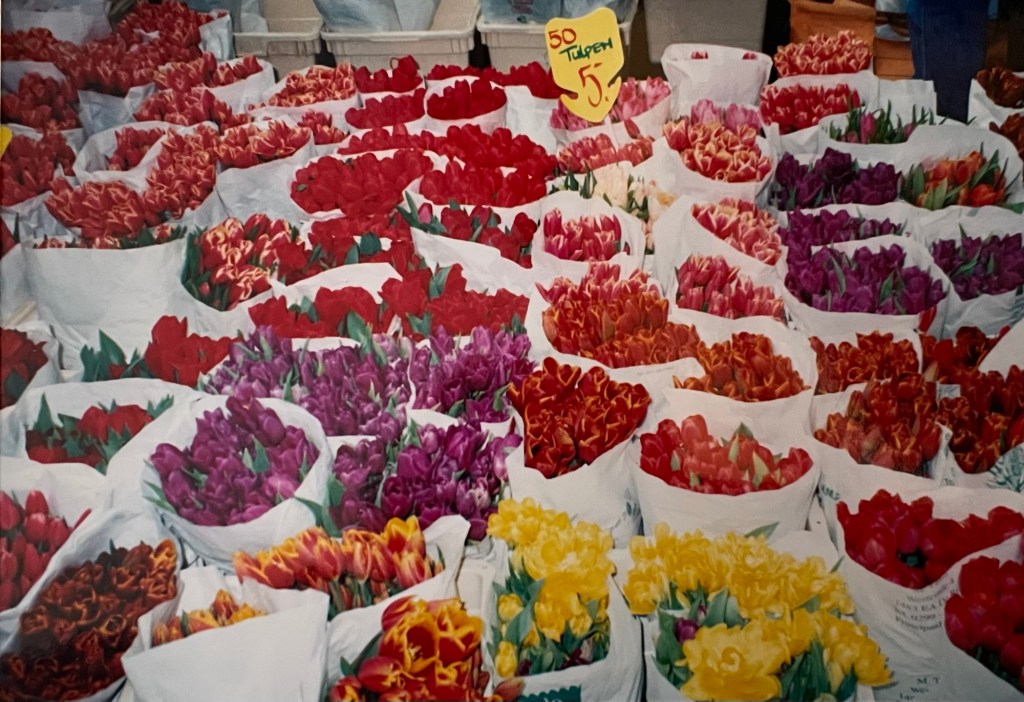
From the fantastic prices paid during the Dutch Golden Age to starvation rations during World War II, tulips are an enduring symbol of the Netherlands.
*BONUS: For maximum tulip mania, plan on a spring visit. You can visit Keukenhof to see the world’s most impressive display of tulips, and find tulips for sale throughout the country. Buy a bunch to brighten your hotel room!
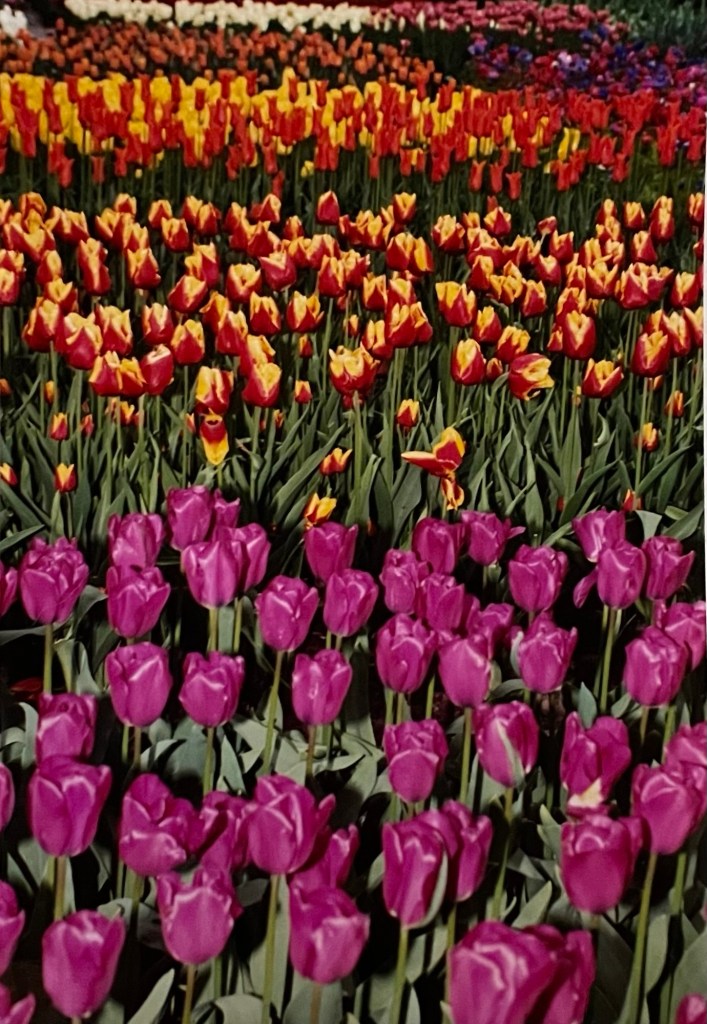
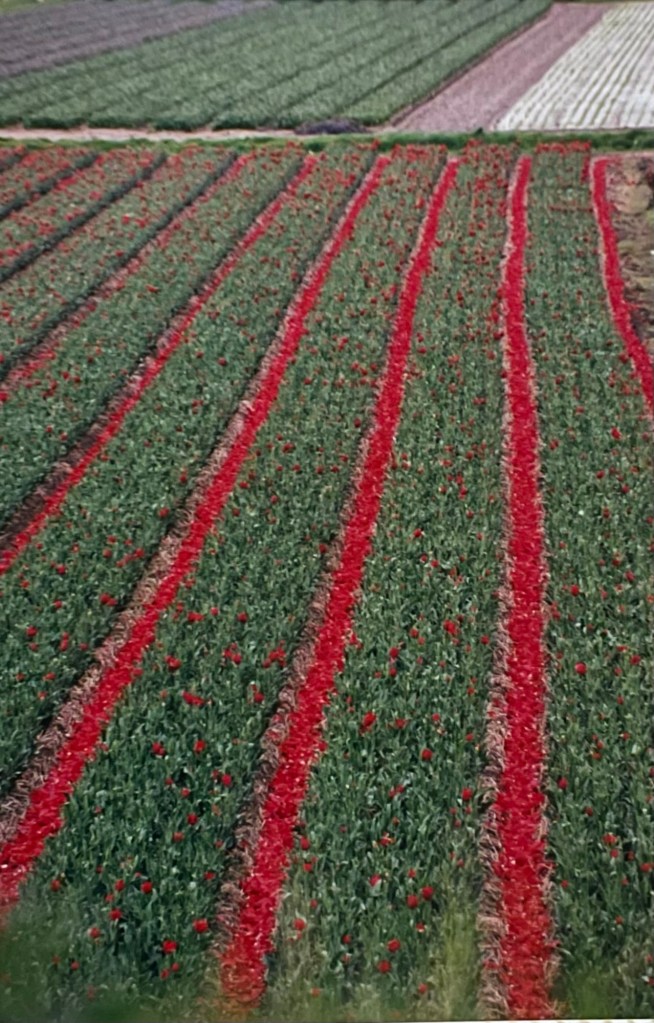
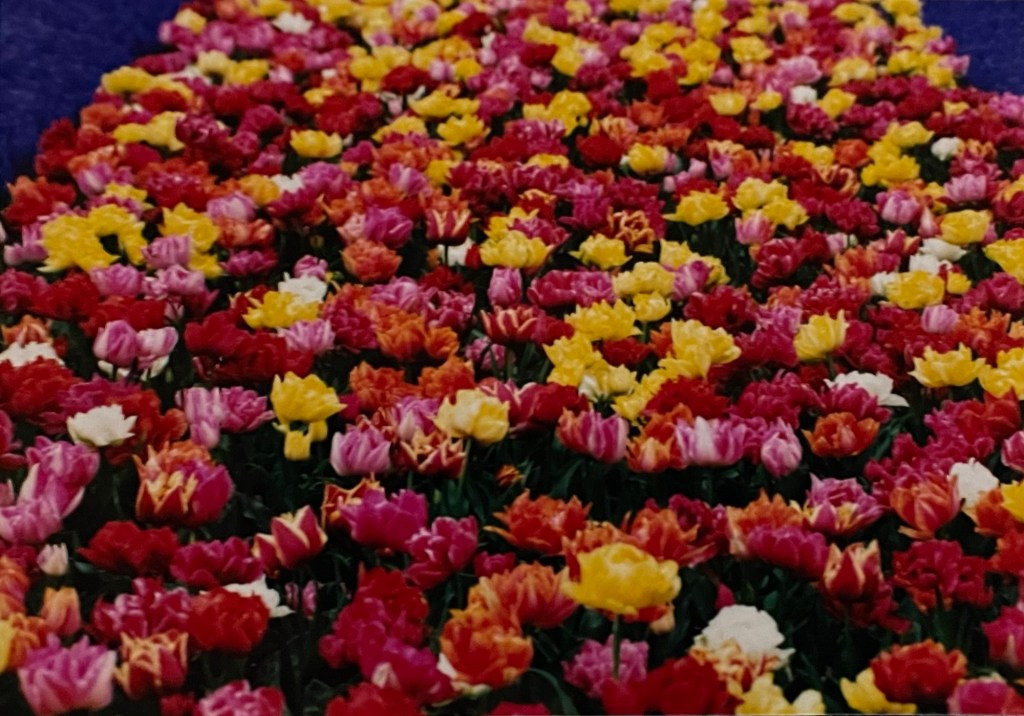
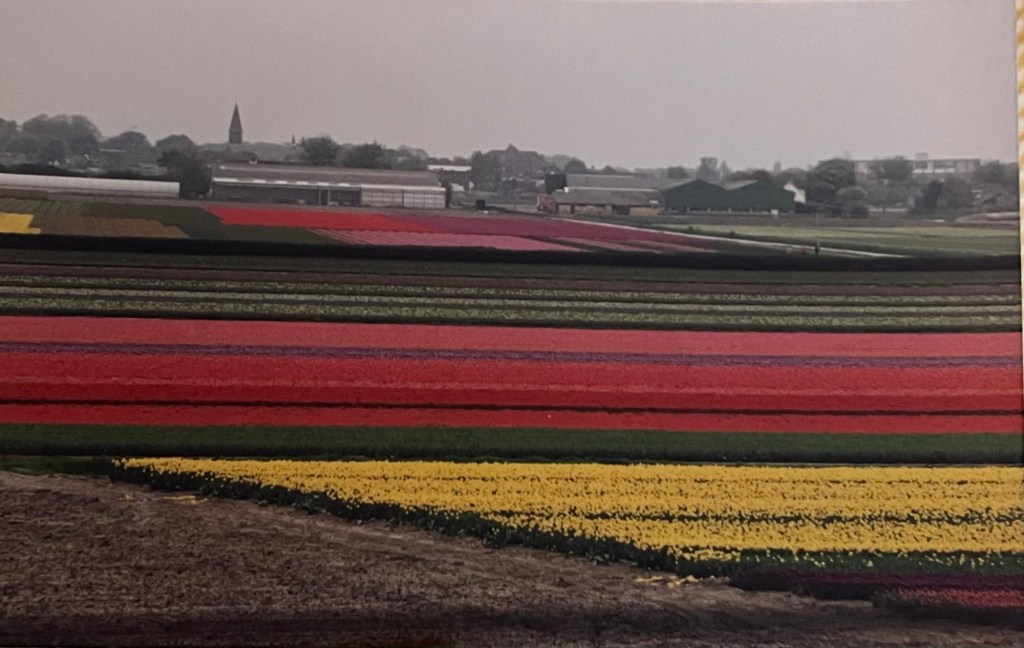
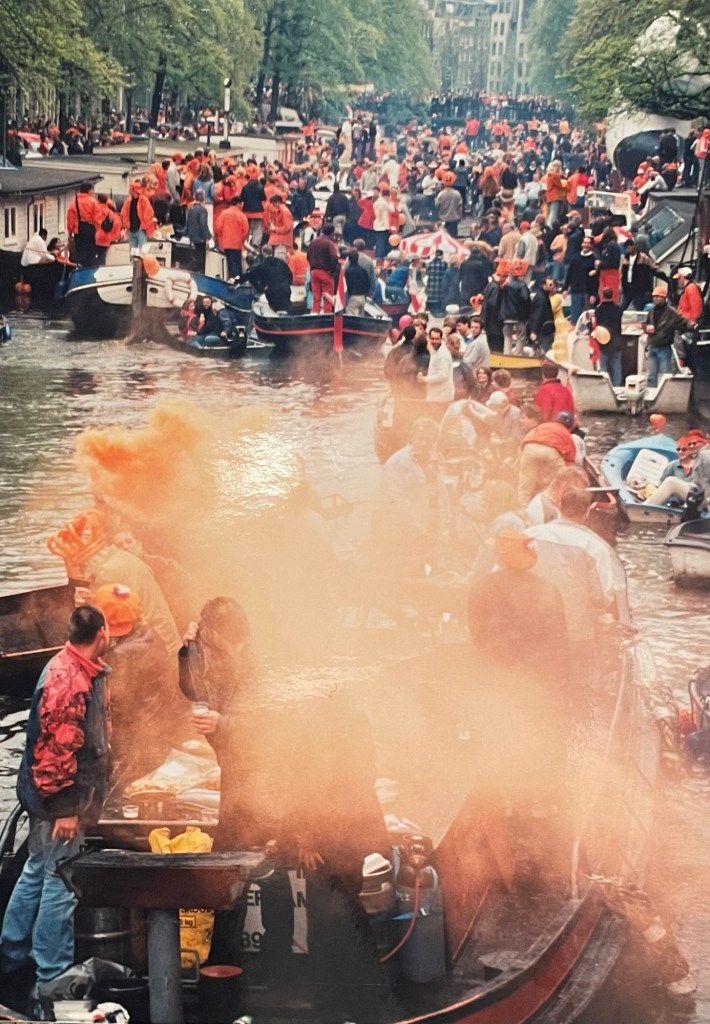
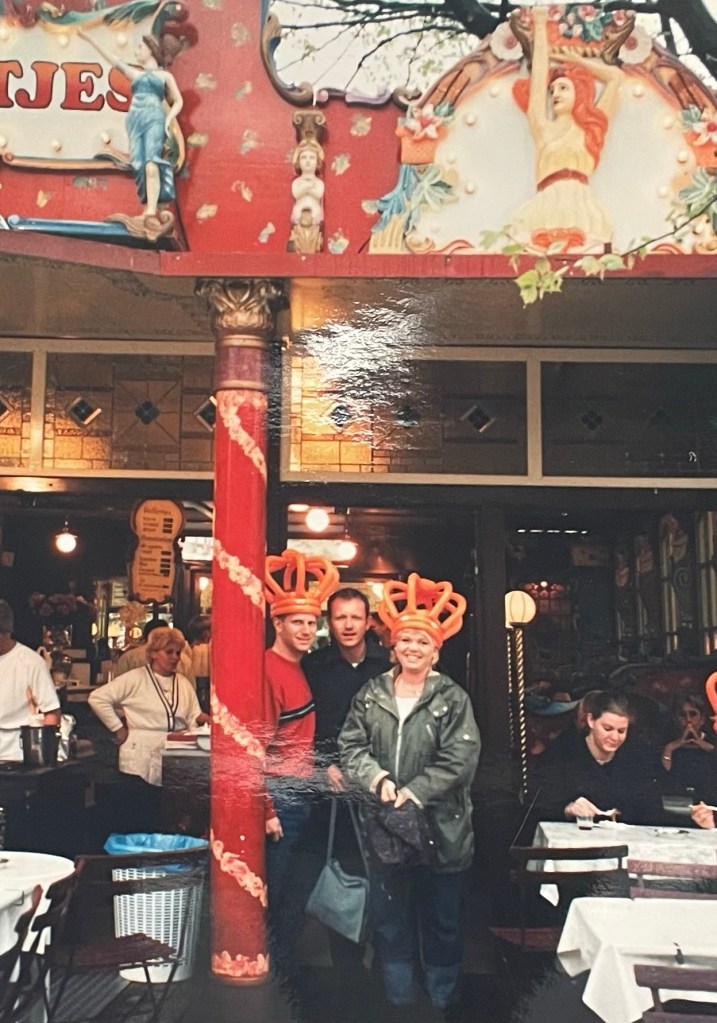
It’s possible to make a tulip holiday coincide with King’s Day, the April 27 celebration of the Dutch king’s birthday. It’s an annual street festival with canal-side flea markets and lots of orange (maybe even an orange crown!).
 Secrets of Philadelphia