Just outside of London, Strawberry Hill is one of those places that even with no prior knowledge is a fun visit to enjoy the art and architecture, but the more you know about its history and owner, the more fascinating it becomes.
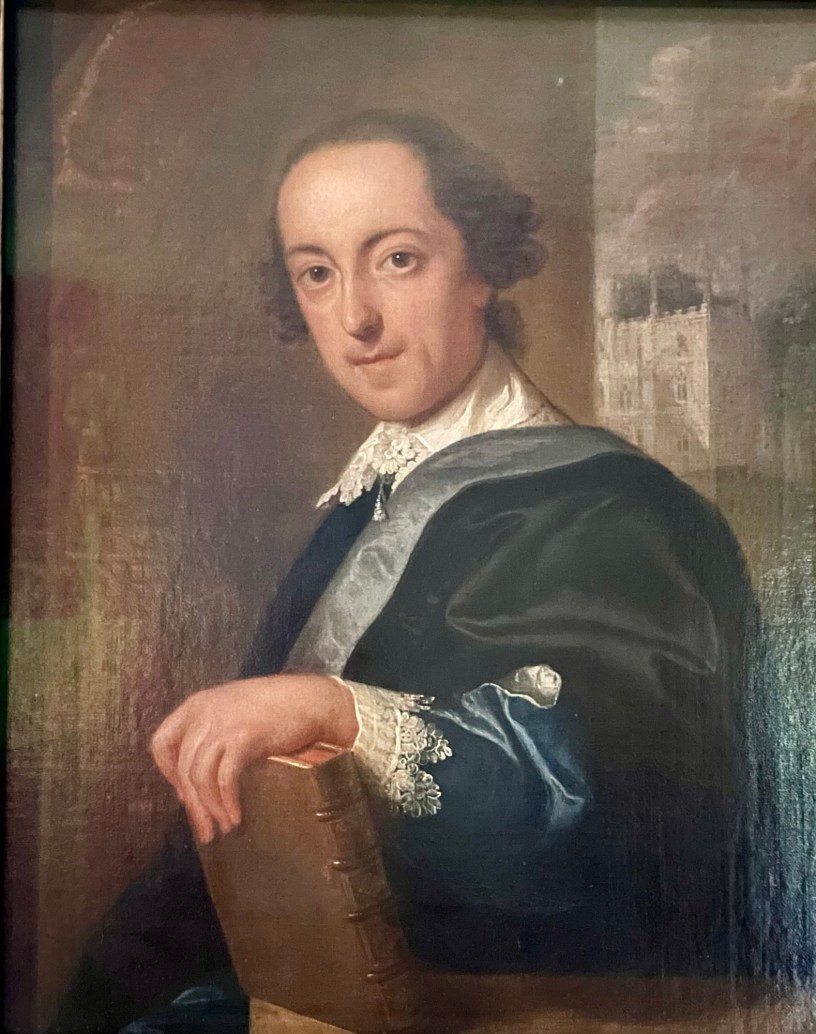
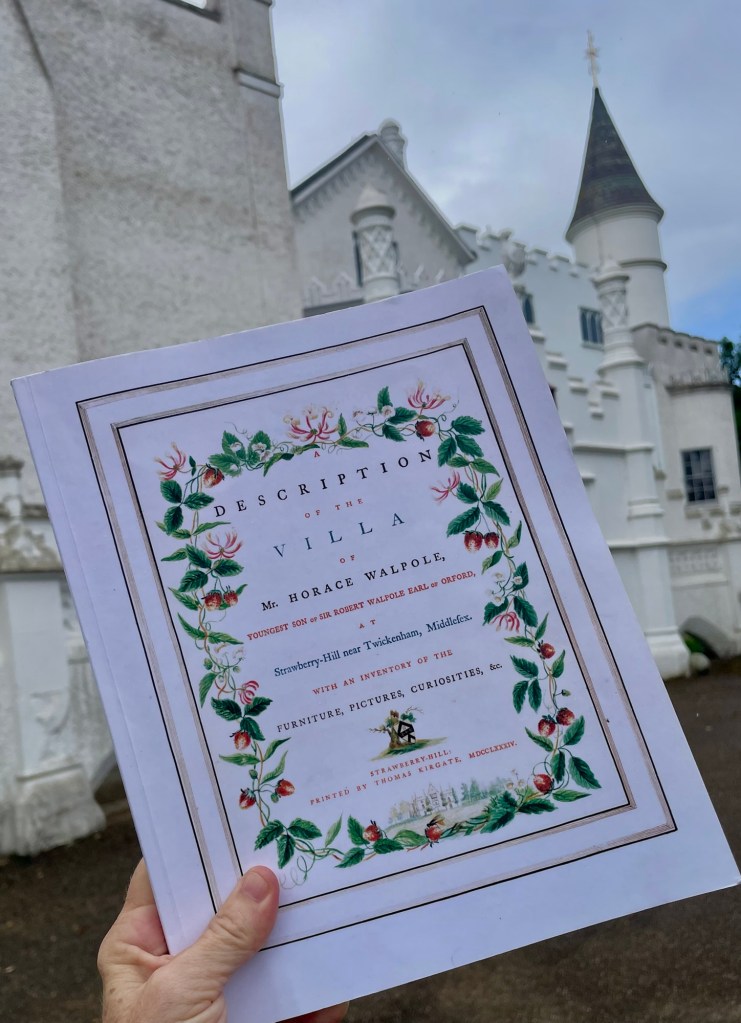
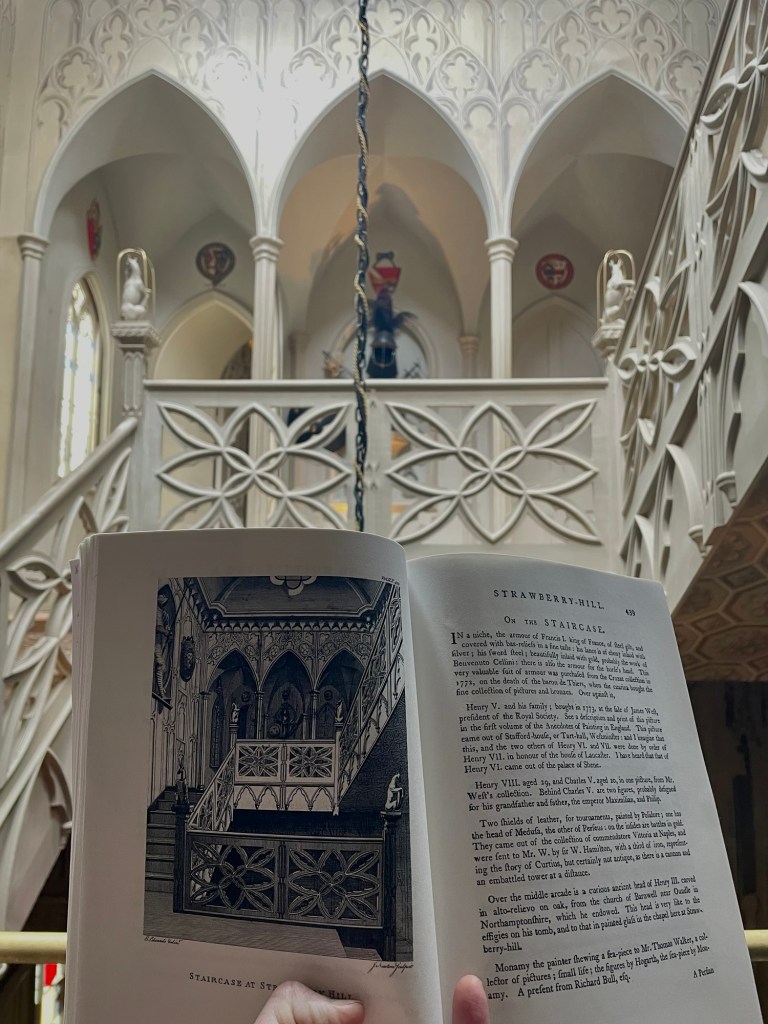
The original house was a small 17th century cottage, but our story focuses on its 1749 purchase by Horace Walpole, youngest son of England’s first and longest serving Prime Minister. Due to his fascination with the middle ages, Horace expanded it into one of the first gothic revival houses, filling it with a collection of thousands of pieces of art and historical items, so many that he felt an obligation to open the house to the public and wrote a visitor’s guide. Today you can tour with a copy of the original guide to discover Horace’s descriptions, gossip, and listings of provenance, along with illustrations (I purchased mine on Amazon).
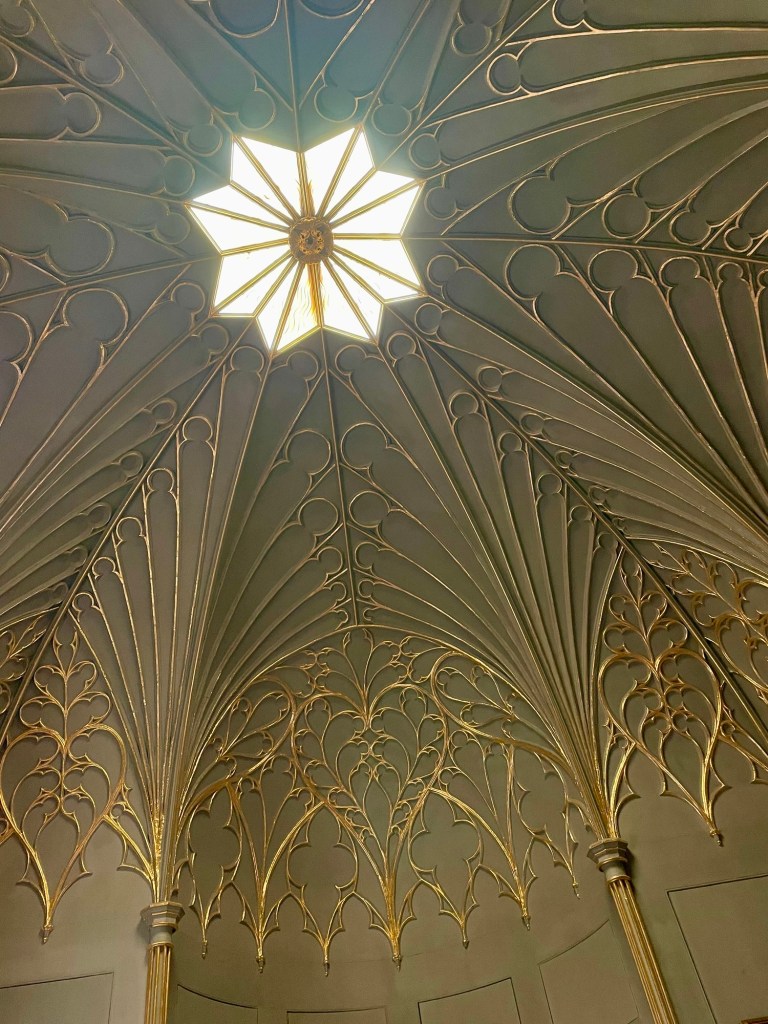
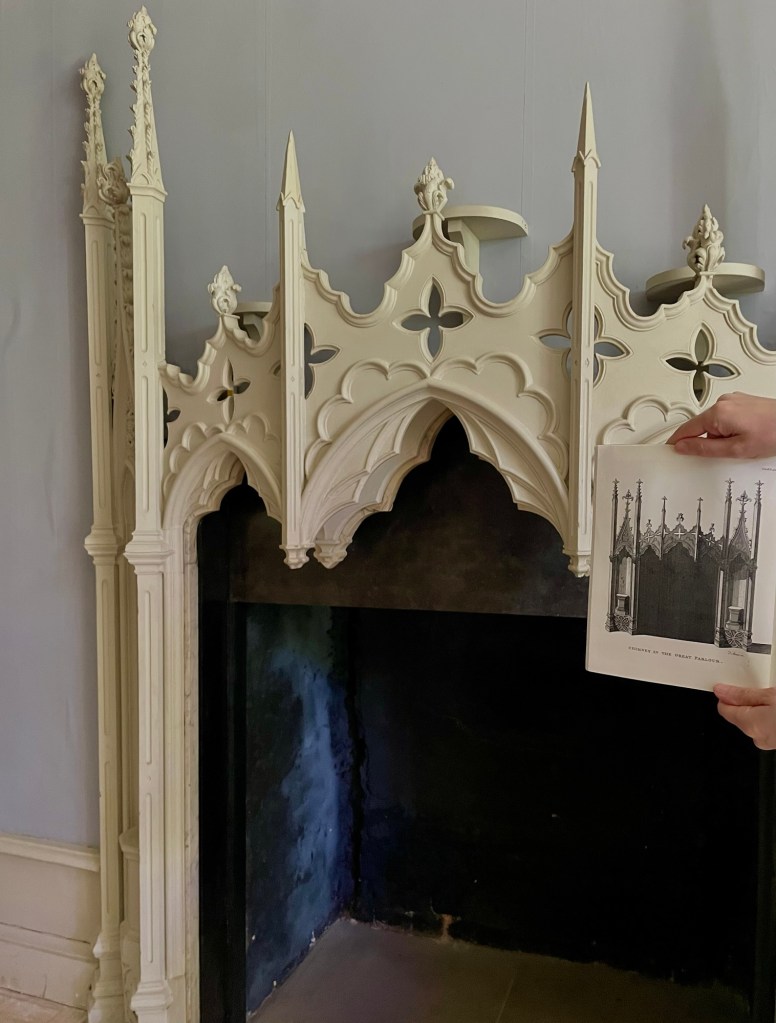
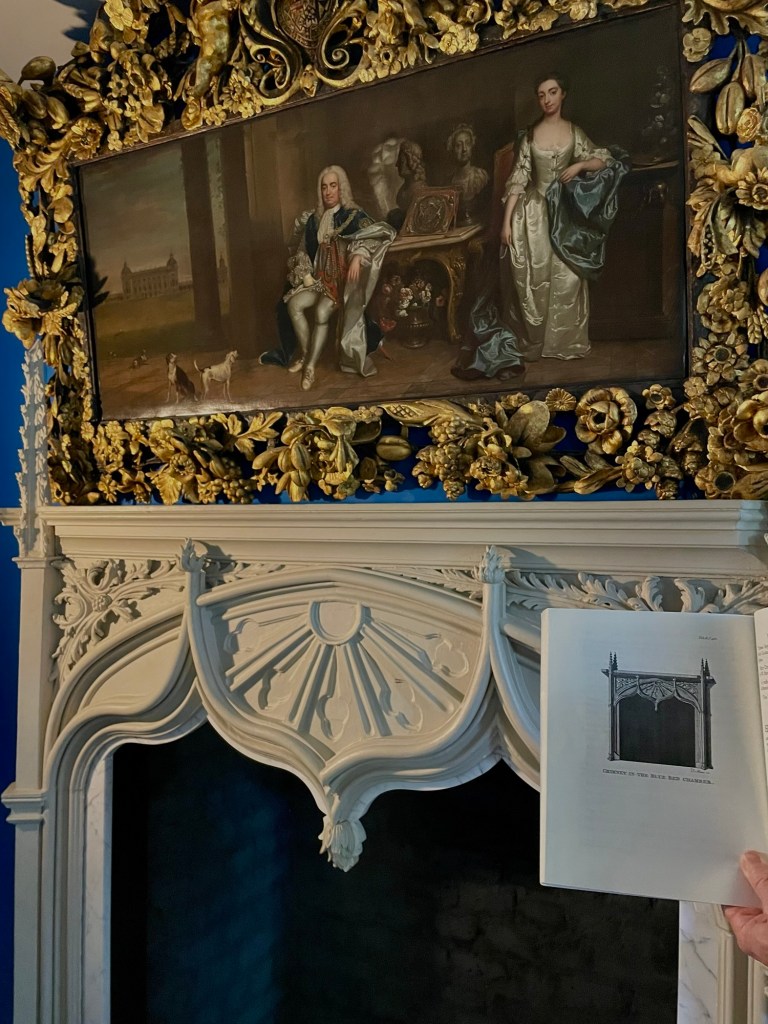
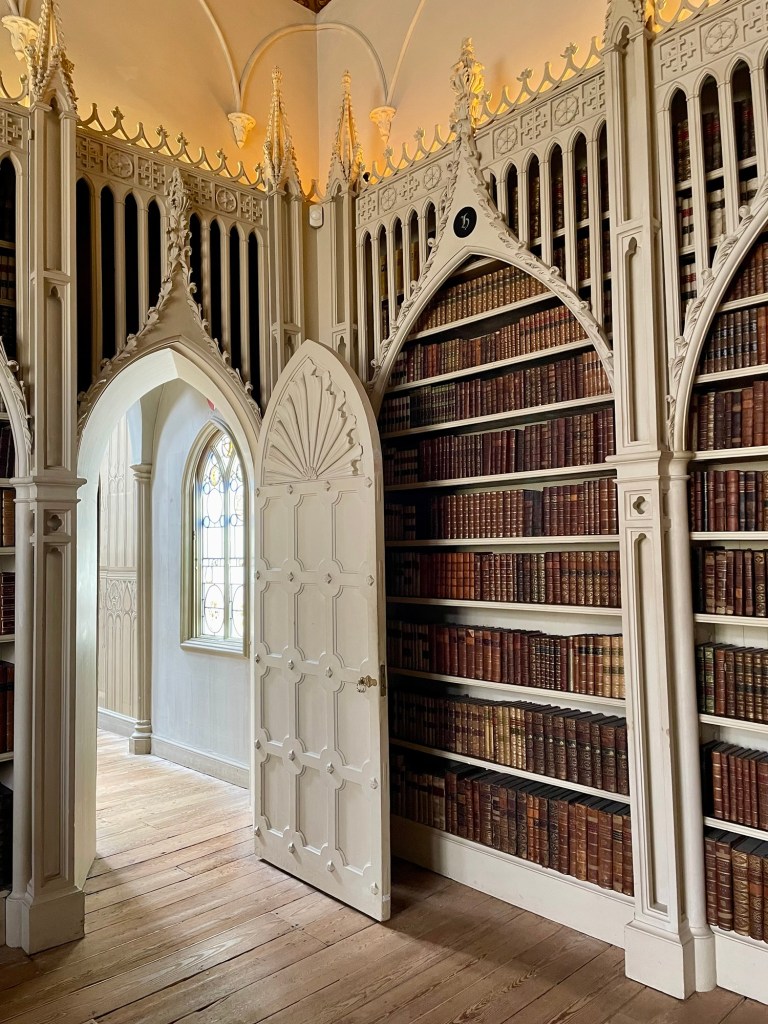
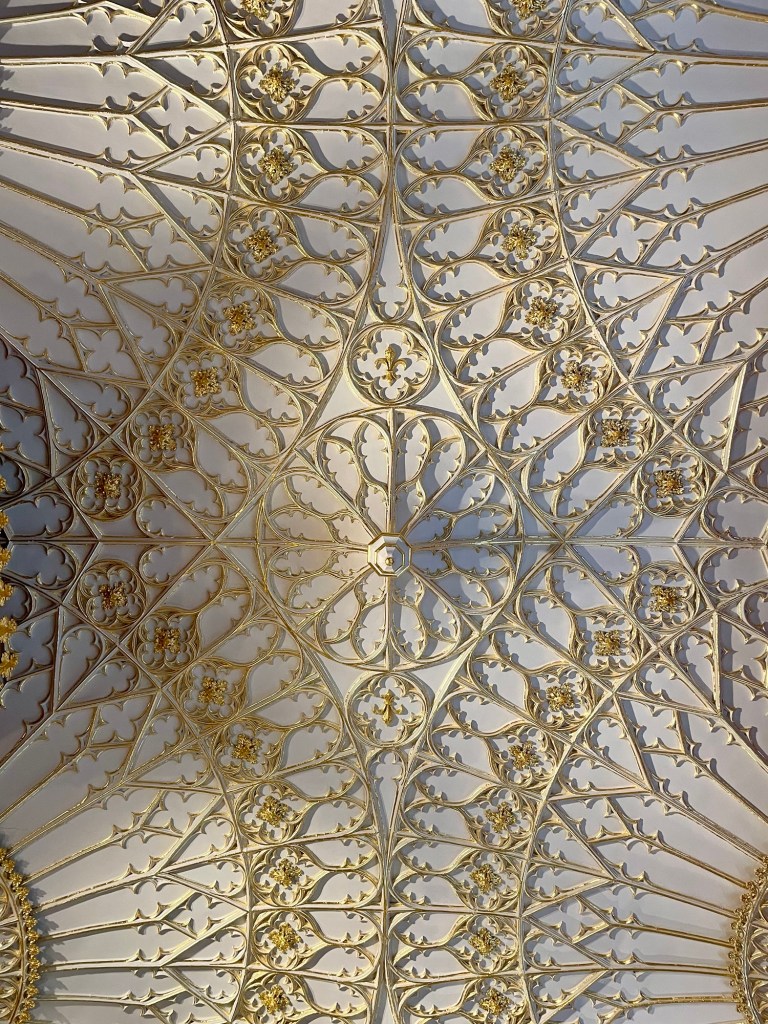
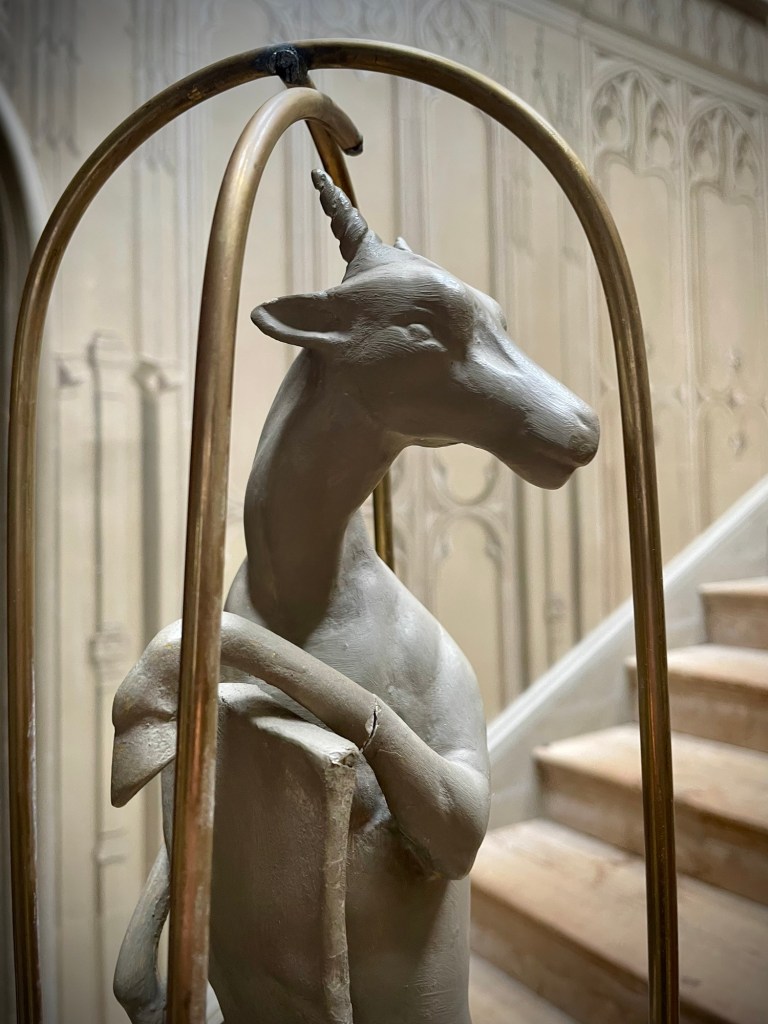
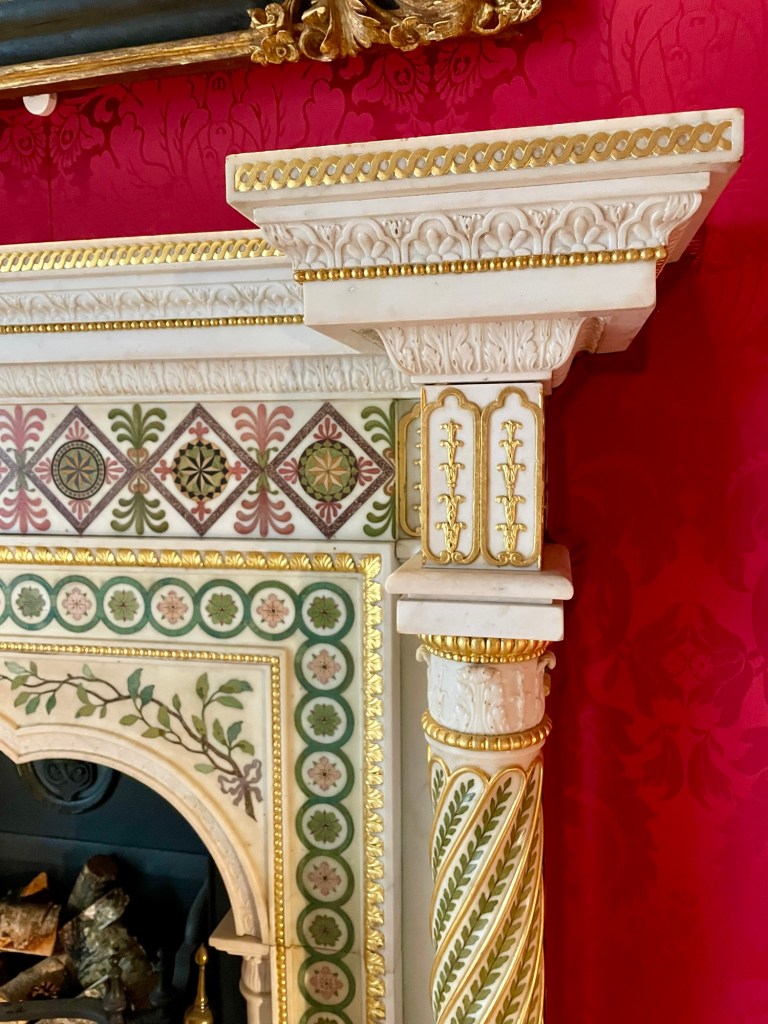
Although the house’s contents were stripped and sold after Walpole’s death, much of his exterior and interior architecture survives. This includes several of the medieval-tomb inspired mantelpieces, the gilded papier mâché gallery ceiling, the choir-stall inspired library bookcases, some of the 16th and 17th century stained glass, and the carved heraldic antelopes on the staircase balustrade.
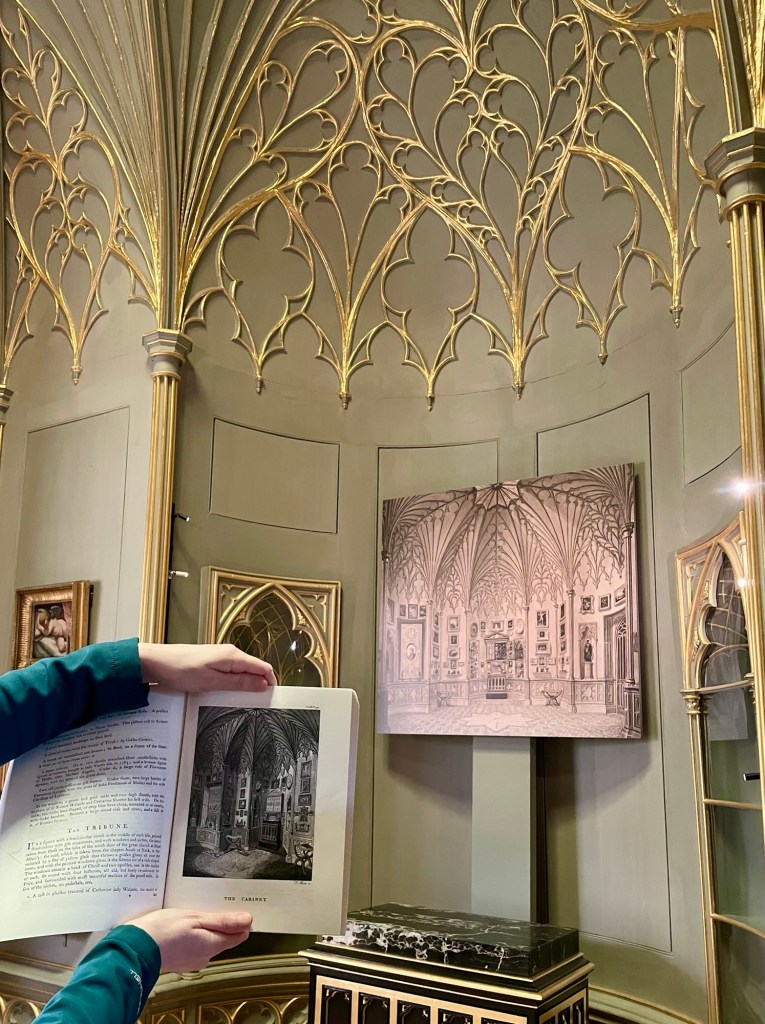
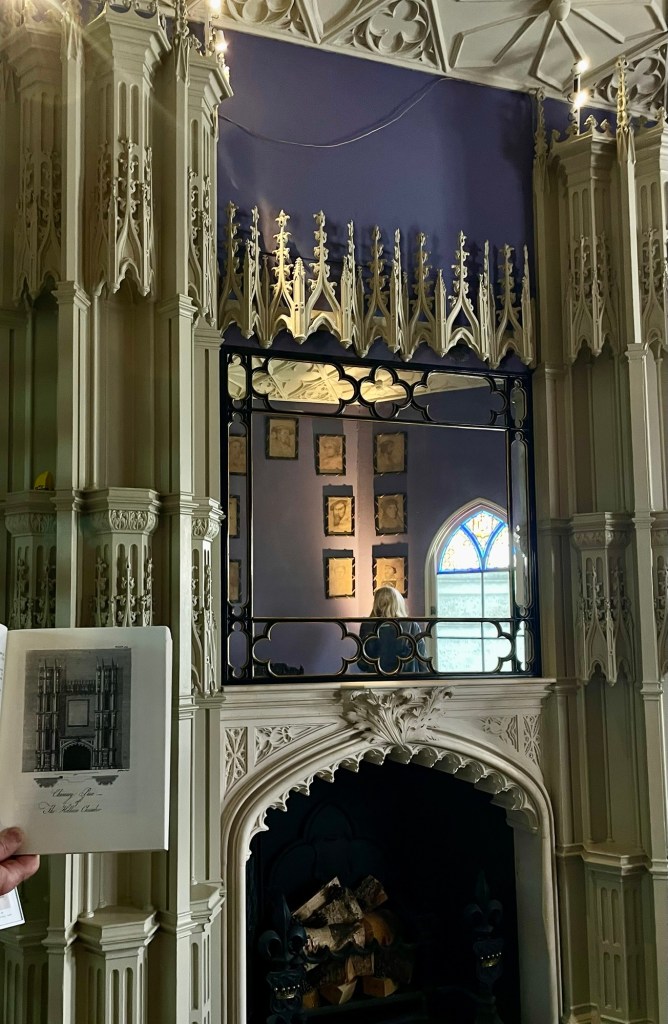
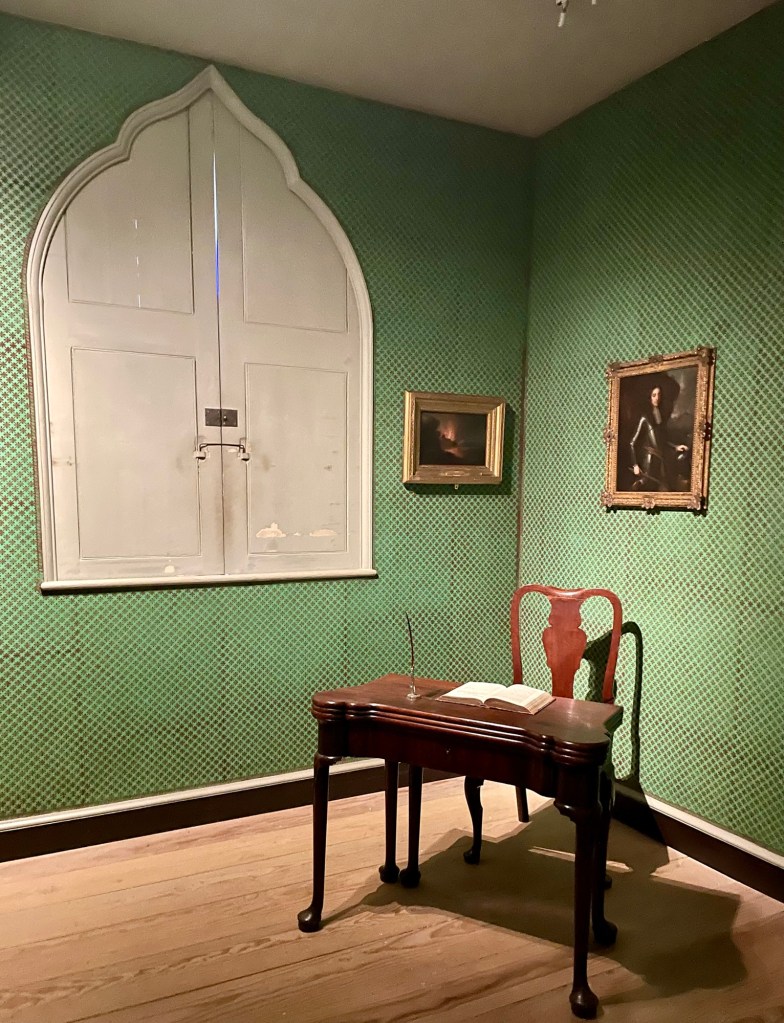
It was this small room that Horace used as his study, writing many of his thousands of letters, a racy incest story, nonfiction, and the world’s first gothic novel.
Deathbed prophecy! Doomed romance! Creepy castle! Damsel in distress! Hidden passages! Long lost heir! Kidnap by pirates! Improper marriage!
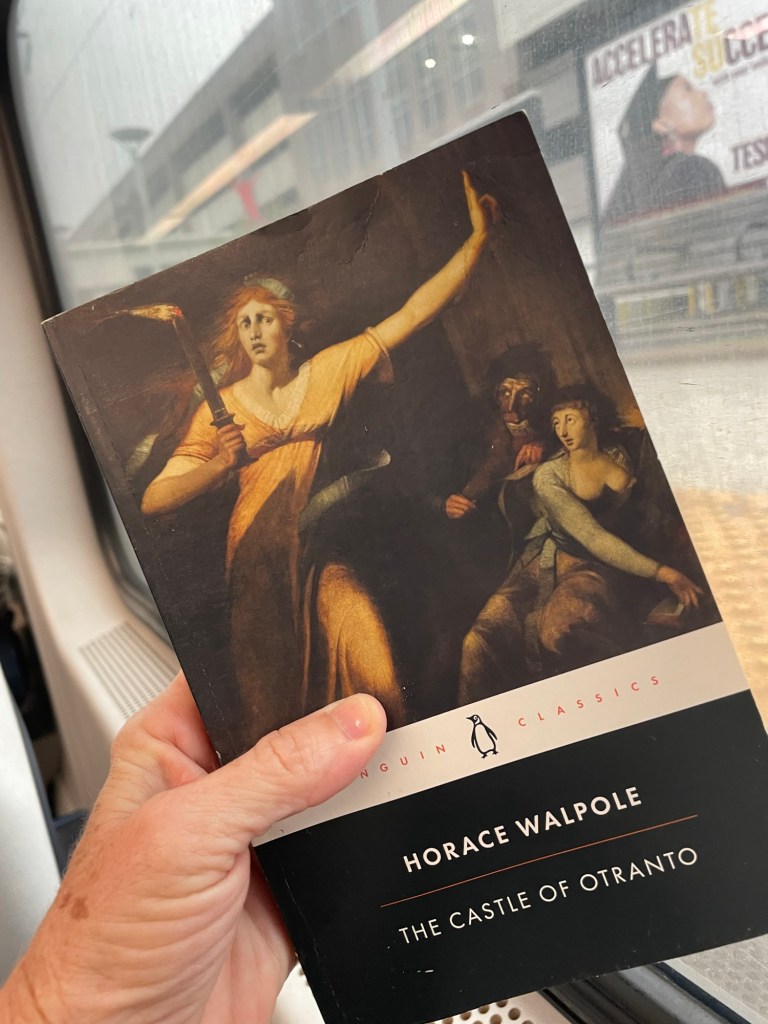
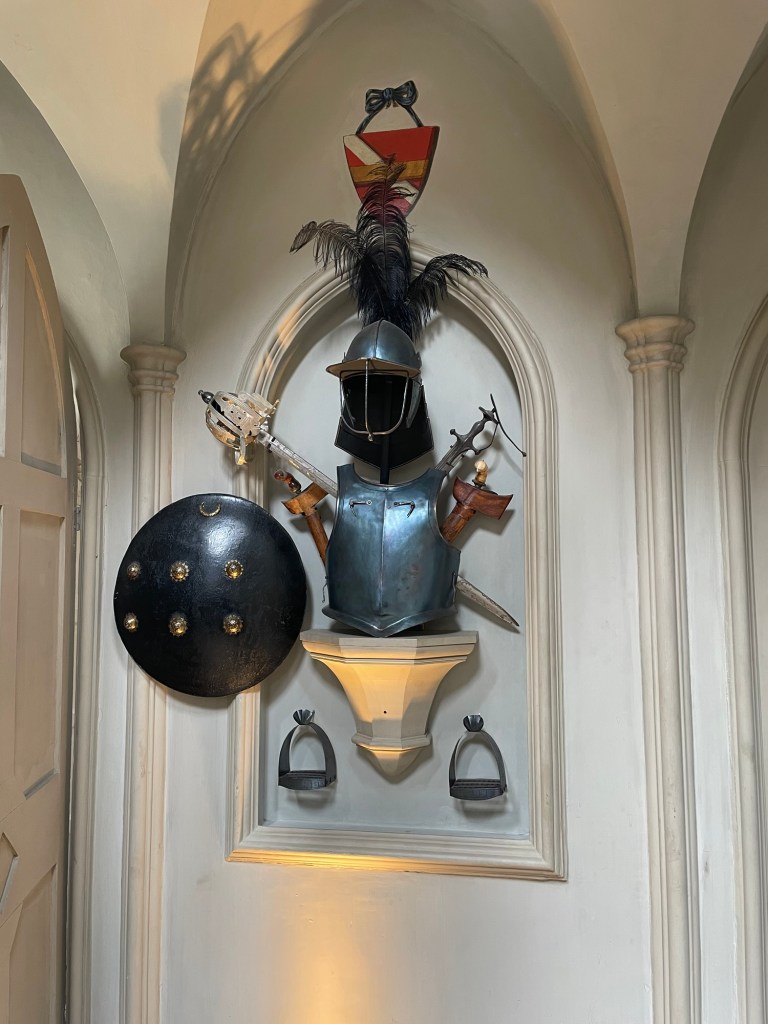
Horace’s 1764 The Castle of Otranto is full of the tropes that we now recognize as gothic horror, several of which were directly inspired by Strawberry Hill. The opening scene in which a young prince is crushed to death by a giant helmet was based on Horace’s nightmare where a giant armoured fist appeared on the house’s staircase. Perhaps one of the pieces Horace displayed in his entry hall??
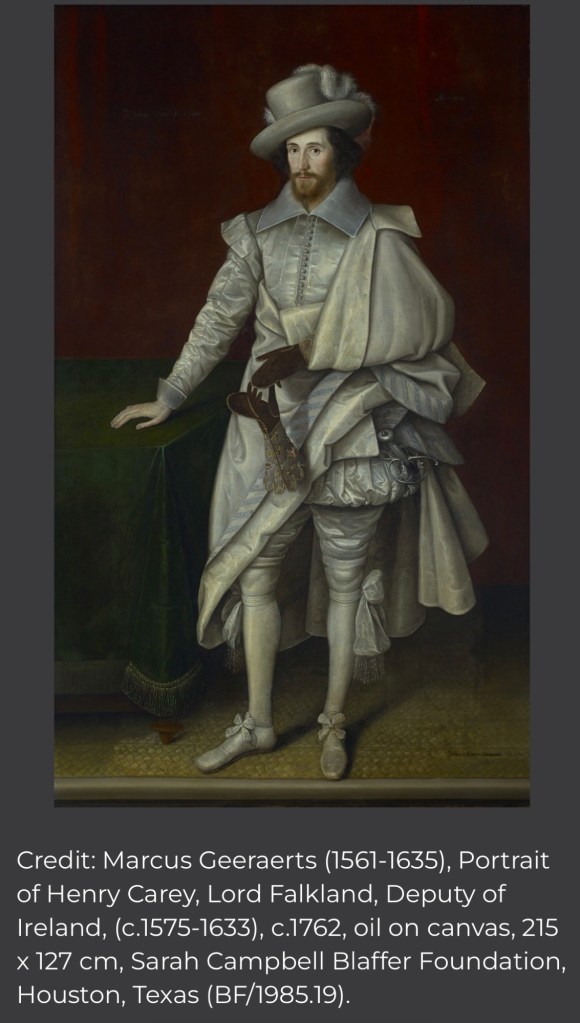
Unfortunately you can no longer see the artwork which inspired another creepy scene in which the main character sees a painting of his grandfather “quit its panel, and descend on the floor with a grave and melancholy air.” Sold in the Great Sale, its current location has yet to be traced, but it was probably a copy of this painting. Perhaps it was the all white outfit that gave Horace his ghostly idea??
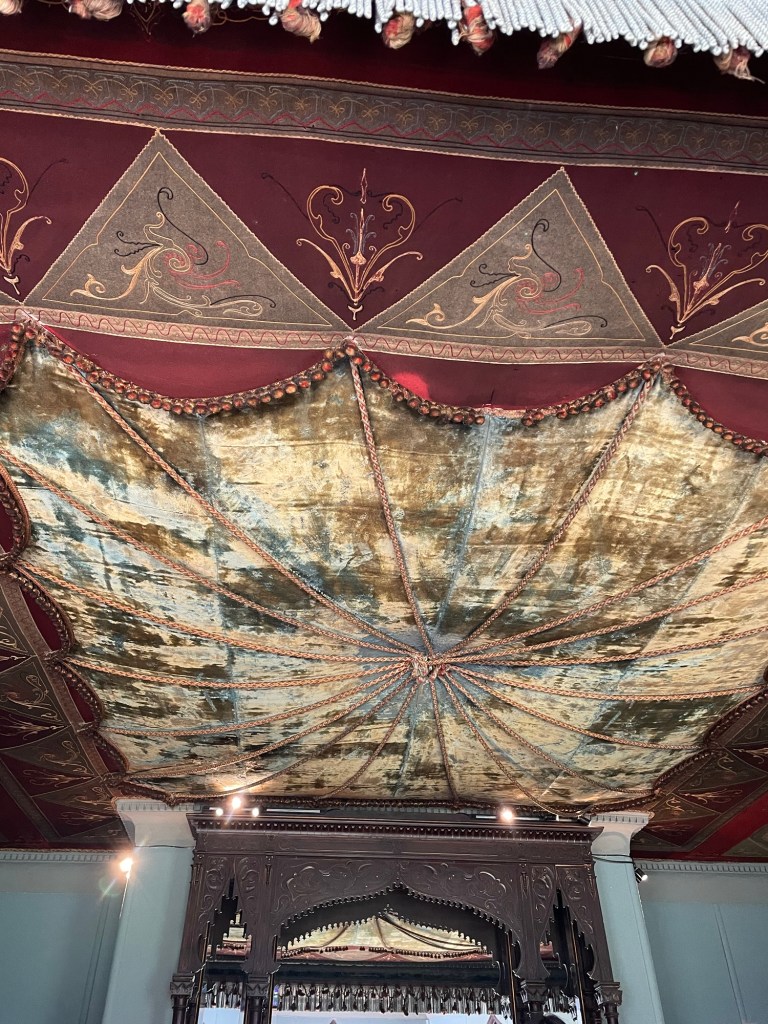
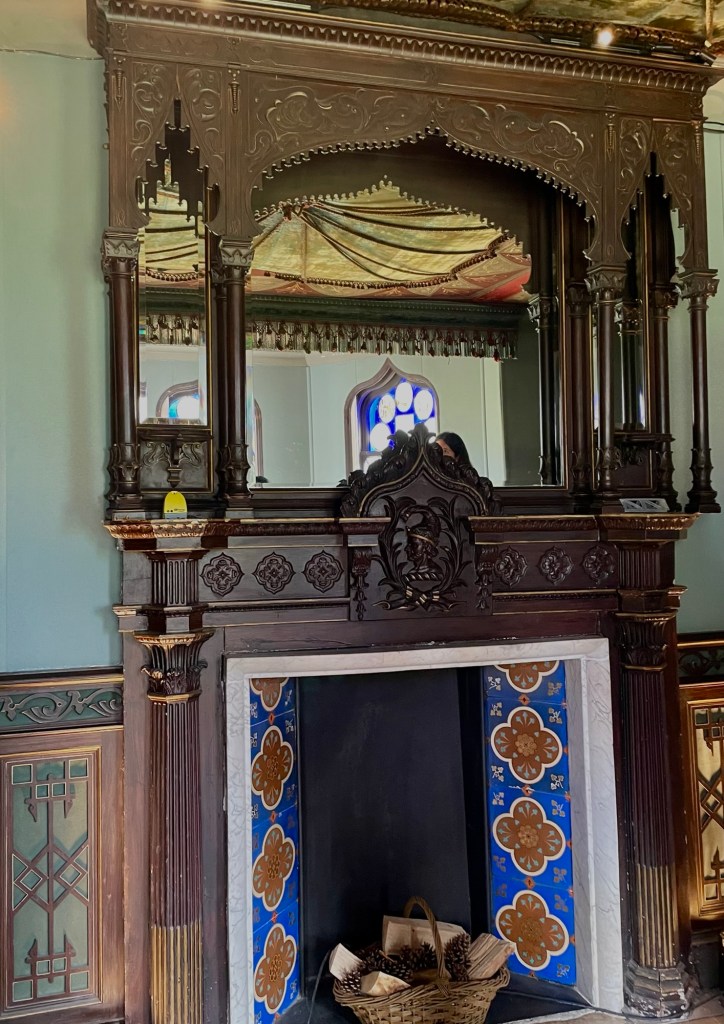
While much of the house has been returned to its 18th century gothic appearance, there are a few more ornate Victorian additions like the Turkish Boudoir which date back to Frances, Countess Waldegrave, who inherited the home in 1846.
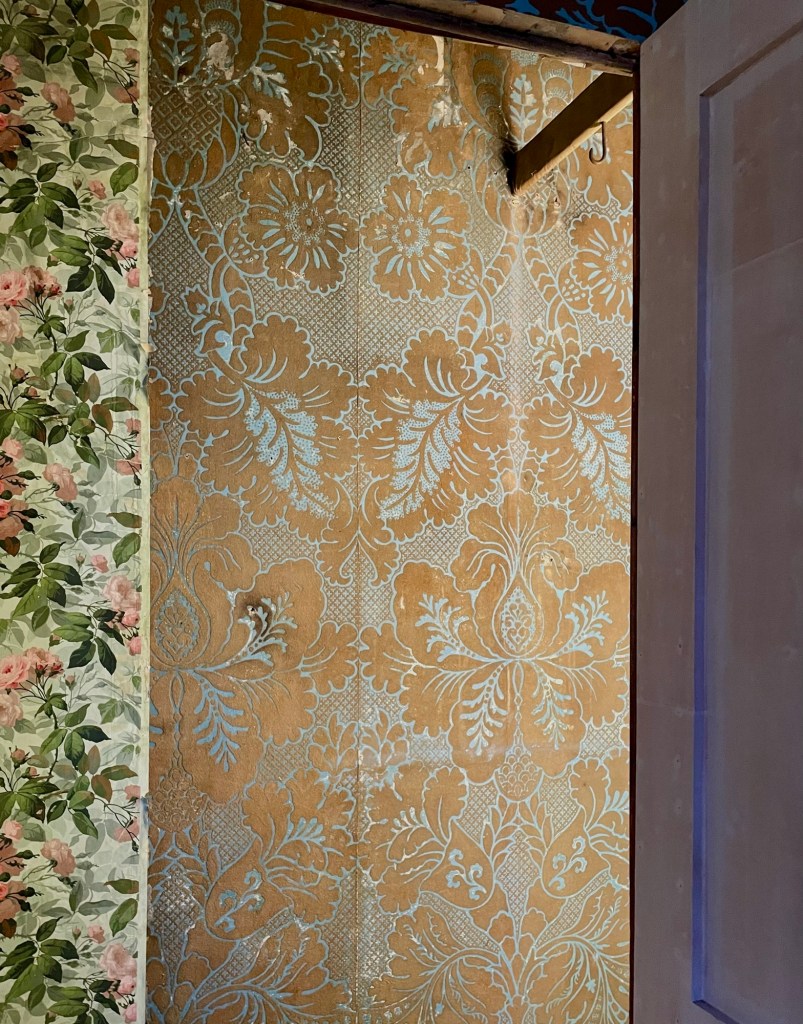
In an upstairs cupboard you can see her wallpaper alongside Horace’s original.
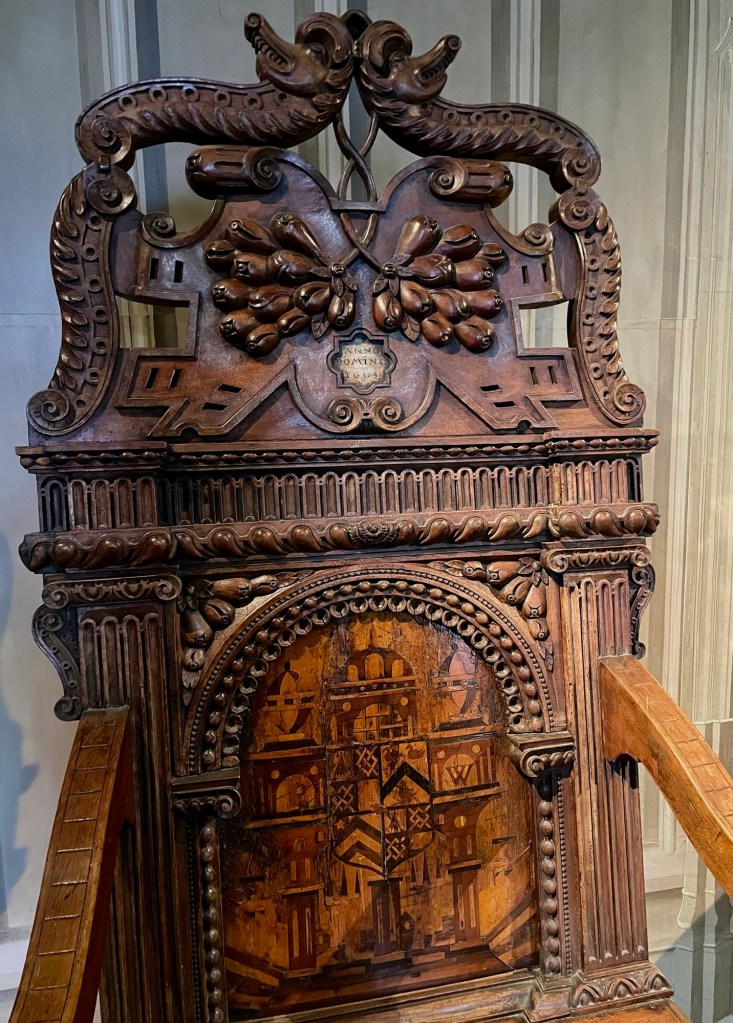
After Horace’s death, the house’s contents were sold at auction, resulting in the collection being scattered across Europe and America. Countess Waldegrave repurchased some, and over the years donations, purchases and loans have returned more. Some items are copies of original works located elsewhere, but all help remind visitors of the extensive collection that Horace detailed in his guide.
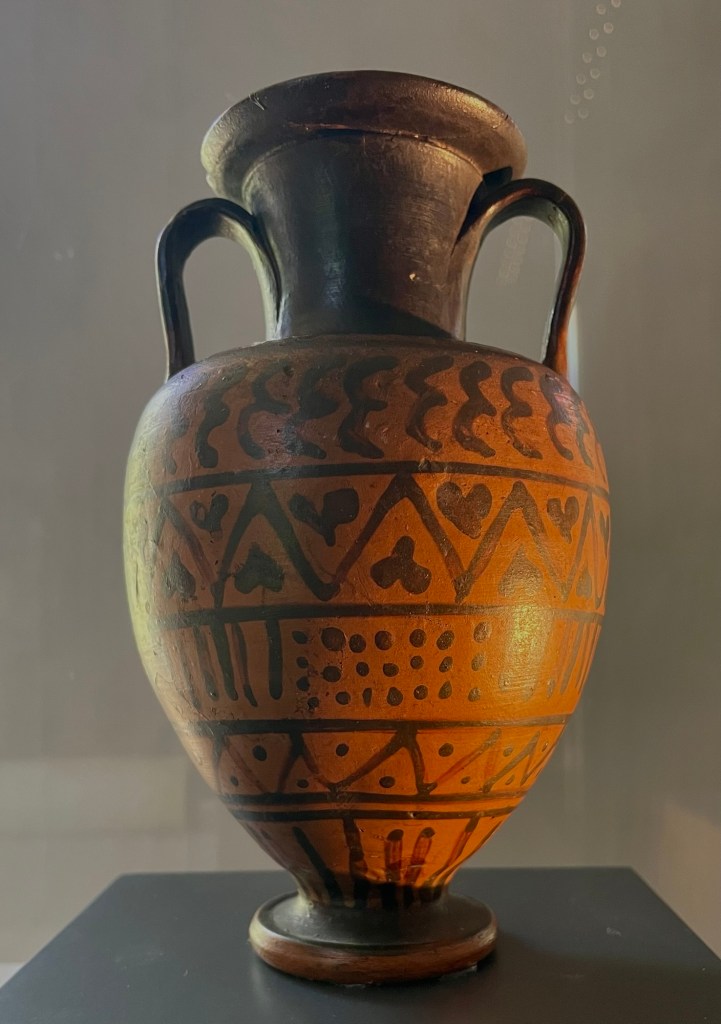
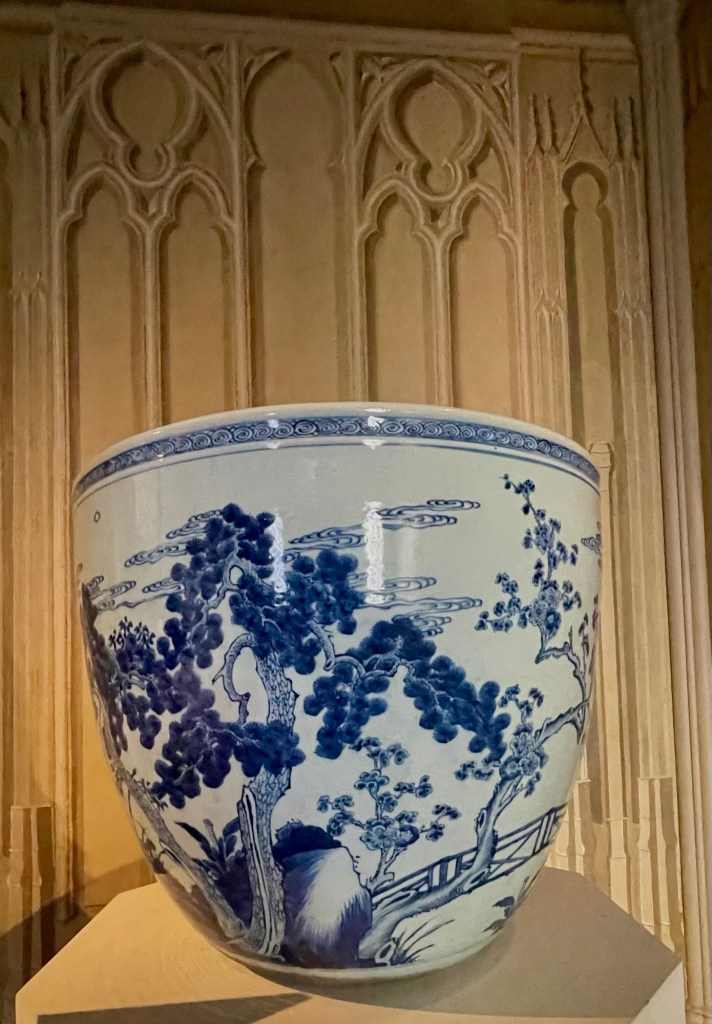
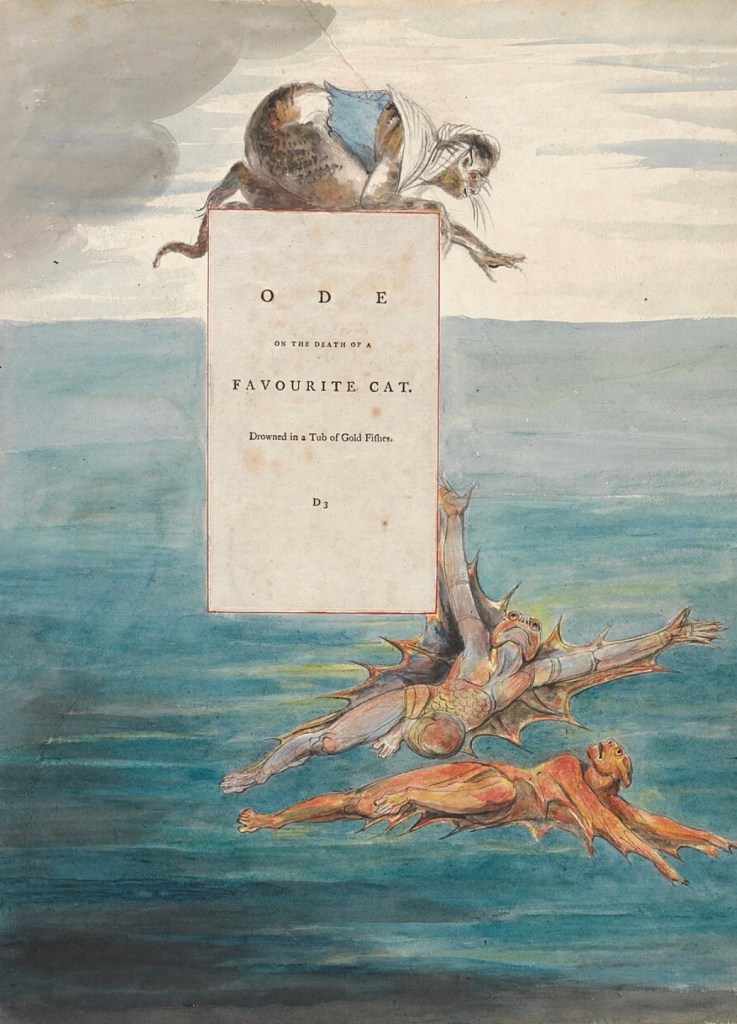
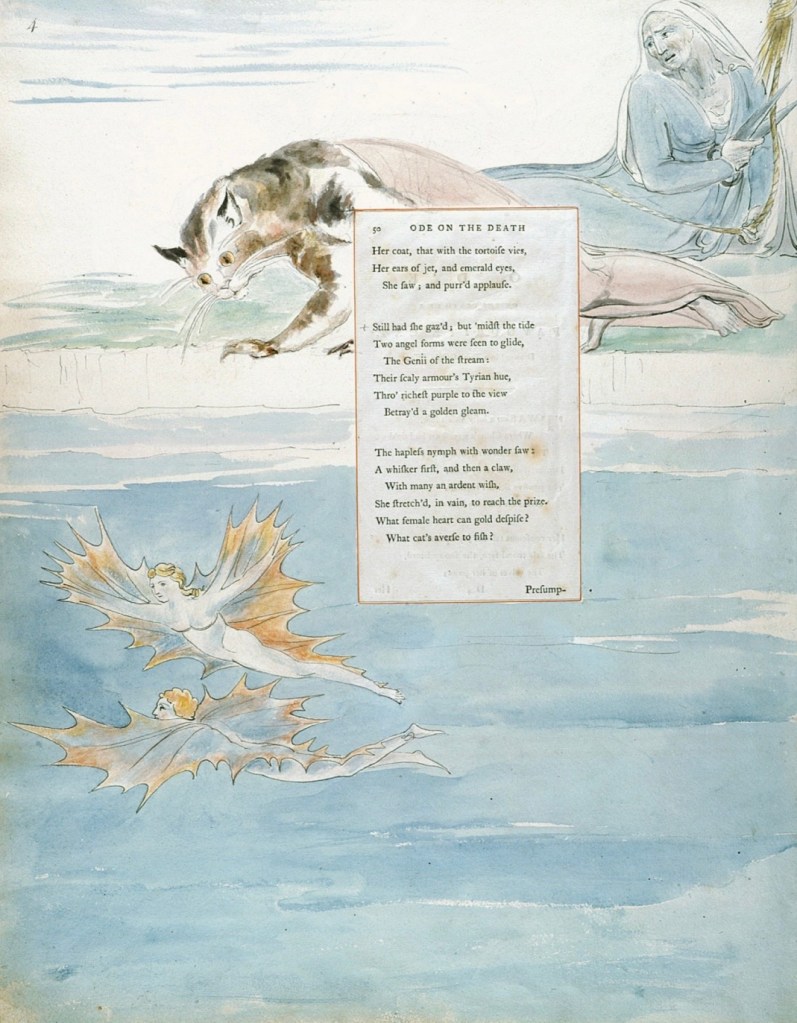
Of the original items that have returned, the blue and white vase might be the most infamous. It was the scene of the death of Walpole’s favourite cat, immortalised by his friend, the poet Thomas Gray in Ode on the Death of a Favourite Cat, Drowned in a Tub of Gold Fishes, which William Blake printed and illustrated adding his own unique vision.
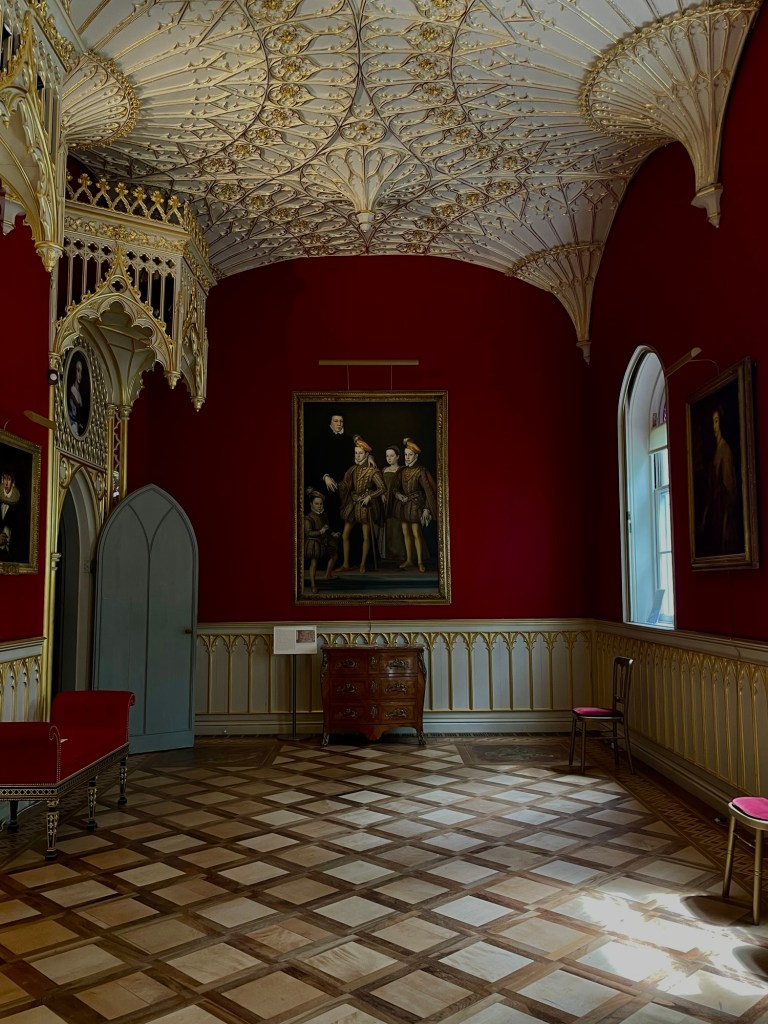
Horace’s 1561 portrait of “Catherine de’ Medici and Her Children” is probably the most valuable item to be returned. It is the only surviving contemporary image of Catherine, wife to French King Henry II and mother to three French kings, two of whom are portrayed in the painting. It was returned to Strawberry Hill after its donation to the nation in lieu of taxes and is back in the gallery where it originally hung, but on the opposite side as it no longer fits in its original location.
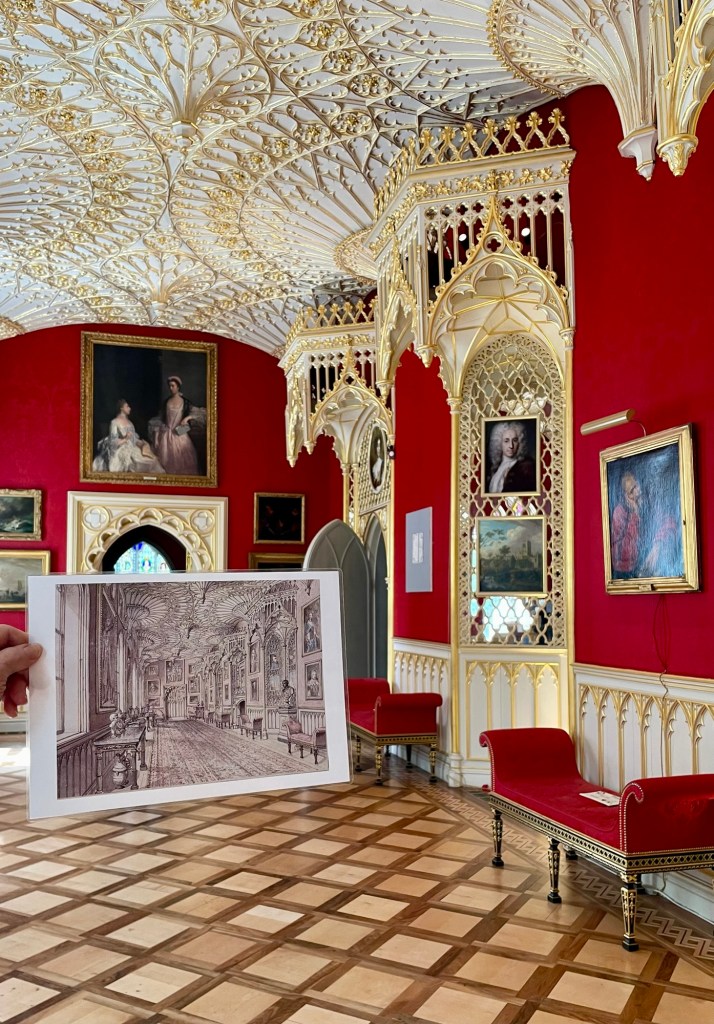
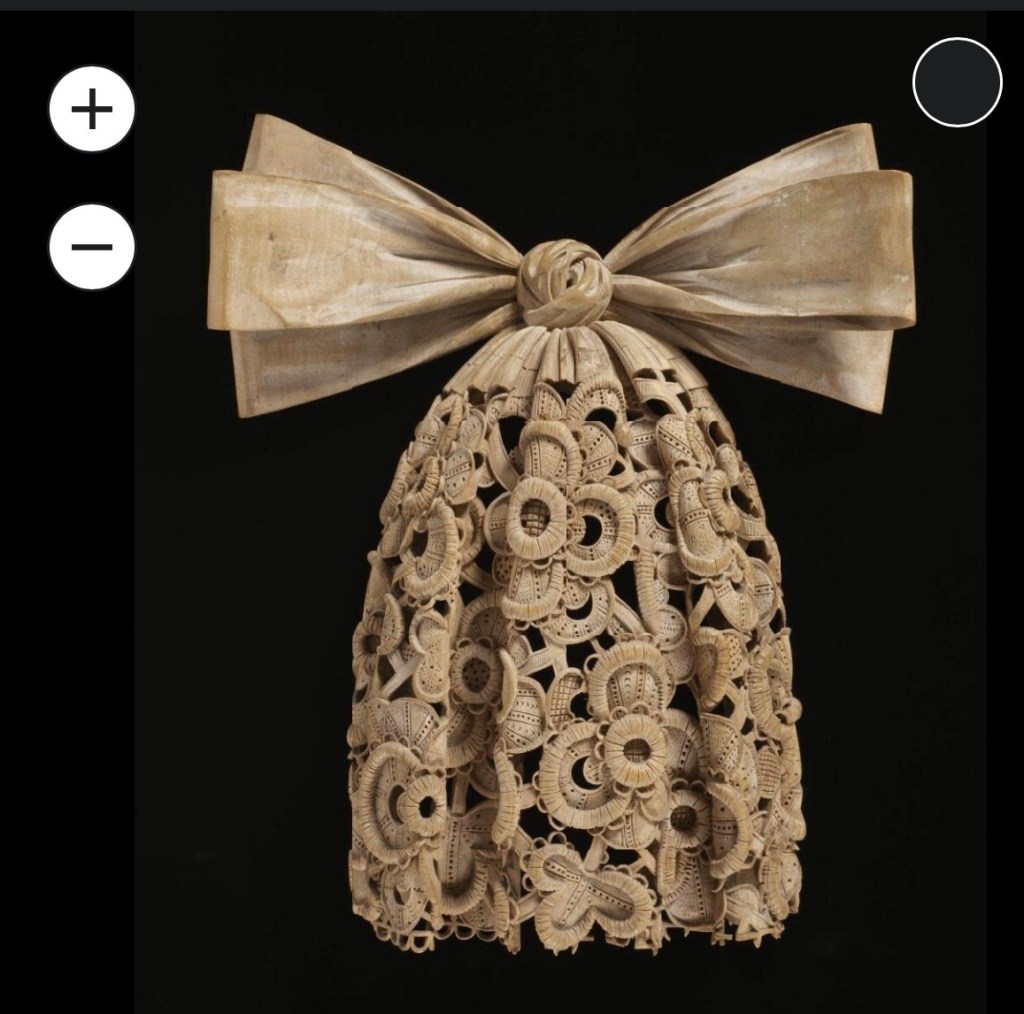
Since the collection was scattered worldwide, keep an eye out for pieces in other museums. In London there are items at the British Museum, the V&A (they have the super cool Grinling Gibbons carved cravat that Horace actually once wore with embroidered gloves that belonged to King James I!)
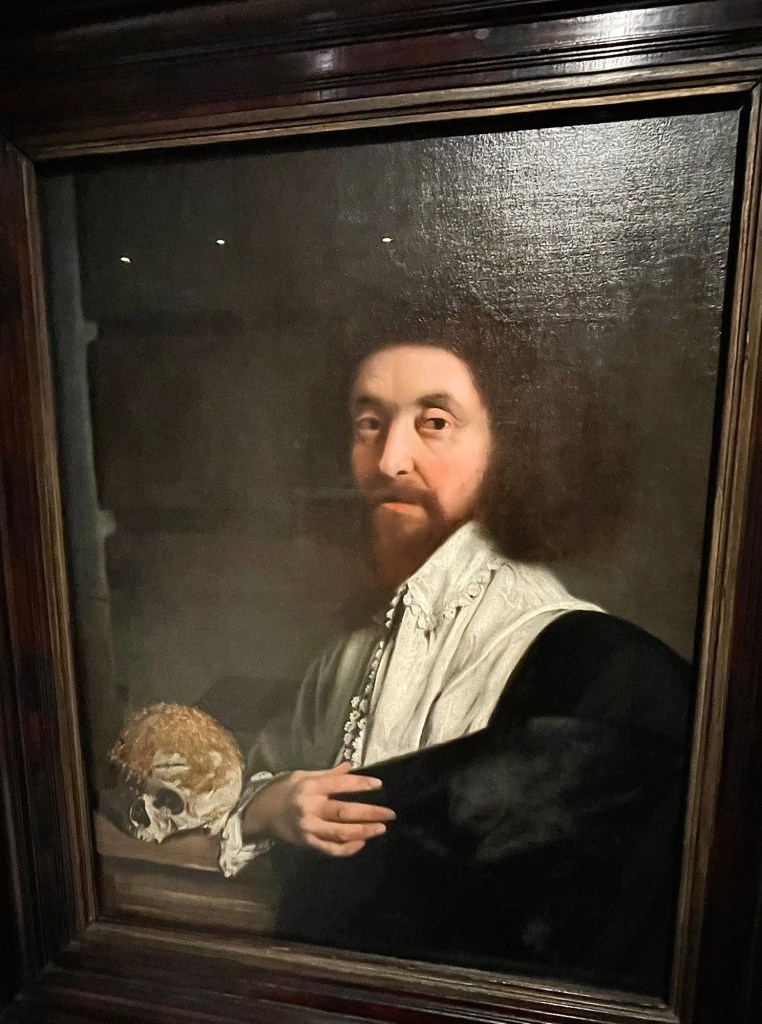
and the Garden Museum which displays “Tradescant junior with a skull covered with moss for the powder of sympathy” that once hung in Strawberry Hill’s waiting room.
For my Philly Folks: John Johnson, whose collection ended up at the Philadelphia Art Museum, obtained several of Horace’s pieces in addition to a copy of the Great Sale catalog, which still reside in the collection but are rarely on view.
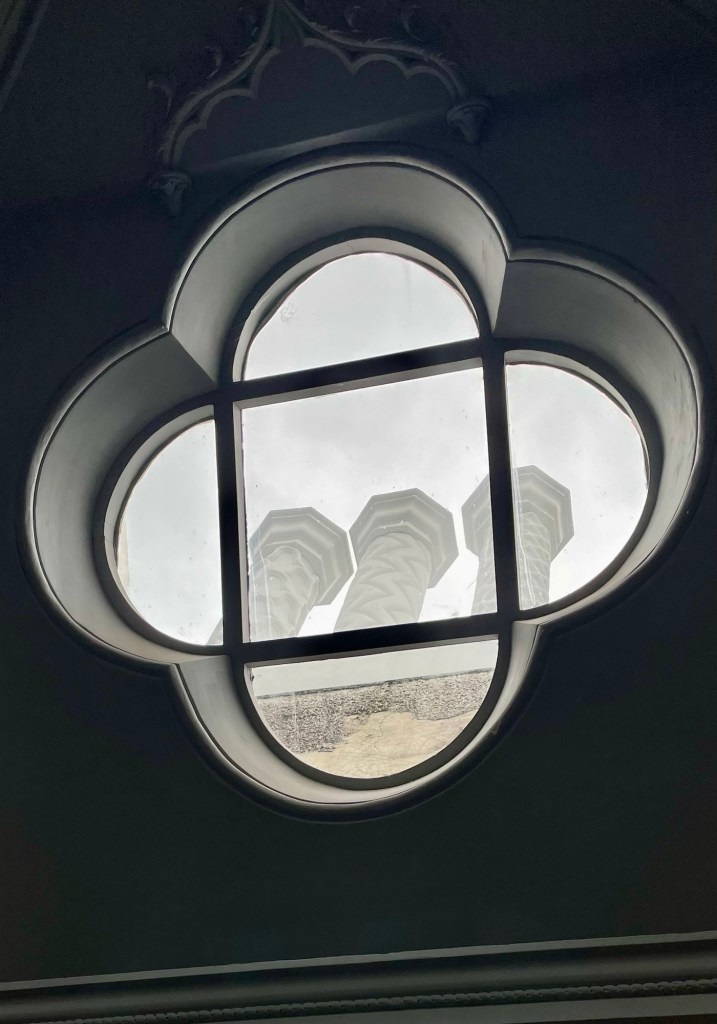
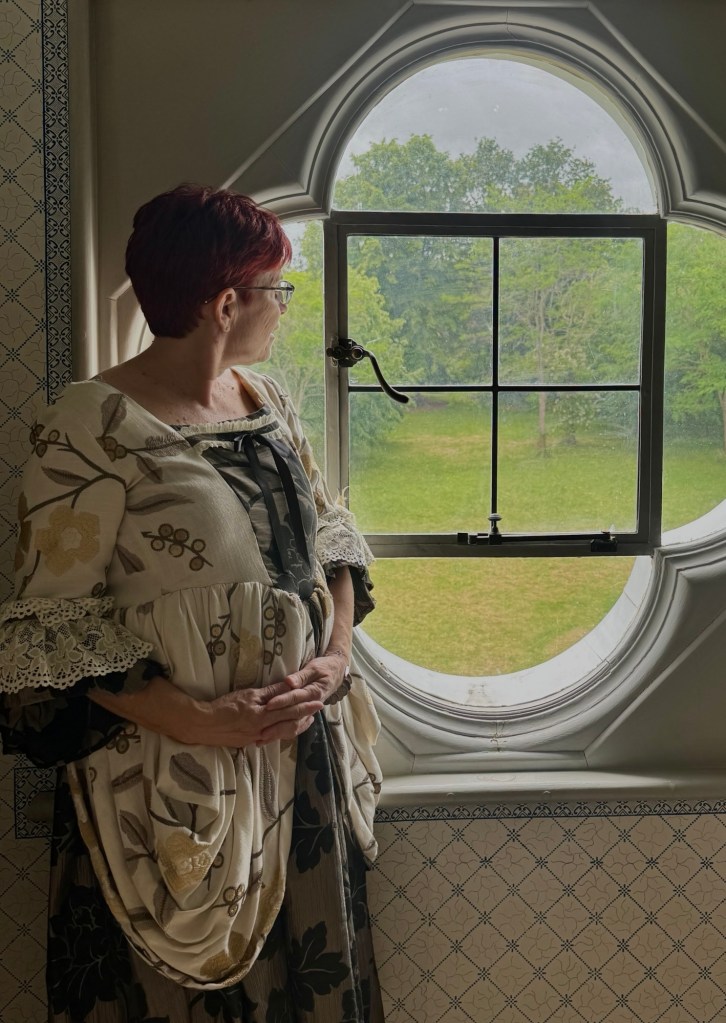
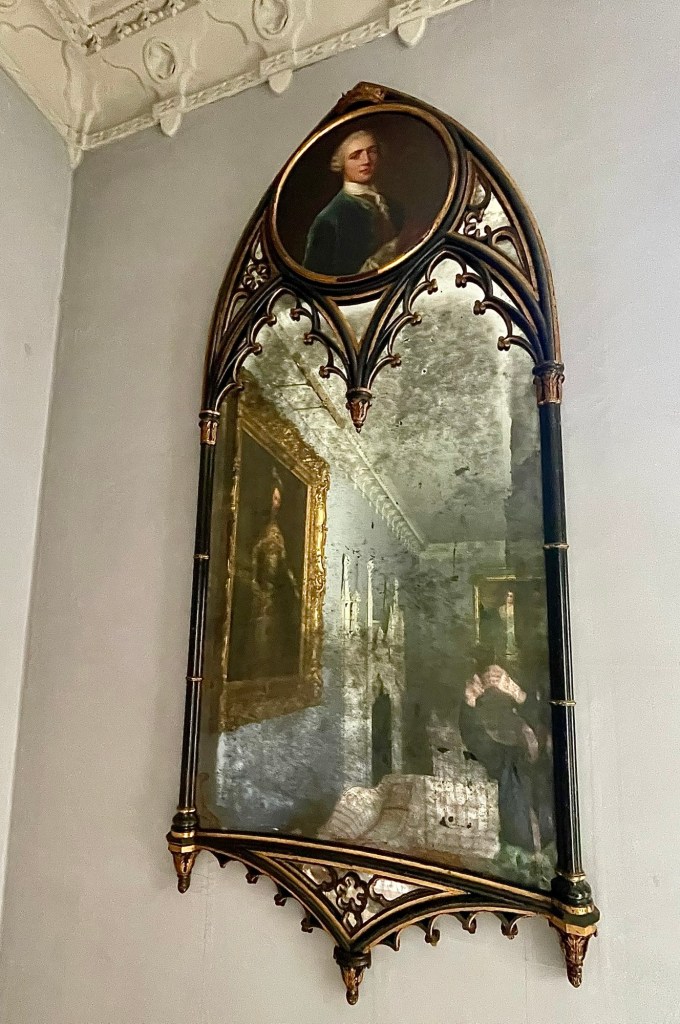
The mansion is so photogenic that I’ll leave you with a few of my favorite shots, including me modeling from the dress-up box!