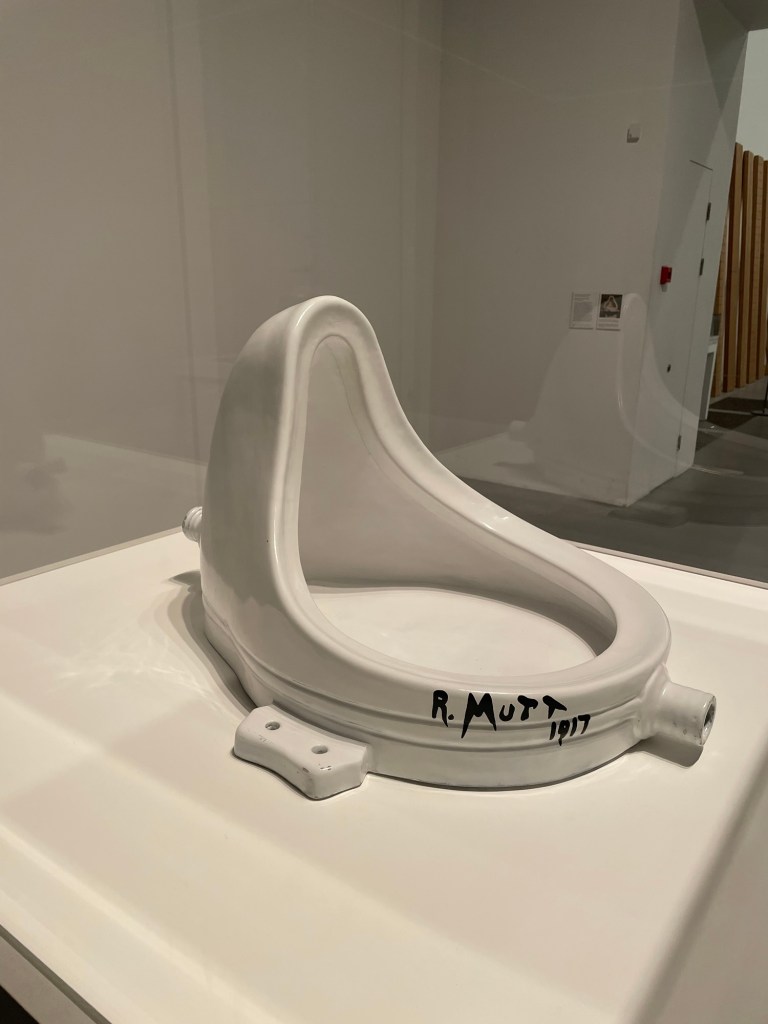
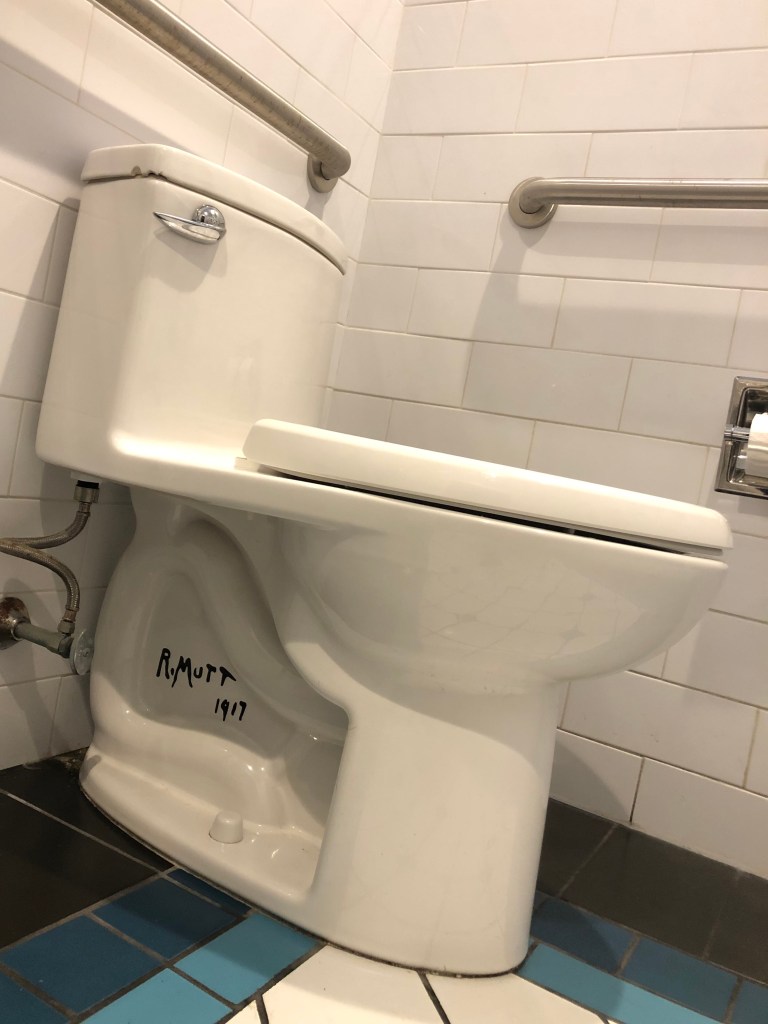
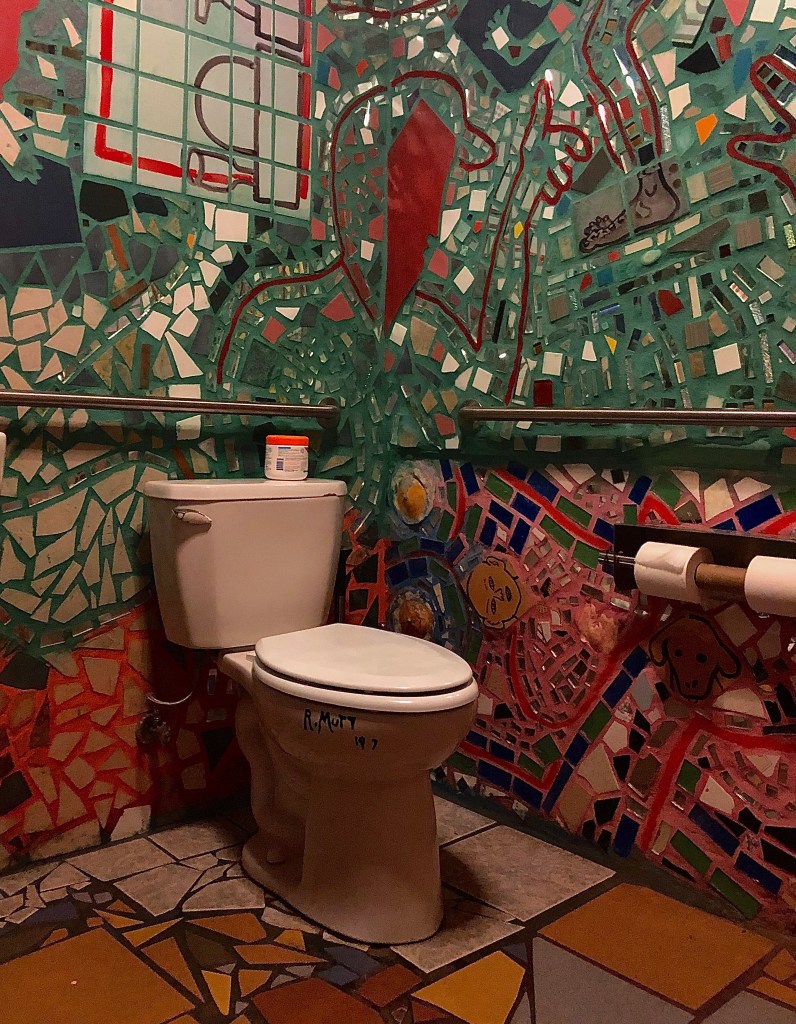
As you explore the city, keep an eye out for the toilets. You never know where you’ll spot an homage to Marcel Duchamp.
In 1917 French artist Marcel Duchamp shocked the art world by submitting a urinal purchased from a plumbing supply store to the Society of Independent Artists exhibit in New York City. The piece was rejected and soon disappeared, this photo by Alfred Stieglitz all that remains:
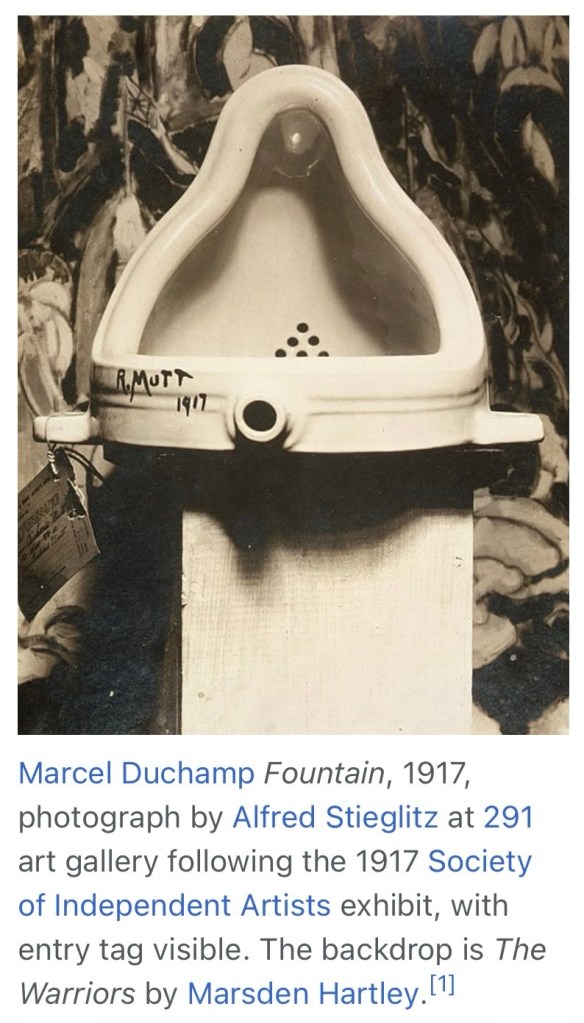
However its impact lives on, and the piece is now considered one of the foundations of 20th century art. “Fountain” was one of Duchamp’s ready mades, pieces questioning the definition of art and the relationship between art and artists.
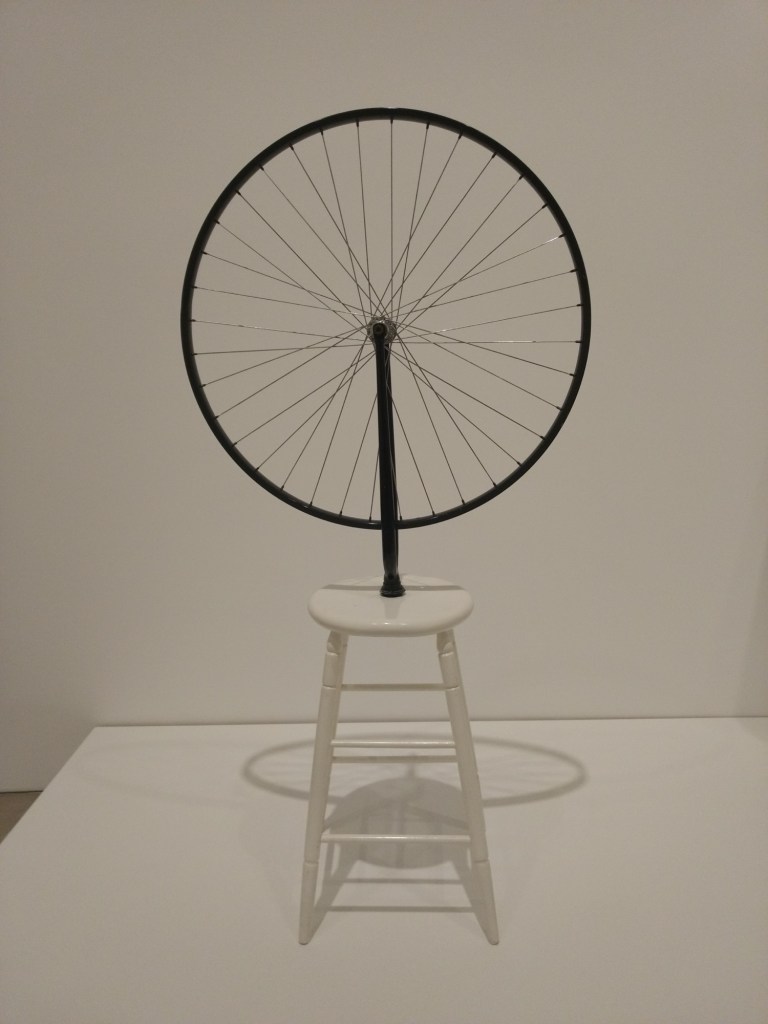
By the time of “Fountain’s” arrival, Duchamp had already shocked America with “Nude Descending a Staircase” at the 1913 Armory Show in New York, viewed as another pivotal moment in modern art.
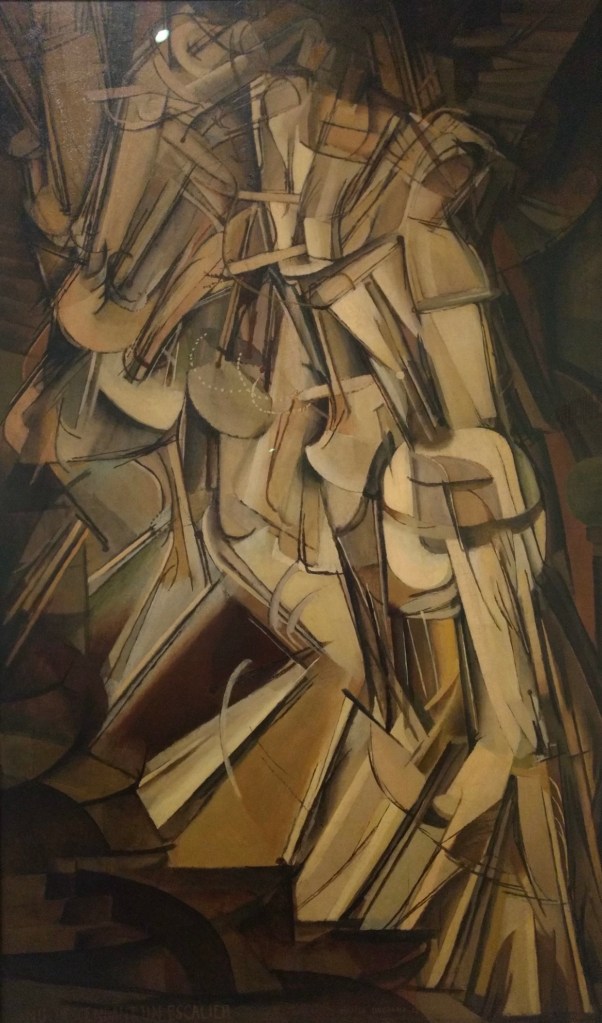
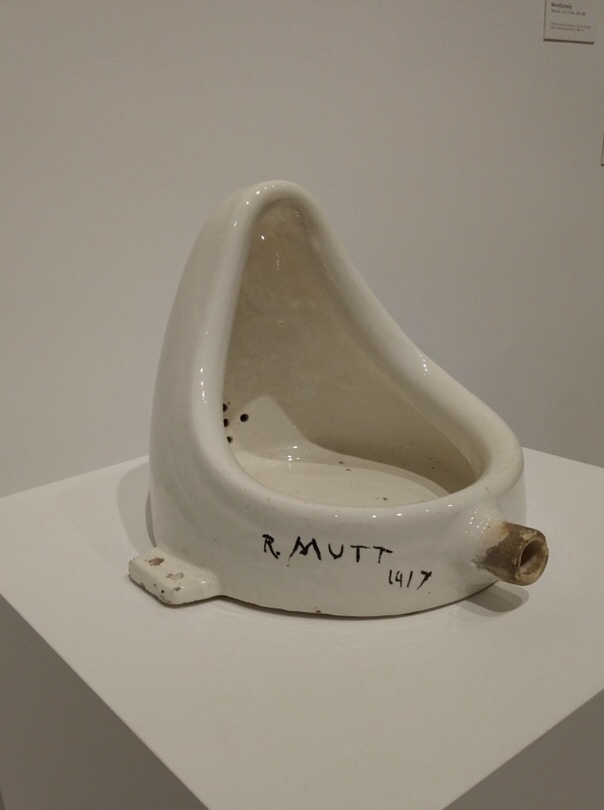
Today, the Philadelphia Museum of Art holds the world’s largest collection of works by Duchamp, including the oldest of the full-size “Fountain” replicas Duchamp authorized in the 1950s and 1960s and “Nude Descending a Staircase.” The PMA also holds his final piece, Etant Donnes, unknown to the world until after his death (for the last 25 years of his life, Duchamp gave up practicing art and played competitive chess). Finding it is a bit of a challenge – this large tableau featuring a nude woman is visible through a peep hole in a wooden door hidden away in a side room off the main Duchamp gallery.
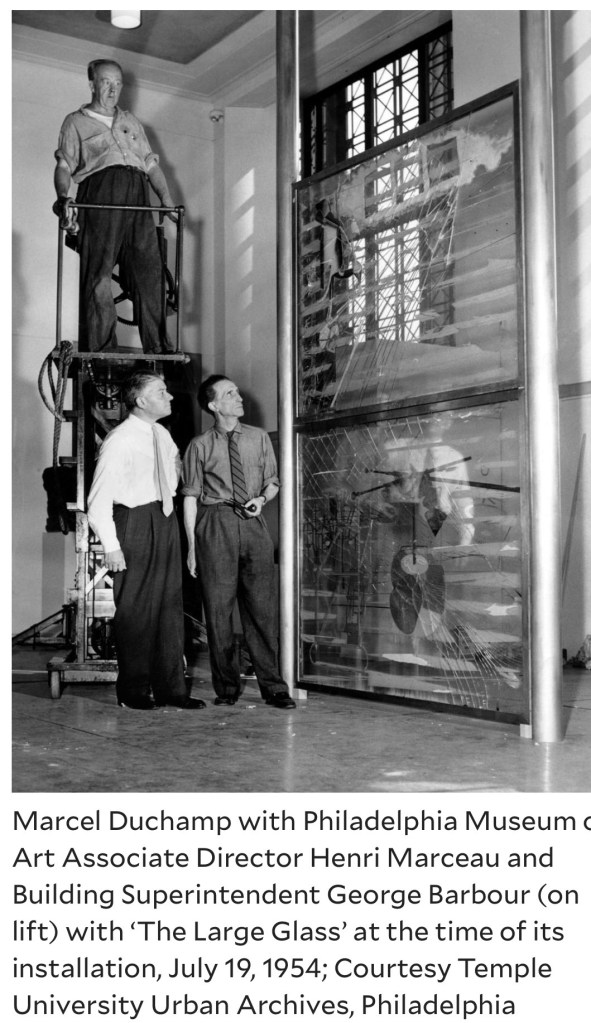
Philadelphia is home to these treasures thanks to the artist himself who persuaded his friends, Walter & Louise Arensberg, to donate their massive collection of his art to the museum. Duchamp himself supervised the installation:
Keep a lookout for “Fountain” which can be spotted at museums throughout the world, including this ‘60’s version we found at the Tate Modern in London: