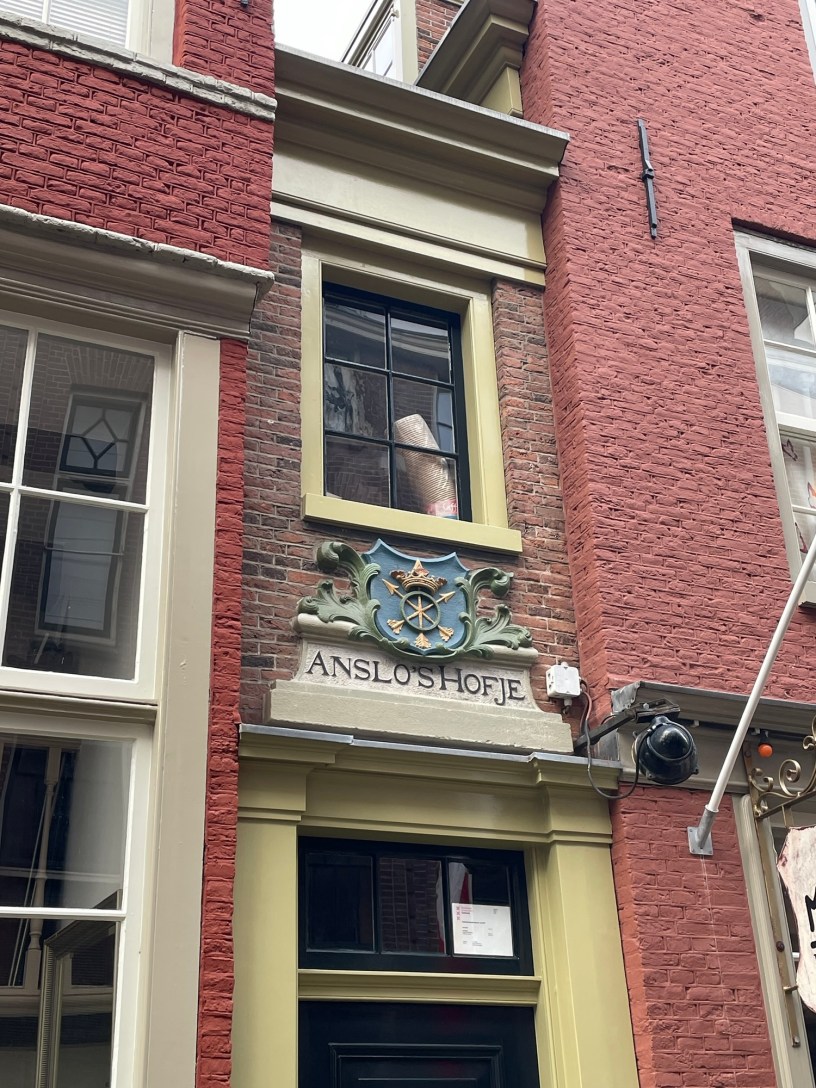
These hidden courtyards of Amsterdam were the city’s answer to social housing. Since the Middle Ages they have been providing low-cost housing, originally for elderly, widows, or unmarried religious women, while they now provide housing for people of all backgrounds. Many were privately funded by wealthy merchants or guilds hoping for a leg up to heaven. Today there are about 30 left, primarily in the Jordaan. For a walking tour visit here: Map with city walk hofjes, inner courts, courtyards of the Jordaan in Amsterdam
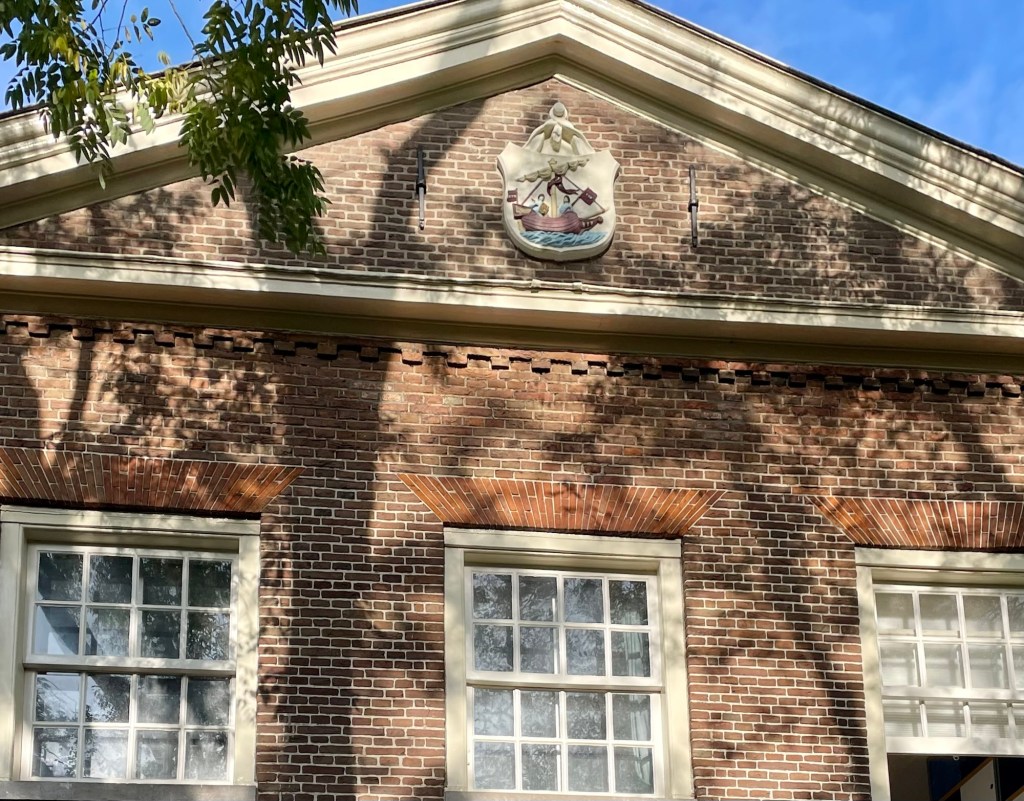
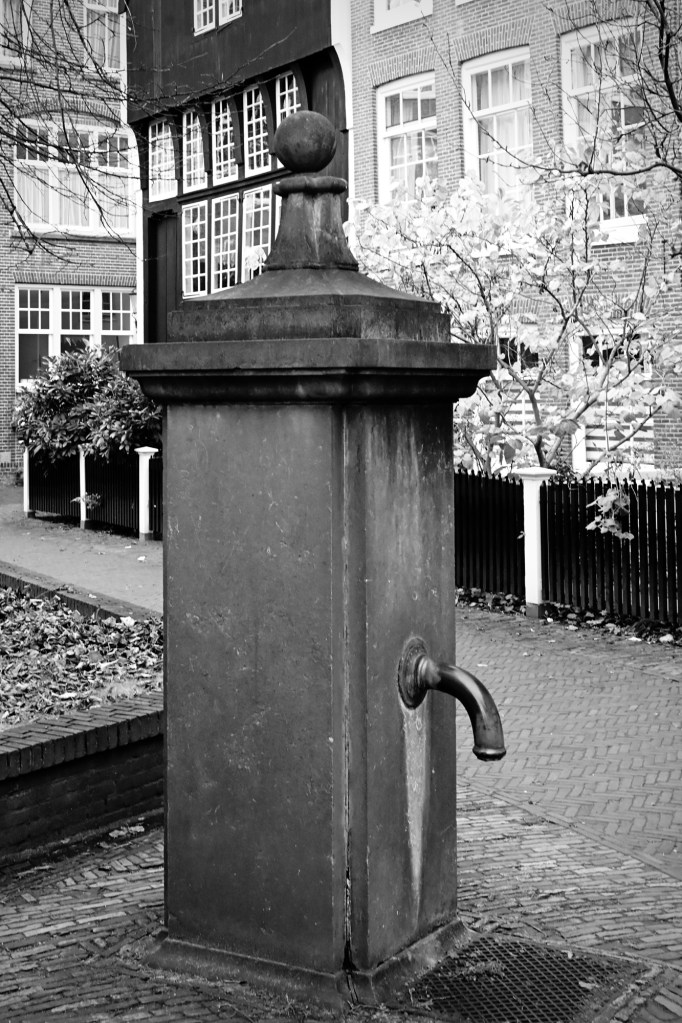
Karthuizerhof: Built in 1650 for widows and unmarried women. Hofjes were built with a central water pump, and this courtyard shows a beautiful original example.
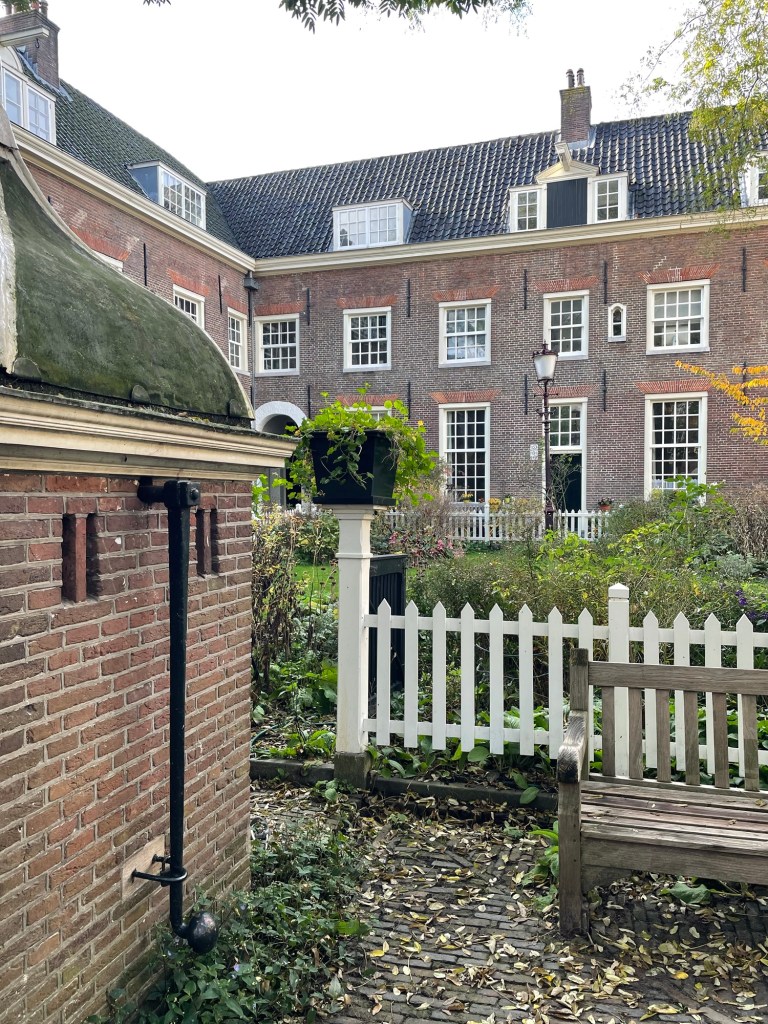
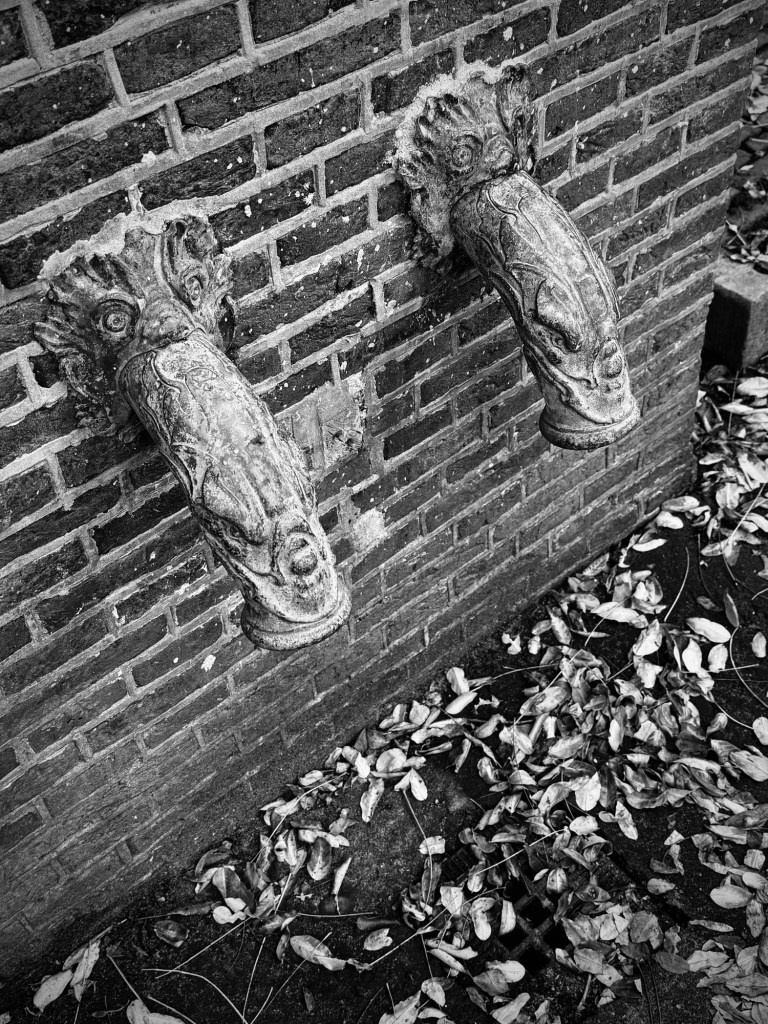
They also contained gardens for residents to grow their food, but while the greenery remains flowers have mostly replaced edible crops.
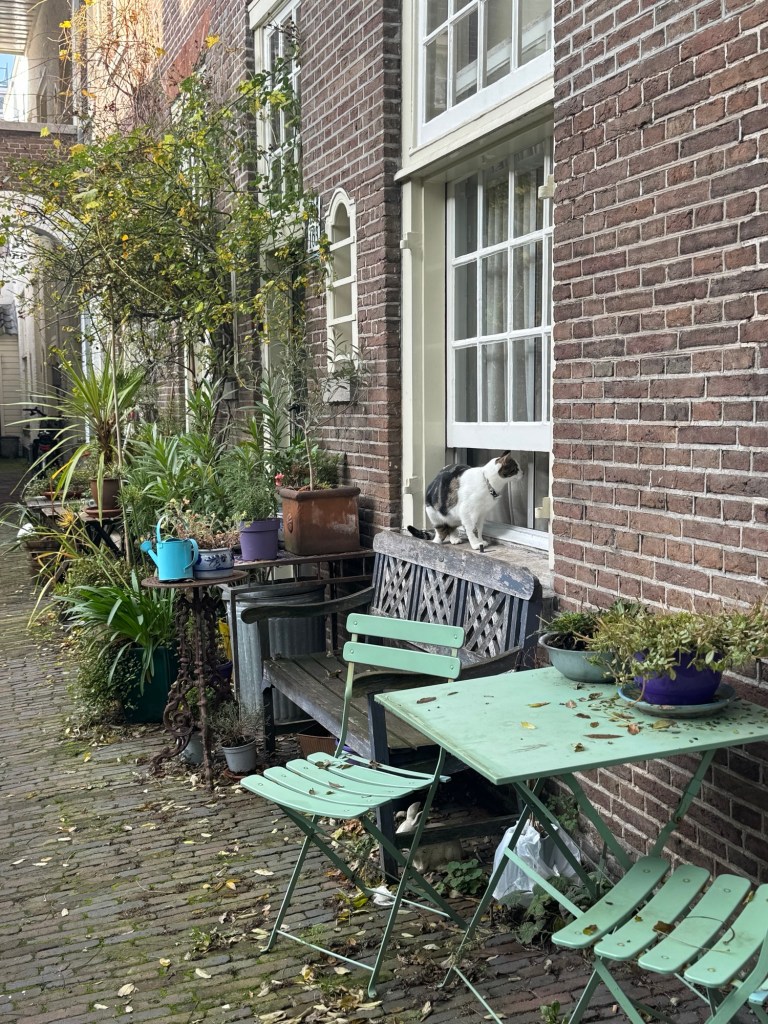
When the gates are open, respectful visitors are welcome to wander in for a look. Just don’t disturb the kitties!
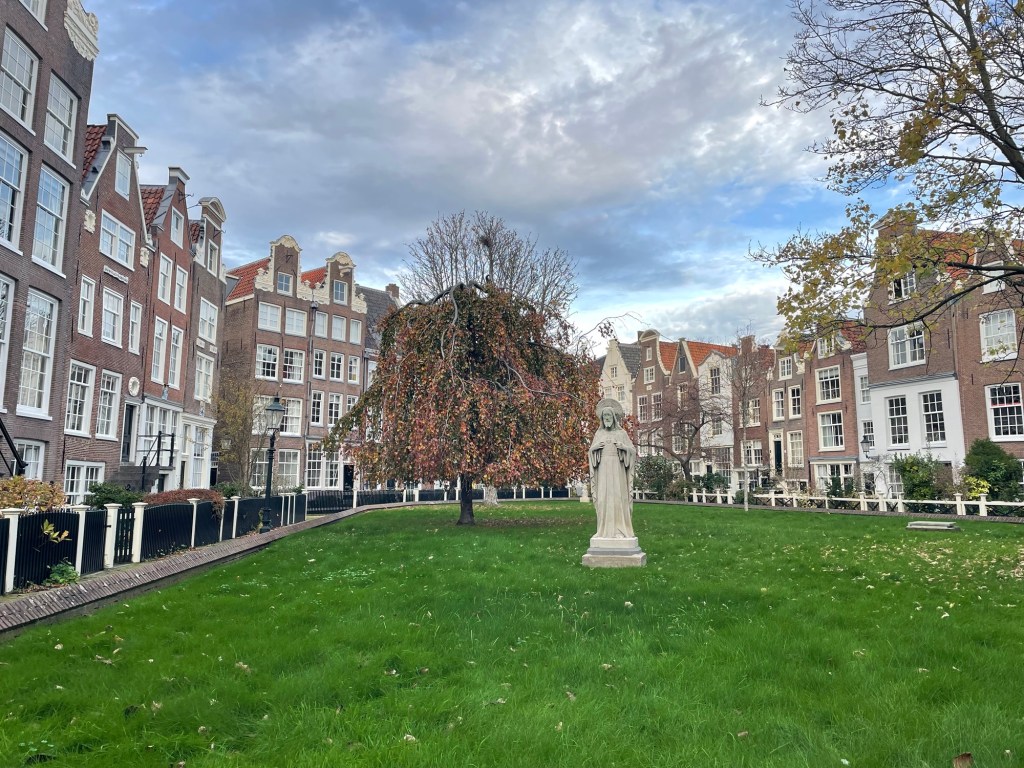
The most famous is the Beginhof. Because it’s on most tourist itineraries (unlike many of the hidden spaces in the Jordaan) you definitely won’t have this one to yourself. It dates back to the 14th century, built to house unmarried religious women. Most of the facades were replaced in the 17th and 18th centuries, but it still contains one of the few surviving wooden homes in Amsterdam, which is also the city’s oldest house (visible behind the pump).
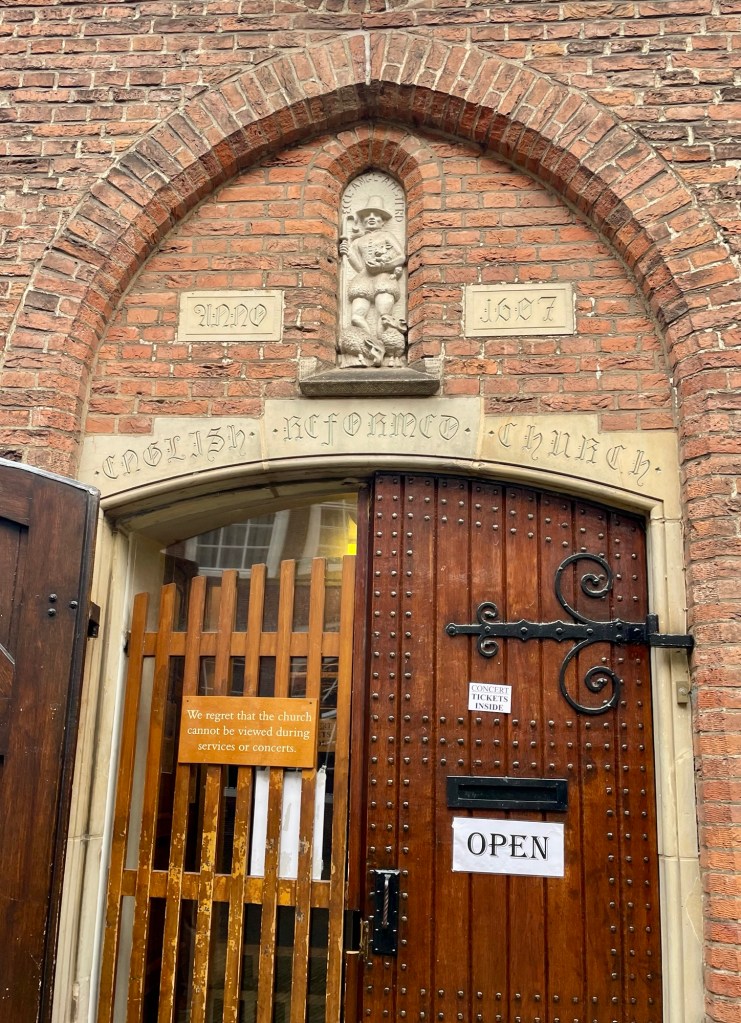
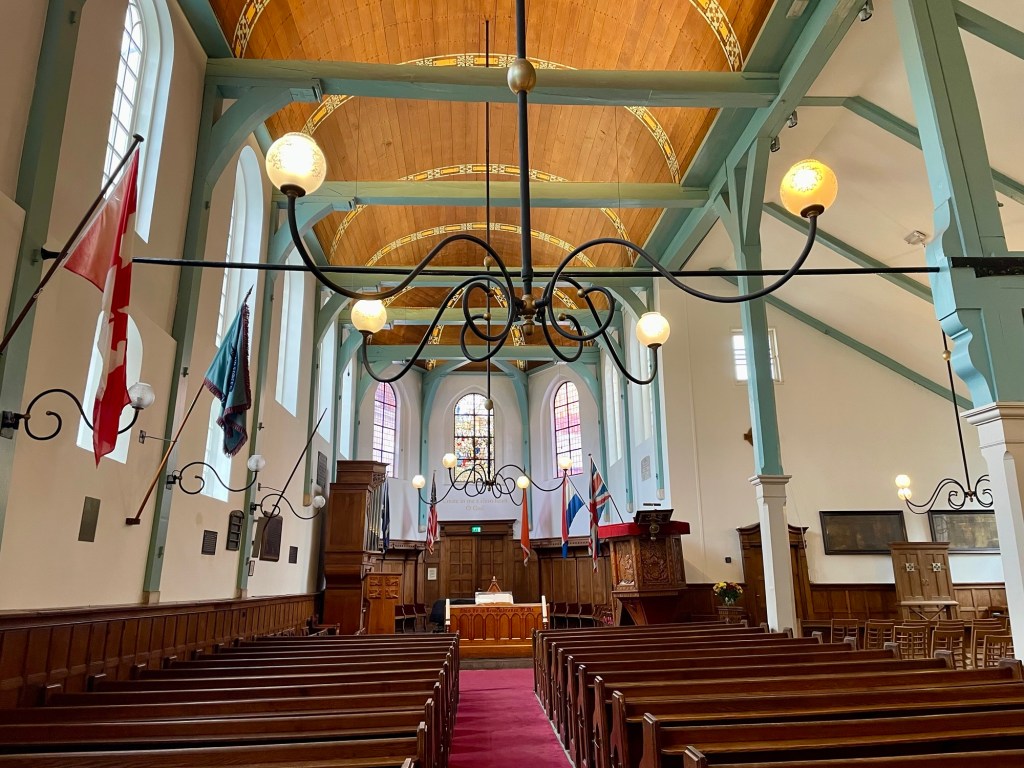
Located in the center is the English Reformed Church, once visited by Vincent van Gogh and worship site for the Pilgrims before they set out for America. There is also a secret Catholic church.
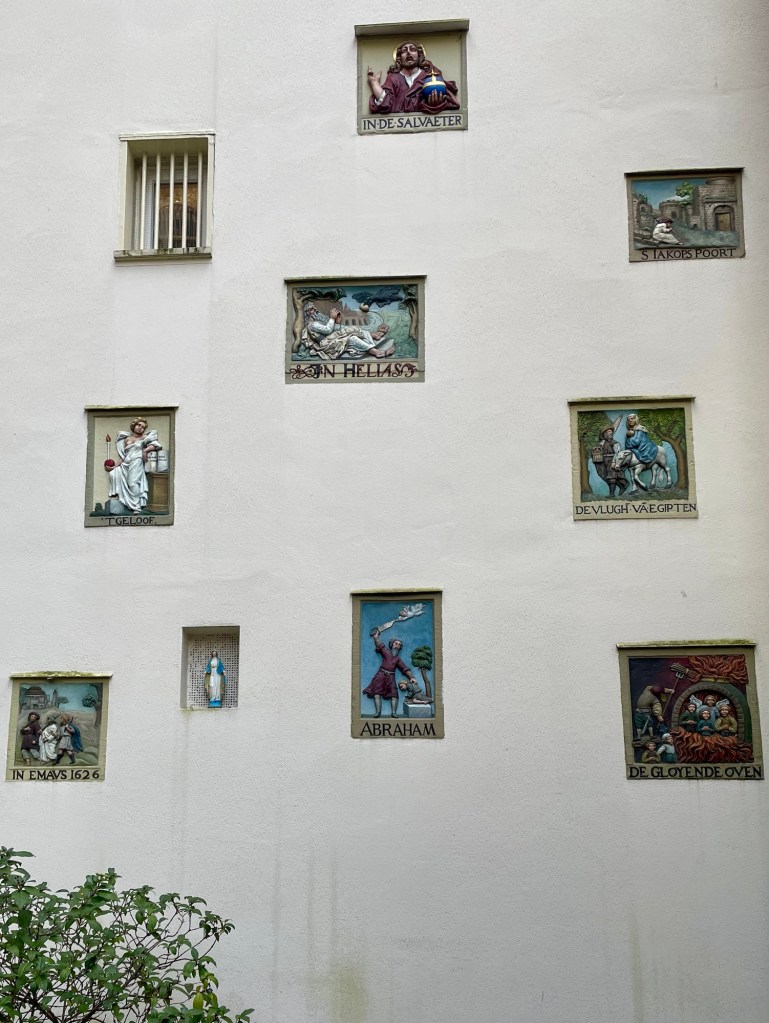
Make sure to explore all the way to the back wall to see this hidden display of historic gable stones, many showing biblical themes (An Amsterdam Scavenger Hunt ).
Hofjes are not just an Amsterdam thing. They popped up in other cities, too, and can still be found around the Netherlands and Belgium.

