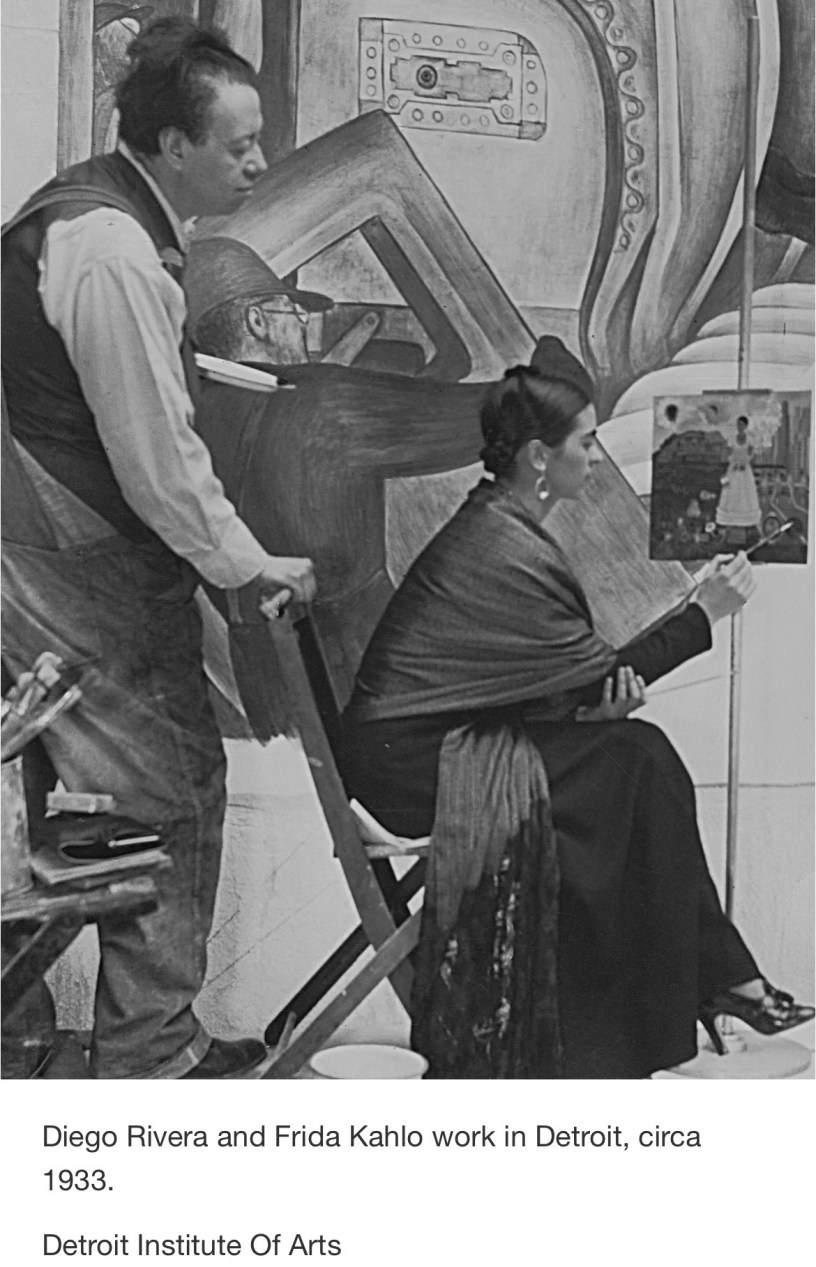
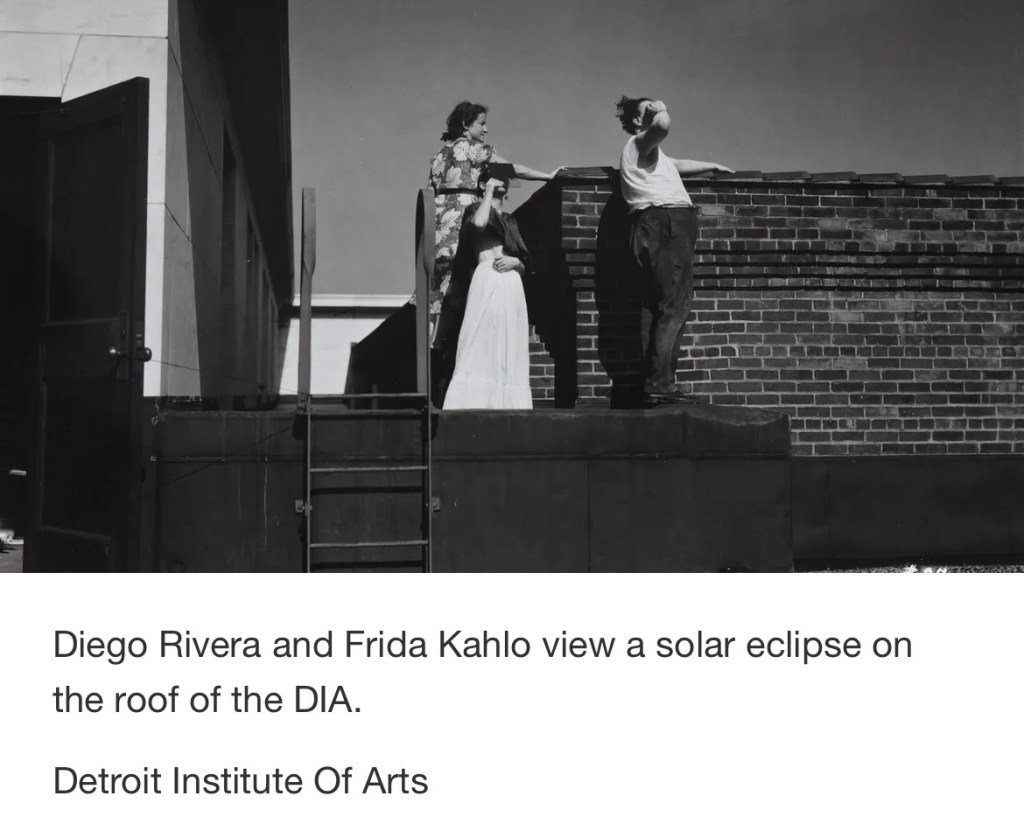
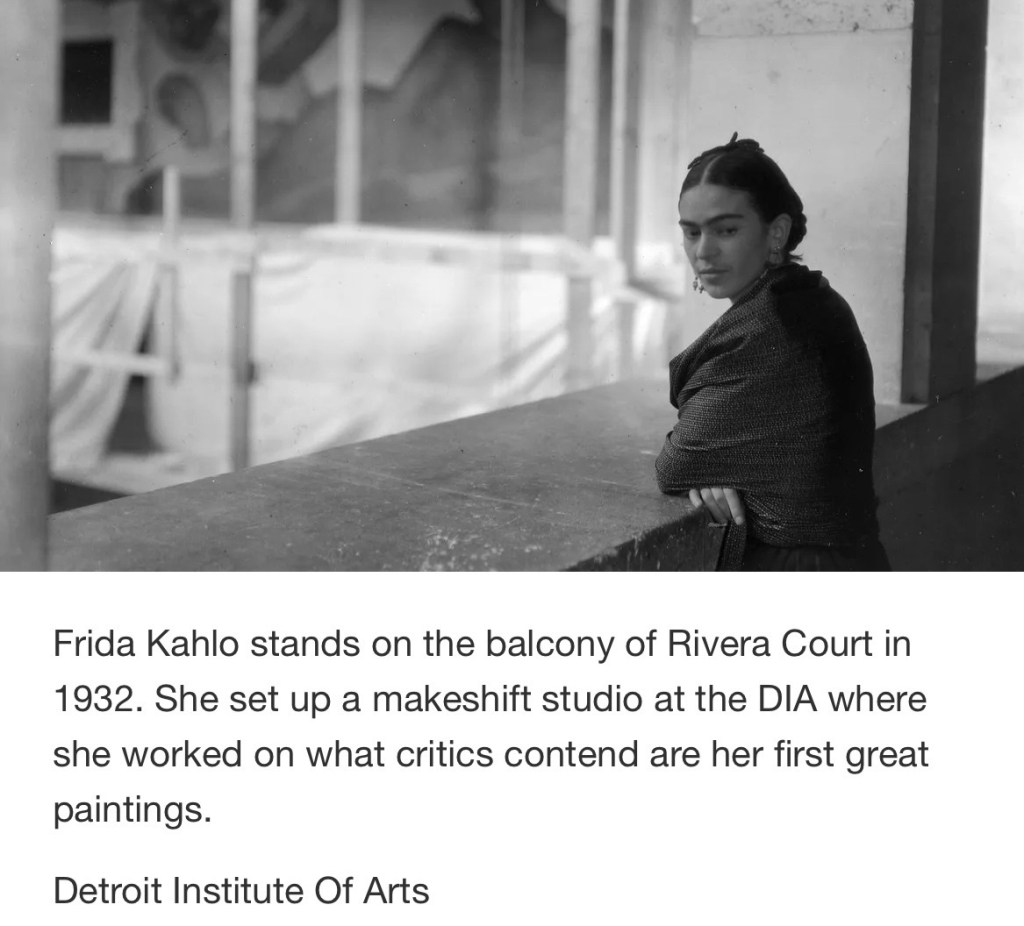
It was the depths of the Great Depression when Diego Rivera arrived in Detroit to paint murals in the courtyard of the Detroit Institute of Art. He brought along his wife, Frida. The couple stayed in Detroit for 11 months, creating what Diego believed to be some of his best work. While he worked on the murals, Frida painted in the gallery above, developing the style that became uniquely hers.
While in the city, they were both often in the public eye, with photographers constantly documenting their time.
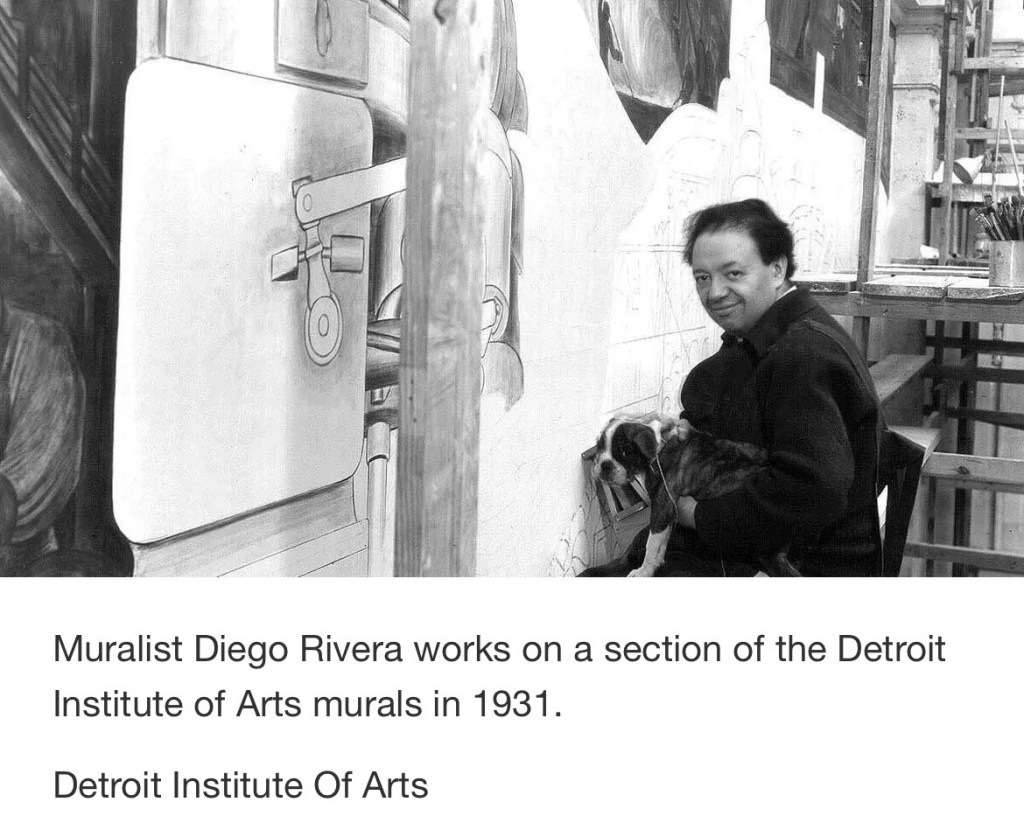
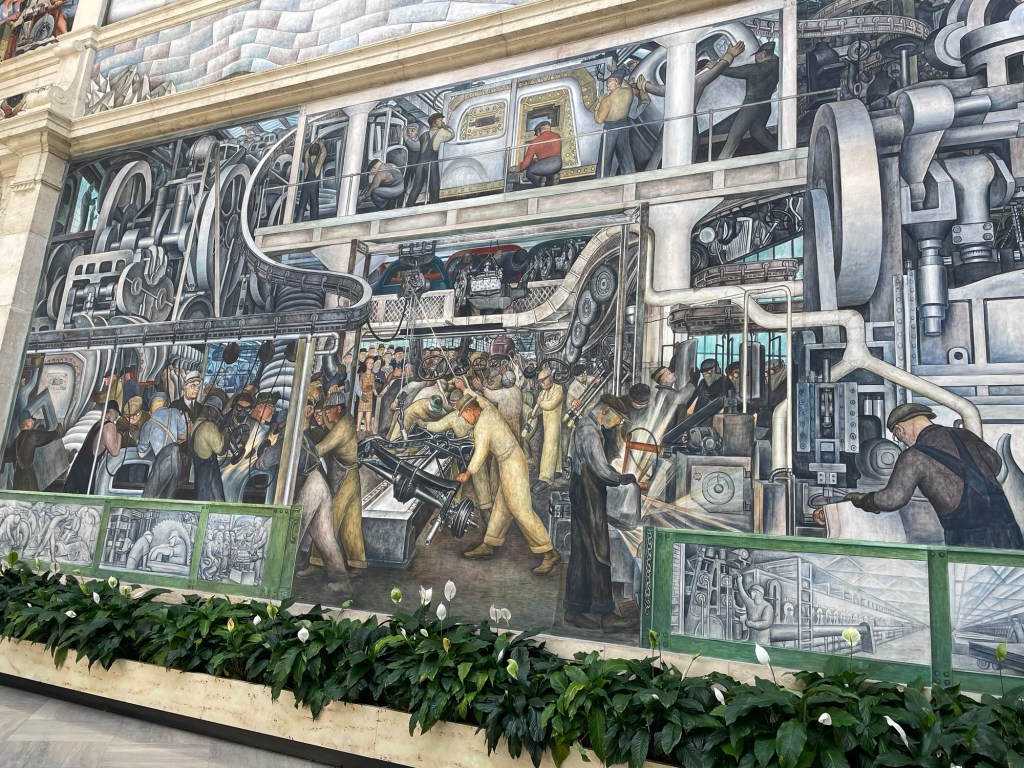
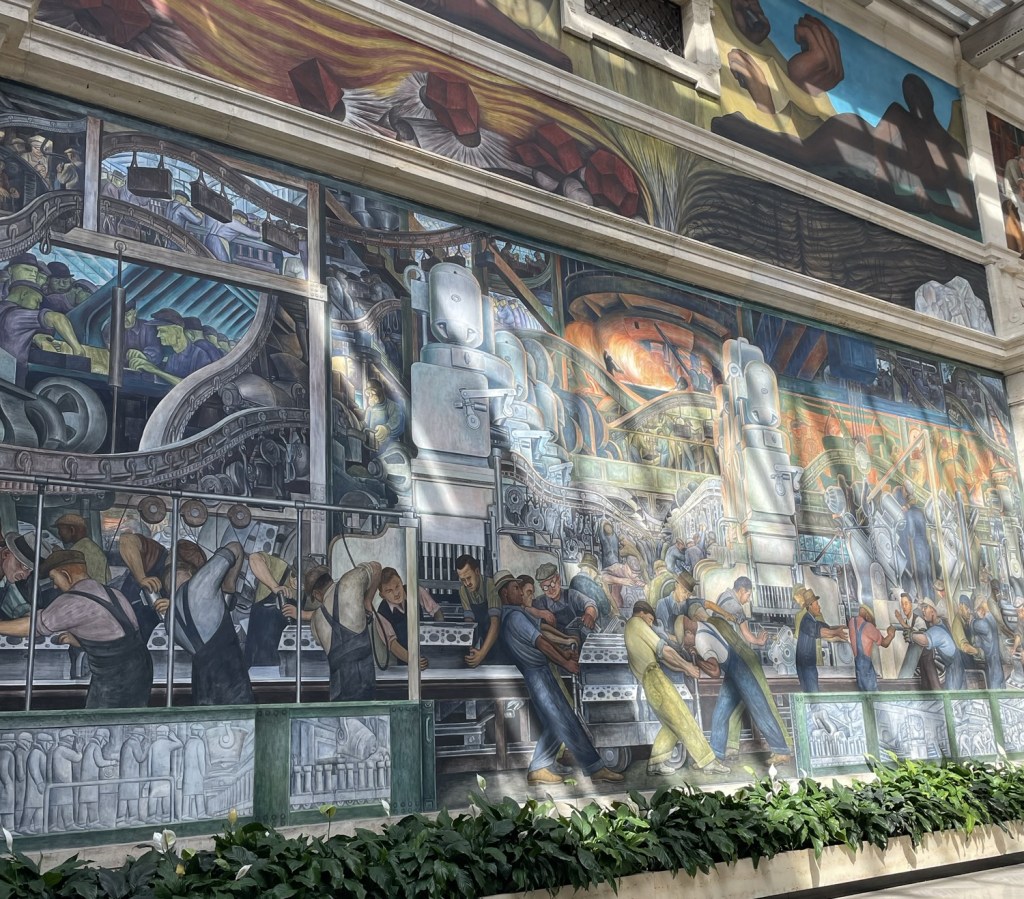
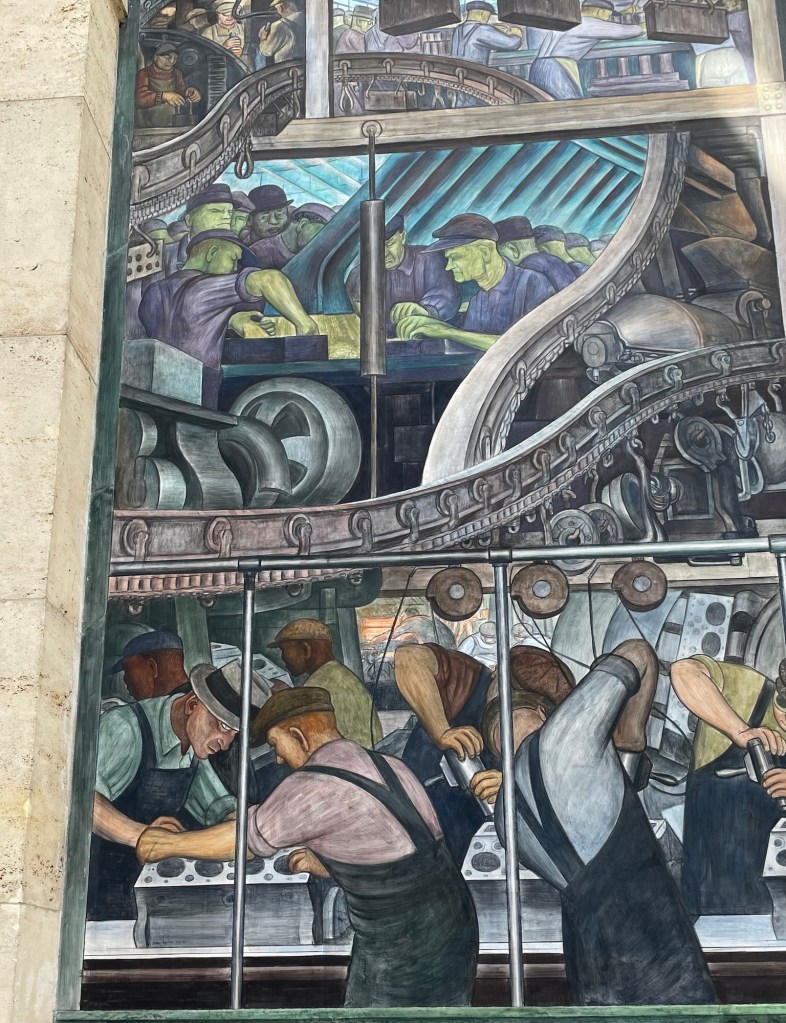
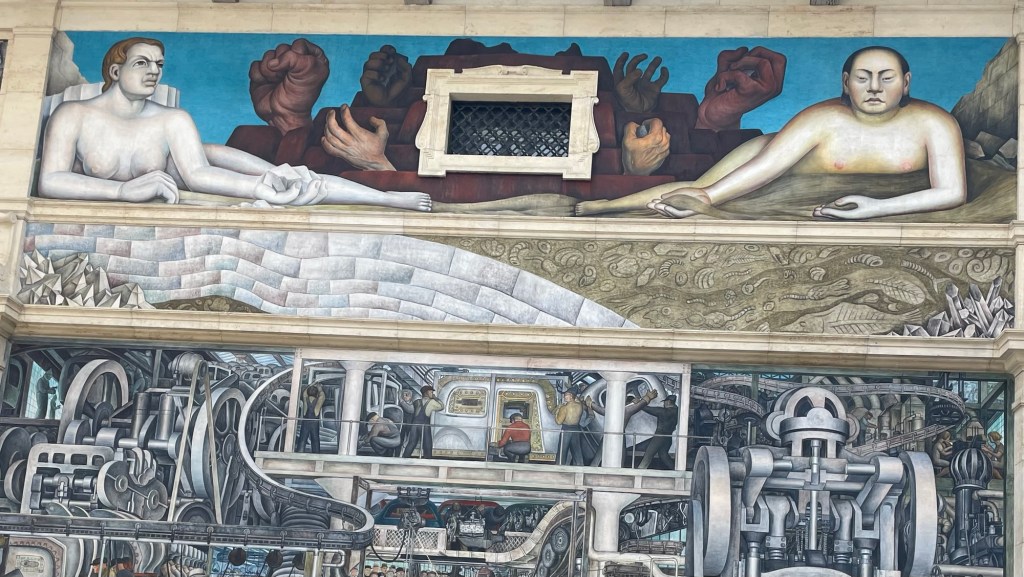
In the murals, Rivera was tasked with capturing a city that was the industrial capital of the world. Front and center is Ford’s Rouge plant, then the world’s largest and most advanced factory.
Detroit wasn’t just cars. In what became the mural’s most controversial panel, the nativity-like vaccination scene pays homage to its pharmaceutical industry.
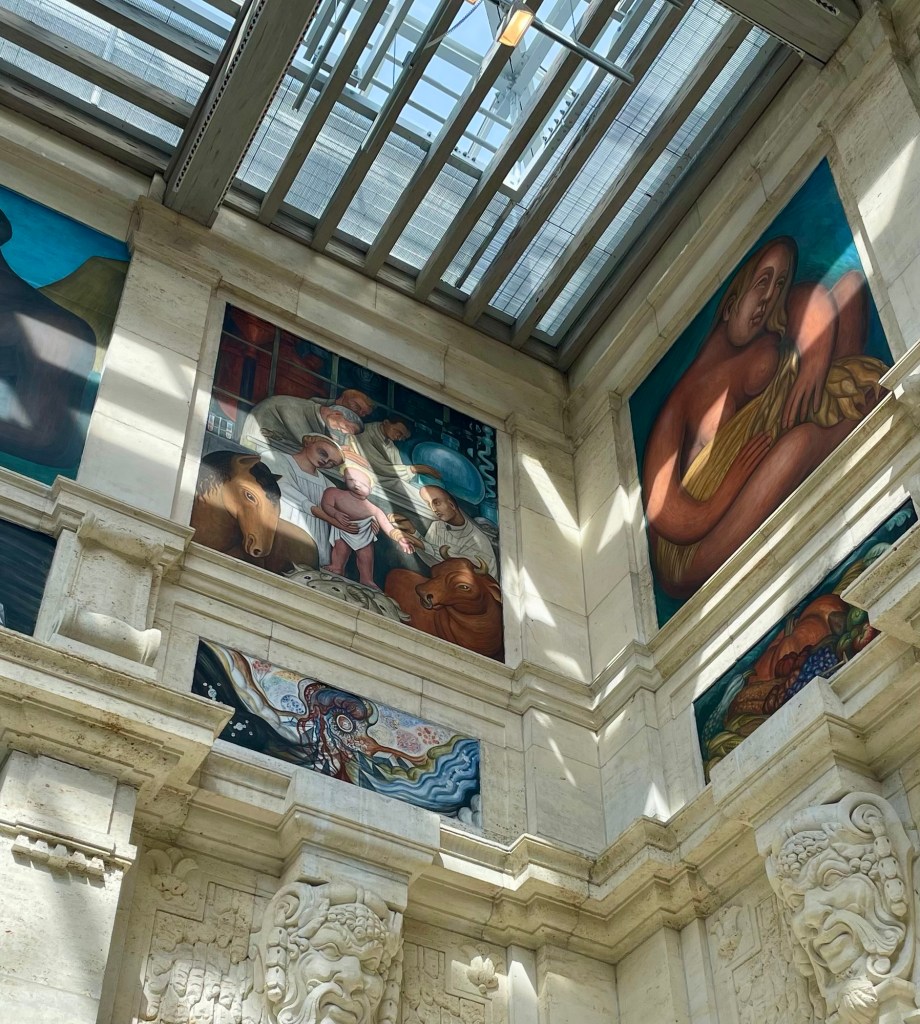
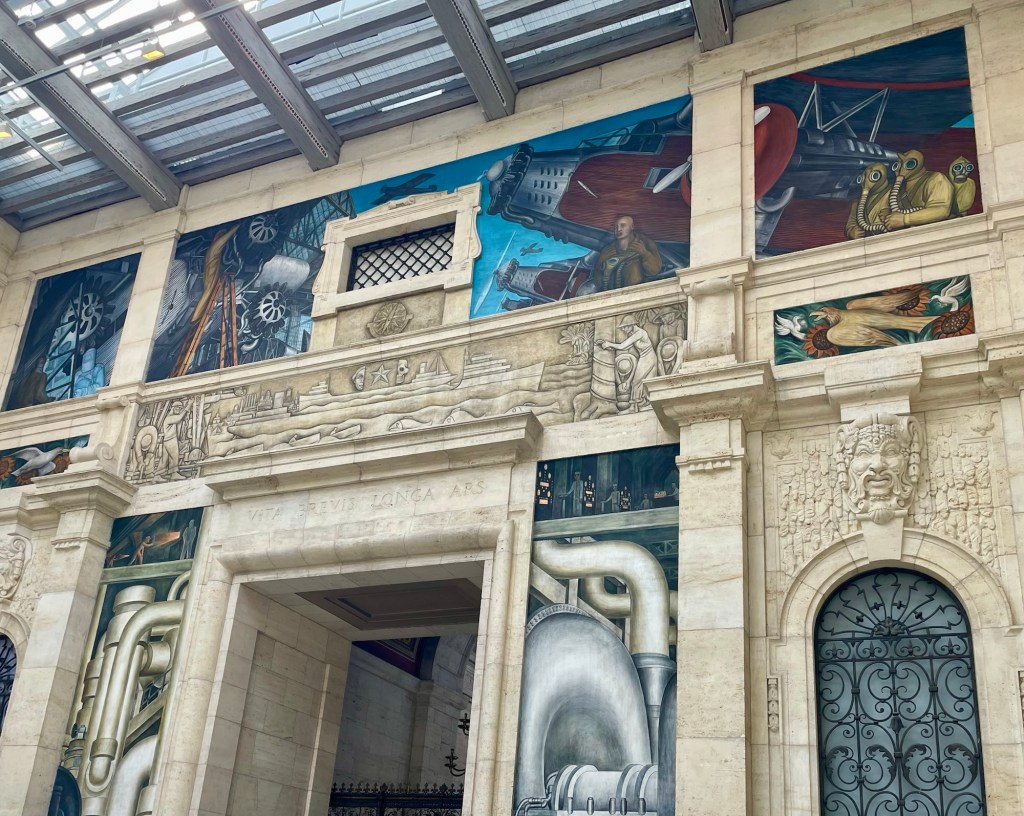
Within the twenty-seven frescoes Rivera weaves together his Mexican heritage with U.S. industry, in what has been called a “Communist’s Homage to Capitalism.” These seeming opposites are at the mural’s core. Nature versus industry. Man versus machine. Passenger versus war plane. Science to save the world (through vaccines) or destroy it (through chemical warfare)? Hawk versus dove?
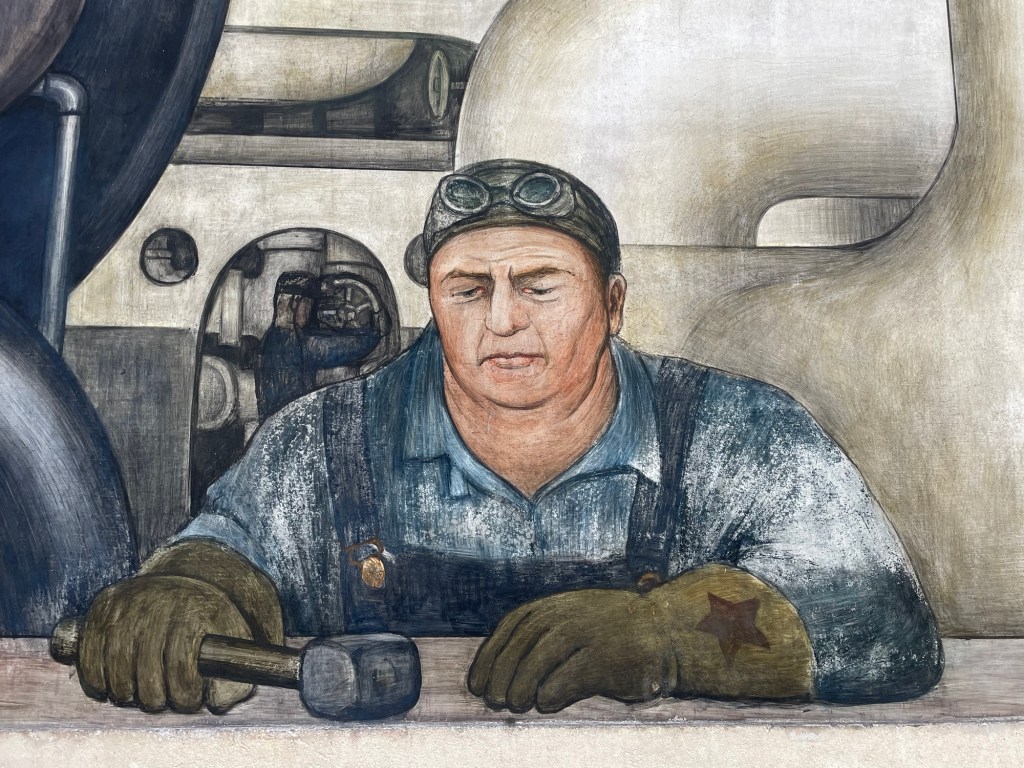
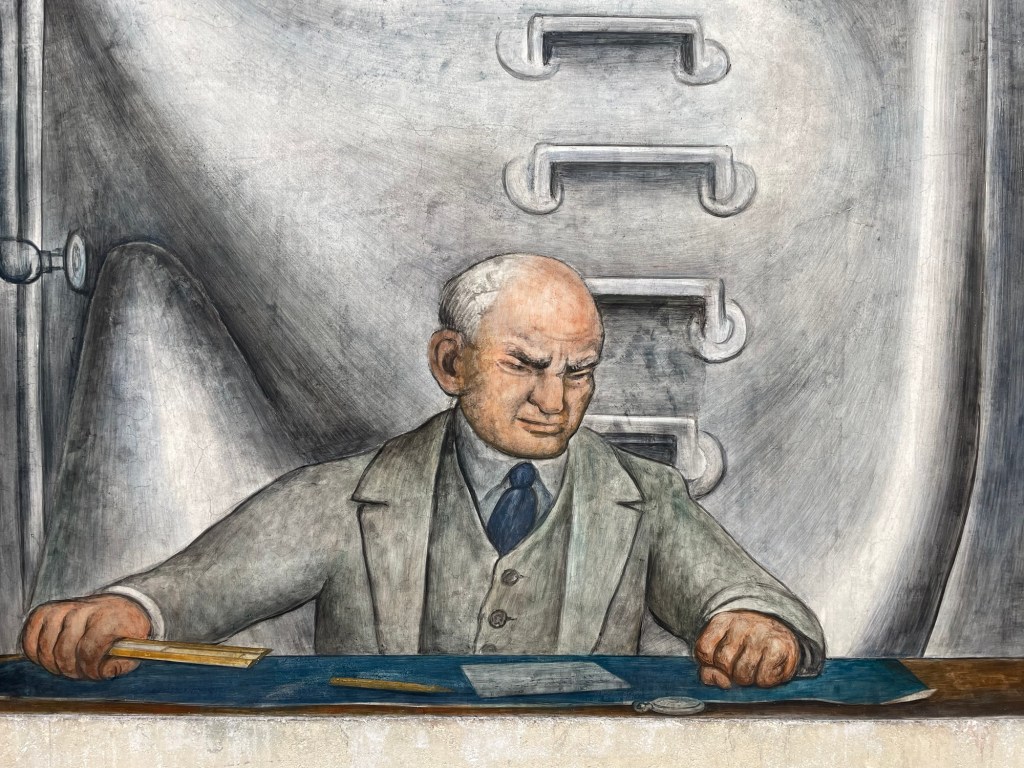
A communist worker (sporting the hammer and star) versus the capitalist owner of production (half Henry Ford, half his mentor, Thomas Edison).
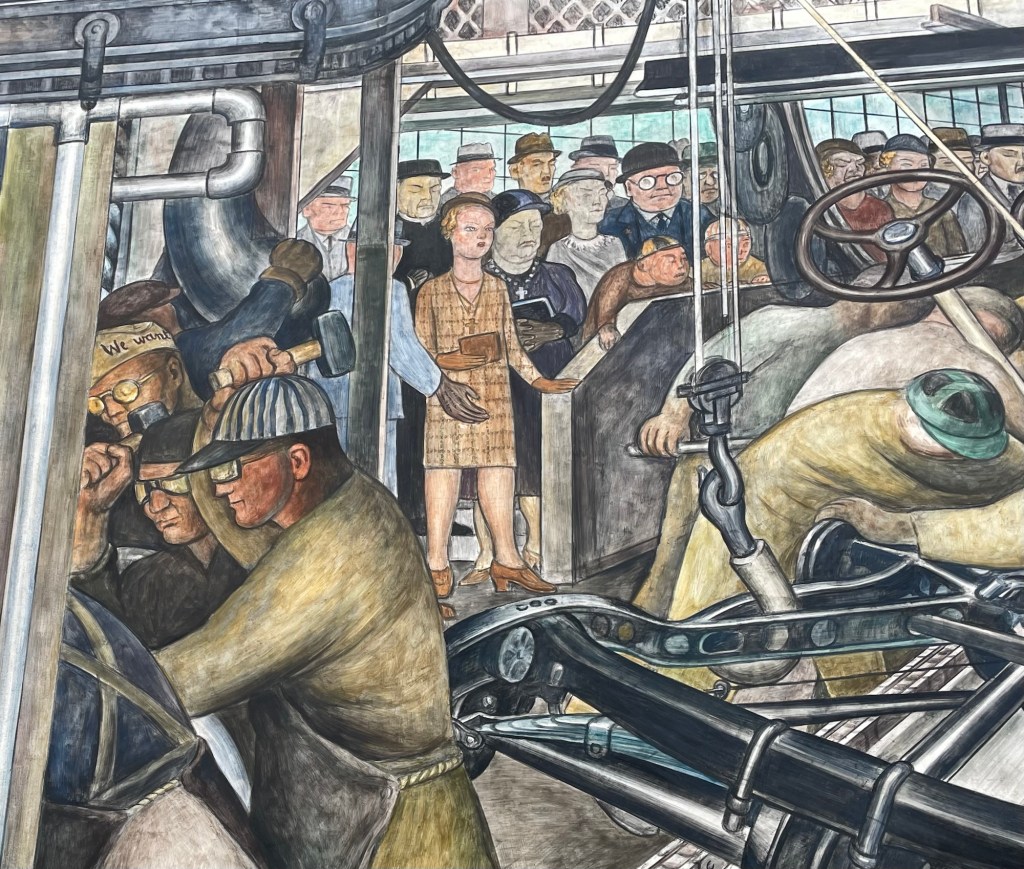
Green-tinted workers labor in a foundry (find the bowler-hatted Diego portraying his allegiance) while a tour group that includes actress Jean Harlow and cartoon figures of Dick Tracy and the Katzenjammer Kids observe the revolutionary assembly line.
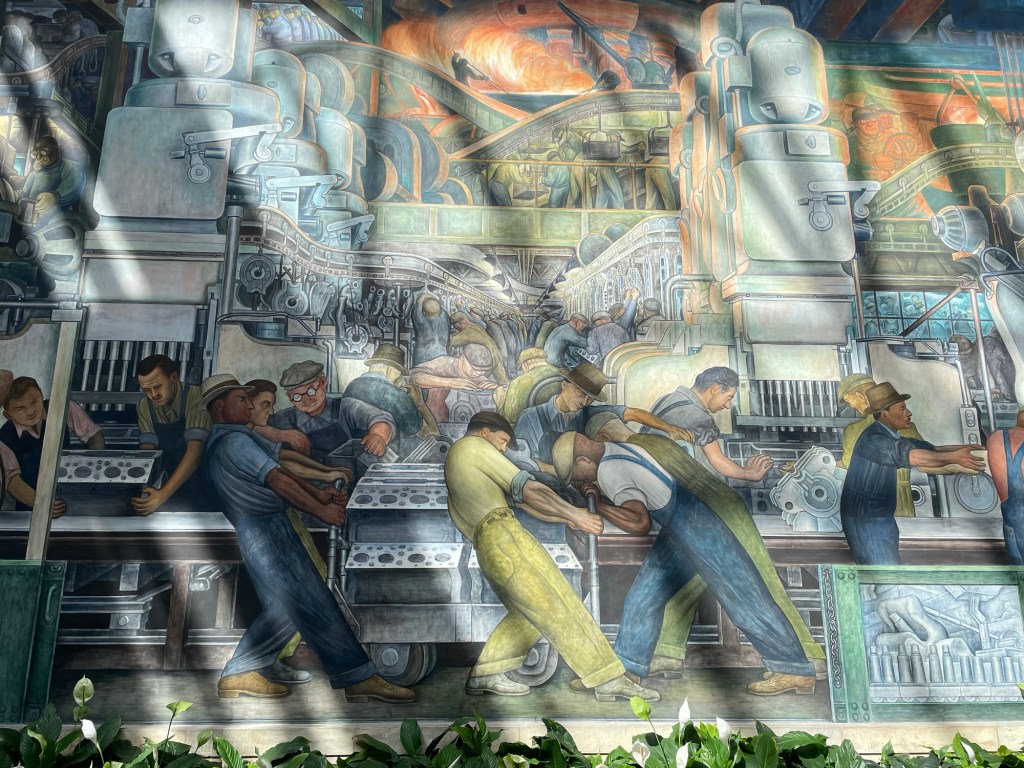
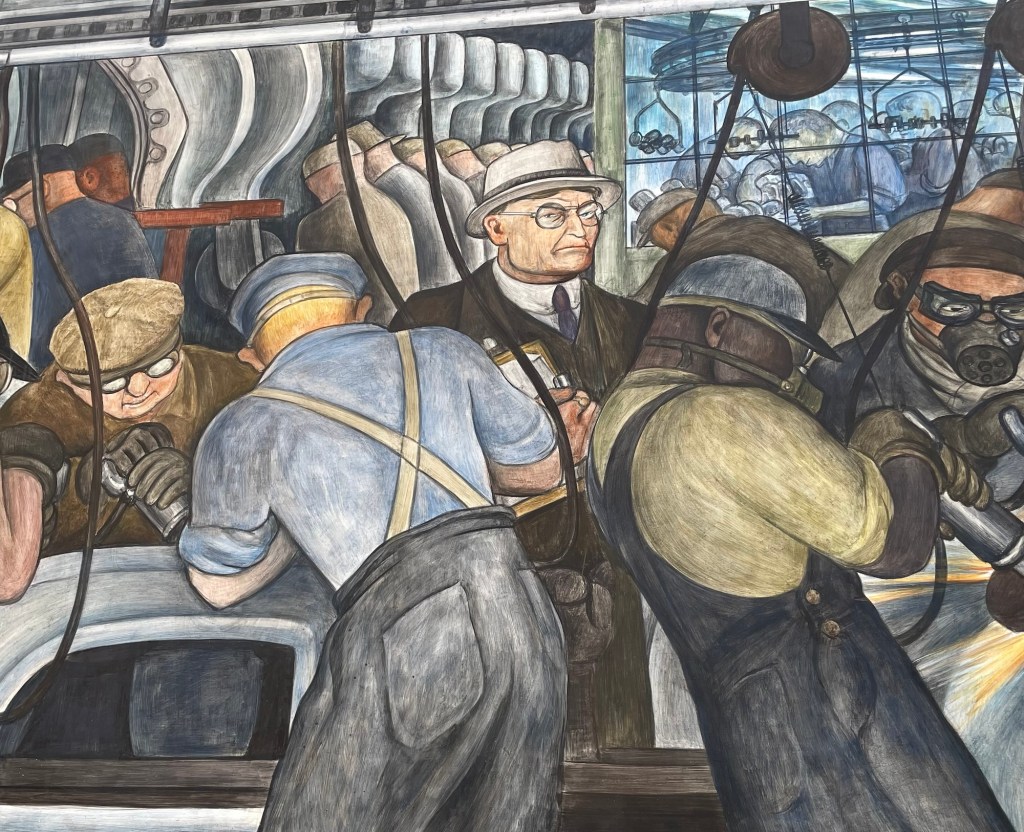
Fact versus fiction. While Ford employed more African Americans than other automakers, they were segregated and almost entirely confined to the most dangerous and unhealthy work. Yet rather than call attention to the injustice, Rivera included an idealized multicultural group of workers (although they are overseen by a very stern looking supervisor!).
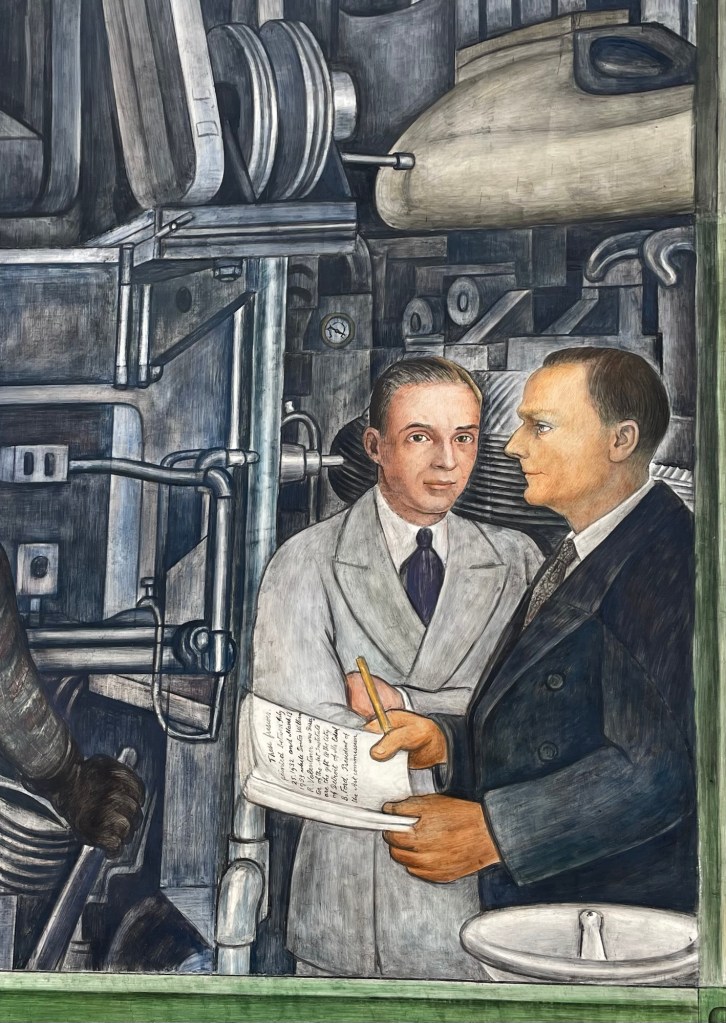
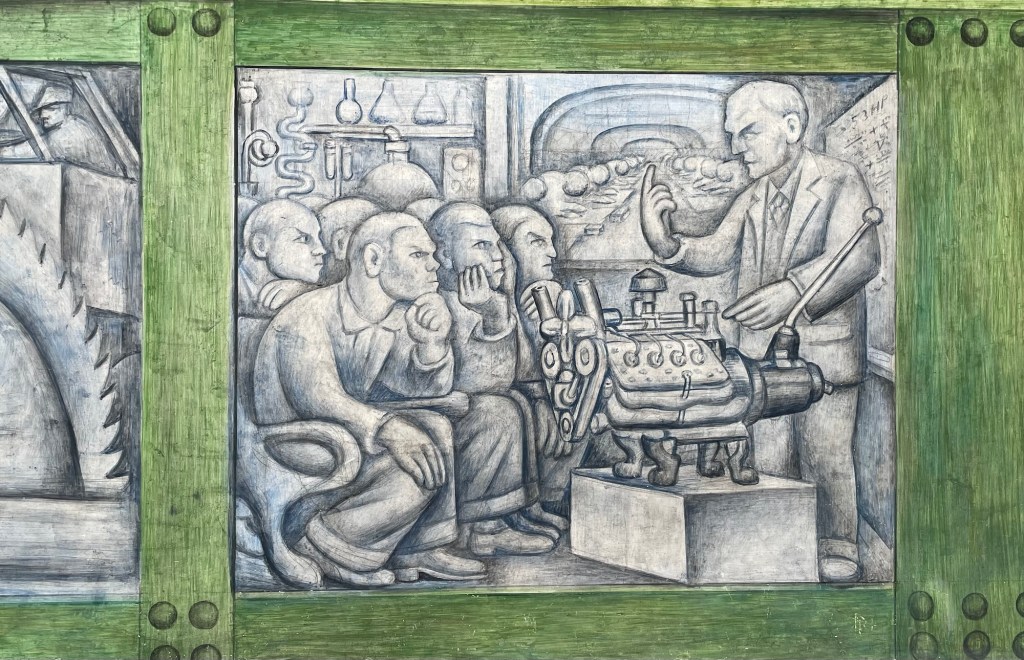
Ford’s son Edsel helped finance the murals, and he can be seen here consulting with the museum’s director on their progress. Ford himself appears lecturing to a group of workers.
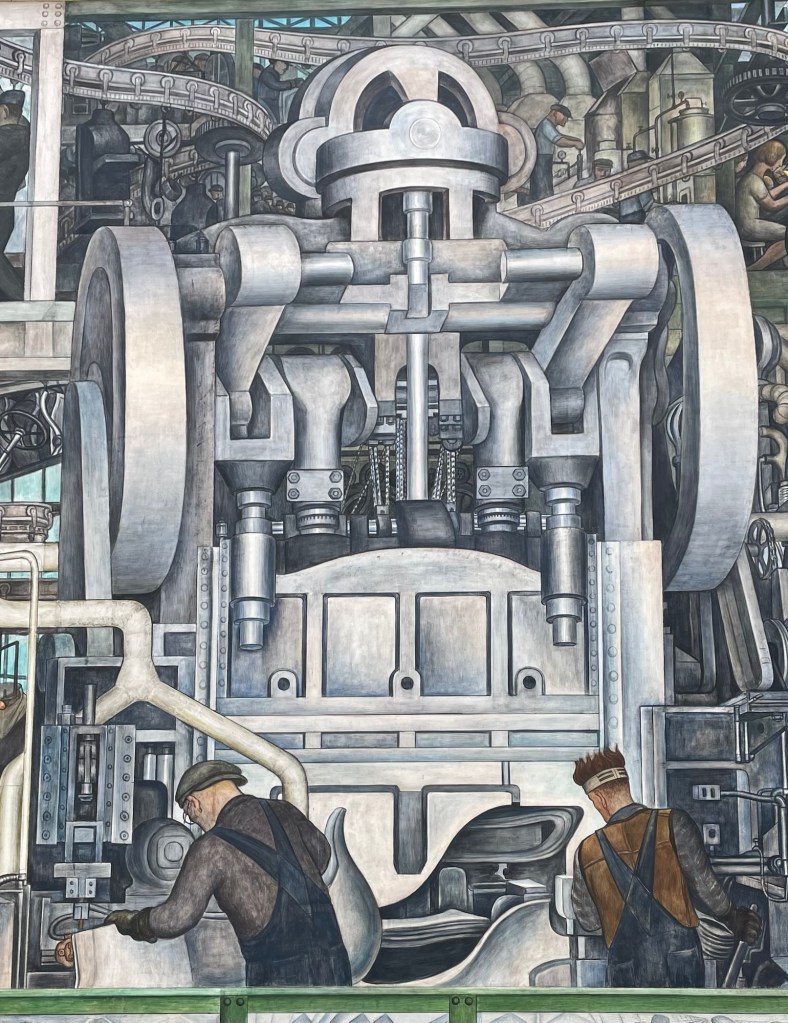
Interspersed with the wonders of modern industry are examples of Diego’s Mexican heritage, including machinery resembling Coatlicue, the Aztec goddess of life and death.
Four female nudes dominate the top panels, representing Rivera’s vision of the four races. Each holds a piece of the natural world that is vital to industry: limestone, sand, iron and coal.
While Diego was depicting the wider world around him, Frida focused on a much smaller scale, creating works that were intensely personal and uniquely hers.
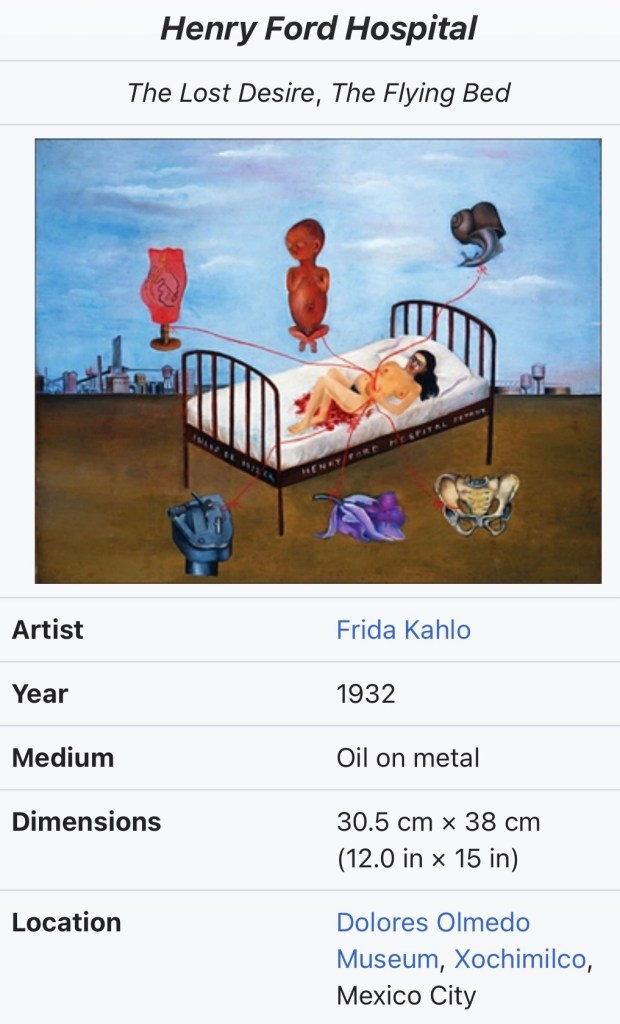
She had a lot to grapple with during her time in the city. Her mother died and she had a serious miscarriage that resulted in hospitalization. She painted the trauma in “Henry Ford Hospital,” in which she depicts herself on a hospital bed surrounded by memories of the miscarriage.
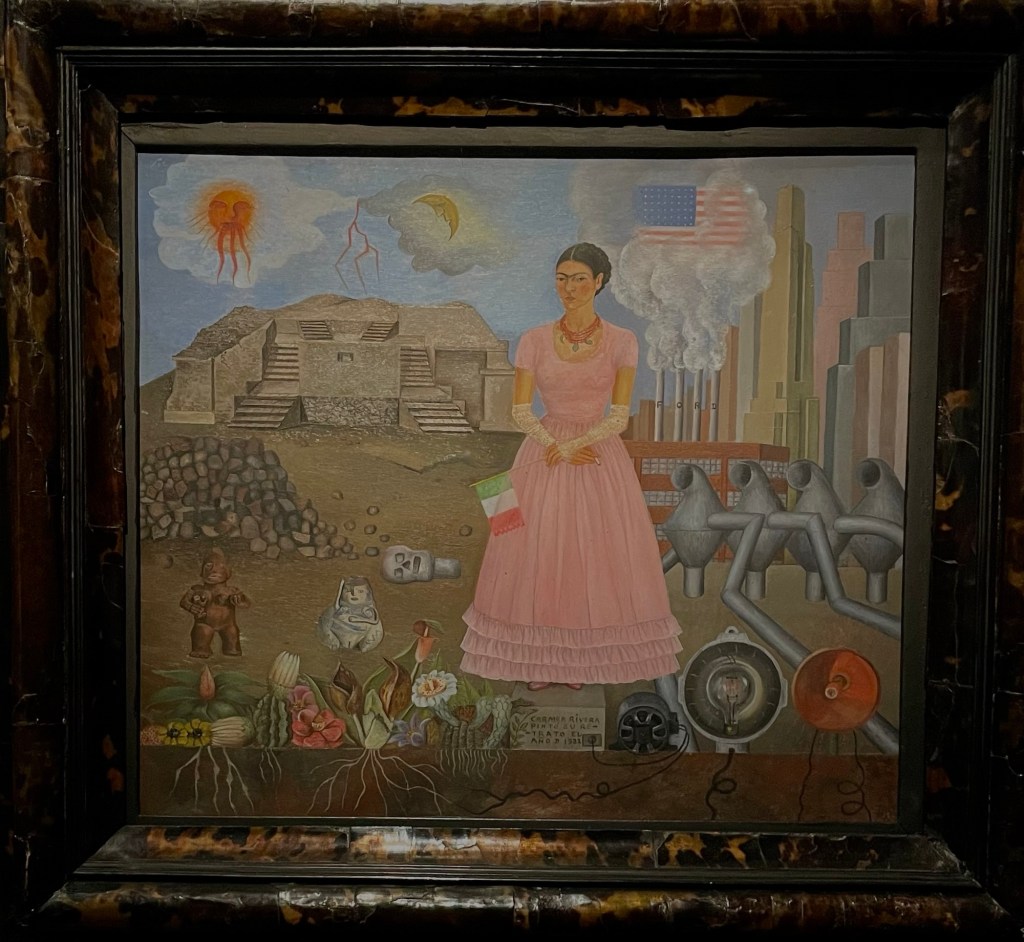
Like Diego, she painted the modern industry surrounding her in Detroit, and also included her Mexican heritage, but she did so with her own unique style that would come to typify her greatest works.
Although together for most of Frida’s adult life, the couple’s relationship was tumultuous and filled with drama. Not long after their return from Detroit, the couple separated after Diego’s affair with Frida’s younger sister. They temporarily got back together, but then split up and formally divorced in 1939. By the next year they had remarried, and remaining together until Frida’s death. Today their reputations have reversed, and Frida’s fame far exceeds that of Diego.
 Secrets of Philadelphia