It’s ironic that a city that prides itself on its abundance of worker bees is where Marx and Engels researched what would become the ultimate paean to the worker in The Communist Manifesto.
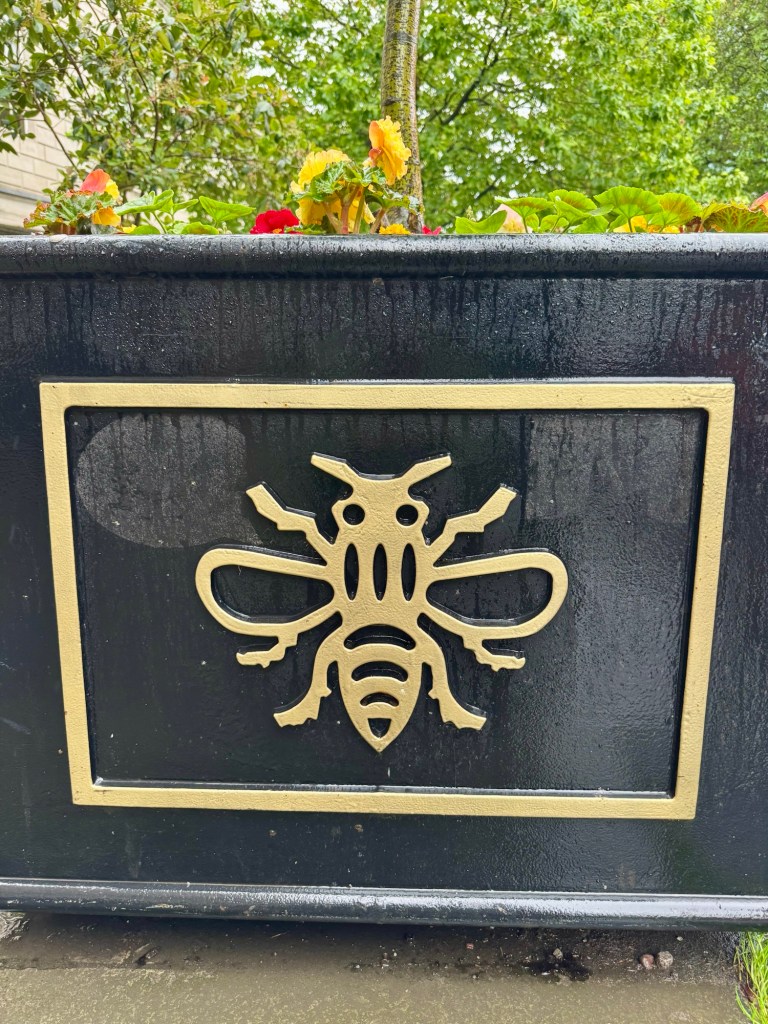
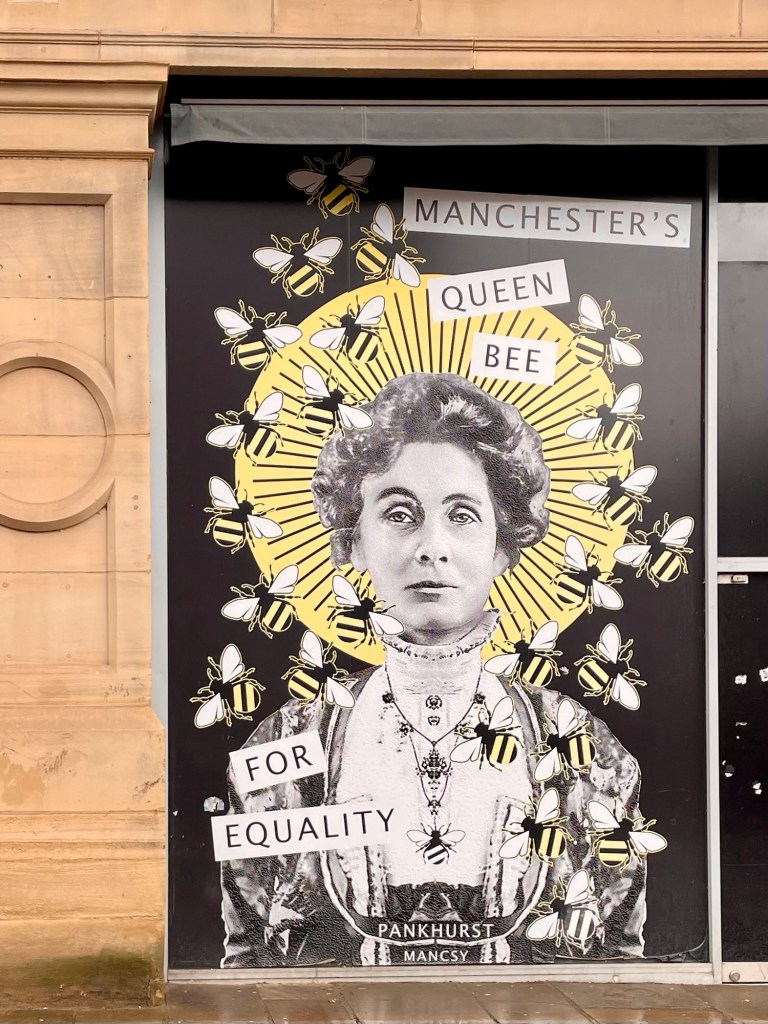
In 1842 Manchester received its coat of arms containing seven bees to symbolize the workers behind the factories that made Manchester one of the world’s first major industrial cities. Its factories were buzzing with so much activity that they were known as beehives, and the workers inside became known as the bees. Manchester continues to boast of this heritage, and you can spot bees everywhere- even its busses and trams are part of the “Bee Network.”


Yet rather than glorify the production created by these workers, it was their exploitation that laid the foundation for The Communist Manifesto, Marx and Engels’s book detailing an economic theory that elevates workers from mere drones to the driving force behind human history. Rather than simply worker bees churning out the products of capitalism to enrich someone else, in an ideal society these workers not only benefit from the wealth they create, but are the ones destined to overthrow capitalism.
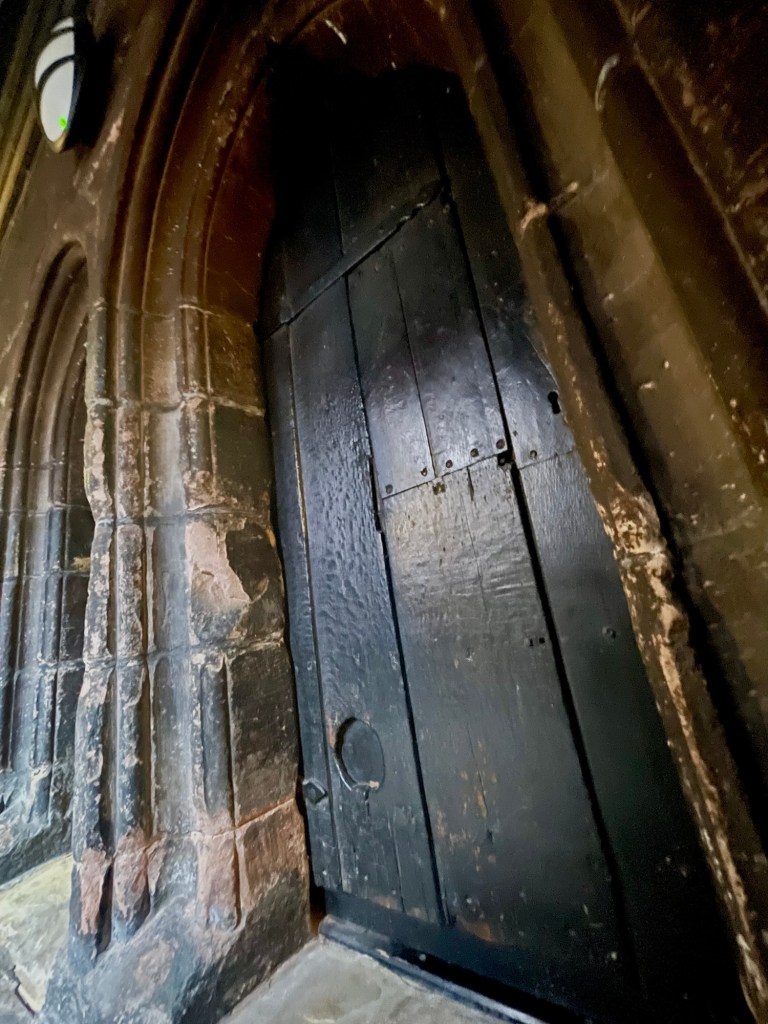
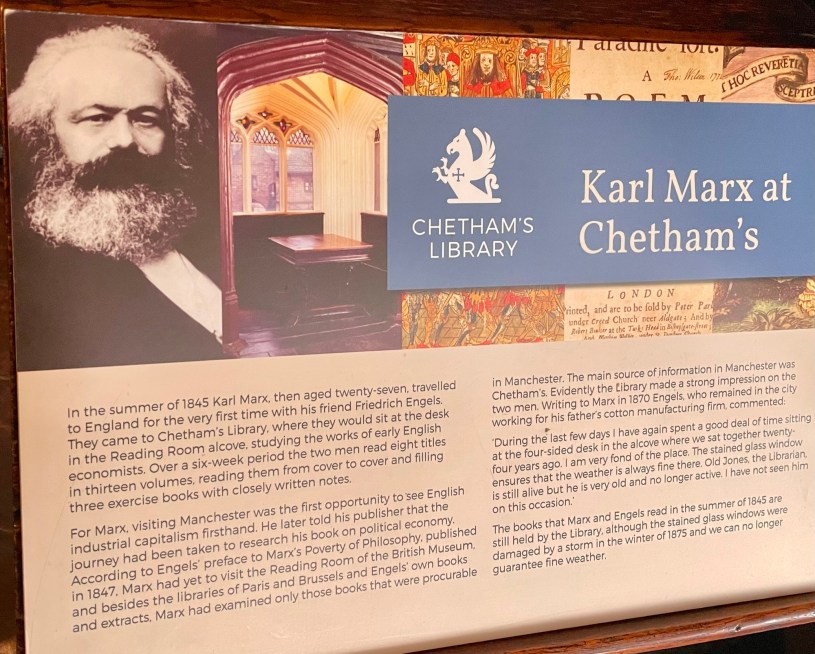
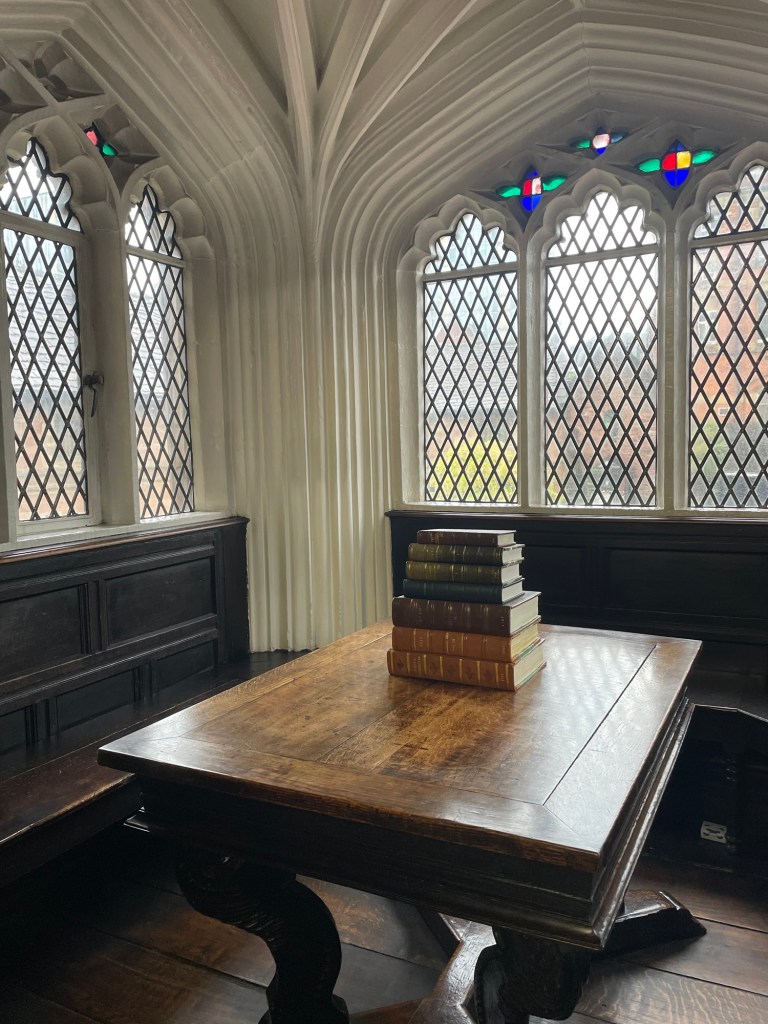
It was in a window alcove in the city’s Chetham’s library that Marx and Engels spent the summer of 1845 studying English economics. Founded in 1653, it is the nation’s oldest surviving public library and its records note exactly which books the pair studied. Reproductions of these texts can be read while sitting at the same desk. Profound thoughts optional. (Note: access to the library is by tour only)
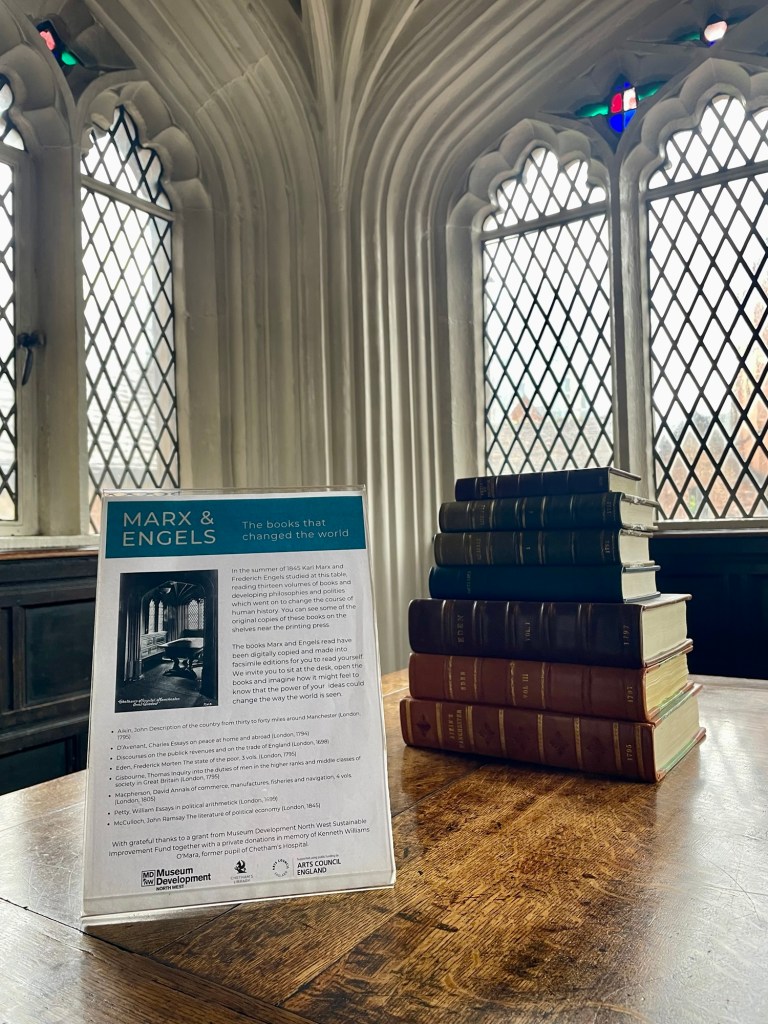
The two had met briefly in 1842, but didn’t form their legendary partnership until a meeting in Paris in 1844. Prior to this Engels had worked at his family’s cotton mill in Manchester. Shortly after Marx was expelled from France for his radical writings the two travelled to Manchester study conditions in its factories, meet with local political activists, and research at Chetham’s library.
The resulting Communist Manifesto was finished in 1847, published in 1848, and still remains one of history’s most influential political writings.
PS: Marx moved to London in 1849 and remained there for the rest of his life, with the wealthy Engels helping to support his family. Fans can visit several sites associated with Marx, including the Reading Room at the British Museum where he researched and wrote Das Kapital, his former apartment building at 28 Dean Street, and his final resting spot in Highgate Cemetery.
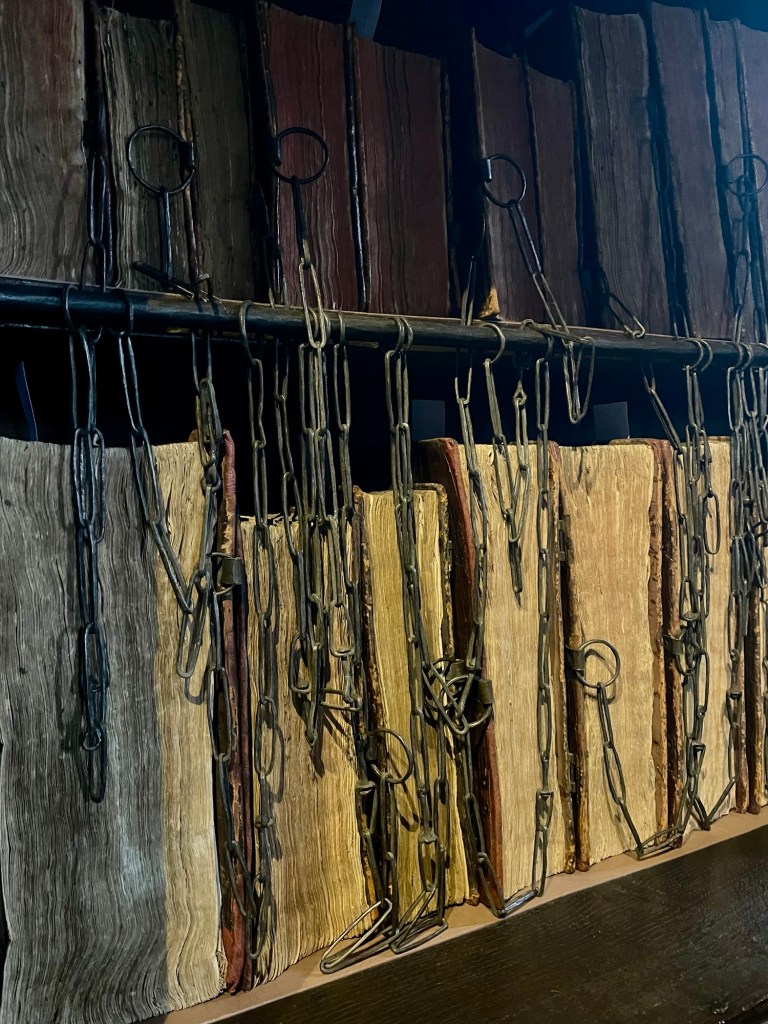
PPS: So many amazing things to see on a tour of Chetham’s library. My top two: the medieval cat doors and the chained books of the 1655 Gorton parish library (also funded by Chatham).