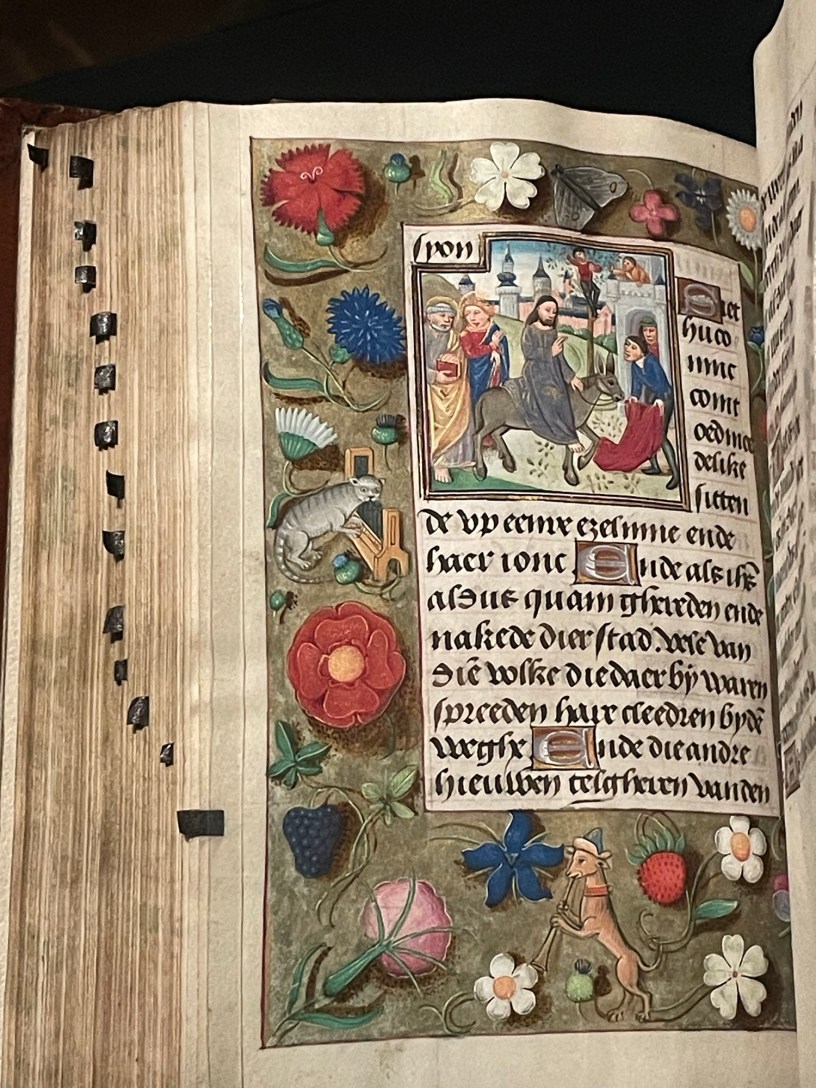
Cats had a mixed reputation in the Middle Ages, loved as playful mouse murderers, but feared through links to witchcraft. Either way, they were a central fixture of medieval life.
Not only associated with witches and witchcraft, cats also symbolized the devil, with a belief that it was his power that allowed them to catch mice in the same way that he entraps sinners.

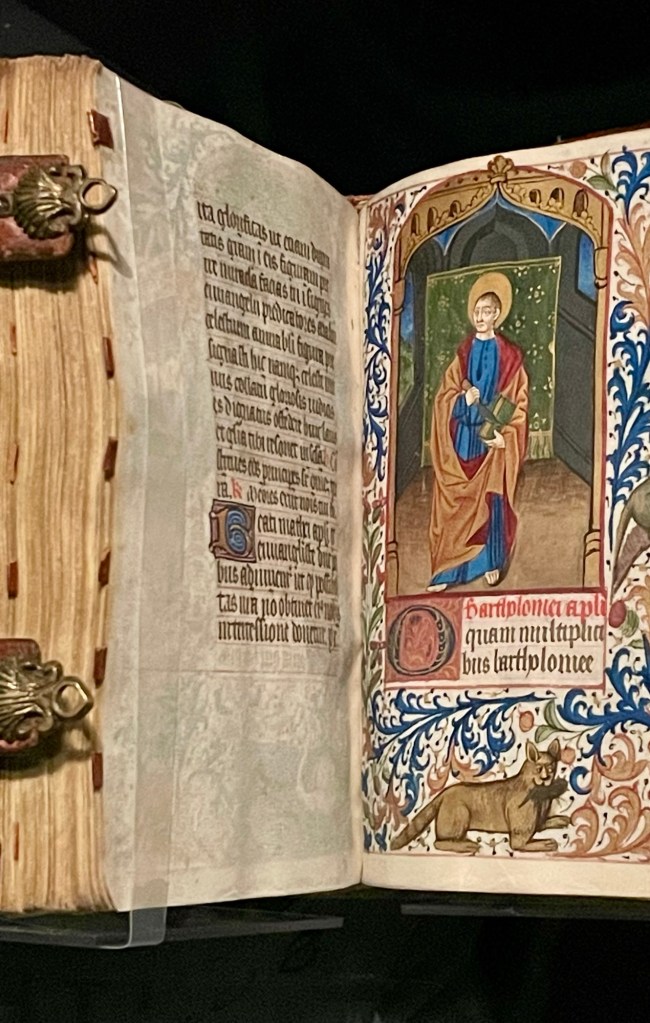
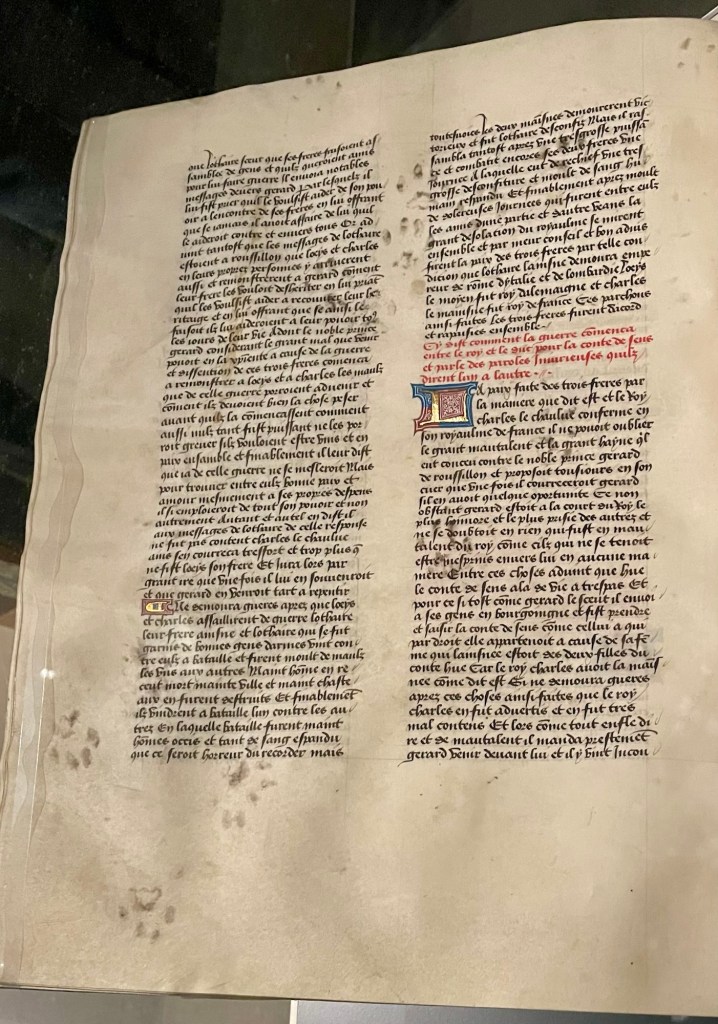
Cats were obviously welcomed at the 15th century Flemish monastery where this manuscript was produced, as several pages show marks of their midnight wanderings. You’d think the scribes would have figured out a cat-safe place for their hard work to dry after the first paw prints appeared!
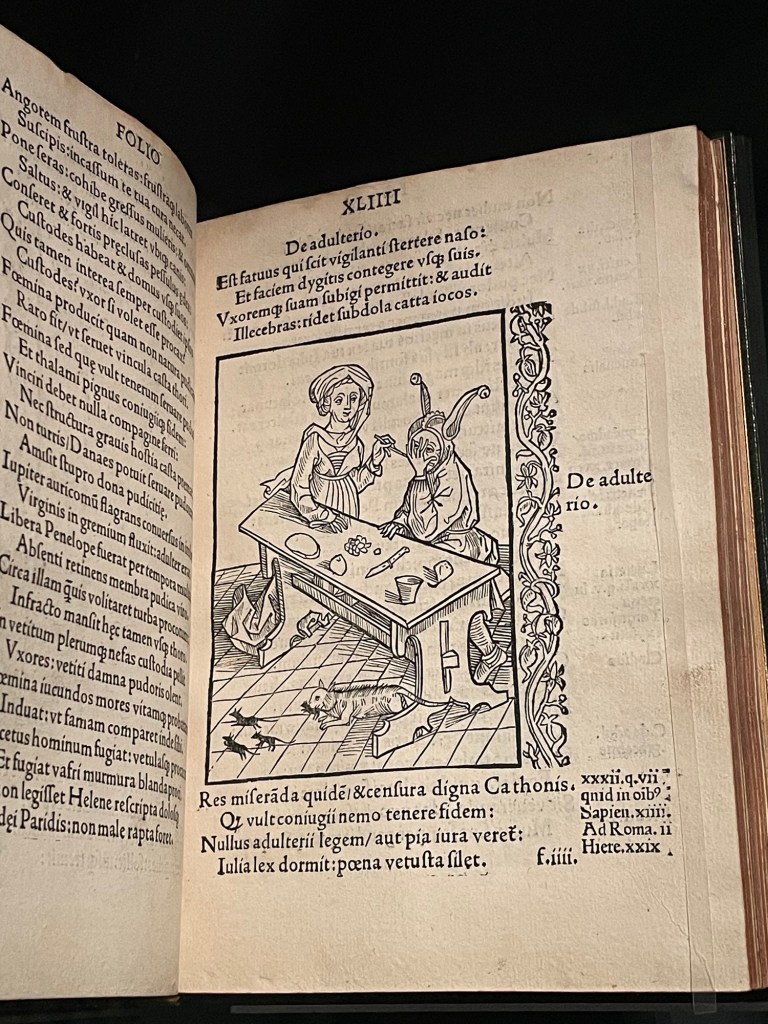
But, it wasn’t all negativity. In 13th century Cairo special gardens were established to provided food and shelter for the furry creatures. While respected for keeping food stores and libraries mouse-free, they were also beloved household pets, providing entertainment and cuddles (although catching one looks about as challenging then as it is today! Bottom photo).
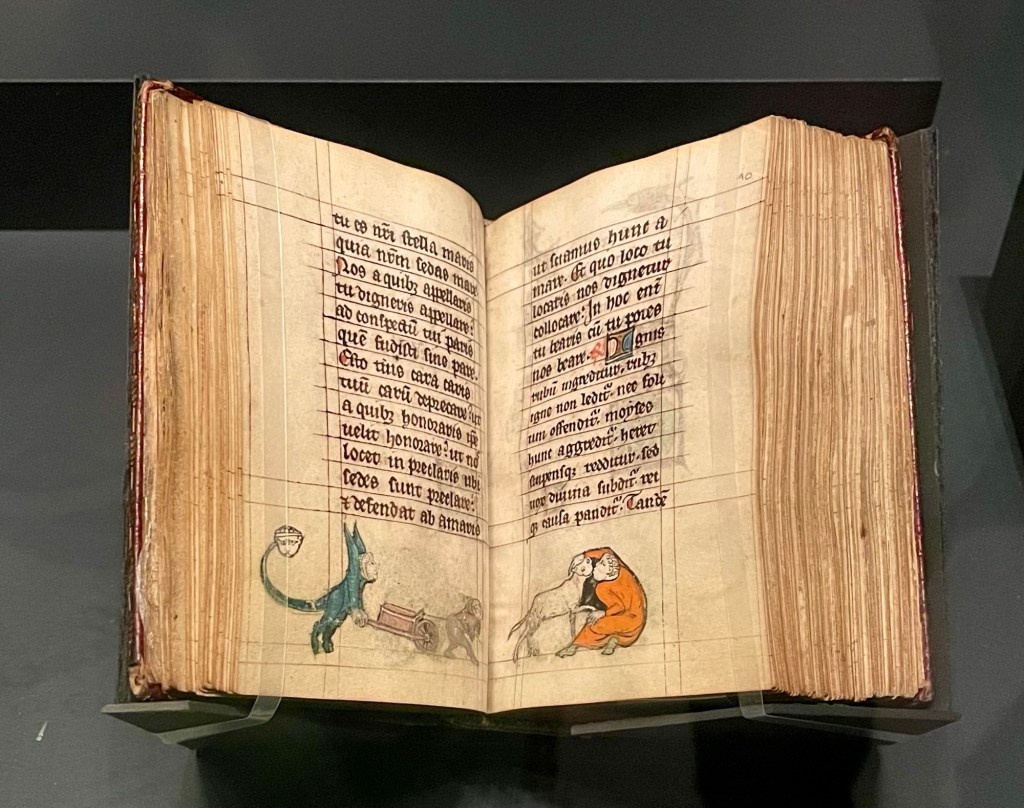
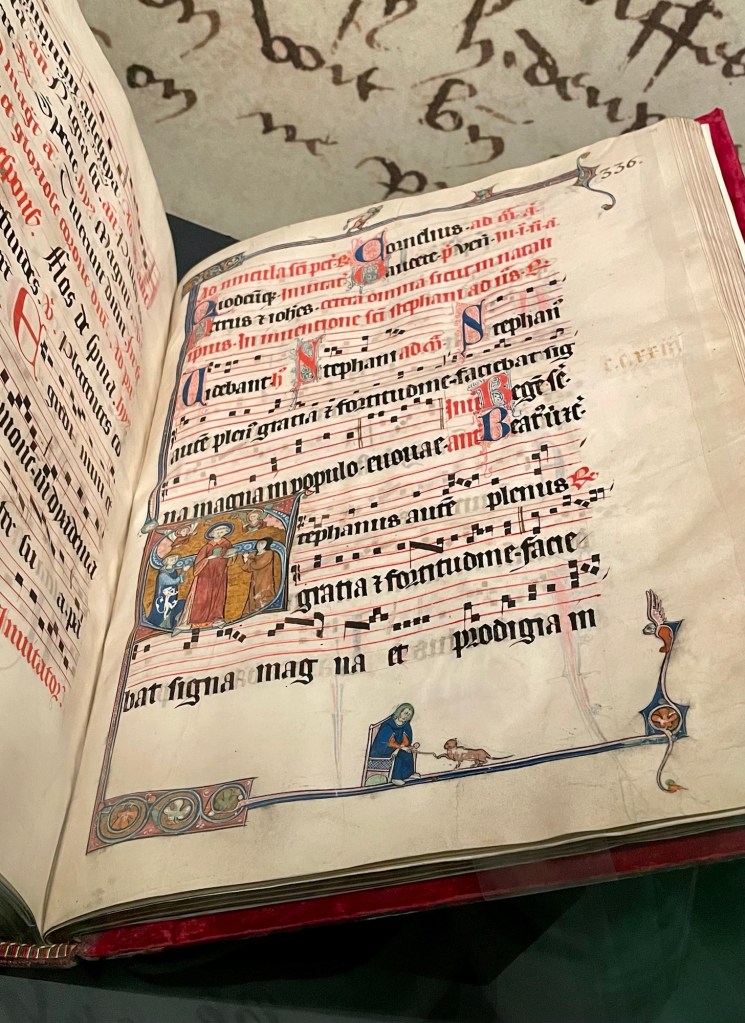
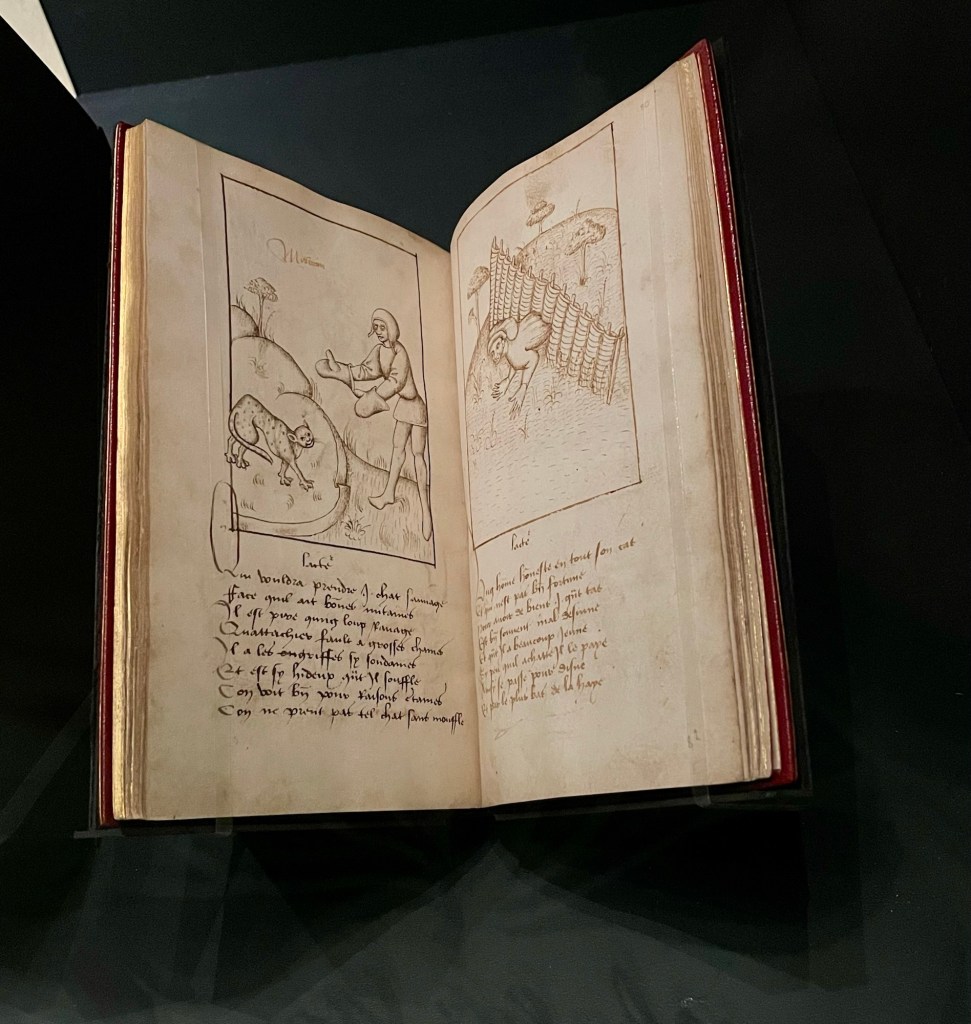
While visiting medieval dwellings keep an eye out for the holes built to allow cats free range as they roamed from room to room searching for mice. Handy for anyone who has ever patiently held the door open waiting for a cat to decide in/out/in/out. They were common enough for Chaucer to mention one in The Miller’s Tale. When a servant’s knock goes unanswered, he uses the cat-hole to peek inside: “An hole he foond, ful lowe upon a bord / Ther as the cat was wont in for to crepe, / And at the hole he looked in ful depe.” This example is from a 15th century French house:
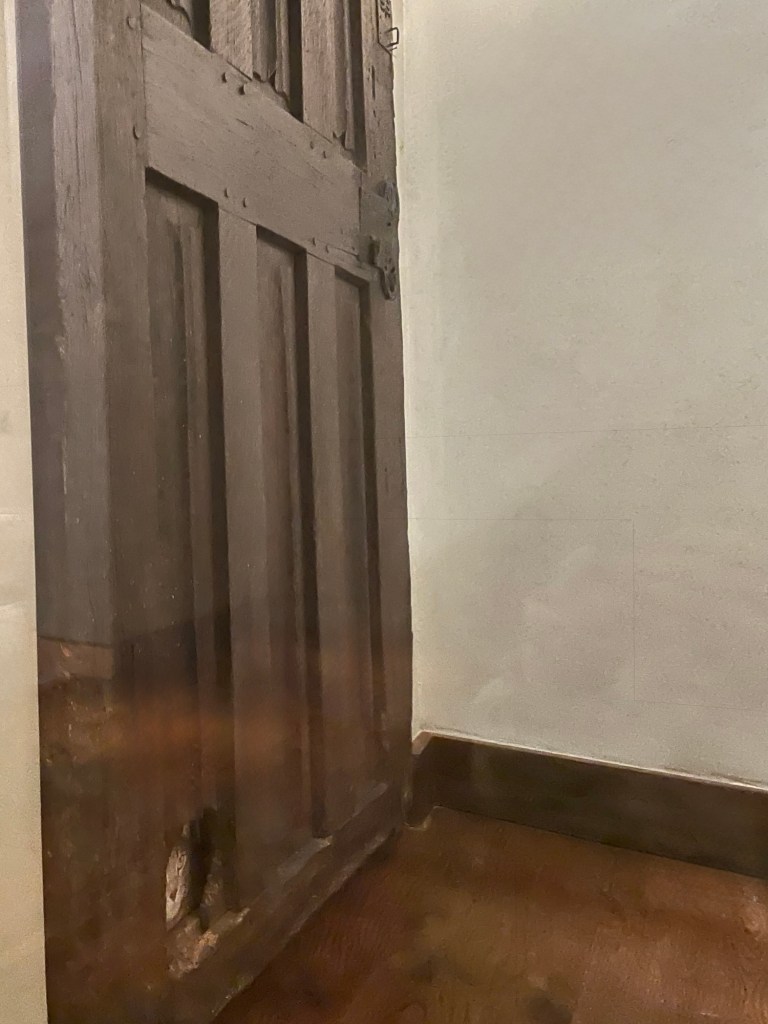
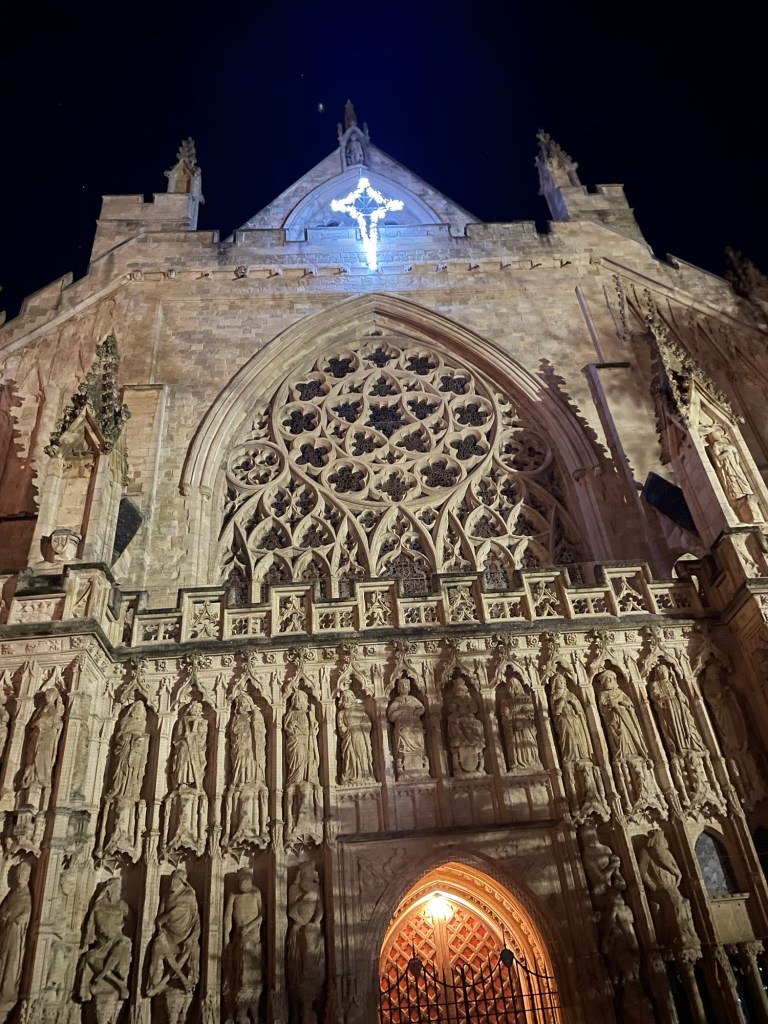
There is written evidence that a 16th century bishop paid to have a carpenter to cut a hole in a church door of Exeter Cathedral for his furry friend. “Paid ye carpenters 8 pence for cutting ye hole in ye north transept door for ye Bishop’s cat.” It can still be seen in the clock tower door today.
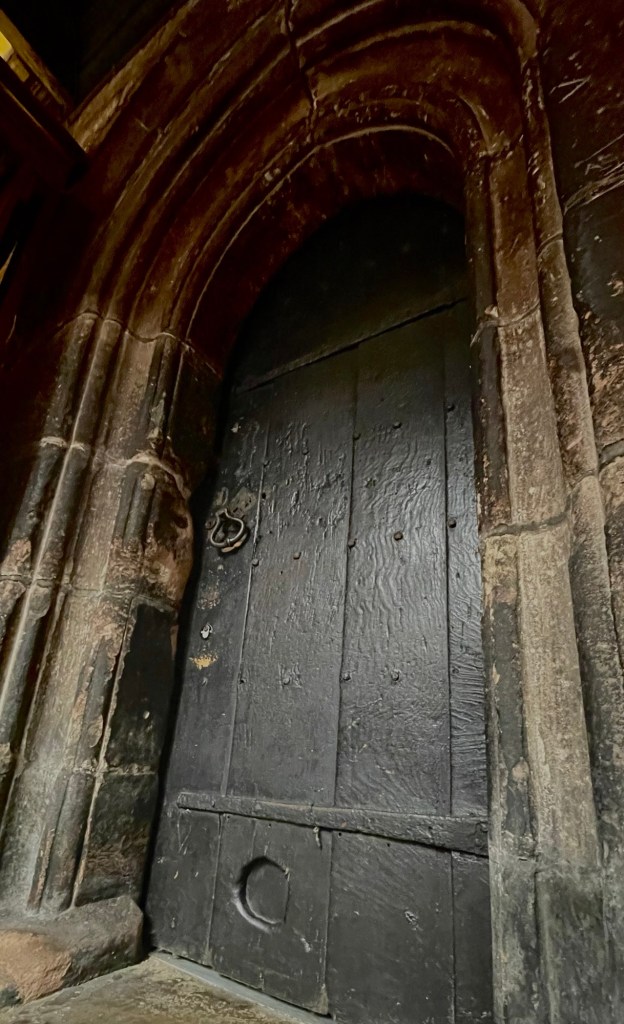
This pair are from the 15th century cloister at Chetham’s library in Manchester, UK.

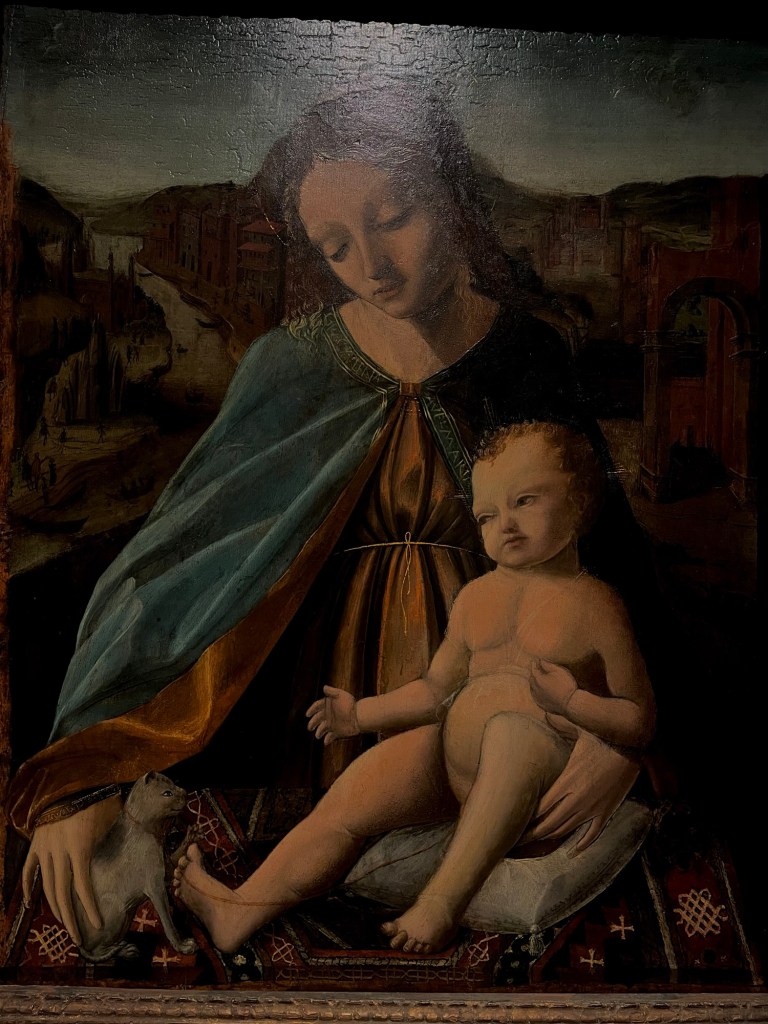
PS: Ever wonder why kitties often have a “M” or “W” shape on their forehead? From a little known Christian story… as Mary struggled to keep baby Jesus warm in the manger, a cat crawled in and cuddled with the baby, its warmth and purring eventually putting him to sleep. Out of gratitude, Mary blessed the cat by tracing her initial “M” across the kitty’s forehead- the mark that tabby cats still wear today.
Note: All medieval cats and the French cat-hole door appear courtesy of the “Paws on Parchment” exhibit at the Walters Art Museum in Baltimore, MD (2026).

