Note: Check website for opening hours. The building is currently closed due to funding issues.
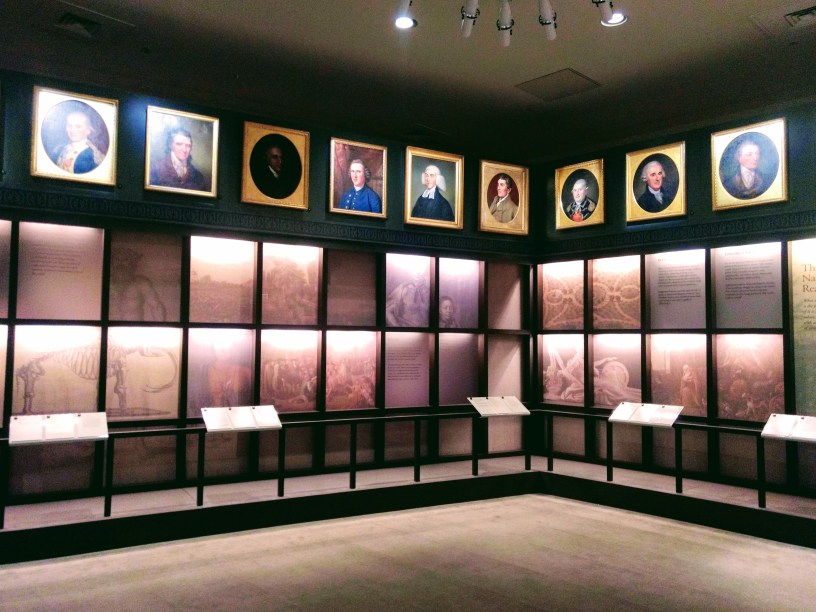
Described by Charles Dickens as having a “mournful ghost-like aspect, dreary to behold,” this is one of my favorite site in Independence Park (Tobey says “yawn”). Today, the former 1819-24 Second Bank of the United States (designed to look like the Parthenon in Athens) has over 150 portraits of Revolution-era military officers, politicians, scientists, explorers – all the people that show up in history books.
The core of the collection comes from the museum of Philadelphia painter, Charles Willson Peale (Philly Artist: Charles Willson Peale). 
The back room is set up to mimic Peale’s museum (painting by Peale from PAFA):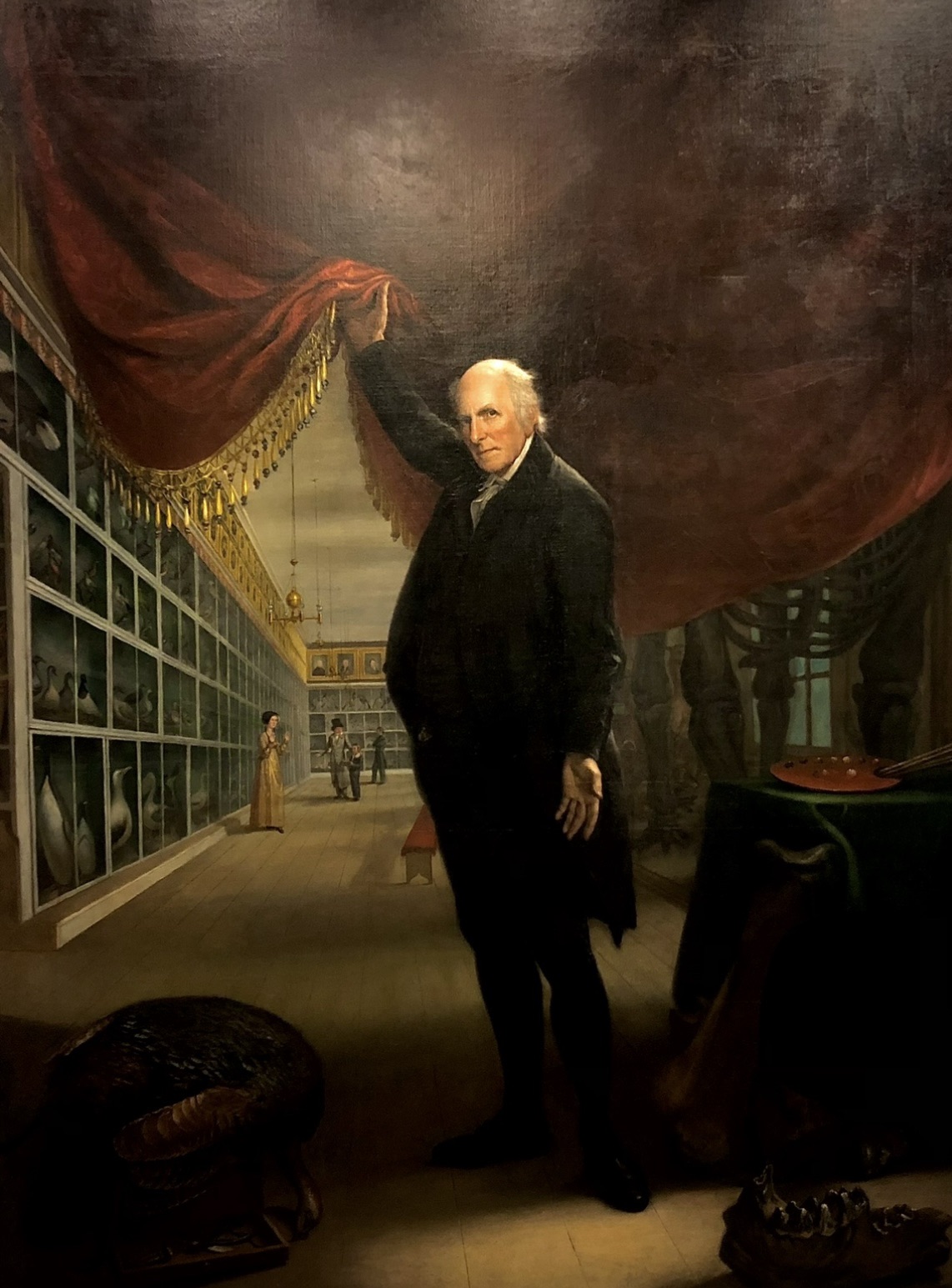
In addition to the portraits, you can also see one of the few surviving specimens from the museum – this Bald Eagle (originally a Peale family pet).
As a follower of the enlightenment philosophers and friend of the founding fathers, Peale believed that educating the American public and increasing their understanding of the natural world would cultivate a more enlightened citizenry and advance America’s prestige around the world. He was assisted by his family (he had 18 children, all named after famous artists or scientists), including Rembrandt, Rubens, Benjamin Franklin, Titian and Angelica Kauffman. For a time, his museum was housed on the second floor of Independence Hall.


In addition to the portraits by C W Peale, other artists are represented, including there this great painting by his brother James, portraying George Washington at the Battle of Yorktown with Charles and James both photobombing in the background: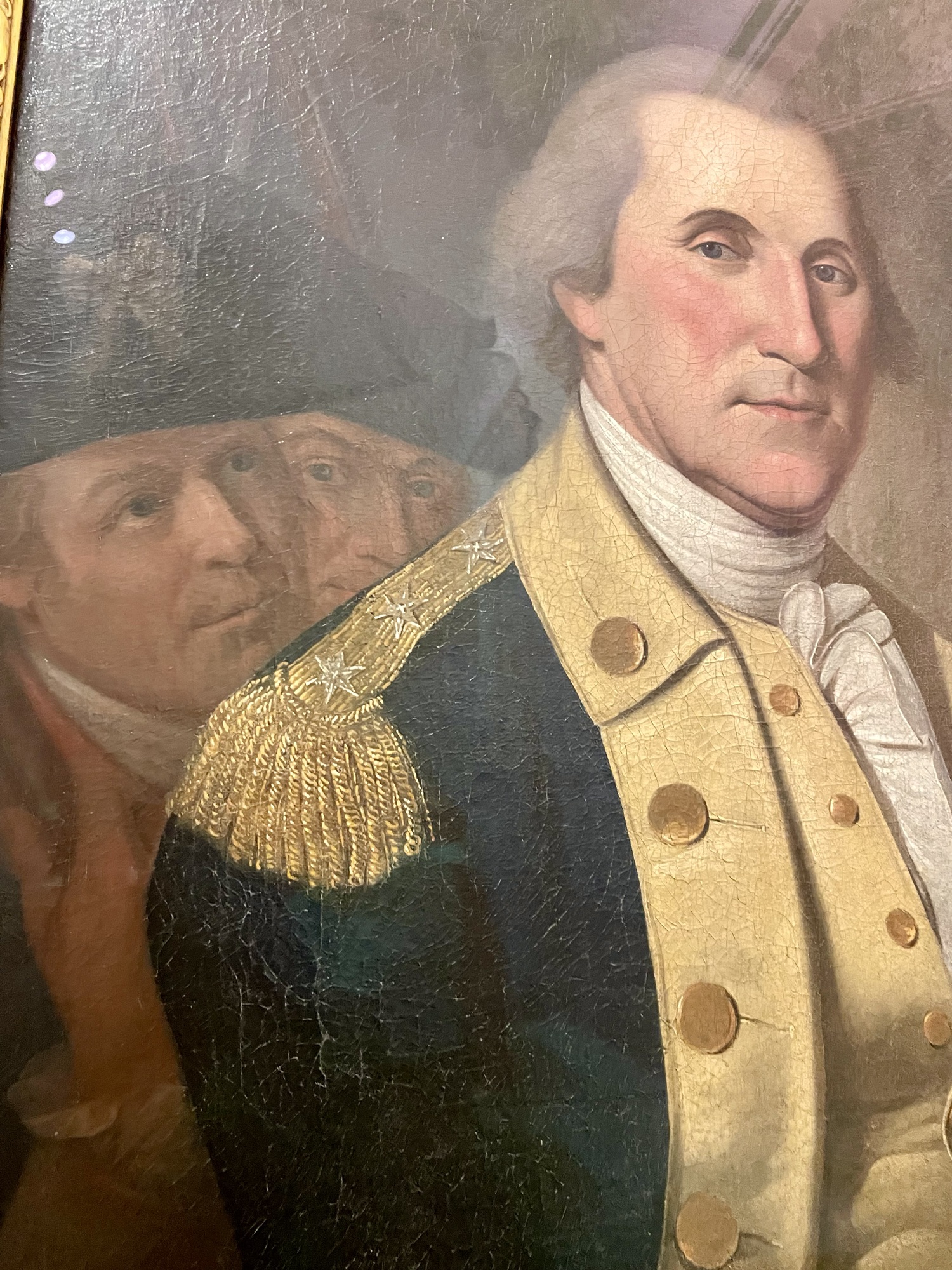
Make sure to check out the side room, containing engravings from William Birch’s self-published “The City of Philadelphia, in the State of Pennsylvania North America; as it appeared in the Year 1800.” 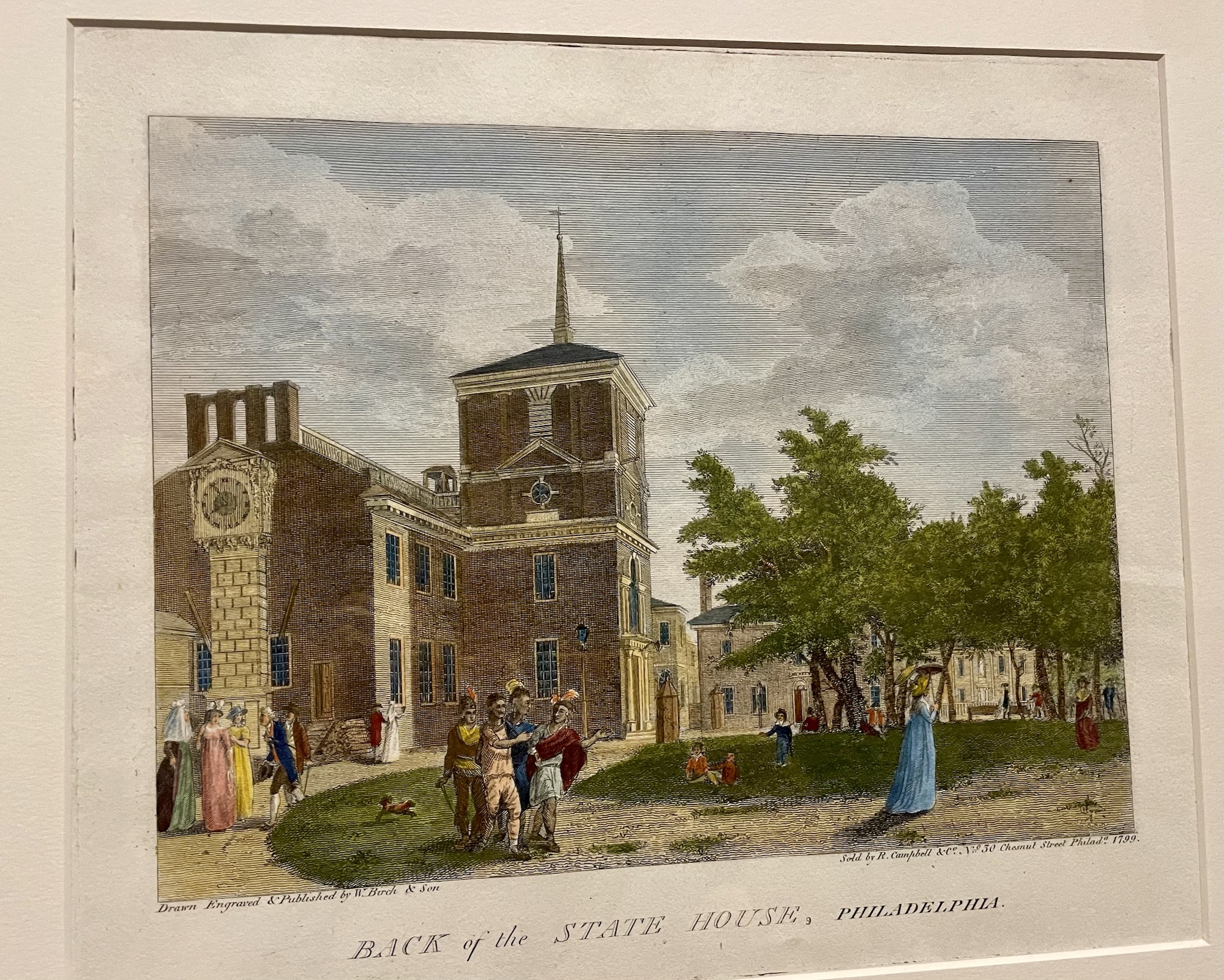
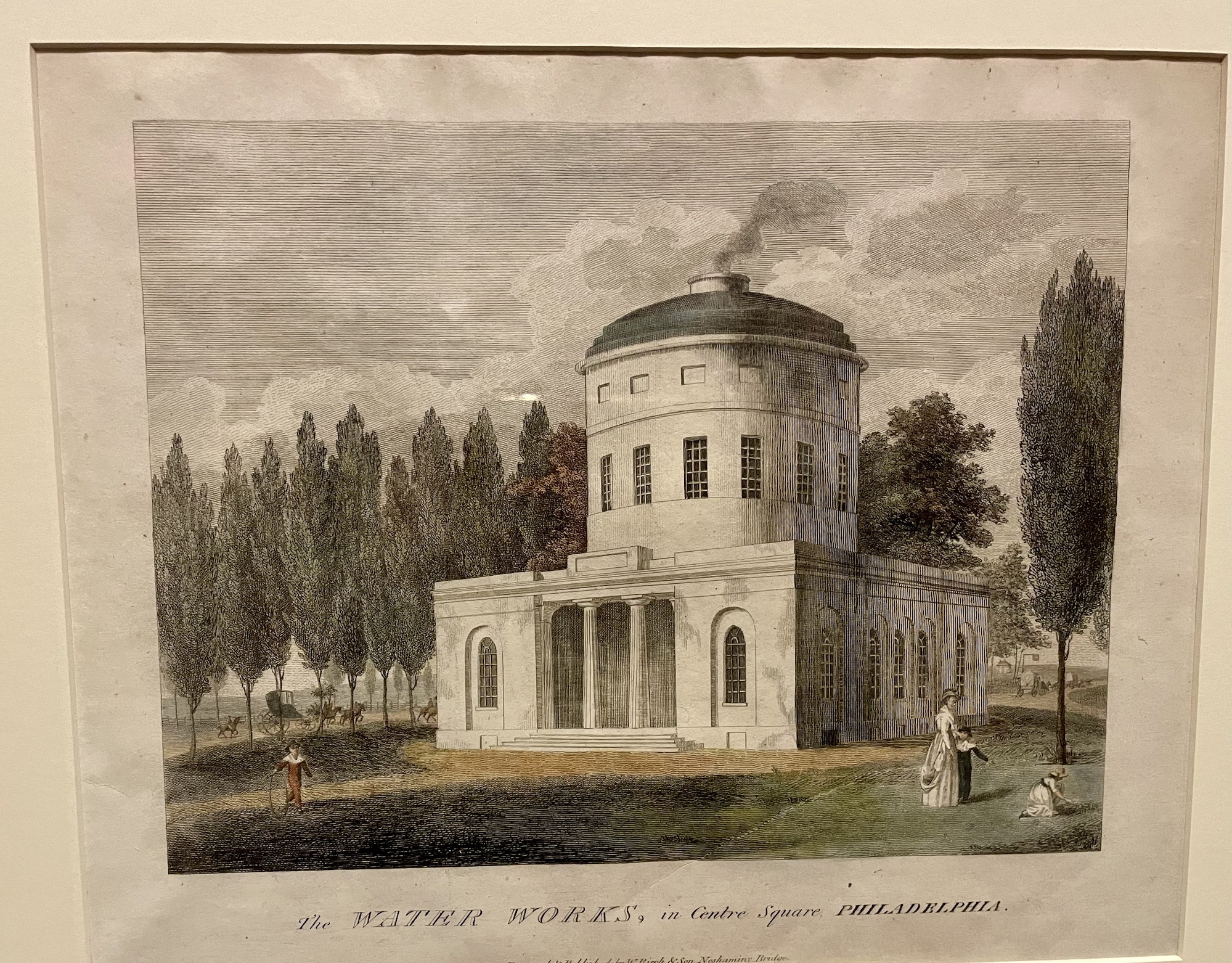
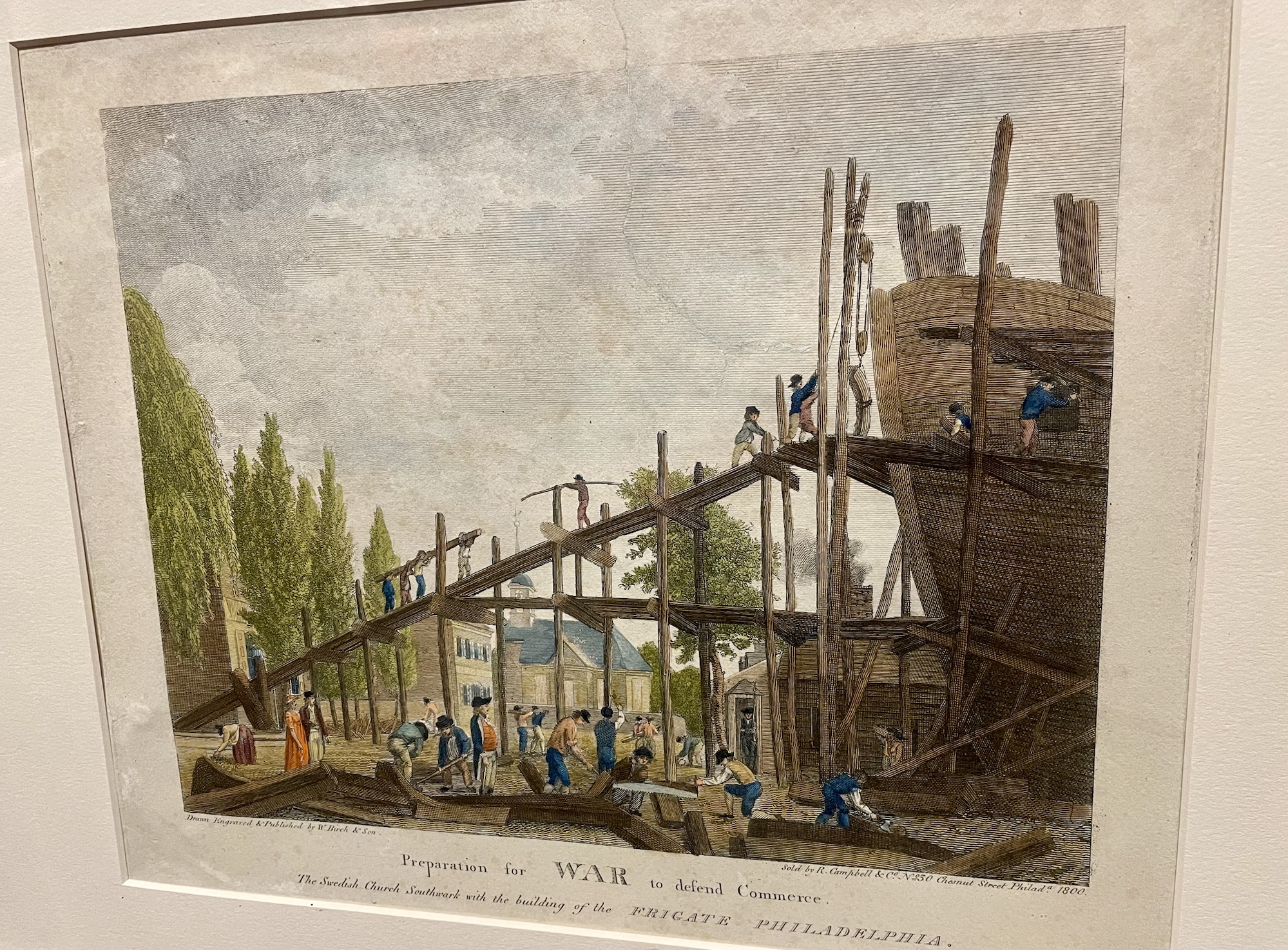
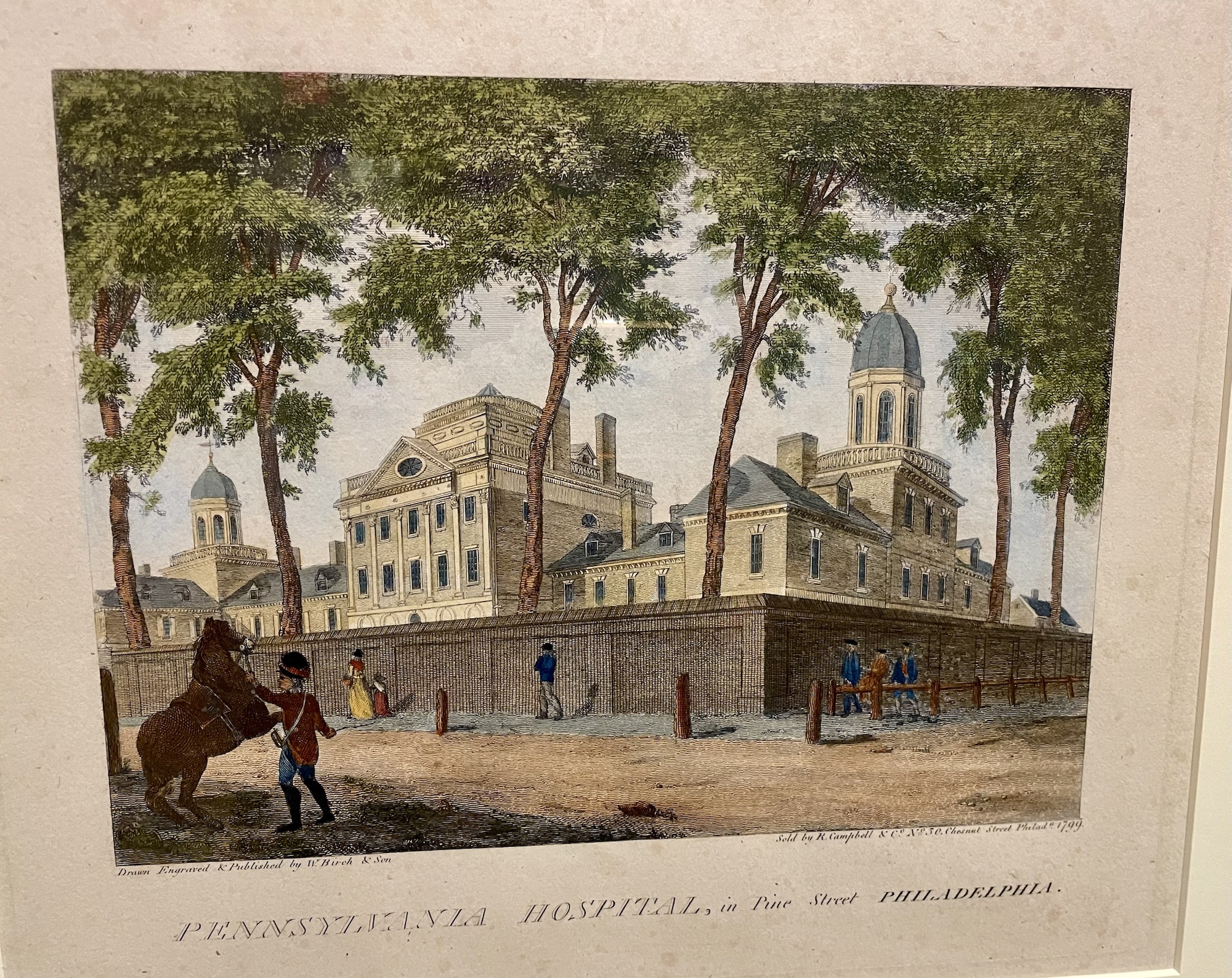 You can also visit the basement bathrooms, where you can view the original brick arches:
 Secrets of Philadelphia
I think it sounds great, but I am the sort of person who googles all the historical figures I read about to try and see what they looked like, especially if they’re described as handsome! That’s how I discovered the foxiness of a young Rutherford B Hayes, and of course Joseph Banks!
LikeLiked by 1 person
I heard on NPR radio this morning that they think they discovered the final resting place of the Endeavour – somewhere in Rhode Island??
LikeLiked by 1 person
Yes, the British used it during the American Revolution, after it had been boringly renamed the “Lord Sandwich.” It’ll be awesome to see it once they haul it up, though if it’s anything like the Mary Rose and the Vasa, the conservation process will take decades.
LikeLike